
Category: Optimal Wellbeing

Infrastructure for  Optimal Wellbeing by Lori Calabrese, MD | The Ketamine Blog

Optimal Wellbeing. Something we all strive for, right?  Something we wish for. But it’s so hard to achieve. Even so, we keep trying…and trying.  But here’s what we’re talking about… We’re not trying to portray a utopia but rather ways to improve your thinking to help sustain the good sense of wellbeing you may have gained after your ketamine treatment. We want to help you build infrastructure for optimal wellbeing.

Look at it this way. Sometimes when you’re depressed for a prolonged period of time as in …maybe …years…? It colors the way you see everything.  And it’s human nature to try to fit your philosophies of life to the way you feel. The result is a mindset that may pull you back into depression.

So it’s extremely important to your recovery and remission to learn to think about things differently in a way that supports a brighter outlook on life.

Because, while most psychiatric disorders have genetic links, the symptoms can be worsened by counterproductive, if not destructive, thinking patterns. To live well, with hope and continued initiative, just may require that you change your mind.

So the basis upon which you base your approach and reactions to life can undermine your progress …or spur it forward.

In these articles about optimal wellbeing you’ll read about facing the truth about your own motives and intents. You’ll also read about nurturing an attitude of gratitude to cultivate your own wellbeing.

There’s information for applying the science of happiness and the science of joy in your life, and for developing and using persistence. Things like this constitute your personal infrastructure that will support you with resilience in the face of challenges going forward.

And this infrastructure for optimal wellbeing can help your remission stand strong. Which makes life better all the way around.

See you inside.

  • Holiday Optimism Sets a Path for Success In the New Year

    Holiday Optimism Sets a Path for Success In the New Year

    Kayla breathed a sigh of relief. A car moving into her lane spotted her car just in time and swerved away to avoid her. Gratitude filled her at the near miss. It could have been a horrible crash, but all was well. This holiday traffic was heavy. Everyone shopping for gifts and groceries, as well as attending luncheons and parties. She loved this time of year. The excitement and anticipation. The decorations everywhere. Ornamented trees, snow on the ground, green, red, blue, and white lights on the streets and in the stores. Kayla wished she could share her joy with everyone she saw. She knew holiday optimism sets a path for success in life. But she also knew such enthusiasm wasn’t received well by everyone. She knew some were sad or angry, feeling losses especially painfully at this time of year.

    Offering Encouragement

    She drove to the specialty grocery store where she liked to shop for tasty treats and unusual ingredients for her Christmas baking. After grabbing a basket she started in the produce section and who did she see selecting oranges and figs but  Megan Watson. 

    “Megan! It’s wonderful to see you! Looks like we had the same idea…shopping for holiday meals?

    “Hi Kayla. Yes, I’m trying. But they seem to be out of the things I came for.  I don’t know why I try. My dishes never turn out right anyway. My family just ridicules my efforts. It takes the fun out of all of it.”

    “Oh Megan, I’m sorry. I wish they realized how hard you try and encouraged you. I’m just learning myself. I used to cook the things my mother cooked, but realized there are other ways to prepare food that I like better. So I’m doing a lot of experimenting these days, finding recipes and trying them out. 

    How Learning Supports Optimism

    “Sometimes they’re good and sometimes not so much. When they don’t work I either scratch them from the list or study the recipe harder to figure out where I made a mistake so I can fix it. I figure optimism sets a path for success, you know? What ingredients are you trying to find?”

    “Well, I need fresh mozzarella and fresh basil for a caprese salad.”

    “Really? I love caprese salad. Surely they have both of those things here! I’ll help you look…”

    “I’m surprised you feel like you’re just learning. I’ve always thought of you as a gourmet chef, Kayla.”

    “No way..! I’m learning every day. And having fun with it. But thank you for the compliment.”

    A quick survey of the store’s “cheese shop” led Kayla to the mozzarella. Next, after looking near the lettuce and cabbage, she found the herbs and handed a package of basil to Megan. Then she saw it. Megan was covering her face with her purse, and Kayla could tell by the movement of her chest she was crying.

    Not Everyone Feels Joy About the Holidays

    “Megan? What’s going on? Are you ok..?”
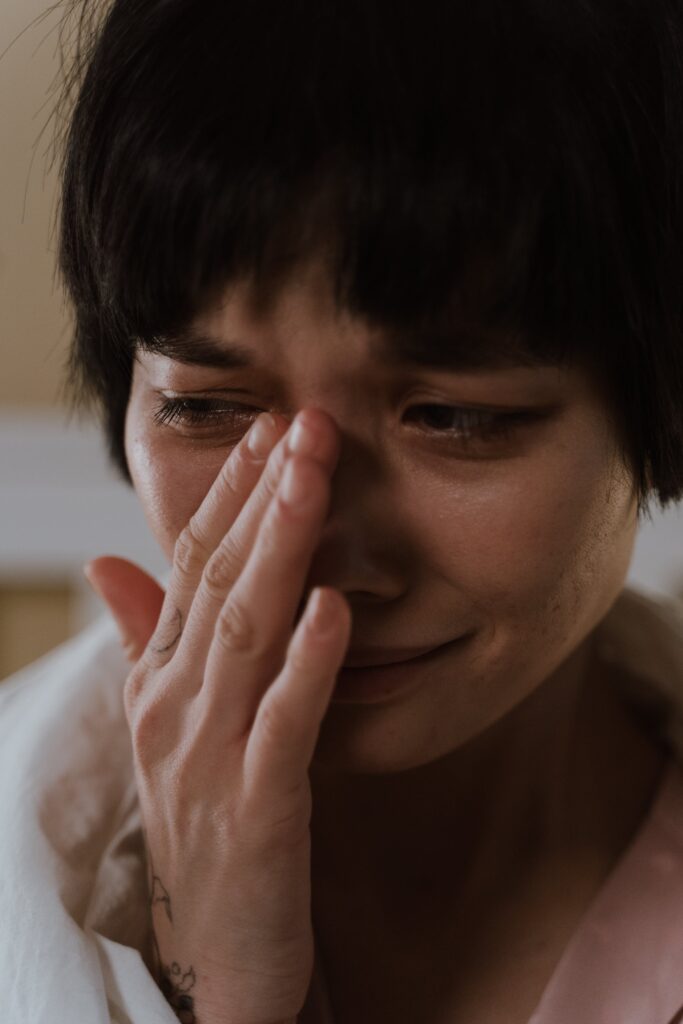
    “I’m sorry, Kayla. I’m so discouraged. My whole life is a mess and I don’t know how to get my feet under me again. The course I was taking was so hard, and I think I failed the final. I’m worried I’ll fail the course. I shouldn’t have tried. I’m not sure I can ever find the courage to take a college course again.

    “I’m just not a good student. I should have known to not try to go back to school. I have bad luck at everything I try.

    “Now I’m trying to put together a plan for Christmas dinner, and I can’t think of anything. I’m no chef. Who am I kidding? Whatever I cook, my family will be disappointed. And I’ll feel humiliated. Plus I’ve gained weight, and my clothes don’t fit right. I don’t think my husband is attracted to me anymore…

    Pessimism Can Rob Joy and Confidence

    “And if my husband leaves me, what will I do? I married right out of high school, and can’t get a good job. It would be just my luck if he left me to take care of the kids by myself… I don’t know what to do anymore. Things don’t work out for me like they do for you.”

    Kayla looked into Megan’s eyes with compassion.

    “Megan, first of all, you’re really beating yourself up, and it’s not helping.”

    “Listen Kayla, I’m just being realistic.

    “Hey my friend, you’re not really being realistic, you’re worrying… and assuming the worst. That’s not the same thing. You do need support. In fact, what you really need is hope. But hope is something you can actually cultivate in yourself, by what you say to yourself and others, and how you view things.

    A dose of optimism wouldn’t hurt either, Kayla thought, since optimism sets a path for success in most things.

    A New Point of View

    “…Also, these situations you described aren’t things that depend on luck…it’s just that you may need to look at your circumstances with a different perspective. 

    “When you go over and over in your mind about how badly things are going to go, it undermines your confidence, and then you can’t do as well.”

    “Kayla, you’re different — you’re an eternal optimist. But life doesn’t always turn out the way you think it should.”

    “Megan, work with me here. I want to show you something. When your daughter is preparing for a test, does she study?”

    “Yes, of course— I make sure of it.”

    “Ok, you see to it that she prepares. So when she walks into that test, she’s not depending on luck, is she? She has prepared. She’s fed the information into her mind, and it’s there when she needs to draw on it for the test, right? As a result, she’s got confidence about what she’s learned.”

    “Yes. And she makes good grades.”

    “Ok. Excellent. Now, when you went in for that test you failed, had you studied for it until you knew the information forwards and backwards? Like, could you have taken the test blindfolded?”

    “No. There were too many things I needed to do for the kids, and too much gift shopping to do, and presents to wrap. I scanned my notes that morning before class.”

    Learning to Expect Happy Outcomes

    “Megan, I’m so sorry you’ve been so loaded with things that needed to be done, but can you see that it wasn’t bad luck that you failed the test? Can you see that maybe you could have prioritized the demands in your life differently, and given the time you had to studying…? And if you had, you would have made a much better grade?”

    Megan nodded. She listened wide-eyed.

    “When you said you were being realistic… that wasn’t exactly true. Maybe you’ve been sabotaging your success in a variety of ways, without realizing it. Your approach to all this is actually pretty pessimistic, because you couldn’t see how to be optimistic… or to have hope. But you do have a certain amount of control over that, if you can just see it.

    “Optimism can set a path for success, if you work on looking for the up side of a situation.

    “Life can become overwhelming, and sometimes it’s hard to get things right. But with support, and by adjusting your priorities, you can thrive. You really can be successful.

    Luck vs. Investing in Success

    “This isn’t about luck. It’s about giving yourself the opportunity to succeed. And about building your confidence with hard work. Then enjoying your own sense of accomplishment. So you can be proud of yourself. And expect things to go well for you.
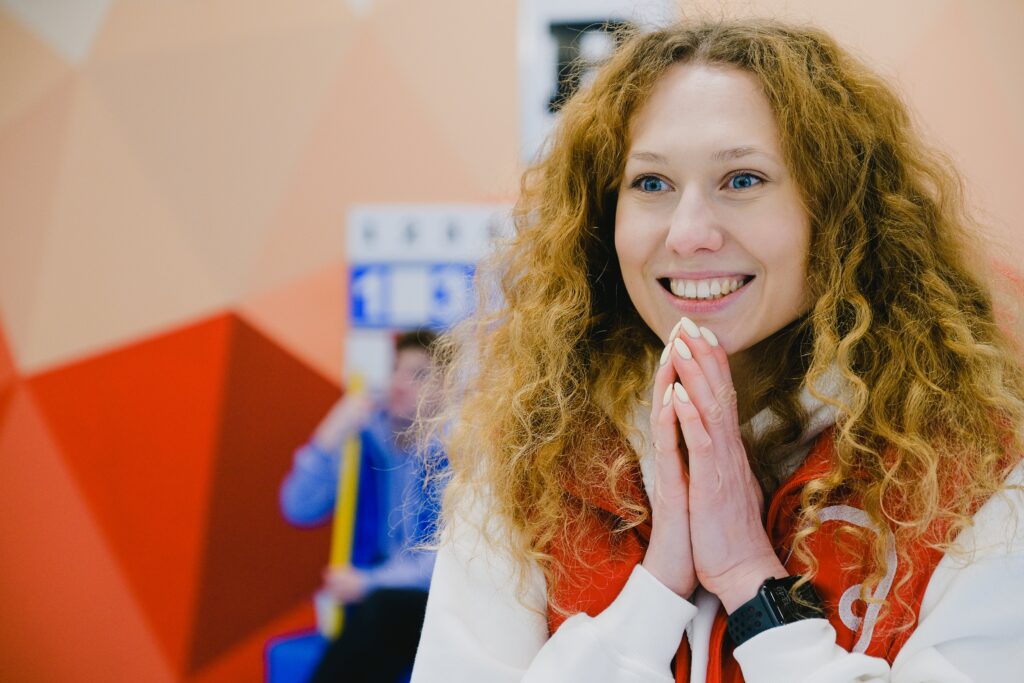
    “Can you see the different perspective?”

    Megan’s eyes began to shine and she smiled. Hope was dawning.

    “So, no matter whether you fail the course or not, you can adopt a different strategy and try again next semester. And if you follow this strategy, you can expect it to go well for you. 

    Support and Social Stimulation are Important for Wellbeing

    “Maybe you should talk to your husband about his helping the kids with homework and maybe the dishes. Why don’t you? To give you more time to work on your school work.

    “And for your Christmas dinner, maybe search the internet for easy-to-prepare dishes that are tasty and festive? Then you can read the recipes, buy the ingredients, follow the instructions carefully, and prepare a wonderful meal your family will love. You don’t have to think of everything by yourself. That’s what Google is for!”

    “Oh Kayla, that’s a fantastic idea! I can see there are ways to plan, and set myself up to succeed.”

    “And about your discouragement with your weight. If you’re like me, you might be drawn to carbohydrates like sweets, and French fries, and chips when you’re feeling down… and those things pack on the weight. I know that first-hand so well. It feels good while you’re eating, but the good feeling doesn’t last.

    Ketogenic Psychiatry

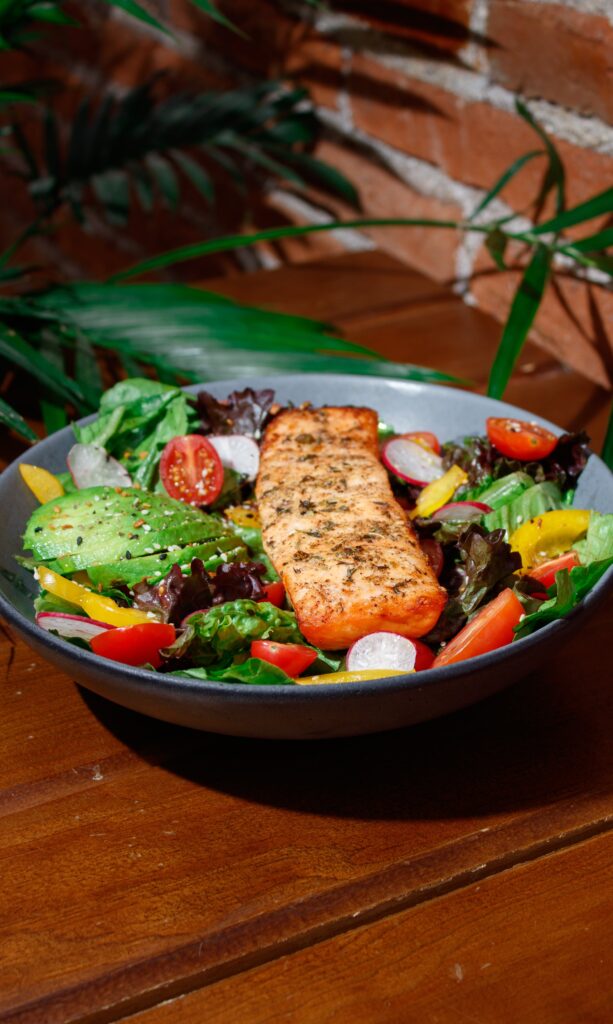
    “I recently learned about a different lifestyle that’s helping me so much. It involves eating moderate amounts of meat, chicken, and fatty fish, with vegetables that are low in carbohydrates. Things like green leafy vegetables, colorful foods like eggplant, roasted Brussel sprouts, bell peppers, etc. And healthy high fat foods like avocados, eggs, nuts, and cheeses. 
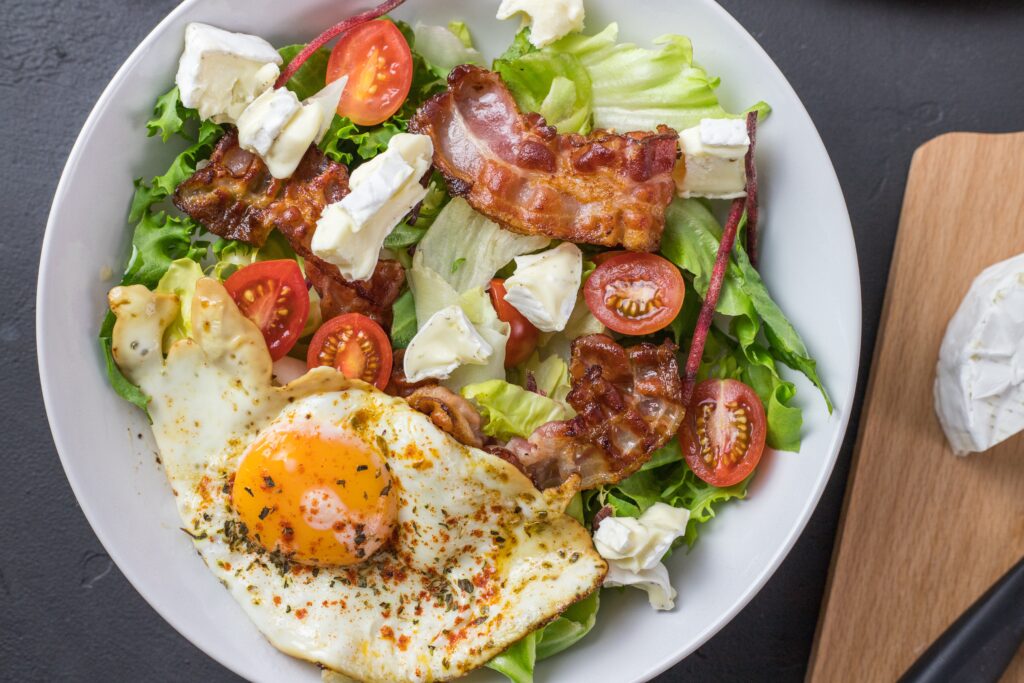
    “When you eat foods like this, and avoid foods high in carbohydrates, your mood will be lifted, you’ll have more mental clarity and energy, and you’ll easily lose body fat. A few months from now, you could be a new size and shape.
    Touchpoints 180™ is Dr. Calabrese's program to help you achieve therapeutic nutritional ketosis so your mind and body can heal.

    “In fact, there’s a treatment program called TOUCHPOINTS 180™ that is all about metabolic strategies, eating the right foods for you, with support, groups, and community-building. The doctor and the dietitian live and breathe it themselves— and even walk with their patients 4 times a week out in nature settings. The transformation is pretty incredible. It’s what helped me do a 180.”

    Touchpoints 180™ can brighten your outlook and help you transform your mind, your body, and your life in ways you didn’t think were possible.

    We’re doing it, and living it. We see it every day.
    Giving Time and Support is a Most Valuable Gift

    “If you’re interested, maybe we could have coffee at my house, and choose dishes with great foods like this, and your whole family could begin to benefit. Instead of Christmas being a day full of pain and humiliation for you, it can be a day of fun and deliciousness! The beginning of a whole new approach to life! What do you think?”

    “Oh Kayla, that would be so wonderful. You’ve given me so much to think about, and you’ve given me hope. You’ve shown me my life can be different. I can’t wait to come over.”

    “Great! Hope is what the holidays are all about! Let’s get to work on a Merry Christmas!

    And that’s exactly what they did.

    Because holiday optimism sets a path for success in the new year.

    If you struggle with feeling overwhelmed and defeated, and maybe need a restart in your mental health and wellbeing, call us.

    Our Touchpoints 180™ program can set you on a new path— a happier, peace-filled, and healthier path.

    Happy Holidays… and a Very Merry Christmas and Happy New Year to You!

    Lori Calabrese, M.D. is on the front end of the race to stop PTSD in its tracks using IV ketamine treatment.

    To the restoration of your best self,
  • How to Avoid Helicopter Parenting Your Almost Adult Child

    How to Avoid Helicopter Parenting Your Almost Adult Child

    When you avoid helicopter parenting your adult child things may get out of hand.

    Helen’s quiet, studious daughter Lizzie, didn’t really date in high school. Helen worried about her social life some, but it was still reassuring that she was safe at home. When she graduated and went to college, her social life developed around her dorm. First her roommates, then their friends and boyfriends. By her second semester, she had gone on some dates and was dating one boy frequently. Helen had the chance to meet him when a group of them came home for the weekend and Lizzie held a little gathering. He seemed like a nice enough guy, and was reportedly a good student. But he was soon replaced by another and then another. Her new found freedom had led to some drinking parties and a new found boldness with boys that seemed to be leading her into less than wholesome relationships. Needless to say, her mom became more and more worried. She was torn between being too overly involved and avoiding helicopter parenting her almost adult child.

    When a Child Leaves the Nest

    When a teen leaves the nest they build new relationships.

    Helen had brought Lizzie up to behave in a way that was circumspect, to always keep her dignity and wits about her, and to follow her instincts when it came to evaluating people. In short, to listen to her gut.  But the current boyfriend… now in her sophomore year of college… wasn’t someone Helen felt her daughter was safe with. When she met him, her skin crawled, but she tried to keep a friendly facade in hopes he didn’t sense it.

    She knew her daughter, and knew Lizzie would have to see through him herself. The guy had a “bad boy” air all about him. It was all Helen could do to avoid running screaming from the room. 

    At the end of the weekend, as everyone piled in cars to go back to school, she whispered in her daughter’s ear, “Please be careful, honey. I love you.”

    Lizzie knew her mom was serious, but she determined she would make her own decisions about her own friends. So she continued forward with her friends, their activities, and her latest boyfriend.

    Helen had trouble sleeping that night after Lizzie went back to school. Not knowing what she was up to, seeing what her new friends were like. And spending a couple days around this guy she was seeing.

    Making Her Own Decisions

    She knew Lizzie had to find her own way and that she didn’t want to be a helicopter mom, but the risks to her daughter’s life and well being loomed like a thunder cloud overhead. She sent Lizzie text messages hoping she might find out about how Lizzie perceived this relationship. But Lizzie was evasive and said very little. Helen walked the tightrope about avoiding helicopter parenting her almost adult child.

    For the next few weeks, Helen found it hard to eat. Her heart was in her throat, as anxiety about Lizzie’s welfare rose up inside her. She tried to go about her routine, commuting to work, buying groceries, attending meetings. Still, her palms were sweaty and her stomach churned. Headaches became a daily occurrence.

    To avoid helicopter parenting your adult child you can't see the risks they take.

    Then she got a call from her daughter. Lizzie had had a terrible fight with “the guy” and was crying. 

    “He fights dirty,” Lizzie cried.

    “What do you mean, honey?”

    “He’s mean, has a dirty mouth, and criticizes things I’m insecure about…he ridicules me and humiliates me.”

    Helen paused a moment. “Lizzie, this is a sign of abuse and of a destructive relationship. I hope you’ll take a hard look at how this argument went and walk away from him. At least think about it. You don’t want someone in your life longterm who’s abusive, right?”

    Once again, Helen knew she risked being a helicopter parent to her almost adult daughter. It was so hard to know when to speak and when to bite her tongue. It tied her stomach in knots.

    Mom’s Advice Not So Welcome

    Lizzie took a breath. “I’m not sure I want to break up with him over this. Maybe this was just a bad day for him… I’ll let him cool off a few days then talk with him.”

    Helen privately shook her head. She knew she had to brace herself to endure while her daughter…who was perhaps a bit naive… worked her way through what was best for her.

    Again, she didn’t sleep. She wrestled with her pillow and sheets all night anguishing about this unsavory guy and Lizzie. Wondering if he was ever violent…how persuasive he was when he wanted to be… how far he’d go to get his way.

    She worried, and worried, and worried.

    As your daughter finds her own maturity you can not helicopter parent your adult child.

    She wondered if Lizzie felt a bond with him or just didn’t want to be wrong about him. Frankly, Helen couldn’t imagine what Lizzie saw in him, but maybe she was too old to see his charm. He seemed sleazy to her. But she also knew that lots of young girls are attracted to the bad boy image. He was disgusting to Helen, but she had to avoid helicopter parenting her adult child so she bit her tongue and tried to be gracious and loving.

    Daughter Withdraws

    A week later, Helen called Lizzie to see how she was doing and if she was feeling better. Lizzie seemed distant, guarded. She chatted a bit, but wasn’t at all transparent or natural. 

    So Helen worried. She couldn’t eat much. Her stomach was too upset. She didn’t sleep much. Images of her daughter swirled in her head. Fears her daughter would be scarred if she stayed in this relationship.

    But her daughter wouldn’t talk to her. 

    She believed the best she could do for her daughter was to love her. To keep the channels of communication as open as possible. She sent her an occasional card in the mail with a few sentences about simple things going on in the neighborhood. Or the latest gossip at the hairdresser. 

    This seemed to help. Her daughter welcomed the pleasant notes that didn’t refer to her boyfriend. 

    Helen finally talked to her friend about her situation. She didn’t give a lot of detail about her daughter…just that she was worried about her safety with the guy she was dating. Her friend, Jessica, listened compassionately. Then she pointed out that while Lizzie was finding her way through this challenging situation, Helen needed to take care of herself.

    Talking to A Friend

    “Helen, you’re not sleeping…you’ve lost weight you couldn’t afford to lose. You’ve taken this so hard, and worry is robbing your health. Your fears for Lizzie are backfiring onto you. I know it has taken a lot of courage and strength for you to resist taking her out of school and bringing her home. And as scary as this is, I believe you’ve made the right decision at this point. 

    “Lizzie will learn so much through this awful situation, but she won’t learn it if she is being shielded by you. She’ll just resent you. And maybe make worse decisions about guys going forward. You just must focus on taking care of yourself while she works through this.”

    Two mothers talk about helicopter parenting almost adult child.

    Helen knew Jessica was right.

    “Jessica, how did you get so wise?”  Helen chuckled.

    “I’ve had two kids in college, and there were some scary times as they learned to navigate their way to adulthood. Listen, let’s go to lunch. I want to tell you about someone who helped me when things got really tough.”

    Jessica and Helen clocked out at work and walked to a nearby sandwich shop. They took their food to a corner table and Jessica began.

    Jessica’s Story

    “When my Isabelle was in her third year at the university, and Jimmy was a freshman, they both developed problems. Jimmy was drinking heavily and skipping class, so his grades were not great. Isabelle had gotten serious with a guy who was selling drugs. I didn’t know that at first. But one night there was a police raid at a party where they were and everyone present was taken into custody.

    “It came out that Isabelle hadn’t been participating in the sale of the contraband, but she had tried some hallucinogenic pills that night for the first time. It was the beginning of a time of enormous crisis, and a legal battle to try to keep her life from being ruined by a felony. Talk about the temptation to helicopter parent an almost adult child!

    “Watching both my kids crater the same year was shattering for me, and I eventually became deeply depressed. I could hardly function to help them through the process. It was all I could do to dress and show up at the court hearings and meetings with the lawyer.

    “We gave both kids an ultimatum, because the situation was so severe, that either they could clean up their grades and distance themselves from these friends, or we would stop paying for school and they could drop out and get jobs to support themselves.

    “Thankfully, they both made hard decisions and sought out counseling on campus. They also got to work on their studies. They’re both doing well now. It was a close call. But I had to face that my love and commitment to them combined with my powerlessness to live their lives for them led to depression and anxiety. And I had to get treatment for myself.

    “I learned about a practice that offered ketamine treatment, and sought counseling to help me make better decisions as a parent of transitioning young adults. Around the 4th infusion, I began to get feelings of light inside myself. And the slightest hint of hope. By the 7th, I could tell I had turned a corner. 

    “After 8 infusions, a booster infusion a month later, and a year of therapy, I feel resilient, full of hope, and joy for today and the future. It was a turning point in my life.”

    Moms talk to avoid helicopter parenting their almost adult children.

    Helen Reaches Out for Help

    Helen took a sip of iced tea and thought hard. “May I have the phone number for the practice that does this ketamine treatment?”

    That afternoon, Helen called the practice and made an appointment.

    While Helen focused on her treatment, she had less contact with Lizzie, who was facing her own situation by herself.

    Lizzie Takes a Stand

    One weekend, Lizzie showed up at home for the weekend. She wanted to talk.

    “I broke up with Ethan, Mom. He was volatile and manipulative. I was trying to prove to myself that I was strong enough to love him. But yesterday he slapped me. That was the final straw. I told him we were done…that I would never be with someone who physically hurt me.  To be honest, I’m so relieved it’s over.”

    Helen wrapped her arms around her daughter and hugged her long and hard. She was so glad she had backed off and avoided the helicopter parenting of her almost adult child. Finally. It had paid off.

    “I’m so relieved for you, Lizzie. So relieved. I’m so proud of you for standing by your principles.You’re a fine young woman, and you deserve to be loved, respected, and nurtured. Good for you.”

    They talked off and on all weekend about school, grades, her experiences with Ethan, and Helen’s treatment. It was eye-opening for Lizzie to realize what her mom went through, but she was also proud of her mom for putting her well being first. It was something Lizzie would always remember for herself, too.

    To avoid helicopter parenting your almost adult enjoy serene times of your own.

    What About You?

    Do you find that your worry about your child threatens your own wellbeing? Have you been losing sleep, finding it hard to work, suffering gastrointestinal or headache symptoms, or even trembling at times? Have you lost your footing in trying to avoid helicopter parenting your adult child?

    Ketamine treatment isn’t for everyone, but can be so effective for people who suffer from depression, some forms of anxiety, PTSD, social anxiety, and suicidal thoughts that won’t stop.

    If you suffer from these conditions and and what you’re doing isn’t helping, call us.

    Ketamine treatment can provide relief from symptoms that interfere with your life. Diet changes can also enhance ketamine’s benefits. And its neuroplasticity can help you change your thinking to a more resilient outlook. 

    We are here to help you build a stronger foundation for building a more rewarding life.

    It’s all about you achieving your best self.

    Lori Calabrese, M.D. is on the front end of the race to stop PTSD in its tracks using IV ketamine treatment.

    To the restoration of your best self,
  • How Optimism Improves Your Healthy Outlook

    How Optimism Improves Your Healthy Outlook

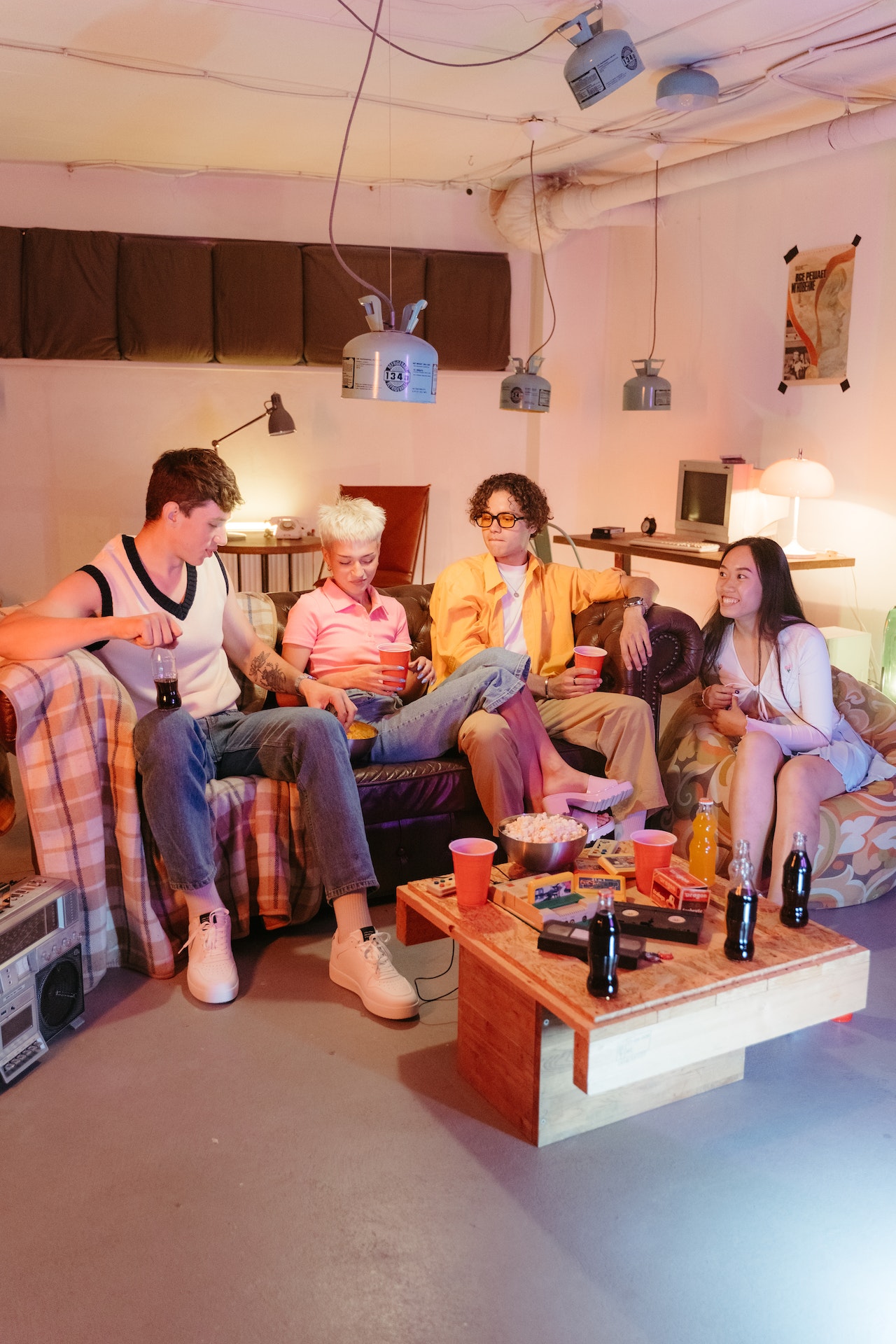
    When life wears you down, optimism improves your healthy outlook.

    How is it that some people seem to maintain a bright outlook in their daily life, including in times of difficulty? Is it naiveté or something else? Others say that their “realistic” outlook has served them well and they rely on it, but their realistic perspective can typically be dangerously pessimistic. And what’s so bad about pessimism? Nothing really, that is if you’re happy with your life. On the other hand, if you suffer from depression or anxiety, your pessimism may actually contribute to it, and be a symptom of it, to boot. If this is the case, you may wonder if there’s a way to develop a more upbeat way of thinking. Because thinking optimistically drives out negativity. And a depressed mind does tend to think negative thoughts. Optimism improves your healthy outlook.

    Ashley was 36, and had her share of bumps in the road. A single mom who’d weathered divorce, she had two teenaged children. The strain of working full time, getting the kids to the school bus on time in the morning, then coming home in the evening to supervise homework, cooking dinner, doing laundry, and talking through problems that came up, kept her on her toes.

    Stresses of life can overwhelm you but optimism improves your healthy outlook.

    Over time, the daily grind, stressors at work, the heartache of her divorce, and dealing with her ex regarding the children, seemed to drain her enthusiasm for living. She’d always been a realist, facing life’s difficulties as they came, and not with a dreamer’s outlook.

    She tried to cope with disappointments by reminding herself that everyone had problems, so what made her any different?

    But then, a major blow invaded their lives. Her ex was in a serious car accident, and her child support stopped. He was in the hospital for a month, then rehabilitation… and she had to find a way to get by. She took a second job at night and on weekends to pay the bills, which added enormous stress to her family. The kids had to fend for themselves for dinner, and be responsible about their homework without her supervision. They also had to do their own laundry. 

    Ashley hated being away so much. She felt desperate. The kids needed her. She checked their homework when she got home at night, and sent notes to their teachers to let them know the family was under an unusual strain for awhile.

    Unfortunately, she found herself venting as she got ready in the mornings, and during her commutes to work. She hated herself for marrying, for bringing innocent children into this mess, for not getting a better education so she could make enough to support her family with one job instead of two.

    The more she vented, the more she wanted to vent. Her anger expanded, her temper sharpened, and her tolerance for all that was required of her weakened. Before too long, she found herself slamming doors, shoving drawers, and snapping at the children. After each scene, she loathed herself. 

    It wasn’t her children’s fault she was so angry…or that she found herself and her family in this situation.

    Finally, she talked to her friend and co-worker, Ginny. Ginny was an optimistic person, and tended to shine a brighter light on life’s events to shed a more positive perspective.]

    When you don't think you can go any further, optimism improves your healthy outlook so you can live again.

    “Ashley, you need a break. It’s no wonder you’re wearing down. You’re working 7 days a week, without relief, and  your kids are raising themselves right now. It’s too much. But your outlook is just making everything worse

    “Somehow you’ve got to break the cycle. There are things in your life you can’t change, but there are things you can. And you can start with being your own best friend. You never talk to me the way you talk to yourself. You’ve got to find a way to bring some optimism into your thoughts. Optimism improves a healthy outlook.

    “If I’m struggling, you tell me how great I am, and how my situation is going to get better. You tell me I’m smart, and loving, and capable. You tell me to be patient with myself. But you only talk smack about yourself, Ash. You need to be your own best friend. The things you mumble to yourself when you’re frustrated sink in, and I daresay it works against you in your own mind.

    “Tell yourself, on purpose, the things you tell me when I’m struggling. Tell yourself how faithful you are, how devoted to your children you are. Remind yourself that this is a difficult time, but it’s temporary. Remind yourself that everything is going to be alright, and that you will come out of this on top. Make yourself introduce optimism…optimism improves a healthy outlook, and your need that right now.”

    Ashley was silent.

    She thought about what Ginny said. Her instinct was to argue and refute all of it, but she knew in her gut that Ginny was right.

    It was just that Ashley had never made the effort to talk to herself on purpose. And she’d never talked about things in a hopeful way. She just mumbled to herself about how things were…and quite honestly that was pretty negative. She just never thought about it all like this. This idea that optimism improves a healthy outlook was foreign to her. But she thought she should at least try it.

    Optimism improves your healthy outlook when realistic thinking has defeated you.

    I am capable… she said to herself.  

    It felt strange, sort of a bit contrived. Maybe even a little phony…? But she tried again.  I’m going to help my family get through this difficult time. And again: We’re going to come out of this ok.

    She thought deeper about her situation. I didn’t do anything to cause these problems. I married the children’s father in good faith. But life happens. And our marriage didn’t survive. But we are doing our best to pull together as a family and get through this. And we will. We’ll all learn from it, and we’ll be stronger as individuals and as a family as a result.

    Yes, that’s true…”. She said to herself. So she said out loud: “I’m going to be ok. My kids are going to be ok. I love my family and I’m what they need to get through hard times in life.” 

    The sound of her own voice was jarring.

    But she also realized that what she was saying seemed to be helping her feel better. Maybe even hopeful?

    She thanked Ginny for her patient encouragement, and told her she would think about everything she said. And she told her she really appreciated her friendship.

    Ginny also used the opportunity to tell Ashley about the depression her own husband had recently recovered from. She explained how pressure at work over years had led to a diagnosis of depression for him. She had watched him deteriorate emotionally and mentally over six months, until he was no longer coping…and was having a tough time performing at work. 

    Ginny's husband is resilient and joyful since his ketamine treatment.

    His boss had seen this happening, and spoke privately with him about the pressure he knew the man had been carrying. He told him about ketamine treatment, and about a psychiatrist who offered it in her office.

    As it turned out, following this treatment, her husband had gotten better and better, embracing challenges at work again, and his restored resilience had helped him function better at home and at work.

    Ginny just said that maybe that information could help Ashley, too.

    After 5 months, Ashley’s ex-husband was back at work and she started receiving child support again. He talked to her and thanked her for her forbearance during the months since his accident. He told her he had taken out a loan to repay her the support he missed during those months and would be sending her monthly payments with 5% interest until it was all reimbursed.

    This was wonderful news, and she quit her second job to be home with the kids again in the evenings and on weekends.

    Happily, her teens had learned to do laundry and cook simple meals during the interim, so she kept those responsibilities in place going forward. This allowed them to do things they enjoyed together as a family on weekends. It was a great reward for their added maturity.

    She also talked with them about the things she learned about pessimism, self hatred, self love, and optimism; and positive self talk became a frequent subject of conversation at home.

    Ketamine treatment and purposeful optimism improved the healthy outlook for Ashley and her family.

    The better Ashley felt, the more she wanted to learn about improving her frame of mind. She wanted to be equipped to build resilience through her ketamine treatment, combined with her newly developed skills of using optimism for her wellbeing. So she read books and blogs to learn more and develop her positive outlook. As it turned out, optimism had improved a healthy outlook in her and her family.

    Taking her life back turned out to be a combination of taking care of herself, supporting herself emotionally, mentally, and physically, feeding herself and her family nutritious meals rich in flavonoids and good fats, and low in carbs, and getting out and having fun together.

    What a life-changing year it had been.

    You can change your life and your outlook, too. Changing your mind to nurture your own brighter perspective can usher in better circumstances. Building an upbeat and hopeful inner life can result in your outer life flourishing.

    With optimism and IV ketamine treatment, joy springs up in your life.

    And if the stress of life has worn down your ability to function, ketamine treatment just might prove to be an important part of your solution.

    If you struggle with hopelessness, despair, feelings of failure… maybe self loathing… and nothing else has helped, call us.

    Let’s talk about whether you’re a candidate for ketamine treatment.

    Ketamine’s not for everyone, but it can be transformative for most, and just may open up a whole new level of wellness for you. When combined with an inner life that fosters healthy thoughts, as well as a diet and activity that foster wellbeing, it can transform your world.

    We want to help you find the best you possible.

    Lori Calabrese, M.D. is on the front end of the race to stop PTSD in its tracks using IV ketamine treatment.

    To the restoration of your best self,

  • Does Your Teen’s “Selective Hearing” Drive You Batty? There’s More To It…

    Does Your Teen’s “Selective Hearing” Drive You Batty? There’s More To It…

    Your teen's selective hearing turns to peers and away from parents to support independence.

    “Riley?  Riley… RILEYYYY!!”  “MOM, why are you YELLING?”  “Because you aren’t ANSWERING ME!!” Sound familiar? Does it seem like your teen has her ears stuffed with cotton?  What about when it’s her friends talking to her? They have her undivided attention, right? Your teen’s selective hearing can drive you bonkers…

    What is this?  Is it just rebellion? A breakdown of respect?

    It turns out there’s a neurobiological change that happens in your teen’s brain that results in their “selective” hearing. Before puberty, they’re hardwired to recognize their mother’s voice amidst other voices. They associated that voice with nourishment, as well as social and language learning. The sound of that familiar and important voice lights up multiple parts of the child’s brain.

    But all that changes at puberty.

    Your teen's selective hearing may make you feel ignored.

    Get this: A study conducted at Stanford University delved into this phenomenon to better understand it. Led by Daniel A. Abrams, Ph.D., and Vinod Menon, Ph.D., they set out to learn more. After discovering in previous years that children 12 years old and younger can recognize mom’s voice with a 97% accuracy, they wondered: what about older kids? They also saw that mom’s voice set in motion multiple brain areas. Functional brain imaging scans allowed researchers to visualize them.

    Brain regions like the reward centers, emotion processing areas, and the auditory cortex were activated. (The job of the auditory cortex is simply to process sound.) Of particular import were brain networks that give a person the ability to differentiate when information introduced is particularly worthy of attention. That’s the key.

    For an infant, the mother’s voice signals nourishment, comfort, language and social learning.

    These researchers set out to build on this previously discovered information. If an infant needs to focus primarily on mother’s voice for survival and development, what happens when a child reaches adolescence?

    Needs change. Survival depends on other needs being filled.

    In the new study, they compared responses to auditory tests of children under 13, to those 13-16. The latter group is in an age of transition, when a dependent child grows toward adulthood. To achieve that independence, his prowess at reaching out to others outside his family must be developed.

    Selective hearing develops around age 12-13.

    Because of that, he experiences a shift in who he’s drawn to focus on. (And he’s not even aware of it. Nature just flips the switch.) Researchers discovered that the process of becoming independent is initiated by a subconscious biological signal. This turns on a teen’s ability to connect socially outside his family. He becomes more and more attracted to the unfamiliar voices of potential friends and companions. He wants to be in their company and spend time together. As a result, he becomes socially skilled outside his family.

    As disrespectful as this “selective hearing” may seem, it’s actually a vital and normal part of teen growth and development, when everything else is normal.

    However, sometimes there are other circumstances that complicate the teen’s “selective” type of hearing. Adolescent depression is an example. When a teen is depressed, he may not feel much like responding, especially to someone in his family. That’s a symptom all its own and can complicate the neurobiological shift in focus a teen experiences toward those outside his family.

    The first step in communicating with your teen comes in recognizing that as much as he needs you until he’s ready to make his own home and take care of himself, he also needs to safely transition to that independence.

    That can be a painful process for both parent and teen. But if you, as parent, can recognize that his instincts to pull away are biologically based, you can better guide him patiently to take those steps toward independence, safely. Allowing his maturity to catch up with each new stride.

    The second step is to be informed and familiar with symptoms of psychiatric disorders that can seriously complicate the process. And if those symptoms emerge, you’ll be there to help him find the treatment that can make all the difference for him.

    For disorders like treatment resistant depression, bipolar depression, PTSD, social anxiety, panic attacks, and symptoms like suicidal thinking, IV ketamine treatment can restore, renew, and give him hope. It can stop suicidal thoughts in an afternoon. It can help your teen move forward with building his life, engaging with friends, and performing in school.

    These symptoms can interrupt your teen’s development, but ketamine can set him back on solid ground.

    If your teen exhibits symptoms beyond just selective hearing, or if you struggle with symptoms of your own, call us.

    Get the help your teen and your family need to enjoy resilience and balance.

    And you can get back to the “simple job” of patient, loving support and guidance as he grows into the future ahead for him.

    Lori Calabrese, M.D. is on the front end of the race to stop PTSD in its tracks using IV ketamine treatment.

    To the restoration of your best self,

  • Navigating COVID Delta and Omicron As the New Year Dawns To 2022

    Navigating COVID Delta and Omicron As the New Year Dawns To 2022

    We’ve been doing COVID’s version of life on this planet for close to 2 years. We’ve done what we’re told, but this coronavirus just keeps dumping more on us. When will this be over?

    About the time we think we’re pushing the delta variant back, who should step up to bat but omicron? We hope you’ve enjoyed Christmas and the winter holidays. Now as we look to the New Year, so many are asking, “When will it end?” How long must we continue wearing masks, testing, avoiding crowds, and getting boosters? Navigating COVID delta and omicron requires tenacity and determination going forward.

    As we move into 2022, we face a new highly contagious variant: omicron. For example, omicron, has caused a startling surge in cases in New York City… and is so contagious that it’s expected to become the dominant strain of COVID in just weeks, compared to delta’s timetable of taking months to do the same thing.

    One epidemiologist, Dr. Jay Verma, warns that if lightning speed adjustments aren’t made now, the danger of omicron taking over with record-breaking hospitalizations and death is irrefutable.

    And that’s the risk with navigating COVID delta and omicron.

    Every few months we seem to hear about another variant of COVID-19, and are given new instructions. 

    We’re tired of it. But even so, you can’t get millions of people to comply with new instructions all that quickly… People as a whole tend to resist change. At first, COVID gave symptoms like cough, shortness of breath, and fever. Now a “loud” symptom to watch for is a scratchy throat.

    So what do we do?  We get a scratchy throat and worry.  And worry.  We go for testing.  At any other time in our lives, a scratchy throat meant a cold or flu (or maybe just allergies), was starting. We knew what to do with it. But, a scratchy throat now means “get a COVID test.”

    And unlike the past symptom alarms, it also means it can get worse and worse if you haven’t been fully vaccinated. (Fully vaccinated used to mean two shots, but now it means two “plus a mRNA-based booster.”)

    Will it EVER Stop? Will COVID be with us forever?

    And, by the way, what on earth is an mRNA – based booster?  Well, specifically, It’s a booster supplied by Moderna or Pfizer.

    We’re at war.

    As to the question of whether the pandemic will ever end, there is no answer yet. There are experts who question whether we’ll ever see the end of COVID-19, and get back to normal. More experts suggest we should accept that we’re at war with this virus, and accept the adjustments that are inevitably part of wartime.

    We keep assembling our “antiCOVID troops” and so far that includes 3 vaccinations, masks, hand washing…and social distancing. (Been to UPS to ship gifts recently? The social distancing pushes people right out the door! This is December. And it’s cold out there…)

    Yes, we’re hoping for things to get better. But some experts believe these variants will keep reproducing ad infinitum. We’ll see. But what about in the meantime?

    It’s tough to make adjustments in war time.

    Meanwhile, we don’t want to isolate. We want to get out, mix with friends, gather for weddings, and we want to enjoy ourselves. 

    While we sympathize — we’re all in the same boat, right?—to keep our families well, to keep our children in school uninterrupted, we have to participate in these latest requirements put forth last Tuesday.

    We have to just do it.

    If we don’t, omicron is going to spread faster than we can imagine. And those without all three vaccinations (including a booster), are likely to be the ones who get seriously sick in the coming year. Boosters offer additional protection against delta and omicron. They’re a necessary part of our arsenal.

    We’re told that those with all three vaccinations are less likely to get seriously sick if they’re infected. However, those without all three vaccines are most at risk for critical illness and death if they’re infected.

    So navigating COVID delta and omicron requires a few pointers for preparing for the new year and with it, the growing wave of omicron. 

    Are you playing tug o’war?

    Now let’s talk about you, and how this may affect you. Stress happens when you want a situation to be different than it is. Picture the rope in a tug-of-war. When someone’s stationed at each end, the tension in the rope is tight. Now picture yourself at one end of the rope and the COVID war at the other end. 

    As long as you pull on your end of the rope, and COVID pulls on the other, with the necessity of masks, hand washing, and social distancing that you may resent, stress is the result for you. That rope is tight. Your stress heightens, and anxiety takes hold …and maybe even depression.  

    But if you let go of the rope by deciding to accept that you can’t change the situation—by complying with the adjustments you’re asked to make in this war—your rope goes slack, and your stress is relieved over this issue.

    Over-simplified? Maybe. But clear.

    You could just stop tugging.

    You might want to evaluate your approach to the next leg of the pandemic that lies before us in the new year, navigating COVID delta and omicron. Your peace and emotional balance is worth more than your resistance… don’t you think?  

    And …if your anxiety and depression, or your substance and alcohol use, are already bad—and you can’t change your mind or make decisions that improve your frame of mind—then you may need treatment.

    If you’ve taken other medications and treatments that haven’t helped, IV ketamine treatment may be just the thing to not only relieve the symptoms of stress, but actually help you achieve remission.

    Imagine having your resilience restored, your outlook on life brightened, the strength and resolve to build meaningful, healthy relationships, the creativity and motivation to excel in your job. And the peace, freedom, and hope to build a rewarding life.

    Just Imagine.

    Ketamine isn’t for everyone. But odds are that you’re squarely in the middle of those whose lives can be transformed by this extraordinary treatment

    At Innovative Psychiatry, we work with people every day struggling with these same symptoms. They come in bearing up under the burden of these symptoms, and complete treatment with a new lease on life, new hope, new freedom from symptoms.

    IV ketamine treatment can reverse symptoms of these disorders, replace them with joy, motivation, initiative, and confidence.

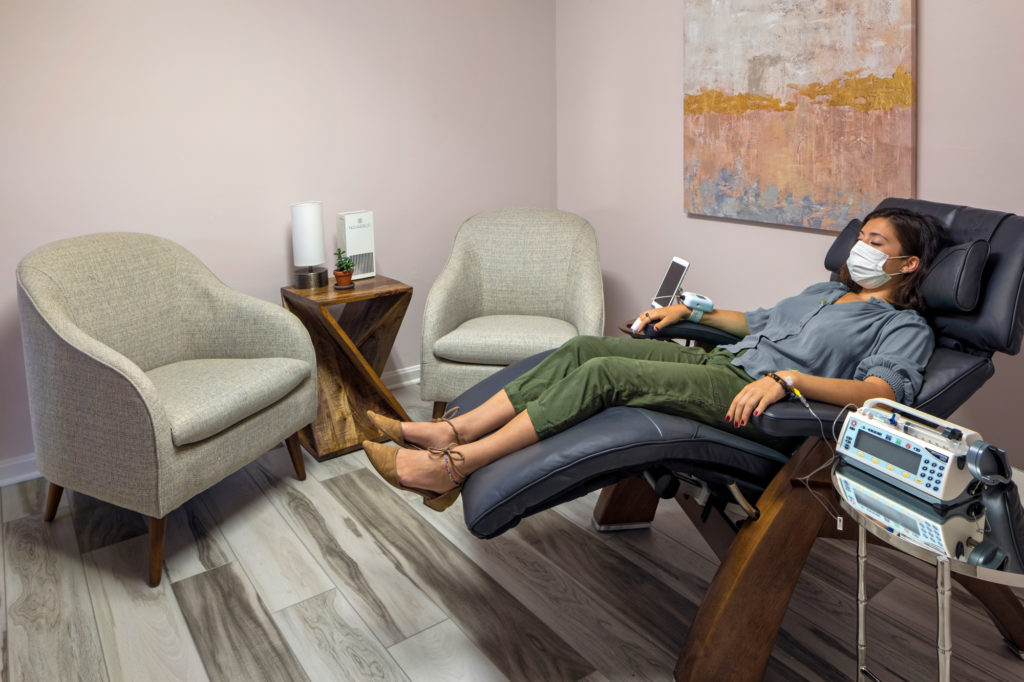
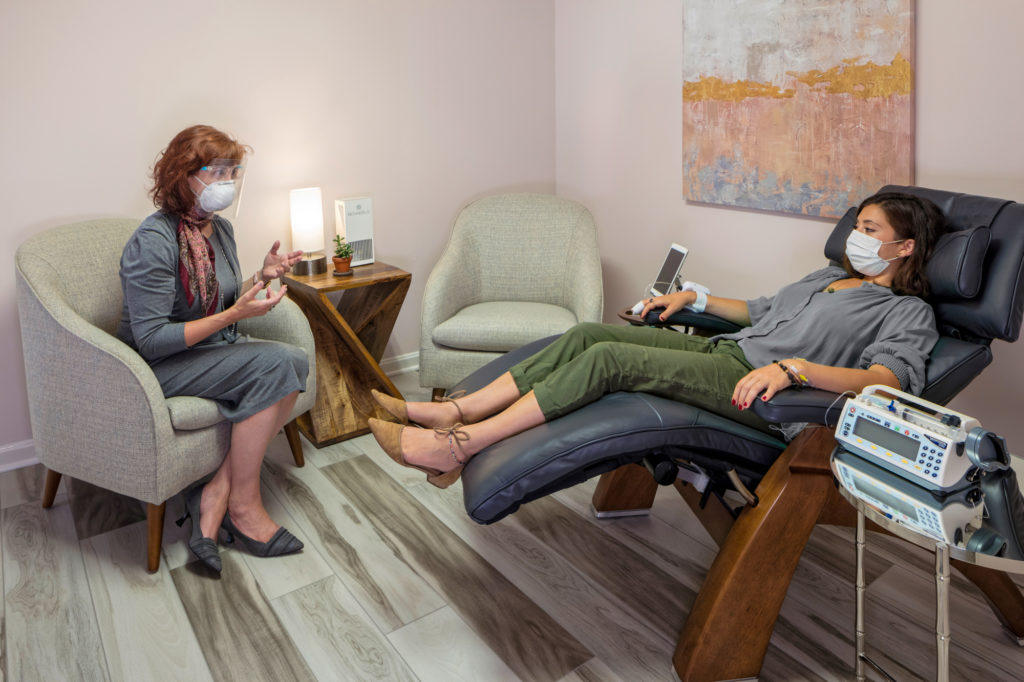
    When you come for ketamine treatment, you'll have a comfortable, quiet room to get the most from your treatment.

    When you come in, you’ll find a comfy, heated recliner you can settle into, and relax. A little white box on the table will be quietly running, destroying (not filtering, but destroying) viruses and bacteria in the air. This little miracle worker uses plasma cell technology to destroy the DNA in the microbes in the air, making the air pure for you to breathe. And it’s efficient. It destroys 99.99% of all microbes in the air, including viruses like flu and COVID with all its variants like omicron and delta.

    We go the extra mile (in every way) to ensure you’re safe from infection and able to focus on getting the most from your treatment.

    IF you suffer from these symptoms and nothing else is helping, call us.

    What else has you in a tug of war? Depression? Apathy? Anxiety that doesn’t let up? Trauma? PTSD symptoms? Bipolar depression? Suicidal thoughts? Or worries about suicidal thoughts in someone you love?

    We’re here to help. With all the tugs. With all the wars you may be fighting…

    Lori Calabrese, M.D. is on the front end of the race to stop PTSD in its tracks using IV ketamine treatment.

    To the restoration of your best self,

  • Your Painful Experiences Can Provide Hope for Others If You Share Them

    Your Painful Experiences Can Provide Hope for Others If You Share Them

    “…You know, I’ve been there. It was a tough time, and I have no doubt it’s tough for you. Here’s what I did to get through it …

    If you’ve been through a great deal of sadness, angst, difficulty, and struggle, it doesn’t need to go to waste. While you can’t go back and erase the experience as if it never happened, there really is something better. And that is to share with others who are hurting, showing them how you weathered the storm. Your painful experiences can provide hope for others.

    Have you ever been against the wall with no way out? Struggling to find answers and solutions?  You KNOW how alone you can feel at a time like that. The fact you feel so alone seems to make finding solutions that much more bleak.

    Eventually, you probably did find a solution, or else if you didn’t, you survived it and are now here to talk about it.

    Others are facing the struggle you were, and haven’t survived it yet. They need to have someone to talk to just as you wished you did. When you allow that, your painful experiences can provide hope for others … IF you’re willing to share them. It’s not all that easy to expose yourself, but you can do so much good if you’re willing.

    Take Melanie, for example.

    She struggled with depression, and her daughter is diagnosed with bipolar II disorder. Melanie has so many stories to tell… For instance, her depression was untreated at the time she married. Her husband, Jim, was in medical school, and was always gone, studying with his study group. It was a great weight on a new marriage, and she tried to overcome her despair.

    But she couldn’t shake the feeling that her husband had become apathetic about her as his wife. The pain she felt about it was more than she could bear. She’d close herself in a blanket closet and scream into the blankets so no one would hear her. It felt so hopeless. 

    Years later, after he finished his training, he continued to be extremely busy and away from home. A dark cloud pervaded her mind and outlook, and it seemed obvious it would never get better. She even considered suicide…

    As one year bled into another, children were born and growing up. Melanie settled into a complacent frame of mind. One that helped her to not expect more from her husband than he was giving to her and the family. She knew she had married a future physician, and that his time would be in demand. 

    But she didn’t know his time was never going to be his own. Or hers.

    Still, she hadn’t expected to be this lonely. But she had to put on her big girl panties and accept the life she was living. It took awhile of ups and downs. Getting up, falling down, and getting up again. But little by little she was able to find things to involve herself in to contribute.

    By the time the kids were in high school, he agreed to see a marriage counselor with her. A friend had suggested that she be cautious about blaming him, if she wanted good to come from the counseling. 

    Taking her friend’s advice, she approached couples’ counseling as an opportunity to find out what her husband needed, and to endeavor to contribute to meeting those needs. She hoped that he would want to know her needs, too, eventually.

    The couples’ therapy seemed to be progressing fine, until he admitted that with the distance between them he had considered pursuing women he worked with, but had never taken the first step.  He truly wondered if she was involved with someone else due to her distance from him.

    At a time like this, exposing your pain is harder than retaliating… but it’s still far preferable, and somehow Melanie sensed this.

    But, she was devastated. The idea that he had looked at any other woman besides her–really looked, seriously thought about it–just seemed to break some aspect of their marriage vows in her mind. She wondered how they could possibly go forward from here.

    With hard work, tears, and pain, the counselor and her husband helped her see that it was because of their vows that he had never acted on those thoughts. And that, if they were both willing, they were in a strategic place to begin a new level of commitment…. one that included time together, caring for each other in ways the other needed, and working every day to nurture love between them.

    Well, it worked.

    They planned a trip to Italy to study Melanie’s favorite artists while the kids were still in high school. After the youngest graduated, they took a second honeymoon to Denmark, to see where her husband’s grandparents had lived and to search out other relatives. 

    By the time Melanie was 50, she was enjoying life in ways she never had before. And she discovered she had much to share.

    While they were enjoying a cruise in Alaska, she met a young woman whose husband was in medical school. This new friend seemed to be having some struggles similar to those she and her husband had so many years ago.

    Since painful experiences can provide hope for others in pain, she decided to open up and talk about her own story to this young woman… and later to both of them together.

    So they met for dinner as a foursome and talked about the problems that plagued their early marriage. and how close they had come to losing each other. They talked about ambition and how sometimes physicians lose sight of their family’s needs because of the demands of their practice. They spoke about her problems with depression and how her unrest fed the depression, and prolonged it.

    It turned out that the younger couple wanted to have dinner with them every night for the rest of the cruise–yep!–and Melanie and her husband took them under their wing to warn them of the pitfalls ahead and how they would do it differently if they could do it over.

    And even now, years later, the two couples are still friends, and have helped each other through a number of ups and downs.

    When Melanie’s daughter was diagnosed with bipolar II disorder, she and her husband needed lots of support. They were doing all they knew to do to help their daughter, but her condition had a way of bringing them face to face with their own powerlessness.

    The young couple from the cruise stepped up to offer their support to Melanie’s and Jim’s daughter and to let her know she had friends who supported her no matter what. They wanted to give forward the kindness her parents had shown them — because painful experiences can provide hope if we share them.

    So beautiful. So generous.

    To say they lived happily ever after is a bit of an exaggeration… but what is happily ever after anyway, but loving and being loved, facing obstacles and tragedies together, and knowing you have each other’s back?

    (Wish we all had that, right?…. we sure need it.)

    At Innovative Psychiatry, we see patients with stories like Melanie’s. People whose lives and their frustration with it contributes to their depression and anxiety. We encourage them to face the truth about themselves and the other players in their life’s story and find out how to embrace their lives head-on and realistically. 

    Sometimes a change of circumstances can help a great deal.  Other times, treatment is needed. For severe depression and anxiety, PTSD, substance use, social anxiety, alcohol use, and suicidal thinking. If the symptoms are too severe to fix through counseling and talk therapy, or don’t respond to other treatments, there may be an opportunity for a whole different approach. IV ketamine treatment may help them manage circumstances more effectively.

    It’s amazing what solutions can be found when symptoms of a disorder lift.

    We treat people with IV ketamine for these specific disorders, and find the treatment extraordinarily helpful in most cases.

    When you come in for treatment, you’ll see we’ve taken every care care to create a space that is calm, serene, welcoming. It’s like a spa. Heated, leather recliners that adjust perfectly to let you really realx.

    When you come for ketamine treatment, you'll have a comfortable, quiet room to get the most from your treatment.

    And while you’re here, settling in, you’ll notice an elegant little white box on the table. That unassuming box is more valuable than you might have guessed. The word Novaerus graces the front of it, as it quietly works away. And what is it doing? Well, since we’re committed to always go the extra mile, those white boxes serve as investments in your health. Using plasma cell technology, they destroy viruses, including all the COVID variants, as well as bacteria and mold. When you’re in our offices, you’re protected from pathogens that would make you sick.

    Developed by NASA and the Department of Defense, these units were designed to destroy pathogens in the Space Station, and are more than sufficient for destroying those pathogens in our office. What’s important is that you’re safe from infection while you’re here, so you’re free of anxiety about flu or pandemic fallout. Focus on your treatment, and the insights you gain. It’s all part of the healing process.

    You’ve lived too long with the nagging wounds and symptoms that have installed obstacles all through your life. It can be so much better for you.

    If you have symptoms like we’ve described, and no other treatment has helped, call us.

    Step up to embrace your freedom and hope.

    Lori Calabrese, M.D. is on the front end of the race to stop PTSD in its tracks using IV ketamine treatment.

    To the restoration of your best self,

  • Thanksgiving’s About More than Food… Think About It…

    Thanksgiving’s About More than Food… Think About It…

    Thanksgiving isn’t just turkey and dressing. Shocking…right? But it’s not about the food.

    Thanksgiving's not just about food, but about gratitude, forgiveness, generosity, and kindness.

    It’s about being thankful. Appreciating every good thing in your life. Expressing your appreciation, recognizing you can’t do this life alone. Thanksgiving’s about more than food, and it’s worth the effort to focus on what gratitude is really about.

    You may feel alone in the world, but there’s an army of faithful workers who make your life function. From those who work for utilities companies, to those who farm your food and those grocers who sell it to you, the list goes on…and on.

    It’s an attitude of gratitude that empowers you to live in joy. Without gratitude, you may be left with dark resentment twisting into bitterness and anger deep in your gut. But it’s amazing how allowing yourself to choose gratefulness and appreciation can transform bitterness to joy. Watch what happens when Grace tries out an attitude of gratefulness:

    Grace walked along the sidewalk, grumbling to herself. She was a graphic designer for a marketing firm, and when the decorations went up at work…her outlook plunged. The holidays had arrived again, and she wasn’t happy about it.

    She felt so alone in the world, and holidays were a time for sharing with loved ones. Grace knew she’d burned her bridges, but how she wished her family and friends would forgive her failures and welcome her back into their gatherings.

    Grace knew why they ignored her. Because she had caused scenes at so many gatherings in the past. She either stomped about in a rage, or drank too much and ended up breaking something or making an utter fool of herself.

    She didn’t like herself very much because she knew others didn’t like her either.

    She’d been going to AA, and the leader talked about doing the next good thing. That you didn’t have to have all your life and future figured out…that was overwhelming to anyone. Just do the next good thing. Maybe load the dishwasher, or wash a load of clothes. Then, there was walking the dog. Or maybe making brownies for the elderly lady next door. If you keep doing the next good thing, it keeps your hands busy and your heart engaged. 

    And it’s easier to not drink.

    Even so, Grace could’t seem to stay focused on the next good thing. She was angry, resentful, bitter. Her other siblings were loved and admired by her parents. They were invited to every gathering.

    They were the crown jewels of the family…she was yesterday’s garbage.  At least that was the way it seemed to her.

    And when she had been invited to the family gathering, the feelings of inferiority she had led to her drinking before she arrived. Just to get the courage. But that’s what caused the problems.  

    Grace couldn’t seem to have a single drink of wine, beer, or “special” eggnog. She always wanted another. The more she drank the better she felt and the easier it was to blend with everyone.  

    At least, that’s how she felt.

    Because Thanksgiving’s about more than the food. It’s about a loving gathering of people. She wanted to fit in. Still, she always seemed to mess up.

    And then, they began ignoring her, resenting her behavior… and showing their disrespect of her

    By the time she felt woozy, she realized the family was offended, and she’d failed again.

    Now the family didn’t speak to her anymore. And she resigned herself to going to AA everyday to get through the holidays without a binge.

    At the meeting that day, someone talked about how important it is to come to peace with your feelings toward the people who have hurt you. To face that you’ve also hurt them. And to turn it over to your higher power while you practiced forgiving them and expressing gratitude for the power to forgive them.

    Grace hadn’t looked at it that way before … the power to forgive them. She didn’t have to live with the bitterness that was eating her alive.  She had the power to forgive them.

    Because again, Thanksgiving’s about more than food.

    After the meeting,  a friend told her about a treatment that can make it much easier to not drink, so she can put these forgiveness lessons into motion more effectively.

    She told Grace about IV ketamine treatment, and how it can remove the desire to drink.

    It sounded too good to be true, but her friend said she had received this treatment herself, and actually felt transformed. That she’d been sober for five months so far.

    She said the treatment actually makes you feel better.  That it hadn’t occurred to her that depression had fueled her drinking, but she didn’t feel depressed anymore and actually felt a lot of joy…and hope for the future.

    Grace decided then and there, she would find out how to get this treatment. She also decided she would adopt an attitude of gratefulness and give it a chance to change her angry bitterness.

    What a delight it was to realize that what she was learning from AA and her friend about IV ketamine treatment was creating new expectations for her holidays going forward. Thanksgiving’s about more than food now, and she was learning to live with freedom, gratitude, and sharing.

    So Grace expressed her gratitude for the people she met at AA, and all she was learning.  She was grateful that she had people with good hearts to spend her time with when she felt so alone. She was thankful she didn’t have to face the holiday season alone, and that there was a way to have gratitude…and peace…at a time when she had seethed with bitterness in the past.

    She realized she needed to ask forgiveness of her family for creating the scenes she’d made before, and she needed to make every effort, partake of every solution she could, to stop the drinking, and all that went with it.

    She called the psychiatry practice her friend had told her about to learn more about IV ketamine treatment. And she made an appointment.

    Three days later, she walked into the practice wearing her mask for the pandemic. The nurse led her to a long consultation with the doctor, and then later, a private treatment room and she settled into the comfy recliner.

    The treatment lasted about 45 minutes and she went back for a few more over the next couple of weeks. By the time she received her 4th treatment, she was feeling so much better. She felt hopeful. After she’d had 7 treatments, her desire to drink had become very weak.

    She found it was so much easier to forego offers of alcohol, and her hope kept growing.

    Grace decided to write a letter to her family right before Thanksgiving, so they could read it together. She told them she was receiving treatment for her drinking, and was also attending AA.  That she hoped they could all forgive her for the messes she had made during previous holidays. She was also hopeful that she’d be able to join them some year for holiday gathering—but she wasn’t pressing for that to happen

    She set about making a Thanksgiving meal for the AA group, and experienced such joy doing it for those who had nowhere to go and no family to share with. Grace was astounded at the joy flowing inside her as she chose gratitude to hold in her heart through the holiday season. 

    While she was sad to miss her family time, she was grateful she had the wherewithal to provide Thanksgiving dinner for her AA “family” and anticipated sharing her effort with excitement.

    She knew in her heart that the time would come when she’d be with her family again, but meanwhile, she was learning to bloom where she was planted.

    And she did bloom, didn’t she? Gratitude, forgiveness, and a generous heart combined with IV ketamine treatment transformed her holiday, didn’t it?

    And the same can happen for you.

    We talk about the infrastructure that helps you maintain the benefits of ketamine treatment, like forgiveness, joy, generosity, and kindness. Practicing gratitude and joy…practicing forgiveness, can pave a smooth pathway for ketamine treatment to take hold and continue working. 

    The stress of anger, bitterness, and resentment can make that road rough and difficult…and can weaken the benefits of your treatment.

    IV ketamine treatment is a safe and extraordinary treatment for depression, bipolar depression, PTSD, social anxiety, substance use disorder, alcohol use disorder and suicidal thoughts.  And while it’s treating and relieving one disorder on the list, it may also treat others you’re suffering with.

    Like with Grace’s friend, it relieved her depression along with her alcohol misuse.

    Ketamine turns on mRNA which switches DNA to ON, signaling the brain-derived-neurotrophic-factor to trigger dendrites and dendritic spines to flourish in the brain cells. The result is a bumper crop of connections to move signals around the brain fast.

    You feel energized, motivated, full of initiative, joy…and hope. You can excel in your job, build strong, healthy relationships, enjoy life!

    While ketamine is amazing, it’s not for everyone. It works best in those with severe treatment resistant disorders. For whatever reason, it seems to be at its best in those with severe illness, and sometimes has a less dramatic effect in those with milder symptoms. While we don’t understand why this remarkable treatment isn’t equally effective for everyone who needs it, the percentage of those for whom it’s not effective is small. For this reason, chances are that it could be transformative for you.

    At Innovative Psychiatry, we love seeing people like Grace — who’ve been unable to stop drinking or using substances — find the kind of relief ketamine can provide. To see their hopelessness changed to hope is extraordinary. and sometimes breathtaking.

    When you come for treatment, we’ll meet you at the door and lead you to your private treatment room where you can settle into your comfy recliner. Because we go the extra mile, you’ll see a white box on the table that’s busy destroying all the viruses (including COVID and its variants), bacteria, and molds that are in the air. We also have surfaces disinfected in a similar way. 

    We want you to rest in confidence, knowing you’re as safe as possible from infection while you’re with us… so you can focus on getting the most from your treatment.

    When you come for ketamine treatment, you'll have a comfortable, quiet room to get the most from your treatment.

    IV ketamine treatment can restore the synapses — nerve connections — in your brain to such thorough function that it’s as if they’ve been turbo boosted. In addition, ketamine tamps down the bursting cells in the lateral habenula so you can feel pleasure, experience joy, and rise above depression. Ketamine also moves the G cells off lipid rafts so they can get to work helping your thoughts and feelings to move around your brain.

    You deserve to feel better, to function at your best, and to share your hope with others. 

    Reach out and embrace gratitude. Revel in hope.

    If you suffer from the symptoms we’ve talked about here, call us.

    Hope, gratitude, and a rewarding life are yours for the taking.

    Lori Calabrese, M.D. is on the front end of the race to stop PTSD in its tracks using IV ketamine treatment.

    To the restoration of your best self,
  • Flavonoids: What they are, Where you get ’em, and Why they’re so Important for your Brain.

    Flavonoids: What they are, Where you get ’em, and Why they’re so Important for your Brain.

    Remember brain fog? Let’s talk about the role diet plays in your mental well-being, cognition, and health. We’ve discussed the microbiome, and nutrients that are good for your outlook. But let’s go deeper.

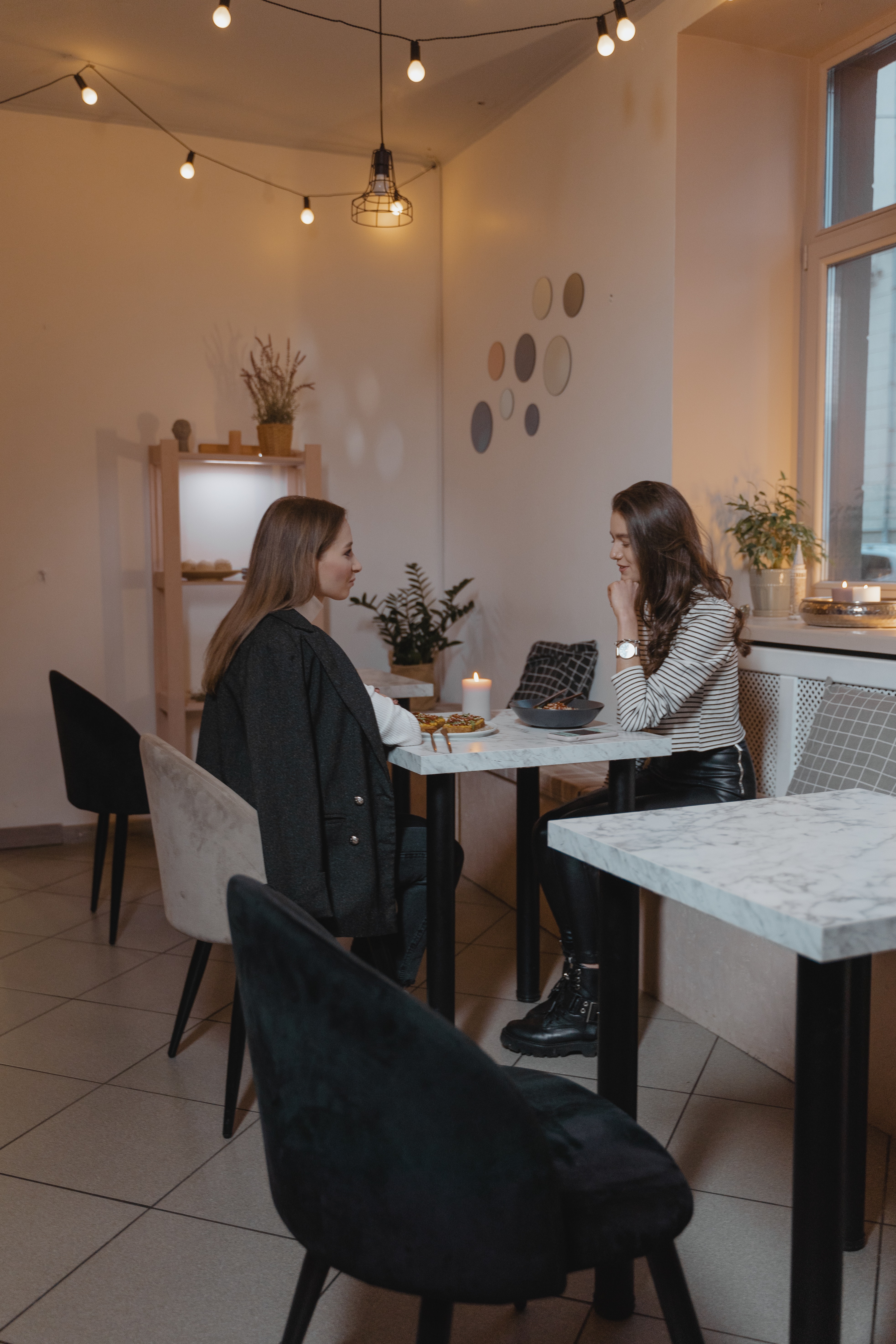
    Lady enjoying flavonoids in her green tea.

    It’s time to talk about flavonoids, since flavonoids impact your vulnerability to serious degenerative brain disorders. Like Alzheimer’s, for instance. Your outlook is important, but avoiding Alzheimer’s is vital. You’ve seen flavonoids in the news (and probably on the cereal box) right..? And you had to wonder about flavonoids: what they are…what they do, are they good or bad..? Let’s talk about them in more general terms today, then next week we can look more closely at the details like how they protect you from neurodegenerative disorders and more.

    Bottom Line — You Need ‘Em! Probably more than you’re getting. So let’s dig in.

    Flavonoids are natural compounds found in plants. They’re made from phenylalanine, and found predominantly in the green pigments in plants. And they have a long history of medical use in treating a variety of ailments. These compounds dominate therapeutic agents because they’re widely disseminated, incredibly diverse, and easy to isolate.

    Researchers who identify and work with flavonoids list over 7000 in medicinal plants, fruits, vegetables, and wines.

    Incredible, right?

    Flavonoids: What They Are… and Can They Be A Way To WARD OFF Dementia..?

    A paper published in 2019 in Frontiers in Aging Neuroscience, by researchers in Chile, Pakistan, Canada, and South Korea, provides a wonderful summary of the sources, chemistry, and importance of flavonoids — not only for improved health, but for protection from debilitating neurological disorders.

    Listen up.

    You’ve probably seen the word on food labels and in articles about diet and nutrition. But what does this word even mean??

    These are naturally occurring compounds that dominate the components in the green pigments of plants. Through the ages, we’ve used them to treat various maladies.

    Why? Because flavonoids are also the major building components for various drugs. (They’re used by people who want plants to be their medicine as well as scientists who develop innovative medicines.)

    Flavonoids have the ability to bind with various proteins in the body and to modify chemical transporters, enzymes, hormones, DNA… chelate heavy metals and scavenge free radicals. (At this point you should be saying, I want some of that!)

    Put another way, they boast strong antioxidant properties.

    In addition to all this, recent research determined that ingesting flavonoids as part of your diet significantly improves cognitive capabilities. It can inhibit the neurodegenerative processes that occur with Alzheimer’s disease (AD).

    Types of Flavonoids – They’re Extensive

    Now, there is a mountain of biochemistry to explain this, but suffice it to say, these little compounds can be life altering in the best sense. In terms of prevention, flavonoid-rich foods like cocoa, green tea, blueberries, citrus fruits, cereals, and red wine, can launch a multitude of beneficial processes for proteins that protect and manage nerve pathways, as well as multiply and strengthen different types of brain and nerve cells.  More flavonoid-rich foods include onions, leeks, broccoli, celery, parsley, tomatoes and soy products.

    Flavonoids: what they are and what they can do to prevent disease is important to learn.

    There are so many types of flavonoids that the list is too extensive for us here. But the classifications include isoflavones, neoflavonoids, flavones, flavonoids, flavonones, flavanonols, flavanols, anthocyanidins, chalcones — defined by their chemical structure.

    (I really was a Chemistry nerd at Wellesley College!)

    But what is pertinent for me now — and for you — is what happens when neurological development goes awry.

    What Causes Alzheimer’s disease?

    Like in the case of Alzheimer’s disease (AD). Alzheimer’s stands out as a neurodegenerative disorder characterized by gradual, progressive memory loss, cognitive dysfunction, errors and confusion in daily routine activities, and a decrease in intellectual learning. We’re terrified of it. AD affects increasing numbers of adults as they age beyond 65, to 75, 85 and older. Sometimes it starts in people in their 50’s! About 35.6 million people worldwide live with Alzheimer’s today.

    But here’s the rub. 

    We don’t really know what causes Alzheimer’s …yet.

    Still?

    I knowwww…..

    Even so, some important findings have been established — such as deficiency of cholinesterases, deposits of beta-amyloid plaques, hyperphosphorylation of tau proteins, and generation of oxidative stress. They’re all there.

    And there are only 5 drugs on the market approved for use in Alzheimer’s. Four of them are cholinesterase inhibitors. The fifth one is a glutamatergic system modifier called memantine.

    You ask about flavonoids: what are they...found in tomatoes, citrus, and chocolate, they protect your brain.

    I get that all this might be a bit much. But what I’m getting to is that there are no effective medicines for Alzheimer’s…. the drugs that are out there can maybe help slow the progression of it.

    (But you ask, compared to what? Compared to whom?)

    What about this? Since flavonoids are known to block beta-amyloid from forming plaques and tau clustering… since they scavenge free radicals and sequester metal ions… wouldn’t it be a great idea to use flavonoids in the design and development of anti-AD drugs?

    Because in addition to those who suffer dementia, people like you and me sometimes just need a little relief from brain fog. Maybe flavonoid rich foods can help with that …?

    Why? They not only help get rid of toxins, they also modulate inflammatory actions on neurons.

    Huge!

    It’s inflammatory factors that create dendritic pruning— the pruning that actually prunes you — and makes you lose energy, interests, enthusiasm, drive, resilience.

    We live in concert with our biology, and when our dendrites get pruned, our lives get pruned.

    So…what if we incorporated concentrated forms of flavonoids into our diets every day? 

    When you come for IV ketamine treatment, you'll have a private comfy room.

    At Innovative Psychiatry, we talk to our patients about eating “all the colors” in their diets. The reason is that those rich colors hold treasures for your cognition, balance, focus, and wellbeing. They can also help protect your brain cells from attack by neurodegenerative processes.

    If you find that you’ve lost your sense of mental and emotional balance, perhaps due to anxiety or depression, and you’re not feeling in command of your life, call us.

    Sometimes you need a boost to achieve a level of remission that empowers you to exercise, eat all your colors, and follow all the other guidelines for wellbeing.

    IV ketamine treatment can revitalize your outlook, jumpstart your creativity, and fill in the patience and hope you’ve been needing.

    And when you come for treatment, you’ll find a comfy private room with a zero gravity heated leather recliner to help you truly relax and get the most from your infusion. We have space age technology that destroys viruses and bacteria in the air and on our surfaces, to ensure that no matter what the Delta variant is up to, you’re breathing air that is 99.999% safe. (We LOVE that!)

    You deserve a jump start on reaching your own remission and joy

    And we’re here to help you experience that fresh footing.

    Let’s work together for your fresh start.

    Lori Calabrese, M.D. is on the front end of the race to stop PTSD in its tracks using IV ketamine treatment.

    To the restoration of your best self,

  • Clean Out the Cobwebs in Your Life and Go Forward with Joyful Resilience

    Clean Out the Cobwebs in Your Life and Go Forward with Joyful Resilience

    Engage with family and friends. Exercise and move. Get your juices flowing. Remember to take time for you…snuggle with your cat…play with your dog. Use your brain, exert yourself mentally and physically. Build yourself up to prepare for the world after the Delta variant subsides.

    After all this time with isolation and social distancing, it may have been simplest to just tumble onto the path of least resistance and watch TV, stay alone, play online games. But you need people. You need your pets. Relationships are a function of the human organism and they’re extremely important to your wellbeing. They help you to move forward with joyful resilience.

    We offered a blog about brain fog recently…. You know it’s not that surprising so many have developed brain fog in our current situation where we don’t talk as much about our challenges, seek the support of friends and family, or spend as much time outside as we did before.

    That Delta Variant Just Had to Jump in and Spoil Our Re-Entry 

    Wouldn’t you know it? Just as the pandemic seemed to be subsiding with the advent of so many people vaccinated, here comes the Delta variant stirring up more trouble.

    But let’s take heart. No one expects this variant to last that long. Use fresh air to your advantage. Meet with friends in the fresh air until the virus status shifts. We just need to be patient a little longer, get vaccinated, wear our masks, use hand sanitizer… and hold a steady position against an infection that’s been so widespread that our global response has resulted in changes in our culture like we have never seen before.

    Even though Delta is severe, contagious, and deadly for people without vaccinations, for most vaccinated people who contract it, it’s like a summer cold. So the easy solution? Just get vaccinated. Like we did with polio, we’re conquering this terrible virus and we’re close to getting life as we knew it, back. Or at least something close to it.

    Global Changes Altered What Looks Normal

    So yes, we’ve seen major changes in our lifestyle and surroundings. Social distancing patches on the floor in businesses. A huge part of the workforce has been working remotely (at home) for the last year. Restaurants only serving for drive through and pick up. Changes we never could have imagined, right? We never could have. And now it’s routine.

    And that’s ok, as long as those changes are helpful to us. Like remote working can be good — but don’t let it separate you from human interaction. Whether you meet with others online or behind a mask, do meet. Go forward with joyful resilience.

    Don’t let the changes caused by this pandemic make you forget how to engage. Don’t let your interactions become flippant, superficial, or without connection. 

    Volunteer in person with a mask or online and by phone without one. But do connect.

    You need to connect!

    And others need to connect with you. How do you dig deep and intertwine with others?  How do you get past listening passively, to empathizing, caring, and helping?  It’s interactions on this level that make your life richer and more resilient. 

    Which brings up another discussion. Managing relationships as they bloom again can be a little tricky, if you remember. So think about this:

    Rule of thumb: when their actions infringe on your values that keep you feeling safe, they’ve crossed a boundary.

    Dr. Henry Clout, who wrote the book Boundaries, said it like this:  Boundaries show you where someone else ends and you begin. You may have a parent or sibling or friend who feels they need you to prop them up. But if it happens too often, you begin to feel like you’re in a cell. That you’re controlled by someone other than yourself.

    Those boundaries can exist between you and your parents, you and your children, you and your friends, you and your relatives.

    Relationships, to be meaningful, need to be balanced. You need to know your decisions are yours, that you are not manipulated to make others comfortable. 

    And you need to know that when you feed those relationships, to strengthen your bonds of friendship, each person involved comes away with helpful, supportive, and happy feelings. 

    If your friendships aren’t providing this type of relaxed support, give and take, and respect, maybe you’ll be happier with better friends…you know?

    Because of boundaries, you get to choose what sort of friends you embrace. Then you can go forward with joyful resilience intact, feeling safe, and spreading yourself around to more people.

    So exercise that power.

    And you can push forward with joyful resilience to a life that fulfills you.

    Kick frustration to the curb.

    After 17 months in the throes of the pandemic, complicated by depression, anxiety, trauma, as well as increased alcohol use and substance use…you now can get down to the cobwebs and clean out your life of people and activities that aren’t helping you become stronger or more resilient, and replace them with people and activities that are.

    Move forward with joyful resilience when you exert your emotions and your energy.

    Has your use of alcohol or substances increased during the pandemic? Kick ’em to the curb with IV ketamine treatment.

    Another look at Alcohol and Substance Use

    You might ask yourself whether the incidence of alcohol use and substance use increased for you in the last 17 months.  If they didn’t, that’s great. But for many people, the boredom, the worry, the fear, the loneliness, all contributed to more use of alcohol and substances.

    And if that’s the case, take a close look at whether your friendships contribute to that or not.  Because engagement, fulfilling friendships, family relationships, and having healthy activities includes people who also have healthy lives. People who can do their part in keeping a relationship with you rewarding.

    Consider using this shift in the pandemic to conduct your own house cleaning in your life. Start fresh with a new outlook. You can be free to move forward with joyful resilience after IV ketamine treatment.

    And…if relationships don’t work, or substances get in the way, or depression makes it too hard to exercise, remember that IV ketamine treatment can possibly offer hope for for challenges like these, and help you get a firmer footing for what lies ahead.

    Innovative Psychiatry provides IV ketamine treatment for postpartum PTSD.

    A welcoming place for restoration when you need IV ketamine treatment.

    At Innovative Psychiatry, our patients sometimes express their fears about being able to function well once the pandemic ends. We encourage everyone to exert themselves in their lives… reach out to friends and family online or with masks, use safety protocols but engage with others. Even engage with your pets!

    When you come in for treatment, you’ll be led to a private, comfy room to help you get the most from your treatment. You’ll find the air in the offices is clean and pure, because we’ve installed technology that removes all viruses, bacteria, and mold from the air and surfaces in every room. Plasma cell technology, designed by NASA and the Department of Defense, works around the clock to keep the air and surfaces clean. We want you to relax, settle in for your treatment, and know that you’re safe from infection when you’re here.

    And if you find too many obstacles to your moving forward, like substances, social anxiety, trauma, depression symptoms, and you can’t seem to get around them…then call us.

    Let’s put our heads together and consider IV ketamine treatment and whether you might be a candidate. If so, we can make an appointment for you within just a few days to get your treatment started.

    Meanwhile, practice good relationship skills. And good living skills.

    And expect your life to get better and better and better. Joyful resilience better.

    Lori Calabrese, M.D. is on the front end of the race to stop PTSD in its tracks using IV ketamine treatment.

    To the restoration of your best self,

  • Wake up and Dream Your Most Heartfelt Dreams This Holiday Season

    Wake up and Dream Your Most Heartfelt Dreams This Holiday Season

    A dream is a wish your heart makes, when you’re fast asleep…

    At least that’s what Cinderella sang, in Disney’s classic animated movie. But… the kind of dreams you have when you’re fast asleep are actually different than the dreams your heart makes. This is the week of Christmas, which has filled children’s dreams with sugar plum fairies and their favorite toys for centuries. It’s also the Christmas of the pandemic of 2020, which has had its own impact on dreaming. We’re living history right now; yet we’re also building our futures. So maybe we should all wake up and dream to make our lives better.

    But you’re not Cinderella or her Prince Charming. You’re you…and you live in the real world. And in a global pandemic, no less.

    You may know Jaxon. He’s been struggling to get his feet on the ground as long as he can remember. He’s tried one job after another, year after year. But during the COVID pandemic with its lack of job security, he’s realized he’s sick and tired of feeling he has no control in his life. So he’s decided to wake up and dream. He plans to take his uncle up on the offer to pay for his training as an airline mechanic. Jaxon is good with engines, and has been studying jet engines.  So as soon as the pandemic eases, he’s going to enroll in training. It will improve his life, and the life of his family. And he’s chomping at the bit to realize his dream.

    Then there’s Cheryl. She’s always dreamed of furthering her education so she can be a nurse practitioner or Advanced Practice nurse. She’s already a registered nurse with a Bachelor of Science degree. It will be a long road to earn the Advance Practice status, or Nurse Practitioner degree. But she wants more out of life. So she decided to not give up but wake up and dream. And the exhaustion of the COVID pandemic has shown her she wants to specialize and do her best work, as well as improve her income for her family’s sake. Her dream is to specialize in pediatrics. So she has begun taking online courses now to move toward that goal.

    After 10 months of COVID-19 this year, many have become discouraged and lost the pluck it takes to visualize life beyond this. Dreams of what we want to accomplish, or create…or overcome.  These are the dreams that are a wish your heart makes….

    “I want to own my own business…”

    “My wish is for a promotion..”

    “Wishing for a spouse and family…”

    “Someday, I’ll have my own daycare center.”

    “My dream is to be a doctor.”

    “I’m hoping to manage my symptoms so I can feel others respect me and I can build a life I’m proud of.”

    A dream is a wish your heart makes… it’s something you don’t have now, but wish you did. Something that you’re willing to wait for…and to work for… that you believe would improve your life.

    Your dream is the shape and color scheme of your hope. Hope says, “Life will get better.”

    Your dream determines HOW it will get better.

    A book published this year called Dream Big, written by the New York Times best selling author Bob Goff, is so timely for the pandemic and the stress you may feel. Actually, it’s called Dream Big: Know What You Want, Why You Want It, and What You’re Going To Do About It.

    Of course, it may not be that easy to know what you want. What you wish. What your big dream is. But it’s worth it to dig deep and figure it out.  You have to figure out what that dream is to figure out if it’s worth it to you to fight for it. 

    And figuring out why it matters is a good step toward putting down roots for the future you dream of. 

    Then, you’ll start taking steps. Because that dream is your lifeblood and fuel.

    It’s timely that this book was published this year — 2020 because so many have been so overwhelmed by the status quo of the pandemic, world economics, and politics, that they’ve given up the fight.  Their energy is drained, along with their determination and strength to move forward.

    But right now, in 2020, is the time to DREAM.  Not hide, not go to sleep. And certainly not give up. But since COVID has seeped into daily life, it may seem to you that it’s too late to fight.

    But you can stretch beyond the limitations you see around you in the pandemic. Reach far. Seek new possibilities. Dream big.

    It’s never too late to fight for YOU.

    Think of the time you have now to reevaluate and restructure your life plan. This is the time to decide if you want your life to continue, business-as-usual, or do you want to find ways to enjoy more, love more, help more.

    Right now is the time to make those decisions. The ones that pursue your dreams.  Because as the COVID vaccinations reach more people and the presence of this illness is reduced, and society becomes able to move around again… you’ll need to already be in your stride with your new plans, your new life style.

    But there’s another facet. And that’s the fact that symptoms prevent some hard working people from pursuing their dreams. In fact, severe symptoms of anxiety or depression can muddle a person’s ability to even form his own dream.

    When that happens, that person may need the treatment to get his symptoms under control so he can move forward toward his own fulfilling life.

    Depression and bipolar depression are two more disorders that can interfere with your power to pursue your dream.  Social anxiety can do that, too.

    PTSD is an example of a disorder that can severely block progress toward the fulfillment of a dream…or even forming one to pursue.

    IV ketamine treatment has well documented evidence for treating and relieving the symptoms of these disorders. It turns on mRNA which switches DNA to “ON” to turbo boost brain-derived-neurotrophic-factors which go to work proliferating the synapses (connections between brain cells) throughout your brain.

    Your brain wakes up, and signals light up your brain as they carry messages everywhere at high speed. You feel joy, you feel creative, you have a renewed ability to invest in your work and healthy relationships. You can wake up and dream because you have hope.

    At Innovative Psychiatry, we’re gratified to watch people come alive with hope and purpose after IV ketamine treatment. We offer this remarkable life-changing treatment in a safe atmosphere where we’ve invested in VB Enviro Care’s plasma cell technology that removes all COVID virus particles (in fact all viruses, bacteria, and mold) from the air and the surfaces in our offices.

    I know it sounds a little sci-fi and actually… it is. This technology was developed at MIT and NASA to fight biological warfare, and it’s extremely effective. You’re safe here and you can be treated without fear.

    We understand that the pandemic has taken a toll both emotionally and physically on so many and we want to help you restore, and achieve remission from your symptoms. So you can wake up and dream, and invest in the life you want to live.

    Ketamine doesn’t work for everyone. No treatment or medicine does. But it is so effective for the majority of patients who suffer from severe symptoms. It can be extraordinarily effective when everything else has failed.

    If you suffer from symptoms of severe depression, bipolar depression, PTSD, social anxiety, alcohol use disorder, substance use disorder, or suicidal thinking, call us.

    You can schedule appointments for IV ketamine treatment without a long wait…usually just a few days.

    Start 2021 hopeful, and empowered to live your life as your best self.

    We’re here to help so you can live a truly rewarding life.

    Lori Calabrese, M.D. is on the front end of the race to stop PTSD in its tracks using IV ketamine treatment.

    To the restoration of your best self,

error: Content is protected !!