
 Your gut-brain axis is one of of the most effective systems you can use to transform your mood. Really? Really. We’ve been talking about that microbiome eco-system community that lives in your gut, and how it affects your mood, your wellness, and your mental health. The gut-brain axis is the pathway of communication between your gut microbiome and your brain — and it’s the system that makes all this possible.
The Gut-Brain Axis is Complex and Powerful
By definition, the gut-brain axis is the two-way communication that takes place between the GI tract and the central nervous system, using biochemical components. They include:
-
- neuroendocrine and neuroimmune systems
-
- hypothalamic–pituitary–adrenal axis (HPA axis)
-
- sympathetic and parasympathetic arms of the autonomic nervous system
-
- enteric nervous system (the nerves the run through the gut)
-
- vagus nerve
- gut microbiota
The Vagus Nerve Highway is the Gut-Brain Axis
How does all this stuff work? Your gut microbiome combines forces with the nervous system in your intestines, your hormone or endocrine system, your neuro-immune system, and your autonomic nervous system. Then it sends signals along the “highway” of the vagus nerve from gut to brain and back to carry communication signals between the two.
About that nervous system in your intestines… The GI tract has been called the “second brain” because of its intricate network of mesh-like neurons that determine its function. In addition, it fits the “second brain” picture because of the massive trillions of cells that live there in the form of synergistic bacteria – which provide 75% more DNA than the human body does. And, because of the signals that are delivered back and forth to create equilibrium in the body and mind.
The two-way communication between gut and brain occurs via hormonal and chemical signals like norepinephrine, serotonin, and tryptophan, as examples.
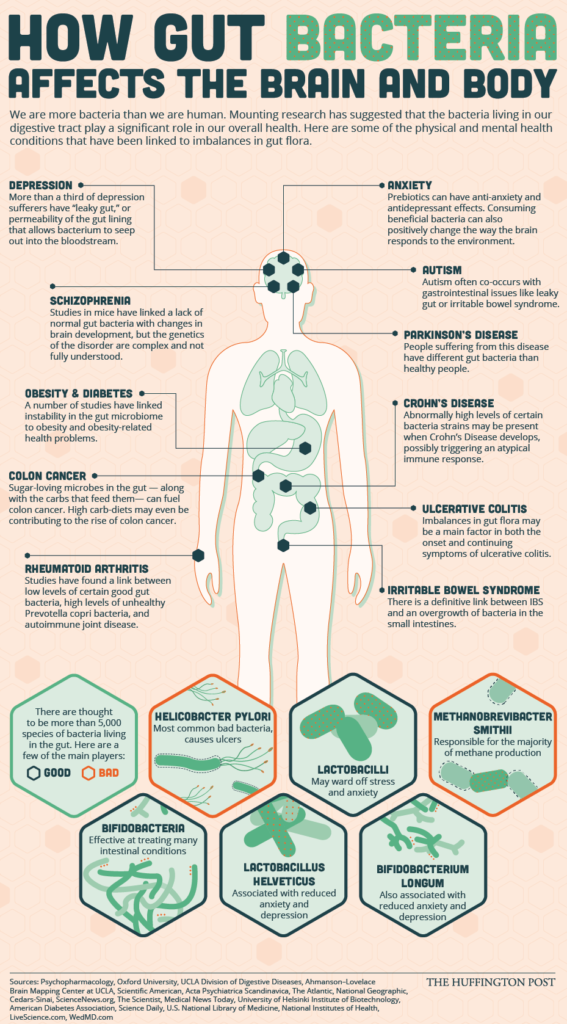
Gut Bacteria Can Undermine or Equip Your Mind and Emotions
And let’s be clear: the operations between these trillions of bacteria work to help your body accomplish much of what it does. They also have a significant impact on your frame of mind, your mental acuity, your inclination towards emotional distress – or toward recovery – and countless other feats.
The purpose of this article is simply to show you there’s a highway between your gut and brain. And if you want your brain to fare well, treat the microbiome in your gut well. On the other hand, neglect it, and there’ll be dear prices to pay.
Feed your gut with beneficial bacteria like lactobacillus acidophilus, and freight trucks will barrel up that highway to your brain bearing peace of mind, pain regulation, and stress management.
But neglect it – feed it fats and sugars and keep your life idle and sterile – and a freight train will charge for your brain bringing infection, depression, anxiety, and insecurity.
Studies Pull Back the Curtain
Myriad studies have been conducted to see what the results are from this communication, from gut peristalsis, to immunity from disease, and emotional and mental well-being.
In one study, mice born and raised in a germ-free environment had a very weak microbiome and showed a panicked reaction to difficulty. On the other hand, when certain beneficial bacteria from a broad and healthy microbiome were given to these mice, they reacted with a calm confidence in managing the high-risk situation.
Then in another, mice were injected with the fecal matter from people with depression. (Remember, the microbiome lives in the intestines so the fecal matter contains a sample of that microbiota). The normally carefree mice showed signs of depression and anxiety. When they were offered sweet water as a treat, they turned it down, and through a variety of tests displayed anxiety with more and more intensity. So in their case, their behavior dramatically changed when microbiota from a depressed person entered their body.
And in still another study, 22 healthy men were given a capsule that contained bifidobacterium longum for a month. Remember this one? – it reduces cortisol, the stress hormone. You won’t be that surprised to learn that…you guessed it…they reported feeling less stressed.
You Can Change Your Personal Outcomes
The point is, even though you have neurons throughout your body, nearly three-fourths of those outside your brain live in your intestines, and are connected to your brain by way of the vagus nerve “highway.”
It’s not that easy to just trade in your current microbiome for another. But, you can definitely influence the balance between beneficial probiotic organisms and those that cause dis-ease. In other words, those that make you sick or miserable on some level. They foster stress, depression, agitation, anxiety, and mental distress. To gain beneficial balance over the dis-ease, feed your microbiome probiotics and prebiotic foods.
Those prebiotic foods include non-digestible fiber that you find in raw foods like garlic, jicama, onions, leeks, and artichokes. They feed the  probiotics and improve your digestive processes. Remember, as silly as it may sound, probiotics eat prebiotics, so feed them well!
You can take that information and change what you do. Trade computer and TV time for gardening and working out. Eat healthy foods to reduce inflammation, improve immunity, improve mood, reduce your response to stress, and create an inner peace and tranquility you may not have imagined.
You Really Can Change Your Destiny Through Your Gut-Brain Axis
Meanwhile, as you work to improve your microbiome, we can improve your well-being from treatment-resistant depression and anxiety. If you need help gaining a brighter outlook, let’s talk. Because with the use of advanced psychiatric treatments like IV ketamine therapy, TMS treatment and medications, you can experience a real improvement, and still keep getting better through your improved microbiome. Contact me and let’s work through this together, step-by-step.
To your ever-developing best self,
Lori Calabrese, MD


 Coping with emotional pain may leave you feeling like life is passing you by. It can be difficult to remain focused on the present while you’re dealing with emotional pain, but it’s crucial to do your best to live for each day. If you’re having trouble staying present through emotional pain, here are some tips to help.

 Having a positive self image is essential to your well-being, but how do you get and keep it? Sadly, we can easily slip into feeling that who we are is not good enough, but that’s simply not true. We are all unique and we are all good enough! Here are some ways to cultivate a positive self-image and increase your self-esteem.