Category: Misuse and Dependence

Articles About Misuse and Dependence

Activities and Behaviors such as sex, shopping, surfing the internet, gambling, pain-seeking, cutting, viewing or attaining pornography, eating, playing video games, exercising…
Because misuse and dependence is complex, treatment can be complex also. In these articles about misuse and dependence, you’ll find posts about how ketamine can reduce or stop craving. You may still require counseling or psychotherapy to help you change your thinking patterns that lean toward misuse and dependent behaviors. Even so, it can be an immeasurable help to not have to fight cravings in the process.
The rule of thumb is to consider whether the use of a substance or a behavior interferes with your daily living. Does it affect your relationships at home, or socially? Does it interfere with your family life? How about your relationships with co-workers, as well as your work performance? Are you breaking any laws?

Denial is the first and perhaps hardest obstacle to overcome so you can seek treatment. When you evaluate the role this substance or behavior plays in your life, the objective opinion of a close friend or family member might add .some distance and perspective

IV ketamine treatment has emerged as a rapid and robust treatment for depression and other psychiatric disorders. Elias Dakwar, M.D., has done exceptional work demonstrating ketamine’s ability to stop craving in patients with dependencies.

Ketamine is proving to be a dynamic tool to break the craving cycle and to enhance psychotherapy by providing neuroplasticity to support change.
Since many dependencies are accompanied by depression, IV ketamine treatment can also slash the depression while reducing craving and enhancing psychotherapy.

Keep reading to learn more.

  • Rapid-Acting Antidepressants Help You Get Better FAST

    Rapid-Acting Antidepressants Help You Get Better FAST

    Rapid-acting antidepressants like ketamine can restore dark emptiness to joy.Smash Treatment-Resistant Mood Disorders with Rapid-Acting Antidepressants: Like Ketamine Treatment

    We’ve talked before about the line to the throne where ketamine treatment now reigns. Formulators in a lab were seeking to create a new anesthesia, and they thought they’d found one.  They called it Sernyl—but the unpredictable side effects, hallucinations, and sometimes violent behavior, drove the pharmaceutical company to take it off the shelves.

    It was not the kind of medicine doctors wanted to give their patients. Rapid-acting antidepressants help you get better fast. Through a series of leaks and improprieties however, it began to drift onto the streets as an illegal substance. The drug was phencyclidine, or PCP. Remember during the ’70’s and ’80’s? If so, you know the havoc that PCP – or angel dust – wreaked on the street crowd.

    Rapid-acting Antidepressants

    But those researchers weren’t willing to give up. They kept working and developed another safer anesthesia that had some of the dissociative properties Sernyl had, but less in side effects when used at therapeutic doses.

    They coined it a “dissociative anesthesia” and it became internationally popular in the surgical suite, in the emergency department, and in war zones around the world.

    That medicine was ketamine hydrochloride. And testing for treating depression began forty years after ketamine was developed and widely used as an anesthetic. 

    And we’re now seeing outstanding results, as in remission of depression and other mood disorders, in both research studies and the clinical setting.

    So it’s not surprising, is it? That ketamine treatment has become the role model for emerging new medicines that treat mood disorders. 

    Still, knowing what ketamine treatment can do for major depression, Rapid-acting antidepressants like ketamine treatment restore inner joy.postpartum depression, social anxiety, bipolar disorder, PTSD, OCD, and suicidal thinking isn’t enough for neuroscience researchers.

    They want more.

    If ketamine does great work treating patients with treatment-resistant mood disorders, there must be more medicines that will also work as well.

    Or so they hope..?

    Antidepressants that Work as Well as Ketamine Treatment

    So the search is on to find other rapid-acting antidepressants that eradicate major depression, PTSD, bipolar disorder, OCD, social anxiety… and stop suicidal thinking in four hours…or less, like ketamine treatment does.

    It’s a tall order, but it’s the quest of the hour.

    Conventional antidepressants improve symptoms by increasing levels of neurotransmitters like serotonin and norepinephrine.

    But it takes 9-12 weeks or more for someone to experience that improvement. So the loud and strong need for rapid-acting antidepressants shouts its demand for these solutions.

    Why? Because when patients with severe disorders are inundated Rapid-acting antidepressants like ketamine treatment bring relief to despair.with thoughts of suicide, if those thoughts can’t be eradicated quickly, the risk of death is high.

    In addition, lost work time as well as abandonment of  the medication regimen, is more likely to happen. In short?  Patient safety is compromised.

    Seeking Ketamine Wannabes

    So, there’s a strong focus on compounds that CAN bring fast relief. They include ketamine, scopolamine, and “mechanistically-related” compounds. We’ll get to those in another blog post.

    But researchers added some newer ones to this list in the surge to find more rapid-acting medicines.

    Compounds like:

    • Antagonists of metabotropic (mGlu) 2/3 receptors
    • Negative allosteric modulators of α5-containing GABA A receptors
    • Psychedelic compounds like psilocybin

    I know…I know… sounds like Greek.

    How about this?

    These compounds need to demonstrate their effectiveness in large groups of people. Most importantly, when medications fail to help people get better, these compounds need prove they can be effective.

    And…as always…the biggest challenge is finding ways to make the positive effects last.

    Rapid-Acting Antidepressants Help You Get Better Fast

    Since the use of ketamine for depression began, the path of discovery started when ketamine first caused remarkable relief for depressed patients, but that relief didn’t last more than a few days or a week.

    Researchers tested a variety of methods, and discovered an effective regimen was 6 ketamine infusions given every few days over 2 weeks.

    By doing this, it seemed to bypass the short term beneficial effects Rapid-acting antidepressants deliver relief and peace to those who suffer with treatment-resistant mood disorders.and instead prolong them. As we’ve moved forward in clinical practice, we’ve found that increasing the number of infusions in some cases can ensure remission. That is, if the initial six fell short of that goal. And we’ve worked with different infusion protocols over 2-3 weeks.

    Like all aspects of psychiatry, personalizing the treatment to fit the patient’s needs yields the most effective outcomes.

    Review of Literature Clarifies the Search

    A brand new review was published in Current Pharmaceutical Design July 29 focused on these specific compounds and their potential. The team, led by Jeffrey M. Witkin, reviewed the current literature on compounds that produce immediate symptom relief.

    They determined that a foremost system for producing rapid effects is by amplifying excitatory neurotransmission (by glutamate) while activating AMPA receptors.

    These drugs cause glutamate to flow out of the cells which provide what researchers hypothesize is a triggering mechanism to increase the amplitude of AMPA receptors. 

    They concluded that the focus in pharmaceuticals these days is rapid-acting antidepressant compounds like ketamine, scopolamine, and psilocybin. All of these need extensive study. And they pointed out that two medicines, rapastinel and esketamine are in the last stages of FDA trials.

    So let’s look again at the up and coming compounds and medicines in the running to potentially supply the benefits that ketamine is now providing:

    • Ketamine — still at the top
    • Esketamine (developed by Jansen, a division of Johnson & Johnson)
    • Rapastinel (developed by Allergan)

    It’s probably fair to say that in the next few years we’ll be bombardedRapid-acting antidepressants bring hope in darkness for those with treatment-resistant mood disorders. with many new medicines that operate quickly to treat mood disorders. But that’s the way of progress.

    Even though esketamine is only half the ketamine molecule — with its own challenges and problems — it’s generating anticipation despite the problems that can come with an intranasal medication.

    Keep in mind that FDA approval doesn’t guarantee a medicine is superior to others. But it’s a sign we’re in a new era of better, faster, and more effective medicines for psychiatric disorders.

    Ketamine still reigns supreme. And physicians will likely need to combine esketamine with traditional antidepressants and mood stabilizers. Even so, mood disorder treatment is better than it used to be. Remember before ketamine treatment?

    Back then, it was necessary to wait for weeks or months to enjoy the benefit of a medicine.

    Times are changing and suffering is declining.

    At Innovative Psychiatry, we’re celebrating the onward development of pharmaceutical progress, while also providing the outstanding benefits that ketamine can offer to our patients with treatment-resistant illnesses.

    Our specialty is treating disorders that haven’t gotten better with other treatments. We’re here because we want to help you experience life like you were meant to live it.

    Lori Calabrese, MD offers innovative psychiatric treatment like IV KetamineTo the restoration of your best self,

    Lori Calabrese, MD


  • True Recovery From Trauma and How to Find Restoration

    True Recovery From Trauma and How to Find Restoration


    True recovery from trauma happens when you know what you've learned from it, and you become calm when you think about it.Trauma: Don’t Beat Yourself Up – Allow Your Loved Ones to Lift You UP

    Have you been through something traumatic …? Maybe you’re a combat veteran, a first responder, or a victim of severe domestic abuse. It might have been a car wreck, or the unexpected sudden loss of someone you love. Fixed beliefs you form about that traumatic experience can insulate you from working through the scars you feel. If you tell yourself you “shouldn’t” be reacting to the incident, it keeps sitting deep inside you…haunting…but not healing.

    Truth be told, you were traumatized. By rape. Infidelity. Fire. Hurricane.

    What matters is that it traumatized you.

    No one but you knows what has shaken you to your core. And continues to keep you shaken. But no one needs to. This was your experience. And YOU need to heal.

    People are individuals and don’t react the same to the same stimulus. One combat veteran finishes his tour and goes back home, gets a job, and proceeds to build his “after-combat life.”

    It’s not that he’s not shaken. But his reaction to all that happened True recovery from trauma requires patience and sometimes counseling.may not have shattered him like the next guy. People go through divorce. One ex-wife gets thoroughly angry and surges forward like a steam engine to overcome the heartbreak she feels about her husband’s infidelity. But another one may be so shattered, so disillusioned she can’t work, can’t function, and trembles or vomits when she sees her errant ex-husband or drives by their favorite restaurant.

    Sometimes It’s Appropriate to Let Yourself Feel Loss

    But then, there’s another reaction. This is you if you’re the abandoned spouse who’s so empathic toward others and their pain that when you’re in pain you just try to ignore your sorrow when you see others who seem to be suffering more.

    Sadly, you validate the pain and sorrow of others, and dismiss your own. The result is that you can’t validate your own grief like you would for someone else to help them heal. Sound familiar…?

    Hey, Loss is Traumatic: It’s Not a Competition

    If a woman loses her husband in a car wreck, and watched him die, True recovery from trauma can be experienced with the right support and treatment.she has reason to be heartbroken and deeply shaken. The fact that another woman lost her infant child in a sweeping illness does not trump the widow’s pain.

    Both woman have lost a treasured loved one through horrifying circumstances. Both women felt helpless. There is no measuring stick to compare the loss of a husband with loss of a child. Both losses are terrible, and life-altering. In both cases, the women hurt terribly. Both were traumatic.

    And both women need support, kindness, a listening ear, and patience. Both may certainly need counseling at some point to help them restore their desire to live and go forward. They’re not in any sort of contest with each other.

    In fact, they’re each faced with shock and grief. And people do have to find their way through these very difficult times of life. Often they come through such times as a natural process. Other times it requires treatment.

    But either way, the loss is devastating. And each person who suffers terrible loss is justified to feel traumatized…to grieve.  To be supported. And to recover.

    Let’s look at another perspective.

    When a Traumatized Person Who’s Evaluated For PTSD, Is Not Given that Diagnosis…

    Does it mean he or she wasn’t traumatized…? Or that the shock or pain of it wasn’t that serious? 

    NO.

    There are certain criteria required for a PTSD diagnosis. Every True recovery from trauma is healing from the terrifying memory of the event.person is different and responds to painful or traumatic experiences individually. Your pain, loss, grief, and trauma are real and valid.

    Don’t let a label or diagnosis invalidate what you’re going through.

    Some people, after a deeply traumatic experience, are actually diagnosed with PTSD. Most aren’t. What’s more, there can be other diagnoses after you endure something like this. If it’s not PTSD, it may be depression, or it might be panic disorder, or substance abuse, or an eating disorder. 

    Or…it might be that you’re sorting through all the complicated effects of grief, shock, and pain that can accompany a traumatic event or experience. To achieve true recovery from trauma requires that you be honest with yourself, as well as patient. 

    Let’s set labels aside.

    If you’re suffering, that’s all anyone needs to know. And your suffering is valid. As time goes by, after a few years, if you’re still suffering the same symptoms you suffered immediately after the event…or even during the event …. then it might be time to see a psychiatrist to find out how to hTrue recovery from trauma comes when you can finally find peace with it.elp you move forward.

    Because a life-altering event isn’t something you just get over. It’s a part of who you become…every major life event is. But if the way you feel about it is preventing you from living your life and productively contributing to your job or hobbies you enjoy, it may be that an intervention can help you get your life back.

    True Recovery From Trauma

    Mental and emotional health isn’t defined by a lack of difficulty or upheaval, but by the skills you learn as you live to cope and recover from those challenges and difficulties that happen.

    Resilience … takes time to develop.

    And…even if your ability to cope needs a little nudge or a leg-up, you’re still learning and building your life skills. And you’ll continue.

    The Secret of the Phoenix

    There will be fires and wars in life. Betrayals and shocks. But if your goal is to learn to rise True recovery from trauma like the terror of a fire can be achieved when you accept the truth about the fear you experienced and the reality of now.from the ashes, you’ll likely gain strength and resilience through the processes you endure, and the storms you weather.

    Even so, if you find that the results of trauma in your life have interfered dramatically in your ability to move forward — whether you have PTSD, general anxiety disorder, panic disorder, severe depression, bipolar disorder, substance use disorder, and especially if you have suicidal thoughts — call us.

    At Innovative Psychiatry we specialize in helping people who haven’t gotten better with other treatments.

    And the most powerful tool we’ve found among the novel, advanced treatments we offer is ketamine treatment. Sometimes in the process of grief, or in processing trauma, you can get sort of stuck, unable to progress forward into a healthier place. Ketamine treatment has proven over 50 years its safety with adults and children.

    The extraordinary actions of ketamine treatment can rebuild the structures in your brain that stress and trauma break down. It’s like it True recovery from trauma leaves you at peace and able to enjoy daily living.restores your tool box so you can rebuild your life. And it can be a huge help in your true recovery from trauma.

    Learn about how to choose the best ketamine clinic, or best psychiatrist who offers ketamine treatment,  and be your own best advocate.  You deserve to live well and enjoy a restored life.     

    Lori Calabrese, MD offers innovative psychiatric treatment like IV KetamineTo the restoration of your best self,

    Lori Calabrese, MD


  • Outrageous Behavior: Mood or Personality??

    Outrageous Behavior: Mood or Personality??

    Outrageous behavior mood or personality? Ketamine can heal mood disorders.Outrageous Behavior: Mood or Personality Disorder?

    You met her at your friend’s house, and you’ve been dating a few months… Then you notice a blouse in her purse with price tags… no receipt.  What???

    Did she steal this stuff? You really like her, but ….  theft?  What the heck is going on…?

    When you ask her about it, she tells you she borrowed the top from a friend for your date on Friday.

    Hmmmm…

    A week later you notice the blouse is hanging in her closet.  Is she going to return it?

    She’s been a little on edge lately… could it be guilt?  But you hate to rock the boat because the nights are so HOT lately…

    Then, another shock. She borrows your credit card to put gas in her car…(which seems off)…and you discover she spent nearly a thousand dollars on dinner with “friends!”

    Outrageous Behavior: Mood or Personality…?

    Confrontation time. Is this amazing and beautiful woman a scammer? A con artist? Is there any other explanation?

    Her response is to lash out, scream expletives, and take off in her car. She returns in a couple hours and she’s been crying. She tells you she doesn’t know what got into her, or why she did any of it. That she really likes you and wants you to respect her – and trust her.  That sometimes she loses her perspective and just does things she can’t explain.

    After a long and tearful discussion, you learn that she did shoplift the blouse. She won’t take it Outrageous behavior: mood or personality?back to the store, or pay for it— too risky. She could get arrested. But she’s got a better idea, she says: she’ll give it away. Donate it. And the next thing you wonder is… if you’re in over your head…

    Scammer? …or maybe bipolar disorder..?

    So is she messed up?  Is she just someone who gets off breaking the law? or is there another explanation?

    To find out, she needs to put her trust in a skilled and experienced psychiatrist.

    good one, who will tease apart her symptoms, their causes, and work to bring her disordered mind to order and peace.

    It could possibly be that she’s fundamentally a rule-breaker. Someone who doesn’t think they apply to her–and doesn’t think what she’s done is a big deal. On the other hand, since she seems to care a great deal, you should pause. Ans she should be evaluated.

    Untreated bipolar disorder can cause all kinds of outrageous behaviors along with the sorrow and remorse

    Is She Hysterical or Just Seeking Attention…?.

    Sometimes, outrageous behavior can be a source of embarrassment to those who love you.

    Take Jason, the manager of the cell phone shop in town. You have no idea what he deals with until one day a glamorous woman walks into the shop crying, “Jasie, Jasie…pleeease I need your help!!  There’s a spider in the car!!”

    You can see Jason is embarrassed.  He tells her he’ll be able to break away in a minute after he rings up this customer.

    “But Jasie!”  She’s all a-flutter, breathless, in a panic.  She takes off her beautiful shoe and Outrageous Behavior: Mood or Personality?holds her tan, pedicured little foot up to show him. “See that dot?  I think it bit me!!” And she sobs and sobs big tears that splash on her cheeks… 

    You can see Jason has his hands full. So, you gesture for him to go ahead and tend to her…it’s ok…you don’t mind waiting. He takes her to the back and her sobs get louder. “I was at home, all alooone…. So I got in the car to go see Celia, and suddenly I saw that spider!!  I was terrified Jasie!  I didn’t know what to do!!!”

    Unbelievable.

    Jason tells her under his breath that her foot looks like it will be fine, and promises to take her to dinner after work.  She goes out the door smiling ear to ear and tells him to call her at Celia’s.  Her bracelets jingle as she waves.

    You Can Love Them… But Do Get Them Help

    You really feel for Jason. He was clearly embarrassed for his customers to get this glimpse into his private life. You wonder how on earth he stays with such a drama queen. You know you couldn’t take it.

    He smiles half-heartedly and rings up your purchase. Then apologizes for the scene. He quietly explains she’s had some serious blows lately and she’s been upset a lot by a series of little things.  “I guess she’s just having a bad day…” he quipped.

    So what on earth is the story with this lady? Is she like this all the time? Is this anxiety or drama? How can you tell the difference?Outrageous Behavior: Mood or Personality?
    Once again, her story needs to be teased apart, and a deeper history collected. It’s possible that the “blows” Jason referred to were multiple deaths in the family, betrayal by her best friend, combined with a lost pet, or some other major crisis.

    People do sometimes reach the “end of their rope” and find it hard to cope with the most minor thing.

    When that happens they may exhibit signs of depression or anxiety, which can be treated … to help them get their footing again.

    But it’s important to know the full picture. Was she always a drama queen? Or did she have a history of coping well until just recently…?  Enduring traits can suggest an underlying personality structure that just seems to get more and more fixed and unyielding as a person gets older.

    Outrageous Behavior – Mood or Personality?

    Meanwhile, your boss’s secretary is silently miserable. She’s married to a guy who acts superior to everyone. He boasts all the time and makes degrading comments to waiters at restaurants or when he’s buying something in a store. 

    Then word gets out that he’s having an affair with her next-door neighbor. Another affair.Outrageous Behavior: Mood or Personality? After all the I’m sorry’s and all the lies. After all the promises. She’s devastated.

    What is the matter with someone like him? Is he just a total jerk?

    Maybe he is. I know you may wish you could give him a swift kick, but there’s likely more to the story.

    On the one hand, he could be a narcissist. But to find out would require some in-depth information gathering to figure that out. Still, there are other possibilities, too.

    Has he suffered a job loss? Maybe he feels betrayed by a layoff right in the middle of his career. He may be depressed if something like that is the case. It’s still not an excuse for making his family miserable.

    Nor is it an excuse for infidelity. But, sometimes people take that road when they’re down on themselves. In fact, sometimes people do all sorts of destructive things when they feel bad, rather than seek help.

    Still, sometimes depression shows up in men by their anger, irritability, and short temper. If it’s depression, it can be treated. And getting the depression successfully treated may help him set things right again in his life.

    Miss Jekyll or Mrs. Hyde…

    The romance you’d always dreamed of. Finally, you’d met the most interesting and charming woman. She was everything you’d hoped to find: beautiful, fun, a hilarious sense of humor, always with a twinkle in her eye… and a wildcat in bed.

    She was so natural in a crowd and loved to entertain. She seemed like the ideal companion, Outrageous Behavior mood or personality?lover, and partner. You felt so lucky.

    Oh, there were little moments while you were dating that caught you by surprise, sure, where she seemed to react to a small thing you did or said. Moments that seemed to come out of nowhere… but the next time you talked, all was forgotten.

    Her charm was addictive…and made you feel like a million bucks.

    But several months later, everything seemed to change. She wasn’t so pleasant when you were alone. Sometimes you felt like she drank too much. And when she did, she wanted to do more and more risky things. She said you just didn’t know how to have fun.

    The next day she stormed into her job and slammed her keys on her boss’s desk, shouting, “I QUIT!!”

    When she got home and told you the story… well, you didn’t say a word. You didn’t dare.

    Then, one night, she stormed out of the house. Again. You got in the car to find her… and when you spotted her she was walking in the dark…and agreed to get in the car. But, as soon as you asked what was going on, she screamed she was going to kill herself and threw open the car door as you were flying down the highway.

    You were so relieved to park in the driveway. So much drama.

    The next week she tells you she’s having an affair with her optometrist. That you just weren’t spending enough time with her.

    What happened…?

    You’re friends tell you she’s crazy and you should pack your stuff and leave no forwarding address. You think there’s more to it. You see her when she’s sweet, thoughtful, caring, nurturing… she can be a wonderful person.

    But this is scary.

    What do you do??

    Once again, there can be a handful of explanations. Some are more hopeful than others.

    This is a good time to get an insightful psychiatrist involved. Because she may just be a brat who never learned to be accountable for her behavior. However, that’s probably not the most likely explanation.

    People with bipolar disorder sometimes have these outrageous behaviors, but when they’re nooutrageoust manic, they can be deep thinking, insightful, considerate people.

    People with borderline personality disorder can sometimes appear like this.

    Even people with substance abuse disorders can show these symptoms.

    You’re right to not make a snap judgment. As to what you should do, that’s another matter. If she has a psychiatric mood disorder, she can be treated and go on to live a fulfilling life.  But you may want to see a counselor you trust, to help you navigate this relationship.

    With counseling, you can learn how to be a therapeutic presence in her life, while taking good care of yourself. With counseling, you may also determine this relationship is not the best for you or for her. But follow your instincts and get support for both of you in the interim.

    You’re not alone.

    So many, many stories. So many lives in disarray. Outrageous behavior rings the gong.  It makes everything stop–or it should make everything stop. Because so often it damages the lives of everyone it touches. Sometimes it’s personality, plain and simple and enduring. (Which is really hard to take.)

    But so often, outrageous behavior is the bellwether of damaged or disordered brain functioning. Sometimes, the ones with outrageous behaviors are likely damaged (by genetic factors, environment, concussions, illnesses, substances–you name it) and unable to function in a normal, healthy way. So they behave in ways that cause damage to others and to their own overall lives.

    In cases like these, the first step is to withhold judgment, as tempting as it is to judge and label. How often have you heard that you don’t know someone’s story until you walk a mile in their shoes?

    When you see behaviors like these, you may be seeing symptoms of a disorder, rather than someone who’s deliberately choosing to be a brat. Deep down, it’s the desire of most of us to enjoy the respect of those around us. Most of us restrain our reactions to maintain that respect. But there are those who just can’t.

    Rule of thumb: If it looks like bad behavior, check it out.

    Ask an expert. Not your friends. Not a Facebook group. Because you might be mistaking a terrible mood or anxiety disorder as someone’s personality — or personality disorder. And that same person just might behave “respectably” and with constraint if their disorder were effectively treated. This is where shame lives. This is where stigma comes in.

    Let’s take a breath before we judge. Let’s stop the stigma.

    If you’ve experienced some of these behaviors and you secretly carry your shame and wonder what’s wrong, or if youOutrageous Behavior Mood or Personality? see outrageous behaviors in someone you love, reach out. Innovative Psychiatry offers novel and advanced treatment for psychiatric mood disorders, including IV ketamine infusions — one of the most extraordinarily effective treatments in psychiatry. It can give you your life back.

    We want to see you well and are eager to work with you to determine what will give you the best results.

    Call or schedule an appointment. You can have control over your impulses, and build strong relationships in your home and your work.

    Lori Calabrese, MD offers innovative psychiatric treatment like IV KetamineTo the release of your best self,

    Lori Calabrese, M.D.


  • International Conference on Ketamine for Psychiatric Disorders 2018

    International Conference on Ketamine for Psychiatric Disorders 2018

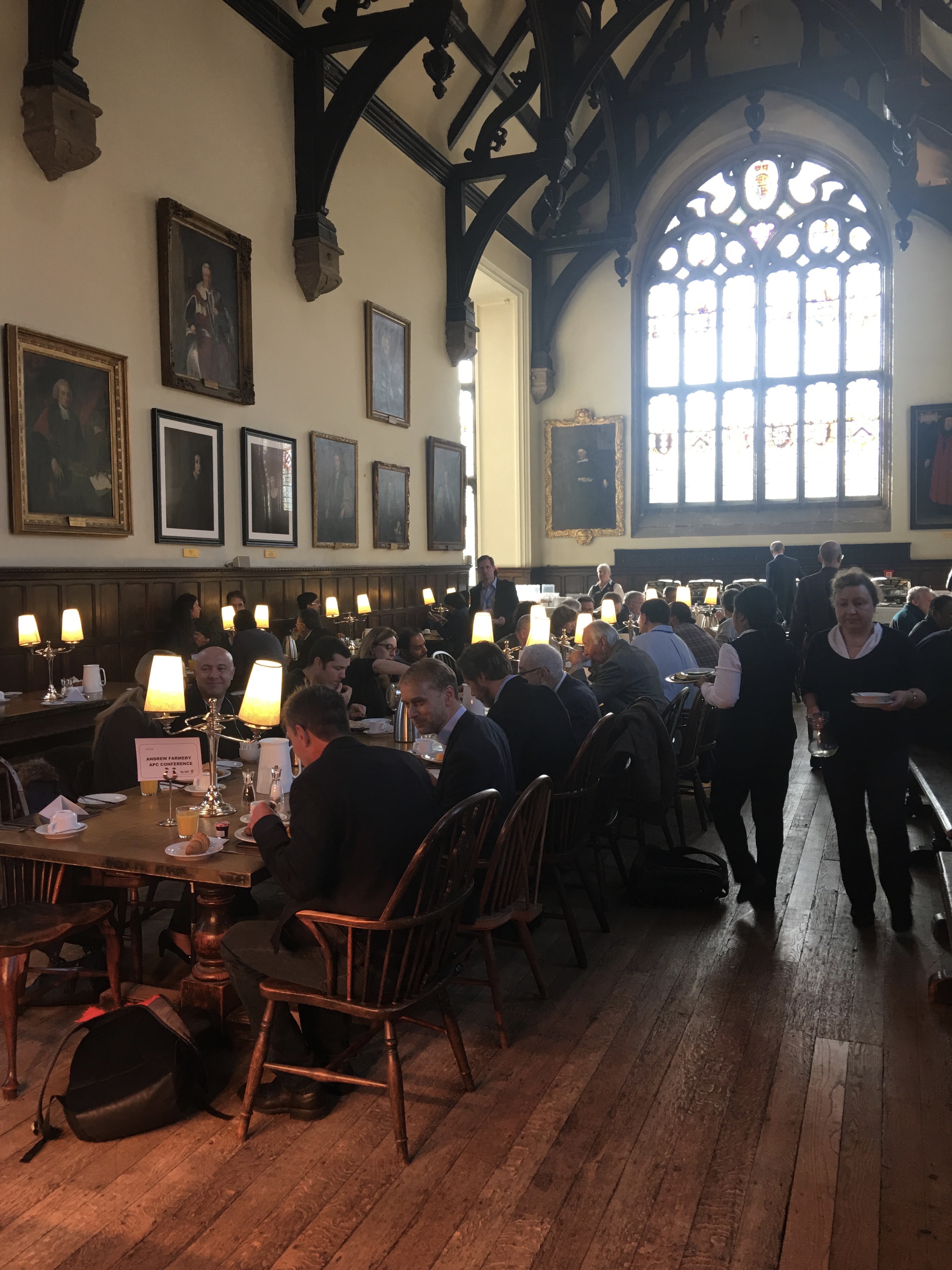
    Ketamine for Psychiatric Disorders breakfast.Can you say PHENOMENAL???

    Let’s hear it for Ketamine Treatment and Oxford!!

    I just returned from a history-making global conference focused on research and clinical evidence for ketamine for psychiatric disorders. Experts from nearly every continent spoke of their own data and evidence from this emerging field of the the science behind ketamine and the extraordinary help ketamine treatment provides. The entire room was held spellbound for three days, from the first word spoken until the final applause Friday afternoon. It was an unforgettable event in the most beautiful and historic venue at Wadham College, Oxford, UK.  

    A 400-Year-Old Chandelier in a 400-Year-Old Room

    In the 1650’s, a group of individuals including such celebrated thought leaders as Robert Hooke, Robert Boyle, Christopher Wren, and Thomas Willis began an “Experimental Philosophy” club where the fundamental premise required that orthodox thought was rejected and the world was viewed through the “broadened lens of experimental scrutiny.”

    Well, this club became the Royal Society when members of the family of King Charles II got Ketamine for Psychiatric Disorders International Conference 2018involved. When that happened, the revolutionary became the norm.

    It seems only fitting that this international conference on the revolutionary breakthroughs for treating psychiatric disorders should be held in this same building, and on these same grounds.

    Rupert McShane chaired this ground-breaking event. Hats off to him for beginning what we hope will become an annual international conference.

    Luminaries in the Ketamine Adventure

    Gerard Sanacora, a frontline researcher for ketamine treatment in psychiatry, spoke first. He previously served as the lead researcher of the American Psychiatric Association Counsel of Research Taskforce for Novel Biomarkers and Treatments which published a consensus statement about ketamine for this purpose in mid-2017.

    Dr. Sanacora kicked off the conference with an overview of the literature and key studies that have explored ketamine’s mechanism of action in treating psychiatric disorders. It was brilliant!

    We’ve been keeping you informed about some of those in recent times … but there was so much more that was discussed.

    Luminaries all around!  We were graced with Peter Somogyi and David Lodge whose seminal work on NMDA and axoaxonic cells paved the way. Many of the top ketamine researchers and clinicians in the world presented their findings: Colleen Loo, Jennifer Southgate, Nuri Farber, Steve Levine, David Feifel, Declan McLoughlin, Haggai Sharon, Alison McInnes, Samuel Wilkinson, Michael Grunebaum, Elias Dakwar, Rupert McShane, Raquel Bennett, Karen Lascelles, Jeffrey Becker, Ian Anderson, Gordon Fernie, James Stone, Meng Lei, and Dan Iosifescu. Jose Miyar covered regulatory issues. Jonn Donello and Suresh Durgam discussed new breakthrough findings for the mechanism of action of Rapastine, and Jaz Singh presented new data about the safety and efficacy of esketamine.

    And of course, the extraordinary international collaborative teams involved in all of this work … the freshness of perspective emerging across the field — from doe-eyed young researchers to seasoned principal investigators … the breadth and energy of molecular, cellular, neuroimaging, and clinical work represented in the posters.

    Breathtaking doesn’t do it justice.

    We talked about everything ketamine from mice to men … and from chandelier cells (just as gorgeous as the chandeliers King George IV gifted to Wadham College for the Holywell Music Room) to psychotherapy.

    How fitting that we heard about paradigm shifts in the very room where Handel and Haydn first played! Raquel Bennet, Founder of KRIYA Institute, explored the importance of the dissociative experience as transformative, and the many ways ketamine has been used in clinical practice.

    Biologically to induce neuronal plasticity (we talked about this before), as a sort of lubricant  to enhance psychotherapy, and to deliberately induce dissociation … which can be transformative for the patient.

    Jeffrey Becker offered us an elegant unifying hypothesis for ketamine in clinical practice, exploring the GABAergic interneurons and Jungian archetypes in treating people with depression. 

    The depth and breadth of this conference was amazing. The sheer richness of talents in the room, the knowledge and experience gathered into this one place from all over the world. Everyone talked about how much more we need to learn, and the questions that still need to be answered.

    Ketamine for Psychiatric Disorders – Global Conference! Stunning.

    These were basic scientists, principle investigators, neurimaging experts, clinical researchers, psychiatrists, anesthesiologists, Ketamine for Psychiatric Disorders International Conference illuminated ketamine's many therapies.psychologists … it’s astonishing to realize the scope of interest and exploration there is in perfecting this most remarkable treatment to help you get better.

    When you feel depressed, deeply and severely … or when your vigilance and terror from PTSD is tearing apart your family … or when bipolar disorder rips you apart … It can feel like you’re all alone and no one out there cares. You know you don’t know the solutions. So you feel like you’re relying on scientists to figure out the solutions … but … is anyone really trying to help you?

    This is why I tell you about this conference.  This sharing of data, preliminary findings, hypotheses, results… just to show you there are people all around the world who explore the solutions to your pain, and work on solutions for you … and others like you … as feverishly as they can. They care. And they’re dedicated to learning more and more. All to help you.

    As for me, I presented data from my clinical practice. It demonstrates that ketamine can be used to stop suicidal thoughts. And it happens often in a real-world outpatient clinical practice. What’s more, it provides an alternative to hospitalization.

    Someone recently mentioned to me that he predicts the excitement over ketamine will fade away.

    Of course, he’d probably read negative media accounts and had probably missed the science … and all the studies. But I have to say, I wish he and others who share that “doom and gloom” outlook could have been present to hear all the extraordinary work going on with ketamine and related compounds.

    It seems pretty clear to me: ketamine treatment is going to be with us a good while.

    Ketamine Can Make Antidepressants Work Better for Hospitalized Patients

    Declan McLoughlin spoke of his study in Dublin using ketamine to try to prolong remission after ECT. He also explained his work using ketamine as an additional treatment combined with antidepressants for hospitalized patients in Dublin.

    These are just examples. But they don’t even scratch the surface of all the topics covered these three days last week.

    There’s no question that ketamine treatment has a long way to go to reach “mainstream status.” Everyone in the upper echelons of research and practice seems to agree we need to know so much more. The more we learn the more questions arise that we need answers to. But we know so much more than we did even two years ago.

    This is the breakthrough we’ve wished for … depressed and anxious people, suicidal people, Ketamine for Psychiatric Disorders international Conference 2018people wracked with PTSD, or torn by bipolar disorder, trapped by OCD. This is what you’ve yearned for. So have I. Many say this is the greatest breakthrough in fifty years in psychiatry. But we can go further than that.

    This is the best, life-changing breakthrough for people who suffer with psychiatric mood disorders EVER.

    There is so much more to learn…so much! Ketamine is the new frontier in psychiatry and the treatment of psychiatric mood disorders and more.

    Ketamine for Psychiatric Disorders like Substance Use Disorders

    One more story I have to tell you about. Elias Dakwar (we’ve talked about his work) discussed his research with ketamine in treating substance use disorders. You might remember our post on crack cocaine use in February.

    We talked about how Dakwar and his team studied responses of crack cocaine users. Those who were currently using and had no intention of stopping.  When they had been given ketamine infusions the day before being offered either crack or money, they had the motivation to turn and choose money, and their craving was so diminished that they also had the power to turn down crack.

    That brings up something we’ve talked about here: that ketamine restores initiative and motivation.

    All in all, this conference gathering of great scientific minds, young researchers, and brilliant clinicians was a huge step forward for the needs of depressed and anxious people. A huge step forward for the use of ketamine in the treatment of psychiatric disorders.

    Research is ongoing to test ketamine’s use with psychotherapy, ECT, TMS, and traditional antidepressants. Plus, its effectiveness intravenously, intramuscularly, subcutaneously, orally, and intranasally.

    Now we’ve all gone back to our home offices, and our work will continue. And this time next year I hope we’ll see that ketamine’s advantages have taken another big step forward.

    Meanwhile, at Innovative Psychiatry, we’re still here providing IV ketamine treatment. And we see life-changing results with it for people with treatment-resistant depression, bipolar depressionsocial anxiety, bipolar disorderPTSD, OCD, and suicidal thoughts. 

    If you’re suffering from a mood or anxiety disorder, treatment hasn’t helped, I’m sure you’re far more concerned about your desire to feel better and function again, than about a conference. And that’s why we’re here and want to help. We try to offer you the best that the world has to offer. This time from the first International Conference for Ketamine and Related Compounds.

    Call us or schedule an appointment here to be evaluated.

    There is hope. You can feel truly better. 

    So don’t judge your next treatment by the ones you’ve had before. This time, chances are, you’ll see a difference. And you’ll remember how to live again.

    Lori Calabrese, MD offers innovative psychiatric treatment like IV Ketamine

    To your life and the emerging of your best self,

    Lori Calabrese, MD

  • Ketamine – Outpatient Treatment for Addiction

    Ketamine – Outpatient Treatment for Addiction

    Ketamine outpatient treatment for addiction.Ohhhh, the weekend.

    The time when you can finally let down and let go after a week of grind. Waking to the alarm clock day after day after day…  Sitting in bumper-to-bumper traffic…  Not once but twice a day…day in and day out.

    Friday night? It’s time to PARTY!!

    Meet your friends at your favorite place, talk, eat, laugh and knock back some cold ones. A drink or five.

    Then, your gaggle of friends decides to move to another bar, and knock back a few more…. With some appetizers… Then one for the road… or three…

    You wake up the next morning and don’t remember how you got home. Head splitting, can’t Ketamine is outpatient treatment for addiction.see straight, drag into the kitchen and drink water, guzzle coffee…add your friend’s hangover remedy… then get on the phone to pull friends together to tie one on tonight…after all, it’s Saturday! Party baby!!
    Rinse, repeat.

    And again Sunday night…

    Monday, throw down coffee, stuff your pockets with Alka-Seltzer and head for work. Back to the grind.

    One Way Alcohol Tears Down Your Life

    A few years of this is just a continuation of your college lifestyle…but somewhere along the line the weekend binges overflow into Monday. Then the weekend starts early on Thursday…

    After a couple more years, you think, “Why wait till the weekend? I’m an adult!” And you’re meeting a friend at the pub every night after work, then drinking at lunch…

    And now? Well, your breakfast is no longer a beer, but vodka in a little orange juice. Lunch is Kentucky Honey…followed by Jack Daniels for afternoon tea.

    The job? Performance has fallen way off, and you’ve got a file full of write-ups for missing Ketamine is outpatient treatment for addiction.meetings, too many absentee days… and finally an ultimatum from your boss.

    What started as fun outings with college friends, has now set your career on the brink of destruction.

    What happened…? And what can you do?

    Too Much Alcohol Too Often Leads to a Disorder

    Well, for starters, you’ve unwittingly trained your brain and body to depend on that daily consumption of alcohol. It started out mild with a few beers, then rapidly accelerated to full-blown alcohol dependence. And the more you drank, the more you needed. You might just be a girl who loves her wine. Or you might have moved on to a new favorite. From beer to Jack Daniels at lunch, and from wine with dinner to Gray Goose instead of dinner.

    This is called alcohol use disorder, and while it doesn’t happen to everyone, it does happen to 5% of the adult population of the world.

    And it can lead to alcohol dependence, or addiction, just like heroin and cocaine use can lead to addiction.

    2.9% of the US population is addicted to illicit substances.

    The leading cause of accidental death in the US is drug overdose.

    And it gets worse. For those who try to stop their addiction to alcohol, prescription or illegal drugs, the rate of relapse is between 40-80%.

    Pretty grim.

    For millions of people, the outlook has been bleak. Once that door is opened, it’s really tough toketamine is outpatient treatment for addiction. close it again.
    Outpatient Treatment for Addiction

    Addiction treatment focuses on abstinence.

    Stopping, staying away, never going back.

    It’s so hard to do.

    It’s hard for some people to even think about. But it’s the goal of treatment, and it’s the way to freedom.

    Support is critical. AA or other 12 step programs, sponsors, a recovery coach, individual therapy, mindfulness practices, healthy living.

    And perhaps medication that can help you NOT RELAPSE,

    There have been two basic approaches to treating addiction with medication. Either to replace the substance with another one that’s less destructive, like methadone in opioid addiction, or use a medication that can enhance abstinence. There are lots of these.

    For alcohol, there are medications that can reduce craving … and medication that will make you really sick if you do drink. For opiates, there are medications that can reduce cravings and completely block opioids from getting you high, like Suboxone, and medication like methadone offered in methadone clinics.

    However, a recently published paper reviewed the work that’s been done with ketamine for treating substance use disorders and alcohol use disorder, otherwise known as alcoholism.

    We don’t mean recent, we mean hot off the presses. In Neuropharmacology January 18, 2018, by lead researcher, Ivan Ezquerra-Romano, and his team of neuroscientists in the UK and Russia.

    It’s a game-changing analysis of studies conducted to investigate the use of ketamine and how its specific characteristic actions impact recovery.

    You may know that alcohol use disorder is a serious epidemic in Russia. One of the authors — E. Krupitsky — is a Russian neuroscientist who has contributed a large number of studies to this effort.

    This paper reviews and evaluates the use of ketamine and in treating alcohol use disorder, cocaine use disorder, heroin use disorder going back as far as 1965 to the present.

    Ketamine??

    Let’s talk about some of the findings.

    Is Ketamine a Treatment for Alcohol Use Disorder?

    Early studies in the ’60’s and ’70’s identified the effects of ketamine and “psychedelic-type” experiences it induced, based on the size of the dose taken. These observations would later become important in the treatment of substance use and alcohol use disorders.

    Neuroplasticity is Vital for Recovery

    Later, it was discovered that addiction seemed to be accompanied by a diminished Ketamine is outpatient treatment for addiction.transmission of signals through the brain cell connections, and reduced change-ability of brain cell organization.

    To make improvements in our brain function, and our thinking, the brain must have the ability to change…to reorganize its cells. This ability to change and improve is called plasticity.

    And since we’re talking about brain cells, or neurons, this is neuroplasticity.

    It allows the brain to improve as you improve. For instance, if you drink alcohol regularly in larger and larger amounts, your brain cells change as a result. One thing that changes is the ability to transmit certain signals through the brain. The connections between these brain cells or neurons, break down, dwindle, and disappear.

    When you decide you want to stop drinking excessively, and to be healthy and balanced again, you need those synapses to be replaced and restored…so your brain can change itself.

    Ketamine treatment works to reverse those changes in synapses, and restore them. It helps new neurons to be formed and to grow, then to grow more synapse connections to proliferate transmission of signals all through your brain.

    Ketamine Turbo Boosts BDNF

    One of the actions ketamine achieves for growing those new neurons and synapses is that it turbo boosts BDNF– or brain-derived-neurotrophic-factor. BDNF is like a rich compost that helps neurons and synaptic branches not just grow, but explode with rapid branching and dense mushrooming of strong, healthy branches and connections. And it happens FAST.

    This transforms the function of your brain for a brighter mood and stronger sense of yourself.

    When your brain’s communication network becomes more prolific and dense, you feel better, think better, have a brighter outlook. As a result, you feel capable of solid decisions.

    Alcohol use disorder and substance use disorders are usually accompanied by depression. So, ketamine’s growing reputation for relieving depression is a strong adjunct to its therapeutic properties for addiction. By relieving depression, ketamine ramps up the strength of resolve in the patient to remain sober for a longer period of time.

    Traditional antidepressants have no ability to reduce drinking — studies have shown this. And if you feel depressed, that’sketamine is outpatient treatment for addiction. a big trigger for relapse. Ketamine’s ability to produce a bright outlook and hope for the future can equip you to abstain from alcohol.
    Add to that the characteristics of ketamine’s rapid onset of beneficial actions, and the high success rate it boasts for relieving depression. Well, you can see the broad advantages it presents for relieving addiction, too.

    Mystical and Dissociative Aspects

    Another aspect of ketamine’s therapeutic prowess in treating alcohol use disorder and addictions of all kinds seems to be in the “mystical” and dissociative experiences it can produce.

    Now stay with me. I know this sounds like we’re going off the road here, but think about it.

    We know ketamine was abused as a club drug in the 1990’s and in some parts of the world is still the focus of serious abuse problems. Those who use it on on the street to get high use massive doses, and their drug seeking can quickly get out of control. Even when they think they’ve got it all under control.

    At the same time, it’s listed on the World Health Organization’s List of Essential Medicines. So it’s a two-sided coin.

    We continue to see that when it’s applied in the hands of non-professionals for the sake of the “mystical” experiences, it’s overused, overdosed, and damaging. However, in the hands of well-trained, deeply experienced psychiatrists for psychiatric treatment, its innate characteristics can work miracles.

    In addition, we know that ketamine has the ability to provide certain experiences that feel like out-of-body experiences. Moments with insightful, profound thoughts… and for many people… deep, or spiritual, or almost mystical experiences. The type of experience is determined by the size of the dose. Keep in mind, in psychiatry, we still use very small doses.

    Ketamine – Outpatient Treatment for Addiction

    We’ve talked before about how it’s actually important that you experience a touch of this during the infusion treatment. And here’s why.

    Because it seems that when you experience a bit of this, it’s because ketamine is at work rebuilding your neuron connections. The two seem to go together like a spark and fire. One is necessary for the other to occur.

    Patients find these moments to be pleasant, floaty, happy moments.

    In our office, we’re very precise about the dose you receive, and carefully control the speed.Ketamine is outpatient treatment for addiction. We curate the experience. We want your treatment to be effective. Therapeutic. Not overwhelming.

    But what researchers have found in terms of addiction treatment is that these deep experiences during treatment are not just associated with improvement.

    They seem to be critically important for achieving and maintaining abstinence.

    Wow.

    Ezquerra-Romano points out that the dissociative experience, mystical moments, enhanced introspection, and boosted empathy during ketamine treatment prove to be psychologically advantageous in the long-term. Experiences like this tend to achieve wonderful outcomes.

    And patients describe life-changing, eye-opening, and spiritually meaningful events from their treatments.

    As a result, they report catharsis, improved relationships, improved self-awareness, and personal growth.

    We can see it.

    Ketamine – and Its Mystical Experiences – Reduced Cocaine Use Without Rehab

    E. Dakwar, et al., whose studies provided important information for this paper, published ground-breaking findings in his work with cocaine use disordered subjects in 2016. His work included subjects who had no interest in detoxification or recovery. After ketamine treatment, they reduced their cocaine use by 67%. Unheard of success before ketamine.

    These subjects had no desire to stop using cocaine, and received no psychotherapy or counseling. Only ketamine treatment.

    Amazing.

    What’s more, the mystical experiences during ketamine treatment increased their motivation to stop using cocaine within 24 hours.

    Unheard of.

    Since counseling for alcohol use disorder and other addictions includes development of respect for others, a deeper self-awareness, and often recognition of a greater power, ketamine treatment may be able to help patients achieve these goals more quickly and deeply because of the dissociative experience that occurs during the treatment.

    In these studies, these experiences and the growth and revelations they produced were seen as favorable by researchers and their subjects. The patients felt more upbeat, less anxious, and more self-confident … in fact, they were able to open up emotionally more than they had before.

    It’s possible that these therapeutic experiences help patients lay the groundwork for, adjust to, and accept, a “sober lifestyle.”

    Letting Go of “The Party Lifestyle”

    If you struggle with an alcohol use disorder, you know how difficult it is to imagine life without all that goes with alcohol. The bars … the friends … the activities … the stories. There is the physical dependence on alcohol, but there’s the psychological and emotional dependence on a lifestyle that’s familiar.

    You may be able to see that an aspect of ketamine treatment that helps you move on to accepting and even embracing a sober lifestyle could play a huge role in your recovery. It’s not the whole picture … but it could be part of it.

    Something that we in medicine need to think about, is whether ketamine’s dissociative effects are really adverse side effects. The literature is full of caution about this — as though it’s something that you don’t want — and it’s been mentioned as a reason to avoid ketamine treatment.

    Some call the dissociative effects of ketamine “psychedelic” and try to assert they aren’t necessary for ketamine’s antidepressant and Ketamine is outpatient treatment for addiction.anti-addictive actions. And … they work on developing cousins of the compound to avoid these effects.

    But, a mountain of studies described by Ezquerra-Romano and his colleagues herald the value of these side effects in treating addicts and helping with their psychological healing. They urge doctors to speak of these therapeutic effects of ketamine in a positive light.

    The real need is to remove the stigma associated with these experiences, and encourage more research.

    My Position about Ketamine for Addiction Treatment

    And I agree. This is a time when real solutions for alcohol use disorder and opioid use disorder have been difficult to come by. A time when we know that alcohol and substance abuse treatments have relapse rates as high as 40-80% within the first year. We need more research. Better solutions. New science. We need to understand how enhancing neuroplasticity can change someone’s life.

    It’s time to look beyond the tired same-old, same-old and help people get well.

    If you struggle with alcohol or other substances, and it’s interfering with your life in a serious way, call us. Or contact us here. Or email us at info@loricalabresemd.com.

    At Innovative Psychiatry, we see 80% recovery and even remission in our patients with treatment-resistant depression.

    And we see surprisingly good results with ketamine in our patients who struggle with alcohol, stimulants, cocaine, and opiates … even in our patients on methadone. They come to us with depression, and they often walk out with much less craving — or no craving at all.

    We didn’t know if we could believe it. Didn’t know what to make of it. Weren’t sure if it was a placebo effect. But there’s a host of excitement in the research community, plus new research in progress, to explore this potential treatment for alcohol and other substance use disorders. The field is exploding.

    It’s about time.

    You can turn your life around and set it on solid ground. You just need some help. And that’s what we’re here for.

    Lori Calabrese, MD offers innovative psychiatric treatment like IV KetamineTo the restoration of your best self,

    Lori Calabrese, M.D.

  • The 3 Phases of Addiction

    The 3 Phases of Addiction

    addictionAddiction steals your joy, hijacks your plans, destroys your family and can ruin your life. It is more complicated than just overindulging in an activity or substance that boosts your mood and doesn’t want to let up. Addictions are psychiatric disorders that require treatment. In order to fully understand addiction, it’s important to understand the three phases.

    Phase 1: Binge

    When you take an addictive drug, or participate in any other addictive behavior, dopamine and other neurotransmitters are released, which then signal the brain that the person has received a reward. Over time, dopamine begins to be released in anticipation of the addictive behavior or drug. It is during this time that the brain associates the reward feeling with the drug or addictive behavior, which can create powerful cravings and prompt a binge.

    Phase 2: Withdrawal

    Your brain begins to reset the reward system, making it difficult to experience pleasure without the drug or addictive behavior. When you don’t participate in the addictive behavior or ingest the drug, the body begins going into withdrawal. It is during this time that you begin to do the drug or preferred activity simply to avoid the feelings of withdrawal.

    Phase 3: Preoccupation

    You become more and more obsessed with the drug or addictive behavior. Although you may be fully aware that the addiction is ruining your life, it’s all you can think about. You become unable to function without it and are always looking for the next fix.

    Addiction isn’t limited to substances like drugs or alcohol can be devastating The brain reward and reset mechanisms that underlie binge, withdrawal and preoccupation can be used to understand a number of behaviors that can spiral out of control such as eating, shopping, internet use, and video gaming.

    If you or someone you love is struggling with an addiction, we are here to help you. To learn more or to schedule an appointment, please call us at 860.648.9755.

    To getting you back to your best self,
    Lori Calabrese, MD
    calabrese-0510_g_crop

error: Content is protected !!