
 Smash Treatment-Resistant Mood Disorders with Rapid-Acting Antidepressants: Like Ketamine Treatment
We’ve talked before about the line to the throne where ketamine treatment now reigns. Formulators in a lab were seeking to create a new anesthesia, and they thought they’d found one. They called it Sernyl—but the unpredictable side effects, hallucinations, and sometimes violent behavior, drove the pharmaceutical company to take it off the shelves.
It was not the kind of medicine doctors wanted to give their patients.  Through a series of leaks and improprieties however, it began to drift onto the streets as an illegal substance. The drug was phencyclidine, or PCP. Remember during the ’70’s and ’80’s? If so, you know the havoc that PCP – or angel dust – wreaked on the street crowd.
Rapid-acting Antidepressants
But those researchers weren’t willing to give up. They kept working and developed another safer anesthesia that had some of the dissociative properties Sernyl had, but less in side effects when used at therapeutic doses.
They coined it a “dissociative anesthesia” and it became internationally popular in the surgical suite, in the emergency department, and in war zones around the world.
That medicine was ketamine hydrochloride. And testing for treating depression began forty years after ketamine was developed and widely used as an anesthetic.
And we’re now seeing outstanding results, as in remission of depression and other mood disorders, in both research studies and the clinical setting.
So it’s not surprising, is it? That ketamine treatment has become the role model for emerging new medicines that treat mood disorders.
Still, knowing what ketamine treatment can do for major depression,  postpartum depression, social anxiety, bipolar disorder, PTSD, OCD, and suicidal thinking isn’t enough for neuroscience researchers.
They want more.
If ketamine does great work treating patients with treatment-resistant mood disorders, there must be more medicines that will also work as well.
Or so they hope..?
Antidepressants that Work as Well as Ketamine Treatment
So the search is on to find other rapid-acting antidepressants that eradicate major depression, PTSD, bipolar disorder, OCD, social anxiety… and stop suicidal thinking in four hours…or less, like ketamine treatment does.
It’s a tall order, but it’s the quest of the hour.
Conventional antidepressants improve symptoms by increasing levels of neurotransmitters like serotonin and norepinephrine.
But it takes 9-12 weeks or more for someone to experience that improvement. So the loud and strong need for rapid-acting antidepressants shouts its demand for these solutions.
Why? Because when patients with severe disorders are inundated  with thoughts of suicide, if those thoughts can’t be eradicated quickly, the risk of death is high.
In addition, lost work time as well as abandonment of the medication regimen, is more likely to happen. In short? Patient safety is compromised.
Seeking Ketamine Wannabes
So, there’s a strong focus on compounds that CAN bring fast relief. They include ketamine, scopolamine, and “mechanistically-related” compounds. We’ll get to those in another blog post.
But researchers added some newer ones to this list in the surge to find more rapid-acting medicines.
Compounds like:
- Antagonists of metabotropic (mGlu) 2/3 receptors
- Negative allosteric modulators of α5-containing GABA A receptors
- Psychedelic compounds like psilocybin
I know…I know… sounds like Greek.
How about this?
These compounds need to demonstrate their effectiveness in large groups of people. Most importantly, when medications fail to help people get better, these compounds need prove they can be effective.
And…as always…the biggest challenge is finding ways to make the positive effects last.
Rapid-Acting Antidepressants Help You Get Better Fast
Since the use of ketamine for depression began, the path of discovery started when ketamine first caused remarkable relief for depressed patients, but that relief didn’t last more than a few days or a week.
Researchers tested a variety of methods, and discovered an effective regimen was 6 ketamine infusions given every few days over 2 weeks.
By doing this, it seemed to bypass the short term beneficial effects  and instead prolong them. As we’ve moved forward in clinical practice, we’ve found that increasing the number of infusions in some cases can ensure remission. That is, if the initial six fell short of that goal. And we’ve worked with different infusion protocols over 2-3 weeks.
Like all aspects of psychiatry, personalizing the treatment to fit the patient’s needs yields the most effective outcomes.
Review of Literature Clarifies the Search
A brand new review was published in Current Pharmaceutical Design July 29 focused on these specific compounds and their potential. The team, led by Jeffrey M. Witkin, reviewed the current literature on compounds that produce immediate symptom relief.
They determined that a foremost system for producing rapid effects is by amplifying excitatory neurotransmission (by glutamate) while activating AMPA receptors.
These drugs cause glutamate to flow out of the cells which provide what researchers hypothesize is a triggering mechanism to increase the amplitude of AMPA receptors.
They concluded that the focus in pharmaceuticals these days is rapid-acting antidepressant compounds like ketamine, scopolamine, and psilocybin. All of these need extensive study. And they pointed out that two medicines, rapastinel and esketamine are in the last stages of FDA trials.
So let’s look again at the up and coming compounds and medicines in the running to potentially supply the benefits that ketamine is now providing:
- Ketamine — still at the top
- Esketamine (developed by Jansen, a division of Johnson & Johnson)
- Rapastinel (developed by Allergan)
It’s probably fair to say that in the next few years we’ll be bombarded with many new medicines that operate quickly to treat mood disorders. But that’s the way of progress.
Even though esketamine is only half the ketamine molecule — with its own challenges and problems — it’s generating anticipation despite the problems that can come with an intranasal medication.
Keep in mind that FDA approval doesn’t guarantee a medicine is superior to others. But it’s a sign we’re in a new era of better, faster, and more effective medicines for psychiatric disorders.
Ketamine still reigns supreme. And physicians will likely need to combine esketamine with traditional antidepressants and mood stabilizers. Even so, mood disorder treatment is better than it used to be. Remember before ketamine treatment?
Back then, it was necessary to wait for weeks or months to enjoy the benefit of a medicine.
Times are changing and suffering is declining.
At Innovative Psychiatry, we’re celebrating the onward development of pharmaceutical progress, while also providing the outstanding benefits that ketamine can offer to our patients with treatment-resistant illnesses.
Our specialty is treating disorders that haven’t gotten better with other treatments. We’re here because we want to help you experience life like you were meant to live it.
 To the restoration of your best self,

Lori Calabrese, MD





 flexible to fit the circumstances. For instance, so you can either react spontaneously or … if the situation requires it … delay your response til a more appropriate time and manner.
 the situation is important, but what can you do if you just can’t? Furthermore, what happens if you never learn how…? Or never get better enough to learn…?
 emotional modulation in May of this year in Frontiers in Psychology.
 ones in the way you think about and respond to painful or frustrating situations. If you’re in pain yourself, and the

 Trauma: Don’t Beat Yourself Up – Allow Your Loved Ones to Lift You UP
 may not have shattered him like the next guy. People go through divorce. One ex-wife gets thoroughly angry and surges forward like a steam engine to overcome the heartbreak she feels about her husband’s infidelity. But another one may be so shattered, so disillusioned she can’t work, can’t function, and trembles or vomits when she sees her errant ex-husband or drives by their favorite restaurant.
 she has reason to be heartbroken and deeply shaken. The fact that another woman lost her infant child in a sweeping illness does not trump the widow’s pain.
  person is different
 elp you move forward.
 from the ashes, you’ll likely gain strength and resilience through the processes you endure, and the storms you weather.
 restores your tool box so you can rebuild your life. And it can be a huge help in your true recovery from trauma.
 You Can Know if You Suffer From Bipolar II Disorder
 moody personality. She says she paints the world the way she wishes it was, rather than the way she sees it.
  problem together. He buys drinks for everyone, along with appetizers for the team. Then after a few hours of shut-eye, he’s ready to jump back in again.
 avoids answering the phone. She thinks she has the flu from all the aching in her back, arms, and legs. And being home in bed is a welcome relief from the pressures and chaos of the office. She needs rest, she tells herself, and she’ll be ok.
 to be there — what great deals! She spots dishes that match her bed and bath linens, then pots and pans.
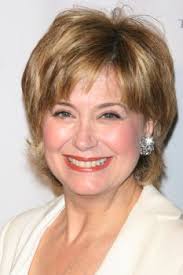 Jane Pauley from the Today Show. This was her experience. And in a televised interview, she referred to her condition as “bipolar III.”
 strengthen your relationships. You can focus again to read what you want to read and do things you enjoy. And you can show up when and where you’re needed.

 years with undiagnosed depression. Not that her parents were aware. Quite to the contrary, they were proud of their talented and intelligent daughter. As long as she continued to perform, they were happy.
  swallowed up by a hole. How could she face the 8th grade boys when she felt so ugly?
 excessive stress early in life, as well as
  DHA and EPA are long chain omega 3 fatty acids that account for 97% of the omega 3 fatty acids in the brain. They’re vital for optimum brain function and development.
 mother’s depression during pregnancy, showed inflammation and depression in adulthood.
 Anxiety and Panic Disorder – A Tormenting Presence

 stabilizers in an attempt to help you get better, but no combination has worked… then it may be time to consider more novel advanced treatments.

 Psychiatric Disorders and Creativity: Is there a link?
 performing arts, politics, business, religion, literature, music, and science translate to exceptional people all around you in school, work, and everywhere in between, it’s worth another look.
 developing symptoms of schizophrenia.
  patients we treat. Ketamine treatment is
  psychiatrists deeply experienced in treating life-threatening psychiatric disorders as well as
  a precise infusion pump and monitoring equipment to ensure the most thorough and effective treatment experience.