Tag: IV Ketamine Treatment for Crack Addiction

  • KRIYA Conference 2019: The Flexibility of Ketamine

    KRIYA Conference 2019: The Flexibility of Ketamine

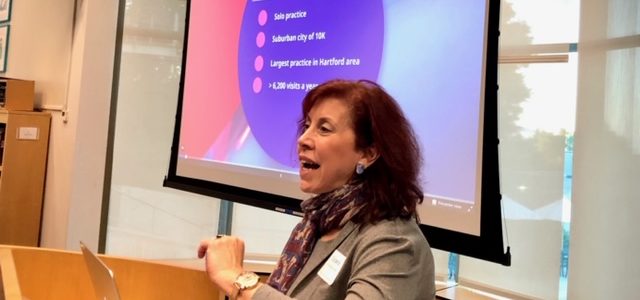
    Dr. Lori Calabrese speaks at KRIYA and applies the flexibility of ketamine.

    We’ve come so far in ketamine treatment for depression, and we still have so far to go.

    KRIYA held the first conference on ketamine treatment for depression in 2015. Now, 5 years later, there are several medical conferences that support the exchange of information in this field. Raquel Bennett, the founder of KRIYA – The Ketamine Research Institute –  says that ketamine is a flexible tool and should be used with freedom and skill. She urges clinicians to make the most of the flexibility of ketamine.

    This is the last conference by KRIYA that will be held in this format, according to Dr. Bennett. She plans to possibly shift to an online format next year to accommodate the huge numbers of clinicians who wish to be included.

    What’s more, KRIYA has supported, from the beginning, the use of ketamine by different routes and for varied conditions, and encourages participation from providers across the gamut of ketamine applications. So we’re a wonderfully diverse crew who come together for these conferences. As for me, I know that I’ve learned so many things and forged new friendships and collaborations from KRIYA conferences. 

    And…my own contributions have been so warmly received. As far as the educational gathering, there are psychiatrists, psychologists, therapists, ER physicians, pharmacists, anesthesiologists, neuroscientists, nurses, and experts in consciousness medicine. 

    Raquel Bennet, Psy.D. Stepped Up as a Leader in the Field of Ketamine for Depression

    Dr. Bennett reminds us she has created a “tasting menu,” if you will… from

    all corners of the field. At this conference, she opted for breadth vs depth to make us privy to all that’s happening in the field of working with ketamine. And she emphasizes that speakers are working from different paradigms. So, she urges us to listen for the paradigm they report from….and learn.

    And she’s right when she says that ketamine is a flexible tool that contributes to a variety of needs.  When a patient is too depressed to talk, ketamine lightens depression so they can participate in talk therapy. To help manage severe pain and the depression that goes with it. It can help the patient go deeper into therapy, and explore their traumatic experiences gently. It can treat acute suicidal thoughts and prevent hospitalization. And she says, it can induce mystical visions for existential exploration.

    Raquel had much, much more to say, but I want to mention some of the other speakers.

    Brent Turnipseed, MD and Lindsey Slater, LPC, from Austin, TX talked about their use of EMDR in ketamine-assisted therapy.

    Brent Turnipseed speaks about the flexibility of ketamine.

    In PTSD, the body’s own reaction to a patient’s traumatic memories activates adrenaline , which prevents their ability to process their trauma. Ketamine can calm the body enough that they can process the trauma without the distraction of adrenaline. As a result, it can help relieve their fears. 

    EMDR works by helping the patient desensitize by brief exposures to the trauma, then by redirecting the patient’s attention, EMDR induces a relaxed neurological state similar to rapid eye movement (REM).

    Elias Dakwar, M.D., psychiatrist and the addiction researcher we’ve often talked about before, gave a wonderful presentation. 

    He presented a thought -provoking talk on meditation and mindfulness as it relates to ketamine in treating addiction.

    The field of ketamine for psychiatric disorders, including  addiction treatment, continues to wrangle with how to take ketamine into psychiatry but that’s because our paradigms are problematic. Mainstream psychiatry has tried to cut ketamine down to size instead of using this extraordinary medicine as a DISRUPTOR.

    Dr. Dakwar entered addiction research after a long time practice of meditation and with great compassion for the patients he sees.

    He described his previous and current work in detail–look for it in the journals.

    Ian Mitchell, M.D., Emergency Medicine in British Columbia,

    spoke about the uses for ketamine in the emergency department. He spoke about its use for sedation during an emergency procedure, such as setting bones, repairing wounds, or the removal of foreign bodies, pediatric sedation for the same types of procedures, sub-dissociative dosing for pain management, especially for neuropathic pain, to prepare a patient for intubation, sedation for the out of control, prehospital pain relief, and to manage an overstimulated patient.

    In British Columbia, ambulances are equipped with intranasal ketamine for prehospital pain management as a result of the PAIN-K trial. More of ketamine’s flexibility.

    Wesley Ryan, M.D., psychiatrist from Marina del Ray, CA,  Parria Zarrinnegar, M.D., psychiatrist in Portland, OR, and Daniel Barton, M.D., psychiatrist from Nashville, TN all presented riveting case reports.

    Kelan Thomas, Pharm.D,

    spoke about adverse reactions and drug-to-drug interactions that have been documented with ketamine. So important and so well-done.

    Annie Oak, a journalist from the Bay area, spoke on the use of ketamine outside the medical setting.

    Gita Vaid, M.D., psychiatrist and psychoanalyst, spoke on using ketamine in psychoanalytic psychotherapy in very long session. She talked about how she has witnessed ketamine help patients relax and defenses soften so they can have freedom to talk. The psychotherapist builds relationship with the patient and it can be transformational.

    Jason Wallach, Ph.D., is a pharmacologist and neuroscience researcher whose energy and depth of knowledge captivates us every time he speaks. He spoke about the neuroscience and  pharmacology of ketamine. Gave an update on some of the other dissociative drugs he’s tested. (I think he’s tested them all!) He made the point that ketamine has been called a dirty drug because of the receptors it hits ex-vivo and in animal models — but that’s not true. It’s really one of the more selective drugs of this class at the doses used in people.

    Jessica Katzman, Ph.D., and Harvey Schwartz, Ph.D., spoke about bumps in the road they’ve discovered with ketamine assisted psychotherapy and in the integration work that follows treatment… What is integration? It comes from a latin word that means “to make whole” or “to begin again.” Bring your clinical compass, but don’t forget your humanity. A beautiful duo talk with lots of clinical examples.

    Eli Kolp, M.D., a pioneer in ketamine treatment, gave a beautiful talk on the phenomenology of ketamine-induced dissociative states.

    There were so many other speakers and so much to absorb–my computer battery kept dying down, so between Surface notes, handwritten notes, and photos, I can’t do justice to the breadth of expertise in the room, and the excitement.

    Greg Wells, Ph.D.  Sylver Quevedo, M.D., Veronika Gold, M.F.T.Eric Sienknecht, Psy.D. presented as a panel on their model of coordination of care between prescriber and psychotherapist. Peter Koshland, Pharm.D. talked about how to work with a compounding pharmacy for varied compounded preparations of racemic ketamine. Nate Schmidt, A.R.N.P spoke about scheduling and billing logistics.

    Sunday was a treasure with a very special presentation by Francoise Bourzat on the Use of Sacred Medicines in the Age of Technology and Medicalization. It was a delight to meet her. She captivated the audience, and her new book, Consciousness Medicine, is a wonderful synthesis of her life’s work.

    Kelley O’Donnell, M.D. and Christian Yavorsky, Ph.D. are doing yeoman’s work with KRIYA and presented an excellent (and not dry!) talk on Measuring Clinical Outcomes: Scales and Assessment Tools. And in addition to the training for Ketamine Assisted Psychotherapy that Raquel Bennett presented and discussed earlier in the conference, Jennifer Dore, MD presented a model of training for Ketamine Assisted Psychotherapy developed by Phil Wolfson, MD and Julane Andrews, that they have used around the country.

    IV Ketamine can STOP suicidal thoughts fast…Now that’s flexibility of ketamine!

    On the last day, and as the next to the last speaker, I took the podium to share my data in working with patients in my own practice, and showing how IV ketamine infusions can stop suicidal thinking, and save patients from having to go to the ER or be hospitalized.  

    Lori Calabrese. MD understands the flexibility of ketamine.

    With heartfelt gratitude. These are my people–the clinicians and many of the greats in the field (who were in the audience) who launched my interest, encouraged my work, supported my writing–and showed me how to apply for an IRB. It’s amazing how much can happen in a year. So I saved the newest data and my newest results (using a new protocol and a new rating scale) for my colleagues and my friends here at KRIYA. I wanted them to hear it first.

    I wanted to give back to those who have sparked my imagination, nurtured my interests, given wind to my sails.

    It gives me such joy to share how this remarkable medicine that can do so much, can also save a life in a short time. And to see clinicians in practice eager to take this information home.

    And that’s the beauty of meeting together at KRIYA and swapping stories and describing outcomes and victories that have restored the lives of people we work with.

    Looking Back…and Reaching Forward – Preserving the Flexibility of Ketamine

    It’s been such a busy fall with travel and speaking engagements each month… along with treating patients. (I’m sure my colleagues are as tired as I am. We need a vacation. Seriously.) But it’s gratifying to look back and know all this information that’s been shared will improve the lives of people we each cross paths with after KRIYA and all the other conferences.

    I know these reports “from the front” can seem science-y and vague, but I want you to see how hard clinicians, neuroscientists, and practitioners of all types are constantly working to learn the breadth and depth of what ketamine can do to help people live better, improved lives. That’s really what it’s about. Ketamine’s flexibility allows for treatment that can turn your life around.

    And if you’ve been reading along, and wondering if there is help for you, call us. In spite of all the travel and bustle, we’re still in all this to help you get better, live better, and have the ability to build a truly fulfilling life.

    You owe it to yourself to try, if you’ve not found a medicine that works for you. It’s not that ketamine is a cure-all for everyone, but it works in so many areas of your brain, that it can restore areas damaged by stress and trauma in most people who are treated with it.

    As the holidays approach, give yourself the best chance you can to enjoy the time ahead and the new year that follows.

    Lori Calabrese, M.D. is on the front end of the race to stop PTSD in its tracks using IV ketamine treatment.

    To the restoration of your best self,

  • Where Can You Find Real Help for a Suicidal Person?

    Where Can You Find Real Help for a Suicidal Person?

    To help a suicidal person, ask hard questions, then listen. Help them connect with people who care. You can save a life.

    What is a suicidal person like?  How do you find help for a suicidal person? Can you describe the profile of someone who wants to die? Are they melancholy?  Irritable or agitated?  Are they funny?  Always making people laugh when they’re dying inside? Do they present themselves one way in public and another way in private? Are they sad…do they fit in …or are they misfits?

    Yes. The answer is YES.  And NO.

    A suicidal person can be any of these people, or none of them.  Someone like you …or me.  Or different than both of us.

    Anyone is capable of suicide given the wrong set of circumstances.

    Someone who can’t remember a time when he wasn’t sad… or just vacant. A person who’s had a series of deep losses, major stressors, and profound disappointments: all in a row…or all at once.

    Someone who just finished medical school. A young mother; a 9 year-old child. An elderly field laborer. A mail carrier.

    The pastor of a mega church.  The owner of a multimillion dollar consulting firm. A thirty year-old single father. A world-famous performer. The head of a university medical department. A kindergarten teacher. A 14 year-old girl.

    Sister, father, son, daughter, grandmother.

    WHO is a Suicidal Person?

    For every person you find who ends his or her life, there are thousands with similar circumstances who don’t.  

    Why?  What makes the difference?

    You can help a despondent person like this man by talking to him, asking if he's thought about hurting himself, and talk to him about how IV ketamine can erase suicidal thoughts.

    What causes one person who seems to have “everything to live for” want to die, and another whose life is similar want to live and not even consider dying…? Why is it that two people can face shame, humiliation, failure; and one wants to die and the other bounces back and moves forward?

    One thing is for certain. It’s not about one person being weak and another being strong. 

    Or about one being flawed and another being “normal.”

    The complexities of suicidal thoughts as symptoms of a deeper, more complex underlying condition cannot be completely explained yet…certainly not here. But, somewhere in it all you’ll find genetic links, brain circuitry, complicated response mechanisms, and more. 

    Why does one person bear the burden of kidney malfunction or lung disease and another doesn’t?  Or Type 1 diabetes? Or liver disease?

    One person’s genetic makeup provides a tendency toward more resilience and another’s genes lean more toward less resilience. One woman’s genes map out a future with breast cancer while another’s don’t.

    How Many In a Week..?

    Last week was Suicide Prevention Week. On last Monday, September 9, 2019, a beloved associate paster of a prominent church in Riverside, California, officiated over the funeral of a lady who had ended her life. Before the day was over, he had ended his own, too.

    Don’t ask why. Ask, “How can I help?”

    We Need to Supply Real Help for a Suicidal Person

    Then, two days later, the director of psychological services at a prominent state university jumped from his 17th- story balcony.

    The gentle and caring pastor was a devoted, loving husband and father of two. He founded Anthem of Hope in 2016, for those who suffer from depression and suicidal thoughts. He had always been open about his own struggles with the same.

    Jarrid Wilson, pastor at Harvest Christian Fellowship, died by suicide last week.

    Jarrid Wilson was a kind-hearted, vibrant, encouraging person, with two beautiful children, and an amazing wife. He’d suffered from depression since childhood. His depression and suicidal thoughts became too much to bear for him that day. 

    His wife is grief-stricken, suffocating with the loss of her best friend, and his church is stunned.

    Our hearts go out to his family, his church, and all who knew and loved him. 

    Jarrid’s life didn’t end because of something that was wrong in his life, but because of something that was malfunctioning in his brain. This is why we promote treatment for suicidal thoughts. 

    When you hear someone say, “She had so much to live for,” remind them that this is an illness. It’s not about hating her life.

    We must find help for a suicidal person like Dr. Eells.

    Gregory Eells, Ph.D., was accomplished and a strong, capable leader. Was there a reason, or was his death also the symptom of an underlying disease..?

    That’s the thing about suicide. Since we don’t know what his thoughts were, we can only guess. But it’s important to understand that stress…too much of it for too long…can lead to depression.

    Prolonged Severe Stressors Can Result in Depression and Lead to Suicidal Thoughts

    Stress breaks down those signaling structures and interferes in other areas of the brain. When that happens, the connections between brain cells become pruned and sparse… and signals are reduced in strength and number. The more severe the depression, the more profusely suicidal thoughts may grow.

    Crisis on top of crisis; death and loss; financial difficulty; illness; divorce; foreclosure; …all of these things together can prune away those connections and lead to deep and overwhelming depression.

    Then come the thoughts. Maybe a desire to escape the torture? Possibly. But more likely they’re somehow related to the poor communication of signals within the brain. The darkness. The silence. The void. The vacancy of any reward.

    These thoughts tend to intrude in your mind when your depression and anxiety are most severe. Some people experience these intrusive thoughts of death and dying no matter what they’re doing. The more their condition worsens, the more these thoughts bombard their minds.

    Suicide is Reaching Epidemic Proportions

    In 2017, 1.4 million people attempted suicide, succumbing to those intrusive thoughts. Of those, 47 thousand people died. We talked last week about how this means that suicide is the 10th leading cause of death in this country alone.

    Let's help a suicidal person like this by reaching out and talking to her, and telling her about IV ketamine for suicidal thoughts.

    And we haven’t even scratched the surface of all the people who have suicidal thoughts, plans, or intentions. Most of us are unaware of the numerous people around us who struggle with suicidal thoughts, because they maintain a brave mask.

    This is why IV ketamine treatment is so vitally important now more than ever. As suicide threatens to take more lives, we need more and better ways to prevent it. And to do that, we need treatment that stops those thoughts.

    IV Ketamine Can Provide Extraordinary Help for a Suicidal Person

    By a mechanism that’s separate from what ketamine infusions do to relieve depression, they also can stop those intrusive suicidal thoughts in an hour or two…or an afternoon. So even those patients who might not feel relieved of depression symptoms after ketamine infusions, may still be relieved of those thoughts of death…and dying. 

    IV ketamine infusions are a life-saving treatment, and nothing else comes close. Other medicines that have been used for this purpose required weeks or months to be effective. And, well…with someone severely suicidal, that may be too late.

    Ketamine acts in a multiple areas in the brain, and in a variety of ways. We do know some of the ways it works, but we suspect neuroscience researchers will continue to uncover more and more of ketamine’s handiwork going forward.

    Ways IV Ketamine Goes to Work in Your Brain to Lift Depression

    We know that as a NMDA receptor antagonist, ketamine increases levels of the excitatory neurotransmitter glutamate, the most prolific neurotransmitter in the body. 

    We know that ketamine turns the mRNA switch to “ON” which turns on DNA, that turbo boosts BDNF (brain-derived-neurotrophic-factor). Then the BDNF acts like a rich compost, stimulating growth of the connections between neurons, or brain cells, called synapses…and their branches of dendrites and dendritic spines.

    IV ketamine helps suicidal thinking by erasing those thoughts and replacing them with hope.

    These synapses, and dendritic branches proliferate abundantly throughout the brain, building superhighways for signaling to be high speed and abundant, lighting up the brain like a Christmas tree. 

    The slow, dark, sluggish signals that crept along during depression, explode with speed and efficiency as the brain comes alive.

    When this happens, your thoughts become creative, extensive, and bright. Your outlook soars, and so does your initiative and sense of purpose. Resilience replaces despair, and hope sets down roots. THIS is real help for a suicidal person.

    While all this is going on, there’s a change in the lateral habenula, that tamps down that bursting of cells that prevents you from enjoying reward. Your ability to enjoy moments, scenery, beauty, appreciation, and love is restored.

    Then, there are those G cells stacked up on lipid rafts in the cell membrane. They lazily while away the afternoon. Then IV ketamine comes along and slides those G’s off the lipid rafts and puts them back to work moving signals down the highway.

    These are the things we KNOW about.  We’re sure there are more actions we don’t know yet. But we will.

    The result is joy. And hope. And the energy and motivation to take initiative and build relationships, strengthen bonds, improve productivity at work, creatively advance in all you do, for a rewarding and fulfilling life.

    Spread the Word and Stop the Torment to Provide Real Help for a Suicidal Person

    At Innovative Psychiatry we see people like Jarrid and Gregory often. And we see so many others. People who don’t want to die…but who don’t want to keep living like this, tormented by pain and suicidal thoughts, images, and ideas. People who want to enjoy life, enjoy their families, and invest their energy in their careers, hobbies, and interests.

    IV ketamine treatment can erase suicidal thoughts and restore your best self.

    We’re thrilled and relieved to see the majority of them walk out without suicidal thoughts at all, confident they can get better with therapy and medication. Or they walk out in remission.  

    That’s the beauty of IV ketamine treatment at work. We’re trying to get the word out that there is now a treatment that can rapidly stop suicidal thinking. Help us spread the word.

    We’d like to help you.

    Are you tired of living like this? Do you ache for the freedom to build your relationships, your career, and your hope?

    Protect yourself from those thoughts of death that try to lure you to an action you don’t want to take. Call us. Let us help you tap into the life you hunger for.

    You’re not alone, and we’re here to help.

    Please, if you have suicidal thoughts, call us. Or call the Suicide Prevention Lifeline: +1(800) 273-8255. Those intrusive thoughts are symptoms of an underlying condition and treatment can help.

    IV ketamine treatment can erase those thoughts in an afternoon. We want you to live and to discover what life can be for you. We want to help you heal.

    To the healing of your best self,


error: Content is protected !!