Tag: Ketamine for Cocaine Use Disorder

  • Ketamine and Depression Treatment-Time Marches On

    Ketamine and Depression Treatment-Time Marches On

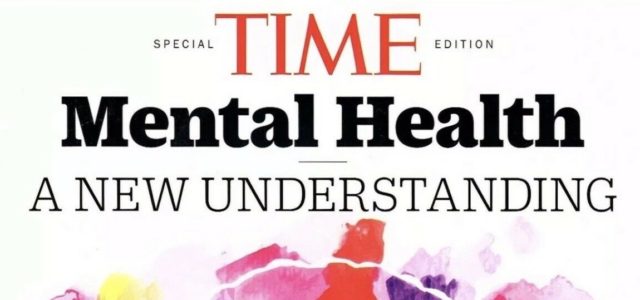
    Ketamine and depression treatment is the subject of this Time magazine special edition.

    Time magazine recently offered a Special Edition on mental health… Did you see it?

    The article about depression treatment – and ketamine specifically – by Mandy Oaklander published in July 2017, was reprinted for this special edition. The title of the special edition is “A New Understanding”…but since the article Oaklander wrote is two years old, I’m concerned this special edition may be misleading.

    Her cover article two years ago touted ketamine as an “anti-antidepressant.” This same term is repeated on this Special Edition cover. But, since Oaklander’s article created some misunderstanding when it was first printed, I’m not sure it’s accurate to refer to the contents of this edition as “a new understanding.”

    In fact, some of her representations of ketamine treatment border on archaic.

    Ketamine and Depression Treatment

    The field of ketamine for depression treatment is a new field in the “psychiatry and neuroscience universe” that’s been growing at break-neck speed. A wide variety of healthcare professionals offer this treatment in a wide variety of places and using a wide variety of methods.

    Ketamine and depression treatment as a whole is developing as a field and is helping people with treatment resistant depression enjoy their lives.

    Still, because we’re on this quest together, you and me, I want to take a few minutes to express my perspective on this reprint of her article.

    What quest?

    Well, that would be our passion to find more ways more people can be relieved of the symptoms that impair their lives.

    We talked about this after this article was published in TIME two years ago. But we’ve learned so much since then. Through neuroscience research as well as in private psychiatry practice and in meeting and collaborating with other healthcare professionals at national and international conferences since then.

    What Have We Learned Since TIME Published That Cover Story?

    Lots. About ways to prolong the effects of ketamine, ways to prolong and maintain remission, more of the actions of ketamine in the brain… We focus on ketamine treatment. So let’s talk again now about how she framed ketamine treatment in a less accurate light than we might wish.

    Because if you suffer, you want to know. You try treatments and medications for months – and years – in vain. You want to know that you’re getting the best possible information you can get your hands on. 
    Is TIME telling truth ketamine?

    Regarding the route of administration

    This article spoke of a lady named Barbara Reiger who’d been depressed since childhood. It said that since no other treatment helped, she goes monthly to a ketamine clinic. And there she has “a needle full of ketamine plunged into her deltoid…” 

    This route of administration for ketamine treatment is only one of many. In the 2 years since the article, there has been much more research about IV ketamine infusions. The intramuscular route is less predictable than an IV for getting the medicine on board. In addition, it’s more difficult to manage the onset of action or the experience once ketamine is sealed into muscle. You can’t slow its absorption or effects, or stop it.

    We later read that Ian Hanley, another person with treatment resistant depression, received ketamine infusions. I assume these are intravenous (or IV).  The term “infusion” speaks of the IV route. (Though surprisingly, I hear there are those who use this term to refer to IM injections.  This isn’t correct, and can be so misleading to patients who don’t know the implications.)

    Is Ketamine and Depression Treatment a “Trip?”

    Another point is the experience itself:  Is it a “trip?” What does the patient experience with ketamine treatment? Oaklander calls these treatment experiences “ketamine trips” as though the concept of a psychedelic trip is the foregone conclusion with ketamine treatment.  While it’s true that there will be a variety of experiences between various patients, and that ketamine is a visionary medicine, ketamine treatment for depression should not be confused with people who use ketamine for a psychedelic trip. 

    Oaklander’s perspective focuses on ketamine as a psychedelic drug. Such characterization draws a narrow crowd of people interested in psychedelic exploration, but can alienate the larger population of patients who have no interest in psychedelic anything. It’s a misunderstanding of ketamine and its properties to limit the characterization of it.

    Who’s in Charge? The Medicine or the Doctor?

    Ketamine for depression has changed the face of psychiatry.

    And it’s the responsibility of the physician administering the medicine to use a route, a rate, and a dose that allows the patient to know the ketamine is actively working. And to prepare and protect the patient from an overwhelming experience. 

    As it takes action in (1) her brain circuits, (2) her BDNF to proliferate synapse connections, (3) her lateral habenula, and (4) those G proteins on lipid rafts in the cell membrane, the patient will experience sensations, feelings, and possibly visuals as a result. (Amazing, isn’t it? These are just a few areas of action we know about ketamine! There may be far more!)

    Because the brain is made up of nerves that connect with each other, and complex systems that perform vital functions of all types, impacting these circuits gives you certain sensations, thoughts, and experiences.

    The sensations feel overwhelming if the dose is too high. And the patient can feel alarm if the rate is too fast or uncontrolled. In fact, the experience might even advance to something you might call a “trip.”

    But … a closely monitored infusion should prevent the overwhelm, while allowing full restorative freedom for the medicine to do its work.

    Ketamine Can Erase Suicidal Thoughts in an Afternoon

    Ketamine treatment lifted depression from this young man.

    Oaklander also pointed out the rapid and dramatic ability of ketamine to stop suicidal thoughts in a few hours, whether it relieves depression or not.

    This is a shining benefit of ketamine — that its ability to erase suicidal thinking is separate from its antidepressant benefits. Lifesaving.

    Now about how ketamine lifts depression.  Oaklander wrote that the “ketamine trips,” as she called them, help people disconnect from their bodies and thoughts. Her idea was that this experience changes the mindset so completely that the depression lifts. 

    However, while we know the experience is important as part of the ketamine and depression treatment, research presented at the American Psychiatric Association Conference in San Francisco a couple weeks ago shows it’s not enough to lift the depression by itself. In addition, if that were true, those who have had these “trips” would all be depressionfree … and that’s not true either.

    Even so, the dissociation the patient experiences during the infusion does serve as a sign of what’s actually going on in the brain. This is ketamine at work, restoring synapses, turbo boosting BDNF. This process is not for entertainment but rather it signals the restorative properties at work, just as pain signals something wrong in the body.

    How Ketamine Works… There’s More to Learn

    Oaklander’s statement that “experts aren’t sure exactly how ketamine works…” is still true, but we know far more than we did when she wrote the article two years ago. It seems this one medicine has spawned its own frontier, and we keep learning. Research on ketamine for psychiatric disorders presses on around the world.

    And real-world practices also present data to give the medical community, and our patients more information that ketamine has taught us.

    Learning more about what we already know is paramount. A recent study revealed how ketamine restores brain circuits. We understood that it did… or believed that to be so. But now a two-step process in restoring dendrites and dendritic spines has been revealed through a special laboratory process. This is the tip of the iceberg.

    There is so much more we want to know about this extraordinary treatment.

    Ketamine and Depression Treatment in General: Keep the Research Coming

    And this is where I’d like to see journalists like Mandy Oaklander and her contemporaries use their influence to call for more research. It’s wonderful that pharmaceutical companies continue to search for new possibilities in drugs to target more areas of the brain. The more the better.

    Ketamine and depression treatment helped this mom to enjoy her daughter and build a stronger relationship.

    But, as Oaklander pointed out in that article, the concern and caution about ketamine lies partly in its potential for abuse, but also in its potential for damaging side effects.

    Our concern is that it may be damaging eventually if it’s used too often for too long. 

    For those who receive ketamine infusions every few weeks or every single month with no end in sight, there may be risks. Since ketamine can help such a large population of people with treatment resistant disorders achieve resilience and remission… isn’t it worthy of the research to find out more that it can do? To build our body of knowledge…?

    How many more people can be restored with ketamine infusions if we find out what their physiological and psychological obstacles are? What do we need to learn to remove more of the hindrances to an individual achieving resilience… and even remission?

    It’s true that not everyone responds to ketamine treatment.  We’ve talked about how preliminary research suggests that those with the VAL-VAL allele respond so quickly, and those with MET-MET can respond more slowly, or sometimes not at all.

    But there are also those who respond within the first three infusions, but then their response dissipates. These are responders, and yet not remitters. There are studies that suggest differential responses in certain groups, like the Taiwanese. Let’s find out what we don’t know about why. 

    Ketamine and depression treatment can change an angry man to a happy man like this.

    In some cases, there’s a cerebral folate deficiency that hasn’t been treated, in others it’s Low T, in others it may be deficiencies only found in the cerebral spinal fluid… 

    And if deficiencies that cause depression are there, they need to be teased out and treated, so ketamine can do more to restore those lives.

    But..what other obstacles are there that can be treated so our patient can get the most out of his ketamine infusions…and enjoy resilience… and get the most out of his life?

    We applaud all efforts to find more treatments that will be effective for more patients. But rather than focus on ketamine’s potential danger in the long term, why not invest our resources in finding out how to get more people to remission so they’re NOT exposed for the long term?

    What if that pot of gold at the end of the rainbow is not in fact another medication we also don’t fully understand, but rather a better understanding of the one that works so well already?

    Thank you, Mandy Oaklander of TIME magazine, for spreading the word about this new frontier in treatment two years ago. While your characterization seemed to stray from our perspective through neuroscience, we have appreciated that TIME magazine helped to make this breakthrough treatment a household word. We’re learning so much and the more we learn, the more we see that we NEED to learn.

    Knowledge really is power against psychiatric symptoms.

    Man with peace in his heart is thankful ketamine treatment restored his life.

    Here’s hoping we can all walk together to get effective treatment to more people. Several years ago, studies showed that “60-70% of people with treatment resistant depression respond to ketamine” … but we’re making progress.

    A number of doctors in private practice are learning to get more out of each infusion for better outcomes for our patients. And we’re seeing responses much higher than 60-70%.

    At Innovative Psychiatry, we see extraordinary outcomes in our patients every week. Patients who were too ill to work, who had withdrawn from their relationships, and lost hope in their jobs, their lives, and themselves…go forward to find initiative, resilience, joy, and bushels of hope for a fulfilling and rewarding life after they receive carefully supervised ketamine treatment.  

    If you suffer and endure with symptoms of depression, PTSD, bipolar depression, addiction, social anxiety, and suicidal thoughts... give yourself the opportunity to feel better and live better. Call us and find out what joy feels like. 

    Ketamine KRIYA Conference 2018
  • International Conference on Ketamine for Psychiatric Disorders 2018

    International Conference on Ketamine for Psychiatric Disorders 2018

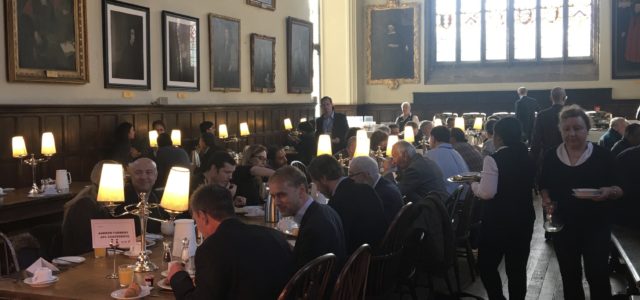
    Ketamine for Psychiatric Disorders breakfast.Can you say PHENOMENAL???

    Let’s hear it for Ketamine Treatment and Oxford!!

    I just returned from a history-making global conference focused on research and clinical evidence for ketamine for psychiatric disorders. Experts from nearly every continent spoke of their own data and evidence from this emerging field of the the science behind ketamine and the extraordinary help ketamine treatment provides. The entire room was held spellbound for three days, from the first word spoken until the final applause Friday afternoon. It was an unforgettable event in the most beautiful and historic venue at Wadham College, Oxford, UK.  

    A 400-Year-Old Chandelier in a 400-Year-Old Room

    In the 1650’s, a group of individuals including such celebrated thought leaders as Robert Hooke, Robert Boyle, Christopher Wren, and Thomas Willis began an “Experimental Philosophy” club where the fundamental premise required that orthodox thought was rejected and the world was viewed through the “broadened lens of experimental scrutiny.”

    Well, this club became the Royal Society when members of the family of King Charles II got Ketamine for Psychiatric Disorders International Conference 2018involved. When that happened, the revolutionary became the norm.

    It seems only fitting that this international conference on the revolutionary breakthroughs for treating psychiatric disorders should be held in this same building, and on these same grounds.

    Rupert McShane chaired this ground-breaking event. Hats off to him for beginning what we hope will become an annual international conference.

    Luminaries in the Ketamine Adventure

    Gerard Sanacora, a frontline researcher for ketamine treatment in psychiatry, spoke first. He previously served as the lead researcher of the American Psychiatric Association Counsel of Research Taskforce for Novel Biomarkers and Treatments which published a consensus statement about ketamine for this purpose in mid-2017.

    Dr. Sanacora kicked off the conference with an overview of the literature and key studies that have explored ketamine’s mechanism of action in treating psychiatric disorders. It was brilliant!

    We’ve been keeping you informed about some of those in recent times … but there was so much more that was discussed.

    Luminaries all around!  We were graced with Peter Somogyi and David Lodge whose seminal work on NMDA and axoaxonic cells paved the way. Many of the top ketamine researchers and clinicians in the world presented their findings: Colleen Loo, Jennifer Southgate, Nuri Farber, Steve Levine, David Feifel, Declan McLoughlin, Haggai Sharon, Alison McInnes, Samuel Wilkinson, Michael Grunebaum, Elias Dakwar, Rupert McShane, Raquel Bennett, Karen Lascelles, Jeffrey Becker, Ian Anderson, Gordon Fernie, James Stone, Meng Lei, and Dan Iosifescu. Jose Miyar covered regulatory issues. Jonn Donello and Suresh Durgam discussed new breakthrough findings for the mechanism of action of Rapastine, and Jaz Singh presented new data about the safety and efficacy of esketamine.

    And of course, the extraordinary international collaborative teams involved in all of this work … the freshness of perspective emerging across the field — from doe-eyed young researchers to seasoned principal investigators … the breadth and energy of molecular, cellular, neuroimaging, and clinical work represented in the posters.

    Breathtaking doesn’t do it justice.

    We talked about everything ketamine from mice to men … and from chandelier cells (just as gorgeous as the chandeliers King George IV gifted to Wadham College for the Holywell Music Room) to psychotherapy.

    How fitting that we heard about paradigm shifts in the very room where Handel and Haydn first played! Raquel Bennet, Founder of KRIYA Institute, explored the importance of the dissociative experience as transformative, and the many ways ketamine has been used in clinical practice.

    Biologically to induce neuronal plasticity (we talked about this before), as a sort of lubricant  to enhance psychotherapy, and to deliberately induce dissociation … which can be transformative for the patient.

    Jeffrey Becker offered us an elegant unifying hypothesis for ketamine in clinical practice, exploring the GABAergic interneurons and Jungian archetypes in treating people with depression. 

    The depth and breadth of this conference was amazing. The sheer richness of talents in the room, the knowledge and experience gathered into this one place from all over the world. Everyone talked about how much more we need to learn, and the questions that still need to be answered.

    Ketamine for Psychiatric Disorders – Global Conference! Stunning.

    These were basic scientists, principle investigators, neurimaging experts, clinical researchers, psychiatrists, anesthesiologists, Ketamine for Psychiatric Disorders International Conference illuminated ketamine's many therapies.psychologists … it’s astonishing to realize the scope of interest and exploration there is in perfecting this most remarkable treatment to help you get better.

    When you feel depressed, deeply and severely … or when your vigilance and terror from PTSD is tearing apart your family … or when bipolar disorder rips you apart … It can feel like you’re all alone and no one out there cares. You know you don’t know the solutions. So you feel like you’re relying on scientists to figure out the solutions … but … is anyone really trying to help you?

    This is why I tell you about this conference.  This sharing of data, preliminary findings, hypotheses, results… just to show you there are people all around the world who explore the solutions to your pain, and work on solutions for you … and others like you … as feverishly as they can. They care. And they’re dedicated to learning more and more. All to help you.

    As for me, I presented data from my clinical practice. It demonstrates that ketamine can be used to stop suicidal thoughts. And it happens often in a real-world outpatient clinical practice. What’s more, it provides an alternative to hospitalization.

    Someone recently mentioned to me that he predicts the excitement over ketamine will fade away.

    Of course, he’d probably read negative media accounts and had probably missed the science … and all the studies. But I have to say, I wish he and others who share that “doom and gloom” outlook could have been present to hear all the extraordinary work going on with ketamine and related compounds.

    It seems pretty clear to me: ketamine treatment is going to be with us a good while.

    Ketamine Can Make Antidepressants Work Better for Hospitalized Patients

    Declan McLoughlin spoke of his study in Dublin using ketamine to try to prolong remission after ECT. He also explained his work using ketamine as an additional treatment combined with antidepressants for hospitalized patients in Dublin.

    These are just examples. But they don’t even scratch the surface of all the topics covered these three days last week.

    There’s no question that ketamine treatment has a long way to go to reach “mainstream status.” Everyone in the upper echelons of research and practice seems to agree we need to know so much more. The more we learn the more questions arise that we need answers to. But we know so much more than we did even two years ago.

    This is the breakthrough we’ve wished for … depressed and anxious people, suicidal people, Ketamine for Psychiatric Disorders international Conference 2018people wracked with PTSD, or torn by bipolar disorder, trapped by OCD. This is what you’ve yearned for. So have I. Many say this is the greatest breakthrough in fifty years in psychiatry. But we can go further than that.

    This is the best, life-changing breakthrough for people who suffer with psychiatric mood disorders EVER.

    There is so much more to learn…so much! Ketamine is the new frontier in psychiatry and the treatment of psychiatric mood disorders and more.

    Ketamine for Psychiatric Disorders like Substance Use Disorders

    One more story I have to tell you about. Elias Dakwar (we’ve talked about his work) discussed his research with ketamine in treating substance use disorders. You might remember our post on crack cocaine use in February.

    We talked about how Dakwar and his team studied responses of crack cocaine users. Those who were currently using and had no intention of stopping.  When they had been given ketamine infusions the day before being offered either crack or money, they had the motivation to turn and choose money, and their craving was so diminished that they also had the power to turn down crack.

    That brings up something we’ve talked about here: that ketamine restores initiative and motivation.

    All in all, this conference gathering of great scientific minds, young researchers, and brilliant clinicians was a huge step forward for the needs of depressed and anxious people. A huge step forward for the use of ketamine in the treatment of psychiatric disorders.

    Research is ongoing to test ketamine’s use with psychotherapy, ECT, TMS, and traditional antidepressants. Plus, its effectiveness intravenously, intramuscularly, subcutaneously, orally, and intranasally.

    Now we’ve all gone back to our home offices, and our work will continue. And this time next year I hope we’ll see that ketamine’s advantages have taken another big step forward.

    Meanwhile, at Innovative Psychiatry, we’re still here providing IV ketamine treatment. And we see life-changing results with it for people with treatment-resistant depression, bipolar depressionsocial anxiety, bipolar disorderPTSD, OCD, and suicidal thoughts. 

    If you’re suffering from a mood or anxiety disorder, treatment hasn’t helped, I’m sure you’re far more concerned about your desire to feel better and function again, than about a conference. And that’s why we’re here and want to help. We try to offer you the best that the world has to offer. This time from the first International Conference for Ketamine and Related Compounds.

    Call us or schedule an appointment here to be evaluated.

    There is hope. You can feel truly better. 

    So don’t judge your next treatment by the ones you’ve had before. This time, chances are, you’ll see a difference. And you’ll remember how to live again.

    Lori Calabrese, MD offers innovative psychiatric treatment like IV Ketamine

    To your life and the emerging of your best self,

    Lori Calabrese, MD

error: Content is protected !!