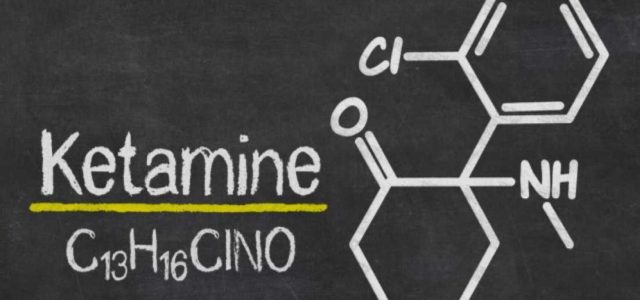
Ketamine: 50 Years of Modulating the Mind

Abstract Ketamine was introduced into clinical practice in the 1960s and continues to be both clinically useful and scientifically fascinating. With considerably diverse molecular targets and neurophysiological properties, ketamine’s effects on the central nervous system remain incompletely understood. Investigators have leveraged the unique characteristics of ketamine to explore the invariant, fundamental mechanisms of anesthetic action. […]

Continue Reading

Ketamine Administration in Depressive Disorders: A Systematic Review and Meta-Analysis.

INTRODUCTION: Ketamine’s efficacy in depressive disorders has been established in several controlled trials. The aim of the present study was to determine whether or not ketamine administration significantly improves depressive symptomatology in depression and more specifically in major depressive disorder (MDD), bipolar depression, resistant depression (non-ECT studies), and as an anesthetic agent in electroconvulsive therapy […]

Continue Reading

How Depression and Antidepressant Drugs Work

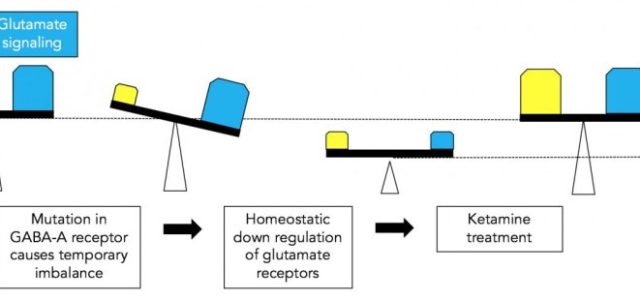
Date: May 18, 2016 Source: Penn State Summary: New research demonstrates the effectiveness of ketamine to treat depression in a mouse model of the disease. The brings together two hypotheses: 1) that depression results from deficits in GABA signaling and 2) that depression results from deficits in glutamate signaling. It shows that the depression-like behavior […]

Continue Reading

From Drug of Abuse to a Glimpse Into Depression

Date: May 18, 2016 Source: American Association of Pharmaceutical Scientists (AAPS) Summary: Ketamine, a synthetic analogue of PCP, has recently taken the spotlight as a novel, fast-acting antidepressant. However, experts say that more research on usage of ketamine as an antidepressant is needed.

Continue Reading

Ketamine Lifts Depression via a Byproduct of its Metabolism

Date: May 4, 2016 Source: NIH/National Institute of Mental Health Summary: A chemical byproduct, or metabolite, created as the body breaks down ketamine likely holds the secret to its rapid antidepressant action. This metabolite singularly reversed depression-like behaviors in mice without triggering any of the anesthetic, dissociative, or addictive side effects associated with ketamine. The […]

Continue Reading

The Science of Happiness: What You Can Do to Achieve It

Photo of family catching snowflakes who have found happiness in their relationships illustrates the social principle of the Science of Happiness.

The science of happiness is rather new as a science, but the pursuit of happiness is something we’re all familiar with. Everybody searches for happiness all through life. In fact, it’s ranked right up there with food and water since the days of cave men. As long as man has lived on earth, he’s sought […]

Continue Reading

error: Content is protected !!