Category: Bipolar Disorder

Articles About Bipolar Disorder from Lori Calabrese, MD | The Ketamine Blog

Serious and Complex Condition

Bipolar disorder’s symptoms demonstrate a complex brain and behavior disorder characterized first and foremost by severe mood swings. Secondly, it includes an inability to regulate your emotions and responses  Because of that, you have times of extreme emotional lows we call bipolar depression, and times of extreme highs we call mania or hypomania. Therefore,  sometimes you suffer through both at the same time.

It’s notable that each mood can last for months or weeks or days… or even hours before it swings just as severely to the other extreme.

Sadly. people with this disorder often face suicidal thoughts, or specific plans for ending their lives. In addition, they show impulsivity. The result of the combination of impulsivity and suicidal thoughts is a dangerous mixture, that far too often ends in fatality.

For this reason, this disorder reduces longevity by an average of 25% less than healthy persons.

These articles about bipolar disorder are available to you to help you understand this condition better, and hopefully to better understand the one who suffers with it.

Causes of Bipolar Disorder

While we don’t know exactly what causes bipolar disorder, we do know that a combination of genetics, environment, altered brain structure and chemistry all  contribute.

For one thing, we know the amygdala and hippocampus play significant roles in this disorder. These structures in the brain help form new memories and process learning and emotions.

As a result, when the hippocampus and amygdala malfunction, the result can be a mixture of memories that store painful emotions that are so relentless that the sufferer finds it difficult to recover from hurts and traumatic events many years later, as well as to forgive someone who has hurt him.

These difficulties cause severe distress for the sufferer who finds it almost impossible to let go of traumatic memories and loss. Instead, he suffers the full pain of the memory each time it comes to mind.

Cheating Death

So, a damaged amygdala can lead to a lack of natural fear of danger. Furthermore, possibly linked to this is the pursuit of adrenalin-stimulating opportunities. A common trait in those with bipolar disorder, you tend to crave danger, thrills, and activities that “cheat death”… and other forms of high risk behavior. Since the amygdala consists of two parts – one on each side of the brain – if both are damaged it results in the sufferer’s inability to distinguish emotion response in the facial expressions of others. Consequently, this type of damage may be linked to autism.

Symptoms

Symptoms of bipolar disorder can include:

-mood swings
-difficulty regulating emotion
-intense outbursts
-rapid pressured speech
-hypersexuality
-high risk behavior
-visual and/or auditory hallucinations
-grandiosity
-delusions
-severe insomnia
-hypersomnia
-suicidal thoughts
-feelings of worthlessness
-hopelessness
-despair
-lack of energy or hyper-energy
-difficulty focusing or retaining information
-shame, low self-esteem and therefore sometimes a belief that one has low intelligence

Mixed States

Some people experience long periods of depression with negative beliefs about themselves, then long periods – or short periods – of mania or hypomania with all the more energized symptoms, including overconfidence and grandiosity. In addition, some people suffer from mixed states which is a mixture of both.

At the same time, this person may experience high energy, sleeplessness, racing thoughts, and rapid speech combined with irritability, rage, explosiveness, despair, and suicidal inclinations.

Types of Bipolar Disorder

Bipolar 1 – most intense and severe
Bipolar 2 – also can be severe, consists of longer periods of depression interrupted by hypomania, which is less intense than mania.
Cyclothymic Disorder – shorter periods of less intense depressive symptoms alternating with  shorter periods of hypomanic feelings.
Fear of Harm Bipolar Disorder – begins in children and consists of acute fear of harming others and/or of being harmed.

Bipolar Disorder of each type is a serious disorder. Continue reading these articles about bipolar disorder to learn more.

  • World Bipolar Day is for YOU

    World Bipolar Day is for YOU

    World Bipolar Day is for you, your children, and your community. Stop the stigma.World Bipolar Day is for You.

    Whether you know this illness intimately, because it’s part of every hour of every day for you, or whether you love someone who suffers. And even if you don’t, you can help with support, kindness, and funds. Make this world a better place. World Bipolar Day is for you.

    How does bipolar disorder start?

    Bipolar symptoms can begin at a variety of ages, and in a variety of ways. This is one person’s story, and you can see how, in this case, seemingly “normal” symptoms gave way to the full blown illness.

    As a toddler and preschooler, his tender heart and sparkle in helping others gave him the reputation as the sweetest child with the most disarming smile in the neighborhood.

    But he also cried.  Long, mournful weeping…for no apparent reason. His mother wouldWorld Bipolar Day is for you... it's an illness and is not your character. hold him and rock him…try to comfort him for hours. Eventually, the sorrow would pass and he could play happily again.

    Later, came waves of guilt and shame. His first-grade teacher disapproved of his constant activity in the classroom… and the pain of it was so severe he’d sit in the dark in his room after school overwhelmed with shame too intense to cry. Just shut down with his own feelings of worthlessness… He told his mom he was a juvenile delinquent.

    What causes a 7-year-old to feel worthless? Where does suffocating shame come from for an innocent child?

    His parents thought he was just especially sensitive, and tried to console him.

    Accidental Blows to the Head Can Cause Damage

    At the age of 9, he had his fifth blow to the head. It was always something. An accidental blow World Bipolar Day is for YOU. To learn, to give, and to take care of yourself.with a baseball bat, falling on his bike and hitting his forehead with the handle bar. Baseballs would come out of nowhere and hit him squarely in the temple or forehead. It was uncanny. One massive goose egg after another.

    Years later his family learned that serious blows to the head can lead to psychiatric disorders, like bipolar disorder.

    By the time he was 10, he was old enough to know something was wrong. His pain, his torment, his humiliations at school, plus corrections from his teachers were piling up. The nitpicking from his friends was too painful to overlook.

    His long periods of sad emptiness had become too hard for him to endure. His mom had always told him it would pass. But he told her that it never has and he can’t bear it any longer.

    He wanted to die.

    How often do you hear a 10-year-old say such a thing?

    A Disordered Brain that Can’t Read

    During middle school he had more and more difficulty reading even though he had learned to read well when he was 4. He could see the words on the page, but couldn’t make sense of World bipolar day is for you and your creativity, your sparkle, and your suffering.them. To make it worse, they danced around the page and he lost his place every 2-3 words.

    The humiliation.

    And the scandal…A difficult thing that kept emerging consistently, was his fascination with sex. As a preschooler, he was punished for cajoling the little kids in the neighborhood to remove their pants so he could explore, or later having sexual experiences with friends, and all sorts of exploration … And more shame.

    **Hyper-sexuality emerged before the manic mixed states, though he had had many times of extreme excitement since he was born. Was that mania? Or just a little boy being a little boy..?

    Then, he was 14, and felt new feelings for a pretty girl he knew. It wasn’t long before he had coaxed her into bed, telling her he would “take care of everything”…to not be afraid. “He knew what he was doing.”

    Painful Conflict Leads to Outburst

    Then, when his parents told him he couldn’t see her any more, he had his first manic episode.

    He exploded, shouting and spitting out curses as if he couldn’t say them fast enough, and his lips sort of popped as he pushed out the words, like the way they do when you say the word “bubble.”

    His family had never seen this before. This fourteen-year-old spoke as though he was a grown man. That he was in love and would marry this girl, and their relationship wasn’t his parents’ business.

    They’d never seen him like this. He stormed around, cursing, and screamed as he slammed the door.

    “Was this just the erratic emotions of a 14-year-old teenager?” his parents wondered.

    Super Human Strength During a Mixed States Episode

    Outside, he grabbed a 4ft. tall shrub with both arms and pulled it straight out of the ground by the roots, screaming with rage.

    **Superhuman strength would always accompany his mixed states mania…this was a sign of things to come.

    Scenes like this happened more and more often. Whoever was with him when it happened,  World Bipolar Day is for you if you've had outbursts, and didn't know why.would see a look in his eye, then his veins would stand out on his forehead and neck while words pounded out and exploded from his mouth expressing his frustration and rage and hurt.

    Nothing within reach was held sacred. He threw whatever was available whether it was a full Coke can, a prized porcelain heirloom, or a boot. Or… a TV or chair through the window…or a dresser… His family became familiar with these “episodes” over time, and most would leave the room or the house to avoid it. His mom stayed close so he wasn’t alone.

    **It’s noteworthy that he never turned his rage and strength toward a person…always inanimate objects.

    High Risk Behavior Leads to More Pain

    By the time he was 15, his girlfriend was pregnant. But, there had been a variety of sexual encounters of all types by then. Sometimes his parents knew …sometimes they had no idea. This time, a baby boy was placed for adoption and his heart broke. It was the most painful loss of his life.

    **It’s important to recognize that hypersexuality is a strong symptom in over 57% of people with bipolar disorder. Don’t be afraid to talk about it. It’s real. And needs treatment.

    New Diagnosis for Improved Treatment

    In between these cycles, he was gentle, considerate, creative, affectionate. He lived to help others feel good about themselves. He was born friendly, never met a stranger, but was quick to  get acquainted and help anyone who needed it. Not a shy bone in his body.

    He loved to create music with this guitar and jammed with others and played in a church band. His humor brought delight to every situation.

    **It’s been said that a person with bipolar disorder is really two people. The wild, out of control, risk-taking trouble maker…and the gentle person who pays for the fallout.

    When he was admitted to a psychiatric hospital for teens, he was given the  diagnosis of bipolar I disorder, with rapid cycling and mixed states. He’d been diagnosed with Major Depressive Disorder a few years before, and had been taking medicine that didn’t improve the way he felt.

    But now, this diagnosis explained the unexpected explosions, the gnawing drive of hypersexuality, the pressured speech, the guilt and shame, grandiosity as in the belief he could control unpredictable forces to his own desired outcome… it all began to make sense.

    His changes in appetite, sleep, feelings of worthlessness, his difficulty concentrating and reading, and his obsession with death and the desire to die, led his psychiatrist to the bipolar disorder diagnosis.

    A Family’s Observations Help Doctors See What the Patient Overlooks

    His parents explained to the doctor that he often felt desperately depressed, wanting to World Bipolar Day is for you, to help you find treatment.die, locking himself in the bathroom to try to hang himself.  Then after awhile… he finally became quiet and within a couple more hours he played his guitar, wrote lyrics, and genuinely apologized for all that had happened that morning.

    Until something reminded him of the girlfriend he lost, and he’d rise into a rage, shooting words like bullets with blood in his eye, slamming doors, crashing lamps, throwing dishes…until he broke down in tears and sobbed and sobbed.  And eventually he fell asleep.

    **Rapid cycling like this was the hallmark of all his cycles.

    Sleep Can Reboot A Shattered Mind

    He often woke from sleep with a clean slate. Peaceful and thoughtful. When he was awake during the night while others slept, he’d make imaginary creatures out of pieces of fruit and take pictures of them and send them to people he cared about with a cute greeting. Or write letters filled with cartoon characters.

    He wrote poetry, lyrics to songs, played the guitar… riffing along with a song on a CD…  It seemed he never stopped.

    **The triad of care that’s vital for anyone with this disorder: sleep, healthy food, and medication. If any one of these elements is missed, it can trigger an episode.

    Never-Ending Cycles + Self-Medication

    He’d be doing fine, then a few days would pass and he would become agitated, describe the feeling of “fire ants on his brain.” Before long he was escalating into a suicidal rage again.

    This scenario defined his life, through his teens and twenties. He learned to shave in jail, never completed high school, and got his GED in rehab.

    His profound desire to just feel better…just be happy…drove him to try various forms of intoxication, from beer to marijuana, from paint thinner to meth, from cocaine to crack.

    It’s no surprise that this guy’s misery and anguish were then complicated by the throes of World Bipolar Day is for you.addiction. Risky behaviors like unprotected sex and illicit drugs always called to him like ancient sirens who lured sailors to shipwreck.

    And his bipolar disorder was getting worse.

    Self-medicating Made Everything Worse

    He took every medication his doctors prescribed but nothing made a real, lasting difference. And the chemicals he turned to for relief magnified the chaos in his mind and body.

    Then another girlfriend…another pregnancy. And he determined to gain control of his life, determined to be a good father. This was a second chance…

    Voluntary surrender to a drug rehab for nearly a year…it helped the addiction, but bipolar raged on.

    **IV ketamine treatment is bringing balance to so many people now who have suffered with treatment-resistant bipolar disorder. But it was unheard of in his day.

    After rehab, he tried his hardest to be a good dad to his new son. They played games, shared long walks and talks. They shared their love for music and rhythm. But he was often too ill to function. Often unable to sleep. Insomnia plagued him.

    Insomnia Undermined Everything He Worked For

    By the time he was 31, he had achieved 6 months World Bipolar Day is for you and all you've lived.sobriety, stayed away from crack cocaine long enough to realize it was good to be at home, be with family, and eat home cooking. But his suicidal thoughts became more and more frequent and dominating. Unable to sleep, awake for days on end, he feared the mania would return. And it did. Way too often.

    And with the mania there was torment.

    He always loved a party with his family, and special times with his son, but far too often good times would trigger mania again, and he’d lose control of his life.

    His sense of humor still kept everyone laughing.

    The problem with his hilarious humor was that enjoying it, even laughing hard, the brilliance of his gift exploding… he’d be on a roll…and that could trigger another nightmare of mania, drinking, arrest, etc. So he tried hard to stay calm and even-tempered, the same way you try not to laugh if you’ve just had an appendectomy.

    There were times that he broke out in hives trying to hold his bipolar reactions inside.

    Bipolar Disorder Can Wear Out Even the Strongest Person

    His 33rd birthday passed, and after studying medical books about the brain for years, learning about the amygdala and hippocampus, learning more about the pathology in his brain that had held him captive for 30 years, after months of suicide attempts a few times a week, slicing his arms every direction and watching the blood pump out in spurts, he told his closest, most trusted friend he didn’t think he’d live much longer.

    He resigned himself to accept there was no escape that would work, but he had a nagging gut feeling his time was coming. He was weary of the ER visits, the whispers and cruel comments of hospital staff. And he was weary of the fight.

    The last week of April and the first week of May, an overwhelming mania sent him running and running and running. Coming home in the middle of the night to hose off and put on dry clothes then back out running and running and running some more. Sort of Forest Gump style.

    He couldn’t stop. The meds didn’t stop it. The emergency meds — for times like this — didn’t stop it, either.

    He began “seeing” various people and talking to them… feeling offended that they didn’t answer him.

    He told his family these people were camping in the woods where he ran.  After that, he was talking to people at home that his family couldn’t see.

    **Times like this had by now earned him the diagnosis of Schizoaffective… because of his auditory and visual hallucinations.

    The running continued for two weeks, until on the afternoon of Cinco de Mayo someone walking her dog stumbled upon a man’s body at the edge of his beloved woods. World Bipolar Day is for you, for your freedom and your fulfilling life.

    The police said it appeared he decided to lie down for a nap. His family, through their tears, later thought it was fitting he exited this world on Cinco de Mayo … because he’d always loved a party.

    The autopsy showed dehydration and a slightly enlarged heart.

    His family called it death by bipolar disorder.

    ——————

    World Bipolar Day is for YOU

    World Bipolar Day has been established to help us all see what those who suffer experience in their private lives. To motivate us to find solutions. Treatments that work.

    This is the true story of one man who lost the fight.

    But there are millions who have similar stories to tell. And others with different stories of their own. It’s easy to point the finger and criticize another person’s behavior, without knowing the brain changes that cause it. And without walking in their shoes yourself.

    World Bipolar Day was celebrated last week on Friday, March 30. Let’s keep it going. Please consider contributing to organizations that are searching for understanding and better and better treatments. Brain and Behavior Research Foundation, for example.

    And seek out those who struggle to live with this illness, and treat them with support and compassion even though you may not understand them. There’s something better than stigma. It’s called kindness.

    World Bipolar Day is for you. Whether you’re suffering with this disorder, or whether someone you love is suffering.  Because if that’s the case, you’re suffering too.  And… if it’s not about your suffering, it may be about your support.

    At Innovative Psychiatry, in South Windsor, Connecticut, we’re seeing very encouraging World Bipolar Day is for You to help you heal.outcomes in bipolar disorder with IV ketamine treatment. Its effects are dynamic with the depression aspect of bipolar disorder. But that’s not all. We’re seeing overall improvement in mental organization and executive function, too.

    There’s so much to learn about this amazing medicine, and, of course, so many questions we still seek answers to. But we’re pleased by the positive outcomes we see.

    It’s likely IV ketamine treatment could have saved our friend’s life. He was a perfect candidate for it. But, he didn’t know about this treatment. However, now you do.

    If you suffer from bipolar disorder in any form, and medications aren’t helping you maintain a healthy, fulfilling life, call us. Or schedule an appointment.

    We believe in your recovery and health. We believe in hope.

    Lori Calabrese, MD offers innovative psychiatric treatment like IV KetamineTo the restoration of your best self,

    Lori Calabrese, MD

  • International Conference on Ketamine for Psychiatric Disorders 2018

    International Conference on Ketamine for Psychiatric Disorders 2018

    Ketamine for Psychiatric Disorders breakfast.Can you say PHENOMENAL???

    Let’s hear it for Ketamine Treatment and Oxford!!

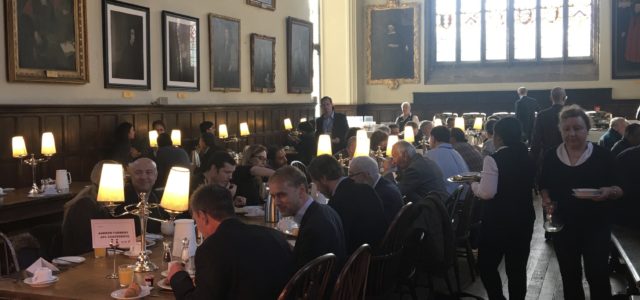
    I just returned from a history-making global conference focused on research and clinical evidence for ketamine for psychiatric disorders. Experts from nearly every continent spoke of their own data and evidence from this emerging field of the the science behind ketamine and the extraordinary help ketamine treatment provides. The entire room was held spellbound for three days, from the first word spoken until the final applause Friday afternoon. It was an unforgettable event in the most beautiful and historic venue at Wadham College, Oxford, UK.  

    A 400-Year-Old Chandelier in a 400-Year-Old Room

    In the 1650’s, a group of individuals including such celebrated thought leaders as Robert Hooke, Robert Boyle, Christopher Wren, and Thomas Willis began an “Experimental Philosophy” club where the fundamental premise required that orthodox thought was rejected and the world was viewed through the “broadened lens of experimental scrutiny.”

    Well, this club became the Royal Society when members of the family of King Charles II got Ketamine for Psychiatric Disorders International Conference 2018involved. When that happened, the revolutionary became the norm.

    It seems only fitting that this international conference on the revolutionary breakthroughs for treating psychiatric disorders should be held in this same building, and on these same grounds.

    Rupert McShane chaired this ground-breaking event. Hats off to him for beginning what we hope will become an annual international conference.

    Luminaries in the Ketamine Adventure

    Gerard Sanacora, a frontline researcher for ketamine treatment in psychiatry, spoke first. He previously served as the lead researcher of the American Psychiatric Association Counsel of Research Taskforce for Novel Biomarkers and Treatments which published a consensus statement about ketamine for this purpose in mid-2017.

    Dr. Sanacora kicked off the conference with an overview of the literature and key studies that have explored ketamine’s mechanism of action in treating psychiatric disorders. It was brilliant!

    We’ve been keeping you informed about some of those in recent times … but there was so much more that was discussed.

    Luminaries all around!  We were graced with Peter Somogyi and David Lodge whose seminal work on NMDA and axoaxonic cells paved the way. Many of the top ketamine researchers and clinicians in the world presented their findings: Colleen Loo, Jennifer Southgate, Nuri Farber, Steve Levine, David Feifel, Declan McLoughlin, Haggai Sharon, Alison McInnes, Samuel Wilkinson, Michael Grunebaum, Elias Dakwar, Rupert McShane, Raquel Bennett, Karen Lascelles, Jeffrey Becker, Ian Anderson, Gordon Fernie, James Stone, Meng Lei, and Dan Iosifescu. Jose Miyar covered regulatory issues. Jonn Donello and Suresh Durgam discussed new breakthrough findings for the mechanism of action of Rapastine, and Jaz Singh presented new data about the safety and efficacy of esketamine.

    And of course, the extraordinary international collaborative teams involved in all of this work … the freshness of perspective emerging across the field — from doe-eyed young researchers to seasoned principal investigators … the breadth and energy of molecular, cellular, neuroimaging, and clinical work represented in the posters.

    Breathtaking doesn’t do it justice.

    We talked about everything ketamine from mice to men … and from chandelier cells (just as gorgeous as the chandeliers King George IV gifted to Wadham College for the Holywell Music Room) to psychotherapy.

    How fitting that we heard about paradigm shifts in the very room where Handel and Haydn first played! Raquel Bennet, Founder of KRIYA Institute, explored the importance of the dissociative experience as transformative, and the many ways ketamine has been used in clinical practice.

    Biologically to induce neuronal plasticity (we talked about this before), as a sort of lubricant  to enhance psychotherapy, and to deliberately induce dissociation … which can be transformative for the patient.

    Jeffrey Becker offered us an elegant unifying hypothesis for ketamine in clinical practice, exploring the GABAergic interneurons and Jungian archetypes in treating people with depression. 

    The depth and breadth of this conference was amazing. The sheer richness of talents in the room, the knowledge and experience gathered into this one place from all over the world. Everyone talked about how much more we need to learn, and the questions that still need to be answered.

    Ketamine for Psychiatric Disorders – Global Conference! Stunning.

    These were basic scientists, principle investigators, neurimaging experts, clinical researchers, psychiatrists, anesthesiologists, Ketamine for Psychiatric Disorders International Conference illuminated ketamine's many therapies.psychologists … it’s astonishing to realize the scope of interest and exploration there is in perfecting this most remarkable treatment to help you get better.

    When you feel depressed, deeply and severely … or when your vigilance and terror from PTSD is tearing apart your family … or when bipolar disorder rips you apart … It can feel like you’re all alone and no one out there cares. You know you don’t know the solutions. So you feel like you’re relying on scientists to figure out the solutions … but … is anyone really trying to help you?

    This is why I tell you about this conference.  This sharing of data, preliminary findings, hypotheses, results… just to show you there are people all around the world who explore the solutions to your pain, and work on solutions for you … and others like you … as feverishly as they can. They care. And they’re dedicated to learning more and more. All to help you.

    As for me, I presented data from my clinical practice. It demonstrates that ketamine can be used to stop suicidal thoughts. And it happens often in a real-world outpatient clinical practice. What’s more, it provides an alternative to hospitalization.

    Someone recently mentioned to me that he predicts the excitement over ketamine will fade away.

    Of course, he’d probably read negative media accounts and had probably missed the science … and all the studies. But I have to say, I wish he and others who share that “doom and gloom” outlook could have been present to hear all the extraordinary work going on with ketamine and related compounds.

    It seems pretty clear to me: ketamine treatment is going to be with us a good while.

    Ketamine Can Make Antidepressants Work Better for Hospitalized Patients

    Declan McLoughlin spoke of his study in Dublin using ketamine to try to prolong remission after ECT. He also explained his work using ketamine as an additional treatment combined with antidepressants for hospitalized patients in Dublin.

    These are just examples. But they don’t even scratch the surface of all the topics covered these three days last week.

    There’s no question that ketamine treatment has a long way to go to reach “mainstream status.” Everyone in the upper echelons of research and practice seems to agree we need to know so much more. The more we learn the more questions arise that we need answers to. But we know so much more than we did even two years ago.

    This is the breakthrough we’ve wished for … depressed and anxious people, suicidal people, Ketamine for Psychiatric Disorders international Conference 2018people wracked with PTSD, or torn by bipolar disorder, trapped by OCD. This is what you’ve yearned for. So have I. Many say this is the greatest breakthrough in fifty years in psychiatry. But we can go further than that.

    This is the best, life-changing breakthrough for people who suffer with psychiatric mood disorders EVER.

    There is so much more to learn…so much! Ketamine is the new frontier in psychiatry and the treatment of psychiatric mood disorders and more.

    Ketamine for Psychiatric Disorders like Substance Use Disorders

    One more story I have to tell you about. Elias Dakwar (we’ve talked about his work) discussed his research with ketamine in treating substance use disorders. You might remember our post on crack cocaine use in February.

    We talked about how Dakwar and his team studied responses of crack cocaine users. Those who were currently using and had no intention of stopping.  When they had been given ketamine infusions the day before being offered either crack or money, they had the motivation to turn and choose money, and their craving was so diminished that they also had the power to turn down crack.

    That brings up something we’ve talked about here: that ketamine restores initiative and motivation.

    All in all, this conference gathering of great scientific minds, young researchers, and brilliant clinicians was a huge step forward for the needs of depressed and anxious people. A huge step forward for the use of ketamine in the treatment of psychiatric disorders.

    Research is ongoing to test ketamine’s use with psychotherapy, ECT, TMS, and traditional antidepressants. Plus, its effectiveness intravenously, intramuscularly, subcutaneously, orally, and intranasally.

    Now we’ve all gone back to our home offices, and our work will continue. And this time next year I hope we’ll see that ketamine’s advantages have taken another big step forward.

    Meanwhile, at Innovative Psychiatry, we’re still here providing IV ketamine treatment. And we see life-changing results with it for people with treatment-resistant depression, bipolar depressionsocial anxiety, bipolar disorderPTSD, OCD, and suicidal thoughts. 

    If you’re suffering from a mood or anxiety disorder, treatment hasn’t helped, I’m sure you’re far more concerned about your desire to feel better and function again, than about a conference. And that’s why we’re here and want to help. We try to offer you the best that the world has to offer. This time from the first International Conference for Ketamine and Related Compounds.

    Call us or schedule an appointment here to be evaluated.

    There is hope. You can feel truly better. 

    So don’t judge your next treatment by the ones you’ve had before. This time, chances are, you’ll see a difference. And you’ll remember how to live again.

    Lori Calabrese, MD offers innovative psychiatric treatment like IV Ketamine

    To your life and the emerging of your best self,

    Lori Calabrese, MD

  • 4 Subtypes of Depression Target More Effective Treatment for You

    4 Subtypes of Depression Target More Effective Treatment for You

    4 subtypes of depression show us that half are focused on low energy, and weight gain, and some are focused on anxiety and agitation.Depression’s the Worst!

    It drains your energy, robs you of enjoyment of ANYTHING, isolates you and makes you feel like no one in the entire world cares. Makes you feel like you’re a burden on the people you know. Makes you feel achey and lethargic.

    Shuts down your brain so you can’t think. You can’t do your job. Can’t take care of responsibilities. Can’t function. You just can’t do. Or care.

    What you do feel is worthless, hopeless, burdensome, guilty. It can even make you want to stop existing. To disappear. To die.

    If all this sounds like you, you’re not alone. Not by a long shot.

    Disability Plagues Depressed People

    Did you know depression is the #1 cause of disability in this country? Ahead of arthritis, stroke, substance abuse, and COPD.  4 Subtypes of depression make it easier to find effective treatment.Does that surprise you?

    It should.

    Because treatment hasn’t been as effective as we wish. But more about that later.

    This is why so much you hear from psychiatrists, drug companies … and why social media refers to the epidemic of depression.

    Well, in the interest of learning more about depression to find more effective treatment, a team of researchers set out on a quest.

    Their idea was to find out how to “define” depression. To tease it into types based on the connections between various brain cell (neuron) clusters and how they behaved. Up till now, psychiatrists, psychologists, and neuroscientists have used the DSM V criteria to diagnose various subtypes of depression.

    While this has been a great help, it doesn’t address brain changes and characteristics for various psychiatric disorders. But, neuroscientists need specific physiologic details that can be measured by machines rather than by subjective symptom reports and observation.

    Brain Circuit Study about Depression

    The study, funded by Brain and Behavior Research Foundation and the National Institute of Mental Health, used brain scans to study connections in the brain in a variety of both depressed and healthy subjects. 

    The study, led by Connor Liston, MD, PhD, included neuroscience research teams from five prominent universities.

    To rethink the general approach to diagnosis and treatment, they set out to identify new subtypes of depression. These were based on 4 subtypes of depression will help determine best medications.dysfunction in mood-related brain circuits. If they could understand more about the neuronal connections in the brain during various types of depression, maybe they could learn more about what type of treatment would be successful in each type.

    This could potentially eliminate the “trial and error” approach that has plagued psychiatric treatment the last fifty years. Patients wouldn’t have to take a medication for 8-12 weeks to find out if it helps.

    They made use of brain scans of these subjects periodically, and studied the differences in their scans. They also interviewed them each to correlate the symptoms of a given patient with that patient’s brain scan.

    What they discovered in simple terms, is that these brain scan images fell into four different categories. With four different clusters of symptoms… and of those four there were two primary differences.

    Anhedonia vs. Anxiety

    Two of the four were dominated by severe anxiety, and the other two were dominated by anhedonia, or loss of interest or pleasure in things they previously enjoyed.

    Those in the severe anxiety segment also tended to lose weight, and reported difficulty sleeping.  While those two in the anhedonia 4 subtypes of depression can help improve treatment.segment tended to gain weight and crave carbohydrates, as well as slept long hours, such as 19 hours at a time.

    You can see that though all four groups were diagnosed with depression, that the two groups of subtypes had almost opposite symptoms.

    Two subtypes

    To be certain they’d derived these four groupings correctly, they did the same scans and interviews with another set of people in a different city with different scanners, and different interviewers.

    The results verified their findings. 4 groups. 2 main categories: one dominated by anxiety and the other by anhedonia.

    If any of this is sounding familiar to you, there’s good reason.

    4 Subtypes of Depression

    Even the DSM V defines depression as a patient reporting 5 out of 9 symptoms that include extreme opposites. Such as 4 subtypes of depression will help with effective treatment.weight gain or weight loss.  Insomnia or hypersomnia (excessive sleepiness or sleeping). Psychomotor agitation or psychomotor retardation (restlessness or slowed movement).

    You may have a little anhedonia, but are plagued by severe anxiety in many situations. You may feel restless and agitated. Along with that, you likely find it impossible to get much sleep at night, if any. And you worry and worry. In addition, you may notice you’re dropping weight.

    On the other hand, if that doesn’t describe your symptoms, you may have minimal anxiety but have no feelings of pleasure, or enjoyment. And you may just want to go to bed and stay there. In fact, once you do, it may feel impossible to get out of bed again the next day. Plus, your waist is ballooning causing you to wear larger clothes.

    We call it all depression. But the symptoms aren’t the same.

    Liston and his team identified areas of the brain affected that led to this disparity in symptoms and named them Subtype 1, 2, 3, and 4.

    Depression Subtypes Treated with TMS

    The last significant step in the study required identifying which subtypes were improved by Transcranial Magnetic Stimulation 4 subtypes of depression can lead to more effective treatment.(TMS) and which weren’t. Learn more about TMS here.

    In their tests, they placed the magnetic coil over the dorsomedial portion of the brain, as opposed to the often-used left dorsolateral prefrontal cortex.

    They discovered the most receptive subtypes of depression to TMS treatment were subtype 1 and subtype 3. Most dramatically, subtype 1.

    They also learned that use of the clinical subtypes and connectivity symptoms as criteria for TMS treatment was 96% effective. But choosing TMS treatment based on symptoms alone was only 63% effective. And connectivity alone is only78% effective.

    The use of clinical symptoms combined with subtype diagnosis yields a dramatic improvement in predicting the best treatment for each subtype of depression.

    The Future in Diagnosing Depression by Subtype

    So … clearly, the first diagnosis is the one that determines you’re depressed and need treatment. But this approach to diagnosis will advance from the laboratory to the psychiatrist’s office. This ability to determine what type of depression you have will empower psychiatrists to get you better, more effective treatment, faster.

    There is lots more research needed, such as trying the same study with antidepressants, anxiolytics, and IV ketamine using this 4 subtypes of depression can help future treatment.same model.

    And of course, software will be developed to help us use these tools.

    The good news is that treatment for psychiatric mood disorders is advancing fast on many levels. The hopelessness that pervaded no less than a third of all depressed patients, when no medication seemed to help, is dissipating.

    At Innovative Psychiatry, in South Windsor, CT, we offer TMS. TMS has demonstrated improvement for most who have anxiety related disorders. 75% of patients in our office who are treated with TMS experience dramatic relief and improvement.

    We also provide IV ketamine treatment, and consistently see 80% of of our patients dramatically respond to treatment — even when everything else has failed them. A small percentage return for a follow-u or booster infusion periodically — if they need it or if a huge stressor occurs in their lives and sets off the first subtle signs of depression again.

    And of the 20% that don’t immediately respond to ketamine in our practice, another 7% reach remission a few months later.

    What’s more, IV ketamine treatment can erase suicidal thoughts in minutes or an afternoon. Ketamine can be life-saving

    If you have endured depression symptoms for a long time, and other treatments haven’t helped, call us. We’ve been working to find new ways to relieve treatment-resistant mood disorders for many years. We want to help you get your life back.  Or …maybe build it for the first time. Schedule an appointment here, or just call. Your life can be so much better, in fact, you can be the best you ever.

    To the emergence of your best self ever,

    Lori Calabrese, M.D.

    Lori Calabrese, MD offers innovative psychiatric treatment like IV Ketamine


    signature of Lori Calabrese, M.D.

  • 2018: Neuroscience Breakthroughs like IV Ketamine Treatment Mean Breakthroughs for YOU

    2018: Neuroscience Breakthroughs like IV Ketamine Treatment Mean Breakthroughs for YOU

    Neuroscience breakthroughs with IV ketamine treatment make the future look bright. Neuroscience breakthroughs like…IV ketamine treatment..?

    Exactly.

    2018 lies before us, like a valley that spreads to the horizon. And while it’s impossible to access the future, you can move forward knowing that each “today” you live has promise that was unheard of until recently.

    Especially if you suffer from untreated or treatment-resistant depression, anxiety, bipolar disorder, PTSD, or anxietysocial anxietyOCD or phobias.

    Neuroscience researchers have been discovering more and more about treating psychiatric mood disorders that has transformed our approach to treatment — and the outcomes, as well. 

    The 21st century breakthrough of IV ketamine treatment for depression is transforming psychiatric medicine. Studying the effects of this treatment has revealed that depression and other mood disorders wear away at the signaling structures in the brain, leaving synapses, dendrites and dendritic spines broken, weakened, and sparse.

    Neuroscience breakthroughs like IV ketamine treatment can bring breakthroughs to you … to your life.

    The clearing away of those broken down structures, and the rebuilding of new ones in a denser, more prolific, forestation turns out to be key to treating depression. The old theory that depression was caused by levels of serotonin or dopamine that were too low … well they’re ancient history now.

    Neuroscience Breakthroughs like IV Ketamine Treatment means Breakthroughs for You

    Actually, so far we know of four ways ketamine clears away depression and erases suicidal thinking so quickly. And we’re watching Neuroscience breakthroughs with IV ketamine treatment mean breakthroughs for you.with anticipation to see if research this year will reveal even more.

    So another intervention ketamine performs is related to the G proteins that are piled on lipid rafts in the cell membranes of the neuron cells in the brain.  Depressed people have these G proteins piled up on lipid rafts, where they can’t do their job to enhance signaling from synapse to synapse.

    For those who are helped by traditional antidepressants, it takes several hours for those G proteins to slide off the rafts and become productive.

    This is one reason it takes so long for traditional antidepressants to work for those they help. But when ketamine is given, they slide off the rafts within minutes. Remarkable. 

    Yet another healing action of ketamine is its effect on DNA. Turns out it also switches on mRNA which in turn flips the DNA switch to “ON” and that fire hoses BDNF across the synapse network.

    BDNF is a growth factor like the richest of composts, and it empowers the dendrites and dendritic spines to burst into blooming branches like a giant oak tree.  When the BDNF is fueled by ketamine, it turbo boosts that prolific branching of synapse structures, and your brain lights up like New York City. Unprecedented.

    A well-lit brain is a happy brain.

    Quoting from our earlier post entitled, “Breaking News: Another Way IV Ketamine Smashes Depression,”Neuroscience breakthroughs like IV ketamine treatment mean breakthroughs for you.

    As new synaptic connections are built, and greater communication between brain cells develops, the brain gains the ability to see things in a different perspective, and your outlook becomes brighter and healthier.

    IV ketamine can jump start that process. Wait. No. It can turbo-charge it.

    Extraordinary.

    And the fourth action IV ketamine treatment performs is increasing glutamate levels to equip synapses to send more and faster signals across the brain, which traditional antidepressants don’t touch. Brilliant.

    APA Task Force Issued a Consensus Statement in May 2017

    What a year it’s been!

    Four actions of ketamine we know about so far. The outcome is so extraordinary, so successful in such a large number of treatment-resistant cases, the American Psychiatry Association assigned a task force to issue a statement about the use of ketamine, this anesthesia medicine, off-label for treating depression.

    Their statement was one of the most momentous and widely read articles of the year. In fact, it’s listed as #3 on JAMA Psychiatry’s “Most Talked About Articles of 2017.” Suffice it to say that those who were on the task force are true experts in our field. They’d seen ketamine’s power to lift depression right out of the water.

    So they offered guidelines and cautions, and expressed theirNeuroscience breakthroughs like IV ketamine mean breakthroughs for you. elation when interviewed that such a thing has happened in their lifetime.

    They also specify that ketamine should be administered under a psychiatrist’s supervision.

    TheHealthSite.com featured a list of the 6 best medical achievements of 2017 that everyone should know about…. Ketamine for depression stood strong on that list.

    Of course, we know ketamine’s discovery didn’t happen this year.  Many years of studies and clinical trials laid the groundwork for ketamine’s popularity now.

    Thousands of patients have experienced the relief, the return of joy, initiative, creativity, and energy without side effects that ketamine provides.

    Never before has there been such a medicine that treats so many disorders in such a huge percentage of the population as ketamine.

    Ketamine has delivered HOPE.

    At Innovative Psychiatry, we see 80% of patients who’ve suffered for years with treatment-resistant depression, crippling panic attacks, suicidal thoughts that won’t stop, severe bipolar disorder, PTSD, social anxiety, and OCD experience relief, restoration, and relaxation after treatment.

    Another neuroscience breakthrough that means breakthroughs for you is Transcranial Magnetic Stimulation or TMS. It uses a coil to create a focused magnetic field over the front left side of your head. Specifically the left dorsolateral prefrontal cortex region.

    Then it sends tiny repetitive pulses deep into the brain to the emotion-regulation region. This stimulates the nerve cells and wakes them up. When they wake up, they begin to function again and give you better emotional regulation and function.

    With TMS treatment, you sit quietly for anywhere from 16 to 37 minutes, five days a week for 6-8 weeks. About halfway through the series of treatments, depression begins to lift, and you begin to feel better and better. Again, faster than Neuroscience breakthroughs like IV ketamine treatment mean breakthroughs for you.traditional antidepressants, and without any of the weight gain, sexual dysfunction, fatigue, or GI side effects they can cause.

    The sophisticated technology of TMS continues to develop. Even 5 years ago TMS seemed experimental and wasn’t widely available. But, like ketamine,TMS built a strong reputation for effectiveness. 

    In general terms, clinicians and hospitals report 60-75% success with TMS around the US. We see 75% of our patients consistently respond — and often remit — at Innovative Psychiatry. 

    Again, HOPE.

    Curcumin has gained an ever stronger reputation for its use as an adjunct in treating depression. Plus the connection between the brain, mood, and the strengthening of the microbiome is growing and gives us more and more opportunities to work with your diet and lifestyle to improve your mood.

    No known treatment lifts depression, anxiety, bipolar disorder, PTSD, or OCD in 100% of cases at this point. But these innovative treatment options prove successful for 75 – 80% of people who suffer in spite of traditional treatments. Obviously, hope soars for you if suffer with depression.

    If you suffer from suicidal thoughtsdepression, bipolar disorder, PTSD, social anxiety, OCD, you can feel better. The age of despair for sufferers is quickly dissipating. This has never been the case before. You really can feel better….lots better….as in really good.

    If you’d like to start 2018 on a brighter, fuller, more functional, and happy path, call us. We live one day at a time, because “now” is all we really have. But live well. Live as the best you you can be.

    Lori Calabrese, MD offers innovative psychiatric treatment like IV KetamineTo your very best self in 2018,

    Lori Calabrese, MD

  • Holidays with Depressed Family…How’s It Going for You?

    Holidays with Depressed Family…How’s It Going for You?

    This baby sleeping in a box at Christmas is peaceful. But holidays with depressed family can be hard on everyone.Holidays with Depressed Family … Not Easy

    Are you enjoying this holiday season…? This time of shopping, music, winter hats and gloves… hot chocolate and marshmallows. Sounds like a Christmas carol, doesn’t it…?

    On the other hand, there’s another side to the holidays, isn’t there?

    Is setting up the tree, and unwrapping all your ornaments, something you make time for, and do with quiet joy…?

    Or is it something you cram into the 45 minutes between work and the holiday chorus concert while the kids scarf down McDonald’s and fight over who gets the last cookie…?

    The traffic to go anywhere is jammed in gridlock…so driving home from work… well there’s no way you’ll ever get This Norman Rockwell picture is heartwarming, but holidays with depressed family can be hard.home.

    That “Christmas Card” Family Holiday

    Wouldn’t we all love to have that dreamy kind of holiday…?

    Yes, maybe.

    But I’d like to suggest that a “perfect Christmas card holiday” wouldn’t be as perfect as it sounds. And here’s why.

    Because it isn’t reeeeally sitting inside a Norman Rockwall painting on the wall that scratches that itch we all have for meaning in life.

    And because it really isn’t silent perfection that fills our hearts — no matter how pretty the picture.

    But isn’t it the people…?

    Isn’t it being with Aunt Sue who talks a lot, and Grandma Jansen and her raucous humor, and the wild and wooly cousins we grew up with…the crazies and the noise….?

    Life is messy. It’s not a pretty little picture, and we aren’t images on a holiday card. And you could even have a fault or two yourself … right?

    Holidays with Depressed Family Members Can Be Messy

    But you love them.  And they love you. You have history together. You’re family.

    If you have some people in your family who are a bit out there, eccentric and even occasionally annoying, that’s part of the patchwork quilt that makes you who you are and gives your family uniqueness.

    And…If you have family members or friends who have the challenge of managing bipolar disorder, depression, anxiety, PTSD … this may be a particularly taxing time for you and for them.

    You know those stresses that turn your holiday moment into a chaotic nightmare…? As much as you feel the stress, This warm scene of Christmas tree and presents doesn't reveal that holidays with depressed family can be taxing and hard.they are possibly more distressed than you are. When you have all you can handle, and someone in the room makes a scene…or explodes into an outburst… or leaves and no one knows where he is…you want to pull your hair out.

    Nothing wrong with that. You’re human.

    In Family Gatherings, Stronger Ones Carry the Load

    But, as you know, it’s also true that you may be a little more predictable. Your emotions may be a little more reliable. And you may be a little more skilled at managing them. These loved ones of yours probably do the very best they can. And they want meaning and love just like you do.

    Of course, this isn’t news to you. You know all about all this, because these are your family members. You’ve been there…and done that. Still, it doesn’t hurt to get a little encouragement from others who also understand your situation. Sharing the holidays with depressed family members can be challenging at best…and sometimes downright traumatic for everyone.

    Holidays Can Breed Crisis

    Caleb was a young man in his twenties, who had been diagnosed with bipolar disorder when he was a young teenager. He’d had bouts in psych hospitals. He’d also had bouts in jail. And bouts in rehabs. By this point in time, his confidence in himself was pretty much shot.

    He had such a gifted personality… you couldn’t sit in the room with him and not laugh your head off at his incredible humor. When he was good, he was your favorite person in the world.

    But far too often, he was sick. Nosediving into depression and crippling anxiety. You could tell when his fun self was transitioning to his tormented self. And that could happen at any time. Sometimes there was a trigger that set him off. Other times it just happened with no warning.

    Holidays were tough for him. His hopes were high and his anxiety that he’d fall apart were higher. You probably This young man sits alone in an isolated woody area because holidays with depressed family is so hard.already can guess that the anxiety can lead to a panic attack.

    So it was Thanksgiving, and the memories and interactions got to be too much and he left. Just walked out. He walked to a bridge in his community. He sat on the bridge and watched the traffic underneath, contemplating what he was going to do.

    Thankfully, his family drove up soon enough. They’d been looking. And they held him…reassured him…and he agreed to get in the car and go home.

    That Thanksgiving wasn’t a flawless Christmas card experience for the family…but isn’t it all about the people you love anyway? The family’s memory of that Thanksgiving was about safely returning home with him.

    Depressed People Have So Much to Bear

    Cherri was 16. She had been depressed so long she couldn’t remember what “happy” was like. She looked mad and sullen to those around her. But it wasn’t that. She was so numb. So silent. So hopeless. So paralyzed.

    She thought about death. About relief. She had self-medicated with various substances in the past then spent 18 months in rehab. After she came home, she was white knuckling sobriety, but was still miserable.

    Then her grandmother died a week before Christmas. She’d been so close to her. At times it seemed Grandma was the only one who understood her. At least it felt that way. Cherri couldn’t bear the pain.

    The day of the funeral she ran away. She just couldn’t face everyone. She needed to be alone with her memories of Grandma as she knew her.

    When the family arrived at the funeral home, they mumbled among themselves about Cherri’s selfishness to turn all Depressed teenage girl finds a quiet place to calm herself. Holidays with depressed family are hard.the attention to herself. In their own pain and loss, they didn’t really realize it wasn’t about Cherri being selfish.

    It was that she was so sensitive, and she could feel the feelings of the people around her. And she wanted to protect her private feelings about her grandma.

    When the family returned home after the funeral, Cherri was alone in her room…looking at pictures of Grandma with the family.

    People with Depression, Anxiety, Bipolar Disorder, and PTSD Need Extra Support This Time of Year

    Holidays are complicated. The next few Christmases for Cherri may be tumultuous, too. That’s the way it goes. Everyone grieves in their own way.

    For those of us who love vulnerable hearts who themselves suffer from anxiety, depression, bipolar disorder.PTSD… may we be patient with our families, and with ourselves.

    And accept life at this time of year as it happens.

    Because it’s all about love … after all.

    If you have a family member who is suffering, where treatment hasn’t  helped, please call us.  We’d love to help you and help your family. That’s what we do. We offer advanced treatment options, like IV ketamine treatment and TMS. We offer hope.

    May your holidays be warm and heartfelt, and may you feel loved by those around you …

    To the emerging of your best self,

    Lori Calabrese, M.D.

    Lori Calabrese, MD offers innovative psychiatric treatment like IV Ketamine

  • Got Lithium? Old Drug Lights the Path to New Hope

    Got Lithium? Old Drug Lights the Path to New Hope

     Lithium: old drug lights new path in bipolar disorder.

    How Can We Relieve Those Who Suffer so Terribly…?

    Mania goes way back. And the destruction it causes goes way deep.  We’ve searched for centuries for a way to bring relief to those who suffer so terribly.

    Sometimes we in medicine go out on a limb, or strike a new path. Other times we fiddle to get things just right–or just calmed down enough to get through the night. Still other times we could tear our hair out in frustration. Getting it right could mean the difference between life and death.  

    Bipolar disorder is a poorly understood illness, with great and terrible symptoms. It’s one of the most debilitating psychiatric illnesses that exists.  And despite all the advances in psychiatry and neuroscience, doctors still reach for lithium.

    Pretty incredible, right? Who does that? Old fuddy-duddies? The docs who don’t read, who don’t keep up? Surely, a digital native would never prescribe lithium. Or take it. It’s an old drug, past its prime. No news there… Right?

    Wrong. 

    What we’re learning about what lithium actually does is going to help turn bipolar disorder on its ear.

    “Mood Swings,” As If They’re Fun

    You read about “mood swings” and it’s almost as if they’re a simple and harmless variation from one frame of mind to another… but that doesn’t even scratch the surface.

    Picture yourself in the middle of your day, mowing the lawn or cleaning up the kitchen or checking your phone.  You begin to notice an intensifying anxiety coupled with agitation rising up inside you … thoughts race through your mind of an experience where you were deeply hurt by someone.

    How Do You Heal…?  How Do  You Forget?

    The hurt escalates to bitterness, then to thoughts of vindictive retaliation. You’ve completely dropped what you were doing, as you storm through the house or office.

    It feels as though you’re about to lose it.

    Before you know what’s happened, you’re in a rage.  Could be a seething, jaw-clenching, lip-pursing internal rage … or one of those really awful ones — throwing dishes and glasses, lamps or staplers, shattering them against the wall. Impulsive actions mix with unbearable emotional pain and you throw whatever you can grab… or knock over a table, hurl a chair across the room, spew the most diabolical phrases you can imagine.

    This may go on for minutes or hours. 

    Bipolar Episodes

    Eventually, it passes. You look around you and see the destruction you left in your wake… faces of people you care about looking crestfallen and shell-shocked. You realize what you’ve done and you don’t know why. Shame fills you up and overflows. You look for privacy to try to stabilize. Then, you realize how much it’ll take to start repairing the damage to property and relationships. The sorrow you feel about this ugliness…the helplessness you feel to control it….the constant humiliation that follows you like a cloud … it all becomes too overwhelming.

    And you feel your emotions sinking… sinking… nosediving…. til the despair and futility of living your own life seems utterly insurmountable, and the only solution in your mind is to end it.

    For some people who suffer from bipolar disorder, this pretty much describes their day. For others, an episode like this might occur once a month, or maybe once a year.

    The Whiplash of Terrifying Highs and Life-Threatening Lows

    And there’s more.

    There are times when you could feel on top of the world, capable of doing anything, and the longer you feel that way, the more super human you may feel. You might begin to believe you can fly, and you might even try it … from a rooftop.

    Or you might believe you can lead your followers to conquer the world or the markets…or…you might believe you can have sex without risk of pregnancy, just by “willing” the sperm to never find the egg.

    You might believe you’re destined to change the world, or become famous, or be adored. Or that you have unlimited wealthLithium: Old drug lights path to new hope for bipolar disorder sufferers like this man who's feeling overly powerful and exuberant. and will never feel the loss of money spent.

    The scenarios are as broad as there are people with this illness.

    But, one thing you learn: The higher “UP” you go in mania, the farther down you’ll probably nosedive in depression.

    Mood swings? 

    More like Saturn V mega-rockets that zoom to the moon — but then take a U-turn and dive right into hell. These are more than moods…and the changes are far more intense than “swinging.”

    No one should have to live with these careening, catastrophic whiplashes.

    Lithium: Old Drug Lights Path to New Hope

    Medical studies have found little to understand what really causes these actions, these “mood swings.” There are so many factors that come into play that it’s dizzying. But we have found medications that seem to help some of the time.

    The first medication that was found to be useful in some cases was lithium, which helps about a third of people with bipolar disorder. What does lithium do in bipolar disorder…? Quite a lot, in those who respond to it.  But how it works has been a mystery.

    Until recently. A network of neuroscience researchers across the globe set up an incredibly elegant way to study the action of lithium within brain cells so they could better understand what lithium actually does to help someone suffering from bipolar disorder, and in doing so, they were able to see a new target for this illness.

    Learning the Mechanism of Bipolar Disorder, through Lithium

    Sort of like following the bread crumbs back to the beginning to find new solutions for better outcomes.

    Since lithium only helps about 35% of people who suffer with bipolar disorder, the plan was to find out HOW it works to help those people, then develop new treatments that might help them and possibly the other two-thirds whom lithium doesn’t even touch.

    The Problems with Lithium

    Because, even for those 35% whose brains respond to lithium, many abandon it because of the serious problems it can sometimes cause.

    For one thing, there’s a tiny window within which lithium is helpful…or “therapeutic.” Not a lot of swing room in the narrow little range before side effects begin, and they’re obvious when they happen:  nausea, diarrhea, tremor, thirst, excessive urination, weight gain.  Go too high and the body gets toxic.  

    For some, lithium works–in fact for some, it’s the only thing that’s ever worked, despite its risks–but not all people.  Why is that?

    Neuroscientists Keep Probing

    To explain their amazing work, and what they learned from it, we’re going to have to get a bit “science-y”… so grab your lab goggles and get ready to roll.

    These researchers started with a certain type of stem cell. They used pluripotent stem cells, that is, the type that can develop into every type of cell found in the human body.  (There are other types of stem cells, such as those that only develop into particular types of cells. Forget about them.)

    These pluripotent cells were taken from people who suffered with bipolar disorder, and who were already being helped by lithium. That’s the key. They wanted to watch what happens when lithium is introduced into the cells of a person who IS responsive to lithium, to learn how it helps, and why.

    Lithium’s PathwayLithium: Old drug lights path to new hope for bipolar disorder.

    The outcome of their in-depth study was this: they found a pathway lithium follows to bring relief to those who respond to it. They found that people with bipolar disorder have abnormally elevated CRMP2, which is a protein necessary for sending signals through the neurons.

    Dendrites are the structures on the neurons that receive electrical messages. The dendritic spine is a tiny little protrusion from the dendrite that’s a storage compartment for the synapse…you know, the connection that sends out a messages to another neuron . . . or to millions.

    Hefty Science, but Exciting News!

    Ok, ok, a lot of vocabulary here … but stay with me.

    • CRMP2 – a protein necessary for sending signals through the neurons that influences their structure
    • dendrites – structures on the neurons that receive electrical messages
    • dendritic spines – tiny protrusions from the dendrite that are storage compartments for the synapse
    • synapse – the connection between neurons that sends out messages

    So these researchers discovered that with lithium in someone who is responsive to it, the CRMP2 protein is instrumental in changing the dynamics in the neuron at the dendrite and dendritic spine formation. To bring it into more normal function. It normalizes the set-point. And that helps stabilize that person’s mood.

    The discovery that lithium has this effect on the CRMP2 protein helps us better understand what it is that goes awry in bipolar disorder. It’s not simply a question of a gene. There’s actually a protein that can be toggled off and on in real time to create a better set point for mood and behavior. To create more longer and more dense branching in dendrites. More dense dendritic spines. Growth.

    We know there are other ways that lithium acts, too.  But understanding this opens up a promising pathway for researchers to explore and target with new treatments. This is lithium: old drug lights path to new hope for bipolar disorder sufferers. It’s a big step forward.

    The more that’s understood about bipolar disorder, the more we can do to help those who suffer.

    Lithium Helps 35% – What about the rest?

    So, since lithium is one of only a very few medications that help people who have bipolar disorder stabilize, and it’s only effective in about 1/3 of bipolar patients, we clearly need more means of treatment.

    Ketamine treatment and TMS have both shown a strong tendency for treating depressive episodes in bipolar disorder. There are other medications that can be used as mood stabilizers, too (although none of the ones tested affected CRMP2), and lifestyle changes that can help create and maintain well-being and minimize mood swings.

    Now…the mood swings of bipolar disorder. What if you could take the depression part of bipolar disorder out of the mix?

    Erase Suicidal Thinking

    And what if you could erase suicidal thinking? The suicide rate for people with bipolar disorder is somewhere between 30-50%. And keep in mind, that statistic is for those who succeed in ending their life. The rate of those who attempt suicide, or think about and plan it, is much, much higher. What ketamine treatment can do, that lithium can’t, is erase suicidal thinking rapidly.  Within four hours. It takes five days to achieve a therapeutic level with lithium.  Five days.

    When the suicidal thinking stops, the suicide attempt thankfully doesn’t happen. It not only saves the life of the person suffering with the disorder, but it also spares the family.

    As we continue to work with these advances, we encourage you to reach out to us if you’ve suffered with a mood disorder without relief from your treatment. Our practice specializes in patients who’ve found no help in other treatments.  We’ll do a thorough evaluation to determine if you’re a candidate for one of the innovative new treatments in psychiatry that are giving our patients their lives back. 

    We’re here to help you find your most happy and fulfilled self.

    Call us or arrange an appointment for a thorough evaluation to determine the best treatment for you.

    To your best self through science,

    Lori Calabrese, M.D.

    Lori Calabrese, MD offers innovative psychiatric treatment like IV Ketamine

  • The Email Message That Changed Her Life – with IV Ketamine

    The Email Message That Changed Her Life – with IV Ketamine

    Woman set free from trauma and PTSD now lives changed life IV ketamine.

    Life-Changing Email

    Wonder what it’s like to have a changed life from IV ketamine treatment…?

    Imagine opening an email that could change your life.

    Let’s say you’re an IT architect, or a chef, a kindergarten teacher, or a construction worker. And let’s say something happened … something terrible, terrifying, and painful. You might have caught your arm in equipment or you might have found out your wife’s leaving you … maybe you were assaulted and suffered injuries to your back and neck. 

    At any rate, let’s say you’ve been profoundly traumatized –by either big T’s or little t’s — and are living with sustained damage that is keeping you from the life you used to have. You feel disabled physically and psychologically.

    Honestly, you’ve tried to “get over it” but you seem to become more withdrawn with each passing week, month after month.

    You jump at every noise, every touch.

    And leaving the house becomes impossible. Fear grips your throat at even the thought of walking out the door. And finally, you wonder how you could end this futile life.

    Hope Reaches Out Its Hand…

    Then, you get an email from a friend.

    And, though you don’t know it yet, it’s an email that’s destined to restore your life.

    “Hey, just reaching out ….” it says. “I know you’ve been going through a terrible time…”  . And after some An email with a link to a changed life IV ketamine.words of compassion and empathy, you see a link. A link about ketamine …?  you think to yourself.  What’s this?

    Ketamine Off-Label = New Hope

    She says this link really might help.  So you click on it.

    And you learn about IV ketamine and how it’s reversing depression, PTSD, and all sorts of other psychiatric mood disorders by switching on the lights in people’s brains.

    Your energy is so low, listlessness so high, and resistance to interference so strong, that at first you’re highly skeptical. But something makes you continue to read. And the more you read the more you notice hope pinging in tiny pings inside you.

    After reading the article a few more times…you push through the apathy and call the author of the article…who’s a psychiatrist.

    And the Miracle Begins…

    Here’s the important part.

    After going to your first appointment for the ketamine infusion, then the second, you begin to notice something changing.

    Let’s talk about that.

    How do you know if you’re getting better…? 

    Are there scientific ways to measure it…? Like say in your blood stream…?  Or maybe ways to measure the way you feel… from one day to the next even…?

    And what about measuring the things you do…?   Since you’ve been in such a bad place, you haven’t felt like doing much of anything.  So isn’t it remarkable that you actually feel like seeing friends again?  Working in the garden…?  Going shopping…?

    I’m happy to tell you the answer is a resounding yes! There are ways to measure, ways to compare from week to week and month to month.  We psychiatrists use them all the time. 

    What’s In It for You…?  EVERYTHING.

    But when it’s YOU who’s suffering, who was shattered by that tragic accident or violent assault or loss of your precious child, you want to know what YOU can expect. In what way will I feel better…?  What will it look like…?  What should I watch for…?

    Everyone’s experience varies a bit as to whether they experienced relief with the first treatment, the She hides in the dark from fear with PTSD, but when she's treated she has a changed life iv ketamine.second, or even the third… and in which ways the relief and recovery showed itself.

    Here’s one patient’s story, as an example:

    Jeanine was a brilliant IT architect at the top of her game who suffered a violent assault that left her badly injured and deeply traumatized. No matter how hard she tried, she couldn’t seem to recover from the injuries or the trauma.

    The event left her unable to work, unable to function, and even afraid to leave the house. This went on for months.  Depression set in and she couldn’t shake it.  She did everything they said.  And it didn’t  work.

    Then she received an email from a trusted friend who gave her a link to an article about how IV ketamine is restoring people with depression, PTSD, anxiety, and other mood disorders. By the thousands.

    She Took the First Step…She Called.

    Jeanine read enough to know it was worth the effort to call and see if this might help her.

    And the tools we used to measure her level of depression and anxiety showed dramatic improvement as she had 6 infusions over the next couple of weeks.

    But what really mattered to Jeanine, beyond the numbers, was the change in her life.

    A Changed Life with IV Ketamine

    Jeanine is real. So are her words, and so is her permission to share them.  Here’s excerpt from her note to me after the second infusion:Woman feels alive again after IV ketamine relieves PTSD and pain.. her changed life iv ketamine.

    “…In addition to completing some dreaded paperwork I’d been avoiding for 8 months, I’ve also had a productive day in other ways. I also:

    1. ENJOYED (!!) my 2 mile walk by the river.

    2. Painted the kitchen shelves, a task I started about 7 weeks ago and simply lacked the executive ability to complete until today.

    3. Got to the pharmacy and back without too much difficulty or hesitation.

    4. Went to the store and bought personal items.

    5. Dead-headed my roses.

    6. Did laundry.

    7. And treated myself to a solo lunch at a slow-food restaurant and enjoyed (!!) my food.

    Given the difficulty I have had just getting out of my house by myself for 3 years, I call this a huge success.

    I look forward to my next treatment tomorrow.

    During last night’s treatment, the only pleasant part was the ‘sparkles’ I felt in my brain, but clearly it worked very well. I did not have any morbid or suicidal thoughts whatsoever today, which is extraordinary.”

    What Will You Experience…?  How Will You Know… ?

    Read what Jeanine says… and others.  Unique stories, personal victories, consistent relief… Outstanding function.

    Here are some more of her thoughts after a couple more infusions…

    “John and I walked 2+ miles along the river today, which I really ENJOYED. I’m frustrated by back pain today, which is keeping me from doing any but the very lightest of garden chores. I am so eager to get out there and dig!”

    Then a few days later:

    “I reminisced about someone I knew years ago who desperately needed my help with a project. His project was in the toilet and his job depended on its success. I took a weekend and went shoulder to shoulder with him to resolve the bugs in the program and he was rewarded for its design soon after. As I thought back I felt 1. I was proud of myself for helping him and proud for him at his success. 2. I was sad to no longer be in touch with him…to have lost not only his friendship, but the valuable work I did. Here’s the point: 3 weeks ago I could have acknowledged the quality of the work, but only felt the sadness of the loss. Now I can feel both.”

    The day after her last infusion:

    “Thank you for helping me get my brain back. Delighted to say I took a lovely hike through the woods today. I enjoyed it so thoroughly and found myself so enthralled with the sites, smells, and beauty. The beauty was actually so distracting, I didn’t notice two bears in my vicinity! 

    I would say I am back to normal. My depression and anxiety symptoms seem to be gone. I’m breathing in life and Woman walks in the woods and enjoys it deeply because of changed life iv ketamine.my family again like I did when I was young.

    Thank you from the depths of my heart for helping me find myself again.

    A few days later, she had a bunch of friends and family over for dinner–the first time in a few years that she’s had people over for a party–which she just loved.

    The Face of Psychiatry has Changed.

    So many people who were listless and without hope are living new, joy-filled, changed lives with IV ketamine treatment. If you’re one of the millions of people who have sought effective treatment for a psychiatric mood disorder without relief, call me or make an appointment.

    There is so much hope for you to live the life you thought was beyond your reach. Let us work with you to determine the best approach for your recovery.

    To the restoration of your best self,

    Lori Calabrese, M.D.

    Lori Calabrese, MD offers innovative psychiatric treatment like IV Ketamine

  • Hope for Bipolar Disorder: IV Ketamine is Making People WELL

    Hope for Bipolar Disorder: IV Ketamine is Making People WELL

    Woman has joy because bipolar disorder : IV ketamine treatment.The Range of Bipolar Disorder

    Bipolar Disorder is a “spectrum” illness with episodes that come in a range of forms (depression, mania, hypomania, mixed episodes, dysphoric hypomania) … cycles that can turn on a dime (episodic, rapid, ultradian) … and severity that ranges up one side and down another.

    Wait a minute. What?

    The episodes vary by type and in severity, the cycles vary in length and severity from one to another, the acceleration over time varies from one person to the next and even varies according to how many antidepressants are used, for how long, and how high … and the overall burden of illness varies from one person to the next.

    So many variables.
    So many things that can go wrong.

    Some people are diagnosed as adults, others during adolescence, and some as children. At any age, it’s a tough illness to weather, as well as to effectively treat.

    Still, some people are lucky.  They can take certain medications like lamotrigine or lithium … or maybe Latuda or Vraylar … and experience balance along with some relief from their symptoms of depression and anger.

    Others, however, really suffer. 

    If you’re one of them, you probably despise the depression. (Although you might love the mania…at first.) And you may not have experienced real help from mood stabilizers or antidepressants. After trying to control your symptoms with one medication after another, you can get just sick and tired of it.

    The depressive episodes, especially.  Most people with bipolar disorder say that that’s the worst part of it. Horrible. Long-lasting. Life-robbing. Often, your doctors will avoid using antidepressants — even though you may be secretly (or not so secretly) begging for an antidepressant, or for anything that could give you relief. They’re afraid it’ll flip you. Turn on mania. Accelerate cycling.

    And so … what are you supposed to do…?

    Just wait?

    IV Ketamine is the Hero Again

    The good news is that rising numbers of people with bipolar disorder are experiencing extraordinary relief of their depressive episodes with IV ketamine infusions, with remarkable results.

    Bipolar Disorder is a mood disorder that can cause intense mood swings, racing thoughts, suicidal thinking, risky behaviors, and sometimes distorted perceptions. Moods can swing from deep, dark, despairing depression to mania… or hypomania… or terrible mixed states that last from hours to weeks or months … and then the next episode of depression takes over.

    Talk about debilitating.

    Unfortunately… effective treatment is all too often tough to find. It’s estimated that as few as 40% of people who Man screams in agony and needs treatment. Bipolar Disorder : IV ketamine brings relief.suffer with this illness receive treatment that actually helps. That means 60% of patients have no real help.

    What?  60%?  

    Even one person with no real help is too many.

    As it stands, there’s no treatment that brings remission to 100% of people, but we work tirelessly to uncover everything possible that can make a difference in our patients’ lives.

    Our goal, always, is to put episodes of illness into a remission that can stretch … to infinity. (What a great goal!) So that your best self can emerge for good.

    Bipolar Disorder : IV Ketamine Isn’t a New Idea

    As far back as 2010, studies were conducted with children, adolescents, and adults with bipolar disorder that were aimed at measuring the effect of ketamine on the symptoms they were experiencing.  They hadn’t been helped by previous oral medications.

    And even in those early studies, they reported improvement in depressed mood, but also anger, outbursts, night terrors, and suicidal thinking.

    Since one of the symptoms we see in bipolar disorder is impulsivity, the intense depression, suicidal thinking, and agitation that can occur in the middle of the night and in the early morning hours — in a mixed state, or during an abrupt mood switch —  is dangerous. When you combine impulsive decisions with recurrent thoughts of dying, the most devastating result can be suicide.

    To try to prevent this, IV ketamine can be given to treat the suicidal thinking rapidly and to improve depressive symptoms.

    Fear of Harm

    Most data regarding IV ketamine and bipolar disorder focuses on the depressive symptoms. But… individuals with Boy screams in rage but bipolar disorder : IV ketamine treatment brings remission.bipolar disorder who’ve been treated with IV ketamine are also reporting reductions in other symptoms like rage, violent outbursts, and racing thoughts. 

    One sub-type of bipolar disorder in children is known as “Fear of Harm.” There is a unique list of additional symptoms we see which are very different than those experienced by adults with Bipolar I or Bipolar II. Things like getting hot in the evening and through the night accompanied by terrifying dreams, fear of being hurt by others, and fear of violently hurting others in retaliation. 

    And as far back as 2010, children and adolescents with this diagnosis who were un-helped by oral medications were being successfully treated with ketamine. A series of doses removed their depression, their terrifying dreams, their rage, and their low self-esteem. They reported feeling much calmer, happier, and more relaxed. And they said they had far less rage, were sleeping better, and feeling confidence…  and hope… about their futures. Their performance on school homework and exams also improved dramatically.

    Some of these kids had no memory of ever feeling better before. Can you imagine…? So they described the new way they felt as a strange feeling for them, but they could tell it was good.

    Can You Imagine?Girl wonders if there is life without pain and anguish bipolar disorder : IV ketamine gives relief.

    Imagine never experiencing peace.  Or trying to remember a time when you didn’t want to hurt someone… or when you didn’t want to die. But not being able to conjure such a feeling. Because you have absolutely no experience in your memory you can draw upon.

    Then, imagine feeling peace, joy, relief… happiness….for the very first time in your life. Not for a minute or an hour, but for real. What would you give for that?

    Most of the world takes for granted the natural ebb and flow of emotion that’s part of being human. But for the many who have bipolar disorder, it’s a dream beyond their grasp.

    Until IV Ketamine.

    Treatment is focused on the depressive symptoms, but when the depression is successfully treated, so are a cluster of other miseries.

    Things like lack of control, thoughts about harming yourself or others, blinding rage, racing thoughts, mental Woman on the verge of exploding but bipolar disorder : IV ketamine can bring relief.confusion, violent outbursts… After a treatment regimen of IV ketamine, patients report these symptoms are greatly diminished or gone. And, another thing… while most patients report dramatic change in depressive symptoms during and shortly after the infusions, some experience the results gradually over weeks or months.

    The trajectory changes.

    You need to know this if you have any form of bipolar disorder: IV Ketamine is making people WELL.

    Neuroscientists Keep Studying

    There’s still lots to be learned about bipolar disorder and all its forms and types. And about all the ways it can be successfully treated. Neuroscientists are forging ahead to discover new ketamine-based wannabe drugs. What’s more, they’re also finding more ways ketamine works in the brain to heal the malfunctioning structures there.

    As we’ve said before, we’ve embarked on a new journey in psychiatry, a new approach to treating mood disorders,Woman at peace feeling relief after treatment bipolar disorder : IV ketamine gives her balance. based on the remarkable and exciting ways that IV ketamine treatment is making people well. There is new hope for people with bipolar disorder: IV ketamine.

    At this point, we’re seeing 80% of people who suffer from treatment-resistant depressive symptoms enjoying relief. They experience a dramatic reduction of symptoms, and often complete remission. If you have bipolar disorder in any form, you know that to dramatically reduce your symptoms would give you the power to live a fulfilling life. 

    But beyond that… remission? That’s a hope worth reaching for.

    If you have been diagnosed with bipolar disorder and you have been treated but don’t feel you’ve improved, call or email me. You can also ask your doctor or therapist to contact us. We’d love to work with your healthcare team to help you find balance and peace in your life.

    To the release of your very best self,

    Lori Calabrese, M.D.

    Lori Calabrese, MD offers innovative psychiatric treatment like IV Ketamine

  • Joie de Vivre with IV Ketamine Can Replace Last Resort Treatments

    Joie de Vivre with IV Ketamine Can Replace Last Resort Treatments

    Listless woman can't make herself function needs to know that IV ketamine can replace last resort treatments.When Depression Doesn’t Get Better

    When you’re sick of one more trial. One more dose increase. A new augmentation agent. Another cross taper…reducing dosage on one drug while increasing it with another… When you’re sick of just feeling so sick and tired and miserable. When you can’t stand the thought of gaining more weight. What then?  

    With the rising use of IV ketamine infusions for treatment-resistant mood disorders, more and more people who are sick of their symptoms are seriously stopping and thinking about their best course of action. Since oral antidepressants can take weeks – if not months – for their full benefits, people are looking at brain-targeted treatments that have faster results.

    Life Threatening Symptoms

    One reason is that the suicidal thinking that can occur with depression can be life-threatening. If you have thoughts that it would be a relief to be dead, or thoughts of killing yourself, waiting 2-3 months for oral medication to kick in and relieve these thoughts can be dangerous.

    Another reason is that once you reach the point that you’re looking for alternatives to oral antidepressants, you’ve probably been depressed for months or years. And the longer it goes on, the more life-robbing it becomes.

    Then, there are studies that show the longer someone suffers from a psychiatric mood disorder, the harder it is to get better. And the more Woman needs to learn that IV ketamine can replace last resort treatments.medications you try . . . the less likely that another SSRI (selective serotonin reuptake inhibitor) or SNRI (serotonin-norepinephrine reuptake inhibitor) is going to help.

    So you try a different class.  You take one of the medications on reserve that we pull out when other things don’t work.

    . . . And your symptoms slowly become “treatment-resistant” — even though you take what you’re supposed to take, do what you’re supposed to do. You keep every appointment, try to exercise, meditate in the morning.  Sometimes nothing seems to make a difference. It’s exhausting even thinking about it.

    These are all reasons to shift to a different treatment … an innovative one that can go above and beyond oral antidepressants.

    Now wait just a minute… oral antidepressants help lots of people…!

    Yes. They do. Millions.

    Actually, 350 million people in the world are depressed.

    16 million in the US.

    4% of kids between ages 8-15 are, too.

    Anxiety disorders are the most common mood disorder in the US — and 18% of adults suffer from anxiety disorders … almost 57,000,000 people.

    Shocking, isn’t it? 

    Anxiety is the most widespread of all…

    Every single one of these millions of people struggles and the struggle is real.  Sometimes it’s just to get out of bed in the morning, sometimes it’s being paralyzed by a vague fear, sometimes it’s just to follow through and do what they know they should do — make the phone call, finish cleaning up the yard, deal with the paperwork. They can be pretty disabled by malfunctions in specific portions of their brain. Is it any wonder that so many take antidepressants hoping for relief that will allow them to function?  

    Most just want to be able to get back in the game.

    Over 10% of Americans take antidepressants for depression and anxiety.

    And we know that they’re really helpful for some people.

    Just not all…not by a long shot.

    Only HALF the Time

    Jennifer Payne, M.D. is director of the Women’s Mood Disorders Center at The Johns Hopkins University School of Medicine — my alma mater.  She says, “Even our best antidepressants work only about half the time.”  And she goes on to say that the chance of success drops if the patient doesn’t respond to the first drug they try. In fact, the hope of recovery diminishes with each new antidepressant regimen that fails.

    Their mood disorder slowly becomes “treatment-resistant,” even if they’re not.  It’s for those who still suffer that we’re discussing options today.

    Like IV ketamine, TMS, and ECT.

    ECT – Its Troubling Side Effect

    Woman thinking of suicide needs to know IV ketamine can replace last resort treatments.Until recently, after all the failed med trials, the gold standard for treatment-resistant depression was ECT, or Electroconvulsive Therapy. (The snazzier new term for it is Electrocortical Therapy.  They took out the “convulsive” part.) 

    ECT has been in use in psychiatry for over 80 years, and it’s still available at hospitals for inpatient and outpatient treatment.  Although it gets a bad rap in the popular press and in the media, it can be a lifesaving, effective treatment for severe depression and particularly for depression when psychotic symptoms are present — like hearing voices, or having delusional beliefs.

    With ECT, you’re given general anesthesia and an electric current is passed through your brain to create a generalized seizure that lasts 30-45 seconds under very controlled circumstances, with muscle relaxers. The seizure is “seen” on an EEG monitor but your body doesn’t shake or convulse — just a toe wiggles.  Treatment begins in a hospital center after you’ve been admitted as an inpatient and continues three times a week until the depression lifts–sometimes after 4 or 6 or 12 treatments.   

    ECT may be continued on an outpatient basis and stretched out and administered on a maintenance schedule (sometimes as infrequently as once a quarter) to help preserve remission.

    Sometimes, ECT is offered on an outpatient basis to patients who can safely remain at home with family support — but they usually can’t work or go to school or drive during the weeks of treatment.

    Clinical studies show this treatment to be 50-80% effective in reducing depression symptoms, and in those cases the patient feels much better. Because of this, ECT has been the “go-to” treatment for those with treatment-resistant mood disorders for whom no antidepressant regimen was successful for many, many years.

    But there’s a problem with ECT.

    Despite all of the modern advances in the administration of this treatment, ECT can inhibit the ability to lay down new memories around the time period of the treatment, and it can cause irreversible memory loss in a “piece-y” kind of way.

    Bits and pieces of memories are lost. Certain things or certain periods seem fuzzy. It’s frightening because it can involve both recent and remote memory.

    Well, when you’re at the end of your rope, when it feels like there is no choice, maybe a little bit of fuzzy thinking or poor recall around the time of ECT doesn’t seem like such a big deal . . .

    But if you want to go to a wedding, recall a client’s name or the details of a contract, have an important discussion with your wife (or your accountant), drive to your cousin’s summer place without having to use a GPS … then fuzzy thinking, poor recall, or no memory of it at all are incredibly BIG things.  It’s to be able to engage in and savor the moments that you’re getting treatment in the first place.

    Remember, ECT was the “go-to” alternative treatment for treatment-resistant mood disorders because there was no real alternative.

    Until now.

    Now, there are more options, like TMS and IV ketamine infusions.

    TMS Offers A Strong Success Rate And It’s Non-Invasive

    TMS, or Transcranial Magnetic Stimulation, is a non-invasive treatment option that’s become more and more Treatment-resistant depression is erased because IV ketamine can replace last resort treatments.prominent in recent years. It’s more expensive than meds, but it’s effective for treatment-resistant depression as well other mood disorders and other maladies.

    It’s Non-invasive. Nothing enters your body. 

    In this case, you’re is seated in a comfortable reclining chair – fully awake – because there’s no need for sedation. A magnetic coil is placed over your left temporal lobe just over the dorsolateral prefrontal cortex … and it sends pulses through your scalp into brain centers just below the surface. The pulses stimulate brain cells to send signals deep into the brain to activate, restore, and bring balance to the areas of the brain that control mood and anxiety.

    TMS can be effective in 55-75% of people with treatment-resistant depression and other mood disorders. Because it’s non-invasive, there is nothing that lingers in the body to create lasting side effects between treatments or in the long-term. The effect that’s sometimes reported is a headache in the area where the tap tap tapping is heard when the impulses are released. This subsides in a little while.

    No memory loss.

    Great success in reversing depression.

    No need for hospitalization… no need to suspend driving… no need for a leave of absence from work or from school like with ECT — even outpatient ECT.

    For so many reasons, and for so many people, TMS is a much better alternative than ECT, which has become a last resort.

    But there’s more… and I’ve probably saved the best for last.

    TMS is effective, comfortable, and safe.

    But there’s another option that’s even more effective.

    That’s IV ketamine treatment for depression and other mood disorders.

    IV Ketamine Can Replace Last Resort Treatments

    Ketamine infusions are best given IV to ensure safety and to guarantee bioavailability — so that 100% of your precise dose (down to a tenth of a milligram) quickly reaches the areas of the brain and can get right to work. Like ECT and TMS, it’s recommended for those who have first tried an oral antidepressant without improvement.

    You’re seated in a comfortable reclining chair (or maybe stretched out on a leather sofa!) in relaxing surroundings during the infusion. This treatment Man shows relief after IV ketamine can replace last resort treatments.is so fast and effective, many patients are feeling better by the time the infusion is over.

    Ketamine also treats suicidal thinking, basically erasing suicidal thoughts within 4 hours. This life-saving feature makes it a most desired choice for those who are are suicidal.  

    It’s a breath of fresh air.  For some people, it feels like their first breath.

    IV ketamine is typically given in the office as a series of six 40 minute infusions over about 2-3 weeks. And then you walk out … and go to dinner, get some sleep, and drive yourself to work the next morning or scoot off to class. There’s no hospitalization, no lost time. At Innovative Psychiatry, we schedule ketamine infusions in the evenings, so you don’t have to miss work or school.  No one needs to know.

    Like TMS, there are no side effects between infusions.  There’s no memory loss. Period. That’s HUGE. During an infusion, you might experience mild nausea, so we just plan to avoid that altogether for you. There’s also a floaty, dissociative effect during an infusion — you should expect this.  Most people find it very pleasant , not frightening, and it’s actually predictive of a good response to treatment.  

    Of course, there are other rare side effects of ketamine when it’s used in high doses in anesthesia. But we just don’t see them in our practice.

    The effectiveness rate of IV ketamine infusions in our practice is 80%. That means that 80% of people who come in with treatment-resistant depression can get WELL. Depression symptoms disappear. For some people, maintenance infusions are used to maintain this wonderful, balanced, quality of life.

    Joie de Vivre – the Joy of life.

    If you’ve struggled to break out of the hollow, dismal, dark place of depression, consider this thrilling treatment. It can fill you with HOPE, then transform that hope to real, here-and-now, life-joy.
    Man sighs with relief after IV ketamine replaces last resort treatments.

    For us, it’s exciting to see people who have been so terribly ill come to life again. Live again. Love again.

    The old days of suffering…without hope… are behind us.

    There is hope for you, even if you haven’t been helped by antidepressants before.

    Let’s meet and discuss new options.

    To the recovery of your best self,

    Lori Calabrese, M.D.

    Lori Calabrese, MD offers innovative psychiatric treatment like IV Ketamine

  • Breaking News: Another Way IV Ketamine SMASHES Depression

    Breaking News: Another Way IV Ketamine SMASHES Depression

    Another way IV ketamine smashes depression is by moving g proteins off lipid rafts in cell membrane.Another way IV Ketamine SMASHES depression

    Sometimes news is so hot it sizzles.

    It lures you away from whatever you’re into.  It captivates you.  And then — just face it — you think to yourself, with admiration, OMG.  You say to yourself … whoever came up with that is brilliant. They nailed it.

    Well, Mark Rasenik and his group from the University of Illinois Chicago College of Medicine nailed it.  They presented absolutely breathtaking work in May at the SBP meeting — the Society of Biological Psychiatry.  It’s the meeting where research is presented that is just so brilliantly conceived and executed that it’s mind-blowing.

    Rasenik’s work is like that.

    He and his group came in from left field with their brilliant discovery of a new way ketamine works which just might explain how and why it can begin to lift depressive symptoms in minutes.

    Understand ketamine’s talents, then get creative

    The goal was to learn what happens on a molecular level that causes IV ketamine’s fast depression relief.  Because, of course, someone wants to design a drug just as effective as ketamine but without its side effects. This is the ever-loving quest for new drugs that wannabe like ketamine.  

    Now, we’ve talked before about how IV ketamine acts on synapses to stimulate them to grow, branch out, and flourish — multiplying the numbers of connections between neurons that send signals deep into the brain. We’ve also talked about neuroplasticity, and how it’s key to this process that causes the brain to change.

    As new synaptic connections are built, and greater communication between brain cells develops, the brain gains the ability to see things in a different perspective, and your outlook becomes brighter and healthier. IV ketamine can jump start that process. Wait. No. It can turbo-charge it.

    How to Get Those G’s Back to Work

    So Rasenik and his team found that “g proteins” were packed on “lipid rafts” in the cell membrane with people G proteins on lipid rafts are moved off the raft shows another way IV ketamine smashes depression.who are depressed. In addition, their brain cell signaling is stifled, which may be the cause of that numbness depressed people experience.

    If this is you, listen up.  Numbness is no joke.

    They’ve demonstrated that when SSRI antidepressants are used, they move g proteins from lipid rafts (I love that visual…like the G’s are languidly floating on a raft in the pool…taking time off being lazy) very gradually, and back into WORK mode. Which is how SSRI’s help some people who are depressed — but it takes weeks or months for relief.

    You see, G proteins produce cyclic AMP, which is vital for the nerve cells to properly send their signals.

    And, Rasenick and his team noted that the movement of the G proteins under the influence of SSRI antidepressants, was gradual … over a period of several days.

    So, let’s take a breath here.

    The Many Talents of IV Ketamine

    We’ve talked about how IV ketamine stimulates neurons to flourish, grow branches, and become prolific with healthy connections for sending signals throughout the brain, especially into the deep brain structures like the hippocampus.

    Now, Dr. Rasenick and his team have discovered that IV ketamine also gathers up the tools the nerve cells need so they actually can send signals throughout this new and bountiful network of connections, or synapses.

    Those unemployed g proteins that were hanging out on the rafts, are pulled off the rafts and put to work to equip the brain cells to do their job.

    And they work fast.

    Remember how it takes several days for the g proteins to move off the rafts with an SSRI? Well, with IV ketamine, it happens in 15 minutes!!

    So … do you see why ketamine acts so fast to remove suicidal thinking and depression?Young man is relaxed as he benefits from yet another way IV ketamine smashes depression.

    I’m telling you, the more we know about IV ketamine, the more hope explodes with all of its potential.

    Letting Go of OLD Ideas

    There’s been a belief for years that ketamine’s one action was to block NMDA receptors.  (Boy, does that seem like the dark ages now!) But ketamine is the only drug that blocks NMDA receptors AND moves g proteins off lipid rafts. It’s a double whammy, a one-two punch!

    Once again, ketamine shows its highly targeted prowess in its assault on depression and its potential for assault on other psychiatric disorders.

    In addition, ketamine and other compounds like it, improve glutamate levels, which SSRIs really don’t touch. When the processing of glutamate doesn’t function properly, that also contributes to depression.

    So…wait a minute…that’s three actions ketamine uses to turn depression on its ear!

    Oh, and the fourth:  it turns on mRNA … to turn on DNA … to make more BDNF (Brain Derived Neurotrophic Factor) so that neurons grow new branches.

    The Four Ways.  Four different ways that ketamine smashes depression.  This has brought a level of excitement into psychiatry like nothing else.

    Someone should write a book.

    A full 80% of those who are treated with IV ketamine infusions in our Relieved and relaxed lady shows another way IV ketamine smashes depression.office respond, and many of those achieve complete remission of their symptoms. But, I’ve said before that it isn’t for everyone.  If it’s not for you, we have other treatments like TMS to help you get better.

    If you have symptoms of depression (chronic, recurrent, bipolar, postpartum),  PTSD, and treatment-resistant OCD and have not been helped by anti-depressants, call or email us to arrange an appointment for a consultation. We’ll thoroughly check you out, and analyze what we learn, to determine the treatment most likely to truly help you feel better. I don’t mean to reduce your current symptoms, but to actually get well.

    We’re Innovative Psychiatry.  (Um, you’d have to be to translate lipid rafts and g proteins into treatment that works in your office … )  And we’ll work with you to find the best steps that will help you get well and live the life you want to live.

    To the discovery of your best self,

    Lori Calabrese, M.D.

    Lori Calabrese, MD offers innovative psychiatric treatment like IV Ketamine

error: Content is protected !!