Category: Bipolar Disorder

Articles About Bipolar Disorder from Lori Calabrese, MD | The Ketamine Blog

Serious and Complex Condition

Bipolar disorder’s symptoms demonstrate a complex brain and behavior disorder characterized first and foremost by severe mood swings. Secondly, it includes an inability to regulate your emotions and responses  Because of that, you have times of extreme emotional lows we call bipolar depression, and times of extreme highs we call mania or hypomania. Therefore,  sometimes you suffer through both at the same time.

It’s notable that each mood can last for months or weeks or days… or even hours before it swings just as severely to the other extreme.

Sadly. people with this disorder often face suicidal thoughts, or specific plans for ending their lives. In addition, they show impulsivity. The result of the combination of impulsivity and suicidal thoughts is a dangerous mixture, that far too often ends in fatality.

For this reason, this disorder reduces longevity by an average of 25% less than healthy persons.

These articles about bipolar disorder are available to you to help you understand this condition better, and hopefully to better understand the one who suffers with it.

Causes of Bipolar Disorder

While we don’t know exactly what causes bipolar disorder, we do know that a combination of genetics, environment, altered brain structure and chemistry all  contribute.

For one thing, we know the amygdala and hippocampus play significant roles in this disorder. These structures in the brain help form new memories and process learning and emotions.

As a result, when the hippocampus and amygdala malfunction, the result can be a mixture of memories that store painful emotions that are so relentless that the sufferer finds it difficult to recover from hurts and traumatic events many years later, as well as to forgive someone who has hurt him.

These difficulties cause severe distress for the sufferer who finds it almost impossible to let go of traumatic memories and loss. Instead, he suffers the full pain of the memory each time it comes to mind.

Cheating Death

So, a damaged amygdala can lead to a lack of natural fear of danger. Furthermore, possibly linked to this is the pursuit of adrenalin-stimulating opportunities. A common trait in those with bipolar disorder, you tend to crave danger, thrills, and activities that “cheat death”… and other forms of high risk behavior. Since the amygdala consists of two parts – one on each side of the brain – if both are damaged it results in the sufferer’s inability to distinguish emotion response in the facial expressions of others. Consequently, this type of damage may be linked to autism.

Symptoms

Symptoms of bipolar disorder can include:

-mood swings
-difficulty regulating emotion
-intense outbursts
-rapid pressured speech
-hypersexuality
-high risk behavior
-visual and/or auditory hallucinations
-grandiosity
-delusions
-severe insomnia
-hypersomnia
-suicidal thoughts
-feelings of worthlessness
-hopelessness
-despair
-lack of energy or hyper-energy
-difficulty focusing or retaining information
-shame, low self-esteem and therefore sometimes a belief that one has low intelligence

Mixed States

Some people experience long periods of depression with negative beliefs about themselves, then long periods – or short periods – of mania or hypomania with all the more energized symptoms, including overconfidence and grandiosity. In addition, some people suffer from mixed states which is a mixture of both.

At the same time, this person may experience high energy, sleeplessness, racing thoughts, and rapid speech combined with irritability, rage, explosiveness, despair, and suicidal inclinations.

Types of Bipolar Disorder

Bipolar 1 – most intense and severe
Bipolar 2 – also can be severe, consists of longer periods of depression interrupted by hypomania, which is less intense than mania.
Cyclothymic Disorder – shorter periods of less intense depressive symptoms alternating with  shorter periods of hypomanic feelings.
Fear of Harm Bipolar Disorder – begins in children and consists of acute fear of harming others and/or of being harmed.

Bipolar Disorder of each type is a serious disorder. Continue reading these articles about bipolar disorder to learn more.
  • Why Some People Get PTSD…and Others Don’t

    Why Some People Get PTSD…and Others Don’t

    In the throes of PTSD, this man feels lost and terrorized. Why do some people get PTSD, and others don't?Ever notice how some people seem to collapse under an onslaught of traumatic experiences, and others almost seem to rise above them? Almost as if demonstrating their resilience? Why some people get PTSD and others don’t..that’s the question.

    People tend to say the latter type is “strong”…  and the former type is weak…unable to withstand or overcome much. More stigma that we have to fight.  But is that what’s going on..?

    Strong or Weak…?  Really…??

    What is it that increases the risk that trauma can traumatize you?  We’re talking about big T Traumas and little t traumas.  Is it about how much or how little?  About how much stress you’ve had.  How many put downs.  Or how much yelling you’ve endured.  And how much fear.  Too much neglect.  Or too little attention.  About too little protection… and too few resources.  How little money.

     How much struggle.

    Traumatic experiences can etch themselves into you–into your memories, into your emotions, and into your biology.  And what we’ve learned is that what puts us at risk for that–besides the horrible events themselves–is something that is already etched into us.  A gene.

     A gene?

    Genetic Widget

    There’s a serotonin transporter gene called SLC6A4. This little genetic widget has two arms–and in the best of all possible worlds, the arms are both long arms.  But if you were born with one or two short arms instead of two long ones, you are more likely to develop major depression or PTSD in response to a traumatic life event.PTSD triggered by fireworks explosions is relieved by IV ketamine, which is why some people get PTSD and others don't

    It’s almost as if those little short “arms” can’t carry quite the emotional load as the longer arms of the corresponding gene in those who aren’t so impacted.

    Or…maybe the longer arms shield their owner from the emotional pain that accompanies heartbreak or trauma in some way.

    Of course this is all  just a way to bring science to life, but the fact is, having a short arm on that gene increases the risk that you will suffer deeply and longer from life events such as verbal or physical attacks, traumatic events, and long term debilitating difficulty.

    And there’s more.

    Genetic Test Predicts Outcomes

    There’s also a genetic test we can use to determine if you might be someone who would respond well to ketamine treatment.

    What?

    For decades, psychiatric medicine has relied on trial and error from one medication to another to find the one that is most effective for a given patient.

    But now…there is actually a test to help predict your outcome in advance and whether you’re likely to respond quickly and robustly to a treatment for severe depression and PTSD that is as innovative as a ketamine infusion.

    Neuroscience is advancing quickly, and treatment options for people who suffer with major depression, bipolar disorder, PTSD, and other psychiatric disorders are becoming more reliable and predictable. These discoveries were unheard of less than 10 years ago…even five.

    More on the Horizon

    And there’s yet another breakthrough on the horizon. And that’s the possibility that we might be able to use science to potentially prevent psychiatric disorders from developing–for example, to protect first responders and military from the risks of trauma before they enter a crisis situation.

    First responders can be protected from potential trauma by ketamine treatment in advance, an example of why some people get PTSD and some don't.So imagine… if firefighters, paramedics, SWAT team members, and military personnel facing potentially traumatic experiences could feasibly be treated with IV ketamine to prevent the event from becoming a debilitating traumatic experience. Or—think about this—imagine if someone who is genetically vulnerable to developing depression or PTSD in response to a traumatic life event could be buffered from the risk of developing it.

    One of the exceedingly bright researchers studying ketamine, and interested in “repurposing it,”  talks about the exceptional potential of this drug for potentially preventing psychiatric disorders. Working with lab animals, her work with ketamine has opened up a treasure chest of new possibilities.

    If you haven’t seen it before, it’s worth your time to watch the TED talk about this by Rebecca Brachman.

    She expounds on the sparkling new hope surrounding psychiatric use of ketamine treatment. It has already offered healing to so many who suffer, and in the future, may potentially protect others from the risk of such suffering.

    Don’t put psychiatry in a box.

    Don’t put people who suffer with psychiatric disorders in a box.

    The possibilities are endless.

    Rapid and effective treatments are emerging.

    And hope for your life to be the best it can be is billowing.

    Please call for an appointment if you’re concerned about the emotions and reactions you’re experiencing in response to what life has thrown at you. Let’s work together to find the right innovative solution for you.

    To your best self,

    Lori Calabrese, MD

    Lori Calabrese, MD offers innovative psychiatric treatment like IV Ketamine

  • IV Ketamine Infusions Restore Your Power to Enjoy

    IV Ketamine Infusions Restore Your Power to Enjoy

    A man sitting on rocks and taking in the beauty around him because IV ketamine infusions restore his power to enjoy a moment.

    IV Ketamine Infusions Restore

    Jacob couldn’t remember the last time he was really at his best self.  He’d struggled from day to day since he was about 4. Getting out of bed, getting dressed, and going to school, from first grade through high school… every day had been awful and just exhausting. As he got out of the car for school each day, he’d look at his mom with pain in his eyes–and then drag himself into school, throughout his day, and through the night.

    His parents didn’t know how to help. They talked with him and tried to do things that would cheer him up.  But his inner pain seemed suffocating, and they felt helpless.

    One day when he was 14, they found him on the floor behind the sofa, wedged against the wall in a fetal position.

    He just disconnected…ran out of the energy to endure any longer…from the dead emptiness inside.  The anxiety.  All of it.

    He thought about how to end his life every day. Some days he was obsessed with visual images of that final act.

    Treatment-Resistant Depression

    His doctor prescribed an SSRI, an SNRI, and then different combinations of medications, but none of them worked. Not really.

    Eventually he refused to take any more, or attend any more therapy sessions.

    School was something he just endured, or avoided, until he graduated.

    College was a roller coaster–and life had been too hard for too long. He was exhausted. Isolated. Disinterested. And he eventually dropped out.

    A Drug Called Ketamine

    Then he read an article online about a drug called ketamine that was helping people recover from severe depression.

    And he started looking for more information about it–studies, information, and just about anything he could find about this anesthesia-turned-club-drug-turned-antidepressant.  

    He found a few interesting articles, a few sensational titles, a lot of talk…and fascinating research that had been going on for years on using IV ketamine infusions to restore life for people with severe depression.

    Who knew?

    Was it possible there was a treatment for crippling depression and anxiety that could work when nothing else did?

    His parents were pretty skeptical.  They looked for hard science, research studies he could participate in, or a doctor he could see who knew something about this kind of treatment.  

    Turns out it’s pretty hard to find a psychiatrist who gets the devastation of depression and anxiety and hopelessness. One who can sift through the complexities, discuss the risks and benefits of all of the available treatment options, in order to provide the best possible options for someone whose symptoms just haven’t gone away.

    Jacob’s first infusion of ketamine was extraordinary. The terrible heaviness that had weighed him down since he was four lifted for the first time about half way through the infusion.

    And when his parents met up with him, they saw a lightness in his expression that they hadn’t seen in years. His treatments continued…his symptoms faded.

    He had missed most of his childhood, and he spent most of his young adulthood wanting to die.  But when IV ketamine infusions restored his ability to enjoy and experience beauty in life, it changed everything. He couldn’t believe it, but he actually wanted to live now. And was so glad he could.

    Low dose IV ketamine infusions restore this man's ability to experience the beauty of a sunrise. Lori Calabrese, MD provides IV ketamine for depression

    How Effective Are IV Ketamine Infusions?

    Before we go on, it’s important we point out that ketamine infusions don’t work for everyone. Every one’s brain is different.  Everyone’s needs are different.  And for some people, IV ketamine infusions don’t work.

    But we see a lot of Jacobs. 

    Because IV ketamine infusion therapy does produce remarkable results in 80% of patients who have suffered with treatment-resistant depression, and the terrible, persistent depressive episodes in bipolar disorder, and for large numbers of patients with unrelenting anxiety disorders.

    What is it about ketamine that delivers such dramatic, fast results?  How does it affect your brain that it causes this wonderful, fresh relief…?

    First, let’s talk about growth factors.  The brain has its own special growth factor, called BDNF–brain-derived neurotrophic factor.  That growth factor is like really rich, earthy compost.  And we think that one of the really remarkable things about ketamine is that it turns on signals and opens up pathways so that the brain begins to manufacture and release more BDNF.

    This is kind of radical news.  

    Most people don’t know that the brain continues to grow new cells all throughout life–and when there is rich compost, these cells, called neurons, grow new branches, and form more and more connections.

    The Role of Glutamate

    Glutamate is the most prolific neurotransmitter in the body. It operates throughout higher levels of the brain, so it’s especially effective in a widespread and quick proliferation of synapses. It causes them to branch like trees in fast motion, creating a virtual forest producing abundant relief, especially in a part of the brain called the mPFC (the medial prefrontal cortex).

    Some neurotransmitters bring a calming balance to the brain and mood, others bring a stimulated excited balance. Serotonin is one of the calming ones… Glutamate is one that excites the neurons.  

    Because glutamate is so prolific and widespread, when it’s stimulated to increase, the impact on mood is fast to take hold and spread.  

    Now, when uptake of glutamate from the synapses is disturbed or blocked, you experience less of the feelings of reward…like for instance the enjoyment of a sunrise, or the fragrance of a rose. This impaired ability to “enjoy” is a symptom of depression.

    However, and this is great news, when glutamate is released, there’s a prolific blooming and branching of synapses, which quickly connect different parts of the brain to each other. It’s almost like watching a film in fast motion as the synapses branch into more and more neural connections. The result is a rapid improvement in communication between networks of cells in the brain.  And your ability to feel good quickly improves.

    So how to get glutamate to be released??

    Enter IV ketamine.

    Ketamine Stimulates Budding New Branches in Brain Cells

    Low dose IV ketamine infusions cause a burst of glutamate.

    Those bursts of glutamate trigger the branching of dendrites (the branches on the tree) and the budding of bunches of synapse communication junctions, and in a short time, you feel better and better.

    So how does it do that?  We think that IV ketamine infusions cause bursts of glutamate that very quickly stimulate AMPA receptors, which activate calcium channels, which lead to the release of BDNF (good compost), which turns on the mTOR pathway, which — voila! — increases protein synthesis right in the brain. Neurons are made of protein. So dendrites branch.  Synapses form.

    New growth.  New connections.  Not just in the structure of your brain but in the very fabric of your life.

    Psychiatrists get really excited about these things.  You should get super excited, too.  Geez.

    Think of a brain cell like a tree in springtime that explodes with the stretching and unfurling of new branches, new growth, new buds, all stretching towards the sun.  That’s what happens.  If you have been so tied up in knots, wound up with tension and anxiety, and deadened to the joy of life…you can feel your shoulders relax for the first time in years.

    Second, a study by the National Institute of Mental Health in August of 2015, revealed that ketamine reduces suicidal thoughts, as an independent and parallel benefit to the antidepressant effect it provides. And studies at Yale, Oxford, NIMH, Houston’s Baylor College of Medicine and New York’s Mount Sinai School of Medicine provided overwhelming evidence of the remarkable effectiveness ketamine demonstrates against treatment-resistant depression.

    How?

    Because of glutamate, and the richness of BDNF, and the fast-growing synapses branching out on neurons throughout the prefrontal cortex, causing relief to bloom along with them.

    Breakthrough Innovative Treatment

    Isn’t this amazing?

    If you’ve suffered from depression, or bipolar depression…or crippling anxiety, you KNOW how amazing this is.

    You’ve known the desperation, misery, and despair.

    Maybe you’ve forgotten what it’s like to feel good, or even to feel ok.

    You’ve lost touch with enjoying yourself.

    But all that can change now.

    Now you can feel good in ways you’ve forgotten.

    Find your love of music, or art, or reading.

    You can feel again.

    Because of glutamate. 

    Because of flourishing synapses.

    And because of ketamine.

    Let us help.  

    Call us for a thorough evaluation so we can discuss innovative treatment options for you. IV ketamine infusions restore your ability to enjoy your life, and we’ll help you with whatever it takes to accomplish that.

    To the emerging of your best self,

    Lori Calabrese, MD

    Lori Calabrese, MD offers innovative psychiatric treatment like IV Ketamine

  • Bipolar Disorder: Why Are You Acting That Way?

    Bipolar Disorder: Why Are You Acting That Way?

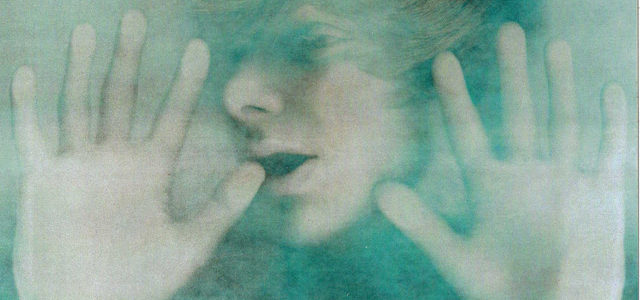
    Woman with bipolar disorder appears to be under a veil because she feels veiled from her real self...and that no one can see who she really is.

    “I hope I don’t have bipolar disorder.” 

    “It’s not bipolar, right?” 

    “How do I know if it’s his bipolar disorder or if he’s just being a brat?”

     “Everyone just throws that term around like it’s the menu of the day—bipolar disorder is so overdiagnosed, it’s not funny.” 

    The words are tough to hear.  The phrases can feel ugly.

    And the diagnosis often carries fear and even shame for a lot of people who feel judged, scrutinized, and stigmatized by it.

    But the fact is, bipolar disorder is caused by changes and variations in your brain and how it works …with all its sparks and fire, and all its awful, slow sludge. Changes you couldn’t possibly have prevented. You aren’t to blame. And we’re here to offer you the support and treatment you need.

    So, let’s chat a bit about what those physical causes are. We know that bipolar disorder causes extreme changes in mood, behaviors, and thinking. Your mood changes can happen over a period of months, or weeks, or even hours.

    You may feel happy and energetic. Or you might feel extremely stimulated with feelings of creativity, power, and superiority for a few months. Or…intensely irritable, volatile, and impatient.  It can change on a dime.

    This can last for hours, or days on end, or for months.

    Then your feelings can change…slowly or more abruptly… to a dark melancholy or despairing depression for just as long. Or maybe shorter. Or maybe longer…Yikes.

    Not Easy. But Also Amazing…

    Bipolar disorder is not fun. It’s tough, it’s exhausting, and it can dig you into a hole fast.  Still, there are aspects of this disorder that can actually be amazing. Things like a perception of beauty, and heightened creativity, and exquisite sensitivity that can give you a much more delicious taste of life than the average guy on the street.

    People who find their mood is dark and melancholy for months, then finally begins to brighten for awhile, experience the most common form of bipolar disorder.

    But you know what? Just as the changes may happen over a long period of time, they also may swing over a period of weeks, days, or hours, with happy or agitated periods of energy, then crashing to a pit of despair, then back again… even in the same day.

    The frequency, the intensity, the breadth of the symptoms – and the rate of switching – vary widely across the spectrum of the disorder.

    Meanwhile, it’s important if you have these mood swings over either a short time frame, or a much longer period, that you take the step to get a thorough evaluation.  If your moods and your behaviors change in a way that makes you feel out of control of your life, or like you’re sort of trapped in your emotions, then that’s your signal to reach out for an evaluation.  You don’t have to figure it out all alone.

    Because we’ve been working on figuring it out for centuries.

    Circular Insanity

    Sounds pretty awful. You may know that a generation ago it was known as manic depression. And before that, in 1851, it was called circular insanity. The condition we now call bipolar disorder reaches back to the earliest observations of despair and melancholy in 400 BC.  It’s not new.  It goes way back. Misery has always been easy to spot.

    But early psychiatrists, who were attentive and meticulous observers, recognized that in some people, despair had another face in bipolar disorder.  A person could  suffer from one illness that had two extremes, rather than two separate conditions.  And…the two extreme symptoms were related to each other.

    Medicine has researched bipolar disorder deeply since that time, and it is the most fascinating and possibly the most broadly researched and investigated brain-based health condition.Girl with bipolar disorder feels disheartened and discouraged by her illness.

    That’s right. Bipolar is not just bad behavior, or uncontrollable anger, or a flaw in someone who doesn’t control himself. It’s a brain-based condition that needs treatment.

    The National Institutes of Health says that 2 percent of Americans suffer from this disorder. But of that 2 percent, they say 83 percent are particularly severe.

    Other surveys put the numbers much higher when you take a broader perspective and include more subtle forms of depression and mania—at anywhere from 3 to 10 percent.

    So Many Without Treatment Struggle … And Feel Misunderstood

    Here’s the tragedy, though. Because of the stigma sometimes associated with this diagnosis, as well as misidentification of the symptoms, misunderstandings about the treatments, and financial constraints, not even 40 percent are treated with even minimally adequate treatment.

    That means there’s a huge number of people struggling every day in their work, their relationships, and their homes, unable to understand why everything is so hard. Why they feel so alone and misunderstood.

    Sometimes a person with bipolar disorder feels like he or she’s actually got two different sides: the “wild” one who stirs up problems …. and the “nice” one who has to live with the fallout.

    And that’s what treatment is about — to create stability, to help the “wild” one blend into the nice one so life, work, and relationships are manageable again.

    But What About You?

    What does this mean for you and your family?

    One thing we know is that there’s a tendency to inherit this disorder. So if you see these symptoms in yourself or your child, someone else nearby in the family tree very likely has it, whether they’ve been diagnosed or not.

    If you aren’t the one in your family with bipolar disorder, you may wonder what your role is and how to cope with the ups and downs. Keep reading … we’re going to address relationships with a person who has bipolar disorder in future posts.

    Hopefully, this post will help you gain some understanding of what your loved one goes through, and why.

    Bipolar disorder, like other brain-based disorders, is not a sign of weakness or bad behavior in the person who has it, but rather is a result of changes in the structure and function of certain anatomic elements of the brain.

    The Amygdala in Bipolar Disorder

    One key area that’s a source of symptoms for this disorder is the amygdala, which is located in the temporal portion of the brain. This little lima bean-shaped duo organ is located on each side of the brain, in the temporal lobes. The amygdala alerts us to fear, it responds to things that are rewarding, and is also the seat of aggression. It identifies for us those things in our environment that are emotionally important to us.

    If a fire is ignited near us, we see danger. In a bipolar person that alarm is multiplied. If we see something rewarding, like a bar of chocolate, or a fragrant flower, or the sweet smile of a baby, the amygdala lights up, and we feel a flush of pleasure.

    But if you have bipolar disorder, the response of the amygdala is exaggerated and you may feel that reward with far more intensity.

    Basically, the amygdala activates far more emotion in persons with bipolar disorder than it does in the rest of us.

    So you feel those emotional reactions with more intensity. 

    And understandably, you’re likely to express those emotions with more intensity, too.

    There’s also evidence that the amygdala itself is smaller in children with bipolar disorder, and is assumed to be too small; but it’s been reported as both smaller than it should be… or larger in adults with this disorder. There’s still so much to learn.

    Let’s look, though, at more of the brain structures that explain still more about bipolar disorder.

    Illustration shows the location of amygdala in the brain which is intergral to bipolar disorder.The Prefrontal Cortex – Dorsolateral and Ventral

    Another key area in the brain that’s significant for you if you have bipolar disorder is the prefrontal cortex. It helps us consider facts and choose our behavior in response. This area helps with mood regulation, and helps us inhibit behaviors we may feel like doing, but know are not socially advantageous to display.

    There are two key players in the prefrontal cortex for people with this bipolar disorder. They’re the dorsolateral prefrontal cortex, and the ventral prefrontal cortex.

    The ventral prefrontal cortex is securely connected to the amygdala. Like the amygdala, it also responds to what’s rewarding or not rewarding. In people with bipolar disorder, it responds with more intensity than it does in those who don’t have this disorder.

    The dorsolateral prefrontal cortex is the more rational part, and tends to moderate emotional reactions. In people with bipolar disorder, it’s far too inactive.

    Which means that the emotional networks of the brain in bipolar disorder are exceptionally active, and the networks that moderate those emotions are less active or ineffective.

    The result? Highly active emotions in a person who doesn’t have the equipment to regulate them. Plus highly stimulated aggression, again without the inhibitions to control it. This is a brain that just can’t do its job.

    Bipolar Disorder is a Biologic Illness

    All of this is to say that bipolar disorder isn’t an excuse for misbehavior–as sometimes cruel, uninformed individuals might think. It’s the result of altered areas of the brain that heighten emotion when that brain is also lacking the equipment it needs to manage emotional responses.

    For this reason, if you live with bipolar disorder, you can know this is a condition just as real as diabetes or heart disease and just as debilitating.

    And just like other illnesses, if you have bipolar disorder or other mood disorders, you need support and help through treatment.

    We’ll talk more soon about how this disorder affects your life, your work, and your social connections. But for now, let’s just understand that your illness is caused by things in your body that aren’t working properly. Those things need to be treated.

    Some people experience a stable and rewarding life with the right medicine, good therapy, and good structure in their lives. But some need an alternative treatment to enjoy a fulfilling life.

    Experience Improvement

    The only way to determine what might be most helpful for you as an individual requires a thorough evaluation with diagnostic tests.

    That’s why we’re here. We have the expertise it takes to tease apart complex symptoms from the complex life stories that embed them, to rule out other conditions that mimic or masquerade as mood disorders, and to offer sophisticated solutions to get your mood, thinking, and behavior back on track. 

    And we offer an array of treatment options to help you find your best self — including effective ways to stimulate the firing of large neural networks with TMS, and ground-breaking opportunities to stimulate your own neuronal rearborization with IV ketamine

    There have never been more exciting opportunities to get well and stay well.

    Call for an appointment so we can do a full evaluation, and create a plan for you.

    You can experience a more fulfilling and rewarding life, even with a diagnosis like bipolar disorder. You just can’t do it alone.

    Contact me and let’s get started.

    In support of your best self,

    Lori Calabrese, M.D.

    Lori Calabrese, MD offers innovative psychiatric treatment

error: Content is protected !!