Category: Ketamine

Articles About Ketamine from Lori Calabrese, MD | The Ketamine Blog

Breakthrough anesthesia medicine proves life-changing for many who suffer from severe mood disorders.

In the last several years, a medicine began to emerge as a remarkable treatment for mood disorders. It was developed and FDA approved for anesthesia around 1970. Over 25 years later… it began to show its colossal hidden ability. What sort of ability? The power to relieve depression and other psychiatric disorders in a most dynamic way. Disorders like PTSD, bipolar depression, postpartum depression, addiction, social anxiety, and even eating disorders respond to this extraordinary treatment that involves a series of IV infusions. And perhaps the most remarkable of all, ketamine infusions can erase suicidal thinking in a few short hours. These articles about ketamine treatment are presented here to dispel stigma about psychiatric conditions and to give hope about treating them. 

Early Testing was Cautious

Researchers tested it with trepidation 10-20 years ago. Then each study built upon the last. Their work revealed more insights about what actually causes depression, and how to treat it effectively. Never before has a medicine helped relieve symptoms in such a wide variety of people and their symptoms.

Researchers Still Learning All Ketamine Can Do

Ketamine works in multiple areas and systems of the brain. It improves the function of mechanisms that have been impaired by the stress of depression and anxiety. It helps the G proteins that pile up on lipid rafts in the cell membrane slide to off. This equips them so they can do their job enhancing signal transmission.

It also turns on the mRNA switch which in turn flips on DNA to build up brain-derived-neurotrophic-factor (BDNF).  BDNF then causes synapse connections between neurons to proliferate in turbo mode, transforming and replenishing the connections between brain cells all around the brain, lighting it up with information, cognition, creativity, and insight. 

There’s more that it accomplishes, like tamping down the cell bursting in the lateral habenula so you can experience the reward of pleasant moments. We don’t know what researchers haven’t discovered yet, but we look forward to hearing what’s next.

Ketamine Does More Than Bring Relief, It’s Transforming

The results of IV ketamine treatment are transformative.  Those who have been weighted under a blanket of lethargic apathy and despair typically find they feel better and better after treatment. They often find they have the energy and motivation to dive into tasks they couldn’t face in recent memory.

More patients with treatment resistant conditions respond to ketamine than any other medicine available. It may sound odd, but the patients it helps the most are those who suffer the most from severe disorders. With continued research, neuroscience researchers and psychiatrists are learning methods of administration that help more and more patients enjoy a rapid and robust response,.

As a result, these individuals enjoy renewed hope. They express amazement at their energy for life and work, and an overall transformation in what they enjoy and are able to accomplish. They report a more balanced and joyful outlook, and the desire to rebuild and strengthen their relationships.

Ketamine is NOT for Everyone

With all the good IV ketamine treatment accomplishes, some people still  don’t respond to it at all. The percentage of people who don’t respond is comparatively small, and we need to see more studies that can help explain why.

Why Ketamine Sometimes Doesn’t Work

There are others who have a significant response initially, then the response fades. One reason for that may be they have a deficiency of certain components in their blood. They may have a low folate level, or low testosterone, and some other deficiencies. In cases like this, sometimes replacing those nutrients helps that patient respond to ketamine treatment and experience resilience again. There are even cases where a patient’s blood levels are normal but the levels of certain components in their cerebral spinal fluid is low. By replacing that deficiency, the patient is able to enjoy a very positive and robust response to ketamine treatment.

Neuroscience is gaining knowledge by leaps and bounds in the 21st century. We hope to see more and more medicines that work as well as ketamine for those who have not yet been helped.

These articles about ketamine expand on those things we learn from neuroscience research in the labs, as well as those things we learn from research in our practice.

  • Dance of the Genes: Activity Patterns that Link Some Mental Health Disorders… and Not Others

    Dance of the Genes: Activity Patterns that Link Some Mental Health Disorders… and Not Others

    Genetic mental health disorders ketamine treatment treats.May is Mental Health Awareness Month!

    That means we have the privilege to talk about the realities of mental and emotional well-being, and the psychiatric disorders that threaten it.

    Even 20 years ago, our society was still so steeped in the stigma that people with depression and other psychiatric disorders were often overwhelmed with burdens of shame and ostracized at school, work, and even within families. We haven’t completely defeated the stigma, but let’s take a moment to appreciate how far we’ve come.

    Mental Health Awareness Through Media

    It was an exciting moment when we first saw the public service announcement showing Glenn Close talking about her sister’s disorder and her love for her 8 years ago. Score ONE Against Stigma.

    Glenn Close, the actress, whose sister has bipolar disorder and whose nephew has schizoaffective disorder, began speaking out with her family in 2010.

    She and her sister founded BringChange2Mind that year, and have broadcast public service announcements and interviews about life with psychiatric disorders.

    Her sister, Jessie Close, writes blogs for the BringChange2Mind website. Jessie responds to those who write or call about their own difficulties or of those who love them.

    And Glenn Close’s family is not the only one who has spoken out. A host of celebrities have stepped up to expose their own personal struggles with depression, bipolar disorder, substance abuse disorder, and more.  People like Mariah Carey, Catherine Zeta-Jones, Carrie Fisher, Ted Turner, and lots more have told their their stores and spoken openly about their struggles.

    Thank goodness.

    Neuroscience Breakthroughs Stamp Out Stigma

    One of the most important ways we strike a blow to the stigma of psychiatric disorders is to talk Genetic mental health disorders ketamine treatment treats.openly about these illnesses, just as we do about illnesses of the heart, lungs, liver, and kidneys.

    The more we make psychiatric disorders part of casual conversation, educating as we go, the further back we push the stigma associated with this suffering.

    We also spread the word about everything neuroscience discovers related to the causes and treatments for mental health disorders.

    And by the way, genetic links have been found for pretty much every major psychiatric disorder.  Even 15-20 years ago there was enormous speculation among certain aspects of society about whether psychiatric disorders were even real…

    But now, we have functional MRIs, genetic links and maps, and the pathophysiology of these disorders. Suffering patients are pushed into corners far less than they used to be, with demands to “prove” they’re ill.

    But it’s not over.

    Dance of the Genes

    We need to keep learning, and keep shouting out the truths about psychiatric illness for the sake of those who suffer and need help. Always to drive away uninformed judgment, and stigma.

    So let’s talk about some things that have been uncovered regarding the solid foundation of psychiatric illness. And the breakthroughs in treatment that are emerging. The treatments that can not just relieve, but conquer, these terrible illnesses. Let’s talk about the dance of the genes: activity patterns that link some mental health disorders and not others.

    Researchers discovered certain arrangements of gene activity associated with specific psychiatric genetic mental health disorders can be seen in patterns in genes.disorders in a recent study. Illnesses like depression, autism, alcohol use disorder, bipolar disorder, and schizophrenia show up as the result of these genes expressing themselves, according to the study published in Science in February 2018.

    These researchers studied postmortem brain tissue from 700 identified patients with those disorders, and compared them with matched controls and with controls with a non-psychiatric inflammatory disorder. They were looking for patterns of genetic similarities and differences in the cerebral cortex — across large brain regions.

    They found similar levels of certain molecules among people who suffered from autism, bipolar disorder, and schizophrenia.

    As they studied further, they found out that there are links between bipolar disorder and depression, which doesn’t seem that surprising. BUT … also between depression and autism. And between bipolar disorder and schizophrenia — and autism and schizophrenia.

    Researchers have known that since 2013. But most of the rest of us haven’t.

    What’s really news is that certain psychiatric disorders are more similar biologically than we’d ever thought if we’re just looking at the diagnoses themselves–the names we use. If we just dig deeper…

    Astrocytes Activate to Signal Specific Conditions

    There are star-shaped cells in the brain and spinal cord called astrocytes that provide support for those cells that make up the blood-brain barrier, among lots of other things. They supply nutrients for nerve tissue, and help with repair in the brain and spinal cord after serious injury.

    So the genetic patterns or systems these researchers found actually affect how the brain cells communicate with each other.

    Because the astrocytes activate with certain conditions.  And many of the same astrocytes activate in conditions we wouldn’t have expected to be linked to each other.

    These researchers see potential for identifying those patterns that genes express in astrocyte activation for each condition, which can eventually help us identify the underlying biologic vulnerabilities for these conditions.

    As complicated as this sounds, this is a stigma buster!  It’s not only “proof” for these disorders, as if anyone has anything to prove. But, it paves the road to improving the diagnosis of psychiatric disorders in the future — faster and with better accuracy, so treatment can be the RIGHT treatment for better outcomes.

    Reach Out to Those Around You

    While these possibilities are brewing, reach out with compassion to those in your world, in your circle, who clearly suffer.  You see it in their “inappropriate behavior,” their inability to perform, and their Genetic mental health disorders ketamine treatment treats.despair.

    Take a breath. Give them a moment of kindness.  Of patience. Recognize that they didn’t ask for these limitations. But they carry them every day without relief.

    Give to mental health research. Support organizations that offer respite and treatment.

    Psychiatric illness isn’t elusive or ethereal.  It can be identified in genes, in functional brain scans, in genetic patterns that write their own recipes for health and wellbeing… or disabling illness.

    Environmental, biological, psychological, and genetic factors come together and spark most, if not all, psychiatric conditions. There is pretty much always a combination of factors behind each illness.

    The fact remains that countless people suffer without help. They reach out on Facebook, on Twitter, and especially on Quora. So many people who have taken the medicines and aren’t any better.

    Thankfully, there are also those who are better. Those fortunate ones who get better with antidepressants, anxiolytics, and mood stabilizers. But far too many don’t improve…and feel more desperate every day.

    For you, we want you to know you’re not alone in this struggle.  As you can see, neuroscientists press forward, as well as psychiatrists and neurologists, working to help people like you get better.

    Studying to find improved treatments.  And hope.

    Innovative Psychiatry Specializes in Tough to Treat Illnesses

    At Innovative Psychiatry, we’ve been specializing in helping those who couldn’t find effective Genetic mental health disorders ketamine treatment treats.treatment before for many years. We love a challenge. And we offer a variety of novel and advanced treatment options to help you get truly better.

    Ketamine treatment is the most dramatically effective treatment we’ve seen in our lifetime. It doesn’t help everyone, but it does help most. Furthermore, its extraordinary antidepressant effects help our patients improve with such vigorous speed and depth that their lives begin anew. 

    Ketamine treatment relieves mental health disorders.

    If you’ve been suffering from a psychiatric disorder that hasn’t improved from other treatments, call us. The right medicines given with the necessary expertise can change a life forever.

    Lori Calabrese, MD offers innovative psychiatric treatment like IV KetamineTo the emerging of your very best self,

    Lori Calabrese, M.D.

  • Outrageous Behavior: Mood or Personality??

    Outrageous Behavior: Mood or Personality??

    Outrageous behavior mood or personality? Ketamine can heal mood disorders.Outrageous Behavior: Mood or Personality Disorder?

    You met her at your friend’s house, and you’ve been dating a few months… Then you notice a blouse in her purse with price tags… no receipt.  What???

    Did she steal this stuff? You really like her, but ….  theft?  What the heck is going on…?

    When you ask her about it, she tells you she borrowed the top from a friend for your date on Friday.

    Hmmmm…

    A week later you notice the blouse is hanging in her closet.  Is she going to return it?

    She’s been a little on edge lately… could it be guilt?  But you hate to rock the boat because the nights are so HOT lately…

    Then, another shock. She borrows your credit card to put gas in her car…(which seems off)…and you discover she spent nearly a thousand dollars on dinner with “friends!”

    Outrageous Behavior: Mood or Personality…?

    Confrontation time. Is this amazing and beautiful woman a scammer? A con artist? Is there any other explanation?

    Her response is to lash out, scream expletives, and take off in her car. She returns in a couple hours and she’s been crying. She tells you she doesn’t know what got into her, or why she did any of it. That she really likes you and wants you to respect her – and trust her.  That sometimes she loses her perspective and just does things she can’t explain.

    After a long and tearful discussion, you learn that she did shoplift the blouse. She won’t take it Outrageous behavior: mood or personality?back to the store, or pay for it— too risky. She could get arrested. But she’s got a better idea, she says: she’ll give it away. Donate it. And the next thing you wonder is… if you’re in over your head…

    Scammer? …or maybe bipolar disorder..?

    So is she messed up?  Is she just someone who gets off breaking the law? or is there another explanation?

    To find out, she needs to put her trust in a skilled and experienced psychiatrist.

    good one, who will tease apart her symptoms, their causes, and work to bring her disordered mind to order and peace.

    It could possibly be that she’s fundamentally a rule-breaker. Someone who doesn’t think they apply to her–and doesn’t think what she’s done is a big deal. On the other hand, since she seems to care a great deal, you should pause. Ans she should be evaluated.

    Untreated bipolar disorder can cause all kinds of outrageous behaviors along with the sorrow and remorse

    Is She Hysterical or Just Seeking Attention…?.

    Sometimes, outrageous behavior can be a source of embarrassment to those who love you.

    Take Jason, the manager of the cell phone shop in town. You have no idea what he deals with until one day a glamorous woman walks into the shop crying, “Jasie, Jasie…pleeease I need your help!!  There’s a spider in the car!!”

    You can see Jason is embarrassed.  He tells her he’ll be able to break away in a minute after he rings up this customer.

    “But Jasie!”  She’s all a-flutter, breathless, in a panic.  She takes off her beautiful shoe and Outrageous Behavior: Mood or Personality?holds her tan, pedicured little foot up to show him. “See that dot?  I think it bit me!!” And she sobs and sobs big tears that splash on her cheeks… 

    You can see Jason has his hands full. So, you gesture for him to go ahead and tend to her…it’s ok…you don’t mind waiting. He takes her to the back and her sobs get louder. “I was at home, all alooone…. So I got in the car to go see Celia, and suddenly I saw that spider!!  I was terrified Jasie!  I didn’t know what to do!!!”

    Unbelievable.

    Jason tells her under his breath that her foot looks like it will be fine, and promises to take her to dinner after work.  She goes out the door smiling ear to ear and tells him to call her at Celia’s.  Her bracelets jingle as she waves.

    You Can Love Them… But Do Get Them Help

    You really feel for Jason. He was clearly embarrassed for his customers to get this glimpse into his private life. You wonder how on earth he stays with such a drama queen. You know you couldn’t take it.

    He smiles half-heartedly and rings up your purchase. Then apologizes for the scene. He quietly explains she’s had some serious blows lately and she’s been upset a lot by a series of little things.  “I guess she’s just having a bad day…” he quipped.

    So what on earth is the story with this lady? Is she like this all the time? Is this anxiety or drama? How can you tell the difference?Outrageous Behavior: Mood or Personality?
    Once again, her story needs to be teased apart, and a deeper history collected. It’s possible that the “blows” Jason referred to were multiple deaths in the family, betrayal by her best friend, combined with a lost pet, or some other major crisis.

    People do sometimes reach the “end of their rope” and find it hard to cope with the most minor thing.

    When that happens they may exhibit signs of depression or anxiety, which can be treated … to help them get their footing again.

    But it’s important to know the full picture. Was she always a drama queen? Or did she have a history of coping well until just recently…?  Enduring traits can suggest an underlying personality structure that just seems to get more and more fixed and unyielding as a person gets older.

    Outrageous Behavior – Mood or Personality?

    Meanwhile, your boss’s secretary is silently miserable. She’s married to a guy who acts superior to everyone. He boasts all the time and makes degrading comments to waiters at restaurants or when he’s buying something in a store. 

    Then word gets out that he’s having an affair with her next-door neighbor. Another affair.Outrageous Behavior: Mood or Personality? After all the I’m sorry’s and all the lies. After all the promises. She’s devastated.

    What is the matter with someone like him? Is he just a total jerk?

    Maybe he is. I know you may wish you could give him a swift kick, but there’s likely more to the story.

    On the one hand, he could be a narcissist. But to find out would require some in-depth information gathering to figure that out. Still, there are other possibilities, too.

    Has he suffered a job loss? Maybe he feels betrayed by a layoff right in the middle of his career. He may be depressed if something like that is the case. It’s still not an excuse for making his family miserable.

    Nor is it an excuse for infidelity. But, sometimes people take that road when they’re down on themselves. In fact, sometimes people do all sorts of destructive things when they feel bad, rather than seek help.

    Still, sometimes depression shows up in men by their anger, irritability, and short temper. If it’s depression, it can be treated. And getting the depression successfully treated may help him set things right again in his life.

    Miss Jekyll or Mrs. Hyde…

    The romance you’d always dreamed of. Finally, you’d met the most interesting and charming woman. She was everything you’d hoped to find: beautiful, fun, a hilarious sense of humor, always with a twinkle in her eye… and a wildcat in bed.

    She was so natural in a crowd and loved to entertain. She seemed like the ideal companion, Outrageous Behavior mood or personality?lover, and partner. You felt so lucky.

    Oh, there were little moments while you were dating that caught you by surprise, sure, where she seemed to react to a small thing you did or said. Moments that seemed to come out of nowhere… but the next time you talked, all was forgotten.

    Her charm was addictive…and made you feel like a million bucks.

    But several months later, everything seemed to change. She wasn’t so pleasant when you were alone. Sometimes you felt like she drank too much. And when she did, she wanted to do more and more risky things. She said you just didn’t know how to have fun.

    The next day she stormed into her job and slammed her keys on her boss’s desk, shouting, “I QUIT!!”

    When she got home and told you the story… well, you didn’t say a word. You didn’t dare.

    Then, one night, she stormed out of the house. Again. You got in the car to find her… and when you spotted her she was walking in the dark…and agreed to get in the car. But, as soon as you asked what was going on, she screamed she was going to kill herself and threw open the car door as you were flying down the highway.

    You were so relieved to park in the driveway. So much drama.

    The next week she tells you she’s having an affair with her optometrist. That you just weren’t spending enough time with her.

    What happened…?

    You’re friends tell you she’s crazy and you should pack your stuff and leave no forwarding address. You think there’s more to it. You see her when she’s sweet, thoughtful, caring, nurturing… she can be a wonderful person.

    But this is scary.

    What do you do??

    Once again, there can be a handful of explanations. Some are more hopeful than others.

    This is a good time to get an insightful psychiatrist involved. Because she may just be a brat who never learned to be accountable for her behavior. However, that’s probably not the most likely explanation.

    People with bipolar disorder sometimes have these outrageous behaviors, but when they’re nooutrageoust manic, they can be deep thinking, insightful, considerate people.

    People with borderline personality disorder can sometimes appear like this.

    Even people with substance abuse disorders can show these symptoms.

    You’re right to not make a snap judgment. As to what you should do, that’s another matter. If she has a psychiatric mood disorder, she can be treated and go on to live a fulfilling life.  But you may want to see a counselor you trust, to help you navigate this relationship.

    With counseling, you can learn how to be a therapeutic presence in her life, while taking good care of yourself. With counseling, you may also determine this relationship is not the best for you or for her. But follow your instincts and get support for both of you in the interim.

    You’re not alone.

    So many, many stories. So many lives in disarray. Outrageous behavior rings the gong.  It makes everything stop–or it should make everything stop. Because so often it damages the lives of everyone it touches. Sometimes it’s personality, plain and simple and enduring. (Which is really hard to take.)

    But so often, outrageous behavior is the bellwether of damaged or disordered brain functioning. Sometimes, the ones with outrageous behaviors are likely damaged (by genetic factors, environment, concussions, illnesses, substances–you name it) and unable to function in a normal, healthy way. So they behave in ways that cause damage to others and to their own overall lives.

    In cases like these, the first step is to withhold judgment, as tempting as it is to judge and label. How often have you heard that you don’t know someone’s story until you walk a mile in their shoes?

    When you see behaviors like these, you may be seeing symptoms of a disorder, rather than someone who’s deliberately choosing to be a brat. Deep down, it’s the desire of most of us to enjoy the respect of those around us. Most of us restrain our reactions to maintain that respect. But there are those who just can’t.

    Rule of thumb: If it looks like bad behavior, check it out.

    Ask an expert. Not your friends. Not a Facebook group. Because you might be mistaking a terrible mood or anxiety disorder as someone’s personality — or personality disorder. And that same person just might behave “respectably” and with constraint if their disorder were effectively treated. This is where shame lives. This is where stigma comes in.

    Let’s take a breath before we judge. Let’s stop the stigma.

    If you’ve experienced some of these behaviors and you secretly carry your shame and wonder what’s wrong, or if youOutrageous Behavior Mood or Personality? see outrageous behaviors in someone you love, reach out. Innovative Psychiatry offers novel and advanced treatment for psychiatric mood disorders, including IV ketamine infusions — one of the most extraordinarily effective treatments in psychiatry. It can give you your life back.

    We want to see you well and are eager to work with you to determine what will give you the best results.

    Call or schedule an appointment. You can have control over your impulses, and build strong relationships in your home and your work.

    Lori Calabrese, MD offers innovative psychiatric treatment like IV KetamineTo the release of your best self,

    Lori Calabrese, M.D.


  • 21st Century Psychiatry: Neuroscience Discoveries Fight Stigma

    21st Century Psychiatry: Neuroscience Discoveries Fight Stigma

    Neuroscience discoveries fight stigma toward those with psychiatric disorders.Stigma: A Mark of Disgrace Based On Belief in Certain Assumptions That Have No Factual Basis


    “He’s not depressed…he just needs to get up and get busy.”

    “PTSD is just a fancy name for weakness.  Get over it!!”

    “Bipolar disorder? What an excuse for bad behavior! Get some discipline in your life and you’ll be fine.”

    Sound familiar?

    Comments like these are insulting, stigmatizing, and prejudicial. They hurt. And they have no basis in fact.

    In this day and age, there is no excuse for them.

    These are just some examples of the stigma expressed in hurtful words that serve to fuel shame in people who have depression, bipolar disorder, a trauma history, or who struggle with substance abuse.

    Why Are Psychiatric Diagnoses So Hard for Some People to Accept?

    Do you ever hear someone say, “Diabetes… ridiculous. Work harder and you won’t have trouble with blood sugar. I work hard and I don’t have diabetes!”Neuroscience discoveries fight stigma and this woman's depression and tears show the real suffering of depression.

    Or…

    “Cardiovascular my foot!  You’re fine. Get back to work.”

    Probably not. Why is that?

    Because there is no real stigma attached to malfunctions in the heart or the terrible sudden dysfunction in the pancreas of a child who develops Type I diabetes.

    The more science learns about the human body, and its ailments, the more credibility those ailments have.  

    Why The Brain is Such a Target of Stigma

    Except for one part of the body…. And that’s the brain.

    Since ancient times, the intricate and complex functions of the brain have been steeped in mystery and wrapped in tales of fear, sorcery, and voodoo. All of this has contributed to the stigma that has hovered over people with psychiatric illnesses like a dark cloud of shame.

    As recently as decades ago, patients admitted to psychiatric hospitals for behaviors their families didn’t understand were heavily drugged and incapacitated.

    There is a population of individuals today who still stand by the opinions that reigned at that time…and they’re still influencing younger family members and friends with those erroneous views.

    Stigma-busting  Research

    If you’ve faced stigma about your psychiatric symptoms from family, friends, or your job, we have some encouraging news for you. We both know that the expression of stigma is simply a sign of ignorance. Lack of up-to-date information underscores old and outdated beliefs. The best defense against stigma we see about psychiatric disorders is information — scientific information.

    A recent study shows we can use a blood test to distinguish biomarkers in bipolar disorder that are different from those in schizophrenia. Investigators have also developed a blood test that could help doctors more quickly diagnose schizophrenia and other disorders.

    This one detects certain types of inflammation and oxidative stress. Another test can differentiate 20 metabolites found in urine that distinguish schizophrenia and bipolar disorder.

    Tests like these are building a foundation of what we would call biological proof for various psychiatric disorders — proof that they’re real, that there are underlying genetics for many and pathophysiology — how things go wrong — that is being worked out and understood in labs and universities and clinics around the world.

    These are exciting times!

    Neuroscience discoveries fight stigma .. .And the more we talk openly about the data points, the sooner we can dispose of the stigma. 

    HOPEFULLY. 

    If you know me, you know I abhor the term “mental illness” —  a term that subtly suggests that psychiatric disorders are somehow different — maybe even less valid — compared to so-called “physical illness.”

    This is just another way of perpetuating the myth… and the stigma… that psychiatric illness has less credibility.

    The fact is, psychiatric disorders are just as physical as pancreatic disorders, or pulmonary disorders, or gastrointestinal. They’re just a lot more complex to see.

    The brain is the most intricate, “multi-media”This woman undergoing a brain scan knows that neuroscience discoveries fight stigma. operating system in the human body. It is absolutely the “last frontier” in medicine. And it has as much credibility as any other body system…and is as real as Saturn or Jupiter…two planets we can see but can not yet touch.

    And if you’ve suffered from severe psychiatric symptoms, you KNOW how terribly real and concrete they really are. Because psychiatric disorders can encompass your whole body.

    Neuroscience Discoveries Fight Stigma

    So here’s another piece of scientific discovery that rips yet more of the stigma-fied rug out from under uninformed individuals who make hurtful and ignorant comments.

    Millions of people are living today who remember when psychiatric disorders were blamed on poor parenting or even demon-possession. Thankfully, we’ve made light years of progress since then through the dedicated work of neuroscience.

    In a commentary on many studies, published February 2018 in Biological Psychiatry, the authors explained discoveries made by researchers about micro RNA (miRNA) and how it plays a role in either improving or exacerbating symptoms of psychiatric illness.

    One finding showed that a certain type of miRNA could be found in tumors; another type was found throughout the body serving a variety of purposes. 

    miRNA-9 is found most abundantly in the brain, while miRNA-21 is abundant in a variety of tissues in the body. miRNAs can regulate a multitude of genes throughout the body.

    And certain miRNAs regulate processes in the brain, like synapses and the replenishing of brain cells, or neurons. They estimate that 60% of all genes are regulated by at least one miRNA …and sometimes by many.

    Tight and Multi-layered Gene Control

    When multiple miRNAs regulate the same gene, it allows for regulation of many layers of This happy young woman in this field is glad that neuroscience discoveries fight stigma. Ketamine treatment has stopped her suffering.processes and tight control of the protein “expression” of these genes. Genetic expression basically involves turning on the protein or RNA that the DNA creates to fulfill that gene’s blueprint.

    This is how genes “express” themselves in the organism they are designed for. When something goes wrong in that process, it can lead to illness. In fact, improper expression of genes has been linked to pretty much every kind of illness or disorder across most of the body’s systems, such as cardiovascular, autoimmune, infectious, neurodegenerative, and psychiatric disorders.

    So in the study of miRNA, researchers discovered that miR-137 regulates the maturing and differentiation of neurons, which has an impact on cognition and the physiology of the brain.

    How about that?

    miRNA and Neurogenesis

    Another miRNA, miR-16 hinders the development and growth of neurons. Fluoxetine, an antidepressant, seems to decrease that hindering function, allowing more neurons to grow and thereby decrease depression.

    Also, it seems to suggest that antidepressants that hinder or block the function of miR-16 increase growth of neurons in the hippocampus. Another plus!

    And if fluoxetine can decrease those miRNA hindering functions, how much more so could IV ketamine treatment …right?

    Neuroscience Discoveries Fight Stigma…

    Well-meaning (but uninformed) adults in the ’60’s, ’70’s, and 80’s used to say “if mental illness is real, show me…where is it?  Take a picture and show me!” These comments were even made by people in medicine. Shameful, really.

    Stigma is such a terrible thing.

    Well, the pictures are emerging. Concrete evidence is spreading.

    And if you suffer with psychiatric symptoms…you don’t have to listen to those heartless comments anymore.  There is a wealth of documented science that’s growing every day, every month, and every year.


    Neuroscience discoveries fight stigma and this young woman is feeling better after ketamine treatment.

    Neuroscience Discoveries

    I hear the things people say to my patients that cause deep hurt … that promote shame … that silence good hearts, and I’m struck by their courage to keep going. To fight stigma. To get well.

    So, another point or two about miRNAs.

    Various alterations, like the one accomplished by miRNAs to block the work of miR-16, have been linked to a number of psychiatric disorders. Researchers found this link in blood, postmortem brain tissue, and cerebral spinal fluid.

    … And Another Discovery

    Also, researchers have found that miR-132 is altered in the brain tissue of subjects in cases of schizophrenia and autism, and in the blood serum of subjects with major depressive disorder…as well as in animal models of depression and addiction.

    Researchers think this may be due, in part at least, to the alteration of miR-132. Researchers suggest that this happens because of the role miRNA play in circadian rhythm or brain-derived-neurotrophic-factor (BDNF). We know (and love) BDNF. This protein has a clear role in mood regulation, cognition, and the growth of neurons.

    Neuroscience Discoveries Fight Stigma

    One last thought. This increasing knowledge about miRNA and how it can shape the causative factors of psychiatric disordersNeuroscience discoveries fight stigma of psychiatric disorder. lays another row of bricks in the foundation of our understanding of the causes of different psychiatric conditions, and opens up new directions to improve treatment.

    In addition, it’s further documentation that there are real cellular, biologic processes behind our diagnoses. And our treatments.

    If stigma has intimidated you, take heart.

    Neuroscience has your back.

    Innovative Psychiatry Offers Advanced Treatment

    And so do we. We see all forms of psychiatric illness here, and we work hard to find more effective ways to help you heal. At Innovative Psychiatry, we offer the most advanced and effective novel treatment options, like IV ketamine treatment and transcranial magnetic stimulation (TMS), along with medications, adjunctive help with nutrients like curcumin, and strategies to strengthen your microbiome

    To date, IV ketamine treatment rises above all other forms of treatment for many individuals who’ve been failed by traditional treatment.

    If you suffer from depression, anxiety, cocaine or alcohol use disorders, PTSD, OCD, bipolar disorder, or suicidal thinking… and have not been helped by medications, call us. We’ll work together to determine the best treatment to help you live a productive, joy-filled life again. Build relationships again. Enjoy your favorite interests again.

    Lori Calabrese, MD offers innovative psychiatric treatment like IV KetamineTo the restoration of your best self,

    Lori Calabrese, M.D.

  • Functional Brain Connectivity: Vulnerability and Resilience in Siblings with Bipolar Disorder

    Functional Brain Connectivity: Vulnerability and Resilience in Siblings with Bipolar Disorder

    Do You Wonder about Your Family? Functional brain connectivity helps brothers stay well when parents have bipolar disorder.

    Connor’s mom was diagnosed with bipolar disorder before Connor was born. He’s now an adult who was diagnosed with Bipolar I Disorder ten years ago. He has a brother and a sister, both grown, also. But his sibs, Todd and Della, have never experienced psychiatric symptoms, and feel healthy, balanced, and able to cope with the challenges of life. They don’t really understand why Connor has so many struggles.

    (Healthy siblings often don’t.)

    Sadie’s dad has Bipolar II Disorder and Sadie was diagnosed with Bipolar II during her second year of college. Her three brothers, James, Tim, and Hal, don’t experience symptoms of bipolar disorder … but they each have other things going on. James has been melancholy throughout his life, Tim has OCD (but refuses to deal with it), and Hal eventually was diagnosed with PTSD after a deployment in Iraq.

    What’s going on in these two families? 

    Functional Brain Connectivity Affects Vulnerability and Resilience to Bipolar Disorder

    Why is every child in one family plagued by brain dysfunctions that result in psychiatric disorders, while the other family has only one child with a psychiatric illness?Impaired Functional brain connectivity is the reason Sadie's brothers also have psychiatric disorders.

    First of all, we don’t understand yet the full answer to that question. But as a result of extensive studies, neuroscientists understand more than they used to.

    We’ve talked before about genetic markers and traumatic experiences.

    But something else has emerged to give us more insight. The default mode network was discovered several years ago.

    Learning about it helps us understand how neurons in the brain are connected.

    Functional Brain Connectivity in the Default Mode Network (DMN)

    So first, let’s talk about the default mode network (DMN). The DMN is a network of neurons that connect brain regions that are necessary for bringing up information about yourself and how you felt in certain experiences in the past, thinking about others with empathy, judging someone’s attitude, remembering the past and thinking about the future … all these skills depend on the default mode network.

    When you focus on a task, whether it be writing a report, balancing your checkbook, or changing a tire, the DMN becomes quiet or de-activated.  

    That’s because your attention, concentration and focus is right there, right in the moment, honed in. And the DMN quiets to allow you to do your thing.

    When that highly-focused task completes, the DMN activates again.

    It’s at its peak when you’re wakefully resting. Not when you’re asleep.

    Let’s say you’re “sittin’ on the dock of the bay, watching the tide roll awayFunctional brain connectivity helps your brain organize and rebuild itself when you're quiet and just watching the view.…”.  In times like this, your DMN is in full throttle. Organizing, sorting memories, rebuilding the connections (synapses) while you’re daydreaming. Or while you’re meditating.

    It’s a beautiful thing.

    That is, if you’re brain is healthy.

    Impaired Connections Play a Role in Bipolar Symptoms

    Researchers know that in bipolar disorder connections like these don’t work properly. Sometimes the connections break down and don’t work at all.

    Bipolar disorder and other psychiatric disorders affect the connectivity of some important networks, such as the default mode network, the sensorimotor network, and the central executive network.

    When there’s an imbalance between the functions of the default mode network and the sensory motor network, the result is … chaos … and disconnect

    And the chaos that ensues really mirrors the chaos that happens in bipolar disorder.  What happens on a brain level can be expressed in your real life.  In a very direct way.  It’s almost palpable.

    Bipolar’s genetic link creates another piece in the puzzle. But researchers still work to understand the bridge from the genetic link to bipolar symptoms. We do know that siblings of a person with bipolar disorder are ten times more likely to also develop bipolar symptoms than someone who has no relatives with this disorder.

    And yet, in spite of that statistic, a large number of relatives continue to be healthy and unaffected.

    So why are some sibs able to “avoid” developing a disorder like bipolar, and others aren’t?Functional brain connectivity helps helps these siblings avoid their brother's bipolar disorder.

    What Makes the Difference?

    A team of researchers at the Icahn School of Medicine Mt.Sinai NY set out to learn more. They worked with a group of 78 people with bipolar disorder diagnoses. The team screened these participants to ensure they had not experienced  an episode of mania or depression in 3 months. Then, they recruited 64 of their siblings — BUT ensured these siblings had NOT experienced bipolar symptoms. Finally, they added 41 healthy volunteers with no psychiatric disorders as a control group.

    Using functional MRI scans, they collected data of the functional brain connectivity of bipolar patients, their unaffected siblings, and healthy volunteers to compare. They took the fMRIs  during the resting state, when subjects were awake but not focusing on anything in particular. They wanted to first look at what the brain was doing when these folks were “sittin’ on the dock of the bay…”

    Some aspects of brain region connectivity remained the same in all three groups. But they found changes in the default mode and sensorimotor networks. In bipolar disorder, the sensorimotor network doesn’t work smoothly. But rather it disrupts the processing of sensorimotor information in the brain. And creates chaos.

    The authors of this study pointed out that recent studies have revealed reduced motor coordination, sensory integration, and selective attention in both bipolar patients and their unaffected siblings. 

    Increased Motor Impulsiveness with Impaired Functional Brain Connectivity

    And in this current study, increased motor impulsiveness was associated with those whoImpaired functional brain connectivity caused this guy to become clumsy and develop bipolar disorder. were diagnosed with bipolar disorder, as well as their siblings.

    To simplify, the study demonstrates the cause of the kind of reduced GABAergic and glutamatergic receptors that coroners see in autopsies of people with bipolar disorder. The impaired neuroplasticity that results from the dysfunction of the DMN and sensorimotor network probably bears responsibility.

    In other words, the broken down connections in these important networks in the brain may help explain the chaos of symptoms in bipolar disorder. 

    And, the study also confirmed the connection between default mode connectivity and resilience…or in this case, the ability to of the brain in certain individuals to NOT develop bipolar disorder.

    Great Connectivity in the Default Mode Network = Resilience

    So the better the connectivity in the default mode network, it appears, the more resilience that individual has, even if he’s related to someone with bipolar disorder.

    And that introduces new ideas for developing novel ways of preventing bipolar disorder, or at least changing its course.

    And both the default mode network as well as the sensorimotor network could possibly be made stronger and more resilient through interventions that enhance plasticity in those networks.

    So that’s the lesson we learned from siblings who haven’t been affected by bipolar disorder. We learned that the adaptations that occur in some sibling brains perhaps could be explored and used to protect all relatives from this illness. And hopefully in the process, a similar method protects everyone from this disruptive and cruel illness.

    Neuroplasticity.  You’re going to be hearing a lot about it.  You’re going to want it for yourself and your family.

    Hope for the Future…and Hope for Now

    There’s hope for the future to wipe out the suffering caused by bipolar disorder, PTSD, anxiety and thoughts about suicide.

    But for now, we don’t have those developments.  We’ve only just begun. 

    However, we STILL have hope.  Hope for feeling better, being better, living better. And that’s Functional brain connectivity protects this young woman from psychiatric disorders.through treatment that leaves others in the dust. In the years I’ve been in practice, I’ve treated patients with just about every conceivable psychiatric disorder, and have prescribed medications that target a kaleidoscope of symptoms. I still do.

    But the most robust and extraordinary tool I’ve found for helping people to recover, build lives and relationships, and experience the joys of life, is IV ketamine treatment.  Administered with the utmost care and precision to enhance it’s best effect on the delicate systems of the brain, I’ve been privileged – sometimes joyfully overwhelmed – at the numbers of people who have enjoyed real remission, joy, and relief.

    If you’ve been dragging a severe psychiatric mood disorder around with you without real and lasting relief, call us.

    Disorders like depression, general anxiety, social anxiety, PTSD, OCD, bipolar disorder and suicidal thoughts can be relieved…and quickly. This isn’t like those antidepressants that take weeks or months for you to feel the benefits.

    We specialize in treatment-resistant psychiatric disorders. There aren’t many that ketamine treatment doesn’t conquer. We often say that ketamine treatment isn’t for everyone. And it’s not. But more than likely it could change your life for the better. Let’s find out.

    Lori Calabrese, MD offers innovative psychiatric treatment like IV KetamineTo the blooming of your best self,

    Lori Calabrese, M.D.

  • How Stress Takes Down the Best People…and What To Do About It

    How Stress Takes Down the Best People…and What To Do About It

    Stress takes down the best people, but ketamine treatment restores them.Heather was 38, and had had a series of extreme stressors over a period of several years. She was a giver at heart, always looking for ways to help — always trying to make the lives of people she knew easier or more fun.

    But then her husband left her. It was the same old, tired story — an affair with her closest and dearest friend.  But still … she was left with two enormous losses, and a crippling sense of betrayal about both of them.

    She tried to function for the sake her of two children, Katie and Noah. One foot in front of the other. One day at a time.

    Another Devastating Crisis

    Three years later, Noah was hit by a school bus and rushed to the hospital. He had a Stress takes down the best people, but ketamine treatment puts them back in working order.concussion and his pelvis and femur were broken in so many places they gave her minimal hope he’d walk again.  Weeks in the hospital, then months of rehab. Asking neighbors and family members to pick her daughter up at school, get her to piano lessons, grab dinner.

    She was exhausted. And Noah was beginning to walk with a walker and just starting back to school when she got a phone call from her mother.

    Another Overwhelming Tragedy

    Her dad had died when she was 25 and her mom lived alone. Mom just found out she had an aggressive form of breast cancer. She’d been told to expect a year minimum of treatment then re-evaluation. But when her mom got so tired she couldn’t drive back and forth to chemo, there was nothing to do but have her mom stay with her. She’d probably be there through radiation, too. Heather asked her mom’s neighbors to look in on her house.

    So a household of three greatly stressed people became a household of four extremely stressed people. Heather just held her chin up and set out to get through this, too.  The idea of losing her mom when she was so young was terrifying.

    She cooked, cleaned, ran the kids around. Made dinner. Went to work. Drove her mom to chemo. Did everything.

    Stress Takes Down the Best People

    Finally, 6 months later, her mom had to be admitted to the hospital. Her next door neighbor Stress takes down the best people, but they can restore with ketamine treatment.offered to take care of Katie and Noah for a few days. Thank goodness.  But then … Heather didn’t get out of bed or out of her pj’s for three days … and she felt less and less like getting out of bed after that. She went through the motions of getting her kids to school and back home again … and feeding them when they were hungry.  But she was numb. She was barely functioning.

    Finally, darkness wrapped around her like a cold box, and she felt hollow. Numb. Adrift.

    Someone from the church came to see her. When they saw how she looked, they could see she’d been through too much for too long. They went to work to take over the care of her mom, and took her to the hospital. Heather was admitted with severe Major Depressive Disorder.

    Heather’s a giving, kind, and generous person. But chronic and repeating stress can take down the best people, and Heather was no exception. It brought her to her knees.

    How Stress Brings Someone Like Heather to Her Knees

    We’ve talked and talked about what stress does to your brain, and how it contributes to depression.

    But let’s talk about why that happens.

    Thanks to recent studies sponsored by Brain and Behavior Research Foundation, we’ve learned some things lately.

    And I’m excited to share them with you.

    It all makes so much sense when you get a peek inside the brain to see what happens.

    MIcroglia Unwittingly Launch a Destructive Attack

    There are immune cells in the brain, called microglia, that are responsible for defending against infection, among other things. One of the other things they do is help build and change the construction of neural connections in the brain.

    Huge. And hugely important.

    In this study, the research team, led by Ronald S. Duman, periodically caused laboratory mice to undergo stress-inducing conditions over a period of weeks. Then they evaluated the effects of this chronic stress on their brains.

    It’s not surprising that the mice displayed symptoms of depression and anxiety. The team demonstrated that the neurons in the prefrontal cortex — which control your abilities to make decisions and function socially — react to the stressors.

    Specifically, these brain cells signal the microglia to begin “remodeling” pyramidal neuronal circuits … which basically WEAKENS them. The outcome is that the synaptic connections between the neurons in the prefrontal cortex begin to break down. And too many of them are lost.

    Sounds like Heather. Broken down.  Lost.

    Maybe that sounds like you.

    How to Stop the Damage?

    Then the team carried it another step.

    When they blocked the neurons from signaling the Stress takes down the best people, but ketamine treatment can put them back on their feet again.microglia, the chronic stress the mice were subjected to did not affect their synapses in their prefrontal cortex so they did not become depressed.

    The research team concluded that finding a way to block the neurons from signaling the microglia could be a way to treat anxiety and depression. 

    (It seems to me this could be a fantastic way to prevent anxiety and depression in those subjected to long term chronic stress, such as first responders, those with chronic illnesses, and more.)

    You can imagine that if you undergo extreme stress over an extended period of time, that more and more of these connections will be lost due to microglia activity. And depression and its accompanying anxiety become more and more severe.

    So what can be done about this deconstruction… these massive losses of synapses?

    Restoration through an Extraordinary Medicine

    Enter IV ketamine treatment, which has been shown to rapidly rebuild and proliferate these synapse connections that have been broken down by depression and anxiety … which are caused by stress and which create more stress of their own.

    Remember that tiny doses of ketamine, administered properly, turns on mRNA to switch on Stress takes down the best people, but ketamine restores synapses and restores peace.DNA which turbo charges the brain-derived-neurotrophic-factors (BDNF) so the synapses grow, branch out, and proliferate creating a dense forestation of neuron connections.

    And when all these neurons in the prefrontal cortex are tied together with a dense network of synapses, you come alive. Joy returns. Creativity blooms. Initiative and motivation billow.

    This is what we can do about those lost synaptic connections.

    Innovative Psychiatry Offers Expertly Administered Ketamine Infusions

    We know that stress takes down the best people. You probably know someone like Heather who tries to help everyone, but eventually she’s the one who breaks down and needs help.

    At Innovative Psychiatry, we see extraordinary, positive outcomes in treatment-resistant depression and bipolar depression, as well as in PTSD, OCD, social anxiety and suicidal thinking. That means that very ill people can get really, truly better. As in happy, upbeat, full of energy, initiative, and hope for the future.

    You can feel like yourself again. With the energy to embrace each day, the hope to look forward to the future. You can enjoy an afternoon breeze, a beautiful ocean view, or the fragrance of a summer rose.

    When was the last time that happened?

    If you suffer from depression, anxiety, bipolar disorder, PTSD, OCD, social anxiety or suicidal thoughts, and medications haven’t helped, call us. We can help you leave psychiatric disorders behind, and live a fulfilling life.

    Live as the best you you can be.

    Lori Calabrese, MD offers innovative psychiatric treatment like IV KetamineTo the emerging of your very best self,

    Lori Calabrese, M.D.

  • International Conference on Ketamine for Psychiatric Disorders 2018

    International Conference on Ketamine for Psychiatric Disorders 2018

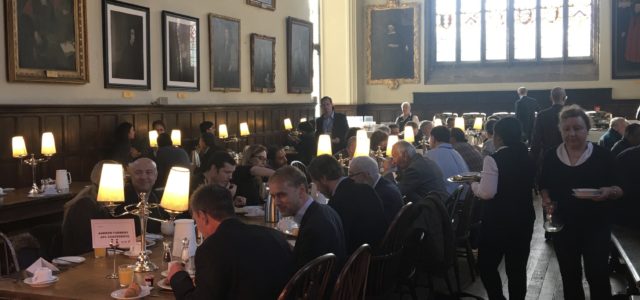
    Ketamine for Psychiatric Disorders breakfast.Can you say PHENOMENAL???

    Let’s hear it for Ketamine Treatment and Oxford!!

    I just returned from a history-making global conference focused on research and clinical evidence for ketamine for psychiatric disorders. Experts from nearly every continent spoke of their own data and evidence from this emerging field of the the science behind ketamine and the extraordinary help ketamine treatment provides. The entire room was held spellbound for three days, from the first word spoken until the final applause Friday afternoon. It was an unforgettable event in the most beautiful and historic venue at Wadham College, Oxford, UK.  

    A 400-Year-Old Chandelier in a 400-Year-Old Room

    In the 1650’s, a group of individuals including such celebrated thought leaders as Robert Hooke, Robert Boyle, Christopher Wren, and Thomas Willis began an “Experimental Philosophy” club where the fundamental premise required that orthodox thought was rejected and the world was viewed through the “broadened lens of experimental scrutiny.”

    Well, this club became the Royal Society when members of the family of King Charles II got Ketamine for Psychiatric Disorders International Conference 2018involved. When that happened, the revolutionary became the norm.

    It seems only fitting that this international conference on the revolutionary breakthroughs for treating psychiatric disorders should be held in this same building, and on these same grounds.

    Rupert McShane chaired this ground-breaking event. Hats off to him for beginning what we hope will become an annual international conference.

    Luminaries in the Ketamine Adventure

    Gerard Sanacora, a frontline researcher for ketamine treatment in psychiatry, spoke first. He previously served as the lead researcher of the American Psychiatric Association Counsel of Research Taskforce for Novel Biomarkers and Treatments which published a consensus statement about ketamine for this purpose in mid-2017.

    Dr. Sanacora kicked off the conference with an overview of the literature and key studies that have explored ketamine’s mechanism of action in treating psychiatric disorders. It was brilliant!

    We’ve been keeping you informed about some of those in recent times … but there was so much more that was discussed.

    Luminaries all around!  We were graced with Peter Somogyi and David Lodge whose seminal work on NMDA and axoaxonic cells paved the way. Many of the top ketamine researchers and clinicians in the world presented their findings: Colleen Loo, Jennifer Southgate, Nuri Farber, Steve Levine, David Feifel, Declan McLoughlin, Haggai Sharon, Alison McInnes, Samuel Wilkinson, Michael Grunebaum, Elias Dakwar, Rupert McShane, Raquel Bennett, Karen Lascelles, Jeffrey Becker, Ian Anderson, Gordon Fernie, James Stone, Meng Lei, and Dan Iosifescu. Jose Miyar covered regulatory issues. Jonn Donello and Suresh Durgam discussed new breakthrough findings for the mechanism of action of Rapastine, and Jaz Singh presented new data about the safety and efficacy of esketamine.

    And of course, the extraordinary international collaborative teams involved in all of this work … the freshness of perspective emerging across the field — from doe-eyed young researchers to seasoned principal investigators … the breadth and energy of molecular, cellular, neuroimaging, and clinical work represented in the posters.

    Breathtaking doesn’t do it justice.

    We talked about everything ketamine from mice to men … and from chandelier cells (just as gorgeous as the chandeliers King George IV gifted to Wadham College for the Holywell Music Room) to psychotherapy.

    How fitting that we heard about paradigm shifts in the very room where Handel and Haydn first played! Raquel Bennet, Founder of KRIYA Institute, explored the importance of the dissociative experience as transformative, and the many ways ketamine has been used in clinical practice.

    Biologically to induce neuronal plasticity (we talked about this before), as a sort of lubricant  to enhance psychotherapy, and to deliberately induce dissociation … which can be transformative for the patient.

    Jeffrey Becker offered us an elegant unifying hypothesis for ketamine in clinical practice, exploring the GABAergic interneurons and Jungian archetypes in treating people with depression. 

    The depth and breadth of this conference was amazing. The sheer richness of talents in the room, the knowledge and experience gathered into this one place from all over the world. Everyone talked about how much more we need to learn, and the questions that still need to be answered.

    Ketamine for Psychiatric Disorders – Global Conference! Stunning.

    These were basic scientists, principle investigators, neurimaging experts, clinical researchers, psychiatrists, anesthesiologists, Ketamine for Psychiatric Disorders International Conference illuminated ketamine's many therapies.psychologists … it’s astonishing to realize the scope of interest and exploration there is in perfecting this most remarkable treatment to help you get better.

    When you feel depressed, deeply and severely … or when your vigilance and terror from PTSD is tearing apart your family … or when bipolar disorder rips you apart … It can feel like you’re all alone and no one out there cares. You know you don’t know the solutions. So you feel like you’re relying on scientists to figure out the solutions … but … is anyone really trying to help you?

    This is why I tell you about this conference.  This sharing of data, preliminary findings, hypotheses, results… just to show you there are people all around the world who explore the solutions to your pain, and work on solutions for you … and others like you … as feverishly as they can. They care. And they’re dedicated to learning more and more. All to help you.

    As for me, I presented data from my clinical practice. It demonstrates that ketamine can be used to stop suicidal thoughts. And it happens often in a real-world outpatient clinical practice. What’s more, it provides an alternative to hospitalization.

    Someone recently mentioned to me that he predicts the excitement over ketamine will fade away.

    Of course, he’d probably read negative media accounts and had probably missed the science … and all the studies. But I have to say, I wish he and others who share that “doom and gloom” outlook could have been present to hear all the extraordinary work going on with ketamine and related compounds.

    It seems pretty clear to me: ketamine treatment is going to be with us a good while.

    Ketamine Can Make Antidepressants Work Better for Hospitalized Patients

    Declan McLoughlin spoke of his study in Dublin using ketamine to try to prolong remission after ECT. He also explained his work using ketamine as an additional treatment combined with antidepressants for hospitalized patients in Dublin.

    These are just examples. But they don’t even scratch the surface of all the topics covered these three days last week.

    There’s no question that ketamine treatment has a long way to go to reach “mainstream status.” Everyone in the upper echelons of research and practice seems to agree we need to know so much more. The more we learn the more questions arise that we need answers to. But we know so much more than we did even two years ago.

    This is the breakthrough we’ve wished for … depressed and anxious people, suicidal people, Ketamine for Psychiatric Disorders international Conference 2018people wracked with PTSD, or torn by bipolar disorder, trapped by OCD. This is what you’ve yearned for. So have I. Many say this is the greatest breakthrough in fifty years in psychiatry. But we can go further than that.

    This is the best, life-changing breakthrough for people who suffer with psychiatric mood disorders EVER.

    There is so much more to learn…so much! Ketamine is the new frontier in psychiatry and the treatment of psychiatric mood disorders and more.

    Ketamine for Psychiatric Disorders like Substance Use Disorders

    One more story I have to tell you about. Elias Dakwar (we’ve talked about his work) discussed his research with ketamine in treating substance use disorders. You might remember our post on crack cocaine use in February.

    We talked about how Dakwar and his team studied responses of crack cocaine users. Those who were currently using and had no intention of stopping.  When they had been given ketamine infusions the day before being offered either crack or money, they had the motivation to turn and choose money, and their craving was so diminished that they also had the power to turn down crack.

    That brings up something we’ve talked about here: that ketamine restores initiative and motivation.

    All in all, this conference gathering of great scientific minds, young researchers, and brilliant clinicians was a huge step forward for the needs of depressed and anxious people. A huge step forward for the use of ketamine in the treatment of psychiatric disorders.

    Research is ongoing to test ketamine’s use with psychotherapy, ECT, TMS, and traditional antidepressants. Plus, its effectiveness intravenously, intramuscularly, subcutaneously, orally, and intranasally.

    Now we’ve all gone back to our home offices, and our work will continue. And this time next year I hope we’ll see that ketamine’s advantages have taken another big step forward.

    Meanwhile, at Innovative Psychiatry, we’re still here providing IV ketamine treatment. And we see life-changing results with it for people with treatment-resistant depression, bipolar depressionsocial anxiety, bipolar disorderPTSD, OCD, and suicidal thoughts. 

    If you’re suffering from a mood or anxiety disorder, treatment hasn’t helped, I’m sure you’re far more concerned about your desire to feel better and function again, than about a conference. And that’s why we’re here and want to help. We try to offer you the best that the world has to offer. This time from the first International Conference for Ketamine and Related Compounds.

    Call us or schedule an appointment here to be evaluated.

    There is hope. You can feel truly better. 

    So don’t judge your next treatment by the ones you’ve had before. This time, chances are, you’ll see a difference. And you’ll remember how to live again.

    Lori Calabrese, MD offers innovative psychiatric treatment like IV Ketamine

    To your life and the emerging of your best self,

    Lori Calabrese, MD

  • Ketamine: What’s Dose Got To Do With It?

    Ketamine: What’s Dose Got To Do With It?

    Ketamine: What's dose got to do with depression relief?Ketamine’s Power Against Depression

    We’ve talked before about how ketamine works through a variety of actions to relieve depression in people with Major Depressive Disorder (MDD).

    Like the hero in an epic movie, ketamine treatment works in several brain areas at once to improve brain functioning. It triggers a cascade of actions that repair, restore order, and create peace once again.

    We know that ketamine turns on mRNA which switches DNA “on” to turbo boost brain-derived-neurotrophic-factor (BDNF). BDNF, in turn, serves as an ultra-rich compost to speed up the dense growth of synapses, dendrites, and dendritic spines to rebuild a superhighway of infrastructure in the brain for signals to move rapidly from cell to cell and deep into the brain.

    This is AMAZING.

    And there’s more…

    While this is happening, there are lazy little G proteins piled high on lipid rafts in the neuronal cell membranes — and they’re Ketamine: What's dose got to do with depression relief?needed to enhance signaling along these dense pathways. But they can’t do their job because they’re just piled on those rafts … and unable to operate.

    Ketamine, like a proverbial grade school hall monitor, quickly causes these G proteins to slide off those lipid rafts, get into place, and get back to work with their signal transmission job.

    The result of all this is a brain that’s communicating at lightning speed again within hours, rather than weeks or months.

    Genetic Tests

    We’ve talked before about tests that help indicate whether a person is likely to respond to ketamine or not.

    One of these tests checks a certain genetic biomarker that signals a person’s likelihood to respond to ketamine treatment. It’s a certain allele, which is one of two more forms of a gene that can arise on the chromosome for BDNF.

    The alleles are called Val and Met. You can be a Val/Val, a Val/Met, or a Met/Met for BDNF.

    It’s the Met allele that seemed to impede the antidepressant effect of ketamine treatment for depression, anxiety, bipolar disorder, PTSD, OCD and suicidal thinking. Early on, it was reported that those with the Met/Met alleles were least likely to respond to ketamine treatment, and those with Val/Val were most likely.  (Those with Val/Met fell in between.)

    However, we’ve noticed in our practice that sometimes our patients who don’t have the Val/Val Ketamine: what's dose got to do with depression relief?alleles, and don’t seem to respond to ketamine rapidly, tell us weeks or months later that they’re feeling so much better, and are enjoying their lives again.  Hmmmm …

    What Causes the Delay?

    That made us wonder what made the difference …?  Why were some of those specific patients enjoying a delayed, but just as robust, response to ketamine treatment…?

    So … a new study shines a light on this mystery. (Science is so fantastic!)

    A team of researchers from Taiwan and the US has found evidence that ketamine’s antidepressant effects are related to the size of the dose given.

    And, importantly, evidence that Met carriers respond to ketamine.

    First Study to Explore Ketamine with Taiwanese Subjects

    The researchers conducted an elegant double-blind placebo-controlled study of 71 Taiwanese adults who received one ketamine infusion.

    Neuroscientists believe ketamine treatment’s effectiveness as an antidepressant depends, in part, on the BDNF gene.

    An important fact is that Chinese people typically have at least one copy of the less responsive BDNF allele, Met.

    So in testing the effectiveness of ketamine treatment for these Taiwanese participants, the Ketamine: what's dose got to do with it?researchers were testing whether ketamine relieves depression in people with the Val/Met allele, and also whether the size of ketamine’s dose determines effectiveness.

    Huge. AND exciting.

    Ketamine: What’s dose got to do with it?

    This was the first study to compare the effectiveness of two different doses of ketamine — 0.2 mg/kg and 0.5 mg/kg.

    The researchers genotyped the participants and confirmed that the Met allele is the predominant BDNF gene in this specific group of people — they were Val/Met or Met/Met. In European descendants, the BDNF gene alleles most often seen are the Val/Val pair.

    Another factor they explored was whether ketamine’s effectiveness varied depending on the severity of the patient’s depression.

    Size of Dose Determined Effectiveness

    All in all, they learned that lower doses of ketamine, such as 0.2 mg/kg, weren’t effective at all. (Good to know, because we’ve never used doses this low.)

    So if you’re asking, “Ketamine: What’s dose got to do with effective depression treatment…?” you now know that tiny doses under 0.5mg/kg are too low to treat depression and other psychiatric mood disorders.

    Only the higher dose, 0.5 mg/kg, was effective, which validates the current most commonly used starting dose, and the starting dose that we use, too.

    Also, when they evaluated ketamine’s effectiveness in those with mild depression, they found it really wasn’t effective. (We’ll get back to this later.)

    But it was remarkably effective in those with moderate to severe depression.

    So, we know that ketamine is effective in people with moderate-to-severe and treatment-Ketamine: what's dose got to do with it?resistant depression. And we know it can be effective in people with the Met allele for BDNF — as well as in people with the Val allele, of course. All you Mets, take heart.

    Questions That Need Answers

    But there’s so much more to be explored.

    More studies — for instance, to determine how ketamine infusions could be used to help you if you have mild depression. Using a different dose, different intervals…? 

    Don’t you wonder… what if a study were performed among subjects from an equal distribution of multiple BDNF gene variants… if we could learn more about what role the Val and Met alleles play in fast response or delayed response to IV ketamine treatment? 

    Or whether a higher dose than 0.5 is needed for those with the Met allele? Or a longer infusion? Maybe a longer series like 9 infusions instead of 6? 

    The more we learn, the more we can hopefully bring relief and remission. Relief and remission to adults and adolescents with suicidal thoughts, anxiety, depression, bipolar disorder, social anxiety, PTSD, OCD, and substance use disorders.

    Exciting, isn’t it?

    If you suffer from depression, anxiety, bipolar disorder, social anxiety, PTSD, OCD, suicidal thinking, or substance use disorders, there’s hope. At Innovative Psychiatry, most of those we treat with IV ketamine achieve remarkable improvement — as in remission — from their symptoms.Ketamine: What's dose got to do with depression remission?

    We use the most precise state-of-the-art methods of administration. We provide a thorough psychiatric evaluation of our patients’ needs and progress.

    And we see people get better every day.

    If you’re suffering from symptoms that haven’t responded to other treatments — or if you’re just tired of side effects that never end — call us, or send us a note here. You can feel better, with a new initiative, motivation, and joy. Soon.

    Lori Calabrese, MD offers innovative psychiatric treatment like IV KetamineTo the restoration of your best self,

    Lori Calabrese, MD

  • Breaking News! Ketamine’s Rapid Relief of Depression in the Lateral Habenula

    Breaking News! Ketamine’s Rapid Relief of Depression in the Lateral Habenula

    Ketamine's rapid relief of depression is helped when it blocks bursting in the lateral habenula.

    Ever get tired of the ongoing discussions about depression…? What causes it, and what actually helps people feel better? How many people have you heard complain that they don’t believe in psychiatric medicine because “it doesn’t work?” People who say they feel like guinea pigs and are fed up…?

    Or…maybe you’re one of those people…? Who are sick and tired of feeling crummy most of the time? Without the energy or initiative to get through a day…or even get out of bed?  …Who are disillusioned with psychiatric prescriptions and therapy? Who feel resigned to drag through life without hope…?

    Well, take heart.

    For you, hope is emerging and taking hold.  Neuroscience is uncovering more and more information that has eluded us since the beginning of man.

    In the last 15 years or so, breakthroughs led to experimental trials, then grew into more widespread use that seemed to be turning a corner on this long, arduous, uphill climb.

    Barbaric treatments that all but put a depressed person out of commission gave way to less overwhelming medications and therapies that only helped some depressed patients. Suicides Ketamine's rapid relief of depression will lift this woman out of her pain.continued or increased. 

    But research pushed forward. Then, a small group tried an anesthesia medication on depressed patients and…

    Eureka! They felt better. And a new era began.

    More about that in a moment… but first, let’s take a look back…

    Over 5000 Years to Crack the Depression Code

    Since the beginning of civilization, people have sought a solution to depression.

    As far back as 2000 BC, in the ancient civilization of Mesopotamia, where psychiatric disorders were believed to be caused by demonic possession and were treated by priests rather than physicians.

    Then, around 400 BC, Hippocrates, known as the father of medicine, called it melancholia and ketamine's rapid relief of depression is helped when it blocks cell bursts in the lateral habenula.theorized its cause was an excess of black bile in the spleen. He gets credit for being the first physician to declare that illness was caused by physical problems in the body rather than gods or spirits.

    Hippocrates offered treatments like blood-letting, among other things. But … he was trying to find help for his patients.

    These meandering beliefs and others have accompanied the quest to understand the cause of depression and to find remedies that actually work.

    IV Ketamine is Depression’s BREAKTHROUGH 

    It’s only now, in the 21st century, that breakthroughs, knowledge, and effective treatment are emerging and gaining momentum.

    We’ve learned a ton about ketamine in the past few years, and it’s important to keep it straight. Really understand it.

    For instance, we’ve learned that it turns on mRNA which switches on DNA to infuse dynamic growth into the brain-derived-neurotrophic-factors (BDNF).

    And that the BDNF is like a compost of sorts, that richly empowers the neurons (brain cells) to proliferate densely with branches and connections that double, triple, quadruple and turbo-charge the development of more synapse connections and branches.

    We’ve learned that IV ketamine slides G proteins off the lipid rafts they’re piled upon in the cell Ketamine's rapid relief for depression is caused by its blocking cell bursts in the lateral habenula.membrane…and that gives the Gs the freedom to enhance the transmission of signals throughout the brain, which reverses depression. And we’ve learned that ketamine causes these things to take place fast. Within hours.

    We’ve learned it does all this in minuscule doses, much smaller than the doses used in anesthesia.

    IV ketamine infusions have brought a dawn of new hope for patients with psychiatric mood disorders, and there’s more.

    In addition to all this, ketamine also stops – erases – suicidal thoughts in 4 hours or less. 

    We’ve never had any treatment that could do that.

    IV ketamine treatment is saving lives. Every single day.

    And now, the hardworking and dedicated neuroscientists who’ve been studying, testing, and researching ketamine around the globe have made a breathtaking discovery.

    Ketamine’s Rapid Relief of Depression:  It BLOCKS Neuronal Bursts in the Lateral Habenula (LHb)

    We now know that IV ketamine blocks the bursts of brain cells in the lateral habenula that drive depression. This area is often called the “anti-reward” area of the brain because it prevents the reward area of the brain from functioning properly.

    Ok, yes, I get that it sounds like Greek. Lateral habenula…who ever heard of it?? It’s not Greek, it’s Latin.  Stay with me.

    The lateral habenula is located deep in the center of the brain. And there are actually two. A right lateral and a left lateral habenula…connected to the hindbrain by nerve pathways. When viewed from above, this system looks something like a horse bridle, if the hindbrain is the horse’s nose, and the pathways are reins.

    For this reason, the structure the nerve pathways connect to is named after the Latin root word for “rein.”

    But that’s where the reference to equestrian activities ends. The habenulae, as in both of them, are part of the limbic system, which regulates emotion, motivation, learning, and memory.

    Now, if you do something hoping for and expecting a reward — and the reward doesn’t happen — neurons in the LHb burst in rhythmic patterns to dampen the sense of reward. The idea is to help the brain understand to let go of the hope of reward and move on to something else.

    The Problem with Bursting Cells

    But here’s the problem. When you’re depressed, those bursting cells go overboard, bursting far too much and too fast. And rather than just dampen expectation of reward, their bursting dampens everything. It renders you hopeless. Until you’re in despair.

    A team of neuroscientists led by Hailin Hu, did a series of very elegant studies to see the effect of ketamine on the lateral habenula.

    And it was pretty spectacular.

    Working with laboratory animals, the team induced a depression-like condition on some of them. The depressed ones moved into despair so severe that they didn’t even try to survive in a severely stressful situation — they just gave up.

    In this condition, researchers observed that a small portion of the neurons in their LHb fired in repetitive bursts in far greater numbers and speed than the LHb of normal, non-depressed mice. This overly excessive bursting of anti-reward rapid fire worsened their depressive condition.

    Researchers also found that when the mice had gone through severely stressful experiences, Ketamine's rapid relief of depression will help this man relax.they also had these quick rapid-fire bursts in far greater numbers than mice who were comfortable. 

    So severe depression and severe stress both resulted in an overabundance of rapid-fire anti-reward signals that drowned out any benefit from the reward center in their brains.

    But look what happened: After researchers dosed the stressed, depressed, despairing mice with ketamine, the rhythmic bursting slowed way down… to almost normal. Which allowed the reward center to shower the mice with serotonin and dopamine and they quickly felt better.

    Then, to test that response, the researchers forced those bursting cells to fire, and even when they did, the mice who had ketamine still showed no signs of depression.

    Exciting, isn’t it??

    Ketamine’s Rapid and Robust Antidepressant Effect

    So we’re beginning to understand how ketamine can act so fast. It releases the reward areas from those Ketamine's rapid relief of depression has helped this guy enjoy fishing.strong anti-reward signals. And the reward signals of dopamine and serotonin are able to find their mark and make you start feeling better very quickly.

    All this suggests that as more medications for mood disorders are developed, medications that block the LHb anti-reward bursts could also effectively relieve depression. That opens all kinds of new ideas for researchers to pursue for depression relief.

    We’re finally getting down to what really works. It’s about time.

    We’re finding new solutions for mood and anxiety disorders.

    At Innovative Psychiatry, we’re learning more all the time. This new study has opened more doors and windows about another extraordinary benefit of IV ketamine treatment. The power to block the bursting, to stop the work of the anti-reward bursts, means that it can lift the brakes that have prevented you from feeling showered with relief, joy, and gratitude. When burst firing stops, you begin to flourish.

    It’s just one more way ketamine works to smash depression.

    If you suffer from depression, anxiety, panic disorder, social anxiety, bipolar disorder, PTSD, OCD, or suicidal thinking, IV ketamine treatment can relieve you so you can live a fulfilling and productive life again. You can enjoy initiative, creativity, motivation, joy, resilience… and you can function.

    We see 80% success in treatment-resistant mood disorders. And 80% is the best result seen from any treatment known today.

    Tired of the sadness, numbness, anxiety, fear, emotional pain, mood swings, or thoughts of death? Call us. We can help you feel better, live better…and have hope for the future.

    Lori Calabrese, MD offers innovative psychiatric treatment like IV KetamineTo your best self in the months ahead, 

    Lori Calabrese, M.D.

  • Mental Health Issues in College Students — Prepare Early

    Mental Health Issues in College Students — Prepare Early

    mental health issues in college students.Does Your College Student Know Where to Find Mental Health Support?

    Jonathan stood at the curb, watching his parents drive till they were out of sight. He felt lost. Vulnerable. Tired. He didn’t know much about mental health issues in college students … or even first graders, for that matter.

    Jonathan had been depressed most of his life. His parents noticed the pain in his eyes from the time he was a preschooler, and tried to help in every way they could. He was their first child, and they didn’t recognize he needed professional help.

    His sadness and social anxiety held him back in countless situations.  He was very bright and did well in school, but socially he was isolated much of the time. He searched early, and visited colleges with his parents. But contributed very little to the decision.

    They chose a small private college, where student/faculty ratio was intimate and friendly. And when it was time to go, they packed him up and drove the 4 hours to the campus. He followed as they carried his belongings to his dorm room. Afterwards, they all went to dinner, then back to the dorm. Hugs all around with words of encouragement. And they left.

    Jonathan had no idea what he would do. As time moved on, he tried very hard to do well in his classes. But his energy for it eventually faded. And after a year he told his parents he wanted to leave school. He withdrew, packed up his belongings, and drove away.

    Treating Mental Health Issues in College Students – A BIG Problem

    A rising problem in the US education system is the minimal attention given to the mental health of students — especially college students.

    Since 80% of incoming freshmen are 18, some 17 or younger, and others 19 or older, most of Mental health issues in college students can be relieved by ketamine treatment.these students are still very much adolescent. Add to that the fact that 75% of psychiatric disorders are diagnosed before the age of 24, and you can see that the college years are predisposed to turmoil for many kids.

    And if you don’t really believe your student is susceptible to mental health issues, think about this: 45% of parents say their child has been diagnosed or treated for a psychiatric disorder. Add to that: those who need help but haven’t sought it. Those who are afraid … of stigma, cost, and the rumors they’ve heard about psychotropic medications. Or children of parents who are misinformed. 

    Do the math, and you’ll see that your daughter or son has more than a 50/50 chance of needing psychiatric treatment in the years ahead.

    Yikes.

    How Common are Psychiatric Symptoms in Teens?

    A survey was conducted with 712 parents of children in grades 9-12 and first year of college this past fall.  The question asked if their child had been diagnosed or treated for anxiety disorders, stress, mood disorders, learning disabilities, self injury or suicide attempts, and more.

    A full 20% reported anxiety disorders, 18% reported stress, 17% reported mood disorders, and Mental Health issues in college Students.17% reported learning disabilities. These are parents whose children have been diagnosed or treated. 

    Of the same group of parents, 54% said their children had not been diagnosed or treated for a psychiatric illness.

    Not because they hadn’t seen symptoms. But because they had not sought treatment. Some percentage of that 54% includes families with psychiatric suffering that they’re not recognizing or acknowledging.

    Some People Don’t Believe in Psychiatric Illness…Still

    There are still factions of society in this 21st century world who still don’t believe in the validity of psychiatric illness.

    So, if they’re faced with it in a child, they consider these disordered behaviors as a lack of discipline, or misbehavior, or rebellion. So they apply more discipline to the situation. Consequences maybe. But nothing that treats the very real symptoms in the brain.

    When teens from that kind of home environment enter the university environment, we see symptoms emerge that often require attention. The stress, the social pressure, and exhaustion from disordered sleep patterns sometimes lead to a crisis … sometimes even a need for hospitalization.

    And again, by the way, the years a student spends in college coincide with the years the largest number of people in the 15-24 age group are diagnosed with a psychiatric disorder. Is there any wonder why…?

    The Need for Diagnosis and Treatment in College is Steadily Rising

    The Center for Collegiate Mental Health reported in 2017 that the demand for mental health services on college campuses has increased continuously over the last seven years. Hands down, the most often repeated request is for counseling for anxiety and depression.

    Parents who were surveyed listed their top criteria in choosing a university with their child. Those criteria included things like affordability, distance from home, academic reputation … but mental health services weren’t included on that list.

    While it may not be all that unreasonable that parents don’t automatically explore availability of mental health services in the colleges they consider, you probably should place these services high on your list. It’s just smart.

    Get Your Student in Touch with Mental Health Services Near His Campus

    If your son or daughter is already seeing a counselor or psychiatrist, continuing treatment or finding mental health professionals they can trust on campus or nearby could make the difference in their academic success or failure. Cradling the idea that he or she can just “wing it” is not a recipe for satisfactory outcomes.

    On the other hand, if your child has shown no signs of psychiatric stress or disorder, just be awareMental Health Issues in College Students can be relieved by ketamine treatment., and stay informed.  The student with the highest performance in high school can still develop depression, anxiety, or bipolar disorder in college. That’s not to say your child will fail. Not by a long shot. 

    But in far too many cases, parents are caught by surprise when a child with excellent performance falls into severe depression … and just withdraws and shuts down.

    High Performance Students May Suffer Burnout

    Sarafina was voted Most Likely to Succeed in high school, along with Class President, Homecoming Queen, and president of the honor society. She was hard working and disciplined, and maintained a 4.0 GPA even with a part-time job.  When she started college, she got a work-study job on campus from the very beginning, and secured loans for her tuition.

    She worked tirelessly toward her goal of acceptance into medical school.

    But during her third year, something began to go wrong. Stressors that included unstable family members, a volatile political environment on campus, and the pressures of school and work finally capsized her ability to function. She had to withdraw from classes to seek psychiatric treatment for bipolar disorder, complicated by way too much drinking.

    She just couldn’t do it any longer.Mental health issues in college students can be relieved by ketamine treatment.

    This is not an uncommon scenario with high achieving students. In some cases, the years of strain to get ahead, the sacrifices… and the pressure, culminate in an overwhelmingly bad place.

    There Is Effective Treatment Available Now

    If your child struggles with psychiatric mood disorders like depression, anxiety, bipolar disorder, social anxiety, PTSD or OCD, there is treatment that can help – therapy, and medications like SRIs.

    And…even if they don’t, there is IV ketamine treatment.

    Ketamine Treatment..?

    Ketamine treatment for psychiatric mood disorders uses a tiny dose compared to the small amount used for anesthesia. We give these doses 3 times a week for a 2-3 weeks, depending on your individual needs.

    Ketamine turns on mRNA to switch on DNA that turbo boosts the Brain Derived Neurotrophic Factor (BDNF). BDNF is like a rich compost…that infuses dendrites and stokes neuronal (brain cell) connections, called synapses.

    These dendrites branch out in fast motion to create dense dendritic spines, causing the signaling system in your brain to bloom like tomatoes at the county fair. When that happens, the signals start flying around in your brain connecting your thoughts, emotions, and well-being and bringing healthy, alert stimulation and balance.

    At the same time, ketamine can erase suicidal thinking. Why is that important? Because there is no medication besides ketamine that has been shown to stop suicidal thinking in 4 hours or less. This is life-saving for someone in crisis, intent on suicide.

    Your son? Your daughter?   …You?   

    The second highest cause of death in college-age students?  Suicide. 

    This is serious, and can mean life or death for the child you love. The best protection for your child is prevention. And after that, treatment. Ketamine treatment can prevent suicide now.

    Innovative Psychiatry Treats Your High School or College Student

    And, if you do have a teen who exhibits signs or symptoms of anxiety, depression, social anxiety, panic disorder, bipolar disorder, PTSD, OCD, or thoughts of suicide, call us. The earlier they receive effective treatment, the higher their prospects of recovery.

    At Innovative Psychiatry, we see 80% of treatment-resistant psychiatric mood disorder cases Mental health issues in college students can be relieved by ketamine treatment.achieve remission with IV ketamine treatment. Eighty Percent!  

    There’s never been such an amazing medication for depression and anxiety before.

    Let us help you and your family restore, rejuvenate, and rebuild on solid, healthy ground.

    Lori Calabrese, MD offers innovative psychiatric treatment like IV KetamineTo the restoration of your best, happy self,

    Lori Calabrese, MD

  • Ketamine – Outpatient Treatment for Addiction

    Ketamine – Outpatient Treatment for Addiction

    Ketamine outpatient treatment for addiction.Ohhhh, the weekend.

    The time when you can finally let down and let go after a week of grind. Waking to the alarm clock day after day after day…  Sitting in bumper-to-bumper traffic…  Not once but twice a day…day in and day out.

    Friday night? It’s time to PARTY!!

    Meet your friends at your favorite place, talk, eat, laugh and knock back some cold ones. A drink or five.

    Then, your gaggle of friends decides to move to another bar, and knock back a few more…. With some appetizers… Then one for the road… or three…

    You wake up the next morning and don’t remember how you got home. Head splitting, can’t Ketamine is outpatient treatment for addiction.see straight, drag into the kitchen and drink water, guzzle coffee…add your friend’s hangover remedy… then get on the phone to pull friends together to tie one on tonight…after all, it’s Saturday! Party baby!!

    Rinse, repeat.

    And again Sunday night…

    Monday, throw down coffee, stuff your pockets with Alka-Seltzer and head for work. Back to the grind.

    One Way Alcohol Tears Down Your Life

    A few years of this is just a continuation of your college lifestyle…but somewhere along the line the weekend binges overflow into Monday. Then the weekend starts early on Thursday…

    After a couple more years, you think, “Why wait till the weekend? I’m an adult!” And you’re meeting a friend at the pub every night after work, then drinking at lunch…

    And now? Well, your breakfast is no longer a beer, but vodka in a little orange juice. Lunch is Kentucky Honey…followed by Jack Daniels for afternoon tea.

    The job? Performance has fallen way off, and you’ve got a file full of write-ups for missing Ketamine is outpatient treatment for addiction.meetings, too many absentee days… and finally an ultimatum from your boss.

    What started as fun outings with college friends, has now set your career on the brink of destruction.

    What happened…? And what can you do?

    Too Much Alcohol Too Often Leads to a Disorder

    Well, for starters, you’ve unwittingly trained your brain and body to depend on that daily consumption of alcohol. It started out mild with a few beers, then rapidly accelerated to full-blown alcohol dependence. And the more you drank, the more you needed. You might just be a girl who loves her wine. Or you might have moved on to a new favorite. From beer to Jack Daniels at lunch, and from wine with dinner to Gray Goose instead of dinner.

    This is called alcohol use disorder, and while it doesn’t happen to everyone, it does happen to 5% of the adult population of the world.

    And it can lead to alcohol dependence, or addiction, just like heroin and cocaine use can lead to addiction.

    2.9% of the US population is addicted to illicit substances.

    The leading cause of accidental death in the US is drug overdose.

    And it gets worse. For those who try to stop their addiction to alcohol, prescription or illegal drugs, the rate of relapse is between 40-80%.

    Pretty grim.

    For millions of people, the outlook has been bleak. Once that door is opened, it’s really tough toketamine is outpatient treatment for addiction. close it again.

    Outpatient Treatment for Addiction

    Addiction treatment focuses on abstinence.

    Stopping, staying away, never going back.

    It’s so hard to do.

    It’s hard for some people to even think about. But it’s the goal of treatment, and it’s the way to freedom.

    Support is critical. AA or other 12 step programs, sponsors, a recovery coach, individual therapy, mindfulness practices, healthy living.

    And perhaps medication that can help you NOT RELAPSE,

    There have been two basic approaches to treating addiction with medication. Either to replace the substance with another one that’s less destructive, like methadone in opioid addiction, or use a medication that can enhance abstinence. There are lots of these.

    For alcohol, there are medications that can reduce craving … and medication that will make you really sick if you do drink. For opiates, there are medications that can reduce cravings and completely block opioids from getting you high, like Suboxone, and medication like methadone offered in methadone clinics.

    However, a recently published paper reviewed the work that’s been done with ketamine for treating substance use disorders and alcohol use disorder, otherwise known as alcoholism.

    We don’t mean recent, we mean hot off the presses. In Neuropharmacology January 18, 2018, by lead researcher, Ivan Ezquerra-Romano, and his team of neuroscientists in the UK and Russia.

    It’s a game-changing analysis of studies conducted to investigate the use of ketamine and how its specific characteristic actions impact recovery.

    You may know that alcohol use disorder is a serious epidemic in Russia. One of the authors — E. Krupitsky — is a Russian neuroscientist who has contributed a large number of studies to this effort.

    This paper reviews and evaluates the use of ketamine and in treating alcohol use disorder, cocaine use disorder, heroin use disorder going back as far as 1965 to the present.

    Ketamine??

    Let’s talk about some of the findings.

    Is Ketamine a Treatment for Alcohol Use Disorder?

    Early studies in the ’60’s and ’70’s identified the effects of ketamine and “psychedelic-type” experiences it induced, based on the size of the dose taken. These observations would later become important in the treatment of substance use and alcohol use disorders.

    Neuroplasticity is Vital for Recovery

    Later, it was discovered that addiction seemed to be accompanied by a diminished Ketamine is outpatient treatment for addiction.transmission of signals through the brain cell connections, and reduced change-ability of brain cell organization.

    To make improvements in our brain function, and our thinking, the brain must have the ability to change…to reorganize its cells. This ability to change and improve is called plasticity.

    And since we’re talking about brain cells, or neurons, this is neuroplasticity.

    It allows the brain to improve as you improve. For instance, if you drink alcohol regularly in larger and larger amounts, your brain cells change as a result. One thing that changes is the ability to transmit certain signals through the brain. The connections between these brain cells or neurons, break down, dwindle, and disappear.

    When you decide you want to stop drinking excessively, and to be healthy and balanced again, you need those synapses to be replaced and restored…so your brain can change itself.

    Ketamine treatment works to reverse those changes in synapses, and restore them. It helps new neurons to be formed and to grow, then to grow more synapse connections to proliferate transmission of signals all through your brain.

    Ketamine Turbo Boosts BDNF

    One of the actions ketamine achieves for growing those new neurons and synapses is that it turbo boosts BDNF– or brain-derived-neurotrophic-factor. BDNF is like a rich compost that helps neurons and synaptic branches not just grow, but explode with rapid branching and dense mushrooming of strong, healthy branches and connections. And it happens FAST.

    This transforms the function of your brain for a brighter mood and stronger sense of yourself.

    When your brain’s communication network becomes more prolific and dense, you feel better, think better, have a brighter outlook. As a result, you feel capable of solid decisions.

    Alcohol use disorder and substance use disorders are usually accompanied by depression. So, ketamine’s growing reputation for relieving depression is a strong adjunct to its therapeutic properties for addiction. By relieving depression, ketamine ramps up the strength of resolve in the patient to remain sober for a longer period of time.

    Traditional antidepressants have no ability to reduce drinking — studies have shown this. And if you feel depressed, that’sketamine is outpatient treatment for addiction. a big trigger for relapse. Ketamine’s ability to produce a bright outlook and hope for the future can equip you to abstain from alcohol.

    Add to that the characteristics of ketamine’s rapid onset of beneficial actions, and the high success rate it boasts for relieving depression. Well, you can see the broad advantages it presents for relieving addiction, too.

    Mystical and Dissociative Aspects

    Another aspect of ketamine’s therapeutic prowess in treating alcohol use disorder and addictions of all kinds seems to be in the “mystical” and dissociative experiences it can produce.

    Now stay with me. I know this sounds like we’re going off the road here, but think about it.

    We know ketamine was abused as a club drug in the 1990’s and in some parts of the world is still the focus of serious abuse problems. Those who use it on on the street to get high use massive doses, and their drug seeking can quickly get out of control. Even when they think they’ve got it all under control.

    At the same time, it’s listed on the World Health Organization’s List of Essential Medicines. So it’s a two-sided coin.

    We continue to see that when it’s applied in the hands of non-professionals for the sake of the “mystical” experiences, it’s overused, overdosed, and damaging. However, in the hands of well-trained, deeply experienced psychiatrists for psychiatric treatment, its innate characteristics can work miracles.

    In addition, we know that ketamine has the ability to provide certain experiences that feel like out-of-body experiences. Moments with insightful, profound thoughts… and for many people… deep, or spiritual, or almost mystical experiences. The type of experience is determined by the size of the dose. Keep in mind, in psychiatry, we still use very small doses.

    Ketamine – Outpatient Treatment for Addiction

    We’ve talked before about how it’s actually important that you experience a touch of this during the infusion treatment. And here’s why.

    Because it seems that when you experience a bit of this, it’s because ketamine is at work rebuilding your neuron connections. The two seem to go together like a spark and fire. One is necessary for the other to occur.

    Patients find these moments to be pleasant, floaty, happy moments.

    In our office, we’re very precise about the dose you receive, and carefully control the speed.Ketamine is outpatient treatment for addiction. We curate the experience. We want your treatment to be effective. Therapeutic. Not overwhelming.

    But what researchers have found in terms of addiction treatment is that these deep experiences during treatment are not just associated with improvement.

    They seem to be critically important for achieving and maintaining abstinence.

    Wow.

    Ezquerra-Romano points out that the dissociative experience, mystical moments, enhanced introspection, and boosted empathy during ketamine treatment prove to be psychologically advantageous in the long-term. Experiences like this tend to achieve wonderful outcomes.

    And patients describe life-changing, eye-opening, and spiritually meaningful events from their treatments.

    As a result, they report catharsis, improved relationships, improved self-awareness, and personal growth.

    We can see it.

    Ketamine – and Its Mystical Experiences – Reduced Cocaine Use Without Rehab

    E. Dakwar, et al., whose studies provided important information for this paper, published ground-breaking findings in his work with cocaine use disordered subjects in 2016. His work included subjects who had no interest in detoxification or recovery. After ketamine treatment, they reduced their cocaine use by 67%. Unheard of success before ketamine.

    These subjects had no desire to stop using cocaine, and received no psychotherapy or counseling. Only ketamine treatment.

    Amazing.

    What’s more, the mystical experiences during ketamine treatment increased their motivation to stop using cocaine within 24 hours.

    Unheard of.

    Since counseling for alcohol use disorder and other addictions includes development of respect for others, a deeper self-awareness, and often recognition of a greater power, ketamine treatment may be able to help patients achieve these goals more quickly and deeply because of the dissociative experience that occurs during the treatment.

    In these studies, these experiences and the growth and revelations they produced were seen as favorable by researchers and their subjects. The patients felt more upbeat, less anxious, and more self-confident … in fact, they were able to open up emotionally more than they had before.

    It’s possible that these therapeutic experiences help patients lay the groundwork for, adjust to, and accept, a “sober lifestyle.”

    Letting Go of “The Party Lifestyle”

    If you struggle with an alcohol use disorder, you know how difficult it is to imagine life without all that goes with alcohol. The bars … the friends … the activities … the stories. There is the physical dependence on alcohol, but there’s the psychological and emotional dependence on a lifestyle that’s familiar.

    You may be able to see that an aspect of ketamine treatment that helps you move on to accepting and even embracing a sober lifestyle could play a huge role in your recovery. It’s not the whole picture … but it could be part of it.

    Something that we in medicine need to think about, is whether ketamine’s dissociative effects are really adverse side effects. The literature is full of caution about this — as though it’s something that you don’t want — and it’s been mentioned as a reason to avoid ketamine treatment.

    Some call the dissociative effects of ketamine “psychedelic” and try to assert they aren’t necessary for ketamine’s antidepressant and Ketamine is outpatient treatment for addiction.anti-addictive actions. And … they work on developing cousins of the compound to avoid these effects.

    But, a mountain of studies described by Ezquerra-Romano and his colleagues herald the value of these side effects in treating addicts and helping with their psychological healing. They urge doctors to speak of these therapeutic effects of ketamine in a positive light.

    The real need is to remove the stigma associated with these experiences, and encourage more research.

    My Position about Ketamine for Addiction Treatment

    And I agree. This is a time when real solutions for alcohol use disorder and opioid use disorder have been difficult to come by. A time when we know that alcohol and substance abuse treatments have relapse rates as high as 40-80% within the first year. We need more research. Better solutions. New science. We need to understand how enhancing neuroplasticity can change someone’s life.

    It’s time to look beyond the tired same-old, same-old and help people get well.

    If you struggle with alcohol or other substances, and it’s interfering with your life in a serious way, call us. Or contact us here. Or email us at info@loricalabresemd.com.

    At Innovative Psychiatry, we see 80% recovery and even remission in our patients with treatment-resistant depression.

    And we see surprisingly good results with ketamine in our patients who struggle with alcohol, stimulants, cocaine, and opiates … even in our patients on methadone. They come to us with depression, and they often walk out with much less craving — or no craving at all.

    We didn’t know if we could believe it. Didn’t know what to make of it. Weren’t sure if it was a placebo effect. But there’s a host of excitement in the research community, plus new research in progress, to explore this potential treatment for alcohol and other substance use disorders. The field is exploding.

    It’s about time.

    You can turn your life around and set it on solid ground. You just need some help. And that’s what we’re here for.

    Lori Calabrese, MD offers innovative psychiatric treatment like IV KetamineTo the restoration of your best self,

    Lori Calabrese, M.D.

error: Content is protected !!