Category: Ketamine

Articles About Ketamine from Lori Calabrese, MD | The Ketamine Blog

Breakthrough anesthesia medicine proves life-changing for many who suffer from severe mood disorders.

In the last several years, a medicine began to emerge as a remarkable treatment for mood disorders. It was developed and FDA approved for anesthesia around 1970. Over 25 years later… it began to show its colossal hidden ability. What sort of ability? The power to relieve depression and other psychiatric disorders in a most dynamic way. Disorders like PTSD, bipolar depression, postpartum depression, addiction, social anxiety, and even eating disorders respond to this extraordinary treatment that involves a series of IV infusions. And perhaps the most remarkable of all, ketamine infusions can erase suicidal thinking in a few short hours. These articles about ketamine treatment are presented here to dispel stigma about psychiatric conditions and to give hope about treating them. 

Early Testing was Cautious

Researchers tested it with trepidation 10-20 years ago. Then each study built upon the last. Their work revealed more insights about what actually causes depression, and how to treat it effectively. Never before has a medicine helped relieve symptoms in such a wide variety of people and their symptoms.

Researchers Still Learning All Ketamine Can Do

Ketamine works in multiple areas and systems of the brain. It improves the function of mechanisms that have been impaired by the stress of depression and anxiety. It helps the G proteins that pile up on lipid rafts in the cell membrane slide to off. This equips them so they can do their job enhancing signal transmission.

It also turns on the mRNA switch which in turn flips on DNA to build up brain-derived-neurotrophic-factor (BDNF).  BDNF then causes synapse connections between neurons to proliferate in turbo mode, transforming and replenishing the connections between brain cells all around the brain, lighting it up with information, cognition, creativity, and insight. 

There’s more that it accomplishes, like tamping down the cell bursting in the lateral habenula so you can experience the reward of pleasant moments. We don’t know what researchers haven’t discovered yet, but we look forward to hearing what’s next.

Ketamine Does More Than Bring Relief, It’s Transforming

The results of IV ketamine treatment are transformative.  Those who have been weighted under a blanket of lethargic apathy and despair typically find they feel better and better after treatment. They often find they have the energy and motivation to dive into tasks they couldn’t face in recent memory.

More patients with treatment resistant conditions respond to ketamine than any other medicine available. It may sound odd, but the patients it helps the most are those who suffer the most from severe disorders. With continued research, neuroscience researchers and psychiatrists are learning methods of administration that help more and more patients enjoy a rapid and robust response,.

As a result, these individuals enjoy renewed hope. They express amazement at their energy for life and work, and an overall transformation in what they enjoy and are able to accomplish. They report a more balanced and joyful outlook, and the desire to rebuild and strengthen their relationships.

Ketamine is NOT for Everyone

With all the good IV ketamine treatment accomplishes, some people still  don’t respond to it at all. The percentage of people who don’t respond is comparatively small, and we need to see more studies that can help explain why.

Why Ketamine Sometimes Doesn’t Work

There are others who have a significant response initially, then the response fades. One reason for that may be they have a deficiency of certain components in their blood. They may have a low folate level, or low testosterone, and some other deficiencies. In cases like this, sometimes replacing those nutrients helps that patient respond to ketamine treatment and experience resilience again. There are even cases where a patient’s blood levels are normal but the levels of certain components in their cerebral spinal fluid is low. By replacing that deficiency, the patient is able to enjoy a very positive and robust response to ketamine treatment.

Neuroscience is gaining knowledge by leaps and bounds in the 21st century. We hope to see more and more medicines that work as well as ketamine for those who have not yet been helped.

These articles about ketamine expand on those things we learn from neuroscience research in the labs, as well as those things we learn from research in our practice.

  • 4 Subtypes of Depression Target More Effective Treatment for You

    4 Subtypes of Depression Target More Effective Treatment for You

    4 subtypes of depression show us that half are focused on low energy, and weight gain, and some are focused on anxiety and agitation.Depression’s the Worst!

    It drains your energy, robs you of enjoyment of ANYTHING, isolates you and makes you feel like no one in the entire world cares. Makes you feel like you’re a burden on the people you know. Makes you feel achey and lethargic.

    Shuts down your brain so you can’t think. You can’t do your job. Can’t take care of responsibilities. Can’t function. You just can’t do. Or care.

    What you do feel is worthless, hopeless, burdensome, guilty. It can even make you want to stop existing. To disappear. To die.

    If all this sounds like you, you’re not alone. Not by a long shot.

    Disability Plagues Depressed People

    Did you know depression is the #1 cause of disability in this country? Ahead of arthritis, stroke, substance abuse, and COPD.  4 Subtypes of depression make it easier to find effective treatment.Does that surprise you?

    It should.

    Because treatment hasn’t been as effective as we wish. But more about that later.

    This is why so much you hear from psychiatrists, drug companies … and why social media refers to the epidemic of depression.

    Well, in the interest of learning more about depression to find more effective treatment, a team of researchers set out on a quest.

    Their idea was to find out how to “define” depression. To tease it into types based on the connections between various brain cell (neuron) clusters and how they behaved. Up till now, psychiatrists, psychologists, and neuroscientists have used the DSM V criteria to diagnose various subtypes of depression.

    While this has been a great help, it doesn’t address brain changes and characteristics for various psychiatric disorders. But, neuroscientists need specific physiologic details that can be measured by machines rather than by subjective symptom reports and observation.

    Brain Circuit Study about Depression

    The study, funded by Brain and Behavior Research Foundation and the National Institute of Mental Health, used brain scans to study connections in the brain in a variety of both depressed and healthy subjects. 

    The study, led by Connor Liston, MD, PhD, included neuroscience research teams from five prominent universities.

    To rethink the general approach to diagnosis and treatment, they set out to identify new subtypes of depression. These were based on 4 subtypes of depression will help determine best medications.dysfunction in mood-related brain circuits. If they could understand more about the neuronal connections in the brain during various types of depression, maybe they could learn more about what type of treatment would be successful in each type.

    This could potentially eliminate the “trial and error” approach that has plagued psychiatric treatment the last fifty years. Patients wouldn’t have to take a medication for 8-12 weeks to find out if it helps.

    They made use of brain scans of these subjects periodically, and studied the differences in their scans. They also interviewed them each to correlate the symptoms of a given patient with that patient’s brain scan.

    What they discovered in simple terms, is that these brain scan images fell into four different categories. With four different clusters of symptoms… and of those four there were two primary differences.

    Anhedonia vs. Anxiety

    Two of the four were dominated by severe anxiety, and the other two were dominated by anhedonia, or loss of interest or pleasure in things they previously enjoyed.

    Those in the severe anxiety segment also tended to lose weight, and reported difficulty sleeping.  While those two in the anhedonia 4 subtypes of depression can help improve treatment.segment tended to gain weight and crave carbohydrates, as well as slept long hours, such as 19 hours at a time.

    You can see that though all four groups were diagnosed with depression, that the two groups of subtypes had almost opposite symptoms.

    Two subtypes

    To be certain they’d derived these four groupings correctly, they did the same scans and interviews with another set of people in a different city with different scanners, and different interviewers.

    The results verified their findings. 4 groups. 2 main categories: one dominated by anxiety and the other by anhedonia.

    If any of this is sounding familiar to you, there’s good reason.

    4 Subtypes of Depression

    Even the DSM V defines depression as a patient reporting 5 out of 9 symptoms that include extreme opposites. Such as 4 subtypes of depression will help with effective treatment.weight gain or weight loss.  Insomnia or hypersomnia (excessive sleepiness or sleeping). Psychomotor agitation or psychomotor retardation (restlessness or slowed movement).

    You may have a little anhedonia, but are plagued by severe anxiety in many situations. You may feel restless and agitated. Along with that, you likely find it impossible to get much sleep at night, if any. And you worry and worry. In addition, you may notice you’re dropping weight.

    On the other hand, if that doesn’t describe your symptoms, you may have minimal anxiety but have no feelings of pleasure, or enjoyment. And you may just want to go to bed and stay there. In fact, once you do, it may feel impossible to get out of bed again the next day. Plus, your waist is ballooning causing you to wear larger clothes.

    We call it all depression. But the symptoms aren’t the same.

    Liston and his team identified areas of the brain affected that led to this disparity in symptoms and named them Subtype 1, 2, 3, and 4.

    Depression Subtypes Treated with TMS

    The last significant step in the study required identifying which subtypes were improved by Transcranial Magnetic Stimulation 4 subtypes of depression can lead to more effective treatment.(TMS) and which weren’t. Learn more about TMS here.

    In their tests, they placed the magnetic coil over the dorsomedial portion of the brain, as opposed to the often-used left dorsolateral prefrontal cortex.

    They discovered the most receptive subtypes of depression to TMS treatment were subtype 1 and subtype 3. Most dramatically, subtype 1.

    They also learned that use of the clinical subtypes and connectivity symptoms as criteria for TMS treatment was 96% effective. But choosing TMS treatment based on symptoms alone was only 63% effective. And connectivity alone is only78% effective.

    The use of clinical symptoms combined with subtype diagnosis yields a dramatic improvement in predicting the best treatment for each subtype of depression.

    The Future in Diagnosing Depression by Subtype

    So … clearly, the first diagnosis is the one that determines you’re depressed and need treatment. But this approach to diagnosis will advance from the laboratory to the psychiatrist’s office. This ability to determine what type of depression you have will empower psychiatrists to get you better, more effective treatment, faster.

    There is lots more research needed, such as trying the same study with antidepressants, anxiolytics, and IV ketamine using this 4 subtypes of depression can help future treatment.same model.

    And of course, software will be developed to help us use these tools.

    The good news is that treatment for psychiatric mood disorders is advancing fast on many levels. The hopelessness that pervaded no less than a third of all depressed patients, when no medication seemed to help, is dissipating.

    At Innovative Psychiatry, in South Windsor, CT, we offer TMS. TMS has demonstrated improvement for most who have anxiety related disorders. 75% of patients in our office who are treated with TMS experience dramatic relief and improvement.

    We also provide IV ketamine treatment, and consistently see 80% of of our patients dramatically respond to treatment — even when everything else has failed them. A small percentage return for a follow-u or booster infusion periodically — if they need it or if a huge stressor occurs in their lives and sets off the first subtle signs of depression again.

    And of the 20% that don’t immediately respond to ketamine in our practice, another 7% reach remission a few months later.

    What’s more, IV ketamine treatment can erase suicidal thoughts in minutes or an afternoon. Ketamine can be life-saving

    If you have endured depression symptoms for a long time, and other treatments haven’t helped, call us. We’ve been working to find new ways to relieve treatment-resistant mood disorders for many years. We want to help you get your life back.  Or …maybe build it for the first time. Schedule an appointment here, or just call. Your life can be so much better, in fact, you can be the best you ever.

    To the emergence of your best self ever,

    Lori Calabrese, M.D.

    Lori Calabrese, MD offers innovative psychiatric treatment like IV Ketamine


    signature of Lori Calabrese, M.D.

  • When Your Loved One Plans to Die: How to Prevent Imminent Suicide

    When Your Loved One Plans to Die: How to Prevent Imminent Suicide

    Depressed lady floating in water needs to know ketamine treatment erases suicidal thoughts.

    Suicidal Thoughts…?

    “Nah, she’s not going to kill herself. She’s too afraid of pain.”

    “He’ll never follow through…he just keeps threatening… he’s just looking for attention…”

    …“I’m so shocked he did this.  I had no idea he was thinking about suicide… I feel so bad…”

    If you’re depressed, or you know someone who is, your heart may break when you hear people say things like this. Or…maybe you say these things yourself. 

    Let’s talk about how depression leads to thinking about suicide… and how thinking about suicide may lead to attempting it – or worse dying.

    If you ever think about suicide yourself, I hope this discussion will give you new hope and you’ll reach out for help.

    And if you love someone who thinks about suicide, I hope we can help you help them.

    Suicide is the 10th leading cause of death, according to the National Center for Health Statistics, and it’s rising.  If you love someone who’s depressed, and has spoken of death or wanting to not live, you and your loved one have both suffered from this epidemic.

    The higher the statistics climb, the greater urgency we all feel to find ways to stop these tragedies. But to do it, we must understand how to recognize the signs and help those caught in suicide’s web to break free, and live… really live.

    Clearly this is a multi-faceted quest for everyone in healthcare, as well as families and friends of people at risk.

    So, how do we know that someone near us is at risk..? 

    That in itself is complicated.  Because there are those with suicidal ideation, and there are those who progress from ideation, or thinking about suicide …toWoman in despair needs treatment because ketamine treatment erases suicidal thoughts. doing it. 

    How can we know when someone is thinking about death and suicide…and how can we tell if they’ve moved on to planning to take action…?

    How can you even know who’s really at risk?

    Risk Factors for Depression that Lead to Suicidal Ideation

    If someone has these risk factors in place, you can know they’re at risk for eventually thinking about suicide unless something changes.

    So risk factors signal a possibility of danger for this person within the coming months or years. The danger to their life isn’t imminent at this point. 

    Risk factors for suicidal thoughts include depression, hopelessness, the presence of nearly any psychiatric disorder, and impulsiveness.

    These risk factors certainly herald the likelihood of someone thinking about death and suicide. However, they’re no help in differentiating between someone who just thinks about it, and the person who will follow through. Of course, it’s possible that any person who thinks about death and suicide, who wishes for an escape from their pain, may advance beyond the thinking stage to taking action…tragic action.

    So how do we identify that person?  How can we get them help before it’s too late…?

    Suicidal Ideation vs. Intent

    What’s suicidal ideation? “Ideation” is a weird word, and no one really uses it, to speak of. Except in psychiatry. It means the “formation of ideas or concepts.” So it means that thoughts about suicide begin to form where they didn’t exist before. And over time those thoughts may continue to evolve.

    As they unfold, sometimes they progress to more dangerous ideas and concepts, like how to commit suicide… and even when.  So it’s vital to learn to recognize the difference between when someone you love has passive thoughts of death as a relief (like if I didn’t wake up … was killed in an accident…or had a heart attack, it wouldn’t be a relief), or active and intrusive thoughts about suicide, or has active, increasingly frequent, intrusive thoughts about suicide with a detailed plan or date. Someone who has added purpose and decision to those thoughts.

    As a friend or family member, hearing someone you care about talk about such terrible things can be unsettling… shocking… alarming. But it’s important to recognize these signs, pay attention to them. Give them the credibility they deserve, because shocking or not, they’re real.

    E. David Klonsky and his research team published a review of the recent research about warning signs for someone likely to attempt suicide soon.  These are warning signs in someone who has the risk factors we talked about. Depression, other psychiatric disorders, hopelessness, and impulsiveness.

    This focus is to go a step – or maybe two – deeper. And it’s laid out like this. Does he or she:

    1. Think about death and suicide, or about hurting himself

    2. Seem isolated, withdrawn, disconnected from important relationships

    3. See no purpose or meaning for his life

    4. Seem obsessed with death, and writes about it 

    5. Display sudden changes in his personality, his sleeping patterns, his eating patterns

    6. Use an increased amount of substances

    7. Struggle with guilt feelings

    8. Show loss of interest in academics or work

    9. Exhibit paranoia and irritability

    10. Feel trapped

    Capability for Suicidal Action

    Klonsky makes an important distinction about determining if the suicidal person is in imminent danger of taking deadly action. In addition to the warning signs above, does this person have the capability to take a decisive action to end his life or to end her life, such as: 
    • High tolerance for pain

    • Diminished fear of pain

    • Increased fearlessness about pain

    • Persistence through pain and distress

    • Knowledge of and access to a lethal means of committing suicide

    • Experience with self-inflicted injury

    Pay attention, because this is huge. These traits and features, when paired with all the other risk factors we’ve talked about, indicate not only the serious warning of imminent deadly action, but also the capability to follow through. This is the person who sees no reason to live and is equipped to end his life when he decides to. Within minutes. Or hours. Or possibly days.

    Now is the time to intervene.

    But…how?

    Start with calling 911 if the situation calls for it.

    If calling 911 seems like an over reaction, think about the items on the lists above. If he seems isolated, withdrawn, if she seems disconnected from important relationships, step up and engage them in conversation. Look for ways to connect with him, show him he’s loved and that he matters.

    If he has access to a method for ending his life, find ways to remove items that he might think of using. Reduce his capability.

    At the very least, encourage him to get help. Immediately. And encourage him to not give up. If needed, encourage him to allow himself to be treated through admission to a psychiatric hospital unit to help him stay safe and stabilize on treatment.

    As long as he stays alive there is hope.

    So let’s talk more about that hope.

    But first… there’s another element you might need to consider.

    Rethink Your Trite Empty Words

    What do you say to him once you intervene?  What hope can you offer?  If she’s been depressed, tormented, troubled…even agitated…for a long time, you’ve probably told her before that this situation will pass.  That their symptoms will eventually subside. That life is worth living.

    He may not believe that at all anymore. At this point he may have become resigned to the belief that there is just no hope.This young man contemplates jumping and needs to know IV Ketamine treatment erases suicidal thoughts.

    And quite honestly…for some there really was NO HOPE. They couldn’t see it.

    But the horizon for people who battle severe depression, intractable bipolar disorder, crippling PTSD, and terrifying panic disorder… has changed.  There is new hope now.

    IV Ketamine Prevents Imminent Suicide

    IV ketamine treatment erases suicidal thoughts. Now that’s some HOPE for you!  It’s a 50-year-old anesthesia medicine that has all kinds of history in operating rooms, war zones, and emergency rooms around the world. This remarkable medication still hasn’t tapped all its talents.

    In the last 15 years it’s been at the center of great victories and outstanding therapy for treating psychiatric mood and anxiety disorders in all ages. By applying different actions in the brain, it rejuvenates and restores synapse connections throughout the brain and helps rebuild the very structure of brain cells themselves — called dendrites and dendritic spines — prolifically branching a dense communication system between nerve cells to turbo boost the signals that make the brain function and come alive.

    For children with the Fear of Harm form of Bipolar Disorder, ketamine treatment has dramatically reduced symptoms and allowed these children to feel joy, happiness, love. To have the ability to do their homework and contribute at school without torment. Some of these children feel happiness and joy for the first time with the help of ketamine. It’s like a child who’s been blind seeing for the first time.

    In men and women with PTSD, it has calmed the fear, restored peace, balance, and in enjoyment in life.

    For those deeply depressed, it has restored their energy, creativity, initiative, and hope.

    And for those with suicidal thoughts or imminent suicidal plans, it has erased suicidal thinking fast. In minutes or a few short hours. Once those thoughts disappear, treatment can proceed to relieve depression.

    No medication has been shown to erase suicidal ideation in less than 4 hours.  Well, nothing except IV ketamine. IV ketamine prevents imminent suicide so you can pause, catch your breath, and work on treatment and recovery.

    IV ketamine stops suicidal thoughts.

    When you help your loved one stop suicidal thoughts, there’s hope for relieving the depression, too. If he’s been taking ketamine erases suicidal thoughtsantidepressants that haven’t helped, he’s likely a candidate for IV ketamine treatment.

    No longer do you have to say, “It’s going to get better someday, I promise…somehow…”

    You can say, “Dr. Calabrese has advanced treatment options. You’re going to feel so much better very soon.

    And what about you?

    Suicidal Thoughts vs. Intent to Act

    Do you have thoughts about death…suicidal thoughts… or even a strong plan for suicide?

    Do you think about death, or about yourself dying…?

    These thoughts…these images… are a sign of severe depression and your need for treatment.

    IV ketamine treatment provides relief, restoration, and relaxation for 80% of patients with treatment-resistant depression at Innovative Psychiatry. We see it every day.

    We know that the literature speaks of 70-75% positive outcomes with IV ketamine treatment. But keep in mind those are studies conducted to learn about ketamine using strict protocols. Research protocols don’t allow for the many adjustments we make to fit your need like we can as your doctor.

    Our goal is to achieve the best outcome for each patient — taking into account all of the complexity that comes with your history, your biology, and your previous treatments. And we’ve learned that some patients need varied adjustments in dose, or perhaps a slightly longer infusion time or longer infusion series in order to achieve remission. For these reasons, some private practices are able to achieve better outcomes than larger published studies. We consistently see excellent outcomes, relief, restoration, and enjoyment of life in 80% of our patients, even when nothing else has worked.

    There are the naysayers.

    Who believe IV ketamine treatment is a “passing fad” or has too many “side effects.” (There is no weight gain, no sexual problems — or other side effects antidepressants are known for.) That we should wait. That it hasn’t been studied enough. And some who say that using it is premature.

    Here’s what’s premature: dying before your time.This happy lady in the snow knows that ketamine treatment erases suicidal thoughts.

    IV Ketamine Treatment – A New Frontier

    IV ketamine treatment is a new frontier in psychiatric treatment.

    We’re also learning that some of the 20% who aren’t helped immediately by ketamine treatment can get better over time. Weeks or months later, ketamine seems to take hold and they emerge better than ever.  We have some theories working as to why that happens.

    So there’s still so much to learn, and that’s why it’s important that you communicate with us during and long after your infusion treatments are over, so we know how you’re doing. It helps us learn more about how IV ketamine treatment works for you. We offer state-of-the-art daily mood monitoring tools to make it easy. To keep you well. So you feel safe. And connected. 

    If you experience visual images of death or of yourself dying, if you think about it, if you find yourself planning it…there is hope, and a way out without harming yourself. Hang on. Find safety. And call us.

    IV ketamine treatment can give you relief and erase those thoughts from your mind. You can have an opportunity to redirect your life and your treatment.

    We offer innovative treatment options for those with treatment-resistant mood and anxiety disorders like depression, panic disorder, bipolar disorder, PTSD, social anxiety, and OCD. If you’d like to see if IV ketamine treatment can pull you up out of despair, schedule an appointment and let’s work together to help you get better.

    We’re eager to work with you and your doctors to help you achieve a healthy, balanced, restored life, and the desire to live it. 

    To the healing of your best self in 2018,

    Lori Calabrese, MD offers innovative psychiatric treatment like IV Ketamine


    signature of Lori Calabrese, M.D.


    Lori Calabrese, M.D.

  • IV Ketamine Treatment for the Saddest Day of the Year…?   Maybe so, if it’s SAD – Seasonal Affective Disorder Treatment

    IV Ketamine Treatment for the Saddest Day of the Year…? Maybe so, if it’s SAD – Seasonal Affective Disorder Treatment

    Seasonal Affective Disorder Treatment is available in IV ketamine treatment.So maybe you’ve heard of Blue Monday…?  January 15, the saddest day of the year. This 13 year old hoax needs a little straightening out. See if you agree. Blue Monday? What does that have to do with psychiatry?

    Pretty much nothing … but let me explain.

    In 2005, a guy named Dr. Cliff Arnall in Wales devised a formula for determining the single saddest, most depressing day of the year.

    Was he a neurologist? No. A psychiatrist? Not even close.

    He was actually working to help a travel agency determine the most likely day that people would book a tropical holiday. The “psychology” behind it measured up to this: When you feel the worst, you want to escape. Get away. So what’s the next best thing…? A vacation on the beach! Once you’ve set up the get-away, you have something to look forward to, and you feel excited about it, and life gets easier. At least that’s the theory.

    The “Gloominess” Calculation

    And what did he base his calculations on to determine when you’ll feel the worst?

    Of course, it had to land on a Monday…who likes Mondays..?  Plus, it had to be after the long stretch of holiday excitement from Thanksgiving, Christmas, and New Years was past.

    And it needed to be far enough past Christmas shopping that you’d have received the bills and wish you’d spent less. And far enough past January 1st to have broken your New Year’s resolutions.

    Then…add to that the gloomy winter weather, the overcast skies… remember he didn’t live in Southern California, but in Wales…the cold and snow and rain, and the short days and long nights at that time of year.

    seasonal affective disorder treatment

    So in Arnall’s equation to the right, W=weather, D=debt, d=monthly salary, T=time since Christmas, Q=time since failing new year’s resolutions, M=low motivational levels and Na=the feeling for a need to take action.

    Now, rather than taking the time to disprove his equation, let’s just be real. Arnall was quite pleased that he was paid for his clever equation, which earned him 1650 British Pounds, or about $2265.93 in US dollars. A drop in the bucket compared to the revenue gained by the travel agency who hired him. For them, it was a great ROI.

    Internet Advertising … Is It Always True?

    But the fact is, there is no truth to the idea that January 15 is the saddest day of the year. Just as there is no truth to Audi’s “Truth in Engineering” slogan, since we all know they cheated on the emissions tests with about half a million cars. Not as truthful as they claim, are they?

    Audi’s slogan is part of a PR marketing campaign intended to sell cars, and Arnall’s formula was part of a PR campaign intended to drive business to a travel agency. Neither one was a scam, but rather a marketing gimmick.

    And the fact remains, he just made it up!

    There is NO saddest day of the year. And if this time of the year is hard for you, that may be a seasonal problem. And we can help with treatment, if you need it.

    So, my suggestion is that social media participants stop aiding and abetting this 2005 advertising gimmick, so that we can talk about things like sadness, moodiness, and depression in real and helpful ways.

    Sound good?

    SAD – Seasonal Affective Disorder Treatment

    This time of year can be difficult for those who are sensitive to light, or the lack of it. While some are unaffected by these short, overcast days, you may be one who is deeply affected by the cloud cover, the cold, the gloominess…SAD Seasonal Affective Disorder Treatment IV ketamine treatment beats SAD.

    And if that happens, it’s great to do something to brighten your mood. Go to a movie, or get your hair done, maybe shop for a new shirt. If that helps you feel a lighter mood, then you’ve accomplished a worthwhile goal.

    Some people know that this mood slide begins early in the fall, every year. And you might find that light therapy helps. The idea is to use a 10,000 LUX light box or lamp for about 30 minutes very early in the morning to replace the light you’re missing in your environment. There are some variables to this depending on you, related to how far the light is placed from your eyes, and how much you can tolerate the brightness.

    One of the ways around this to to use a visor with a 10K lux light on the inner brim.  They are so versatile and easy to wear that you can walk around, make a cup of coffee, make the bed, get ready for your day, all while wearing the visor.  You’re not stuck sitting still in front of a light on a table.

    For some people this can really help. For others with seasonal affective disorder (SAD), even light therapy might not be enough. SAD is also called winter depression and it can occur episodically, just when fall strikes, and last through spring. Sometimes, people who have depression chronically or who have frequent episodes always seem to have a seasonal exacerbation — a winter worsening. And an antidepressant along with light therapy may bring you relief.

    However, some people suffer so severely from depression when it occurs as seasonal affective disorder, winter after winter, that they have periods when they can’t function at all.  And just like any form of severe depression, seasonal affective disorder can be crippling, even devastating.

    Where you’re too sluggish to function, and you feel hopeless, helpless, fatigued, and gloomy. And gloominess advances to despondency… Despondency may even progress to thoughts of ending your life.

    If this sounds familiar…if you’re feeling this way and having thoughts you haven’t admitted to anyone yet, there is hope.

    In fact, there’s more than HOPE. There’s a SOLUTION.

    IV Ketamine Treatment Beats SAD – Seasonal Affective Disorder

    Until the last several years, only a third of depressed patients were helped by antidepressants. Which has been wonderful for those patients, but what about those who didn’t improve?

    Well for those, another 1/3 felt some improvement with a second try using another antidepressant, or a combination of medications.

    And for those who did find help, life had hope again. They could return to work, resume their lives and relationships.

    But what about the 1/3 who were left in the pits of depression and despair…?  What about them?Woman relaxed by fire due to IV ketamine treatment beats SAD seasonal affective disorder.

    There’s now another form of treatment for severe depression, and it is as effective for severe seasonal affective disorder, or severe winter depression, as it is for depression any time of the year. It’s called IV ketamine treatment, and it’s not just 33% effective. IV ketamine treatment is effective in treating 80% of treatment-resistant cases of depression at Innovative Psychiatry in South Windsor, CT.

    That means that if you’ve tried medications and treatments that haven’t helped, you may be a good candidate for IV ketamine treatment.

    IV Ketamine Treatment Operates Like a S.W.A.T. Team Against Depression

    Ketamine acts on different aspects of the brain than traditional antidepressants. Rather than affecting serotonin or dopamine receptors, it works on rebuilding the synapse branches that connect nerve cells in the brain to each other. 

    Let’s pretend you’re in the old west. And you need to get a message to your family in Boston that you’ve arrived safely in San Francisco. You want to send a message by telegraph. So you go to the telegraph office, and they tell you that the lines have gone down between San Francisco and Boston due to tornadoes and fires. There’s no connection.

    And you can’t reach anyone until all those lines are repaired.

    IV Ketamine Treatment at Work

    The synapse connections from signaling cells to more signaling cells in your brain have been broken down, weakened, or destroyed by the stress of depression. This is what depression does to your brain, and these connections have to be repaired and restored so you can get the information signals moving fast around your brain. When that happens, you’ll feel upbeat again.

    IV ketamine treatment helps clear away the old broken branches, called dendrites and dendritic spines, to make way for new ones. Then it goes to work fast to rebuild new healthy, resilient connections that proliferate throughout your brain. 

    The result? Your sad, dark, depressed brain comes alive and lights up like Times Square on New Year’s Eve!

    All that activity and signaling lightens your mood brighter and brighter, restores your motivation, your hope, your energy, and your IV Ketamine treatment beats SAD seasonal affective disorder.creativity…and you feel better.  So much better, it may be the best you ever remember feeling.

    IV ketamine treatment also stimulates mRNA to switch on DNA to turbo boost brain-derived-neurotrophic-factors (BDNA). BDNA is like a rich compost in the brain that helps to stimulate prolific and rampant growth of dendrites and dendritic spines in the synapse connections.

    Another of ketamine’s talents involves moving lazy G proteins off their lipid rafts and back to work to enhance the signaling communication.

    Now let’s be clear…IV ketamine treatment isn’t for everyone. But more than likely, it’s just what you need to recover, to find your best self again, and to revel in your life.

    So don’t let the gloominess of the skies at this time of year drain your hope. At Innovative Psychiatry, we’re innovative and we offer solutions — even more than we’ve talked about here.

    If your winters are too hard to bear, call us. Let’s talk about options that just may be available for you.  And you can dance on your way to work, and twinkle about the joy of building a warm fire to sit by when you get home at the end of the day.

    Winter can be about popcorn, hot chocolate, fuzzy sweaters, and crackling fires. Discover how you can enjoy the beauty of winter through advanced treatment options like IV ketamine treatment

    There’s hope for your winters.

    Lori Calabrese, MD offers innovative psychiatric treatment like IV KetamineTo the liberation of your best self,

    Lori Calabrese, MD

  • IV Ketamine Treatment Can Prevent a Medical Leave of Absence from College

    IV Ketamine Treatment Can Prevent a Medical Leave of Absence from College

     Ketamine treatment can prevent medical leave of absence from college for you.Are You a Depressed College Student?

    Who sometimes just can’t go to class?  … or do your work? Sometimes you can’t bring yourself to write the paper … or even do the reading. If last semester was awful, you hope this one will be better.

    That you’ll get up. Get cleaned up. Eat some decent food.

    It’s so hard to do when you don’t feel like doing anything. When you’re trying to pretend everything’s OK. When you don’t want anyone to know how bad it is, or how bad you feel.

    College is supposed to be the best time of your life, right? And it feels like you’re screwing it all up. Maybe you’re wondering if you can even do it.

    Should you withdraw? Take a medical leave …?

    If you’re a parent, you may have agonized over what to do if you think your college student is depressed. Encourage them to stay? See a doctor on campus? Bring them home?

    Too often … too late … the college or university decides what happens when you can’t function: they send you home on a medical leave of absence.

    College Student Depression

    Sometimes a young person graduates from high school and makes plans for college. Sometimes he’s excited about it. And that’s great!

    But, sometimes he makes those plans because it’s expected. And he’s not up for the challenge. Depression or anxiety may have taken over his brain, and he’s just not functioning very well. Does that sound anything like you?

    You may even pack up in Fall and move into the dorm. Your parents hope you’ll snap out of the subdued condition you’ve been in, and so do you. Your lack of energy, your sullenness, your tendency to stay by yourself all the time. And you just don’t feel like being around people, much less smiling.  …How long has it been?  I mean, since you smiled, or better yet, belly laughed?

    Maybe you’ve been depressed for years…maybe you struggled in high school with anxiety or panic…It’s also possible you’ve seen a psychiatrist but the medication just hasn’t helped … like, at all.

    Or … maybe you were fine until you got to the university and the heavy course load, the adjustment to roommates, dorm life and extracurricular Ketamine treatment can prevent medical leave of absence from college for you.activities, the overwhelming work… drove you into a corner that just got darker and darker…

    If you’re depressed, or you’ve developed significant anxiety about school, social activities, grades, expectations, or maybe just trying to get caught up…you may have a tough time getting on your feet and moving forward without treatment.

    Maybe, like some kids and teens, your symptoms started in childhood and you’ve had depression or bipolar disorder, or social anxiety, PTSD, OCD, and suicidal thinking from early in your childhood. Maybe you’ve tried not to wish you were dead, tried hard to push away suicidal thoughts without letting anyone really know. And maybe traditional treatments haven’t helped.

    You may have been like this so long, your parents don’t understand and don’t know how to help.  On the other hand, sometimes parents do all they can find to do but still… nothing helps or changes.

    One thing is sure: depression and anxiety undermine your success in college. Without effective treatment, you’re set up to fail, to establish doomed academic habits, and even to cope in self-destructive ways.

    William’s Story

    A friend of mine, Bob Pollack, M.D. in Florida, recently published the story of a young college student who was the son of a Yale classmate back in his school days. This young man, named William, remembers loneliness and despair filling his childhood, rather than fun activities, friends, and sports.

    He was reprimanded by teachers for being “out of control,” isolated from making friends, felt misunderstood by students, and generally alone.

    He moved from school to school, because of a family move, or because the environment didn’t foster his best performance.

    William was always alone when his depression was the worst.  And lonely. He wasn’t one to speak to anyone.

    Eventually, his dad contacted Dr. Pollack about IV ketamine treatment for William. Father and son flew to Florida for the series of infusions. The first day he felt woozy…until he ate some dinner, then felt better. Not a lot of change.  But by the third infusion, he walked in, shook Dr. Pollack’s hand, and said, “Good morning.”

    That’s when Dr. Pollack saw the treatment was taking hold.

    Two weeks after the first treatment, William says he was “far less harsh” on himself and far less miserable. And it just got better from there.

    William is back in college, and close to completing his degree. And so grateful for the treatment that gave him his life back. He now Ketamine treatment can prevent medical leave of absence from college for you.says with conviction that brighter days are ahead for those in darkness. He now knows there is hope for the future.

    At Innovative Psychiatry, we have lots of Williams. Lots of Susans. Lots of Caseys. We hope you won’t hesitate to reach out to us.  We really get what you’re going through.

    What Do You Do When You’re a Depressed College Student?

    You need to get better. Fast. You need something to work.

    Before you lose more time, lose credit, miss out on an internship, or put off taking the LSAT or the GRE.

    Because not doing well heaps guilt on you, intensifies hopelessness, and tears down your confidence on top of depression. If treatment hasn’t worked or if what you’re doing now isn’t working, reach out for help.

    IV Ketamine Treatment  treats depression, anxiety, bipolar depression, social anxiety PTSD, and OCD — and it’s extraordinarily effective even when nothing else has worked. It can stop your suicidal thinking in an afternoon. If you’re depressed, you’ve got an 80% chance that it will work — and there are genetic and clinical factors that can boost that chance even higher. Eighty percent.

    Better odds than anything else we’ve got.

    We’ve never had anything like this in your lifetime.

    Ketamine Treatment Can Prevent Medical Leave of Absence from College 

    Ketamine was developed in the late ’60’s as an anesthesia medicine used in surgery, emergency rooms, and war zones. It’s been used safely for more than 50 years among  all ages, from the very young to the very old. But is it a safe treatment to offer to college students? Because of course, people know it — and have abused it in massive doses — as “Special K” on the street.

    When we use IV ketamine treatment for IV ketamine treatment can prevent medical leave of absence from college.depression, a much tinier dose is used than is ever required for anesthesia. We administer it with a state-of-the-art infusion pump to ensure precision delivery to the delicate brain systems involved in mood regulation.

    Very quickly, the synapses and dendrites in the connections of your brain cells begin to grow, flourish, branch, and become healthy and abundant. When that happens, signals begin traveling through your brain in higher numbers and at faster rates.  

    And that brings your brain to life. You can concentrate. (Which means you can go to class, read, study for exams.) You feel optimistic, motivated, hopeful, with new initiative and resilience. Creativity blooms again. Your ability to enjoy your relationships, your studies, and your life grows like a blue ribbon garden.

    Ketamine treatment can prevent you from having to take a medical leave of absence from college — or help you come back from a medical leave — if you suffer from treatment-resistant depression, anxiety, bipolar disorder, PTSD, OCD, and suicidal thinking. It can help you restore and have the resilience to continue toward your goals. Because it works fast. A special task force of the American Psychiatry Association called it rapid and robust.

    If you’re a college student who’s suffering from suicidal thoughts, or worse … if you’re making a deadly plan no one knows about … IV ketamine treatment can stop those thoughts in minutes or hours. And you’ll feel relieved. Hopeful.

    Traditional antidepressants take weeks or months. Time is precious when you’re desperate.

    We’re dedicated to treating the sickest of the sick, those suffering the most from psychiatric mood disorders like severe depression, crippling anxiety, the worst cases of bipolar disorder, disabling PTSD, shackle-laden OCD, and critical life-threatening suicidal thinking. We provide IV ketamine treatment, TMS, nutritional guidance using curcumin and microbiome support, among others.

    Please understand that IV ketamine treatment isn’t for everyone. We will evaluate you carefully to determine if you’re a candidate for ketamine treatment or another advanced treatment option — and if you are, we won’t waste time.
    We have a special place in our hearts for college students.

    And we’ll work with your doctor and therapist so that when you’re done with treatment, you can launch your life.

    You can experience relief, restoration, remission.Ketamine treatment can prevent medical leave of absence from college for you and improve social and academic performance.

    When getting well matters, and you don’t have time… or a semester… to lose … if you’re struggling with depression, anxiety, bipolar disorder, PTSD, OCD, or suicidal thinking, and you haven’t been helped by traditional antidepressant treatments, call us.

    At Innovative Psychiatry, we’re here to help you with expertly administered, advanced treatment options by a seasoned psychiatrist with deep expertise from Wellesley, Hopkins, Harvard, and Yale.  We get college. We know how important it is. 

    And we’re here to help you flourish there. 

    Lori Calabrese, MD offers innovative psychiatric treatment like IV KetamineTo the restoration of your best self,

    Lori Calabrese, MD

  • 2018: Neuroscience Breakthroughs like IV Ketamine Treatment Mean Breakthroughs for YOU

    2018: Neuroscience Breakthroughs like IV Ketamine Treatment Mean Breakthroughs for YOU

    Neuroscience breakthroughs with IV ketamine treatment make the future look bright. Neuroscience breakthroughs like…IV ketamine treatment..?

    Exactly.

    2018 lies before us, like a valley that spreads to the horizon. And while it’s impossible to access the future, you can move forward knowing that each “today” you live has promise that was unheard of until recently.

    Especially if you suffer from untreated or treatment-resistant depression, anxiety, bipolar disorder, PTSD, or anxietysocial anxietyOCD or phobias.

    Neuroscience researchers have been discovering more and more about treating psychiatric mood disorders that has transformed our approach to treatment — and the outcomes, as well. 

    The 21st century breakthrough of IV ketamine treatment for depression is transforming psychiatric medicine. Studying the effects of this treatment has revealed that depression and other mood disorders wear away at the signaling structures in the brain, leaving synapses, dendrites and dendritic spines broken, weakened, and sparse.

    Neuroscience breakthroughs like IV ketamine treatment can bring breakthroughs to you … to your life.

    The clearing away of those broken down structures, and the rebuilding of new ones in a denser, more prolific, forestation turns out to be key to treating depression. The old theory that depression was caused by levels of serotonin or dopamine that were too low … well they’re ancient history now.

    Neuroscience Breakthroughs like IV Ketamine Treatment means Breakthroughs for You

    Actually, so far we know of four ways ketamine clears away depression and erases suicidal thinking so quickly. And we’re watching Neuroscience breakthroughs with IV ketamine treatment mean breakthroughs for you.with anticipation to see if research this year will reveal even more.

    So another intervention ketamine performs is related to the G proteins that are piled on lipid rafts in the cell membranes of the neuron cells in the brain.  Depressed people have these G proteins piled up on lipid rafts, where they can’t do their job to enhance signaling from synapse to synapse.

    For those who are helped by traditional antidepressants, it takes several hours for those G proteins to slide off the rafts and become productive.

    This is one reason it takes so long for traditional antidepressants to work for those they help. But when ketamine is given, they slide off the rafts within minutes. Remarkable. 

    Yet another healing action of ketamine is its effect on DNA. Turns out it also switches on mRNA which in turn flips the DNA switch to “ON” and that fire hoses BDNF across the synapse network.

    BDNF is a growth factor like the richest of composts, and it empowers the dendrites and dendritic spines to burst into blooming branches like a giant oak tree.  When the BDNF is fueled by ketamine, it turbo boosts that prolific branching of synapse structures, and your brain lights up like New York City. Unprecedented.

    A well-lit brain is a happy brain.

    Quoting from our earlier post entitled, “Breaking News: Another Way IV Ketamine Smashes Depression,”Neuroscience breakthroughs like IV ketamine treatment mean breakthroughs for you.

    As new synaptic connections are built, and greater communication between brain cells develops, the brain gains the ability to see things in a different perspective, and your outlook becomes brighter and healthier.

    IV ketamine can jump start that process. Wait. No. It can turbo-charge it.

    Extraordinary.

    And the fourth action IV ketamine treatment performs is increasing glutamate levels to equip synapses to send more and faster signals across the brain, which traditional antidepressants don’t touch. Brilliant.

    APA Task Force Issued a Consensus Statement in May 2017

    What a year it’s been!

    Four actions of ketamine we know about so far. The outcome is so extraordinary, so successful in such a large number of treatment-resistant cases, the American Psychiatry Association assigned a task force to issue a statement about the use of ketamine, this anesthesia medicine, off-label for treating depression.

    Their statement was one of the most momentous and widely read articles of the year. In fact, it’s listed as #3 on JAMA Psychiatry’s “Most Talked About Articles of 2017.” Suffice it to say that those who were on the task force are true experts in our field. They’d seen ketamine’s power to lift depression right out of the water.

    So they offered guidelines and cautions, and expressed theirNeuroscience breakthroughs like IV ketamine mean breakthroughs for you. elation when interviewed that such a thing has happened in their lifetime.

    They also specify that ketamine should be administered under a psychiatrist’s supervision.

    TheHealthSite.com featured a list of the 6 best medical achievements of 2017 that everyone should know about…. Ketamine for depression stood strong on that list.

    Of course, we know ketamine’s discovery didn’t happen this year.  Many years of studies and clinical trials laid the groundwork for ketamine’s popularity now.

    Thousands of patients have experienced the relief, the return of joy, initiative, creativity, and energy without side effects that ketamine provides.

    Never before has there been such a medicine that treats so many disorders in such a huge percentage of the population as ketamine.

    Ketamine has delivered HOPE.

    At Innovative Psychiatry, we see 80% of patients who’ve suffered for years with treatment-resistant depression, crippling panic attacks, suicidal thoughts that won’t stop, severe bipolar disorder, PTSD, social anxiety, and OCD experience relief, restoration, and relaxation after treatment.

    Another neuroscience breakthrough that means breakthroughs for you is Transcranial Magnetic Stimulation or TMS. It uses a coil to create a focused magnetic field over the front left side of your head. Specifically the left dorsolateral prefrontal cortex region.

    Then it sends tiny repetitive pulses deep into the brain to the emotion-regulation region. This stimulates the nerve cells and wakes them up. When they wake up, they begin to function again and give you better emotional regulation and function.

    With TMS treatment, you sit quietly for anywhere from 16 to 37 minutes, five days a week for 6-8 weeks. About halfway through the series of treatments, depression begins to lift, and you begin to feel better and better. Again, faster than Neuroscience breakthroughs like IV ketamine treatment mean breakthroughs for you.traditional antidepressants, and without any of the weight gain, sexual dysfunction, fatigue, or GI side effects they can cause.

    The sophisticated technology of TMS continues to develop. Even 5 years ago TMS seemed experimental and wasn’t widely available. But, like ketamine,TMS built a strong reputation for effectiveness. 

    In general terms, clinicians and hospitals report 60-75% success with TMS around the US. We see 75% of our patients consistently respond — and often remit — at Innovative Psychiatry. 

    Again, HOPE.

    Curcumin has gained an ever stronger reputation for its use as an adjunct in treating depression. Plus the connection between the brain, mood, and the strengthening of the microbiome is growing and gives us more and more opportunities to work with your diet and lifestyle to improve your mood.

    No known treatment lifts depression, anxiety, bipolar disorder, PTSD, or OCD in 100% of cases at this point. But these innovative treatment options prove successful for 75 – 80% of people who suffer in spite of traditional treatments. Obviously, hope soars for you if suffer with depression.

    If you suffer from suicidal thoughtsdepression, bipolar disorder, PTSD, social anxiety, OCD, you can feel better. The age of despair for sufferers is quickly dissipating. This has never been the case before. You really can feel better….lots better….as in really good.

    If you’d like to start 2018 on a brighter, fuller, more functional, and happy path, call us. We live one day at a time, because “now” is all we really have. But live well. Live as the best you you can be.

    Lori Calabrese, MD offers innovative psychiatric treatment like IV KetamineTo your very best self in 2018,

    Lori Calabrese, MD

  • How to Start Today to Build Christmas Cheer and  Hanukkah Happiness… in Time for December 2018

    How to Start Today to Build Christmas Cheer and Hanukkah Happiness… in Time for December 2018

    Christmas cheer, hanukkah happiness you can start now to build for next year.Christmas Holidays…Hanukkah

    …. a season of Joy?

    The song says this is the most wonderful time of the year, and for so many children, it is…but for others, not so much. It’s also a treasured time for many adults…but not all. And while there’s no magic way to go through some step-by-step plan to snap from sorrow to happiness, there are some purposeful things you really can do to get your brain in a happier mode over time.

    Because although it feels like happiness and sadness come from your heart, they’re actually manufactured in your brain. And neuroscientists have done some remarkable work to get to the bottom of what makes or breaks our feelings of contentment, happiness, emotional warmth, and feeling loved. 

    There really are things you can do! 

    We have a tendency in our society to just let the way we feel “happen” to us. Some of us are naturally upbeat…others of us lean toward the grumpier side. Still others are downright melancholy.

    But if being happy doesn’t come naturally, you can regularly take some simple steps to train your brain into a happier, more upbeat outlook. And it’s like going to the gym.  If you go once a year…the results aren’t so impressive, right? On the other hand, if you go every day all year long … you’ll have a toned, well-developed body that responds instantly to any demand.

    Emotions are like that, too. If you’re a 97-pound weakling in the emotional part of yourself, every wind that comes along can knock you down. But, build your emotional strength and resilience, and you can stand and command in the face of all kinds of adversity with grace, patience, and confidence.

    Weight-lifting for emotional resilience

    A book by Alex Korb, neuroscience researcher at UCLA, entitled The Upward Spiral, reveals all sorts of eye-opening activity that happens in the brain in response to sadness, guilt, and rejection…and shows how you can turn those negative feelings on their ear by simple emotional strength-building actions.

    You know what it’s like to feel guilty or ashamed…these are terrible feelings and makeChristmas cheer, Hanukkah happiness to build up for next year it seem impossible to be happy again. Pride is an emotion you may use to try to overwhelm the feelings of guilt and shame, but interestingly, they all stimulate activity in specific parts of the brain: the dorsomedial prefrontal cortex, the amygdala, insula and the nucleus accumbens.

    There’s a lot of scientific jargon there, but these structures are as important to your emotional life as your heart, kidneys, and lungs are for your physical life.

    Turns out that worrying, which is a natural reaction to guilt and shame, actually decreases activity in the amygdala, and is calming.  (You’re tricking your brain into thinking you’re at least doing something about the problem.) Sounds crazy, because worrying does other things like stir up ulcers, so it’s not really a good solution.

    Play the Glad Game

    However, there is something that is:

    When you feel down, ashamed, guilty, or fearful, when you’re worrying a hole in it…Stop.

    Play Pollyanna’s Glad Game. Remember the old Walt Disney movie Pollyanna?  A child whose missionary parents had died was sent to her aunt’s to live. She had a way of turning frowns to smiles by following the principles her parents had taught her. Like counting her blessings when she was down.

    Ask yourself what you’re grateful for. Think hard. Just because you’re down, or maybe even devastated by one of life’s worst losses, there is always something to be grateful for. What’s important is that you search for it. It could be that you have a warm place to live…or if you don’t, it might be a friend you have, or that you’re healthy.

    Or if you’re sick … it might be that you have good care, or that you simply have a beating heart.

    But think about it, and search for it. Because gratitude increases neurotransmitters in your brain like serotonin and dopamine. And those neurotransmitters help signals move through your brain, to lighten your mood and to help you feel more sociable.

    And here’s another thing… expressing gratitude to others in your life, helps them feel grateful to you, too.  And that stimulates more mutual gratitude … and those relationships slowly become stronger. 

    So, bottom line, the search for things you can be grateful for actually helps your brain spiral upwards, as the title of Korb’s book Christmas cheer and Hanukkah Happiness is hard to hold onto at times.describes. Do it, everyday and often, to train your brain to be happier and stronger.

    But I’m just too angry…

    Now, let’s be realistic. Sometimes you feel so beaten down, so hopeless, so angry, or so scared, that you can’t – just can’t – think of something you’re grateful for.  The best thing to do when that happens?  Just name names.

    If you feel angry…?  Say, “I’m angry.” If you’re scared or worried…?  Say so. Best to not go into a diatribe about it, as that can backfire.  But if you just call it what it is, simply expressing the emotion you’re feeling reduces the activity in your amygdala and actually helps you feel some relief.

    So call it what it is.  Then move on.

    Another stab at the gratitude exercise might also be more effective right about now.  And remember…this is an exercise regimen to build a brain that’s better at happiness so keep up the good work!

    Get off the fence and MAKE that decision

    Now, let’s talk about those times when something is eating at you in the back of your mind. You know that gnawing… and it’s so subtle but unsettling….  You have to consciously stop and ask yourself, “what’s bugging me??”

    It just could be a decision you NEED to face and MAKE.  Staying on the fence about it is building anxiety, and anxiety creates all sorts of havoc in your emotions.  It can make you irritable, withdrawn, distracted.

    But making the decision does good things in your prefrontal cortex. And that calms down worry and anxiety, helping you to feel more relaxed wellbeing.

    So you need to get that decision settled.

    Here’s a clue that might help you get there. Decisions are sometimes choices that aren’t easy. Maybe there’s no perfect choice. At Christmas cheer and hanukkah happiness is hard sometimes.those times, neuroscientists say that a “good enough” decision is better than no decision.  Far better.

    When you accept that a good enough decision is acceptable, you release yourself from the stress of striving for perfection, and avoid activating the ventromedial segment of your brain which heightens your stress.

    Instead, accepting good enough switches on the dorsolateral prefrontal cortex regions, and you feel more in control…which is far more comfortable.

    And…you know what?  Good enough is almost always good enough. Things have a way of just working out, especially if you’re at peace and not tormented.

    Neuroscience says that actively choosing…or making the decision…increases the feelings of reward from dopamine activity. 

    Just do it.

    You deserve the break.

    Now, you’ve established some great habits:

    • like making a list of all the things you’re grateful for, building an attitude of gratitude
    • Naming names, calling out those emotions that feel awful, and taking the wraps off ‘em
    • Make that decision, and get out of limbo

    And you know what…?  People who are naturally upbeat and happy tend to do all these things instinctively.  Ever noticed that?

    Hugs for Christmas cheer and Hanukkah happiness

    And now the best of all, and my personal favorite, is to give and receive love with touch. Hand holding, shaking hands, hugs and squeezes, and pats on the back.

    In fact, research shows that 5 hugs/day for 4 weeks builds happiness in a measurable way. 

    Physical touch releases oxytocin, which is a neurotransmitter that gives a sense of wellbeing. This is the same neurotransmitter that’s released in the mother when she’s nursing her baby. It gives the mother a sense of wellbeing along with a stronger bond to her infant.

    Holding hands and hugging are some of the most therapeutic methods of touch, because that oxytocin reduces reactivity in the amygdala. 

    So get out there and hug, dear friend. Do it for science. And do it for your own happiness. And do it all year round for next year’s Christmas cheer and Hanukkah happiness. The more the better and for as long as possible!

    Take the findings of neuroscience researchers…and use them to YOUR advantage

    “[Optimism] is not about providing a recipe for self-deception. The world can be a horrible, cruel place, and at the same time it can be wonderful and abundant. These are both truths. There is not a halfway point; there is only choosing which truth to put in your personal foreground.”
    ― Sonja LyubomirskyThe How of Happiness: A Scientific Approach to Getting the Life You Want

    And if you’ve been suffering from symptoms of severe major depression, panic attacks, bipolar disorder, OCD, or PTSD, and Christmas cheer and hanukkah happiness for grandma and grandchild togetheryou’ve tried at least two forms of medication or other therapy, call us. Innovative Psychiatry specializes in advanced treatment options that can be provided in cooperation with your current psychiatrist.

    Help us help you by calling us for an appointment. We can determine if you’re a candidate for IV ketamine treatment or Transcranial Magnetic Stimulation (TMS). Here at Innovative Psychiatry we’ve consistently seen 80% positive results in our most treatment-resistant patients. We’ve also seen 75% positive response in our treatment-resistant patients to TMS.

    2018 can be your best year to date.  There are outstanding alternatives available now to help you if nothing has helped before.

    To the year of your best self yet,

    Lori Calabrese, M.D.

    Lori Calabrese, MD offers innovative psychiatric treatment like IV Ketamine

  • Ketamine Treats Social Anxiety Disorder…Seriously…?

    Ketamine Treats Social Anxiety Disorder…Seriously…?


    ketamine treats social anxiety disorder so attending a party is much easier.

    Yes. Let’s be really clear.

    Because nothing seems really clear if you’re someone who just doesn’t want to go …

    Go?

    Yes, who doesn’t want to … or can’t just easily … go. To work. To class. A meeting. That job interview. Even out for coffee. Or Shopping. 

    There are a thousand reasons you might not be able to go. You might be too tired, too busy, not interested … or too stressed, or depressed.

    You may be too introverted or shy or …  just too worried about what others will think of you, about how you seem to them, about whether or not you’ll do or say something embarrassing, or worse, yet, humiliating.

    Humiliating is the worst

    Ketamine treats social anxiety disorder. You can stop the humiliation.

    It’s a dread and a fear that you can’t shake if you have social anxiety disorder. Reassurance doesn’t help. Self-talk falls flat.

    And it’s different than being introverted or shySocial phobias and anxiety are often mislabeled “introversion”… but they’re not the same. We’re pretty complex — sensitive to the number of people around us, whether we know them, how they perceive us.

    If you’re an introvert, you draw your energy from quiet time with your own company. 

    If you don’t know the people around you and feel uncomfortable, you may be shy — but once you get acquainted, you may be someone who comes out of your shell and chats them right up.

    But if you have social anxiety, it means a sense of vague, but intense, fear rises inside you in social settings where you feel you will be observed, or noticed, or scrutinized. It could be by people you know or … by people you don’t know.  You may believe that everyone is talking about you, criticizing you, even ridiculing you. 

    It can be so difficult that you find it hard to speak at all.  Your palms may grow sweaty, your voice may crack …you may blush deeply over and over…where they can see it. 

    You wish you could control it, because the reaction you experience and the fear that you’ll make a fool out of yourself … and that others will notice and not want to interact with you is far worse than just getting acquainted with someone
    Social phobia and anxiety -study shows ketamine works.
    . It’s crippling. You’re frozen. Wishing for an escape.

    You feel like such a jerk.

    How to Escape from Social Anxiety??

    If you talk to a friend or counselor about it, they may ask, “so… what is it exactly that you’re afraid of?” 

    Well…how do you answer that..? Is the anxiety you feel something that just happens that you can’t prevent? 

    I’ve met lots of people who don’t even realize they have social anxiety. They never had a name for it. They believe it’s just the way they are, and they try to live with all the “can’ts.”

    But I know others who dread entering an elevator with someone of the opposite sex, or who die a thousand deaths before walking into a classroom of students they haven’t met before, or who will cancel plans rather than experience the misery they feel when attending a gathering.

    Social anxiety just makes life so difficult.

    Ketamine treats social anxiety disorder. Man seeking refuse in alley could enjoy himself in a gathering...with treatment.

    It holds you back in so many ways — from your own family, from making friends, from raising your hand in school to being able to sign up for classes, or talk to a professor. From entering an elevator with people in it.

    Fast forward and you see it holding you back from using your native intelligence –to express your ideas, talk to a coworker, or to your boss … or the mortgage loan people or your server at a restaurant. If you can get to the restaurant.

    It can ruin your life.

    And put you at risk for developing other things that can ruin your life … like depression, alcoholism, and cardiovascular disease.  Geez!

    Most people who labor under the pain of social anxiety would get rid of it in a New York minute…if they could.

    Treatment for social anxiety has been along the same lines as treatment for any anxiety-producing condition. Antidepressants and anxiolytics  – medications that reduce anxiety — along with therapy have been the treatments used for the last 50 years or so. But, unfortunately, these have been only partially helpful.

    Why isn’t treatment more helpful…?

    About 1/3 to 1/2 of all people with social anxiety disorder don’t respond to the treatments that are out there for it –SSRI’s, venlafaxine and cognitive behavioral therapy.  Even when you wait for 8 to 12 weeks to get the full benefits.  All evidence-based treatments, for sure, but with inadequate relief for most.

    That’s why it’s so exciting to see innovative treatment available for social anxiety disorder with impressive results from the absolute gold standard of clinical trials:  a double-blind, randomized, placebo-controlled crossover trial — recently published in the journal Neuropsychopharmacology IV ketamine treatment has novel actions in the brain that reduce anxiety and fear fast.

    Ketamine Treats Social Anxiety Disorder

    Ketamine switches on mRNA to switch on DNA to turbo boost BDNF, as you can read here. And it works rapidly to slide the G proteins off their lipid rafts in the cell membranes, as described here. Those G proteins have to be off the lipid rafts to do their job improving signaling between the synapses and neurons.

    And…ketamine also blocks NMDA receptors AND improves glutamate levels, which you can learn more about here.

    So far, we know about these four actions of ketamine in the brain. And ketamine is kicking bootie and taking names across the anxiety spectrum: PTSD, OCD, phobias, and now social anxiety disorder,

    ketamine treats social anxiety disorder.

    Jerome Taylor and his colleagues set up an elegant proof of concept study with just enough patients to give it power. Eighteen adults with social anxiety disorder, as described in the DSM-5, were given either a ketamine infusion or placebo infusion…and their responses were measured 3 hours after the infusion, and multiple times over the next 14 days. A great sample of real-world, complex people, some on and some off meds — just like in real life.

    Then, 28 days after their first infusion, they came back in and got the other infusion; if they had a ketamine infusion first, they got a saline placebo the second time, and vice versa. Turns out that 17/18 patients knew when they got ketamine instead of saline, so the blinding wasn’t perfect. But there are always limitations to studies, and opportunities for refining the questions we ask and the methods we use the next time around.

    Still.

    Ketamine treats social anxiety. Ketamine was safe, generally well-tolerated, and worked.  People responded to ketamine, and they had significantly greater reduction in anxiety that lasted up to 28 days, compared to when they were treated with placebo. Fear, avoidance, social anxiety, and social avoidance all fell significantly.

    Of course, study results are often reported in the most conservative terms. We always need and want to know more. But this trial provided fine evidence that ketamine is effective in reducing social anxiety.  Hopefully, this kind of anxiety reduction can lead to more social activities and opportunities for people who so suffer so terribly.  Hopefully, this study will open the doors to more inquiry.

    Isn’t that outstanding??

    We always love to see clinical trials and studies that put ketamine through its paces. We love to hear of others who find ketamine to be effective in treating mood disorders.

    Because here at Innovative Psychiatry, we see it every day. In fact, within our practice we see a strong 80% positive response to ketamine even in people who’ve failed everything. 

    We like to say that they didn’t fail — everything failed them. If you feel like what you’re doing isn’t working, you’re not alone.  You may have one thing — depression, maybe, or bipolar disorder — or you may have a lot of things — PTSD, anxiety, and OCD

    But we have one of the 6 Best Medical Achievements of 2017 to offer you: IV Ketamine Treatment.  We’ve used it for years … before anyone knew it was going to become one of the 6 Best.

    …We’ve always been on the cutting edge.

    We’re not a pop-up clinic.  We’re not a johnny-come-lately.

    We’ve developed our approach over the past 20 years to help those who suffer the most…and are desperate to find relief. We stay up at night to find solutions that are novel and innovative, that will allow you to function again and find joy in your life with the advanced treatment options that we offer. 

    We’re the only psychiatry practice in Connecticut that’s daring enough and forward-thinking enough to bring you a menu of advanced treatments in a beautiful outpatient office with its own library of research articles that supports everything we do: IV ketamine treatment, TMS, reducing inflammatory factors, improving nutrition and enhancing the gut microbiome.

    We have advanced treatment options for you

    Social phobia and anxiety - study shows ketamine works.

    If you’ve been suffering with a treatment-resistant mood disorder like depression, social anxiety, phobias, panic attacks, PTSD, bipolar disorder, and OCD, please call us. Let’s set up an appointment to figure out if IV ketamine or another innovative approach is right for you. 

    We don’t take over your medication management or therapy — we offer advanced solutions to enhance what you’re already doing — with the doctors you’re already working with. So you can finally leave social anxiety, depression, bipolar disorder, PTSD, and OCD behind.

    We want you to feel better… and we believe we can help.

    We’re closed for the holiday but we’ll be back to schedule appointments right after the New Year. Put us on your calendar.

    To the new emergence of your best self,

    Lori Calabrese, M.D.

    Lori Calabrese, MD offers innovative psychiatric treatment like IV Ketamine

  • What Your Friend With OCD Needs from You

    What Your Friend With OCD Needs from You

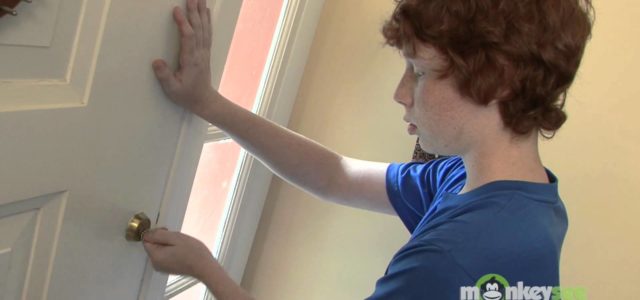
    Boy locks door repeatedly so what your friend with OCD needs from you?Wonder how to help someone with OCD? 

    Think about what your friend with OCD needs from you…

    Obsessive Compulsive Disorder, or OCD, is a condition where intrusive thoughts occur in your mind over and over again. You don’t want to have these thoughts or ideas…but you can’t stop them by sheer will.

    To make it worse, they’re often disturbing or upsetting.

    Compulsions follow the disturbing and repetitive thoughts…and you feel driven to act them out over and over again. When you actvigorous handwashing is hard to stop so what do your friend with OCD need from you. out these compulsions, your hope is that they’ll drive away the obsessions.

    Unfortunately, as hard as you try to drive away those obsessive thoughts with your compulsive and repetitive behaviors…they just don’t go away. In fact, they become stronger.  More compelling… even overwhelming.

    Eventually the overwhelming and compulsive behaviors become so demanding and cause such anxiety and are so time consuming…

    Well, it all becomes a vicious cycle.

    Some people with obsessive compulsive disorder are driven only by obsessions.  Others by only compulsions.  But most are driven by the obsessive – compulsive cycle of both. And it can occur as often in men as in women, and in children as often as adults.

    People with OCD weren’t born with these symptoms. In spite of extensive research, the cause is still pretty much unknown…although there seems to be a genetic connection in families for the tendency. And it may begin following a severe strep infection in children, or an accumulation of stressors in adults.

    Regardless of the cause, what’s important is the role you play, as someone who cares about anyone who seems to suffer with OCD.

    What Does Your Friend with OCD Need From You?

    Let’s talk about some ways you can support her. If you’re not alert to the behaviors you see, and what’s causing them, it may be Latching and unlatching the door may help but what does your friend with OCD need from you?easy to fall into criticism and judgment, teasing or ridiculing, which honestly, just makes things worse for them.

    For instance, you may begin noticing behaviors or habits that are frustrating to you, but are actually “signals” of OCD.  Things like spending way too long in the bathroom, continually showing up late, or constantly asking questions about themselves that are steeped in self-judgment, and needing continual reassurance.

    Long blocks of time doing anything… with no explanation for what was going on… simple chores that turn into prolonged undertakings… and doing the same thing over and over and over…

    If you see behaviors like these, coupled with irritability and an unwillingness to talk about it, be assured this isn’t about you or your friendship.

    Something painful is happening with your friend. While it may appear to you initially that she’s being weird, or that she has a wacko personality…she may be suffering from OCD.

    And if she is, she needs support and acceptance from you. If she feels you blame her … or you’re critical of her…anxiety will just skyrocket and her symptoms will likely get worse.

    What Symptoms Look Like

    She may have obsessions that center around a common theme…like fear of contamination or dirt, or maybe about everything around her being orderly and symmetrical … or maybe fear of harming herself or others.

    Those obsessions are likely to result in compulsive acts such as not wanting to touch things that have been touched by others. Maybe she wonders if she forgot to lock the door or turn off the iron…

    And she may feel mounting pressure to return to the house and check that the door’s locked and the iron unplugged. “Would you stop it?? We’re late already…!” isn’t the response that will calm things down and get you back on schedule. Instead, reassuring her that the schedule can be adjusted and it’s time together that matters is a much more productive response.

    Easy Tasks are Tougher for Her

    Taking a shower and dressing for a quick brunch may involve 5-6 hours, while you wait for her to emerge. Remind yourself that what does your friend with OCD need from you?she’s not treating you disrespectfully nor is she intending to be inconsiderate.

    She may or may not even realize what’s happening that takes her so much time …and she may not realize so much time has passed either.

    Also know that any change, even what seems like a good change, can stir up anxiety for her. And if you’re counting on her to carry her weight, such as in a move or cleaning the house, you’ll both end up miserable.

    More important than her equal share, is that she feels accepted, understood, and reassured. She’s likely already beating herself up. She probably has NO idea why each task takes her so long. Your friend with OCD needs your reassurance at times like this.

    She needs your help to cut herself some slack. “It’s no surprise you’re feeling stressed, or that your symptoms are worse right now…you’re going through a lot of change. Be patient with yourself, and give yourself time. This will subside — like it always does.”

    Give Her Credit for Improvement

    For anyone who doesn’t suffer from OCD, small tasks seem rather insignificant. But for your friend, shortening the length of her Two friends cook together so what think about what your friend with OCD needs from you?shower time by 5 minutes, or washing her hands one less time, can require an enormous amount of work, and fighting through gargantuan anxiety.

    Resist the temptation to compare her to you…but instead applaud her efforts and results. The gratification of those small victories can be so motivating to continue making progress.

    You’re Friends First

    In the midst of all the OCD centered interaction, remember your friendship comes first. You are individuals first.

    If you had thin hair, and she helped you with products to thicken it, that would not become the center of your friendship. But just one of many ways you connect and support each other.

    And just as she wouldn’t focus every conversation around your hair, you mustn’t allow too many conversations to be focused around her OCD symptoms. Just as you wouldn’t play “mother hen” to any other friend, this friend also needs time to herself and respect as an individual. And you need the same.

    What your friend with OCD needs from you is recognition of her best traits, as well as support for her struggles.  After all, that’s howEven friends with OCD need to be friends first, so what does your ocd friend need from you? friendship works, isn’t it?

    OCD is often treated with antidepressants and medications that reduce anxiety, but the results haven’t been stellar. However, an advanced treatment option is yielding some bright hope for those who suffer with this disorder.

    IV ketamine treatment treats OCD symptoms by rebuilding synapses and strengthening signaling throughout the brain. It also reduces anxiety, depression, suicidal thoughts, and relieves PTSD.

    At Innovative Psychiatry, we consistently see 80% recovery in treatment-resistant cases of depression, anxiety, PTSD, and obsessive-compulsive disorder.

    If you or someone you care about is someone who suffers from OCD symptoms, call us. We’re here to help you with advanced treatment options like IV ketamine treatment and Transcranial Magnetic Stimulation.

    Even though our practice is closed to new patients seeking medication management or therapy…we’re just too full…we are scheduling patients who want to see if advanced treatment options like ketamine treatment might be right for them.

    We look forward to working with you for the better.

    To the release of your best self,

    Lori Calabrese, M.D.

    Lori Calabrese, MD offers innovative psychiatric treatment like IV Ketamine

  • Anxiety Treatment That Doesn’t Make You Sleepy

    Anxiety Treatment That Doesn’t Make You Sleepy

    Anxiety treatment that doesn't make you sleepy? Ketamine gives this young woman resilience.
    What Is Anxiety, and How Do You Treat It?

    People talk about depression, talk about PTSD, and about bipolar disorder. But how do you talk about anxiety? How do you know if you have anxiety, and how do you find anxiety treatment that won’t make you sleepy so you can do things without being tired…or without being overwhelmed?

    What is it, really?

    Anxiety Shatters Innocent Trust

    Seven-year-old Chrissy climbed the stairs to take her bath…. It was dark upstairs. She wondered what could be lurking in the shadows. Surely there was nothing to be afraid of.  She tried to convince herself that this is home, and her parents kept the doors locked, so no one could have crept in to wait for her upstairs in the dark.

    There was nothing to be afraid of!

    But her reasoning didn’t seem very convincing. As she reached the top stair step, and turned past the landing, groping in the darkness to find the bathroom doorway so she could flip on the light, her eyes tried to adjust.

    Out of nowhere, two hands grabbed her in a sudden burst and she screamed in terror. Her 12-year-old brother burst into laughter and fell to the floor rolling around in glee.

    “That’s not funny, Ben!!”

    Anxiety Builds Obstacles to Moving Forward

    …Eleven years later, Chrissy hugged her mom and dad goodbye, after they’d unloaded the car of all her boxes. They were about to drive back home and leave her to unpack and set up her dorm room. She would register tomorrow for classes. This was her first time living away from home.

    She climbed the stairs of the dorm, walked down the long lonely hall, and stood before the door to her room.

    Chrissy froze.

    Her throat went dry, her stomach cramped, her palms sweaty.

    She couldn’t open the door.   

    Insomnia caused by anxiety. Anxiety treatment that doesn't make you sleepy.

    The key was in her hand but she couldn’t bring herself to push the key into the lock. A nightmare of some kind awaited her … she just knew it. What if her roommate didn’t like her?  What if she wasn’t welcome…?  Or worse, what if there were people inside who made fun of her?? This would have to be her home now, and what if she couldn’t relax here?

    Why did she come? She wasn’t ready for this. She was too insecure, too shy. This was never going to work. 

    What had she been thinking????

    Chrissy continued to stand in the hall.  Looking at that closed door. Off behind her, she could hear voices. Chatter. Laughing….

    She knew they were laughing at her. NO ONE goes to college without the maturity to walk into a dorm room.

    She was going to be the laughingstock of the entire campus.

    Minutes passed.

    Finally, in one big moment of resolve, she wiped her wet palms on her jeans, shoved the key into the lock, opened the door, and walked in.

    Anxiety Can Erode the Foundations of a Solid and Resilient Life

    Nine years have passed since that day in the dorm hallway.  Chrissy thinks sometimes she’ll never be able to manage her own life. She’s been to college, completed her degree, although there were some shaky times.

    She’s held a couple jobs, but something always seems to go wrong. She keeps thinking she needs to build a career … but hardly knows where to begin. 

    Her self-confidence isn’t great, and she tries to hide it behind flashy clothes and makeup. She tries to appear to “have it all together,”  but deep inside she wishes she could hide from the world.

    Gripping chest from anxiety. Anxiety treatment that doesn't make you sleepy.

    Her live-in boyfriend works hard and works out, but with abuse in his childhood and PTSD from combat in Afghanistan, there isn’t much peace at home. His hyper-vigilance and flashbacks make the nights like a terror movie. She never knows when he’ll fly into a rage … or come at her. It’s a living nightmare, but she doesn’t want anyone to know what goes on…so she keeps it all to herself.

    Over time, it seems to get harder and harder to just leave the house. One day last week she was at work and panic rose up inside her.  She was shaking, trembling, and just couldn’t see much besides bright lights.  She grabbed her purse and walked out. Got in her car and drove home.  She hasn’t left the house since.

    Not that she hasn’t tried. This morning she even put her things in a bag to go see a friend. Got into her car. And sat there. Why was this so hard?  She reached into her purse to get the key.  But couldn’t get it into the ignition. Just …couldn’t.

    So she sat there. And cried…and cried….

    Severe Anxiety Can Prevent You From Finding Your Place in This World …and Flourishing

    Anxiety comes in lots of forms. It can be a nagging dread about entering a public place, or about joining a group of people. Sometimes the dread is worse than other times.

    Sometimes it’s a sickening feeling that interferes with your good intentions. 

    Other times it’s a crippling terror that plants your feet – as if they’re concrete – bolted to the sidewalk.

    Sometimes anxiety turns on faucets of sweat that run down your face and sides while you ride an elevator. Or makes your mind go blank when you stand up to give a presentation you’ve worked on for weeks.

    A date with a someone new can lead to abdominal cramps, headache, and diarrhea

    But anxiety symptoms can get much, much worse.  A rapid heartbeat and sweaty hands, face, and torso, along with severe chest
    Man with chest pain caused by anxiety. Anxiety treatment that doesn't make you sleepy.
    pain and shortness of breath can mimic a heart attack. Many people wind up in the emergency room — and they’re shocked when they’re told they’re having a panic attack, not a heart attack.

    How Can You Get Ahead of Anxiety…???

    The traditional treatment for anxiety has been antidepressants, anxiolytics, and therapy. 

    But.  Unfortunately, only about one third of people who suffer with depression, anxiety, or both, get better with antidepressants or therapy, or both. Another third are believed to be helped with a second medication or combination of medications.

    So about a third of all people with anxiety continue to suffer, lose their jobs, and sabotage their relationships with symptoms they can’t control.

    Is There An Anxiety Treatment that Doesn’t Make You Sleepy?

    Because IV ketamine works on different parts of the brain than traditional antidepressants, ketamine treatment can now make the difference for 80% of those people who’ve been left untreated. And un-helped.

    And it yields extraordinary results in people who suffer from mood disorders by:

    All in all, ketamine helps rebuild brain structures that support communication through the prefrontal cortex and deep into the brain.

    Ketamine Brings Your Brain to Life

    Ketamine doesn’t make you sleepy.  In fact, ketamine wakes up your brain. As the synapses are restored, signals travel faster and
    Dread of anxiety follows man everywhere. Anxiety treatment that doesn't make you sleepy.
    faster deep into the brain, bringing a sense of well-being along with initiative, creativity, and order.

    Your brain will function at a much more effective and efficient level. You’ll feel like your best self. Your sleep will improve when you’re sleeping, and your alertness will improve when you’re awake.  It’s pretty extraordinary.

    This is anxiety treatment that doesn’t leave you sleepy. There’s no fatigue, no weight gain, no sexual dysfunction, no constipation or diarrhea, and none of the other side effects you can see with other medications used to treat anxiety.

    Ketamine is an anesthesia medicine that’s been used in emergency and surgical settings for 50 years, and has been found to be safe and reliable. It’s only been in the last several years that it has emerged as a remarkable treatment for depression, anxiety, and other mood disorders.

    Ketamine’s rapid and robust antidepressant action is restoring the lives of those who’ve suffered with treatment-resistant psychiatric mood disorders.

    At Innovative Psychiatry, we’re seeing a consistent response rate of 80% to IV ketamine treatment. So, while ketamine isn’t for everyone, chances are pretty good that it can really help you.

    Message on the beach says HELP... anxiety treatment that doesn't make you sleepy.

    If you suffer from anxiety disorders that haven’t responded to other traditional treatments, call us for an appointment.

    We’re not able to take on new patients who need medication management. That arm of our practice is just too full. However, we are accepting patients who want to see if they can benefit from ketamine for severe depression, crippling anxiety, and other serious mood disorders.

    Let’s work together to help you get better.

    To the restoration of your best self,

    Lori Calabrese, M.D.

    Lori Calabrese, MD offers innovative psychiatric treatment like IV Ketamine

  • Considering Ketamine for Depression? Here’s How to Screen a Ketamine Clinic

    Considering Ketamine for Depression? Here’s How to Screen a Ketamine Clinic

    Screen a ketamine clinic before receiving treatment. Your brain is complex with delicate systems.

    Maybe you’ve heard the buzz.

    Ketamine for depression is in the headlines, the journals, and the chatter at Starbucks. If you or someone you love wrestles with the exhausting symptoms of depression, you’ve likely heard about it.

    Or maybe you haven’t.

    Either way, it’s the biggest news in psychiatry these days, and seems to be high on the list for some entrepreneurs looking to make a profit. The result is clinics that have popped up all over the country — almost overnight– run by businessmen, anesthesiologists, psychiatrists, ER docs, ICU docs, and nurses.

    If you’re considering ketamine for depression, maybe you’ve looked for someone in your area who offers ketamine treatment?

    There may be more places to get treatment than you think. Or there may be fewer than you wish. Either way, your health, your brain, and your mind ought to be treated with care, caution, and best practices, for best outcomes as well as safety.

    Let’s talk about the ins and outs of these clinics and practices, so that you can be your own advocate. Scrutinize … and screen a ketamine clinic before you agree to treatment.

    Psychiatric Treatment as a Business..?

    Healthcare should not incorporate high pressure sales techniques. But there has been an explosion of ketamine clinics … pop-up clinics … and non-MD CEO-types setting up ketamine clinic franchises and making a nice profit from them. They work with anesthesiologists, emergency department physicians, family medicine docs, and other non-psychiatrists to run these clinics, and pocket a lot of the money.

    They operate as call centers or use centralized calling services to funnel and schedule appointments, collect your money … and bend over backwards to get you in the door. Some of the call centers or clinics are pretty aggressive in encouraging you to schedule followups for maintenance dosing or buy clinic “memberships”  so that you can get maintenance ketamine on a regular schedule.  Even though the whole question of maintenance hasn’t been well-studied. 

    This is a business model. Not a wellness model.

    And in our experience, most patients don’t need maintenance ketamine on a regular schedule.  (We need much more research to determine that.) 

    One Size Never Fits All in Psychiatric Treatment

    Just like the degree of response, the need for maintenance doses of ketamine is purely individual, and should be handled on a case by case basis. In short, ketamine treatment for mood and anxiety disorders should be given by psychiatrists who can evaluate each patient for their response to treatment, its effectiveness, and durability.

    So … if ketamine infusions are $500-800 each, you can see the business model in that — and the profits — in making sure everyone comes in once every month or two. Whether they need it or not…?  

    But psychiatric care, like all health care, demands personalized care.  Expect to be treated with what you need, not what someone’s wanting to sell.

    Screen a Ketamine Clinic Before Treatment

    There are lots of options for ketamine treatment. Lots of places all of a sudden. 

    Major academic and teaching centers which offer ketamine treatment during a study… if you qualify for one of their studies.

    Dedicated ketamine clinics which offer only ketamine treatment … for depression, or pain, or both.

    And individual psychiatrists in established practices on the forefront of medicine who offer ketamine treatment because they’re on the forefront of medicine … and as one of many treatment options they offer for their patients.

    If you have a severe mood or anxiety disorder, you need psychiatric care.  Not anesthesia care –  Not critical care – Not part-time care – And certainly not a business-type CEO or “closer” trying to get you to book a series of treatments before you know if they’re even appropriate for you.

    When your suffering comes from a mood disorder, you need a mood specialist.

    If you’re really sick, you want to go to the best person to figure it out. You’re probably already seeing an expert … or you’ve seen a lot of them.  And if the treatment you’ve had hasn’t helped and you’re considering ketamine, it’s crucial that your psychiatric care is individualized and personalized to fit you, your symptoms, your Seek a psychiatrist who carefully supervises each patient's ketamine treatment when you screen a ketamine clinic.responses, and your personal needs.

    For that to happen, you should be evaluated by a psychiatrist who will work with you — and everyone involved in your treatment — to determine if you’re a candidate for IV ketamine treatment, or if you would be better served by something else.

    You need a psychiatrist who has deep experience with ketamine treatment and its effects on psychiatric symptoms, disorders, and patients …. who is comfortable with medicine, on top of the technology, and knowledgable, skilled and responsive throughout the infusion experience to manage every aspect of it.

    And who is willing to coordinate this aspect of your psychiatric care with everyone else caring for you.

    And so, of course, it’s not the same for everyone. It’s personal. You’re unique. Your story could be filled with dashed hopes, trauma, and a lot of misery. Your history could be sprinkled with substance abuse and infused with shame.  Where you go with it, whom you trust … is critical. Sometimes, it’s a matter of life and death.

    Inferior Standard of Care?

    The early published studies using IV ketamine in treatment-resistant depression used a very small dose — called a subanesthetic dose — administered through an IV pump over a set amount of time.

    Many doctors use this protocol widely.  It’s a strong standard. This delivers a dose of ketamine at a speed that’s fast enough to elicit the therapeutic response we want to see — during the infusion itself and afterwards — but slow enough to keep any unpleasant side effects at a manageable level.

    A full course of treatment is considered to be 6 infusions typically given 3 times a week for two weeks.  Again, based on the early studies that dosed ketamine kind of like ECT is scheduled– every other day.

    Now, for many patients, this regimen is remarkably effective, but with real-world patients, with complex symptoms and complex histories … varied and complex medical issues … or because of a host of other medications they need, their genetic profiles, history of drug reactions medications, severe anxiety … the research-based infusion protocols need to be modified. 

    We can tell this even during the infusion itself based on how you respond during the infusion. Some need a different schedule of administration — and let’s be real — sometimes that’s just due to practical reasons like travel, work schedules, or the inability to get a ride home. We’ve used a variety of intervals between infusions. Just as an example, for patients traveling from out of state, we’ve modified the protocol and used 3 daily infusions and then another 3 the following week, and the results were remission. Sometimes we add additional infusion treatments beyond just 6 to get the best possible outcome.

    The researchers among you could say:  What?  It doesn’t follow the protocol.

    Life doesn’t follow a protocol.

    Neither does real-world psychiatric treatment.

    And the best psychiatrists among us are constantly evaluating and precisely adjusting medication as we work with the biologic, genetic, individual, and psychological factors for each of our patients.

    Especially when we work with IV ketamine as a medical treatment for severe depression and anxiety disorders.

    You should expect nothing less.

    Precision, by the way, is a big deal.  It’s best to use an infusion pump.  Infusion should be by infusion pump not a bag on a hook when you screen a ketamine clinic.Ketamine for depression is a safe drug but it’s a powerful drug for fragile patients with anxiety and mood disorders, and it should be administered with precision using a sophisticated infusion pump.  

    However, many clinics offer ketamine infusions from a bag that hangs on a hook with a little manual roller that adjusts the flow.

    The problem with this is the varying rate of the infusion. If it runs in too fast, you can have scary traumatic reactions or a scary spike in pulse and blood pressure — and if it’s too slow, it may not produce the therapeutic response during the infusion itself or the ultimate outcome we want to see.

    We can control the flow rate with an infusion pump — but without one, the flow rate could be adjusted or altered by anyone in the room. Not good.

    Routes of Administration

    If you suffer from treatment-resistant depression, ketamine treatment is the most advanced and effective treatment available. And it’s amazing to see ketamine at work in someone failed by traditional antidepressants.

    IV – Intravenous Precision

    But not all modes of administration are equal. IV delivery is the only route that allows you to receive exactly 100% of the dose you’re given. The only route.

    For ketamine to create the changes in the brain that relieve depression, you need to get the right dose, and your psychiatrist needs to know exactly how much ketamine your brain has seen in order to get that dose right … for you, for your next infusion, and for your overall treatment. Right dose, right rate, right length of time.

    IM – Intramuscular Gamble

    With IM administration of ketamine, you absorb about 93% of your dose … but not all the time, not every time, and not over the same period of time. What you get is a gamble. When you inject ketamine into muscle, you’re stuck. Literally. You can’t slow it down, you can’t turn it off, and you can’t decide to stop. Your right to discontinue treatment evaporates right there. If you suffer a reaction to ketamine, in the office (or hours later depending on how you absorb it), you have no recourse but to endure until it dissipates and the reaction ends.

    In fact, there’s nothing you can do but let it work its way through the tissues until the reaction subsides. “No” doesn’t work here.  “Um, I changed my mind” doesn’t work here. However, the psychiatrist can slow or stop IV ketamine immediately if you have an unexpected response … or if you just change your mind and say stop. Your psychiatrist can control the speed and intensity of the treatment. It’s just so much safer.   

    IN – Intranasal Roughshod and Random

    On top of that, if ketamine is given intranasally, it’s really poorly absorbed. You receive roughly 45% of the amount you spray. But, you only get that much if you’re lucky — if it doesn’t run down the back of your throat, or get trapped for a while in boggy sinuses. And since the right dose needs to reach your brain in order to work, what you’re doing with intranasal is just sort of sloppy. How could anyone really figure out what the right dose is for you, or what you actually got or absorbed, with all these variables?

    We’re not talking about treating allergies.

    We’re talking about suicide, trauma, severe intractable depression … anxiety that feels unbearable.

    And we’re dealing the brain and with structures — like neuronal dendrites — that have been altered physically and actually pruned, because of those experiences and symptoms … and the complex and delicate systems that operate there. Precise medication doses and rates can carefully change those systems and delicate balances for the better. And can get those dendrites to branch out again and connect.

    Intravenous infusion is the only way to be exact. Precise. Accurate.

    Checklist: What to Look For When You Screen a Ketamine Clinic

    Considering ketamine for depression?  Get a pen, or copy and paste this list.

    Satisfy yourself that all of your questions have been answered.  You want to know that if you undertake this treatment, it will be provided in the safest, most therapeutic and most effective way possible. You should know if your treatment is based on research protocols. Whether it’s standardized. If it’s personalized.

    1. Who is actually evaluating you and determining if this treatment is appropriate for you? Is it within their scope of practice to do the kind of comprehensive psychiatric evaluation you need? What do they base their evaluation on? How much time do they spend? Who do they talk to? How much information do they gather? How do they handle substance abuse?

    2. Is the doctor who does the evaluation the same one who provides treatment?

    3. Is the doctor who provides ketamine treatment specialized to be able to treat your condition itself? In other words, is your ketamine doctor a psychiatrist who specializes in treating severe mood and anxiety disorders?  You don’t need a technician here, you need a specialist.

    4. What is the extent of his or her ketamine infusion experience? Ask about numbers, outcomes, whether they keep a registry of their own patient data and results, how they follow outcomes both during a treatment course and afterwards, how they coordinate your care with everyone else who’s treating you.

    5. Is the route for administration of ketamine specifically IV?

    Infusion pump delivers precise dose of ketamine so screen a ketamine clinic if they use one.

    6. Is ketamine given with a computerized infusion pump? Is the dose adjusted during infusions or throughout the treatment course? How often? Is the adjustment standardized or does it vary?

    7. Is there a recommended frequency? What is their experience with the number of days between infusions? And with extending a course of treatment for a patient?

    8. How are you monitored psychologically during and after your treatment … or how is the treatment experience processed or integrated? Is there continuous monitoring of your vital signs?

    9. How do they work with the set and setting (your mindset and the treatment setting) to help you have the best possible outcome?

    10. What happens when it’s over?

    Delayed Response Doesn’t Mean Un-Responsive

    With all this said, the fact remains that ketamine doesn’t help everyone.  Or at least it doesn’t seem to help everyone. At least not within the typical infusion course. But … we’re learning more about these non-responders all the time and we’re learning about them in our offices … probably because we’re in the trenches.

    For instance, if you didn’t show a definite improvement within the first couple of infusions, we used to assume that ketamine was just not going to work for you.

    However, over time and with experience we’ve learned that some patients actually have a slow, delayed response to ketamine treatment. It may be weeks before they begin to experience the benefits of the ketamine treatment, but once it starts, it builds, and you can enjoy the same extraordinary benefits as patients who felt better after the first day.

    There are extraordinary individual stories where this has occurred (after they’ve left devastated that they didn’t respond!) … and we definitely need to learn much more about these treatment outliers and what turns the corner for them in the weeks or months following their treatment.

    For this reason, it’s important to stay in touch with your ketamine doctor and let them know how you are doing over time.

    Ketamine’s Not for Everyone…But It Could Be Just What You Need

    Ketamine isn’t for everyone, but 8 out of every 10 profoundly depressed patients we see whose previous treatment has failed them experience transformation from IV ketamine treatment.

    It’s fast and it’s powerful. For the sake of the rest of your life, your relationships, and your joy, give yourself the opportunity to turn your depression, suicidal thoughtsPTSD, severe anxiety, phobias, or OCD on its ear.

    Let’s talk and see if you’re a candidate for ketamine treatment. You can be free from the terrible weight and despair of depression, anxiety, and serious and compelling suicidal thoughts.

    At Innovative Psychiatry we’re available to offer you this extraordinary, life-changing medical treatment.

    Call us for an appointment to determine if you’re a candidate for ketamine treatment.

    You can feel good again. You can live a fulfilling life.

    To the emerging of your best self,

    Lori Calabrese, M.D.

    Lori Calabrese, MD offers innovative psychiatric treatment like IV Ketamine

error: Content is protected !!