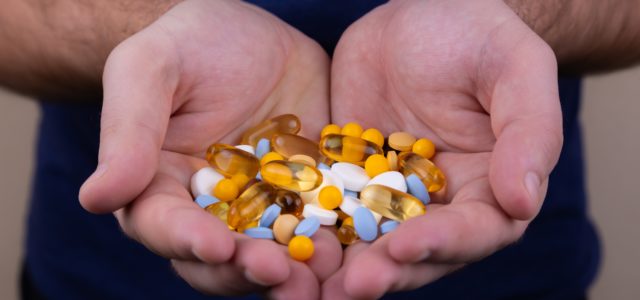
Category: PTSD

Articles About PTSD from Lori Calabrese, MD | The Ketamine Blog

Our purpose in offering these articles about PTSD is to reduce stigma. It’s also to help the reader better understand the causes and symptoms of PTSD. Better understanding helps each of us to offer support to those in our lives who need understanding for episodes they’re unable to prevent.

Post-traumatic-stress-disorder (PTSD) occurs following a terrifying experience, in some people. It prevents the sufferer from recovering after witnessing a traumatic event. PTSD can last for months or years. In addition, memories of the event can trigger extreme physical and emotional reactions.

Symptoms of PTSD

The scars that remain from active combat or other traumas cause recurring memories that seem as real as when they first happened. Originally known as “shell shock, PTSD was thought to be exclusive to soldiers returning from battle. But over time, it became clear that PTSD was a disorder anyone could develop who’d been through a traumatic experience.

When someone suffers from PTSD can have recurring flashbacks of the terror they experienced during the traumatic event, as well as intense nightmares. They may feel afraid, or intensely frightened, whether there is anything presently threatening or not.  It’s as though their “fight-flight” response malfunctions, and a small stimulus can bring all the horror of the initial experience back instantly.

PTSD affects around 8 million people a year in the US. These people who suffer have been far too often misunderstood and misjudged for their reactions.

Articles About PTSD Treatment

Talk therapy

The most widely used treatment for PTSD is talk therapy. By talking through the traumatic memories, as well as those moments that seem to trigger the flashbacks, the individual can sometimes learn a healthier response to the trigger.

Medications

Medicines are used in some cases to help patients cope with their anxiety and anger in the face of an unrelated situation that stimulates the reaction, i.e., a trigger. Since adrenalin is a hormone that’s released in overabundance with each trigger point, addressing the individual’s hormonal reactions sometimes improves relief.

IV Ketamine infusions

This treatment makes a remarkable difference in many cases of PTSD. The Veterans Administration works with IV ketamine to treat PTSD in combat veterans, and has for years with excellent results. And IV ketamine shows remarkable outcomes for people with a wide variety of PTSD causes. PTSD from major disasters, to domestic violence, assault, battery, and rape, to catastrophic illnesses, transportation accidents, and other disastrous injuries.

IV ketamine isn’t for everyone. No treatment is. But chances are it will help you enjoy a dramatic relief from symptoms of PTSD.

More studies show IV ketamine infusions can also prevent PTSD in combat military and first responders. Extraordinary.

By offering these articles about PTSD, we hope to increase understanding and compassion for those who suffer, and drive back stigma with factual information.

Keep reading…
  • How Do You Disrupt a Fearful Memory? Learn to Erase a Conditioned Fear Response

    How Do You Disrupt a Fearful Memory? Learn to Erase a Conditioned Fear Response

    We’ve been talking lately about how neuroscience researchers explore for possibilities for better medicines. 

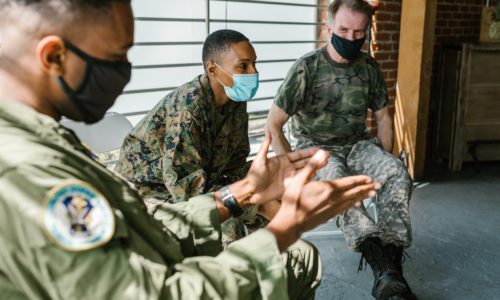
    Group therapy for combat veterans suffering from PTSD

    Lately, there’s been more work exploring fear and memories of fearful experiences, and how to erase those memories…or at least make the memories weaker. Those memories play a big role in anxiety, PTSD, and bipolar disorder. We talked about AKT. Now, a team of researchers at Texas A&M University led by Stephen Maren, Ph.D. recently published their work in Nature Neuroscience, and used prolonged exposure therapy in an effort to extinguish to erase or weaken conditioned fear response memories.

    These methods often work well for awhile…but in time about 50% of patients relapse and over the long-term the fear memories take hold with a vengeance.

    Briefly, the way these therapies work is to repeatedly expose you to situations, sounds, or other associations with the trauma, over and over and over… with the hope that, in time, the trauma is no longer triggered.

    But, unfortunately in many patients, remission from PTSD doesn’t last.

    So, knowing that these efforts don’t prevent relapses in some patients, Dr. Maren and his team have designed innovative experiments (in rodents) so they can test the possibility of disrupting the original fear memory… this is the memory that we think starts all the suffering in a person who develops PTSD. 

    How do you disrupt a memory?

    Because here’s the thing. The memory forms at the moment of the trauma…or in the 4-6 hour window that follows. This is a crucial time period.

    Keep in mind that the 4-6 hour period from the moment of trauma or shock is the period of memory consolidation, or when the memory forms.

    These skilled researchers sought to intervene during the period of time when memories are recalled due to a key stimulus …like a car backfiring… that might trigger a traumatic fear memory of assault, or combat…or a vehicle crash. This little window of time after a sound or other stimulus in the environment triggers the traumatic memory is called re-consolidation. The stimulus can result in reaction behavior… like hiding under a table… or striking someone nearby… or grabbing a weapon.

    Think of triggering memories by this method, like noises, as indirect retrieval. 

    Extinguish PTSD fear with erasing a conditioned fear response.

    But keep in mind that retrieving memories this way – by indirect retrieval – can help retrieve the traumatic memory but without an attempt to manipulate or otherwise change the original memory. The researchers’ intention is to retrieve that person’s response to it. To weaken or erase a conditioned fear response.

    …So back to the rodent experiment.

    Backward conditioning was a key intervention the team used.  It’s a unique and fresh method to get the rodents to retrieve their own trauma — a conditioned, context-dependent fear memory….without the subject being aware of the experience.

    Ok, so this is where it got reeeeeally interesting.

    With all this accomplished, they were facing 2 questions:

    1) Could they use neural tracing technology to identify basic circuits that were activated in this process?

    2) Could they intervene in such circuitry to see if they could alter the process of memory re-consolidation..to the extent they could alter or eliminate the fear memory and its potential to negatively impact behavior.

    Then, the team switched on cells in the hippocampal fear memory circuit, which caused the rodents to “freeze” because of prior conditioning to react with fear. 

    And, in the final stage of this experiment, the team used rapamycin to disrupt this particular circuit associated with conditioned fear memory. (Rapamycin is used to coat heart stents and to prevent rejection of transplanted organ tissue. Weird, huh? )

    Rapamycin interrupts the neuron’s ability to produce proteins that are necessary for the circuit to function. As a result, the inclination of the rodent to freeze in fear is weakened or erased altogether.

    And it worked. And they did succeed in associating fear memory reconsolidating with circuitry in the hippocampus. They did it!

    Basically, these researchers successfully interfered in a circuit to change an original fear memory… which is what begins and is key in trauma-related conditions like PTSD. By forcing the circuit to “forget” the fear, the “freezing” behavior can be weakened or erased completely.

    Like, gone.

    If you or someone you love suffers from PTSD… a painful fearful memory, that’s triggered by little noises, a sight or smell or other cues, this can be life-changing.

    Such an important step toward developing a new way to treat PTSD, or perhaps even substance or alcohol use disorders. Cues that trigger relapse might feasibly be interrupted in the circuit, to prevent it. 

    Heady, exciting stuff!

    Thankfully, as we watch this development unfold, we have IV ketamine treatment NOW. IV ketamine treatment that’s effective in treating PTSD, substance use disorder, alcohol use disorder, social anxiety… all cue-related conditions. And of course, it is robustly effective for treatment-resistant depression and bipolar depression, and there is new exciting evidence of how ketamine is effective in teenagers.

    It’s encouraging to see how research is exploding as we continue to seek treatments that can resolve devastating relapse and suffering.

    At Innovative Psychiatry, we are meticulous about our outcomes, present our data at scientific meetings, publish our own findings in peer-reviewed journals, and stay up nights and weekends reading. We are on the cutting edge for breakthroughs in psychiatry and neuroscience. You deserve to be treated by experts dedicated to excellence.

    If you suffer from any of these conditions, you would probably like some support, some help, and probably some treatment. We’ll schedule an appointment for you to come in and talk about your history, your current difficulties, and the possibility that you might be a candidate for IV ketamine treatment. We won’t be able to make a judgment about that until we talk.

    If you’re a candidate, you can come to our practice with confidence that you’re safe even in this ongoing pandemic. Our plasma cell technology for removes 99.99% all viruses, bacteria, and molds from our air and surfaces means you can relax and focus on your treatment… and getting better.

    Better days are ahead for you to live, dream, build, and hope.

    We really want that for you. And we’re ready to help.

    Lori Calabrese, M.D. is on the front end of the race to stop PTSD in its tracks using IV ketamine treatment.

    To the restoration of your best self,

  • Suffer from Postpartum PTSD?        Ketamine Can Bring Back Your Joy

    Suffer from Postpartum PTSD? Ketamine Can Bring Back Your Joy

    We say that childbirth is utterly natural. But the experience of giving birth doesn’t always go as planned. Sometimes there are surprises, disappointments, unexpected changes, fears, and excessive pain.

    A terribly painful labor or delivery can become a traumatic memory for a postpartum mom. Loss of the baby during the process can also create an unbearable trauma for the mom. Especially in situations where the infant doesn’t survive, the mom can be so deeply affected that the smell of baby powder or lotion can trigger a cascade of PTSD symptoms. Or the cry of a newborn baby. Mothers who suffer from postpartum PTSD can have severe reactions to triggers for months after delivery.

    Leanne has five children.  The first four of her deliveries were increasingly traumatic. In one case, the baby’s head was lodged at the side of the pelvis and after hours of pushing with no progress, she was moved to surgery for a C- section. This was the fourth delivery.  More about that one in a bit.

    With the first, she labored for 38 hours and when the baby was finally born, she tore through her rectum. Bonding with her baby didn’t go well, because she was in so much pain. Plus, she felt beat up, traumatized, exhausted, and unable to find any warm feelings for her newborn. (And too ashamed of this to say it out loud.) Eventually, over months, she began to improve.

    But within 7 months of that birth, she found out she was expecting again. She sat down and cried. She didn’t feel ready. The pain in her rectum had only recently subsided.

    Then, the circumstances of her second baby’s birth were also excessively painful. (We’ll leave out the details.) She began to feel like she just had terrible luck… or just wasn’t supposed to be a mother.

    From that time, she cried anytime her husband tried to touch her.  She couldn’t separate the suffering of the two births from amorous times with her husband. Leanne couldn’t face the risk of another childbirth. One day she was so angry, she slammed the dishwasher door hard over and over, then sat down and cried.

    Leanne’s husband quietly slipped out of the house and bought a new set of dishes.

    Leanne talked with her doctor, and he said that she suffered from Postpartum PTSD.

    Then, one day Leanne and her husband went to visit friends for a backyard cookout. They took the babies with them and really had a wonderful day. That night, they were both relaxed, and enjoyed cuddling. One thing led to another…

    And soon enough, Leanne was pregnant with her third child. She’d been in therapy for 2 years at that point, so she was guardedly optimistic…but on shaky ground.

    This time, unfortunately, the crisis was placenta previa… specifically the placenta was overlapping the opening of the womb to the birth canal.  Once she began to dilate, portions of the placenta broke free, causing a rush of blood loss. She started to hemorrhage.  She panicked, called her husband, called her doctor, called her mom. ( If only she had called 911…but she was too shaken to think clearly.)  Of course, her husband was on his way, and told her to call 911 NOW.  She called 911 then called a neighbor to come stay with her little toddlers. She was rushed to the hospital, unconscious when she arrived. Doctors went to work hoping beyond hope they could save both mother and child.

    Thankfully both mother and child survived, but again, Leanne was exhausted, shaken, and shut down. She just couldn’t relate to the baby.  She was overwhelmed with guilt that her mistakes had come so close to causing the baby’s death. 

    Even though Leanne and her husband were committed to living a natural lifestyle, and had never used birth control, she just felt she couldn’t go through this again.  But he stood strong about not using birth control. So she used the best form of preventing pregnancy she could think of. Anytime her husband touched her or was affectionate, she pushed him away…or sometimes she just fell to the floor in a heap, weeping her heart out.

    She had times when she just began to tremble and couldn’t stop. One day she dropped a jug of milk that spilled and splattered all over the kitchen. Then she had to pull herself together to clean it up. Who else would?

    By this point, she tried to be a good mom to her innocent babies, but so much of the time she felt vacant. Other times she felt angry. Then, there were times when she had such anxiety that she didn’t dare drive, even to the grocery store.

    If you suffer from postpartum PTSD, ketamine treatment can help.

    She managed to avoid pregnancy for two years. Her marriage had become volatile. She just couldn’t be calm to communicate with her husband. Everything was falling apart.

    Her husband suggested they let the 3 kids stay with Grandma and Grandpa, so they could take vacation to somewhere peaceful. They took a week in Jamaica. It was wonderful with swimming, great food, walks on the beach, and local music. (And those drinks with umbrellas! She loved them!) So many sites, smells, and friendly people. They both believed this was just what the doctor ordered.

    On their 5th night, they danced to local music, and drank more umbrella drinks than they realized…  They found their way to their room and collapsed in bed. The next day neither of them remembered how they got there. In their inebriated state, their celebration led to baby-producing activity. So rare for them, at this point.

    You guessed it…baby #4 was on the way.

    Leanne home-schooled her children, so by now she was doing lessons with babies #1 and #2.

    At least on the days she was functioning. But her anxiety was pretty high.  How could she take care of these children when she was so shaky?  A few times during the pregnancy she experienced a panic attack. Her therapist was working with her to help her work through the anxiety.

    Bless her heart. This was the delivery we mentioned earlier. The baby’s head seemed to be stuck to the side in her pelvis and they couldn’t get the baby to move into the birth canal. It was the last straw for Leanne. She had a full out panic attack during the latter portion of her labor. She was standing up in her bed and screaming and crying. No one could calm her. She just wasn’t rational. She was terrified. So they did an emergency C-section after putting her sleep.

    When she emerged from the anesthetic, she was disoriented, surprised to learn her 4th baby was born and doing well in the nursery.  Her doctor encouraged her to rest before they brought the baby to see her. But she just withdrew.

    Leanne had had dreams of being such a natural “earth mom” …she’d started out wanting to give birth to her children at home. But each childbirth had been too risky to continue at home. She felt cheated. Angry. Beaten. Each labor and delivery was a nightmare.

    All her plans for meaningful home births had been vanquished. She knew she suffered not just from postpartum depression but from postpartum PTSD … and she just didn’t know what to do about it.

    Her doctor had advised Leanne and her husband to consider a tubal ligation during this C-section but she had been far too distraught for a decision like that. So he encouraged them to consider it later, to give her a chance to  recover.

    While they were “thinking” about it, she got pregnant once again. She told her doctor she definitely wanted the tubal ligation done during her final C-section. As it happened, this 5th birth went smoothly as a C-section, and the tubal ligation was completed in the same procedure.

    She was able to bond with her new baby peacefully, and she enjoyed him so much. 

    A wonderful, simple, easy, planned C-section — with no crash carts, hemorrhages, horrible images, horrible fears, horrible pain. Why couldn’t it replace all those awful memories? Why did they shake her up during the day, and infiltrate her dreams at night? And why did every little thing seem to be a trigger? The kids were healthy, right? They were OK, right? She was OK, right? Well on that one, no…she was really not ok. She still suffered from postpartum PTSD symptoms — and all the treatment she had had over the years hadn’t made a dent in it.

    So when a friend encouraged her to consider IV ketamine treatment, Leanne grabbed her phone, and started trying to learn what ketamine can do for postpartum depression and postpartum PTSD. She made the call.

    Scheduled her appointment. And left the children with a babysitter. 

    After the first infusion, she felt no different. Same after the second. After the third she decided to cook a new recipe for supper. Such a little thing, right? But it was such a big deal—she hadn’t done that for months. (Ketamine can restore initiative and motivation.) After the fourth, she could feel rays of hope inside her. Almost like rays of sunshine, she said.  By the time she went for the 5th infusion, she was calmer. No longer shaking. And although there was still anxiety, she was becoming hopeful. She had good days and bad days. But there was improvement. She could feel it. She just wasn’t there yet.

    So she went for a 7th infusion…and then an 8th. By this time she went for her 8th infusion, she had joy. She felt free of the fear and anxiety.  And as the days passed, she felt more resilient all the time.

    She became her old self over the next several weeks — felt happy, calm, fun-loving. (Oh wow, when was the last she she’d felt that?) She had patience with her children, she had creativity in home schooling them, she enjoyed socializing. She also had the initiative and motivation to clean up the house and invite another couple with kids over for dinner — outside, on the patio. 

    Leanne hadn’t felt this good since her first baby was born.  

    If you suffer from postpartum PTSD, try ketamine treatment. This mom found her joy again after she did.

    She also found the patience, wisdom, and determination to work with her children in family therapy in hopes of improving their security with her and building the bonds that suffered with these pregnancies and deliveries. 

    And she was thankful that her husband was still at home so they could work together with a marriage counselor to strengthen their relationship.

    IV ketamine treatment has developed a track record for helping women who suffer from postpartum PTSD to achieve remission. Choosing to seek out this treatment was a wise move for Leanne to make. At the same time, it’s important that you understand that ketamine is not for everyone. (There isn’t anything that works for 100% of people 100% of the time.) But ketamine can be transformative for most people who are suffering from severe postpartum PTSD, depression, social anxiety, bipolar depression, postpartum depression, and more.

    Innovative Psychiatry provides IV ketamine treatment for postpartum PTSD.

    At Innovative Psychiatry, we’re experts in psychiatry, in postpartum disorders, and in all the treatments available for them—including IV ketamine—and we work with you to map out the best course of treatment for you. We have the protocols and — incredibly important — the technology to protect you from viruses including COVID-19, bacteria, and molds, so you can come for your treatment with peace of mind. You can breathe easy…even if you haven’t for months.

    If you suffer from postpartum PTSD, don’t keep toughing it out. Call us.

    We’ll set up an appointment to talk about your history and current symptoms and all the things we need to know to determine if you’re a candidate for IV ketamine treatment. You deserve the care of a specialist.

    Don’t hesitate to call. Get your hope back. And the power to enjoy your family.

    We want to help.

    Lori Calabrese, M.D. is on the front end of the race to stop PTSD in its tracks using IV ketamine treatment.

    To the restoration of your best self,

  • Repeated Ketamine Infusions Relieve PTSD Symptoms – New Study

    Repeated Ketamine Infusions Relieve PTSD Symptoms – New Study

    New study demonstrates that with repeated doses of IV ketamine, relief can last up to several weeks.

    A deep unfamiliar voice behind Sarah made her jump. In a flash, she turned and bolted down the stairs she’d been climbing, turned left, then left again, knocking into people in her path as she scrambled for a place to hide. A mad dash took her into the restroom, where she locked the door and turned off the lights to hide in the dark. Screams sounded as darkness enveloped the room. Her heart was pounding, sweat pouring from her scalp, down her face, her torso…her armpits. She willed her breathing to slow…so the man pursuing her would not hear her panting gasps. (Poor Sarah. She’s suffering… if only she knew what repeated ketamine infusions relieve…)

    Three women exploded out of their stalls complaining about the lights and searching for the switch. Sarah pushed past them to an empty stall and stood on the toilet seat with the door locked so her feet couldn’t be seen below the door.

    Sarah’s vision blurred as sweat poured into her eyes. With a quick swipe, she wiped the moisture from her eyes and forehead. And waited. Silently.

    By her watch, she saw time passing. She heard women come and go from the restroom…heard their quiet conversation…  but she waited, hands trembling.

    After 45 minutes crouched with feet on the toilet seat…Sarah began to feel calmer. It washed over her that she’d been hiding in a public restroom for close to an hour… and now she was late to work. 

    PTSD is Not Only Terrifying, It Seriously Interferes with Daily Living

    Again.

    Oh noooo.

    Reality settled in. After washing her hands without incident, she cautiously opened the door and saw nothing unusual outside the door. She began to realize that it had happened again. Like countless other times. The sound of that voice triggered her memory of the assault…and it was so real. Except it wasn’t. 

    She was surrounded in the trauma again. 

    And that was the problem. Yet again, she would clock in late and be reprimanded for it. There must be help to conquer the PTSD symptoms that had emerged after she was assaulted 2 years ago. She had to find peace. Sarah wanted her life back.
    Desperately.

    Repeated Ketamine Infusions Relieve PTSD Under Controlled Conditions

    PTSD can be so entrenched that it is very difficult to relieve — even with therapy, special trauma-based therapies, SRI’s, or a combination of approaches. Very early work with ketamine–and the brilliant neuroscientists behind those studies–showed ketamine could reduce PTSD symptoms.

    A recent study from the Icahn School of Medicine at Mt. Sinai published January 5, 2021 has made splashing news among ketamine researchers and clinicians as the first randomized, double blind, placebo-controlled trial of repeated ketamine infusions for chronic PTSD. Adriana Feder and her team deserve applause and admiration, and have just set the bar higher for ketamine clinical trials.

    It was brilliantly conceived, elegantly executed. Well done.

    Patients with chronic PTSD that had gone on for years, from a variety of traumas, were separated into two groups. One group received 6 ketamine infusions (3 times a week over 2 weeks); the other group received an infusion of midazolam, which was the “placebo” in the trial, but it is was an active placebo–it made them feel something but it wasn’t ketamine.

    Ok, now this is important: if you have PTSD, or if someone you love has PTSD, you want it to stop. That would be remission, and that would be ideal. But in the world of PTSD clinical research studies, researchers look for response, and response means a 30% decrease in your symptoms.

    That’s how response is defined, and that’s how it was defined for this study: 30% improvement. It doesn’t seem like a lot of improvement, does it? Unless your life is a nightmare. Then a 30% reduction is a lot of improvement.

    As it happened, 67% of those in the ketamine group responded after 6 infusions …  compared to only 20% of those getting the placebo study drug.

    A significant difference.

    And possibly even more exciting than that 67%, those who received ketamine infusions experienced significant improvements across 3 of the 4 PTSD symptom clusters: intrusions, avoidance, and negative alterations in cognitions and mood.

    So, Repeated Ketamine Infusions Relieve PTSD

    Dr. Feder and her team — and all of us, truly — are encouraged by this kind of outcome, and of course, call for more infusion studies using more infusions as well as trials using ketamine infusions combined with trauma-focused therapy. In fact, we can and are imagining all kinds of studies we’d like to see for PTSD — different infusion parameters, different infusion doses, titrated infusions, new medications, new therapies. The GREAT news is that relief for PTSD is under investigation and more effective treatment is on the horizon.

    Formal Studies Help to Establish Credibility

    Now, it’s important to note that for a study to be replicable, it’s required to use clear protocols and consistent dosing. In real world practice, we have the duty and the responsibility to treat each patient as an individual for the best possible outcome. Sometimes that means using a teeny, tiny dose, tinier that you would imagine; sometimes it means titrating the dose to get a better response.

    Medicine is a science and an art.

    Since we’ve learned that effective depression relief requires different treatment for different patients, and effective ketamine treatment often requires different ketamine doses for different patients (and different conditions), we might expect the same to be true for PTSD.

    The ketamine dose for each of the 6 infusions dose in this study was 0.5 mg/kg — the same dose used in the single-dose and early repeat-dose studies of treatment resistant depression.

    But we find clinically, and from our own published work, many patients with depression need higher doses to stop suicidal thoughts, to achieve remission, and to restore hope.

    By the way, notice that in the trial above, 67% of participants benefitted from ketamine infusions: they experienced a 30% drop in their symptoms. Ketamine is wonderful for those it helps — when it helps — but for reasons we don’t fully understand yet, it doesn’t help everyone. And it didn’t benefit everyone in the study. Ketamine is not a treatment that works for everyone. There isn’t anything that works for everyone.

    In real life practice, we can titrate. By that I mean that we use our expertise, in addition to evidence-based scientific results, to adjust the infusion dose during treatment (within certain parameters) to try to bring forth the most effective results for you.

    Because your treatment, of course, is about you. It’s all about you.

    New Studies, like this one with a Series of Ketamine Infusions for PTSD, build our Brain Trust about Ketamine so that We Can Provide More Relief to More People Who Need It

    One size may fit many, but not most, and one size never fits all.

    At Innovative Psychiatry, we treat PTSD with repeated titrated IV ketamine treatment. And we use our deep expertise with ketamine in psychiatry and in the treatment of trauma to give you the best possible results. We’re thrilled that randomized, controlled trials are now investigating this so carefully. Research underscores safety, efficacy, and credibility. The more researchers learn, the more we can help you.  

    If you’ve suffered with PTSD and other treatments and medications have not helped, repeated ketamine infusions may help remarkably. 

    And remember, until the COVID-19 pandemic has moved to another solar system (just kidding! — but wouldn’t that be great?),  we’re prepared to keep you safe when you’re here with us. We have the technology to keep the SARS-CoV-2 out of the air, and off of the surfaces in our office. We’re vaccinated, we’re tested regularly, we screen everyone. (And we keep the front door locked!) When you come for treatment, you can breathe easy. 

    We want you safe, and we want you relieved of PTSD and other symptoms.

    Because, like Sarah, you need a life that is free to develop. A life that’s not interrupted with unmanaged symptoms.

    And we want that life for you.

    So you can follow your own dreams, and build the life you want to build.

    If you suffer from PTSD and nothing has helped, call us.

    In fact, if you suffer from treatment resistant depression, bipolar depression, anxiety, suicidal thinking and nothing has helped, call us.

    Let us work with you to help you transform and enjoy your life.

    Lori Calabrese, M.D. is on the front end of the race to stop PTSD in its tracks using IV ketamine treatment.

    To the restoration of your best self,

  • Discovery: A New Key to Ketamine’s Extraordinary Antidepressant Benefits

    Discovery: A New Key to Ketamine’s Extraordinary Antidepressant Benefits

    Ethan sat on his rock at the lake’s edge and stared across the water. He couldn’t help but wonder if it would ever be easier to get through a day.  Not really easy, per se. But what about functional? To just have stuff to do and to get it done. Routine, like other people.

    Ethan was so tired. Just didn’t feel the energy to do anything…and was deeply ashamed about it. He knew people thought he was just lazy. Maybe he was. He didn’t care about changing it, and felt so defeated. (There are so many people like this…who struggle, hopeless, and don’t know about ketamine’s extraordinary antidepressant benefits. Oh to get the word out!)

    Would he ever be able to actually think? He’d felt like a goober for so long. Years.  Really felt scrambled, it was so hard to read.  But he could read fine when he was a kid. What the heck??

    What was it like to feel loved?  To love and feel loved? Why was he so empty…and why did love seem to be beyond his reach?

    Why didn’t the antidepressants Ethan’s doctor had prescribed ever make a difference? Was medicine for this condition just worthless? Did it help anyone? Or was he just not doing his part somehow?  It seemed hopeless. And he felt worthless. What was the point anyway?

    Years of this empty futility had eroded Ethan’s endurance to keep trying. He could not for the life of him find a reason to live. Or a benefit to living.

    Someone tell Ethan about ketamine’s extraordinary antidepressant benefits…. and hurry.

    Ketamine's extraordinary antidepressant benefits can put joy and hope back in your heart.

    Is it Futile? Not With the Aid of Ketamine’s Extraordinary Antidepressant Benefits

    Depression and bipolar depression. What can help you feel like living? It turns out that 30% or so of depressed patients just find no real help with traditional antidepressants like SRIs. These medicines just don’t help enough people.

    When a second medicine is prescribed, if that doesn’t help either, well…we say that your case is treatment resistant. That doesn’t mean you’re treatment resistant, but that your depression medicine is failing to help you feel better and enjoy your life.

    But the good news is that small doses of IV ketamine – that is, doses smaller than might be used in anesthesia – can be remarkably effective for lifting depression systems and restoring your joy, your creative energy, and your hope.

    In fact, IV ketamine treatment can provide rapid and extraordinary relief of symptoms. And researchers have been trying to understand the WHY and the HOW of the underlying mechanism for years.

    While there are some actions that have emerged to illuminate this process, more information is coming available. We’ve talked of the lateral habenula and the synapses in the brain many times.

    New Research Unlocks a Ketamine Secret

    Ketamine’s extraordinary antidepressant benefits are the talk of the decade. But ketamine’s secrets have only slowly been coming to light.

    And just last month, research was published in Nature Research that shows that the ketamine  and the ketamine metabolite hydroxynorketamine provide their antidepressant effects when mTORC1kinase is activated in the cell. 

    This research shows one of the things mTORC1 does is to turn on mRNA which initiates special binding proteins 4E-BP1 and 4E-BP2. 

    Actually, these binding proteins get lots of the credit for ketamine’s antidepressant benefits…as well as that hippocampal synaptic plasticity that promotes so much healing.

    Remember that mRNA also turns on DNA to turbo boost brain-derived-neurotrophic-factor proliferating a dense growth of synapses.

    It turns out that these same binding proteins are necessary for ketamine’s benefits in the lateral habenula as well. You may remember also how ketamine moves those G-proteins off the lipid rafts to get signals moving fast!

    Ketamine is a powerful medicine. We don’t know why it isn’t effective for 100% of people who need it, or 100% of people who suffer from depression, bipolar depression, PTSD, and other conditions. We’re still researching and learning.

    But we do know that IV ketamine treatment in the form of serial expertly titrated infusions is effective for more treatment resistant depressed people than any other medicine currently known. 

    And the odds are excellent that it will help you achieve remission.

    Ketamine's extraordinary antidepressant benefits give you a spring in your step like this guy as he strolls and whistles.

    Imagine having a heart full of joy and courage, along with the determination to build a fulfilling life, and the initiative to develop healthy rewarding relationships.  

    Just imagine.

    Imagine really caring. About anything…about everything that matters. 

    Imagine hope.

    Ketamine’s Secret Unlocks Joy and Hope

    At Innovative Psychiatry, we cultivate hope… and joy… through expertise in titration, dose, and frequency of life-changing ketamine infusions. We have world class expertise in helping people get better.

    We also have a safe environment in the presence of COVID-19 pandemic. 

    Talk about world-class. We have transformed our offices into a coronavirus killing machine.  Units in each room that destroy and remove the virus…in fact all viruses….from the air, and a spectacular spray/fog that destroys all viruses – including COVID-19 – from all surfaces. 99.9999% is ALL.  

    You’re safe here. To be treated, restored, and empowered to live the life you want to work for. Your life. Your dream.

    If you have labored and struggled under the burden of treatment resistant depression, bipolar depression, PTSD, substance use disorders, and suicidal thinking, call us.

    And if you feel unsure, read the posts linked through this one. There is so much information, and hope.

    We’re here to listen, and to help.

    You’re the reason we do what we do. So call us.

    Lori Calabrese, M.D. is on the front end of the race to stop PTSD in its tracks using IV ketamine treatment.

    To the restoration of your best self,

  • Wake up and Dream Your Most Heartfelt Dreams This Holiday Season

    Wake up and Dream Your Most Heartfelt Dreams This Holiday Season

    A dream is a wish your heart makes, when you’re fast asleep…

    At least that’s what Cinderella sang, in Disney’s classic animated movie. But… the kind of dreams you have when you’re fast asleep are actually different than the dreams your heart makes. This is the week of Christmas, which has filled children’s dreams with sugar plum fairies and their favorite toys for centuries. It’s also the Christmas of the pandemic of 2020, which has had its own impact on dreaming. We’re living history right now; yet we’re also building our futures. So maybe we should all wake up and dream to make our lives better.

    But you’re not Cinderella or her Prince Charming. You’re you…and you live in the real world. And in a global pandemic, no less.

    You may know Jaxon. He’s been struggling to get his feet on the ground as long as he can remember. He’s tried one job after another, year after year. But during the COVID pandemic with its lack of job security, he’s realized he’s sick and tired of feeling he has no control in his life. So he’s decided to wake up and dream. He plans to take his uncle up on the offer to pay for his training as an airline mechanic. Jaxon is good with engines, and has been studying jet engines.  So as soon as the pandemic eases, he’s going to enroll in training. It will improve his life, and the life of his family. And he’s chomping at the bit to realize his dream.

    Then there’s Cheryl. She’s always dreamed of furthering her education so she can be a nurse practitioner or Advanced Practice nurse. She’s already a registered nurse with a Bachelor of Science degree. It will be a long road to earn the Advance Practice status, or Nurse Practitioner degree. But she wants more out of life. So she decided to not give up but wake up and dream. And the exhaustion of the COVID pandemic has shown her she wants to specialize and do her best work, as well as improve her income for her family’s sake. Her dream is to specialize in pediatrics. So she has begun taking online courses now to move toward that goal.

    After 10 months of COVID-19 this year, many have become discouraged and lost the pluck it takes to visualize life beyond this. Dreams of what we want to accomplish, or create…or overcome.  These are the dreams that are a wish your heart makes….

    “I want to own my own business…”

    “My wish is for a promotion..”

    “Wishing for a spouse and family…”

    “Someday, I’ll have my own daycare center.”

    “My dream is to be a doctor.”

    “I’m hoping to manage my symptoms so I can feel others respect me and I can build a life I’m proud of.”

    A dream is a wish your heart makes… it’s something you don’t have now, but wish you did. Something that you’re willing to wait for…and to work for… that you believe would improve your life.

    Your dream is the shape and color scheme of your hope. Hope says, “Life will get better.”

    Your dream determines HOW it will get better.

    A book published this year called Dream Big, written by the New York Times best selling author Bob Goff, is so timely for the pandemic and the stress you may feel. Actually, it’s called Dream Big: Know What You Want, Why You Want It, and What You’re Going To Do About It.

    Of course, it may not be that easy to know what you want. What you wish. What your big dream is. But it’s worth it to dig deep and figure it out.  You have to figure out what that dream is to figure out if it’s worth it to you to fight for it. 

    And figuring out why it matters is a good step toward putting down roots for the future you dream of. 

    Then, you’ll start taking steps. Because that dream is your lifeblood and fuel.

    It’s timely that this book was published this year — 2020 because so many have been so overwhelmed by the status quo of the pandemic, world economics, and politics, that they’ve given up the fight.  Their energy is drained, along with their determination and strength to move forward.

    But right now, in 2020, is the time to DREAM.  Not hide, not go to sleep. And certainly not give up. But since COVID has seeped into daily life, it may seem to you that it’s too late to fight.

    But you can stretch beyond the limitations you see around you in the pandemic. Reach far. Seek new possibilities. Dream big.

    It’s never too late to fight for YOU.

    Think of the time you have now to reevaluate and restructure your life plan. This is the time to decide if you want your life to continue, business-as-usual, or do you want to find ways to enjoy more, love more, help more.

    Right now is the time to make those decisions. The ones that pursue your dreams.  Because as the COVID vaccinations reach more people and the presence of this illness is reduced, and society becomes able to move around again… you’ll need to already be in your stride with your new plans, your new life style.

    But there’s another facet. And that’s the fact that symptoms prevent some hard working people from pursuing their dreams. In fact, severe symptoms of anxiety or depression can muddle a person’s ability to even form his own dream.

    When that happens, that person may need the treatment to get his symptoms under control so he can move forward toward his own fulfilling life.

    Depression and bipolar depression are two more disorders that can interfere with your power to pursue your dream.  Social anxiety can do that, too.

    PTSD is an example of a disorder that can severely block progress toward the fulfillment of a dream…or even forming one to pursue.

    IV ketamine treatment has well documented evidence for treating and relieving the symptoms of these disorders. It turns on mRNA which switches DNA to “ON” to turbo boost brain-derived-neurotrophic-factors which go to work proliferating the synapses (connections between brain cells) throughout your brain.

    Your brain wakes up, and signals light up your brain as they carry messages everywhere at high speed. You feel joy, you feel creative, you have a renewed ability to invest in your work and healthy relationships. You can wake up and dream because you have hope.

    At Innovative Psychiatry, we’re gratified to watch people come alive with hope and purpose after IV ketamine treatment. We offer this remarkable life-changing treatment in a safe atmosphere where we’ve invested in VB Enviro Care’s plasma cell technology that removes all COVID virus particles (in fact all viruses, bacteria, and mold) from the air and the surfaces in our offices.

    I know it sounds a little sci-fi and actually… it is. This technology was developed at MIT and NASA to fight biological warfare, and it’s extremely effective. You’re safe here and you can be treated without fear.

    We understand that the pandemic has taken a toll both emotionally and physically on so many and we want to help you restore, and achieve remission from your symptoms. So you can wake up and dream, and invest in the life you want to live.

    Ketamine doesn’t work for everyone. No treatment or medicine does. But it is so effective for the majority of patients who suffer from severe symptoms. It can be extraordinarily effective when everything else has failed.

    If you suffer from symptoms of severe depression, bipolar depression, PTSD, social anxiety, alcohol use disorder, substance use disorder, or suicidal thinking, call us.

    You can schedule appointments for IV ketamine treatment without a long wait…usually just a few days.

    Start 2021 hopeful, and empowered to live your life as your best self.

    We’re here to help so you can live a truly rewarding life.

    Lori Calabrese, M.D. is on the front end of the race to stop PTSD in its tracks using IV ketamine treatment.

    To the restoration of your best self,

  • Fantasize This: A Stress-Free Family Holiday Month… Crazy? Maybe Not.

    Fantasize This: A Stress-Free Family Holiday Month… Crazy? Maybe Not.

    December is National Stress-Free Family Holiday Month. Don’t Laugh. It really is…

    OK, yes, I get it. It’s the holidays. In a pandemic. COVID-19 spread is skyrocketing. Finances are a struggle and it’s the holidays. Depression can peak this time of year. Everybody needs something and to go somewhere. And don’t forget Personal Protective Equipment. Did I mention it’s the holidays? Stress-free family holiday month? You gotta be kidding me.

    We’ve talked about stress before, and the pathology that contributes to it. And how stress contributes to the wearing down of brain structures like synapses that can cause more serious disorders. Like depression, bipolar depression, PTSD, social anxiety, to name a few. 

    When do you need to be stress-free more than now??

    Add to the holidays the risk of seasonal affective disorder, which for some people creates the symptoms of debilitating depression as the days become shorter, the skies are gray more often, and less light gets through.

    When you feel bad, your stress increases. And when your stress increases, you feel crummy.

    So how on earth do you make December a stress-free family holiday month? Especially now?

    One approach might be to consider that even though the pandemic may create stress, the pandemic can also give us the freedom to reduce our own stress.

    Case in point:

    You can shop less. Agree with your family and friends that giving no gifts or else giving small token gifts is easier to manage this year.  You can reduce your shopping and wrapping by say…80%?  And use the time that’s left to do things you enjoy at home. And avoid exposure to others.
    Perhaps spend more quiet and quality time with your spouse and family. Playing cards and board games, or just talking and laughing together.
    You can bake together if you enjoy it.

    But you can definitely reduce the stress that goes with hustle and bustle.  You can make reasonable decisions to just pass up the hassles this year and give gifts next year.  

    Stressors Abound But Stress Doesn’t Have To

    While it’s true that US COVID-19 cases in the month of November — 4 million — actually doubled the number of cases in October, your risk of infection is pretty low if you stay quarantined and isolated a while longer. 

    Daily deaths from COVID-19 in the US are back up to the numbers back in April. On April 15, 2752 people died in a single day, the largest number of the pandemic…until this past Wednesday, when 2300 people died.

    COVID-19 is a serious risk, but that’s why you need to make good decisions that protect yourself.

    The more you stay inside, washing your hands, wearing a mask if anyone comes in, and finding ways to ENJOY yourself, the less risk you face of the COVID-19 virus spreading to you.

    And if you don’t feel afraid, the stress ratchets down. 

    If you don’t feel overwhelmed with more to do than you can every complete…well the stress ratchets down more.

    If you don’t have to prepare to host a houseful of company for 10 days…you got it: the stress ratchets down even more.

    Because one of the things that cause stress is fear. Another thing that causes it is exhaustion — mental and physical exhaustion.

    And illness causes it, too.

    Winter 2020 presents us with new options.  

    We can continue riding the treadmill in the midst of the storm…or we can just take a breath, and decide to make changes that help us — and our loved ones — enjoy improvements in life and relationships. And less risk of contracting the most contagious and potentially threatening virus we’ve seen in 100 years. 

    It won’t always be like this, will it?  This is temporary.  It may last a year or two.  But it is NOT permanent. 

    So let’s take care of ourselves and each other. 

    In doing that, we can make this a stress-free family holiday month.

    Another thought:

    Think back over the last 5-10 years before we’d ever heard of COVID-19.  During the hustle, bustle, and intense stress of December, can you remember thinking that somewhere along the way we’ve lost sight of what all this is about? That society — you and me — has gotten so caught up in the obligations at this time of year that we’ve forgotten how to enjoy ourselves and each other. To seize moments?

    That feeling of “stop the world…I wanna get off…”  Sound at all familiar?  Consider that this is your year for a reboot. Set new expectations, reduce expenses, invest less of yourself in “impressing” and more in “supporting” and “loving”…

    Meanwhile, if you suffer from severe symptoms of depression, bipolar depression, alcohol use disorder, substance use disorder, PTSD, social anxiety…maybe even anorexia….  then the stressors of the Winter 2020 season can only aggravate the symptoms.

    Some people whose symptoms were managed by oral antidepressants before COVID-19 and all the circumstances of this season, find the oral medications are no longer effective. In spite of medication adjustments and dosage changes.

    And some of these people are finding they want to reach out for ketamine treatment because nothing else is working anymore.

    If that sounds like you, just know you aren’t alone and that ketamine infusions may just make the difference. It has for so many others who have reached the point you have.

    Yes, there is still some people who are not helped by ketamine and we don’t understand why. But research continues to clarify the dose, response, and safety of ketamine treatment.

    At Innovative Psychiatry, we, too, are re-evaluating to find less stressful and safer means of helping you get better. We’re so gratified when we see patients who’ve suffered for years from treatment-resistant symptoms walk out of our offices with joy, relief, and hope following a series of ketamine infusions.

    It’s enough that there are as many stressors as there are these days, but our hope for you is a stress-free family holiday month in December 2020. This is a unique holiday season like we’ve never seen before…and one we’re unlikely to see again in our lifetime.

    And if you need ketamine treatment to achieve “stresslessness” at home… please do call us.

    It’s possible to make some strategic executive decisions to reduce the stress as well as exposure to others for yourself and your family…while using this time to rediscover meaningful experiences within your household.

    And by reducing stress in your home, life, and family…and receiving treatment for the misery of unmanaged symptoms, you and your family can enjoy a special and memorable December 2020 holiday month.

    We’re here and ready when you are, and wishing a happy holiday month for you.

    Lori Calabrese, M.D. is on the front end of the race to stop PTSD in its tracks using IV ketamine treatment.

    To the restoration of your best self,

  • Ketamine Can Stun PTSD Through This Pandemic

    Ketamine Can Stun PTSD Through This Pandemic

    As businesses and services begin to slowly, cautiously open back up, we have questions.

    Is it safe to be around others? Experts say social distancing is still the ticket, as well as masks and gloves and hand washing. Yes, yes, and yes. And what if you’ve got something gripping you in the midst of this pandemic that just makes everything so much more difficult to control? We’re going to talk about how ketamine can stun PTSD through this pandemic — and make it let go of its grip.

    Tom could use a little of that. For sure. He found managing his outlook, frame of mind, and overall health…. challenging.

    Tom had been isolated for months. The COVID-19 lockdown was doing a number on him. It had really cramped his style, and being cooped up for so long made him feel like exploding. He’d undergone treatment for PTSD, but even though he’d seen improvement, he had to be careful about his frame of mind and exercise and nurture peace in his life.

    After two tours in Afghanistan, he had some trauma and scars. Headaches, nightmares, chronic pain, a little hearing loss. He’d lost some good buddies. And then later, he lost his emotional and mental balance.

    For years, the scenes from those six years crashed into his awareness with a blast that was so real, he reacted to it as though he was there all over again. And while the scene was exploding around him, triggered when he least expected by the littlest things, his body reacted, again and again, just like it did the first time. When it was real.

    Combat Stress charity helps war veterans with mental ill-health | Express.co.uk

    He’d hit the floor, smelling fear, seeing enemy fire around him. And sometimes he’d crawl to his gun safe and scrabble for the gun, on high alert. Ready. Waiting.

    His wife eventually was so frightened by his reactions when he was terrified and reacting to his terrors that she finally just moved out with the kids. And he was left alone.
    Have you ever been terrified … and then abandoned by the one person you trusted would always have your back?

    Imagine how that could magnify the terror!

    If only he’d known that ketamine can stun PTSD…and transform his nightmare into joy.

    Tom felt like he’d tried everything. A variety of treatments and programs. Doctors, therapists, meds, you name it.  In some cases, he’d see a little improvement, but even that turned out to be temporary. The discouragement choked him. Despondency flooded him. He didn’t know how he could go on.

    He had said he wouldn’t go through any more treatment unless the person offering it had seen combat. It didn’t seem to him that anyone could imagine what this was like. And he didn’t want to keep wasting his time.

    Then he started drinking again.  Tom had been sober for years…but his desperation, his loneliness, and the humiliation he felt by his behavior was sometimes just too much to bear. He had to find some relief.

    He wondered…maybe if he got just a little drunk, for just a little while, it would give him some relief. It would quell these horrid episodes.

    Tom was alone. 

    Locked up in his house.

    And living through terrors.

    He felt helpless.

    And angry.

    Ketamine can reverse PTSD so you can relax at home rather than walking the streets like Tom.

    He signed up for an online alcohol recovery group, hoping it might help him get a grip. They met 3 times a week, and he felt like maybe it would help… but the jury was still out.

    Then one afternoon, the conversation turned and seemed to suck him right in. Some of the members were talking about PTSD. 

    Finally, something relevant!!!

    And a young woman spoke about her pain, and her quest for freedom, as well as her determination to stop hiding her pain behind alcohol.

    She’d been sexually assaulted in a parking garage at night. A stranger who came out of nowhere.

    She described her own night terrors.

    And he could see that she had lived in her own type of combat. And he ached for her.

    A New Solution Emerged

    Later, as some of the more involved members continued their online discussion, a middle-aged guy, who said he’d also served in Afghanistan, mentioned a treatment he’d had that transformed him. Wiped out his PTSD symptoms. That the PTSD that had all but destroyed him seemed to be gone…he wasn’t sure….but he had not had PTSD symptoms for 17 months. He had tried ketamine treatment.

    Blew his hair back.

    He said he and his wife were back together, and the kids were learning they could relax around him again. His own self respect was getting stronger as he worked his way through the daily challenges of life.

    He also said that the treatment had seriously helped him stay sober. It was like the cherry on top of the sundae.  

    Tom and the young woman both wanted to know about the treatment that had made such a dramatic difference for him.

    “IV ketamine treatment,” he said. “I read about it, checked some studies I found online, talked to some people I found who’d gone for it, and realized I needed to give myself a chance. I wanted to see if I could get better.”

    He was quick to add, “They tell you that not everyone benefits from this treatment, so be prepared. It might not work. But the percentage of people who felt it worked was extremely high, from my point of view. Ketamine can stun PTSD and it did for me.”

    Tom realized this was his chance. 

    Ok, so it doesn’t work for everyone. But if this treatment worked so well for this guy, it might do just as well for me, he thought. He’d lost his family, and his job was shaky.  He had to try.

    So he made the call.

    Sometimes Solutions Emerge Unexpectedly – For Example: Ketamine Can Stun PTSD

    That’s Tom. He lived his life responsibly and with a heart of service when he signed up for the Marines. And he served bravely and well. But it cost him his family and a rewarding life because of PTSD. It cost his peace of mind and his self respect. He felt helpless and weak because of his episodes of terror. Man, did he hate feeling weak.

    Tom desperately needed a solution… especially after months in lockdown during the pandemic. All that had just intensified the pressure and intensity of those earth-shattering attacks.

    After so much loss, and so many failures from treatments he sought, Tom was desperate, and beginning to consider ending his life.

    Even though he didn’t believe in 12 step groups, he tried one anyway to reach out for support in his isolation. And there online, he found good people who cared. But the biggest surprise was the treatment he learned about that had nothing to do with the 12 steps.

    His new friends told him about IV ketamine treatment.

    More and more evidence shows that glutamate, the excitatory neurotransmitter, goes to work to respond to stress, impacting the formation of traumatic memories and all the pathophysiology of PTSD.

    Ketamine treatment works on the mechanisms that create traumatic memories, and can help reform the memory in a way that releases the traumatic aspect of it. By stimulating neuroplasticity, these mechanisms can adapt and help that memory to become more circumstantial rather than traumatic.

    Ketamine can reverse PTSD but it's not for everyone.

    And rather than requiring several weeks or months to deliver these trauma reducing benefits, ketamine can work fast — within hours, days, or a week or two.

    Ketamine Can Stun PTSD

    And loosen its grip.

    At Innovative Psychiatry, we provide IV ketamine treatment for people who suffer from PTSD caused by combat, sexual assault, a devastating illness, and more. And we see people with terrible trauma make their way out from underneath their PTSD symptoms, all the time.

    It doesn’t take away the fact that the trauma happened. But it can take away the hold that the trauma has on you.

    Can you relate to Tom?  Has the pandemic imposed isolation that has intensified your symptoms? Do you wish for relief from your episodes that nothing else helped? If so, call us.

    We don’t want to imply that ketamine is a cure-all for whatever ails you.  That wouldn’t even sound real. And it isn’t effective for everyone. But no other treatment has been so effective for so many who suffer from psychiatric symptoms that nothing else helps.

    We’re here constantly working to make sure you get the relief you desperately need. 

    We want you to achieve full remission. And to enjoy a fulfilling and rewarding life. 

    Give yourself the opportunity like Tom did.

    Lori Calabrese, M.D. is on the front end of the race to stop PTSD in its tracks using IV ketamine treatment.

    To the restoration of your best self,

  • Chronic Stress Pathology: IV Ketamine Kicks It to the Curb

    Chronic Stress Pathology: IV Ketamine Kicks It to the Curb

    Is depression common ..? 

    Is it something suffered only by the rare individual…? The World Health Organization says it’s the leading cause of disability.  Have you heard that? Not those rare people no one ever sees… but people all around you struggle to function, and paste on their “upbeat faces” … while feeling more alone than words can say. Likely as not, chronic stress pathology is at work wearing them down.

    And it’s not just depression. It’s bipolar depression, and generalized anxiety disorder, and PTSD, and social anxiety… These conditions are all different, and the way their symptoms present in each person can be really different.  

    But all these disorders also have something in common. Something called chronic stress pathology or CSP. They may have been triggered by a traumatic event, or a terrible loss, and just a constant nagging of unrelenting heaps of difficulty that wear away at your ability to cope.

    There’s something else they have in common. They tend to clump together …why?  Because of what happens in your brain. We call it comorbidity.

    We’ve often talked about how long and severe chronic stress prunes the dendrites and dendritic spines of the neurons in the prefrontal cortex and the hippocampus, breaking down synapses (or “synaptic connections”).

    Well …it turns out that there is a cascade of changes during these chronic stress situations that also increases brain derived neurotrophic factor or BDNF to increase synaptic connections in the amygdala and nucleus accumbens in another area of your brain.  The nucleus accumbens is part of the basal ganglia located near the hypothalamus.

    Oh dear…this is getting a bit tongue-twisting. 

    But get this: in one part of the brain, the synaptic connections are SHRINKING from chronic stress while in another area, they’re EXPLODING where they shouldn’t be.

    You heard right.

    This creates a vicious cycle that continuously drags you back into this disordered condition over and over…making it terribly difficult for you to recover. In the amygdala, the hippocampus, the prefontal cortex, and the nucleus accumbens, nerve connections (called neuronal connections) are being changed and damaged because of long term chronic stress.

    That condition may be major depression. It may be PTSD. It may be an anxiety disorder. But it goes on and on. And on.

    These Disorders are NOT a Chemical Imbalance

    You can see why the old idea — and people still talk about it like it’s a thing — that this is “a chemical imbalance”…is archaic, mistaken, and doesn’t even describe what’s going on at all. 

    We’re talking about dramatic changes in structures in your brain. Damage. Not just chemical changes.

    Misinformation Feeds Stigma… But Knowledge is Power

    This idea of chemical imbalances is leftover from 30 years ago, before neuroscience understood these structural changes and thought depression was the result of changes in serotonin alone….a neurotransmitter that turned out to be a only a component in the overall process.

    Ketamine Research has Taught Us So Much More… About Chronic Stress Pathology And Its Effects on Your Brain

    As we’ve talked about before, evidence has been accumulating for years showing that ketamine treatment can reverse the pruning of synaptic connections in the prefrontal cortex and hippocampus – caused by stress – by robustly increasing them — turning on your mRNA to switch on your DNA… and that releases BDNF. 

    And you know what BDNF does. It TURBO boosts those synaptic connections in those areas, which in effect turns the light on in the darkness. You feel better, function better. Your creativity flourishes. And you have the patience and capacity to build and repair your relationships. Hope surges and futility morphs into purpose.

    But you know what? We don’t talk very often about ketamine’s effect on the synapses in the amygdala and nucleus accumbens. There, it turns off the production of BDNF and reduces those connections there which helps to reduce your symptoms. 

    Chronic stress pathology wears you down when stress goes on too long.

    It also tamps down the cell bursting in the lateral habenula to help you relax and enjoy yourself. So you can revel in the fragrance of honeysuckle, and the aroma of burgers on the grill. 

    The fact is that chronic stress pathology is at the root of much of your suffering. Your body is intricately balanced, your emotions are influenced by a complicated series of changes in your gut through your microbiome, in your brain cells, as well as your muscles and organs.

    If you have a severely broken leg, the pain, repair, and convalescence of that injury can have a significant effect on your emotions. And symptoms of chronic stress, depression, and anxiety can make your muscles and joints ache.

    Which is why I’m on a mission to eradicate the term “mental illness.” Because your whole body is affected when something is malfunctioning in just one part of it. 

    For example, diabetes can predispose you to depression. And so can open heart surgery.  Your brain is part of your body…not a separate entity. And when one part of your body is affected, other parts are affected, too.

    So, the more we learn about our brains and bodies, the more we understand about the intricacies of how we function on every level.

    Now… what if you do have chronic stress pathology working against you?  What if you’ve been traumatized… or what if you’ve weathered a long, repetitive, unrelenting assault of stressors?

    Cheryl’s Story

    Cheryl did. Cheryl’s husband began complaining about the family’s budget..insisting they needed to make changes or there would be nothing to retire on. He finally became harsh about the need to find a less expensive house. Cheryl worked 60 hours a week…and the kids had needs, and schedules, and practices, and uniforms….  When could she look at houses..?  Or worse…when could she possibly pack?

    But since her husband Ben was so adamant about it, she tried to cooperate. She looked at houses during her lunch break, and after she dropped her sons off at practice.

    She stayed up late searching the internet for houses she could look at, but she and her husband couldn’t seem to find the time to look together.  Finally, she found one that could work, and Ben took a look on his lunch hour and agreed it was just fine. 

    Working late, marriage problems, and mom with cancer cause severe stress.

    After frantically packing every free minute for weeks…they closed on the house and moved. Cheryl was exhausted and the rooms packed with unopened boxes in the new house just made her want to cry.

    Then as soon as she moved, her mother asked her to go to the doctor with her. At the appointment, the doctor told her mother she had breast cancer. She explained the details, the treatment, and prognosis to both of them.

    When they got back in the car they cried together. 

    Cheryl knew her mother would need her extensively through this process. And she was committed to be at her side as much as she could.

    She rearranged her schedule, her children’s schedules, and approached her boss about shortening her work hours for the next several months.

    Unpacking the new house was a mountain to climb…and Cheryl kept wondering why Ben wasn’t on hand to help…

    And why was his job so demanding through all this, anyway??

    Then she found out…  Ben told her he wanted a divorce.

    “A divorce??  NOW?? IS THIS WHY YOU WANTED TO MOVE…??”

    Cheryl felt herself coming apart.. 

    There was nothing to do but keep moving. Her children needed her to be reliable through this. To be a safe haven…a comfort.  

    Her mother needed her support as she looked a life threatening condition in the face.

    Cheryl couldn’t think about how she felt…she had to keep going.

    But 8 months later, after the divorce was final and her mother’s treatments were complete… Cheryl couldn’t get out of bed.

    Over the weekend…Cheryl just felt like she was in a long dark tunnel.  She called in to work on Monday. Her sister came over and got the kids on a bus…

    Sometimes it’s just too much.

    Chronic stress pathology is the damage caused by long term unrelenting crises.

    And what about you?

    Have intense stressors piled up in your life and worn down your hope? Have you taken prescriptions that just didn’t help? 

    Do you feel like the crises just keep pelting you without mercy?

    Sometimes we’re subjected to repeated stressful assaults in life that we can’t control. But there is something you can do about your ability to cope with it. Reach out for IV ketamine treatment.

    At Innovative Psychiatry, we offer IV ketamine treatment expertly titrated and see resilience return to our patients every week. We also have published research that you can read about our results. We’re serious about what we do.

    Titrated Serial Ketamine Infusions Stop Outpatient Suicidality and Avert ER Visits and Hospitalizations. Lori Calabrese MD.

    Things have changed since the days of “chemical imbalance” thinking. (That’s so 20th century!) Neuroscience is making 21st century discoveries that offer better treatments than we’ve ever known before.

    And you get to take advantage of those advances.

    If you can relate to Cheryl and prescriptions haven’t helped, call us. If you have symptoms of PTSD, call us.

    Ketamine treatment can give you relief from the damage of chronic stress pathology.

    IV ketamine treatment can reverse the damage caused by chronic stress pathology. Chronic stress doesn’t always result in this damage, but it does all too often.

    And when you’re the one suffering, you need a solution. You need to cope. While ketamine doesn’t work like this for everyone, it does provide rapid, robust relief for most. And chances are, it will transform your life to allow joy, hope, and resilience.

    Give yourself the opportunity to live well again. To enjoy a fulfilling and rewarding life.

    Lori Calabrese, M.D. is on the front end of the race to stop PTSD in its tracks using IV ketamine treatment.

    To the restoration of your best self,

  • When You’re Tormented by Fear, PTSD, and Panic in Isolation

    When You’re Tormented by Fear, PTSD, and Panic in Isolation

    Shannon awoke, looked around the room hoping the new day would reveal it had all been a nightmare, and that life was back to normal.

    But when she saw the the shattered mirror – cracks spreading out from a broken center – she remembered hitting it with her fist last night and realized nothing had changed. She looked at her hand…to  see if it was cut. It was no surprise to see the cuts on the heel of her hand, the dried blood. It looked like the damage was minor and it would heal on its own. Why do fear, PTSD, and panic strike so hard at night?

    The nights were hard.

    Stay Safe, Stay Home the governor had said…

    But for someone like Shannon, these instructions were costly. She understood it was important. But the silence, the darkness, the feeling that the walls were closing in turned her apartment into a house of horrors at times. Those sounds she couldn’t identify that made the hair stand up on the back of her neck and her heart race. 

    She’d grab the 18” long flashlight she kept in bed with her, to defend herself if an intruder broke in. The baseball bat was just under her bed if she needed it.

    Last night she couldn’t see anyone, but the sounds started reverberating around her, and she finally exploded through the house ready to fight. She screamed, she cried, and she finally sank to the floor sobbing.

    She’d wanted to die. She wondered how she could escape her life and her terrifying thoughts.

    The mirror happened at some point during that experience and she wished she had never woken up again. But she did.

    Right now she was calm. Why did she get so wound up by the dark?  

    Fear, PTSD, and Panic Attacks Seem to Get Worse at Night

    All day she tried to manage herself. Her doctor had reminded her to try to avoid news broadcasts and news websites. Just reading about all the evolving changes in the city and country every day was overwhelming and depressing. Her doctor had pointed out that the sheer volume of information was too much for anyone to digest.

    Instead she encouraged Shannon to find people online she could encourage. Or to offer to pick up groceries for people in the apartment  complex who were at greater risk for the COVID-19 virus. 

    She’d said that doing things to help others can give her more peace and good feelings. And can help her stay balanced.

    But it was hard.

    Even though Shannon had followed her doctor’s advice, even interacting with friends on social media was becoming more challenging as more and more people were spewing anger, rage, and blame.

    Sometimes it seemed as though fear attracted fear. And she wondered how to attract optimism, instead.

    Listening to the rants of her friends stirred up her anger, too.  But more than anger was the fear that their fears ignited.

    And when you have a disorder, fear can present its own danger.

    Counting her pills helped her verify she had been taking her meds on schedule. Of all times, this weird time shut in her apartment was not the time to miss her meds.  She needed all the help she could get and she knew it.

    Shannon decided she better request an online meeting with her doctor on the secure server. She thought she better tell her what happened last night.  She didn’t want to.

    It was embarrassing, but she was learning that facing her symptoms in all their “glory” gave the doctor the information needed to make sure her meds were at the best dosage. 

    She’d only been coming clean with her doctor for a couple years. Before that, she’d always tried to protect herself with a clean and respectable image and then everything would fall apart. She guessed she’d learned that her condition wasn’t something she should be ashamed of, but rather a condition with symptoms she and her doctor worked together to manage. 

    It had lifted a load off her to finally accept the condition rather than hide it. She wondered…if she did die here, how long would it be before they found her body…?

    Shannon forced herself to stop thinking that way. She just had to not think like that…but how could she make the thoughts go away?

    The Relief Ketamine Treatment Can Bring

    Next door, Sam woke up after the night of bumping, pounding, broken glass, screaming, and crying that kept him awake last night, wondering how he could face the day. He thought he might have dozed for an hour or two in all.

    One of the hard things about working at home was the desire to crawl back into bed or doze on the couch when he was tired.  

    Nevertheless, he showered, got his coffee, and sat at his computer at 8:30am right on schedule.

    Fear, PTSD, and Panic Attacks Can Affect People Near You, Too

    As his day began, he was distracted thinking about all the noise from next door. It wasn’t the first time. He wondered if the person who lived there was being mistreated by someone or if she was there alone.

    If she was there alone, he sure could understand this social distancing getting to her. It seemed to him that social distancing is great for happy introverts who want to quietly read books or something but it had to be hard for people who draw their energy from spending time with other people.

    As for himself, he was just so relieved that he had as much self control in these circumstances as he did. 

    For years, PTSD had kept him so torn up, so terrified at times, that his wife and children were afraid of him. Being shut in like this would have been really really hard.

    But he was lucky.

    He’d learned about a treatment that helped him find a calm, a feeling of well-being, and  a peace he didn’t know was possible.

    His buddies from Afghanistan had talked about all kinds of special treatments. There were camps people went to that were so expensive, he didn’t have the means to try them.  

    One of his friends came back doing somewhat better, but still had the awful flashbacks at times. A couple others didn’t get much out of it…after all that money.

    There were counseling programs, outpatient medicines, and more.

    But one guy told him about ketamine treatment. And this guy seemed almost well. Hard to believe but he did.  They became good friends and talked more and more often. He said that fear, PTSD, and panic were much more rare now.

    Turned out the guy went for 6 treatments at his psychiatrist’s office… and he just kept feeling more and more normal.

    So Sam looked into it. He found out he could get special financing from a medical loan service, so he went for it.

    That was a year and a half ago, and he was just so glad for his calmer frame of mind during this lockdown. He could only imagine what this period of time would be like otherwise. Fear, PTSD, and panic would have been the fabric of his existence. But…

    By eating healthy, working out in his living room over lunch hour, and looking for ways to help people around him, he felt a bit more like a hero to some of the older people in his complex, and less like someone who came home from the war broken. 

    He did attend an online meeting for people with PTSD once a week,  and tried to apply everything the therapist suggested. But he also felt like he had things he could contribute, too. This treatment almost seemed to increase his insight into the trauma he experienced, so the more meetings he attended, the less victimized he felt.

    Sam wished he could help the girl next door.  He wished he had something to offer. He needed to think about that more. Maybe he could come up with something to cheer her up without having actual contact with her.

    He felt so privileged to be living this well. It was as if he’d been to hell and back…and he just wanted to give something somehow to those who hadn’t found the freedom he had.

    Weathering The Coronavirus Crisis

    As you get through the days in your home, you look around you, and there are people in all the other homes and apartments you see. Some are coping fine, though they may be getting cabin fever. Others are working hard, with some tension building as they work because of the conditions in the world.

    But some are suffering. Fear, PTSD, and panic attacks along with severe depression threaten the health and wellbeing and sometimes the lives of some. From ailments that make life alone at home a lot harder. And those whose symptoms are intensified by the isolation they feel may be suffering more than you can imagine.

    Here at Innovative Psychiatry, we’re seeing patients every day.  Our psychopharmacology patients we see by telemedicine. It’s important for all of us to avoid face to face contact, but it’s also important to take care of our patients.

    And those patients who need ketamine treatment? We’re carefully treating you here at the office. Using a safety protocol that protects you, and protects us, too.

    We’ll screen you for exposure to COVID-19 to protect your safety and ours, as well.

    Ketamine treatment can help ease your symptoms, improving the neuroplasticity in your brain cells, so you can change the way you see things, and respond to them.

    And …often even separately from your symptom improvement, it can erase suicidal thoughts in a few hours. If you’re isolated, and the suicidal thoughts have become overwhelming, call us.

    And if you suffer with PTSD, severe depression, severe bipolar depression, with symptoms that medication doesn’t relieve, schedule a consult to see if ketamine treatment could be right for you.

    For suicidal thoughts, you’ll be amazed at what ketamine treatment can do to give you peace from those.

    Stay Safe, Stay Home. But if you find it too hard to get through the days and nights right now, and if the terror and despair overwhelm you, call us.

    We’re here to help you achieve a healthier, more balanced frame of mind to see you through the current crisis and beyond.

    You can get through this, with help. We’re all in it together.

    Lori Calabrese, M.D. is on the front end of the race to stop PTSD in its tracks using IV ketamine treatment.

    To the restoration of your best self,

  • Can Use of Opioids Lead to PTSD? And If So, What Can You Do?

    Can Use of Opioids Lead to PTSD? And If So, What Can You Do?

    You know how a disorder – like bipolar disorder or PTSD – can make you so miserable…even make you want to self-medicate?  

    Doing so is rarely a good idea, though it may seem at the time that it helps.  But that’s for another post. Anyway, you know how self-medicating often accompanies these disorders, and we’ve assumed that the self-medicating is driven by the symptoms of the disorder: the ups, the downs, the agitation and rage, the misery… If the symptoms were to go away, there would be no need for self-medicating. Right? Doesn’t that seem logical? Well, a recent study says no…in fact, self-medicating with opioids… or even using prescribed opioids may lead to PTSD!

    Mood Swings in Bipolar Disorder Make You Want to Self-Medicate

    Take bipolar disorder, for example. You feel yourself swinging up, up, up until you’re confident, then agitated, shooting words like a machine gun, and feeling more energy than you can manage… you just want to feel normal, you know?  So you start drinking beers as fast as you can to slow down… and…well, it’s not an exact science.

    You end up drinking way too many until you’re frankly drunk…but there’s still energy you have to manage, somehow. You may want to jump in a car and head down the freeway… but thankfully, you can’t find your keys.

    OR… your mood starts plunging and plunging.  Way too fast… and before too long you want to scream and cry. You feel so hopeless, and disgust and self hatred take over your mind… and it feels like you have fire ants on your brain. 

    You need something to help you feel better. So you reach for something that helps you feel like you’re at a party. Then, after awhile, you’re a mixed up ball of horrific and frustrating feelings…and you decide to go for something different that will help you chill.

    This is a dangerous and destructive path, but it’s tragically common. This is self-medicating.

    And, unfortunately, you may not even realize that use of opioids may lead to PTSD.

    =============

    Meet Zach. He served two tours in Afghanistan. He wanted to go back for a third, but his family needed him at home. (At least that’s what he told himself.)

    Zach never talked about it, but he’d gotten high with friends off and on in high school. He had joined the Marines for the hard work and discipline, to get himself back on track.

    Now this.

    Anyway, he had rehab. Who was he kidding? There was no way he could go back. He figured he was nervous about going home after all that happened…

    The truth is, Zach got through the first tour fine. Then, on the second tour, he and some fellow marines were helping some children carry water to their homes.

    He and Rex were heading in the same direction when a little girl approached them with eyes as big as saucers. Rex naturally reached for the child and at that moment she detonated. The child had been wrapped in home-made explosives under her clothing.

    Rex blew apart, as did both children. Zach lost his right arm and his ear. Such an inhuman thing to do. The scene was tattooed in Zach’s memory and he couldn’t escape from it. Children’s body parts, his friend and marine brother’s hands, leg, organs, everywhere.

    Rage Begins… and Panic

    Rage burned within him that anyone would stoop to the evil of murdering children that way just to get rid of a marine or two.

    When he got home, he wasn’t the help to his family he wanted to be. He had trouble holding a job… any sudden startle stirred up the fight in him and sent him into a cold sweat at the same time. Like the wait staff dropping a dish. The clatter sounded like that explosion inside his head. His only thought in moments like that was to tear apart the reprobate who did this to these little kids. And stole his friend.

    Zach was seething all the time. Going through surgeries for his arm stump and ear reconstruction. Jumpy, easily provoked, irritable…and at times terrified. His marriage was deteriorating. His children afraid of him.

    He talked to a buddy about getting his hands on something to calm him down… he hated being like this.

    Something had to give…then his wife learned about a “new” treatment for PTSD…

    ============

    Researchers Asked, Can Use of Opioids Lead to PTSD?

    So…  it turns out this self-medicating road goes both ways. A new study released in December 2019 demonstrated that heavy opioid use over time before a traumatic event influences us to be traumatized by the event… basically it alerts us to be so fearful of that experience that we can develop PTSD as a result.

    We’re talking about Post Traumatic Stress Disorder, or PTSD. And like bipolar disorder, PTSD has an established reputation as a disorder that is quite often co-morbid (meaning you have more than one illness at the same time) with substance use disorder.

    In fact, 40% of people diagnosed with PTSD also struggle with substance use disorder (SUD) …meaning they may have addictions, or they may regularly use a substance that masks or combats the way they feel…until it doesn’t. 

    Now get this: almost 35% of people who struggle with an opioid use disorder also suffer from PTSD. Sound familiar?  

    PTSD <=> SUD

      40% <=> 35%

    A bit of a coincidence you think..? Maybe, but more likely this two way street of comorbidity with PTSD and substance use disorder does cause us to stop and think….can opioid use play a role in the development of PTSD?

    Laboratory Animals Develop PTSD after Opioid Use

    This study I mentioned was just published in Neuropsychopharmacology last month, by a team at UCLA led by Zachary T. Pennington. Their carefully planned study involved laboratory animals and demonstrated how the use of opioids during a time that preceded a trauma increased fear learning.  Or, to be more clear… use of opioids may lead to PTSD.  

    Interestingly, in cases where the opioid use occurred after the traumatic experience, there was no lasting fear or PTSD reaction.

    The team used an upsetting/frightening stimulus to create a traumatic experience for the animals and noted their reaction to it. Then after creating the condition of “withdrawal” from opioids using morphine and naltrexone (a medicine used to block the effects of opioids) they placed the animals in an environment where only a mild stimulus was used, and saw that the animals reacted strongly in fear — basically they froze in place — as though it was the original severe experience.

    Sounds a lot like PTSD, doesn’t it?

    Remember Zach? The guy who is a combat veteran with PTSD freezes when someone pats him cheerfully on the back to greet him. It’s all he can do to avoid turning and fighting that person to the ground. Why? Because it feels like he’s being assaulted, and all those horrific memories flood him as if they’re happening right now.

    Researchers also gave control animals (the ones who don’t receive opioids so they can be compared to the ones who do) saline injections instead of morphine, and then followed with the traumatic experience. Those animals experienced far less fear and anxiety reactions compared to the ones who had been given morphine prior to the traumatic experience.

    Stress Enhanced Fear Learning (SEFL)

    They call this approach “stress-enhanced-fear-learning” (SEFL) and it’s a model for us of PTSD and how it ca develop. 

    And this demonstration shows us that people who’ve used opioids, whether they were prescribed — or obtained illegally — could be vulnerable to PTSD from traumatic experiences in the future. The resilience necessary to quickly recover from trauma seems to be drastically reduced in those who are exposed to opioids.

    The media is full of the dangers of the opioid crisis, but this is one we didn’t see coming. Use of opioids at a particularly vulnerable time can lead to PTSD …or at least that’s what this study seems to tell us.

    Still, the researchers emphasize that there’s a difference between fear learning and fear expression. Fear learning is the process we go through where we’re frightened by something unpleasant that we don’t want to experience again…and by it we learn to be cautious and recognize danger.  (This is a good thing.) The amygdala is the primary place in the brain where fear is processed and stored. Some types of fears are then sent to the hippocampus for further storing.  But that’s not the point.

    Fear expression is what we do and how we look when we feel fear. Fighting or running are expressions of fear. Freezing can be an expression of fear, too.

    Fear expression is our response to the fear we feel.

    The way we express fear has nothing to do with the learning process we go through to establish a fearful memory. But the process we go through to learn the fear has a lot to do with whether we quickly recover from it, or whether it turns into a fearful memory that becomes traumatic every time we think of it…and that’s the story of PTSD.

    What we didn’t know before this study, is that using opioids may make you really vulnerable to PTSD, so avoiding them if you can is better for your overall wellbeing going forward. 

    Because use of opioids may lead to PTSD…

    Of course, since this is the first study that has identified the role opioids may play in the development of PTSD, there are lots more studies needed. We’d like to see studies that test the development of PTSD if the opioids were used 6 months ago, a year ago, 2 years ago…?  

    In this laboratory setting, with lab animals — not human beings — it had only been a week.

    And because this study focused on the reactions of lab animals, we don’t yet know how the results would look in human subjects. In addition, we can’t know without more research, what this means for people who already take opiates for pain.

    It’s certainly true that none of us knows when we might experience something traumatic. It can happen to anyone… at any time. An assault, a vehicle collision, a catastrophic illness, a vicious divorce.

    The study demonstrated this phenomenon only in cases where the animal had previously had the opioid before experiencing the trauma. When the opioid was administered after the trauma there was no PTSD reaction.

    So… of course we’d like to avoid opioids as much as possible for unexpected surgeries, accidents, and injuries just in case of trauma in the future…? At the same time, we don’t know enough yet to be alarmed.

    This is how it works with new discoveries. Tiny pieces of information eek out…one bit at a time. And so we look forward to what else can be learned about this PTSD – Opioid connection.

    Still, we’re excited about an effective treatment for PTSD if it does develop, and for certain substance use disorders, as well.

    IV ketamine treatment has demonstrated what it can do for both of those, both in studies and in real world practice.

    At Innovative Psychiatry, we use novel and advanced treatments for disorders that haven’t responded to traditional medicines and treatments. IV ketamine treatment reigns proudly at the top of that list. 

    And we’re always thrilled and amazed to see how effective ketamine can be in reversing a cluster of disorders all at once. By treating PTSD and depression with IV ketamine, we often see phobias disappear, too. By treating suicidal thoughts with ketamine, which can be utterly life-saving…we often see depression lift, and PTSD with it.

    There’s nothing magical about ketamine. It’s just a man-made molecule that happens to work in a surprising number of ways. But when you’ve been tormented by the traumatic flashbacks of PTSD, disrupting your life and your family, and then those terrifying visuals and experiences subside with ketamine infusions, it sure can seem like it’s magic. And it thrills your family just as much as it does you…when they see your new-found peace and resilience.
    If use of opioids leads to PTSD for you, IV ketamine treatment can help you achieve remission like this relaxed guy on the beach.

    If you suffer from fear and the fearful memories that disrupt you life, your career, and your relationships — or if you’ve been diagnosed with PTSD but treatments haven’t helped, you owe it to yourself and the people you love to reach out for the freedom you can enjoy after IV ketamine treatment.

    Your life can change through the extraordinary effects of IV ketamine treatment. 

    Expect around 6 -8 infusions or so… and be patient if you don’t immediately feel better after the first one. Give it a little time and a few more infusions…

    On average, it’s common for people to experience ketamine’s benefits after the 3rd infusion. But that’s an average and individual experiences vary.

    You do your part, we’ll do our part…and we’ll also eagerly embrace collaboration with the healthcare team who knows you well.

    You can have a better life. You really can. Find out how you can enjoy the resilience to snap back after something goes wrong. Reach out for help to get better with IV ketamine treatment. We’re here to walk you through it, and to help it go smoothly. You’ll be in a quiet, comfortable room, with lights turned low for your infusions. And you can bring soft music to play, if you like. A blanket to keep you warm and secure.

    This is your chance to emerge better, balanced, and joyful. This is your opportunity to restore hope.

    We look forward to talking with you. Call us.

    Lori Calabrese, M.D. is on the front end of the race to stop PTSD in its tracks using IV ketamine treatment.

    To the restoration of your best self,

error: Content is protected !!