Category: Anxiety

Articles about Anxiety from Lori Calabrese, M.D. | The Ketamine Blog

When you feel that sense of dread or uneasiness about something in the present or in the future, that’s anxiety. Everybody feels that way at some point. An interview for a job, meeting your fiancee’s family, a major exam…. But for some people, the unpleasant dread can be overly intense and ongoing. When it’s so intense that it interferes with your life, causing you to miss work, or miss social opportunities…  then it may be a disorder. These articles about anxiety shed light on the difference between moments of anxiety, and a lifetime with a severe, debilitating disorder.
Anxiety can be as mild as a transient feeling of butterflies, or so intense and overpowering you think you’re having a heart attack so you call 911.

Types of anxiety disorders:

1. Social anxiety

is the overpowering and relentless fear of being watched and judged by others. It can cause you to feel afraid to meet new people, to believe everyone in the room is talking about you, and to feel intensely self conscious in the presence of others. This is a serious mental health condition that can prevent you from interviewing for jobs or excelling at the one you have, or from meeting new people and building relationships.

2. Postpartum anxiety

This is emerging as a serious disorder in woman, at least as prevalent as postpartum depression. It can express symptoms like panic, fear of harming the baby, poor bonding with baby, obsessive worrying, inability to eat, sleep, or relax. Also, it can include the obsessive fear the panic will never resolve.

3. General anxiety disorder

obsessive and continuous worry about one’s health, work, social contacts and interactions, as well as daily routine circumstances and experiences…that repeat almost every day for at least six months.

4. Panic Disorder

Characterized by repeated and overwhelming panic attacks with accelerated pounding heart rate, sweating, trembling, shortness of breath, and feelings of impending doom. Often brought on by triggers, but not always. The attacks lead to a fear of the attacks, and a driving desire to avoid them, which can often lead to agoraphobia.

5. Test anxiety

Irrational dread of testing in spite of being well prepared. The anxiety can rise until the person’s displaying symptoms of panic like accelerated heart rate, headache, nausea and sweating. Can result in the mind going blank, and general functioning shuts down.

6. Phobia-related disorder

Agoraphobia – fear of enclosed public spaces, fear of open spaces
Arachnophobia – fear of spiders
Acrophobia – fear of heights
Dentophobia – fear of dentists
Claustrophobia – fear of enclosed, confined spaces
Aerophobia – fear of flying
Aquaphobia – fear of water
Zoophobia – fear of animals
Coulrophobia – fear of clowns – (not officially recognized but widely claimed)

7. Separation anxiety

Occurs in children and adults, and expresses as fear of being apart from people to whom they’re attached. They often worry that something terrible will happen to the person they’re connected to, and so avoid separation from that person as well as avoid being alone.

8. Selective mutism

A rare disorder in both children and adults where people don’t speak in specific situations, even though they have well developed language skills. It’s often associated with extreme shyness and fear of social embarrassment, and usually begins before the age of five.

9. Obsessive -Compulsive Disorder (OCD)

Considered to be connected to anxiety disorders, but there is controversy as to whether it belongs here. At the very least, that person who suffers from OCD has feelings of anxiety and usually feels powerless to control the intrusive thoughts they have, or their reaction to them.
This is not an exhaustive list, but rather examples of anxiety disorders.

Treatment of Anxiety Disorders

Some people suffer from a cluster of anxiety disorders and mood disorders combined, while some struggle with only one.  Since anxiety disorders are best treated for the specific diagnosis, the more complex a person’s condition is, the more complex it may be to treat.

Transcranial Magnetic Stimulation (TMS)

demonstrates promising outcomes for some types of anxiety.  Cognitive behavioral therapy shows the most promising outcomes as a form of psychotherapy. Psychotherapy combined with anxiolytic medicines, serotonin reuptake inhibitors (SRIs) and serotonin norepinephrine reuptake inhibitors (SNRIs) can be helpful, as well.

IV ketamine treatment has demonstrated favorable outcomes in some patients with some types of anxiety. Social anxiety can be debilitating and interfere with the desire to build life, family, and career. Ketamine treatment is one of the most effective treatments for social anxiety. There is exciting work being done with OCD patients and ketamine treatment also.
We invite you to continue reading the following articles about anxiety by Lori Calabrese, M.D.

  • Seasonal Affective Disorder: Feeling SAD Lately? There’s a Reason for That

    Seasonal Affective Disorder: Feeling SAD Lately? There’s a Reason for That

    It’s that time of year again. The holidays and parties and celebrations are behind. We’re left to clean up the mess, pay the bills for what we spent…. And try to avoid falling into depression.

    That’s right. January is often considered the most depressing month of the year. And actually there’s a reason for that. And that’s not your imagination. Through the holidays the days kept getting shorter, the dark looming earlier in the evening, sun setting during what feels like the afternoon, and rises after you start work. We need sunshine to feel good, healthy, and to enjoy wellbeing. But it’s not as available this time of year, is it?  Even during the day when the sun is up, and you’re working, it’s often cloudy, gloomy, and you have to slog through snow or rain. Seasonal affective disorder, feeling SAD at this time of year, may be the culprit for your flagging emotions and energy.

    This infringement on our daylight takes its toll.

    Beverly looked at her watch. The time was dragging by. Only 40 minutes had passed since her workday began. Surely it had been hours. Only 40 minutes?? She felt so heavy, so groggy. If only she could lie down and close her eyes for a bit. This was torture.

    She knew she was supposed to be working on the team project but she just couldn’t seem to concentrate on it. As much as she researched…she read and read… she wasn’t getting anywhere. So she searched for more to read. And read…

    Finally, Beverly said, “Enough.” 

    She dragged herself out of her chair and walked to her car to get a reference book she’d left there that morning. She needed to walk a bit to wake herself up, so this was a good excuse.

    But the worst of it was that she didn’t feel like doing anything. Her mind seemed numb. What do you do when you feel like a nub. Not accomplishing anything, devoid of interest or creativity, without energy to invest in the team’s outcomes. This was her job, for heaven’s sake! She wasn’t getting paid to doze, or stare into space! Seasonal affective disorder, feeling sad and tired, was draining her outlook and her ability to do her job.

    It was January, and she’d been out of it, not feeling anything useful inside herself, since November. 

    To make things worse, she wasn’t sleeping very well at night. Then, every day it was all she could do to keep herself awake enough to get through the day. Talk about days and nights being mixed up!

    The hours finally passed and it was time for her to take her lunch break. She carried her food into the lounge and rifled through the newspapers and periodicals on the table. Across the top of one, a headline seemed to burst to capture her attention: “A Way Out of Seasonal Depression”… so she scanned the article while she ate. 

    Beverly learned some things she found eye-opening. Seasonal depression is a state of depression brought on by too little sunlight during this time of year. The article said that when daylight savings time ends in the fall, it starts getting dark earlier, because sunset begins to occur an hour earlier every day. 

    To make things worse, the shorter days combined with earlier sunsets mean that many of us get very little sunlight, if any, after work. Then, add to that, the inclement weather that’s so common, and — due to rain and snow — the sun doesn’t shine as much on us as it does the rest of the year. 

    Plus, the farther away from the equator you are, the shorter the days.

    She also learned that Vitamin D is a hormone…that’s right, a hormone… that is reduced when there is less sunlight available.  In fact, they think that more women suffer from seasonal depression …or seasonal affective disorder…because of changes in estrogen levels. 

    She learned that Vitamin D is important to nearly every chemical process that takes place in the body. When Vitamin D is deficient, it’s easy for depressive symptoms to emerge.

    She also learned a lack of sunlight can cause too much melatonin to be produced by the pineal gland. When there is too much melatonin, you can get sleepiness, grogginess, and lethargic lack of energy and stamina. Melatonin regulates the sleep wake cycle, and when there is too much, alertness suffers.

    Maybe that also explained the change in her circadian rhythm. It turned out that there was more to the lack of sunlight. That it causes an uptick in serotonin transporter activity. Add that to the increased melatonin and the result is disrupted circadian rhythm… that sleep wake cycle that forgets when you need to sleep and when you need to be awake.

    Beverly was so relieved to learn there were things she could try to relieve her horrid depressed melatoninised, groggy condition. (You heard right.) For one thing, she went to a vitamin store and picked up some high dose vitamin D3 to try to replace her deficiency. She also started a routine of riding her stationary bike at home before work in the morning, in hopes the extra activity would help her feel more productive.  

    And she learned about using phototherapy, which would give her an artificial form of incredibly bright light — 10K lux of brightness — without any ultraviolet light — to replace what she was missing this time of year. That it was the brightness that was important, not the claims about “full spectrum.” She could see that it was best to use it in the morning so her normal sleepiness in the evening could do its job. She was hopeful that combining the light with exercise in the mornings could get her system off to a better start.

    In all, the steps Beverly took weren’t exactly transforming, but they did produce some improvement to help her get through the SAD time of year.

    She knew she’d feel better when Spring took hold with sunshine, warm breezes, and blooming plants all around.

    What about you?  Do you struggle with seasonal affective disorder…feeling SAD…this time of year? Does seasonal affective disorder sneak up and drain you around November ?  Or…if the holidays help you cope with the doldrums until January, do you feel like the rug was ripped out from under you in January?

    If the tips that Beverly found don’t help, what can you do?

    Weight gain or weight loss can occur, social withdrawal, crying easily, difficulty concentrating, and suicidal thinking can be problems.

    Like any form of depression, suicidal thinking is a potential risk and is dangerous. The solutions Beverly found may be effective for you, but if it’s not and if you endure suicidal thoughts, ketamine treatment is an effective way of removing those dangerous thinking patterns. It can allow you to seek more effective treatment.

    In fact, we conducted and published a real world retrospective study that showed that IV ketamine treatment is incredibly effective in our own clinic, in a lovely outpatient setting, in stopping suicidal thinking in a few hours. It can save you a trip to the ER, and help you avoid hospitalization. It could save you life.

    Literally.

    This is a lifesaving function of IV ketamine treatment that’s separate from its effectiveness with severe depression, PTSD, social anxiety, bipolar depression, substance and alcohol use disorders. Let’s say that again.

    IV ketamine treatment can save lives by stopping suicidal thoughts.

    When you come for ketamine treatment, you'll have a comfortable, quiet room to get the most from your treatment.

    There is so much good news about what ketamine treatment can do that it drove me to open an additional segment of my practice just for treating people who suffer from things like social anxiety that keeps them from interviewing for jobs or building families. People who suffer from bipolar depression, which impairs function to the point it’s devastating. Or people who suffer so severely from PTSD they can’t work, build relationships, or carry on a rewarding life. There is so much IV ketamine treatment can do. AND it saves lives.

    We want to see you achieve remission. We want to see you build a rewarding life.

    If you struggle with symptoms of depression or these other conditions, call us.

    For years, we’ve watched people come in depressed, anxious, overwhelmed…. and after they’ve received IV ketamine treatment, so many emerge after a few treatments full of hope, resolve, confidence, and freedom.

    You can have the same joy of remission, too.

    Reach out for a brighter change. We’re here to help.

    Lori Calabrese, M.D. is on the front end of the race to stop PTSD in its tracks using IV ketamine treatment.

    To the restoration of your best self,

    .      

  • Say My Friend, How’d You Sleep Last Night? Sleep Disturbances and Psych Disorders

    Say My Friend, How’d You Sleep Last Night? Sleep Disturbances and Psych Disorders

    Your answer to that question could quite possibly be a hint to your mental health going forward. 

    Why? Generally, because the more early indicators we can identify and treat, the better the outcomes we see by catching symptoms early… before they turn into real problems. In fact, the more indicators we can identify, the more psychiatric disorders we might be able to prevent from blooming. Sleep disturbances and psych disorders often present themselves hand in hand, with sleep disturbance often being the first sign of a troubled mind.

    Sam was 9 years old, and had shown signs like sleep walking. He would come into the living room where his mom usually decompressed at the end of the day after children were in bed. He would begin talking to her and not making much sense, eyes open and bloodshot. It didn’t take long for Mom to realize he was asleep.

    Sometimes his mom would walk by her son’s room and hear him talking. Often, she stopped in to ask why he wasn’t aslee., But she quickly realized his talking was while he slept..  She would gently wake him up, then soothe him back to sleep.  Other times, he would walk into the living room talking …again about something she didn’t understand. His eyes would be open, and he would answer direct questions, but he didn’t seem to understand himself what he was saying.

    In these instances she could gently walk him back to bed and he would willingly go with her, then get back in bed and seemingly go back to sleep.

    What was this ?

    Because sleep disturbances like insomnia are so often associated with psychiatric disorders, researchers look at insomnia as a possible predictor of new cases of depressive disorder. Insomnia is a disorder with ongoing problems associated with going to sleep or staying asleep that affect daytime functions.

     Researchers include daytime and nighttime symptoms to determine whether individual cases were significant.

    But there’s more to sleep problems than just insomnia.

    Like what?

    Parasomnias — Unwanted physical experiences with behaviors that occur while going to sleep, during sleep or awaking from sleep. Easily confused with psychiatric disorders, think of these as out-of-the-ordinary motor or emotional behaviors. (And know that they’re sometimes misjudged as symptoms of abnormal waking experiences.)

    Marcy could tell she was waking up, but she couldn’t seem to open her eyes and sit up.  A demon was chasing her, reaching out to tear off her legs by grabbing her ankle… but she managed to break free and keep running over and over. She knew should could wake up and kept telling herself to wake up…but it wasn’t working.  Then a dark, sinister shadow passed over her and she could feel her legs being pulled off….and suddenly Marcy woke terrified. She couldn’t tell if she was awake or asleep…she couldn’t tell if the dark fog was still ripping her legs off or if it was gone.  So she cried hysterically…then little by little began to realize she was actually awake…and safe. Marcy sat up suddenly and cried each time this happened.

    Nightmare disorder (formerly labeled dream anxiety attacks) — this is distinct from non-REM (NREM) sleep terrors. These are repetitive, extremely long lasting and upsetting, dreams that are easy to recall. They threaten survival, security, and physical well being in the dream state. They occur during the second phase of the sleep cycle. Dreams like this may be herald signs of comorbid sleep disturbances and psych disorders that lie ahead.

    Sydney has experienced odd times when he felt unable to move when first waking up. He felt he was floating above his body, and either his body wouldn’t move or he didn’t care if it moved or not. Sometimes he felt as thorough he must not be awake yet..that maybe he is still partially asleep…or that he had just awakened and his muscle control had not yet returned. In most cases, it slowly returned to normal…so he convinced himself that the key was patience.

    Recurrent isolated sleep paralysis.- sleep paralysis associated with the deficiency of usual or expected tone in the muscles, when sleep has become dissociated. It can intrude when you fall asleep or it can persist as you wake. Experienced often as discomfort-causing or frightening. And more common than you think. The prevalence of this type of sleep experience is between 2.3% to 40%

    Somewhat bizarre experiences like these play a role in countless people’s livesand they’re often never investigated or treated.

    It’s believed that these experiences may serve as alert for possible psychiatric disorders, and while it’s true that the symptoms can give way to psychiatric disorders, that doesn’t mean that they always do.

    Still there is much to be said for seeking psychiatric evaluation to open up the opportunity to treat a disorder early and hope for faster effectiveness. 

    In the cases listed here, Sam was eventually diagnosed with Bipolar 2 disorder, Marcy was diagnosed with severe adolescent depression, and Sydney was treated for severe adult onset depression. These diagnoses were given years after these sleep aberrations first appeared. (And of course, their names have been changed to protect their privacy).

    At Innovative Psychiatry, we talk with patients every day about their sleep. It’s true that sometimes sleep disturbances are a part of a disorder, and require treatment. Identifying and treating depressive symptoms with IV ketamine can rapidly resolve sleep disturbances — even if the first treatment sometimes keeps people up a bit that night going over their experience, and digesting it. Ketamine treatment can be effective for both major depressive disorder as well as sleep disturbances, and we’re going to be talking about that here in greater depth soon.

    Get ready to her about some great science in the next few weeks.

    Since sleep disturbances often accompany depression, by treating depression symptoms, the sleep disturbances often resolve as well.

    And IV ketamine can help make that happen.

    When you come in for treatment, we’ll meet you at the door and lead you to your private and pleasant treatment room. You’ll be monitored comfortably with state-of-the-art equipment. Your dose and rate will be precisely meted out by a state-of-the-art IV pump. You can bring your own soothing music to listen to in your heated zero-gravity leather recliner.

    We want you to be utterly comfortable to get the most out of your treatment. You may notice an elegant white box on the table that uses plasma cell technology to destroy the DNA of all viruses, bacteria and mold in the room. In fact our clinic was the first ketamine treatment center in the US to use plasma cell technology to constantly destroying pathogens to keep you safe and free from infection. Developed by the Department of Defense and NASA, this technology destroys 99.99% of all pathogens in the air you breathe.

    IV ketamine treatment is the most precisely controlled form of ketamine administration because we can absolutely customize and adjust every aspect of your experience–before, during, and after infusion–to help you get better. No other outpatient psychiatric treatment has ever been so rapidly effective against depression, social anxiety, PTSD, substance and alcohol use disorders, or suicidal thinking.

    Give yourself the best advantages for getting better, without an ER visit or hospitalization. CALL US.

    Make 2022 a new beginning for you.

    Lori Calabrese, M.D. is on the front end of the race to stop PTSD in its tracks using IV ketamine treatment.

    To the restoration of your best self,

  • Anxiety vs. an Anxiety Disorder: What’s the Difference?

    Anxiety vs. an Anxiety Disorder: What’s the Difference?

    Anxiety is a part of all our lives. Feeling nervous before a test, or before a meeting with the boss. But for some, anxiety continues to get worse until it is a disorder…and needs an intervention because it’s interfering in your life. How can you know the difference?

    For example, a time of life when anxiety is so thick in the air you can cut it with a knife… is middle school.  And it’s true that most middle schoolers struggle with some amount of anxiety on a regular basis. Does he like me? Am I ugly? Did she talk to me because I’m a charity case, or does she think I’m worthwhile..? It goes on and on. Self doubt and insecurity is part of the backdrop at that time of life. But there is a difference between anxiety vs. an anxiety disorder.

    Britney and Analise were both 13, and cute boys filled their thoughts. The dreams they carried in their hearts of being swept off their feet by their fellow 12- and 13- year old classmates were just that — dreams. But their hearts swooned when they thought about certain boys in their class. 

    As the girls walked home from school, they talked about the upcoming 8th grade graduation dance. “Has anyone asked you to go to the dance?” Analise asked. 

    Britney said, “No…, you?”

    Analise looked at her feet…”No…. I sort of doubt anyone will. So if no one asks you, will you go anyway?”

    Britney lit up. “Yes I think I will. I mean really, Analise, we could ask some boys to go, you know?  We don’t have to wait for them!”

    “Would you do that? I know people do that…but I just don’t think I could… Just getting my nerve up to call would be so hard…I don’t think I could do it. Look at my hands…they’re shaking just thinking about it.”

    “Analise, lots of girls will ask boys to the dance. You wouldn’t draw attention to yourself if you did, too. It’s scary to ask someone, knowing you can be turned down. But honestly, it’s what boys go through all the time. Even though it scares me to ask somebody too, I still think girls should carry some of the load.”

    (Britney had some anxiety vs. an anxiety disorder…? Not so much of a disorder.)

    Tears filled Analise’s eyes. “Thank you for the vote of confidence, but there’s just no way. I’d rather not go at all…”

    Twenty Years passes….

    Britney walks into the City Library, and stops at the head librarian’s desk. “Ahem… I’m looking for the librarian. Is she here today?”  

    Her eyes met with the woman at the desk. “Britney!!” Analise was elated. “I haven’t seen you in years!! What have you been doing???”

    “Analise, I would have known you anywhere!!!  I’m in town for a conference for women lawyers. I have to speak, which I don’t mind. But I just had to make time to come see you!  How long have you worked here?”

    “I was hired straight out of college and have been here ever since. A few promotions and I’m head librarian. I love my job.”

    “Ana, this is perfect for you. Remember when we talked about asking boys to the 8th grade dance??  You didn’t go, and I did. I realize now that I shouldn’t have pushed you. It just wasn’t your thing.”

    (Anxiety vs. an anxiety disorder: the difference is that Britney was motivated by hers…and Analise was blocked by hers.)

    “Honestly, Britney. It turns out I have an anxiety disorder and I take medication that helps but it doesn’t wipe it away. I felt so much shame as a teenager. But it’s been a revelation to understand that I have a disorder, that it’s not that I’m a coward. Gosh, life is hard for kids. Have you experienced any difficulty with anxiety since then?” Analise looked at Britney intently.

    “Sure, I’ve had anxiety, but nothing hard to deal with. I’ve been nervous about one thing or another along the way. Asking a boy to that dance was really tough. I felt humiliated and my hands were shaking. But he went with me, and we had a pretty good time. I think that through the years, I’ve been able to just go ahead and do things that were hard, and most of the time it helped me gain confidence. 

    “Which is a good thing because I’m in the public eye so much now for my job. It’s just the path my life took.” Britney scratched her forearm thoughtfully.  

    “Brit, I’m really glad for you. So glad that you have been able to keep pushing through in what you wanted to do. Glad you’re enjoying the life you have. Glad for you that you’ve been promoted along the way. Your job sounds perfect for you. I can clearly see that the anxiety you’ve experienced has been part of your growth rather than a disorder requiring treatment. And I’m also so glad that a job like this one was available for me to enjoy and follow my own path. We’re both “following our bliss” as they say.”

    Britney smiled her winning smile, and looked at her watch. “I wish I didn’t have to rush off, but I need to get to the conference. It’s wonderful to see you again, Analise, and to see how well your life is going.”

    Ana and Brit discuss the difference between anxiety vs. an anxiety disorder.

    “I’m thrilled I got to see you too, Britney. And by the way, I’m getting married this summer. You’ll get an invitation. He’s a chemical engineer and my best friend. If you can make it to the wedding, I’d love it. Now hurry and run! You mustn’t be late! “

    The two women hugged, kissed cheeks, and Britney took off.

    Analise sat back down at her desk and thought about their conversation. She smiled to herself when she thought of how far she’d really come.

    Both Analise and Britney felt anxiety in 8th grade.  The anxiety seemed to motivate Britney to overcome it and make the call to a boy. But it stopped Anallise in her tracks.

    Anxiety is a part of life for everyone. Many experience it in small manageable doses like Britney did. Over her life, she came to see the anxiousness she felt before a challenge as an opportunity to overcome. So she just kept stepping up to overcome it.

    Britney saw anxiety as a motivator.

    In Britney’s life, anxiety built a fire under her to accomplish more, overcome more.

    Analise, on the other hand, felt blocked by the anxiety she felt about that dance. Her anxiety was too intense for her to move forward. It didn’t motivate her, it made her feel crippled. Frozen. Incapable of meeting the challenge. As Ana’s life continued, she never felt motivated by anxiety, but had to get it under control just so she could function at all. 

    She had headaches, GI upsets, and aches and pains she couldn’t explain. She’d be invited on dates, and spend the date in the restroom of the restaurant, unable to enjoy the opportunity. And it was so embarrassing. She felt out of control of her life.

    Anxiety vs. an anxiety disorder… Britney managed the former well, and Analise found treatment for the latter. And they’re both doing well now.

    So in her late teens she sought psychiatric care and took medication. With the help of the medication, she could push forward in her education.  

    However, after college, it became clear that Analise’s main anxiety issue was social. It prevented her having fun at the 8th grade dance, it made it hard to date in high school and college.  But she learned about IV ketamine treatment and what it could potentially do for social anxiety.

    So after college, once she was working at the City Library, she saw a psychiatrist who offered IV ketamine treatment, and it changed everything for her.

    She became comfortable attending librarian meetings, or talking at length to scholars who came to the library for research. And she began to date again because her fear was gone.

    She was so thrilled to share with Britney her upcoming marriage. Oh sure, the wedding would be fun, but it was the aspects of marriage that require deep communication that excited her the most.

    At Innovative Psychiatry, we see people with anxiety disorders all the time. We get to enjoy the pleasure of watching people receive IV ketamine treatment and lose their fear of social situations. With the anxiety gone, they’re able to let their true personality emerge in a variety of situations. No longer do they stare at their feet.

    Ketamine treatment has demonstrated great results for social anxiety, treatment resistant depression, PTSD, substance and alcohol use disorders, and suicidal thoughts.

    If you suffer from symptoms of disorders like these, call us.

    When you come for ketamine treatment, you'll have a comfortable, quiet room to get the most from your treatment.

    When you come for treatment, we’ll will meet you at the door and lead you to your private treatment room where you’ll find a comfy recliner. The room is in a constant state of disinfection from a plasma cell technology developed by The Department of Defense and NASA to destroy viruses (including COVID-19 related forms like the delta variant and the lambda and mu variants), bacteria, and mold in the air and on surfaces. Designed for the Space Station, this technology is powerful and wipes out these invaders. So you’re safe from infection when you’re with us. That leaves you free to focus on getting the most from your treatment.

    Remember, most people struggle with some anxiety now and then, but if you suffer with symptoms that are persistent and that interfere with your life, causing you to miss important opportunities, you may benefit from treatment. It can make all the difference for you.

    Lori Calabrese, M.D. is on the front end of the race to stop PTSD in its tracks using IV ketamine treatment.

    To the restoration of your best self,

  • Can Cannabis Make You Suicidal?                       It Depends…

    Can Cannabis Make You Suicidal? It Depends…

    There are so many sides to this controversy. Marijuana’s good for what ails you – right? For cancer pain, anxiety, depression…for putting your body back in order… Or is it??

    There has long been a belief that cannabis, another name for marijuana, was associated with suicidality.  Not a popular belief, but one supported by neuroscience. What do I mean by suicidality?  I mean thinking about suicide, planning it, setting it up…and following through. Trying to kill yourself. Or actually killing yourself. Can cannabis make you suicidal? Is cannabis responsible?

    So is it? 

    Is cannabis use directly linked to the process of planning and completing suicide?

    Meet Isaac:

    Isaac walked along the boardwalk, feeling alone. Isolated. Bored. And the more bored he felt the more depressed he felt. He had few friends, and the ones he had he was never able to see. He didn’t have a car to go visit them, and most of them were also without transportation.

    His insides seemed hollow. He felt empty. His mom had died from cancer last summer, and there was nothing left but for him to kill time until his dad got home. But that wasn’t much better. Dad was also hollow and empty, looking for ways to fill the void his mom’s death had left.

    Soon after his mom’s funeral, some friends offered him pot for the pain and heartache. It helped. For a little while. So he got more to keep the heartache from defeating him completely. And it felt good.

    If only the effects lasted longer. He NEEDED it to last longer.

    Within a few months, Isaac was smoking with at least one friend at a time just about every day. He had graduated from high school, but his mom’s illness — then her death, the funeral, and all the grief… he just didn’t have the gumption to drag himself off to a few places to submit applications. Whether for college or even just a part-time job. So he’d sleep late, then get up and meet his friends and share some weed. By the time they were finished, his dad was home from work and in bed…so he’d find some food, then go to bed too. End of another identical day.

    How do you inject meaning into a day..? Can cannabis do it? No..? What can..?

    And if there’s no meaning to be found, can cannabis make you suicidal? Keep reading…

    Time passed. It was meaningless. But he was coping… sort of.

    Still, the days ran together like the colors in an amateur watercolor painting…until the blues, greens, pinks, reds, and oranges of life all puddled together to make a blackness. And the same ol’ same ol’ was no longer tolerable but rather unbearable. 

    Isaac missed his mom. She’d been his best friend. She encouraged him to be more and do more. To have hope for his future. Without her here, life was a vacuum. A void. And smoking weed no longer comforted him…. Instead it seemed to drag him further and further down. He didn’t know when it happened, but at some point he had begun to realize he didn’t want to live anymore. Not feeling like this anyway. 

    And where was a solution? His mom was gone. She’d always been the solution until she got sick. His poor little brother never knew her like that. He wished he could fill in the gaps for his brother, but he couldn’t even keep his own head above water.

    Can cannabis make you suicidal? Can it??

    The bridge over the river that ran through downtown always captured his attention. He could just jump. If he wanted to. He pictured the drop from the bridge … it would be like flying….he pictured the water swooshing and swirling around him as he plunged into it…covering his head…sinking as the sun seemed to pull away…he knew the water would be cold…

    Isaac shook his head to break away from the whole idea.

    Drowning would be a nasty experience… or would it? What if he just inhaled the water…?

    Later that day, he saw his friend Josh on a street corner, ready to cross. 

    “Hey Josh…” They crossed the street together…two young men, bored, empty, hopeless. Depressed.

    “What’s up, Isaac?”

    “A whole lotta nothin’…”

    “I have some medical weed…”

    “Where’d you get it..?”

    “I got a medical card for it. It helps with the pain in my leg from the cancer…”

    “Is it better than pain pills? Why use weed?”

    Josh took a breath, surprised Isaac would ask about something so obvious. “It’s natural, man. It’s organic. Not some chemical that’s created in a laboratory. It’s good for you.”

    “Well, I’m down for it. And I don’t even have any leg pain!” So they headed over to Josh’s car where they could just sit and smoke.

    Where do you go when the meaning runs out?

    What do you do if cannabis makes you suicidal?

    Three days later Josh heard sirens. Didn’t think much of it until he heard on the news that Isaac’s body had been found near the downtown bridge… Josh was sick. Devastated. 

    He had had no idea Isaac was on the verge of suicide. The loss. The waste. Maybe he could have done something for Isaac if he’d known. He knew Isaac’s family and knew they must be heartbroken. It was too tragic, and he’d had no idea. The medical marijuana should have helped soothe him. Baffling. Sickening…

    Let’s take a look at this. As cannabis becomes more widely used — because of legalization for medical and recreational use in more and more states — let’s look at just how good it is for our loved ones …and even ourselves for that matter.

    We’re talking about the use of cannabis, and Cannabis Use Disorder, known as CUD.

    A group of medical researchers from the National Institute on Drug Abuse at the National Institutes of Health set out to learn more about the impact of cannabis use on young adults.

    They chose 281,650 subjects between the ages of 18 and 34 years of age, who had participated in face-to-face National Surveys on Drug Use and Health between 2008 through 2019. These 281,650 people used cannabis daily or almost daily, at least 300 days per year, OR they had a diagnosis of cannabis use disorder plus a major depressive episode.

    The primary focus was to figure out the prevalence of suicidal thinking, planning, and attempts within the last year and whether it was related to cannabis use. More than 281 thousand people. Out of all those people, what did they learn?

    They learned that cannabis use and cannabis use disorder (CUD) were more strongly associated with suicidal thoughts, planning, and attempted suicide and that the risk of suicidality was higher in women than in men. And that was with or without depression.

    Did you know that among people between ages 15 and 54, 60% of first suicide attempts occurred within a year of the first thoughts about it? And get this alarming fact: Suicide attempt is the single most serious clinical predictor of death by suicide.

    Did you know that? When someone makes an attempt, it’s a mistake to claim they’re seeking attention. Never make that deadly mistake. Always take suicide attempts seriously, and offer help and treatment.

    Can cannabis make you suicidal? Yes, if you use it often enough.

    They also found that women with both CUD and depression were more likely to plan and attempt suicide than men with the same circumstances.

    But more importantly, even though women were more likely to think about, plan, and attempt or complete suicide than men if they did use cannabis frequently and had a depressive disorder… they were only equally as likely as men to think about and attempt suicide… if no cannabis was used.

    That’s the shock of it.

    That the more you smoke weed, the more likely you are to think about, plan, and attempt suicide.

    (Data. Fact. Not just me sayin’…..)

    You wonder…was it the increasing amounts of cannabis causing the suicidality, or was it the conditions and circumstances that led to the smoking…?

    We know that a large group of people seeks comfort in cannabis — now more than ever — since cannabis has been legalized in so many states. And the pandemic has increased anxiety in people everywhere.

    But what’s the fallout of that …?

    If you are between 18 and 34 and you use cannabis, you have a greater chance of developing thoughts of suicide, or worse, death by suicide. Regardless of whether or not you have depression. And the chances of becoming suicidal are higher if you’re a woman than if you’re a man. The association is strong and the likelihood seems to be steadily increasing, according to this 11-year study.

    Those are the facts. Those are the risks. And although we need more studies and more information to determine exactly what is causing what, right now today this is information that you should share with everyone you know and love who uses cannabis.

    At Innovative Psychiatry, we hear our patients’ stories of anxiety every day. Depression. Hopelessness. It seems like it’s everywhere. Let us help you with it.

    People have been smoking cannabis, eating it in brownies, including it in their favorite cake recipes for decades, maybe even centuries. But no matter how you introduce it into your body, if you do it often and a lot, suicide is a risk you may not be able to control or talk yourself out of. It’s a serious and severe risk, from what many consider a seemingly harmless plant.

    Can cannabis make you suicidal? Well, cannabis really may be a wolf in sheep’s clothing, if you use it enough to cross the proverbial line into suicidal thinking.

    To more effectively treat depression that medications have not helped, anxiety and trauma, and substance use disorders, IV ketamine treatment may be the best option available. It’s not for everyone, and for reasons that remain elusive, it just doesn’t impact some people in the same remarkable way it does most.

    But those exceptions are in the dwindling minority. More likely than not, it will be the best introduction to peace you’ve ever imagined. From PTSD to social anxiety, and from major depressive disorder to bipolar depression to postpartum depression and even anorexia.

    When you come for treatment, you’ll find a relaxed and beautiful environment, optimized by technology that removes viruses and bacteria from the air and the surfaces. Developed by NASA and the Department of Defense, this plasma cell technology was developed for the space station, and is truly other worldly in its effect. When you come for treatment, you’ll be comfortable and safe. Secure and in privacy. So you can focus on making the most of this IV ketamine treatment.

    If you have suffered PTSD, depression, social anxiety or other conditions we’ve talked about here, call us.

    We’re eager to meet you and work with you to help you rise above the symptoms that have held you back. It’s time to move ahead in your life.

    Lori Calabrese, M.D. is on the front end of the race to stop PTSD in its tracks using IV ketamine treatment.

    To the restoration of your best self,

  • The Connection Between a Man’s Violence and His Anxiety: How to Help

    The Connection Between a Man’s Violence and His Anxiety: How to Help

    When a man's violence is fueled by anxiety, people around him can be hurt.

    Know any men who can flip from mild annoyance to a violent rage in a short minute? Know any women who are wounded and intimidated by a man’s anger?  Now if that anger is violent then it’s likely lots of women and children as well are wounded and intimidated by it. Let’s talk about the connection between a man’s violence and his anxiety.

    Anxiety/alarm. 

    A good book written by Russell Kennedy, M.D., titled RX Anxiety, is full of great advice for men whose anxiety is expressed in violence. Dr. Kennedy explains that anxiety is experienced both emotionally …in his mind…and physically, in his body. Anxiety is produced in the mind, and alarm is the result that is experienced in his body…physically.

    So it should be no surprise that since a man feels this emotion in mind and body, that it would be expressed in both his mind and his body. 

    But in his body… how?

    One of the human physiology’s way of calming this anxiety/alarm, is crying. When we cry it rewires the brain. But what if, as a boy, they taught you to not cry?

    Tom was edgy, irritable. He woke up in an ambulance, which caught him off guard. They said he had a blackout. Once at the hospital, ER staff rushed to apply leads to all the right spots on his chest and legs for an EKGs. And then another one.  After a variety of tests, they moved him to a cardiac unit in the hospital.

    Tom felt fine. What was all the fuss? Then they handed him a pitcher that looked like it would hold a quart of milk with a wide open top. The nurse instructed him to “pee” into the pitcher !?!

    He blushed, grumbled, let out a few curse words and said he couldn’t “go” in that sitting position.

    From that point on, everything made him madder. Madder and madder. More and more irritated.

    When a lunch tray was delivered to him, he cleared it from his bedside table with one angry sweep of his arm. Food, cutlery, his plate and glass, all flew to the side of the room, hitting the chair and wall in a big mess.

    His nostrils flared. “Get all this away from me!”  

    In his most secret place of shame, Tom felt like crying. But that was unthinkable. So he had just lashed out…

    A man’s violence and his anxiety are so closely connected. A cardiac event can cause unbearable anxiety in a man, and it’s not unusual for a violent expression to follow.

    A man's violence can be connected to his anxiety.

    “Anxiety is an early warning system to help you survive… It’s not there to harm you, but in its constant warnings, it makes you feel unsafe.” -Anxiety RX

    Tom may have felt angry and irritable, and may have behaved with a lack of control. But what was really going on?

    Anxiety. There is very little in a man’s life to ignite anxiety like a cardiac event. Anxiety was eating Tom up inside.

    The “Straw” of Caring for Others Before Yourself Can Break the Camel’s Back

    This is such a common situation for men. Men who marry young, for instance, before they’re really equipped to be providers for themselves or a family. Maybe a young pregnant wife, or the perceived need to rescue a girlfriend from an abusive family. Crises like this can seem obvious and necessary, but can lead to a man’s overload.

    Or maybe parents whose special needs require unexpected and exorbitant care and financial support. 

    There are endless possibilities of circumstances that could add the breaking straw to a man’s back resulting in constant worry — like where will I get the money to pay all these bills? and when will I find the time to care for everyone who needs me? And fear of the fallout if he fails…

    You’d think true masculinity was just calm and collected happiness. So alpha male that it needs not or worries not. But typically masculine characters are always fighting, and most violence comes from some agitated level of fear and anxiety.”

    –Liev Schreiber

    Add to that, the belief that a man might unwittingly hold that being a caregiver gives his life power and purpose, a sense that he matters. However, he may not grasp at all that the burden that gives his life power and purpose may also break him under the load of anxiety and violence.

    Reducing a man's anxiety can reduce his violence.

    A Man’s Violent Release can Easily Follow the Anxiety that Accompanies His Responsibilities

    As we mentioned earlier, all these things can happen to a woman, too. But we’re focusing on men today because they’ve so often been taught to avoid showing their feelings, and to not cry because it’s a sign of weakness. (You know men like this. Maybe you are one. Or maybe you’re a woman who has seen this, over and over) And that can have dangerous results

    So when the pressure builds from a mountain of responsibilities they fear they cannot fulfill, instead of crying or panicking, that man can snap and become violent.

    So our goal is to help him find ways to lower the pressure far in advance of the melting point.

    To help him learn to take care of himself, give himself time to release pressure through enjoyable activities, and to spend time with the people who love him most.

    Sons Need to Learn Self Care from Childhood to Equip Themselves to Respond to Stress Because there’s often a Connection Between a Man’s Violence and His Anxiety-Depression

    And optimally, we need to train our sons to seek these releases as children and young men, before their responsibilities have so much power.

    Our quiet, private treatment rooms allow you to relax to receive your IV ketamine treatment.

    Each individual treatment room provides privacy and quiet, as well as an incredibly comfortable zero-gravity heated leather recliner — so you can be monitored during treatment, and relax deeply for the best possible infusion experience.

    At Innovative Psychiatry, we’re here for you, and for the men in your life. And we love to work with and complement your your healthcare team to offer treatments that can help you or the people you love. When the anxiety is seated in PTSD or social anxiety, IV ketamine treatment can be a remarkable aid. And we can schedule your treatments so that you can to get the most benefit from the neuroplasticity ketamine offers to do the best possible work in therapy.

    Above and Beyond

    We have a devoted program for administering IV ketamine treatment, and have installed space-age equipment to remove viruses, bacteria, and molds from the air and surfaces. When you come for treatment, you can feel safe from risks–because we go above and beyond to keep you safe! So you can focus on getting better. The environment-purifying technology designed by NASA and the Department of Defense keeps the environmental air and surfaces free of pathogens. There is nothing else even close. We’ve taken the best steps available to ensure your wellbeing when you’re here.

    When a man takes time to meet his own needs, he has less anxiety for his responsibilities and reduces his risk of violent thoughts.

    Taking care of yourself, giving yourself what you need, can equip you to take care of all those responsibilities more effectively… and keep the anxiety and depression from overwhelming you.

    Anxiety is not something to be ashamed of. It’s not weakness. But, like so many other things, it requires your attention to manage it, seek treatment, and be the best you can be for yourself and those around you.

    Anxiety can take on a life of its own, and drive you to do things you would never normally do. If anxiety and/or depression has tried to drive you to violence before, you can kick it to the curb.

    Please call us if we can help.

    We look forward to working with you.

    Lori Calabrese, M.D. is on the front end of the race to stop PTSD in its tracks using IV ketamine treatment.

    To the restoration of your best self,

  • How Do You Disrupt a Fearful Memory? Learn to Erase a Conditioned Fear Response

    How Do You Disrupt a Fearful Memory? Learn to Erase a Conditioned Fear Response

    We’ve been talking lately about how neuroscience researchers explore for possibilities for better medicines. 

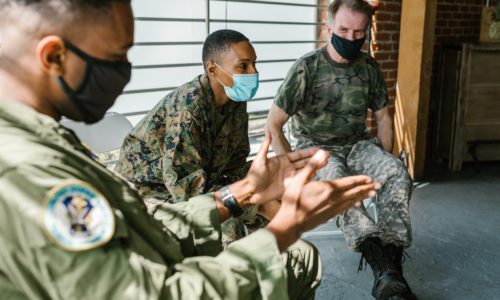
    Group therapy for combat veterans suffering from PTSD

    Lately, there’s been more work exploring fear and memories of fearful experiences, and how to erase those memories…or at least make the memories weaker. Those memories play a big role in anxiety, PTSD, and bipolar disorder. We talked about AKT. Now, a team of researchers at Texas A&M University led by Stephen Maren, Ph.D. recently published their work in Nature Neuroscience, and used prolonged exposure therapy in an effort to extinguish to erase or weaken conditioned fear response memories.

    These methods often work well for awhile…but in time about 50% of patients relapse and over the long-term the fear memories take hold with a vengeance.

    Briefly, the way these therapies work is to repeatedly expose you to situations, sounds, or other associations with the trauma, over and over and over… with the hope that, in time, the trauma is no longer triggered.

    But, unfortunately in many patients, remission from PTSD doesn’t last.

    So, knowing that these efforts don’t prevent relapses in some patients, Dr. Maren and his team have designed innovative experiments (in rodents) so they can test the possibility of disrupting the original fear memory… this is the memory that we think starts all the suffering in a person who develops PTSD. 

    How do you disrupt a memory?

    Because here’s the thing. The memory forms at the moment of the trauma…or in the 4-6 hour window that follows. This is a crucial time period.

    Keep in mind that the 4-6 hour period from the moment of trauma or shock is the period of memory consolidation, or when the memory forms.

    These skilled researchers sought to intervene during the period of time when memories are recalled due to a key stimulus …like a car backfiring… that might trigger a traumatic fear memory of assault, or combat…or a vehicle crash. This little window of time after a sound or other stimulus in the environment triggers the traumatic memory is called re-consolidation. The stimulus can result in reaction behavior… like hiding under a table… or striking someone nearby… or grabbing a weapon.

    Think of triggering memories by this method, like noises, as indirect retrieval. 

    Extinguish PTSD fear with erasing a conditioned fear response.

    But keep in mind that retrieving memories this way – by indirect retrieval – can help retrieve the traumatic memory but without an attempt to manipulate or otherwise change the original memory. The researchers’ intention is to retrieve that person’s response to it. To weaken or erase a conditioned fear response.

    …So back to the rodent experiment.

    Backward conditioning was a key intervention the team used.  It’s a unique and fresh method to get the rodents to retrieve their own trauma — a conditioned, context-dependent fear memory….without the subject being aware of the experience.

    Ok, so this is where it got reeeeeally interesting.

    With all this accomplished, they were facing 2 questions:

    1) Could they use neural tracing technology to identify basic circuits that were activated in this process?

    2) Could they intervene in such circuitry to see if they could alter the process of memory re-consolidation..to the extent they could alter or eliminate the fear memory and its potential to negatively impact behavior.

    Then, the team switched on cells in the hippocampal fear memory circuit, which caused the rodents to “freeze” because of prior conditioning to react with fear. 

    And, in the final stage of this experiment, the team used rapamycin to disrupt this particular circuit associated with conditioned fear memory. (Rapamycin is used to coat heart stents and to prevent rejection of transplanted organ tissue. Weird, huh? )

    Rapamycin interrupts the neuron’s ability to produce proteins that are necessary for the circuit to function. As a result, the inclination of the rodent to freeze in fear is weakened or erased altogether.

    And it worked. And they did succeed in associating fear memory reconsolidating with circuitry in the hippocampus. They did it!

    Basically, these researchers successfully interfered in a circuit to change an original fear memory… which is what begins and is key in trauma-related conditions like PTSD. By forcing the circuit to “forget” the fear, the “freezing” behavior can be weakened or erased completely.

    Like, gone.

    If you or someone you love suffers from PTSD… a painful fearful memory, that’s triggered by little noises, a sight or smell or other cues, this can be life-changing.

    Such an important step toward developing a new way to treat PTSD, or perhaps even substance or alcohol use disorders. Cues that trigger relapse might feasibly be interrupted in the circuit, to prevent it. 

    Heady, exciting stuff!

    Thankfully, as we watch this development unfold, we have IV ketamine treatment NOW. IV ketamine treatment that’s effective in treating PTSD, substance use disorder, alcohol use disorder, social anxiety… all cue-related conditions. And of course, it is robustly effective for treatment-resistant depression and bipolar depression, and there is new exciting evidence of how ketamine is effective in teenagers.

    It’s encouraging to see how research is exploding as we continue to seek treatments that can resolve devastating relapse and suffering.

    At Innovative Psychiatry, we are meticulous about our outcomes, present our data at scientific meetings, publish our own findings in peer-reviewed journals, and stay up nights and weekends reading. We are on the cutting edge for breakthroughs in psychiatry and neuroscience. You deserve to be treated by experts dedicated to excellence.

    If you suffer from any of these conditions, you would probably like some support, some help, and probably some treatment. We’ll schedule an appointment for you to come in and talk about your history, your current difficulties, and the possibility that you might be a candidate for IV ketamine treatment. We won’t be able to make a judgment about that until we talk.

    If you’re a candidate, you can come to our practice with confidence that you’re safe even in this ongoing pandemic. Our plasma cell technology for removes 99.99% all viruses, bacteria, and molds from our air and surfaces means you can relax and focus on your treatment… and getting better.

    Better days are ahead for you to live, dream, build, and hope.

    We really want that for you. And we’re ready to help.

    Lori Calabrese, M.D. is on the front end of the race to stop PTSD in its tracks using IV ketamine treatment.

    To the restoration of your best self,

  • Do You Suffer From Pandemic-Induced Social Anxiety?

    Do You Suffer From Pandemic-Induced Social Anxiety?

    When you think about going to a gathering, walking into a room full of people, how do you feel? Tense…nervous…?

    People are getting vaccinated.  It’s highly likely, if you’ve had both vaccine injections, that you may be invited to an July 4th gathering of friends and family who’ve also been vaccinated. Can you imagine? How long has it been since you were invited to a backyard barbecue? Would you feel excited to go? Or would you find yourself feeling a bit nervous about it? You may have struggled with social anxiety for years, or you may be one of the new breed who never felt socially uncomfortable until the COVID-19 pandemic kept you socially distanced for a year and a half. Pandemic-induced social anxiety is an emerging real problem for so many.

    A study recently published in Lancet Psychiatry found that about 1/3 of COVID-19 survivors suffer from long term brain disorders. They looked at 236,000 who were diagnosed with the coronavirus over a six month period. Turns out that 34% display neurological or psychiatric disorders. Of those, 13% had never suffered from these before.

    They found that those who had survived the COVID infection were at increased risk for brain disorders. Psychiatric disorders. Neurological disorders.

    So you have to ask yourself…should that be a surprise?  Over a year of keeping to yourself, seeing no one in person except for your own household. If you live alone, that’s a long time to be isolated. And when you’re around strangers, at the grocery store, for example… Everyone is wearing a mask and you can’t tell if anyone is smiling or not. The world can become a drab place.

    At the very best, the last 14 months have been disruptive, challenging, and alarming. Routines have been tossed out the window, normal interactions with friends, family, acquaintances, and co-workers have all but stopped. Major conferences, gatherings, and events were cancelled. 

    In short, we’ve all adapted to a different way of living. And little by little, life is going to change again. And eventually, we’ll be changing to a world with lower risk. But not yet.

    For now: do you suffer from pandemic-induced social anxiety?

    It comes in all sorts of forms. We ask ourselves, has he been wearing a mask consistently?  Does she practice social distancing? And we still need support.

    That’s quite a jump from the way it used to be, when we’d say, “Of course we’ll be there! What can I bring?”

    There are also those who have dealt with social anxiety for years, so this isolation was easier to adjust to. Until it got old. While theirs isn’t pandemic-induced social anxiety, theirs has likely been exacerbated by the pandemic.

    Because on some level, we humans need some social interaction. Until the pandemic, we naturally chose the amount of interaction — and the type — that fit most comfortably.

    But now it’s harder. Scarier. And the stakes are higher. Add to that the nagging feeling that people around you are probably judging you… harshly. 

    If you already struggled with social anxiety before the pandemic ever happened, you know that feeling. It’s awful. That horrid sense that you just know the people around you are so put off by you… that they’re talking about you.  About you!  When in truth, they’re likely talking about where they’re going Friday night…or what they thought of the latest blockbuster movie.

    If you never tasted social anxiety before now, you probably had no idea what it’s like. But now, people who have developed social anxiety from the restraints, isolation, and precautions of the pandemic are experiencing that horrid feeling themselves for the first time. And, that feeling feels real. 

    When you’re in the throes of it, you are acknowledging as truth the FACT that everyone in the room is appalled by your appearance or behavior and they’re ALL judging you and verbalizing it to the person next to them. You believe that feeling.

    You know what?  

    This is an early stage of post-COVID reaction, specifically post-COVID social anxiety.

    And just like social anxiety probably didn’t go away on its own when there was no pandemic… it may not go away on its own now

    It may be that you can slowly help yourself adjust to the new reality and give yourself time to resolve it, or you may have to take intentional steps.  

    By treating yourself with compassion, you may find you can identify the scenarios that stir up anxiety for you, and not force yourself to do too much too soon. Determine to be your own best friend. Give yourself credit for baby steps. Maybe coffee with a friend, or taking a walk with a neighbor. As you find yourself comfortable in these smaller situations, then you can increase your exposure as you feel ready.  Lunch with two friends. Dinner with a friend, relative, or co-worker you really like!

    Because, if you’re paying attention to what pumps up anxiety for you, then you probably realize that dinner with someone you don’t like is unnecessary stress this early in your recovery … or maybe we should say …this early in your re-entry.

    And that really is what it comes down to, isn’t it? Everyone is re-entering society over this next year. And that means some will be re-entering in spite of pandemic-induced social anxiety. After you’ve had both your vaccines. After most others have had both of theirs, too.

    We can all expect to see people jumping into public places, parties, dinners, ball games, just as soon as it’s possible, but that doesn’t mean you should do the same.

    A friend who lives in Texas where restrictions have been lifted, stopped in a popular restaurant recently to get takeout for her family.  She expected the restaurant to be practically empty, but to her surprise it was packed, with a full waiting room! 

    She knew that ALL those people weren’t vaccinated. And most weren’t even wearing masks.

    This illustrates how much the general public may be chomping at the bit to get out and about again,  whether it’s wise or not.

    That being said, there are probably plenty of people pressuring friends to go with them to public places. And those pressured invitations may be just one more way this re-entry environment stirs up anxiety for you.

    Don’t put yourself through that. BE PATIENT with yourself, and stand up for yourself when others are moving ahead faster than you’re comfortable.

    Take it slow and do what’s best for YOU.

    By limiting your face-to-face interaction to only vaccinated people, you’ll automatically reduce your own anxiety to some degree because you know you’re safe.  Pandemic-induced social anxiety may be daunting, but you choose what you’re ready for day by day.

    And if these outings continue to be difficult, talk to someone you trust.  Whether it’s a family member, or a close friend, or a therapist, it can just help you to relax about the issue to say it out loud. It can help  you feel more normal. And will possibly help reduce anxiety, too.

    Finally, we have to address the question, “What if this anxiety doesn’t get better? What can I do?”

    If you’ve found you’re gripped inside every time you go out, and it never seems to get better in spite of all you’ve tried, you may be a candidate for IV ketamine treatment.

    Ketamine is that mild-mannered anesthesia medicine that wears a cape and leaps tall buildings in a single bound when it’s applied to treatment resistant depression, social anxiety, PTSD, bipolar depression, substance use disorders, and suicidal thinking.

    (I just couldn’t resist.)

    It has helped many of those who have received it to achieve remission. Because IV ketamine treatment is not one of those meds that just, you know, takes the edge off symptoms. Rather, it either doesn’t help someone… or it transforms them to a joyful, hopeful person with a new lease on life.

    And while ketamine treatment isn’t for everyone, it helps such a large percentage of the patients we treat that chances are good it will transform your life, too.

    At Innovative Psychiatry, we want to make your IV ketamine treatment give you the best it’s got. So we’ve worked out methods and protocols to give you the most personalized titrated dose and rate available. 

    We also have invested in a state-of-the-art system for destroying viruses, bacteria, and molds in the air and on hard and soft surfaces to protect you and keep you safe from infection like COVID, influenza, and even pollen. Your focus needs to be squarely aimed at getting better, without the worry of contagious disease. We want you to feel safe.  

    With that said, if you’re still sitting squarely in the midst of your anxiety, call us.

    Everything we do all boils down to our primary focus of seeing you get better, and live well with joy and purpose.

    Our patients each represent a wonderful story of restoration and resilience. We want to see your story join theirs.

    With only one life you get to live, it’s worth the effort to find the path for your best life.

    We’re here and look forward to hearing from you.

    Lori Calabrese, M.D. is on the front end of the race to stop PTSD in its tracks using IV ketamine treatment.

    To the restoration of your best self,

  • Keep Your Eyes on AKT: It Might Explain How We Learn and Forget Fear

    Keep Your Eyes on AKT: It Might Explain How We Learn and Forget Fear

    You may hear people say, “Antidepressants and other psych meds just don’t do anything…”

    Some people say, “…placebos work better…” Oh please. But why do they say that?  Maybe their own experience with prescribed medicines was disappointing. So — of course — they’re disillusioned about these medicines. We get it. And we know that any given medicine that works for some people won’t help some others at all, or might even make them worse. Sooo… what’s up with that? Well, the answer isn’t simple. We do know that antidepressants,when first prescribed, only help about 30% of depressed people. We know that psych drugs help some people but not others and that men and women can experience depression and anxiety and fear differently. It’s a tangle to unravel it all. That’s why we’re so excited about new developments. We want to keep your eyes on AKT because it might explain how we learn and forget fear.

    Meet Jill and Greg to see how differences affect their well being and livelihood:

    Jill and Greg own a coffee shop together and are partners in life as well. They have a great balance of power, in the tasks they divide between them and the strengths they each bring. Greg is a people person, creative, funny, and efficient at both designing new drinks and training staff to make them just right. Jill is a numbers person, and sometimes comes off a little stiff and awkward, because she just doesn’t have Greg’s gift for setting people at ease. She also has some social anxiety going on.

    She does ordering from suppliers, closes out the books every night, and keeps a close eye on profit and loss. They’re a perfectly matched pair and love working together. That is, as long as they’re both at their best. With Greg building relationships with customers and vendors, and Jill keeping the financial end sound, they really do provide strength for the weakness of the other.
    Unfortunately, they both suffer from disorders that periodically causes some lost time at the shop. When that happens, the one who is doing OK ends up carrying a double load. And both of them struggle with anxiety… or basically fear on some level.

    Greg was diagnosed with bipolar II disorder when he was a teenager. Jill was diagnosed with depression in college. She’s a worrier. He just explodes sometimes—and refuses to call it anxiety. Greg takes medication for mood stability that also has an antidepressant effect. Jill takes an antidepressant that only sort of works. They probably both need medicines that reduce anxiety.

    In a perfect world…

    Since their coffee shop venture requires all hands on deck to run smoothly, Jill and Greg are eager to find the right meds for both of them to help stay in the game. They need to be able to go in to work—they can’t afford not to. It seems to Greg that since his medication helps him as much as it does, Jill should ask her doctor to prescribe the same for her. She’s a nervous wreck! However, she knows enough about changing meds that she can’t just jump on another medication just because it works for Greg. She’s tried that before. It didn’t work.

    At this point, Jill has tried five different antidepressants over the past few years, and has researched enough about IV ketamine treatment that she wants to talk to her doctor about whether she’s a candidate for it.

    Considering something new takes a little bit of courage. She wasn’t sure what her psychiatrist would say. A visit with her psychiatrist surprised her–he was cautious but supported her trying something that might help. Jill decided to pay for it out of savings, because her bouts of severe depression were taking a toll on the shop and their income.

    She arranged for treatment and began infusions. When the treatment was complete, she had received 8 infusions over about 3 weeks, and she felt like she had a new lease on life. Her ketamine infusions seemed to wake up her brain. And that got better and better day by day — even after she completed treatment. She found she enjoyed singing and dancing, and painting became her new passion. When they had a problem in the shop, she had so many more ideas for solving it. Working on the book work was no longer a drudgery–she enjoyed it and got more accomplished in a shorter time.

    Jill and Greg’s life became so much better at work and at play. Greg still had slumps when his meds weren’t quite holding him, but their life was so much better overall. They had read that ketamine treatment could help bipolar depression, too. Maybe the next time he went through a bad bout of that, Greg would talk to his doctor about it. To see if it was right for him—not just to copy Jill.

    Finding the right medicine for you is sometimes a long search. And medicine that works for you may not work for your sister…or your son. But it’s well worth the work researchers do to better understand why.

    A research study at the University of Colorado Boulder offers one fascinating revelation about why those differences between people and genders might exist.

    It has to do with a key protein kinase in the brain called AKT…which functions differently between males and females.

    They found presence of a certain form of AKT (called an isoform) in male mice can help the male let go of fear from a past painful experience–and form a new adaptive response to get around the old fear. Wait, what? Doesn’t that remind you of the way synaptic plasticity helps you adapt?

    Ok, you’re right…mice aren’t people and it doesn’t work quite that way…. but AKT is remarkably similar across mice and humans and this kind of translational research can begin to give us specific information to make our medicines and medical care more specific. Potentially even gender specific.

    So you’ll do well to keep your eye on AKT because so much is being learned about how we learn and how we forget fear.

    By figuring out the very complicated cascades involved in creating synaptic plasticity, we may be on the verge of figuring out how to shape and foster the neuroplasticity–for the better.

    We may be able to personalize medication therapies so that they don’t just broadly address a disease state, but so that they can be specific for the man or woman who needs them. 

    Charles Hoeffer, the principal investigator of this study, said it like this: “We need to stop hitting every ‘disorder’ with the same hammer.”  Well said! (Wish I had said that!)

    We’re always talking about personalizing treatment. About how important it is to provide treatment that fits the individual. Just as that’s true with all of the fine details involved in ketamine treatment, it’s also true with all of the medicines we prescribe.

    So… about AKT. 

    It turns out AKT plays a lead role in synaptic plasticity. We’ve talked about that too…  The idea that the connections between cells in the brain can change and adapt. They can change and adapt as a result of an experience. (This is why trauma can change us.) But — so importantly — these connections can also grow, change, and adapt as a result of the deeply emotional experiences, like the incredibly deep and awe-filled experiences you can have during a ketamine infusion. So many of our patients do. We’ve talked about how taking advantage of that process by scheduling psychotherapy 24 hours after a ketamine infusion can enhance the effectiveness of the infusion. 

    Why? Because therapy helps you think differently about something…and synaptic plasticity empowers those changes in thought. Many of our patients also find that journalling, creative writing, meditation and other activities help to integrate those experiences into their lives, find meaning in the experience, and move forward. Keep your eyes on AKT… there’s so much more to learn.

    AKT helps you create memories. Like a child touching his hand to a hot stove. To encode that memory so that he will be cautious in the future around hot burners, his brain needs to activate protein kinases like AKT.

    In fact, AKT is one of the first proteins to present itself to form a memory like that.

    There are 3 main variants, or isoforms, of AKT and they do different things and affect people in different ways (More on that in a sec!)

    AKT1 is important in encoding new experiences and allowing you to forget the old.

    AKT2 is often found in the astroglia…which are star-shaped brain cells.

    AKT3 seems to be important in brain growth and development. This one plays a positive role in mental health and wellbeing. 

    And when AKT1 and AKT2 are working together in the prefrontal cortex, they’re vital for learning, for memory … for dynamic change.

    Maybe like the kind of dynamic change that you want for yourself. So yes. So many different forms, working singly and sometimes together, in ways we are only now just beginning to understand for people suffering with psychiatric disorders.

    Now. To add another twist to this picture. In this study, researchers found a dramatic difference between genders regarding AKT. 

    They found that male laboratory animals whose AKT1 was functioning well, had far more ability to replace unwanted memories with new ones…than those who were missing AKT1. 
    Draw that out for a moment now…. and imagine men who’ve experienced the trauma of illness, or assault, or combat… and imagine for a moment that they’re given the opportunity to experience something new — maybe hopeful, blissful, awe-filled, like they might during a ketamine infusion — and then the excitement of realizing that a tiny little protein kinase like AKT1 may play a part in helping to encode that new feeling. Turn it into a new memory. Make the old traumas fade. (That’s called extinction learning.) Teeny little AKT1 helps with this. In males. 

    Incredible.

    There are endless little nuances in your brain that translate your experiences, encode them, and shape your synapses…and your individual functioning. And maybe your future possibilities.

    AKT is one to keep your eyes on for sure.

    We keep learning, keep researching, and keep doing all we can to help you get better.

    (Let’s just say we read all this stuff for fun–at nights, on the weekends, and at 5 am with a double shot of espresso.)

    And at this point, serial titrated IV ketamine infusions still do the best job we’ve seen in bringing relief to more people with treatment-resistant depression and anxiety than just about anything else available today.

    But ketamine treatment doesn’t work for absolutely everyone. Is it because of AKT or something different? We don’t know. Not yet. Researchers like the ones at Boulder are still searching to understand the nuances of dendritic growth and synaptic plasticity in order to refine our treatments–and discover better ones.

    At Innovative Psychiatry, ketamine treatment is provided in a virus-free environment.

    At Innovative Psychiatry, we personalize treatment to fit you — all the complexity and all the wonderfulness of you! And we aim for remission. Not just response. That’s the reason we titrate your dose, duration of the infusion, and the number of infusions you need to help you discover — once again — your best self.

    When you struggle and suffer from the symptoms of disorders that can be tormenting and exhausting, getting treatment is paramount. And feeling safe is critical — so we have state-of-the-art technology that crushes 99.999% of all viruses and pathogens. During this pandemic we want to make things easy. We all need a little bit of easy.

    So now, reach out for IV ketamine treatment in a safe atmosphere where this treatment can help you live better, hope more, and enjoy the challenges and relationships in your life that give your life meaning.

    You can live a life of joy, fulfillment, accomplishment, and ongoing hope.

    If your meds have not been providing you relief from symptoms of depression, despair, PTSD, or suicidal thoughtscall us.

    Let’s talk about what you’ve tried that didn’t work. And if you’re a candidate for IV ketamine treatment, we can begin that.

    Even though ketamine treatment isn’t for everyone, it just might be a good fit for you.

    We’re here to help.

    Lori Calabrese, M.D. is on the front end of the race to stop PTSD in its tracks using IV ketamine treatment.

    To the restoration of your best self,

  • Why Are Anxiety and Depression so Prominent in This COVID Pandemic?

    Why Are Anxiety and Depression so Prominent in This COVID Pandemic?

    What makes it so hard?

    Anxiety and depression are so prominent in a pandemic.

    Devon tuned into his department meeting. Another Zoom meeting. He was so tired of online meetings…the technical lapses, interruptions…  you can read people so much easier face to face. At the same time, he could sit in an easy chair for the meetings, so that wasn’t so bad. But no one seemed like themselves. Anxiety and depression are so prominent and have clearly taken their toll on his colleagues.

    Still, maybe there’s also a palpable energy in face-to-face meetings. He wasn’t sure if that was the problem or not, but Devon found it more and more difficult to focus, and to think creatively for his job. As the year had passed, he felt less and less capable and more like dead weight. 

    He kept asking himself what was wrong with him? Where were the sparks that flew when he dove into a problem?  Rather than sparks, Devon felt more like a dud.

    Then, he got the phone call about his next door neighbor’s son. Just like Devon’s family, his neighbor’s son was taking his high school classes at home, and online. At first, the young man Stewart, had stopped logging in to classes. Devon had heard this was becoming more and more of a problem in his community. 

    But, apparently Stewart was becoming more and more depressed. Devon just learned yesterday the boy had ended his life…right there at home.

    The grief settled over Devon like a black fog. This on top of the recent deaths from COVID-19 of two of his friends, 10 days apart. But Stewart was 15. His whole life was ahead of him. It was all too tragic.

    COVID Tragedies Can Trigger Anxiety and Depression

    He’d watched the boy grow up, playing with his own kids over the years. And it stirred up more worry about Devon’s own family. He and his wife had tried to keep a close eye on their children to be sure they logged in to school and did their work.

    But, they couldn’t be everywhere and they both worked online. But they tried. Still, life was becoming increasingly overwhelming. His heart went out to Stewart’s family. And he felt a low, sinister rumble of trepidation within himself. The dangers of the pandemic went far beyond the risk of getting sick with the virus. 

    The fear of becoming too depressed to function, or of his family succumbing to it, rose inside him till his  ears were buzzing.

    All in all, Devon knew he had to keep functioning, and presenting a solid, unified front with his wife. He also knew the danger of drowning in it all. When his meeting ended, he called a highly recommended psychiatrist for a consultation appointment. He wanted to be proactive, before it was too late to think straight.

    There’s just something about a pandemic that can make happy people depressed or relaxed people overwhelmed with anxiety.

    We’ve talked about it before. In the early months of COVID-19, that the circumstances that accompany a widespread environment like this can lead to your symptoms worsening. It can also lead to symptoms you never suffered before. Anxiety and depression are so prominent these days.

    Well, at this point, this global state of affairs has been causing stressors that aren’t new anymore. But they do go on and on and on….and on…

    And periodically, we need to stop and take a breath and ask how you’re doing?

    At this point, there have been 99,195,630 COVID-19 cases globally, with 2.1 million deaths. In the US, 25.2 million cases, and over 419 thousand deaths. The numbers are staggering. And the scale of this pandemic is difficult to grasp.

    These are people. Our teachers, our friends, our neighbors, our families. Grandparents. Parents. Our children.

    And…since we are a species with both mind and body, it stands to reason— doesn’t it? —that both our minds and our bodies are impacted by this. With anxiety about sickness, anxiety about isolation, anxiety about lifestyle change and lack of spontaneous freedom, it does stand to reason that the problems and stress factors would pile up and also lead to depression. Anxiety and depression are so prominent these days…and they often go together.

    We’ve watched a 1st wave of COVID spread, then a 2nd wave, then a 3rd…and it’s not over. The virus changes, mutates, and different strains have varying impacts. Some cause milder symptoms, some spread much faster, some cause more severe symptoms. It goes without saying that all this has affected you…and all of us,

    Most of us know people who have had the COVID-19 virus, and many of us have seen our friends and loved ones die because of it. This is a traumatic time that none of us will forget.

    Research Helps Us Understand the Impact of a Tragic and Stressful Experience

    A group of Danish researchers in Copenhagen and Aarhus, Denmark led by Søren Østergaard conducted a survey during each of those 3 waves to better understand the variation in psychological well-being regarding symptoms of anxiety and depression during this pandemic, among participants in Denmark. 

    Their results were relevant to the global community, even though severity of the disease hasn’t been equal everywhere.

    They reported results of the survey for wave 1 (March 31st to April 6th), wave 2 (April 22 – April 30th), and wave 3 (November 20 – December 8 … just last month.)

    The 1554 respondents were an average age of 49.5.

    There was a statistically significant decline in psychological well being from wave 2 to wave 3, especially with men. And during wave 3, worry, anxiety, and hopelessness decreased over those levels in wave 2, but feelings of guilt increased.

    Anxiety and depression have been prominent in Denmark, too.

    In a nutshell, these researchers ended the paper with the statement that by late November to early December, the psychological well being of the Danish population had fallen again to the level of March/April, when it had been at its lowest.

    Overall, they found that when COVID cases are high, and the measures to reduce the spread of the virus like quarantine, isolation, social distancing, and major lockdowns are the most widespread, there is a significant impairment of psychological wellbeing.

    What Can You Do with This Information?

    Setting aside the particulars of a study in Denmark, and focusing on right here in the US, we need to find ways to intervene in your own state of mind. Your own wellbeing.

    Gather online with friends and family to interact for online chess. Talk and laugh together. Watch your grand babies blow bubbles.  Share a spaghetti dinner, complete with candles, where each participant cooks at home then all connect and chat while eating.

    Social interaction is fundamental to your well being. When you share a meal on Zoom, you don’t have to wear a mask!

    Even so, if this ongoing pandemic seems to be having a serious impact with depression, social anxiety, hopelessness, even suicidal thinking, ketamine infusions may be able to turn that around and refresh your resilience. There is still hope.

    Anxiety and depression so prevalent during pandemic

    At Innovative Psychiatry,  we’re all about helping you get a leg-up to manage these challenging times, and meet the frustrations in your life with flexibility and peace. We offer IV ketamine treatment — after a thorough screening and evaluation — to those whom we determine are good candidates for ketamine’s extraordinary benefits. Ketamine treatment is not for everyone, because circumstances as well as the medical and psychiatric history of some patients indicate ketamine is not the right choice. However, it can be so helpful to so many…it can be transformative.

    We provide a safe place for treatment. We now test our staff at least once each week to verify they are COVID free… We can also refer our patients to a local DNA lab that will do same day PCR testing for those patients who wish it. In addition, we installed technology that destroys the coronavirus and all viruses and bacteria in the air and on all surfaces fast.

    Our goal is to help you get better and to keep you safe.

    You have struggled, tried to break through, tried to carry the anxious and depressive symptoms that have weighed you down for a long, long time. We want to help you put that struggle in your past. So you can feel restored. So that you can be your best self. To have the energy, freedom, and hope to build your life again with creativity and joy…and to have the resilience to move from day to day and week to week.

    You needn’t postpone it any longer. Call us.

    We can answer your questions and sort out the possibilities together.

    Lori Calabrese, M.D. is on the front end of the race to stop PTSD in its tracks using IV ketamine treatment.

    To the restoration of your best self,

  • The Vicious Cycle Of Psychiatric Disorders and COVID

    The Vicious Cycle Of Psychiatric Disorders and COVID

    Sam wasn’t sleeping enough. As in, not much at all. She just couldn’t drop off.  But even if she did she’d wake right back up.

    Day after day, week after week. She’s done everything she knows to do. And she has to work, so she just has to get by. Still, it scares her because her mind just isn’t clear. On top of that, she felt nervous all the time… shaky. What’s so hard about walking to the mailbox? What was the matter with her…  Was there any connection to psychiatric disorders and COVID? The very idea made her shudder.

    But it was real.  And there were some things that had become harder and harder for her…since a couple months before she stopped sleeping. She didn’t know if being overly tired was making her feel uncertain about things like answering the phone or walking down the street, or if the nervousness was keeping her from sleeping?  

    Still, she was careful with COVID precautions. Always had her mask with her, and her hand sanitizer. She did have to work in the office, but everyone wore masks, and the cleaning service wiped everything down each night.

    In spite of all that, she started feeling bad. Odd symptoms.  On top of the shakiness. A tightness in her chest, strange feeling in her throat, and she felt sort of washed out.  Then she ran a fever so she called in. Since her symptoms continued, she went for a drive-through COVID test… and it was positive.

    Arrrgghhhh. So she had to stay home. But she felt so weak and crummy. After calling in to work, she went to bed. Fever and chills continued over night. And she realized she was getting weaker and weaker. Overall…her symptoms reminded her of the time she had mononucleosis in high school.  

    It was hard to be alone and try to figure out what to do.

    Time to Take Action

    The next day, she was afraid to wait any longer, so she called her doctor to get his advice. He told her she should go to the hospital.

    The harder it was to breathe, the more discouraged she felt. Thankfully, they put a commode by her bed, because even walking to the bathroom in her room was just too much exertion.

    This was far worse than mono. It was becoming scary. And because of the pandemic, her family couldn’t visit her. That night, she woke up panicking for air. She heard an alarm…her room filled with people in protective garb… then everything went black…

    Sometimes A Disorder Seems to Make You Vulnerable To Contract COVID-19, and Sometimes COVID-19 Seems to Make you Vulnerable to Developing a Disorder…

    Phil was 73, recently retired as COO of a successful marketing firm, and was beginning to enjoy his freedom. Of course, the pandemic wasn’t helping matters or helping him with his retirement plans.  He wore a mask when he went out, kept sanitizer in his car and used it often.

    Occasionally, he’d go fishing or play a round of golf. And when he did, he was outside and didn’t wear a mask.

    One day, he noticed one of his golf buddies seemed to have a cough. Phil asked him about it, and he said he had something stuck in his throat from breakfast. Three days later Phil didn’t feel right. Something was off. By lunch time, he was feeling bad. Achy, draggy, his throat hurt, his stomach hurt. He called his golf buddy who told him he had been admitted to the hospital. 

    What???

    Social Distancing and Masks Matter to Avoid the Vicious Cycle of Psychiatric Disorders and COVID

    Phil was healthy, spry, in good shape. He truly didn’t feel vulnerable to catching anything. He called his doctor, who told him to get a drive-through COVID test and to call back after taking his temperature.  Oh no. It was 101 degrees. He went for the drive through COVID test, and by the time he got home he felt like he was in trouble.  He had no idea …if this was COVID…. that it could get so bad so fast.

    By supper, he didn’t want to eat, and his breathing was shallow and rapid. His wife called 911, and by midnight he was on a ventilator.

    His wife was terrified. 

    Phil was so sick. His family was so afraid he wouldn’t survive.  But after 11 days in the hospital he began to improve, and they removed the respirator a couple days later. 

    Once he was home again, resting and rebuilding his strength, his wife noticed he was missing words. He called common objects by the names of something else. At first it embarrassed him, and then he lost track that it was happening.

    In less than 6 months, he forgot the names of his grandchildren, and a few months after that, they had to put special locks on the doors to keep him from walking out and getting lost.

    He didn’t really have dementia in his family, medical history… and his behavior was baffling for the people who loved him.

    Phil’s Battle with COVID May Have Set Him Up for Dementia, as It Has Others

    It’s a Vicious Cycle of Psychiatric Disorders and COVID

    As if we didn’t already have enough to think about, new research has emerged that reveals a vicious cycle between psychiatric disorders and COVID.  

    Yeah…I know.

    Specifically, between depression/anxiety as well as insomnia and COVID. And for the older patients, between COVID and dementia.

    The study, led by Paul Harrison at Oxford, examined the electronic health records of 69.8 million people from 54 healthcare organizations in the US between January 2020 and August 2020.

    They found that in the 14-90 day period after their COVID-19 diagnosis, 5.8% received their first-ever diagnosis of psychiatric illness. This compares to the 2.5 -3.4% who are diagnosed with psychiatric illness after another illness without COVID.
    Another study, led by Nora Volkow at the National Institutes of Health,  conducted a study of over 61 million adults found that people who have been diagnosed with a psychiatric disorder in the last year have a heightened risk for COVID…and they tend to have worse outcomes that those who fight COVID without a psychiatric diagnosis.

    Gee.

    And the diagnosis that seemed to cause the greatest risk was depression. So to provide perspective, for those who had been diagnosed within the last 12 months with a psychiatric disorder and also contracted COVID-19, the death rate was 8.5%, compared to 4.7% for those who had no psychiatric diagnosis.

    The study couldn’t reveal WHY this is the case, but researchers have some hypotheses.  

    For one thing, if you’re depressed, it’s hard to care, so therefore more likelihood of abandoning precautions. In addition, if you struggle with psychiatric symptoms, you may have a higher sensitivity to stress, and you may have less resilience to cope with the uncertainty, isolation, and financial challenges associated with the pandemic.

    All of that adds up to weakened resistance and greater risk for relapse.

    It all comes down to comorbidity…and psychiatric disorders fall into the category of “underlying conditions” that increase your risk, just as diabetes and heart disease do.

    And so, just like the grandmother who has chronic asthma, or the business man with heart disease, you need to take special precautions to protect yourself from becoming infected with COVID-19.

    These revelations about how COVID-19 illness can seem to make you more vulnerable for psychiatric disorders, including dementia, and how recent psychiatric diagnoses can also make you more vulnerable to being infected by COVID-19, tell you how important it is to protect yourself through the rest of the pandemic. This vicious cycle can result in long term problems that make the precautions worthwhile.

    Be extra careful to protect yourself from the vicious cycle of psychiatric disorders and COVID.

    At Innovative Psychiatry, we’ve taken more extra steps to protect you and our staff by using VB Enviro Care’s plasma cell technology tools to remove dangerous pathogens from the air and surfaces. And we still wear masks. And so will you. 

    Because our focus is for you to get better. To reach a point where you feel like the best you’ve ever been. So we want to treat your symptoms, and we also want you to stay well, free of COVID-19 and the flu.

    IV ketamine treatment has demonstrated dramatically that at this point it may be the most rapid and best treatment available for depression, bipolar depression and PTSD, and so much of the anxiety that goes along with them.

    If you believe ketamine treatment can help you, call us.

    Let’s work together to help you experience the rewarding life you long for.

    It’s the only life you have, right? Do this for yourself. Call us.

    Lori Calabrese, M.D. is on the front end of the race to stop PTSD in its tracks using IV ketamine treatment.

    To the restoration of your best self,

error: Content is protected !!