Articles about Anxiety from Lori Calabrese, M.D. | The Ketamine Blog
When you feel that sense of dread or uneasiness about something in the present or in the future, that’s anxiety. Everybody feels that way at some point. An interview for a job, meeting your fiancee’s family, a major exam…. But for some people, the unpleasant dread can be overly intense and ongoing. When it’s so intense that it interferes with your life, causing you to miss work, or miss social opportunities… then it may be a disorder. These articles about anxiety shed light on the difference between moments of anxiety, and a lifetime with a severe, debilitating disorder.
Anxiety can be as mild as a transient feeling of butterflies, or so intense and overpowering you think you’re having a heart attack so you call 911.
Types of anxiety disorders:
1. Social anxiety
is the overpowering and relentless fear of being watched and judged by others. It can cause you to feel afraid to meet new people, to believe everyone in the room is talking about you, and to feel intensely self conscious in the presence of others. This is a serious mental health condition that can prevent you from interviewing for jobs or excelling at the one you have, or from meeting new people and building relationships.
2. Postpartum anxiety
This is emerging as a serious disorder in woman, at least as prevalent as postpartum depression. It can express symptoms like panic, fear of harming the baby, poor bonding with baby, obsessive worrying, inability to eat, sleep, or relax. Also, it can include the obsessive fear the panic will never resolve.
3. General anxiety disorder
obsessive and continuous worry about one’s health, work, social contacts and interactions, as well as daily routine circumstances and experiences…that repeat almost every day for at least six months.
4. Panic Disorder
Characterized by repeated and overwhelming panic attacks with accelerated pounding heart rate, sweating, trembling, shortness of breath, and feelings of impending doom. Often brought on by triggers, but not always. The attacks lead to a fear of the attacks, and a driving desire to avoid them, which can often lead to agoraphobia.
5. Test anxiety
Irrational dread of testing in spite of being well prepared. The anxiety can rise until the person’s displaying symptoms of panic like accelerated heart rate, headache, nausea and sweating. Can result in the mind going blank, and general functioning shuts down.
6. Phobia-related disorder
Agoraphobia – fear of enclosed public spaces, fear of open spaces
Arachnophobia – fear of spiders
Acrophobia – fear of heights
Dentophobia – fear of dentists
Claustrophobia – fear of enclosed, confined spaces
Aerophobia – fear of flying
Aquaphobia – fear of water
Zoophobia – fear of animals
Coulrophobia – fear of clowns – (not officially recognized but widely claimed)
7. Separation anxiety
Occurs in children and adults, and expresses as fear of being apart from people to whom they’re attached. They often worry that something terrible will happen to the person they’re connected to, and so avoid separation from that person as well as avoid being alone.
8. Selective mutism
A rare disorder in both children and adults where people don’t speak in specific situations, even though they have well developed language skills. It’s often associated with extreme shyness and fear of social embarrassment, and usually begins before the age of five.
9. Obsessive -Compulsive Disorder (OCD)
Considered to be connected to anxiety disorders, but there is controversy as to whether it belongs here. At the very least, that person who suffers from OCD has feelings of anxiety and usually feels powerless to control the intrusive thoughts they have, or their reaction to them.
This is not an exhaustive list, but rather examples of anxiety disorders.
Treatment of Anxiety Disorders
Some people suffer from a cluster of anxiety disorders and mood disorders combined, while some struggle with only one. Since anxiety disorders are best treated for the specific diagnosis, the more complex a person’s condition is, the more complex it may be to treat.
Transcranial Magnetic Stimulation (TMS)
demonstrates promising outcomes for some types of anxiety. Cognitive behavioral therapy shows the most promising outcomes as a form of psychotherapy. Psychotherapy combined with anxiolytic medicines, serotonin reuptake inhibitors (SRIs) and serotonin norepinephrine reuptake inhibitors (SNRIs) can be helpful, as well.
IV ketamine treatment has demonstrated favorable outcomes in some patients with some types of anxiety. Social anxiety can be debilitating and interfere with the desire to build life, family, and career. Ketamine treatment is one of the most effective treatments for social anxiety. There is exciting work being done with OCD patients and ketamine treatment also.
We invite you to continue reading the following articles about anxiety by Lori Calabrese, M.D.
Disasters can come in many forms… barring natural disasters like earthquakes or floods… political disaster and a rising pandemic sound pretty daunting.
There’s the anxiety that accompanies voting tomorrow, and hopefully you’ve had the opportunity to vote early and avoid the big final voting day… Then add to that the OUTCOME of the vote the next day. The fact that it will go one of two ways… and it’s easy to cling to the idea that the world as you know it will end if the vote doesn’t go YOUR way. Eeesh…. Right along side that is the rising tide of COVID-19 in the news as the daily infection rate rises higher and higher. The CDC reports 99,750 new cases this past Friday in the US, the highest single day count of new cases ever in the US. That’s up from 63,000 October 16. We are neck deep in the Second Surge of coronavirus.
Yikes…
Both of these issues have been looming. At the end of the summer, COVID seemed to have been receding. Then there was talk of the Second Surge of coronavirus. Now, the news is full of the threat of the worst flu season in memory because of the combination of influenza and COVID-19.
Like the growing gloom of black thunderclouds on the horizon, when the low barometric pressure is a hint of the impending storm… there is the sense in the nation that disaster looms.
And you feel helpless.
And fearful that life will become somehow unmanageable, so difficult that it may overwhelm you and those you love.
Stop and take a breath.
Breathe in…
Breathe out…
Repeat.
Because of particularly strong clashes of ideals and passions, they’re calling this vote an Election on Steroids.
There was a time when elections were so apathetic that big chunks of the population didn’t bother themselves to vote.
Not now.
Where the presidential election is concerned….only one candidate will win. You know that.
But here’s the rub. No matter who you voted for, life will move forward. Your life, your family, your job…your routine…will move forward.
Those who didn’t vote for that candidate will adjust. And those who did are sure to suffer their own disappointments at some point too…but that’s how life goes.
You. Your loved ones. That’s who deserves your energy and support. So get up. Keep living, and being grateful for everything that’s good in your life.
Remember that your vote is one vote in a nation of millions of people. We live in a great nation with all its faults and all its strengths. And you’re a part of these millions of people who comprise this nation.
We’re all connected, no matter who we voted for, or who wins. We’re connected by virtue of being Americans, and by virtue of being human. We all share the same DNA and we need each other.
Tensions Foster Divides But You Can Bridge Them
During the tensions of an election it’s easy to fall into grievous criticisms of other beliefs and ideals than your own. But honestly, it’s beneath all of us to do that.
During the terrible fires that have swept across the northwest, California, and Arizona, Americans go and help. Right..? They don’t ask if the people evacuating are of one ideology or another. They just help because they’re people.
And doing so increases peace in the helper.
After this election is completed tomorrow, think about what YOU can do to maintain your peace of mind, your stability, your support of other humans. It’s likely there will be others who react because their candidate didn’t win, and those who celebrate because their candidate did win.
But think about your life, your loved ones, and your wellbeing as a family. Make an effort to understand those you don’t agree with. Make a decision to limit the time you spend watching the news, or reading news or political rhetoric on the internet.
And focus on the good in your life, the people you love, and your care for them.
Second Surge of Coronavirus: The Double Whammy Flu Season.
People everywhere are seeking ways to protect others from the ravages of the spread of these viruses. We already have cities in our country where hospitals are full…businesses have been shuttered.
The numbers of cases per day are swiftly rising. In the US overall, on October 16, the number of cases/day was 68,000 but is now 99,750.
Just Think.
There IS a need to take every precaution. To choose safety, rather than take chances.
In NYC this weekend, a Halloween party was held where 400 people attended. Many wore no masks. Why? You have to wonder. Of course, police handed out citations to all they could, but what causes people to knowingly contribute to the second surge of coronavirus …?
Ok. Yes. We’re all fed up with masks and gloves, sanitizers, and handwashing, as well as social distancing. But that’s no reason to stop doing what’s safe, is it?
Still, you cannot change what other people do. But you can make your safety decisions based on what is currently happening. And you should.
So if you know the people in the post office or grocery store line aren’t wearing masks, don’t go there! You can always send gifts from websites and have them delivered directly to your recipient.
When you go to the grocery or hardware store, use one where you can park in a special space and they’ll bring your purchase to you. So that you avoid going inside. You do have choices to keep yourself and loved ones safe.
See how easy this can be? No muss, no fuss, no frustration.
You can stay safe from this second surge of coronavirus by making thoughtful choices that take care of you.
What Else Can YOU Do to Navigate and Weather the Sense of Dread You Feel At This Weird Time?
Walks in the fresh air can help. Eating a diet that’s chosen from all the food groups, especially all the colors of vegetables and fruits. Greens, reds, blues, purples, yellows…
And if you need the kind of treatment ketamine infusions can provide, call us.
At Innovative Psychiatry we’ve taken extra steps to make sure we’re constantly destroying COVID-19 and flu viruses in our offices. We’ve gone the extra mile, so you can feel safe here, and our staff is safe, too.
“The second wave of the coronavirus has begun,” they tell us.
They say we’re in it now, and this will be worse than the first. How do you respond to announcements like this…with fear? Terror? Maybe anger? Some will… but you do have a choice. You don’t have to be the victim of your emotions. You can respond to the second wave of covid: fear, anger, or acceptance and common sense, rather than react instinctively.
Fear and anger trigger the fight or flight response…think about it. Have you noticed fear and anger in yourself or in the people around you during the first wave? It’s probably safe to say we all have.
But think about this. This is the second run. COVID-19 is no longer a surprise… You’re experienced at dealing with it. You know all about wearing masks and gloves. About staying inside and wiping down your home. Washing your hands. Maintaining distance from people when you have to go out.
You’re an old pro at dealing with Covid-19. Just look at your muscle bound, highly skilled self.
There really isn’t anything to fear… is there? Not really?
Common sense says to take precautions. Wear a proper mask. Avoid contact with others. Maintain at least 6 feet from others in public. And to not push the envelope.
So…What’s pushing the envelope?
Gathering with others assuming the mask is enough. An infected sneeze or cough may actually not be enough. But if you confine your gatherings to Skype, Zoom, FaceTime… Sneezes and coughs from others can do you no harm.
Common sense.
On the other hand, if you succumb to your emotional gut reactions of anger or fear, the likelihood you’ll make risky decisions heightens the danger that you’ll inadvertently expose yourself to the coronavirus.
Is your response to COVID: fear, anger… or acceptance and common sense? Are you a supporter or a discourager? You have a choice.
And if you get sick, people around you will get sick, and the second wave of COVID-19 wreaks havoc on more lives.
In this second wave of COVID, you can not only choose how to spend your time in safe ways and safe places, but you can also set an example for others who haven’t really thought all this through.
You Can Be the Voice of Reason and Common Sense
So how will you respond in the second wave of COVID: fear, anger, or… acceptance and common sense?
Will you lead or follow? Either way, you can hopefully find the wisdom and sense of safety that goes with protecting yourself and your loved ones.
That’s what we’re doing here at Innovative Psychiatry. We’re using caution, a commitment to protect our staff and our patients, and we’re fueled by common sense , CDC guidelines, and state and local guidelines. We have the latest plasma technology air filtration system. (We’re all about innovation.) With social distancing, masks, faceshields, and gloves for ketamine treatment, and telepsychiatry for our psychopharmacology patients, we can help you safely.
But…what if you’re overwhelmed with fear… and it won’t calm down? What if rage keep growing, on the verge of exploding, no matter how much you try to be rational and calm?
When Fear Seems to Swallow You Up…
When that happens you may need additional support. You may need an antidepressant or talk therapy. But if you’ve tried other treatments and they haven’t helped at all, you may need ketamine treatment.
Ketamine treatment can restore the connections and structures in your brain that give you the ability to cope and to hope. When you can cope, your patience increases, your outlook brightens, and your inner strength grows.
Hope helps you see past the current pandemic, realizing that your life lies ahead…and that the pandemic will eventually pass and your life will still be there, ready for the new choices you make as you flourish.
Ketamine treatment also can enable you to feel joy, and to enjoy experiences even when you’re isolated. It can empower you to build a happy and rewarding life, and rebuild healthy relationships.
And when that happens, you can respond to COVID with kindness, caring, patience, and endurance…and help others around you achieve that peaceful frame of mind, too.
Because the COVID-19 pandemic is temporary. We’re all in it together. Let’s truly be with each other, our families, and our friends. Let’s look forward to our future.
The sky grew darker as clouds morphed from white to gray, and created a solid ceiling over the city.
It had rained off and on for days, and thunderstorms had filled the night skies with a threatening latticework of lightening. In an aggressive assault on the grayness, Evie stepped back from the window and decided to turn all the lights on. The quiet in her bungalow, the gray skies, and the silence felt like a blanket that she couldn’t seem to shake off. She turned on music and tried to dance around the living room, but that didn’t last. There had to be a way to ward off this expanding gloom. She’d heard about ketamine in a pandemic, because these symptoms can strike anyone…even if they’d never had them before. Could that be what’s going on?
Dread crept up inside her, and she couldn’t understand why. Where was this coming from? She didn’t object to this isolation. It had given her the excuse to read more, which she’d salivated to do for years. She enjoyed her own company.
It was as if things she normally would do as part of her routine just seemed too hard to do lately.
A heaviness grew darker and heavier in her chest..? Her stomach…? What was it?
Evie had always prided herself in her ability to snap back from disappointment, to face fearful situations and push through them. She just lived with her sleeves rolled up, ready to take on whatever life tossed her way.
Her younger brother had never been so resilient. And unfortunately, she hadn’t been very supportive. She just had never understood why he wouldn’t just shake it off. Call a friend, pitch in and help someone in need, walk in the sunshine…and get over it!
Isolation and Even Social Distancing Take a Toll on Your Emotions
She strained her brain to understand what was causing this. Internet articles pointed out that being cooped up this for weeks or months was affecting people in a negative way.
But Evie liked being alone. She loved the quiet. The uninterrupted freedom to do what she enjoyed.
And these articles also talked about fear. People were afraid. Sales of guns had skyrocketed, and ammo was sold out and on back order, as people have bought up more and more.
She had to admit to herself…that THAT was scary. All sorts of people armed against unknown dangers…
But seriously. She wasn’t afraid of looters or invasions.
It seemed clear to her that it was just a matter of waiting this out.
Ketamine in a Pandemic Can Relieve Anxiety and Depression in Someone Who’s Never Had It Before
So what was wrong with her?? Why was she lying in bed and reading all day every day? Things had piled up. Her garden needed weeding. But the idea of doing it was overwhelming.
Motivation, initiative… it seemed to have drained out of some proverbial hole in her bucket.
When a knock came on her door…Evie didn’t answer it. She just stayed quiet and waited for whoever it was to go away. The same with her phone. She didn’t want to talk…not to anyone.
She remembered a few months ago, when she saw a map of the world that depicted the incidence of this COVID-19 virus in countries around the world. She was stunned to see how every country seemed to be red. The entire world!
So if she had thought she could just get out of town and wait for this to blow over, she was fooling herself. There was no escape on the planet.
Maybe that shock started this…this feeling of dread…
Then they closed the schools and restaurants and businesses. Then required mask wearing.
You know that feeling that “it will never happen to me”…? But this thing has happened to everyone. Everywhere.
So was the dread from feeling trapped? Evie thought about that. It might be the case with some people, but how could she feel trapped all snugged up in our home she loved doing things she enjoyed?
She didn’t know what was wrong with her or what specifically caused it. She did know that she wasn’t herself. There had to be some serious thinking about her brother and so many others who suffer from symptoms like this. Who really couldn’t shake it off, like she couldn’t now.
And she acknowledged it was a difficult place to be. That her brother had been very brave all these years to keep fighting to function when medication and therapy didn’t work for him.
She’d read enough to know that many people were being affected by these circumstances. Some, like Evie, had never felt this way before.
She promised herself she’d call a doctor to see if she could get treatment — as soon as she could scrape up the initiative to do it.
Evie’s not alone, is she?
And this is why telepsychiatry has been so vital through these months. A new flood of people who never needed psychiatric treatment before have emerged…and need treatment.
Ketamine in a Pandemic: Depression and Anxiety Can Strike Anyone in These Circumstances
Then, there are those who’ve been receiving treatment with prescriptions that now don’t seem to be working anymore. And in isolation, these people are at higher risk because they’re alone, and feeling all the things Evie feels, but often the symptoms of suicidal thoughts have been added to the mix.
Ketamine in a Pandemic for Depression and Anxiety Can Be A Lifesaver
A team of medical researchers set out to try to evaluate the psychiatric effects this global pandemic — and the restrictions that have been part of it — to better understand its impact on mental health in individuals around the world.
They published the results of their survey. One of the most remarkable outcomes was that 41% of adults showed they were more concerned about their increasing anxiety, than they were about their financial problems. That’s 2 in 5 adults.
Two out of 5 in line at the grocery store. Two out of 5 in line at the gas station.
Think about it.
Also, 2/3 said they feel like they’ve lost control of their lives. Sound familiar? And 56% say they find it difficult to manage their responsibilities amid this pandemic.
So, yes. You’re not alone. If you’ve been struggling with these things too, just recognize you’re not alone. You’re part of the “new normal.”
Except that it doesn’t feel normal.
And it doesn’t mean you should keep struggling with these feelings of uncertainty, anxiety, and depression.
Do call your doctor and talk about what you’re going through.
And…if you’ve been taking prescription medicines, and find they aren’t helping, don’t lose hope.
Reach out for ketamine treatment, which can restore your resilience in the face of all this. It can restore your initiative and motivation. Aren’t you glad that there is something that can help in times like these? Ketamine in a pandemic can bring remarkable relief for depression and anxiety that’s triggered by these restrictions.
At Innovative Psychiatry, we’re providing ketamine treatment here in our office every week. We’ve instigated safety protocols that allow us to provide you the essential treatment you need to help you get through this stressful time.
While the process of recovery from a global pandemic is more complicated and time consuming than we wish, you don’t have to live in misery. Ketamine treatment can restore your hope, your resilience, your initiative, and your confidence.
And if hopelessness has been rising up inside you, stripping away your belief that things will ever get better, that’s a symptom. It’s not reality. And ketamine treatment can relieve those thoughts, and help you get your momentum back.
Jocelyn and her friends missed their interaction on Friday nights after a week of work.
They’d meet somewhere and have dinner and talk about work, their plans for the weekend, the people they knew, and their hopes for the future. But since the COVID-19 crisis, they worked from home and Friday was just another day. So they decided to have a meet-up online. Jack set up a zoom meeting so they could all see each other, and it commenced Friday night at 7pm like they’d always done before. They ate their dinner in front of their laptops and chatted about this and that, vented about isolation, about technical problems when all work had to take place online, and family frustrations. And they talked about the horrid emotions they felt. The idea that millions were expected to get sick and die. Scott, a therapist, mentioned ways of coping with anticipatory grief. Someone else said, “Wha..??” Jack said, “What the heck is anticipatory grief??”
Scott went on to explain that horrid feeling they all described, the dread they felt about all the sickness and death, the fear that their friends or family members would likely be among the dead…that this all falls under the category of anticipatory grief: Grieving about losses that haven’t happened yet, but might.
He also said that when you read all the articles that come out every day about the potential damage the COVID-19 virus can do, that dread increases day by day. Then you hear about someone’s co-worker or family member who tested positive for the virus, it gets a bit closer to home, and your dread and fear of loss increases.
When Fear and Grief Hit Home
Next, you get word that your own relative or co-worker dies… or the relative or coworker of someone close to you dies, then you feel the loss up close. It becomes your own loss. And it hangs on you, weighing you down, long after…because it goes so deep.
Celia hesitated, then spoke up. “My aunt died. It’s been so sad I haven’t wanted to talk about it. But she lives in New York City, and tested positive. She tried to recover at home…then her breathing got really bad one night and they had to take her to the ER. She was in the ICU with a ventilator for 17 days. Just about the time she seemed to be getting better, she suddenly got bad again…and died that day.”
Everyone told Celia how sorry they were. How terrible it was to lose someone you love over a virus.
Nick spoke up. He had a sadness about him most of them had noticed. He said, “ A friend of our family…someone I grew up with…started feeling bad, and called the doctor. The doctor told her to go for a test at a drive through testing center. She tested positive and her cough was so intense, her breathing so bad, they admitted her to the hospital, too. Within 3 days she was gone. She was my age!It’s so hard to make sense of it.
“I hear about people protesting the lock down…or throwing COVID parties…and I want to scream. So many people don’t get it. I wondered myself in the beginning. But as I saw the numbers increase around the world, I realized this is real. I wish each one of those people who went to one of those parties could see how it feels to lose someone you care about. And who knows who’s next?? It could be one of us!”
Celia jumped in and said, “Yes…or to see what’s it like to be sick with this. Sure there are people who aren’t having symptoms, but talk to the ones who are! My friend got sick and had to let someone take care of her child while she convalesced. She said it was the worst thing she ever experienced.”
Scott then pointed out how THIS is anticipatory grief. Realizing that someone you care about could get sick. Could die. And worrying about it.
“And,” he said, “there are things you and I can do to help us get through this.”
Study: 40% Say Anticipatory Grief Is The Worst
“A Swedish study,” he went on,” found that no matter how much you grieve before you experience the loss, it doesn’t reduce your grief after the loss really happens. And that 40% of the people studied felt the grief you experience when you anticipate loss is far more stressful than the grief you experience afterward.”
Jocelyn asked, “If that’s the case, then it sounds as though I’d be much better off waiting until someone dies to grieve, than grieving about everyone in advance. But I do feel fearful…I have anxiety all day and especially at night…On top of that, I’m drinking more than I ever have. Just to try to relax and not think about what could happen.”
Scott agreed. “But how do you wait until you have someone’s death to actually grieve??? Coping with anticipatory grief is so much harder than we could have expected!”
Celia finally blurted out, “My husband is beside himself. He’s so angry, filled with doom and gloom. Constantly rehearsing the latest statistic in illnesses and deaths in every country around the world. His rage is so hard to be around, even though I know it’s just how he’s coping. But it all makes me all the more lonely…
Symptoms of Anticipatory Grief
“Ok let’s all look at this, guys…” Scott was talking in a softer voice now. “We have Nick, who’s been so sad, and has lost a lifelong friend, and Celia’s husband who is irritable and furious about what’s happening…and likely struggling with feeling out of control…which he is… and Jocelyn who feels fear, anxiety, and uncertainty… and Celia who’s sad about her aunt, stressed about her husband, and lonely.
“You know what? All of these things are symptoms of anticipatory grief. So what can you do, what can WE do, to cope right now…and get through this?
Coping With Anticipatory Grief – We Need Each Other
Nick, Celia, and Jack all said at the same time: “Keep getting together like this!”
Scott and Jocelyn laughed…and heartily agreed.
Nick admitted that meeting and talking, opening up and feeling understood were all amazing for him. He could see that spending time together was great medicine.
So they agreed that the lockdown would no longer interfere with their mutual support. And they would continue their Friday night @ 7 gathering online, until they could meet in person again.
Grief is a looming and saturating condition for many, if not most, of us during this COVID-19 crisis. Grieving over the death of someone we care about is a form of grief that’s inescapable when we lose someone, no matter the circumstances.
But anticipatory grief is another form that can cause anxiety, depression, and overwhelm. In trying to prepare for loss, it magnifies the suffering of loss itself, and can continue to cause more pain months or more after that loss occurs. Right now, news from government and medical experts can ignite enough fear to trigger anticipatory grief.
How long will I be out of work? Will we lose the house? How will we feed the family? What if one of us dies? Who will take care of the children?…And that suffering intensifies the actual suffering from this global crisis. Coping with anticipatory grief includes finding ways to stop the cycle of fear in our thinking.
Like these friends, fear of what might happen, fear of losing loved ones or other things in life you hold dear, can overwhelm your outlook, and drown your perspective.
But if you have friends like these, people who care about you and with whom you can discuss your feelings and listen to theirs, you may be able to restore balance to the way you look at life.
But What if You’re NOT Coping with Anticipatory Grief? And Friends Don’t Help?
Unfortunately, sometimes talking, listening, and caring isn’t enough. Sometimes you realize you don’t have many friends. Sometimes you need help. If the stressors of life, and of this period of isolation, have worn you down, stripped your resilience, and damaged your hope, then you may need the help of a treatment that can make a real difference in everything for you.
At Innovative Psychiatry, we know that the COVID-19 crisis, and the enforced isolation that has been necessary because of it, can drain your hope, your energy, and your motivation.
It can make it almost impossible to just keep being brave, and willing, and steadfast. It can make you feel like you’re afloat at sea, all alone, without hope or remedy.
But as we’ve talked about so many times before, this is caused by the pruning and wearing down of synapses in your brain. That’s what stress does. But ketamine treatment gets your brain-derived-neurotrophic-factor (BDNF) going…burgeoning…which works like a rich compost to produce…no— more than that…to PROLIFERATE… the dendrites and dendritic spines that create those synaptic connection between the neurons in your brain.
With all that going on, believe it or not, you can be resilient whether you’re isolated or not.
Ketamine Treatment Can Erase Suicidal Thoughts, Too
That’s the beauty of ketamine treatment. And what’s more? It’s so effective.
And remember. The kind of discouragement, depression, and fear we’ve been talking about can make some people want to stop living. If you have struggled with those thoughts, if you’re not coping well with anticipatory grief, we want to help. Because ketamine treatment can stop suicidal thoughts in an afternoon.
This is why we’re open when everything else is closed. Because taking care of you is essential. And that’s what we’re here to do.
If you’ve struggled with some of the feelings Jocelyn, Nick, Jack, Celia, and Scott were talking about, call us.
We’re here and still providing ketamine treatment right now with safety protocols to protect you and to protect our staff. Just call us, and we’ll talk you through the process.
You don’t have to suffer alone. We’re here to help you get through this confusing time, and to help you experience the joy and hope that will see you through.
Schools have been closed and gatherings cancelled. Your plans for Spring 2020 have been turned upside down. The news is filled with the increasing numbers of cases of this strange virus, and everywhere you turn, conversations focus on discussing the dangers and risks. What do you do with this information overload? COVID-19 anxiety has gone viral – How do you weather the uncertainty?
Thousands Self-Quarantine
Lilyanne, a mother of five, returned from a spring break trip to the northwest. It was a chance to see grandparents, aunts, uncles, and cousins. They were able to get outside and camp, and take in the beauty of the rugged Oregon coast. After she and her children arrived back in their small rural town in Oklahoma, she didn’t feel right. She checked her temperature and it was 102. No wonder!
Before long she was coughing…hard. It was a dry cough but it hurt. Her preschooler was wheezing, and with her daughter’s asthma history she thought it best to take her to the doctor. The doctor prescribed Tamiflu for both Lilyanne and her little girl.
Her daughter Bessie started feeling better quickly but Lilyanne felt no improvement. She asked the doctor for a COVID-19 test, and the doctor said he wasn’t sure yet how to test for that.
A couple days went by, and Lilyanne decided to go to an urgent care. She worried that she might get too sick to care for her children, and also wanted to know if she should isolate herself away from them. The urgent care had no idea how to do the testing either.
So Lilyanne went to the ER. She hated to expose others there but tried to be very careful. She needed to know if she’d been infected in Oregon or in the plane…or somewhere else.
The ER doctor tested her for other infections, but explained that she didn’t meet criteria for a COVID-19 test.
“I don’t meet criteria?? Why not??” She felt overwhelmed.
Covid 19 anxiety has gone viral, and she wished she knew what to do…
The best thing she knew to do was to quarantine herself and her five children in the house. But to do that…she needed groceries so they could eat.
Again, she tried to be really careful, using hand sanitizer every few minutes at the store. She quickly filled her cart with necessities since they’d been out of town 9 days. Then, she chose frozen meats, veggies, and snacks, along with milk, juice, pasta, and produce.
She paid without touching the cashier, wiped down the terminal where she inserted her card, and hurried out of the store.
Once home, the kids helped with unloading groceries, and she took off her clothes, put on her nightgown, and crawled under the covers. Before long, her oldest son, Colton, brought her a steaming mug of herbal tea.
So far, none of her children showed symptoms, but how was this going to go? Her two oldest kids could handle meals, but how long could they manage the young ones? The laundry? Keeping the peace..? How bad would this get?
Could she trust all 5 of them to stay in the house, when she was in bed?
Her temperature had risen higher. 102.9. The coughing was hard to control and painful. Her lungs hurt.
She called the CDC to ask them what to do…
Anxiety is a natural response to a situation with an unknown outcome.
And just because the outcome is unknown, it doesn’t mean you’re facing doom. That’s the thing about anxiety. It feels foreboding. Scary. Threatening.
If you’ve been watching the news or reading articles on the internet and you feel your heart rate increasing, turn off the TV for awhile, walk away from your computer, and take a short walk in the fresh air, do a little gardening, or go in the kitchen and cook something.
That heart rate rises to give you more energy to fight or run in a crisis, so put that energy to work for something productive and enjoyable.
An unsolicited act of kindness, no matter how small, can help you redirect your energy and focus, and the smile you bring to the recipient will give you good feelings that help you feel a little better, too.
Facetime or Skype a friend, and talk and laugh. Just because you’re isolated doesn’t mean you can’t continue to nurture your friendships, and show others you care. Keeping the connections in your life strong will gird up your own resilience to get through this challenge.
There are also apps for your phone like Marco Polo, where you can talk back and forth and see each other’s faces. Just being able to talk face-to-face can help you relax, feel connected, and encouraged.
Because COVID-19 anxiety has gone viral, and the people you care about are comforted hearing from you.
And remember that by isolating yourself at home, you’re taking care of others. Odds are that you’re likely to recover fine if you’re infected with the COVID-19 but you quarantine yourself for the sake of those who might not recover as easily.
When you isolate yourself, it’s an act of kindness toward all of those people whose paths you would cross.
We’re all surrounded with people who have compromised immune systems, or underlying conditions, and we don’t even realize it. A colleague who suffers from Crohn’s Disease, Type 1 Diabetes, leukemia, or any other immunocompromised condition could be made critically ill by contact with you.
And any of the people you see at the grocery store, on the train, in an airplane, or on an elevator are protected because you chose to isolate yourself until you’re no longer contagious.
Now, even though we talk about productive things to do with the anxiety you might feel, sometimes you just can’t manage it.
Sometimes you need help.
And just as we’ve used IV ketamine treatment for depression, it’s also shown significant efficacy for anxiety. We know that anxiety and depression often go hand in hand, don’t we?
We know that that breakdown for treatment effectiveness goes something like this:
About a third of patients with depression improve with their first trial of antidepressants, and another one third or so respond well to a second trial of a different antidepressant or combination. That leaves about 1/3 who aren’t helped by that method of treatment. The ones we might call treatment resistant.
Still it’s not so much that those patients are treatment resistant, it’s that traditional antidepressants are the wrong treatment for those patients.
At Innovative Psychiatry, we’re seeing patients every week who walk out with their heads high, a spring in their step, and full of anticipation and joy about what lies ahead.
And the resilience these patients can enjoy that IV ketamine can supply, can give them the flexibility and resilience to bounce back in the atmosphere we’re challenged with right now in this country and the world.
It’s so good to know you don’t need a hospital stay to receive this extraordinary treatment. You can come to the office, relax in a private area, and after your infusion, slip out quickly and head home with a ride.
Don’t let our current challenges tear down your confidence in your ability to manage your life. COVID-19 anxiety has gone viral, but it doesn’t have to affect you.
If you’re part of that last 1/3 and need relief, call us.
We’re here to help you safely receive treatment, so you can emerge with a new outlook on your life, new energy and resilience to face these challenges, and new hope and joy to build your future.
Treatment can help anxious moms relax and enjoy their babies.
Jill was so excited to be pregnant. She’d waited for 4 years after she and Joe were married to start trying. She was just elated three months later when a home pregnancy test showed those two little lines. She was pregnant! Even the slightest thought of antepartum and postpartum anxiety never crossed her mind.
In spite of waves of nausea off and on the first couple months, by the time she got through her first trimester, she was feeling better. Her excitement to see and hold her precious baby was bubbling up like crazy. How could she wait six more months??
But as she moved through the 4th month, she began to feel… uneasy.
Just this vague sense that something bad could really happen… maybe something about her pregnancy wasn’t going as it should? She worried that something was going wrong with the baby. What if there was something wrong that they couldn’t see? Or a problem with his development? What if he was in that 3%? What if something went really wrong during delivery?How would she take care of him?
Day by day the dread grew worse. She asked her doctor about her concern, and she assured her that everything looked good. Told her that she should enjoy her pregnancy.
That was the problem. She couldn’t. She was worried sick.
Then, when she reached her third trimester, the dreams started with a vengeance. Night after night she’d dream she gave birth … to an alien. Or a forest creature. Or a monstrous murderous demon. She was so ashamed that these were her nightmares that she couldn’t tell anyone. No one.
When something is so terrible, who can you tell? Who can you trust?
The nightmares were so cruel, so vivid, that she’d wake up in the wee hours sweating, heart pounding, and screaming. Her husband would try to comfort her, then she’d go back to sleep. And the nightmare would continue. It was as if she couldn’t escape.
By the time the baby was born, her joy was gone, and in its place loomed a terrible dread. She feared for the baby, and what he would grow to be. Not who…but what. She tried to nurse him in the hospital but would break down and cry and ask the nurses to take him for awhile to give her a break.
Going Home From the Hospital Didn’t Help
It wasn’t supposed to be like this! What was happening to her? Why couldn’t she enjoy her newborn son?
The first 6 weeks or so she tried. She really tried. She was exhausted, and wondered if she’d ever get enough sleep to feel better. Waking every hour or two around the clock took a toll she didn’t anticipate. Her thoughts about her baby seemed irrational, even to her. She couldn’t imagine why she ever thought she wanted a baby. Now here she was, stuck in a permanent nightmare. She felt cheated.
Then her worries about what she might do to him if she let her guard down overwhelmed her. She mentioned her concerns to her pediatrician during a routine visit, and he explained that this could be postpartum anxiety and gave her a card to see someone he trusted.
Within a few months after her treatment began, she was beginning to see life, her son, and herself in a new light. She could sort of imagine now that it was possible she could have a good and loving relationship with him.
It helped enormously to know all this was a condition her hormonal imbalances and stress created. To fully realize that neither she nor her infant son were to blame. She read all she could find on antepartum and postpartum anxiety.
There wasn’t much.
But where, oh where, did it come from?
We’re all familiar with postpartum depression, but you rarely hear people talk about postpartum anxiety. While the two often join forces, they’re actually individual disorders. Since postpartum depression is often associated with sadness and anxiety, postpartum anxiety is sometimes overlooked.
It’s actually possible to feel overwhelmed, severely stressed, and have thoughts of harming your baby or… of ending your own life… without feeling sad.
When a woman gives birth, several changes go into high gear in her body. Pregnancy hormones drop, lactating hormones kick in, and the sudden changes in her brain give way to mood swings.
Add to that the painful engorgement in her breasts as milk comes in, lack of sleep from her baby’s waking every hour or two to eat, the soreness in her perineum from stitches, (or in her abdomen from a C-section) and cramping of her uterus as it recovers from pregnancy and childbirth, and this new mother is enduring substantial stress.
Stress + Fear = Anxiety
Even though many people are more familiar with postpartum depression, roughly 6% of all pregnant women and about 10% of those who are postpartum develop anxiety that’s severe enough to need treatment.
It’s natural for a new mother to have mild worries or nervousness about whether her baby is eating enough, whether the baby’s stool is like it’s supposed to be…and wonder if she’ll ever feel rested again.
But when mild worries become more intense, concern becomes a constant dread that something bad is going to happen, or intrusive thoughts begin of harming the baby or yourself, it’s time to seek help.
So why do some mothers seem to adapt to the new addition to the family, along with hormone changes, the lack of sleep, and the new routine, while others feel and think things they don’t want to feel or think, struggle to bond with the baby or enjoy her, and wish for a way to escape … either temporarily or permanently…?
There are a number of factors. And none of them are the anxious mother’s fault.
Risk Factors for Antepartum and Postpartum Anxiety
First, mothers who have relatives with anxiety disorders –or have had anxiety disorders themselves in the past — are at higher risk for postpartum anxiety than woman with no family history of anxiety at all. In addition, women with thyroid imbalance are at higher risk, also.
Most of the time when we refer to postpartum anxiety, we’re talking about a generalized anxiety disorder that develops during or after pregnancy. Symptoms like nervousness, constant worry, difficulty sleeping, racing thoughts, tension…
But there are a couple more types of postpartum anxiety that are important to highlight.
Postpartum Panic Disorder
Panic disorder doesn’t mean being panicky, or having anxiety that escalates easily until you feel wound up. It means having frank, out of the blue, and unprovoked panic attacks. You’re not just worried all the time about whether the baby is eating enough, whether you’re capable of being a good mother, or whether the baby will get sick, you begin to get random episodes of sheer panic.
Sometimes multiple times a day.
Shortness of breath, fast heart rate, chest pain, dizziness, and tingling along with feeling confined or like you’re suffocating can make it extremely difficult for you to take care of your baby, yourself, or the rest of the family. These sensations can come and go, but you may need professional help to cope with them and reduce their impact on you and your new family.
Postpartum Obsessive Compulsive Disorder (POCD)
Symptoms of OCD can emerge during or after pregnancy, too. They’re similar to general symptoms of OCD but tend to be focused on the baby. Intrusive thoughts about harm coming to your baby can crowd your mind, and even shock you.
The next thing you know, you find yourself checking things over and over and repeating things over and over to try to avoid a circumstance that would allow your thought to come true.
And…you’re probably horrified at the thoughts that pop into your mind. But this is why we call them “intrusive” thoughts. They intrude into your thoughts without you inviting them.
They’re a result of disordered circuitry, and misfiring signals, in your brain as the result of relentless and overwhelming stress, shock, and genetics.
Of all of the antepartum and postpartum anxiety disorders, this may be the most difficult and the most upsetting of all. Even though you probably know in your head you would never follow through on the thoughts, and you also know that the repetitions and cycles of checking don’t really help, you probably feel powerless to stop. But treatment can do what you can’t by yourself.
You’re not to blame for the intrusive thoughts, the fears, the compulsive reactions. These are a result of your genetics, your circumstances, your stress, and your family history. But treatment is not only available to you, it also can return your world back to its right and rewarding function.
Antepartum and postpartum anxiety disorders come in various forms with a variety of faces. But it’s vital that you not confront this alone. Rather, seek treatment. And please know that this is not your fault. Even so, you may not get better without help outside yourself.
If you’re pregnant and feeling feelings and thinking thoughts that aren’t what you wish you they were, there is help available. If your baby has been born, and those feelings are just starting or are getting worse, call us. We can help you feel better, or refer you to someone who can.
Don’t face postpartum anxiety disorders alone.
You and your baby deserve a loving and happy relationship together.
A new study finds that a nasal spray formulated from the anesthetic ketamine is a safe, fast-acting and effective treatment for treatment-resistant depression. Researchers presented the findings this week at the annual meeting of the American Psychiatric Association.
Esketamine, the intranasal formulation of ketamine, recently received FDA approval as a depression treatment when used with an oral antidepressant, based in part on findings from this study. The results open the door to a potential new alternative for the estimated 30% of depression patients suffering from treatment-resistant depression.
The study included 197 adults from 39 outpatient centers over a two-year period. All of the participants had either moderate or severe depression and hadn’t responded well to at least two antidepressants in the past. Participants were randomly assigned to one of two groups: The first switched from their current antidepressant treatment to esketamine nasal spray and a new oral antidepressant; the other switched from their current treatment to a placebo nasal spray and a new antidepressant.
The results showed significant improvements in depression symptoms among those in the esketamine group compared to the placebo group four weeks into the study, with signs of improvement starting much earlier.
“The study supports the efficacy and safety of esketamine nasal spray as a rapidly acting antidepressant for patients with treatment-resistant depression,” the study concluded.
“Not only was adjunctive esketamine therapy effective, the improvement was evident within the first 24 hours,” said Michael Thase, M.D., one of the study authors. “The novel mechanism of action of esketamine, coupled with the rapidity of benefit, underpins just how important this development is for patients with difficult-to-treat depression.”
The researchers reported that most of the negative side-effects in the esketamine group, including dissociation, nausea, vertigo, dysgeusia (impaired sense of taste) and dizziness, disappeared within a couple of hours. A small percentage of patients dropped out of the study due to side effects.
Ketamine has been in headlines for more than a decade as the party drug (aka “Special K”) with promise of becoming a next-generation depression treatment. Early studies showed patients with a history of treatment-resistant depression responded well to ketamine almost immediately. Those studies generally used intravenous ketamine at a low enough dose to not deliver anesthetic effects (what ketamine was originally designed to do in humans and animals), but intravenous ketamine for the treatment of depression hasn’t been approved by the FDA. The intranasal formulation (brand name Spravato) received FDA approval in March of this year but is only available through a restricted distribution system with a certified clinic or doctor’s office.
The news isn’t entirely upbeat, however, with some researchers urging caution as the drug moves closer to pharmacy shelves. In commentary accompanying the study in the American Journal of Psychiatry, Alan Schatzberg, M.D., from Stanford University School of Medicine, cautioned that while this study shows potential benefits of using the drug, “there are more questions than answers…and care should be exercised in its application in clinical practice.”
Schatzberg pointed out that clinicians don’t have adequate information about how often the medication should be prescribed, how long patients should use it, or what the correct course of action should be if patients eventually stop responding to it.
He also highlighted the potential for abuse, echoing concerns raised by many health professionals all along the drug’s road to approval. Using the history of opioids as an example, he added, “We have witnessed four decades of supposedly new and safer opioids that have turned out often to be, if anything, even more abusable and lethal.”
“Still, the agent [esketamine] could be helpful to many patients with refractory depression,” Schatzberg said, ending on the positive, “and efforts to develop rapidly acting agents for severely depressed patients need to be applauded.”
Johnson & Johnson patented a form of the psychedelic with less research and a ridiculous price tag.
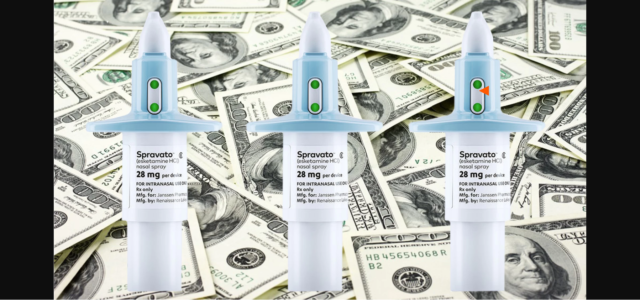
In a popular and public move, the United States’ Federal Drug Administration recently approved intranasal esketamine, one of the components of the psychedelic ketamine, for treatment-resistant depression. The nasal spray costs nearly $900 per dose—or roughly $7,000 for the first month of treatment, and each treatment takes at least two hours in a clinic. (It has yet to be decided how much of the cost insurance plans will cover.)
Esketamine can be unwieldy to use and carries a number of significant potential side effects. Shockingly, it was no better than placebo in two of the three short-term Phase-III studies submitted to the FDA for approval.
But the biggest problem at hand is not the drug itself. It’s the fact that instead of representing a revolution in mental health treatment, as it has been touted to do, esketamine is not a breakthrough at all. It’s just a way for pharmaceutical company Johnson & Johnson to make a significant profit off gullible insurance companies and vulnerable patients.
It’s currently difficult, if not impossible, to provide generic ketamine treatment in public clinics, even to patients who need it, because there haven’t been any large-scale, randomized trials, both with and without psychotherapy. Without these trials, and resources, physicians can’t be reimbursed by insurance companies for ketamine treatment like they will be able to do with esketamine.
Ordinary ketamine is a racemic medication, meaning it is made up of two molecules that are mirror images of each other. Because ordinary ketamine is generic, Johnson & Johnson simply isolated one of the two molecules in regular ketamine so that it qualified as “new.” The reality is that we don’t know whether esketamine is more or less effective than regular ketamine because there have been no head-to-head trials between the two. Johnson & Johnson only tested esketamine against a placebo, likely because they feared esketamine might actually perform worse than the generic version.
As many critics have pointed out, this strategy has become the bread and butter of drug development in the United States today. Largely because of the influence of pharma on the FDA itself, our drug approval process rewards copycat variation of already-available drugs instead of truly innovative pharmaceutical design.
When Psychotherapy Is Missing
The trials for esketamine also reveal a larger issue in the field: they de-emphasized the importance of psychotherapy while focusing solely on its chemical effects. The most effective treatment strategy for treatment-resistant depression is intensive psychotherapy along with the use of medication, but the FDA esketamine trials didn’t include therapy at all.
Getting insurance companies to pay for psychotherapy is already difficult, and without it as part of the protocol, they will likely offer no reimbursement for patients interested in receiving a psychotherapy session after their esketamine dose in order to process the experience.
Our colleagues who offer ketamine-assisted psychotherapy say that this is a vital part of the process. One such session can require upwards of three hours of one-on-one treatment in order to prepare patients for the experience, take care of patients while they are under the influence of ketamine, and then integrate the effects afterwards. Ironically, insurance companies would save more money paying for generic ketamine-assisted psychotherapy rather than esketamine treatment alone, as the former is both cheaper than the latter and can lead to long-term remission of symptoms.
Alternatives
Private ketamine clinics currently do exist, but they have to fight the stigma of the drug, and sporadic cases of malpractice. Some private clinics do not properly screen patients prior to initiating treatment and often charge outrageous sums of money—one reason that both patients and medical systems have been hesitant to implement it more widely. Those clinics that are providing ketamine responsibly, however, offer a potentially lifesaving treatment for patients living with depression who have exhausted all other available options.
Although there are no quick fixes for the broken drug-development and approval process that led us to esketamine, it is possible to take concrete steps to address the most glaring problems. Insurance companies and the FDA ought to require head-to-head study designs of clinical trials to investigate generic and patented medications. Additionally, current research on medication-assisted psychotherapy with other psychedelic substances such as MDMA and psilocybincan serve as a model for future research that explores ketamine-assisted psychotherapy, instead of the drug alone.
While Johnson & Johnson rakes in the profits from esketamine, patients dealing with depression and trying to navigate our struggling mental health system will bear the cost. Fostering the development of mental health treatments that are novel, effective, and affordable will require a critical examination of the undue corporate interests that drive drug approval in American psychiatry today.
Dr. Michael D. Alpert is a psychiatrist and clinical faculty at Harvard Medical School. He is also a therapist with the MAPS Clinical Study of MDMA-Assisted Psychotherapy for PTSD.
Dr. J. Wesley Boyd, MD is a psychiatrist and associate professor at the Center for Bioethics at Harvard Medical School.
Dr. Marco A. Ramos is a psychiatry resident at Yale University.
I just returned from the American Psychiatric Association’s 2019 Conference in San Francisco.
This is the 175th Anniversary of the APA, and look how far we’ve come. The theme this year was: Revitalize Psychiatry – Disrupt – Include – Engage – Innovate. and it certainly provided fodder toward those goals. It was an informative and eye-opening conference with a wide array of talks and poster presentations. Plus, I was privileged to make a presentation, too. More about mine in a bit.
The attendance at this conference exceeded them all, with thousands of attendees from around the world and new research presentation abstracts which spread out over 800 pages!
You may not be aware that the APA is the oldestmedical organization in the nation. (We’re proud of that.) The venue was enormous and the camaraderie rich, inclusive, and restorative.
The presentations flowed from every aspect of psychiatry, including geriatric issues as well as issues specifically relevant to children, and adolescents, too. There were talks from ADHD to dementia and addiction to psychosis.
From Saturday through Wednesday the venue was chock-full of courses, convocations, lectures, symposia, talks, and media presentations by the hundreds. There were more than 360 new research presentations every dayin the poster sessions which went up every morning and every afternoon.
There’s no way I could ever provide a synopsis here of all the findings presented. But there were a couple I do want to mention.
My own focus was on those presentations specifically related to suicide, depression and other mood disorder treatment, and especially ketamine treatment. I drank up all the information and data I could hold. (That and espresso kept me going.)
Here we’ll talk about two of the presentations focused on ketamine and the one I presented on suicidal thinking.
Ketamine’s Effect on OCD
I was so pleased to see there has been more work focused on ketamine for obsessive-compulsive disorder (OCD). Clinical Psychiatry News featured this article with the title: “Ketamine may help OCD, but much work remains.”
The author, Carolyn Rodriguez, MD, pointed out that the symptoms of OCD are severe, and 1 in 7 people with OCD attempts suicide at some point in their lives. She said that there is a significant and painful delay between the time of diagnosis and the time when the patient experiences benefits from the medicine — 2-3 months or even longer.
She talked about her interest in looking at therapies that worked much faster, and were more thorough. This is so important so that patients could feasibly experience more complete eradication of symptoms.
Since more and more evidence indicates that glutamate seems to contribute to neuron communication as an excitatory chemical messenger, she chose to see what ketamine could do, considering it blocks the glutamate receptor.
The only study using ketamine with OCD was conducted by Dr. Rodriguez and her team in 2013. Not surprisingly, she’s planning a new one now which will compare ketamine with midazolam, to study the effects of ketamine on the circuits associated with OCD.
She Called for More Studies On Ketamine’s Effects on OCD
She says a larger study is needed to learn more about how long ketamine’s effects on OCD symptoms lasts. It’s also important to see if the effects seen in the 2013 study can be replicated.
This is exciting work, as we need more information about what ketamine does for OCD so we can help more patients.
Dr. Rodriguez commented on the FDA approval of esketamine this past March. She made the point that those OCD patients with “contamination OCD” are likely to be unwilling to use a nasal spray.
Disrupt – Include – Engage – Innovate …
Ketamine and Opioid Receptors
Another talk, presented by Nolan Williams, MD, from Stanford University, discussed ketamine’s mechanism of action. Since there’s wide recognition that stress is directly related to a buildup of glutamate outside the cells which causes unwanted effects, ketamine blocks the NMDA receptors, blocking glutamate, and reverses these unwanted results.
Dr. Williams made the point that ketamine affects many neurotransmitter systems and has a wide variety of effects, both good and bad, as a result of that.
Researchers know that ketamine’s effect on pain is complex, and an opioid receptor antagonist prevents ketamine from relieving pain. We know that opioids have an antidepressant effect, and Dr. Williams wondered if ketamine’s antidepressant effect depended on the opioid system.
There were 12 subjects in all who completed the study; 7 had dramatic relief of symptoms. Even more interesting, 6 of the 7 achieved remission.
Now, the design of the study included crossing over between 2 groups of subjects. So, to accomplish this, one half received a placebo an hour earlier, then ketamine. The other half received naltrexone an hour beforehand, then ketamine. As you may know, naltrexone blocks opioid receptors, so if ketamine relies on the opioid system, in part, then naltrexone should prevent ketamine from reducing depression symptoms.
After the ketamine infusion, they allowed the subjects to become depressed again. They became deeply enough depressed to reach the 20% mark on their evaluation tool. Then they were given another infusion of ketamine. If they received placebo with the first infusion, this time they were given naltrexone. If they received naltrexone with the first infusion, this time they were given placebo.
Those who received naltrexone experienced no benefit from the ketamine infusion, whether they received it prior to the first ketamine infusion or the second one.
The same is true of suicidal thinking as measured on the tool. Those who received naltrexone experienced no reduction in suicidal thoughts.
Interesting, right? But, keep in mind, this was a very small study, and much, much more work needs to be done looking at these issues. This is too preliminary, and these numbers are too small, to make sweeping generalizations. Certainly, closer to home, at Yale, patients treated with naltrexone have responded to IV ketamine.So much to learn!
Disrupt – Include – Engage – Innovate…
Ketamine Infusions Stop Suicidal Ideation in Outpatients and Avert ER Visits and Hospitalizations
Finally, my own story. I had the opportunity to present my own data.
I’m very interested in how IV ketamine can rapidly reverse suicidal thinking in patients with depression. Passionate about it, actually. Taking a long, hard look at my own experience with more 235 adults and adolescents with treatment resistant depression, I presented data which showed that serial, titrated ketamine infusions stopped suicidal thinking in the majority, and prevented ER visits and psychiatric hospitalization.
We have dozens of case reports, small studies, beautifully written case series, and elegant placebo-controlled trials of ketamine treating depressive episodes — and very fine studies teasing out the effects of ketamine on suicidal thoughts in small numbers of patients.
What’s been missing — for us all — are extensive results from real-world psychiatric treatment with ketamine in large numbers of patients like the ones we see every day–people who are complex, and have more than just one thing going on (like anxiety, OCD, trauma, and histories of substance misuse in addition to their depression or bipolar disorder). People who are medically ill, or in chronic pain. Those who have made numerous trips to the ER for suicidal ideation. So many who have been hospitalized, made suicide attempts, have been failed by ECT, or failed by TMS.
People like you. Or like people you know.
When I think about what ketamine can do best, and who it needs to work for first, it’s the patients I see — people like this: Depressed. Sick and tired of it. Sick and tired of treatment not working. With thoughts it would be a relief to not wake up, or with frank thoughts of suicide.
There were No Suicide Deaths, Suicide Attempts, ER Visits or Hospitalizations in my High Risk Group Treated with IV Ketamine Infusions
This is the first report from a real-world psychiatry office practice in the community using IV ketamine to treat suicidal thinking in hundreds of adult and adolescent patients with treatment resistant depression.
The response from attendees to the data was enthusiastic. But we were even more excited with the breadth of new research presented during that same 2 hour poster session. Information that touched on ketamine,suicidality, and treatment resistant depression. It’s extraordinary to see so much energy and thought put into examining these connections. Here are some examples of the new research posters that surrounded me:
Effect of Ketamine and Esketamine in Suicidal Ideation: Relationship to Depression
Patient-Reported Outcomes in Major Depressive Disorder with Suicidal Ideation: A Real-World Data Analysis using Patientslikeme Platform
Care Setting Type and Readmission/Subsequent ED Visit Risk Among Patients with Major Depressive Disorder and Suicide Ideation or Suicide Attempt
Do the Impact of Risk Factors or Protective Factors for Suicidality Change in Response to Effective Treatment? A Case Study
Esketamine’s Antisuicidality Effects on Treatment-Resistant Depression: A Role for the Subcutaneous Route
The Relationship between the Big Five Personality Traits and the Suicide Crisis Syndrome in an Outpatient Population
Resilience Moderates the Relationship between Suicidal Narrative and Suicidal Behaviors
Effects of Ketamine and Esketamine on the Levels of Brain-Derived Neurotrophic Factor in Patients with Treatment Resistant Depression
Development of a Real-World Ketamine Database Registry: Centers of Psychiatric Excellent (COPE)
Managing Esketamine Treatment Frequency Toward Successful Outcomes: Analysis of Phase 3 Data
Esketamine’s Antisuicidality Effects on Treatment Resistant Depression: A Role for the Subcutaneous Route
And the beat goes on.
Disrupt – Include – Engage -Innovate !!
So, in fact, we enjoyed a wealth ofdisruptiveinformation shared through hundreds of studies, new technologies, and new paradigms. We engagedwith the information and with each other, included diverse groups who attended and the patients they advocate for and treat. We’re moving forward to innovate in our mindset, our approach, our science, and our treatments.
Because after all, it’s for you that we attend these conferences. No doctor practices in a vacuum, but our best and most healing practices are born from collaboration within the psychiatric and neuroscience community.
Ketamine Treatment at Innovative Psychiatry
So here at home, we focus our energies on you. Do you have thoughts about suicide that treatment has not been able to stop? Do you suffer from symptoms of depression that recur or persist no matter what you do?
While it isn’t the right treatment for everyone, (because nothing is) it is remarkably helpful to most. And we’re learning all the time more ways it can help more people.
We live, study, collaborate, work, and share our findings to help you find the rewarding and fulfilling life you’ve longed for. Together, we can Disrupt -Include – Engage – Innovate …and help transform your life. Give yourself the opportunity to feel well and to enjoy the things in life that mean the most to you. We’re here to help.
“Though I am often in the depth of misery, there is still calmness, pure harmony, and music inside me.” —Vincent Van Gogh
May is Mental Health Awareness Month, and I’ve been thinking about how to disrupt the stigma of “mental illness.” It’s a term I don’t like – but it’s still used throughout the world, unfortunately. To me, “mental illness” is an archaic and stigma-ridden phrase. Because it can isolate people who experience these illnesses in their own dark corner of misery, and surrounds their condition with mystery and skepticism. Yet cardiovascular, pulmonary, or liver disease are all discussed in the light of day and with credibility. There should be no difference. So, let’s talk about the ins and outs of one “brain” illness: the oddities, charm, and suffering of bipolar disorder.
My patients encounter stigma every day. Family members and friends who are furious with them, and just worn out by it all. Critical. Disgusted. Steeped in stigma.
And many of my patients are steeped in shame. It’s for them — and their families — that I’m writing today… and for you.
So let’s talk about what a person can be like who endures the suffering of bipolar disorder. Because the symptoms of a disorder like this one can seem to be intertwined with the person’s personality … for better or for worse.
In fact, neuroscience researchers have discovered a genetic connection that influences the personality development of a person with bipolar disorder. We’ll be talking more about the scientific side of bipolar disorder in a future post.
Emma was diagnosed with bipolar I when she was 15. She’d stolen her parents’ credit card, and had charged $4700 in a weekend taking friends to nice restaurants, shopping for clothes, and attending concerts. She felt like a million bucks…and tried to spend a million, too.
Her parents got alarmed, and she got admitted to a mental health crisis unit where she could be evaluated for 72 hours. It was here that she received her diagnosis of bipolar I disorder. The doctors there started medications to help stabilize her mood, and discharged her within a week.
Shock and awe. Not enough time to see how the medications really worked, or to wade through her questions and fears about this new diagnosis. This wasn’t how it was supposed to go.
She left confused, a bit shell-shocked, and with no small amount of anxiety as to what life would be like now. The shame she felt gripped her. How could she face anyone? She believed she’d never be able to show her face again anywhere… and the new pills she was taking made her feel weird.
Emma’s next few years were tumultuous, as the medicines didn’t help her stabilize, but even seemed to make her more unstable. Add to that the hormonal changes of adolescence and their affect on symptoms, and the instability…better said, the roller coaster… of her emotions was almost impossible to endure.
Everywhere she looked, she saw disapproval. Despite regular and frequent visits with her psychiatrist, she felt miserable and her symptoms seemed to get worse and worse.
Emma and her parents participated in therapy, to become educated about this illness. They also learned how to support structure in her life, as well as methods of helping her decompress when the need arose.
Oddities, Charm, Suffering of Bipolar Disorder… So Many Facets
But her ability to participate with them in counseling got sporadic as her symptoms worsened. During depression she couldn’t get out of bed, and anxiety made leaving the house seem insurmountable.
But there were also transient periods when she felt a bit more like herself. Her sense of humor had always been spectacular, and often kept her family in stitches. Those light-hearted fun times reminded them of the history they shared, and endeared her to them all the more.
But…her bedroom floor. Trashed! It was the place clothes and food wrappers went to die. And personal hygiene? …Let’s just say that was a work in progress. She didn’t bother to shower unless she was badgered. But she was feeling better, and creating magnificent, enchanting poetry, so no one wanted to argue with her about hygiene. They had all learned to choose their battles.
Still, there were also the times when she came home drunk or high. She told her parents she was sorry, but they feared for her…and wondered what to do.
The irony was that when her friends were high, they acted crazy. However, at the same time, when she was high it made her mind feel clear and grounded. She didn’t crave the substance, she craved the clarity. But her parents knew the dangers of addiction.
She was an odd bird, and she knew it. She figured she’d always feel like the odd one out.
But, for real, she had to give her parents credit. She could see they were really trying to understand. But it wasn’t a walk in the park.
At times she felt anxious and angry, and couldn’t tell why. But her parents would react in ways that seemed to her more like an attack. So she responded in kind.
So Complicated!!
Through therapy they learned that “pulling rank” and trying to force her to comply only served to escalate her reactions and agitate her when she was manic. They learned to listen patiently when she verbally shot words like bullets in a long tirade. They learned this was a symptom.
And they learned it was important to treat her with respect, in spite of her outbursts. After all, she wasn’t a spoiled child, she was ill. And… they learned that during times of peace, her talents, empathy, and growing wisdom had a richness they’d never seen in anyone before.
They had to admit this was new territory, and they couldn’t fall back on their old parenting patterns without making matters worse.
She was still their Emma, but there were times they didn’t recognize her. The counselor helped them see that all of these behaviors together were part of “their daughter with bipolar disorder.” Good times, bad times, times she amazed, and times she broke hearts.
Though Emma came home from the crisis center filled with shame, through counseling and the love and acceptance of her parents, along with time, she found she was slowly healing. She and her parents learned together that the mood swings – which were sometimes violent – were not a sign of her contempt for them, but rather a shift in her brain cell function that was involuntary.
So her parents learned to show her they were standing with her when she found herself in mixed states, exploding with manic energy, rage, and heartbreak.
Emma had made a friend at the crisis center, and was saddened for her and the awful scenes she described with her parents. Her friend felt so alone and hopeless because her parents viewed her behaviors as threats to their authority, rather than symptoms, and tried to shame her into compliance. Before long, her friend ran away from home.
Emma knew she was really lucky to have parents who tried so hard to support her and stand with her in this illness.
At times, she felt upbeat, pleasant, and enjoyed time with her parents, as well as a friend. In those same times, Emma often waxed poetic, writing pages of melodious rhyme, describing her magical wonder of the world as she saw it. Her words carried wisdom far beyond her years, and her creativity resulted in thoughtful and meaningful gifts for those she cared about.
But as the wonder bubbled up…the bubbles came faster and faster until she felt as though she was all bubbles, like helium…and she was floating, exhilarated, and able to do anything.
The Suffering of Bipolar Disorder Can Appear To Be Something Else
She’d climb a water tower and paint graffiti at the top, or she’d have sex with three different guys in the same night, or shoplift something from Macy’s. Why? Because she could do anything.(or at least she thought she could.)
Was she rebellious? Not intentionally. But she was manic at those times, and her perceptions were distorted, as well as her judgment. And impulsive. Oh my…intensely impulsive. Could that be fixed by her parents’ discipline? Ummm…not likely.Impulsivity and distorted perceptions are symptoms of bipolar disorder.
Unfortunately, there were times the police brought her home, or the store security officer called her parents, or… once…she found out she was pregnant.
Sadly, she miscarried 6 weeks later. It was all so terribly painful. The grief so suffocating. She really wanted that baby. It didn’t matter that she struggled to care for just herself…she wanted that baby more than she wanted air.
The grief continues to this day. On bad days, the pain of it rises up fresh and in waves. It’s almost more than she can bear. And the pain never lessens, or heals, but is always fresh and suffocating…because of the disorder in her brain. And the pain she feels when the waves return often push her into another mixed state episode.
But eventually, with sleep, healthy meals, and medication, she begins to recover each time.
Then, just about the time she feels a little stable, here come the bubbles again. And she forgets to go home by curfew because of the adventure she’s on. Then the crash… and eventually, the recovery.
The Suffering of Bipolar Disorder Untreated Leads to Worsening Symptoms
Years later…? Emma was 22, and the periods of depression became too frightening. The pressure within her gave way to visions of her death. The pain, then the end. The determination to end the pain rose higher and stronger. The risk of an impulsive act that would remove her hope permanently led her parents to deeply research the options that might be available to help her.
They learned about IV ketamine treatment and how it can end suicidal thinking in a few hours. They discussed it with her psychiatrist and made arrangements to see a psychiatrist who offered this treatment and would consult with Emma’s doctor to coordinate her care.
All three of them made the trip together, planning to stay for a couple weeks and make it a sort of vacation. They hoped the break and new scenery would do her good. And they believed that saving their daughter was the best investment they could make.
They’d read of people who had experienced help from bipolar depression with IV ketamine treatment, but their greatest concern was to help her continue to live.
They’d also read that people with bipolar disorder have an average life span of 25 years less than those who don’t have this illness. They could see the risk and felt they had to take measures to protect her.
After the couple of infusions, she didn’t appear to be so deeply and dangerously depressed. Her mom mentioned the suicidal thoughts, asking if there was any change.
Emma blinked. Oh yeah. As a matter of fact, she realized she hadn’t had any thoughts like that in 2 days. With all that was going on…she forgot that was why she was here. Her parents exchanged a hopeful glance.
With another infusion, her mom noticed she was picking up after herself. And she got in the shower and shampooed her hair…then blew it dry! Now this was a moment both parents noticed…but tried to not make an issue of it.
By the end of the series of treatments, Emma’s mom saw a light in her eyes that had been gone for months. And Emma suggested a shopping trip and lunch, which never happened when she was depressed.
Once they arrived back home, Emma was upbeat, and disappeared into her room to organize it and clean. This was no small chore, mind you. She asked her dad to carry out the 3 huge trash bags of trash she picked up from the floor. He jumped at the chance.
Emma, herself, was surprised about her own motivation and initiative. And she found sheenjoyed the sun filtering through the trees…the ducks paddling around the pond at the park, and the aroma of someone’s barbecue cooking outside.
There was no question about it. She was feeling better. In fact, she felt better every week.She slept better at night, and had more energy for living during the day. A few weeks later, she realized she had a song playing in her head. So she hummed along. Her mom flashed a grin at her. It was so good to see her feeling so much better.
Emma has had some rough days and weekends since her IV ketamine treatment. Times when she felt exhilarated and knew she might make a bad decision. But she’d learned to call her doctor, report the subtle symptoms, go in and do what she needed to do to avoid sliding into hypomania.
Overall, her life improved dramatically after ketamine. Every month she sent a note to her ketamine doctor to let her know how she was doing. She missed fewer appointments with her local psychiatrist and her therapist. And somehow she seemed better able to manage herself now.
While Emma still has challenges, her life is happier and easier to manage. She’s more productive and was able to go to college and actually do the work. What traditional medications couldn’t do for her, IV ketamine treatment could.
At Innovative Psychiatry, we see patients who suffer from bipolar disorder often. Patients who experience significant improvement through IV ketamine treatment. If the suffering of bipolar disorder, especially bipolar depression, begins to return at some point, we’ll quickly arrange an appointment so you can receive a new infusion to refresh your well being.
If you suffer from bipolar disorder or another mood disorder, and you’ve not been helped by the medicines your doctor prescribes up till now, please call us. We will schedule a consult to determine if you’re a candidate for IV ketamine treatment. And if you are, you can begin your treatments right away.
We’ll help you connect with the version of the best you that has become hidden, and help you feel and function better, so you can enjoy a rewarding and fulfilling life.
We’re here to disrupt stigma.
And innovate— not just with fresh new effective treatments like ketamine, but innovate with understanding.
We don’t just infuse ketamine—we infuse compassion, and we infuse hope. We live for that.
With respect and appreciation for the beauty of your best self,