Articles about Depression by Lori Calabrese, MD | The Ketamine Blog
The World Health Organization asserts that depression causes more disability worldwide than any other illness. In addition to standing alone as a disabling disorder, it also worsens other illnesses from diabetes, liver disease, heart disease, and brain injuries. We present these articles about depression to show the many ways this disorder is expressed, ways to treat it, and to dispel stigma caused by lack of information.
Causes
Depression and stress create a self-defeating cycle. Prolonged stress prunes the synapses, the dendrites attached to them, and the dendritic spines, reducing the network necessary for optimal signaling in the brain. Consequently, thinking slows and outlook darkens. In addition, creativity all but disappears. Depression follows this process, imposing yet more stress on the these all-important signaling structures.
Other structures in the brain enter the process. These structures in turn malfunction and make the symptoms worse. The lateral habenula, the amygdala, the thalamus, and the hippocampus each play a role in depression. By the same token, depression impacts them, too.
Treatment
Only about a third of people who suffer with depression find relief with traditional antidepressants. These medicines increase neurotransmitters in the brain and eventually increase neuron growth. But the actions of these medicines delay the process and these patients improve slowly. Sometimes, if the first trial with a medication doesn’t help, a different one or combination can help another one third or so of those who didn’t feel better after the first trial. Unfortunately, 33% of people suffering from depression find no relief from these medications. Until recently, they were left with little or no hope of relief for the rest of their lives.
Benefits of Ketamine Treatment
However, ketamine treatment is a novel and advanced treatment that has changed the prognosis for those treatment-resistant patients. Ketamine switches the mRNA to “On” which turns on the DNA to turboboost the brain-derived-neurotrophic-factor (BDNF) that proliferates neuronal growth along with synapses, dendrites, and dendritic spines which play such a vital role in improving signaling throughout the brain.
Another benefit of ketamine is how rapidly it causes the G proteins to slide off the lipid rafts in the cell membrane. This allows them to get back to work enhancing signals. It also causes the cell bursting in the lateral habenula to be dampened. Another process that allows you to experience a sense of reward – and feel better – when something good happens. Basically, ketamine treatment goes to work to help you feel better fast.
Then you enjoy clearer thinking and more creativity. Also a rewarding and upbeat outlook filled with light and joy. Add to that the improved initiative, increased motivation, and hope that makes life worth living again. This remarkable outcome occurs in 65-70% of treatment-resistant patients in general, and much more than that when the treatment is highly personalized. And the results are rapid and robust. Extraordinary.
As you read these articles about depression, keep in mind that there is always hope. Researchers continue to work to find more aspects ketamine’s effects on the brain that can impact the outcome.

When someone commits suicide, you’ll sometimes hear people say, “It makes no sense! She had everything to live for…” Or, “What a selfish thing to do. What about all the people who loved him? What about his kids…his wife..?” But this sort of tragedy isn’t about selfishness. To grasp what happens with your suicidal loved […]
Continue Reading

Treatment can help anxious moms relax and enjoy their babies. Jill was so excited to be pregnant. She’d waited for 4 years after she and Joe were married to start trying. She was just elated three months later when a home pregnancy test showed those two little lines. She was pregnant! Even the slightest thought of […]
Continue Reading
Time magazine recently offered a Special Edition on mental health… Did you see it? The article about depression treatment – and ketamine specifically – by Mandy Oaklander published in July 2017, was reprinted for this special edition. The title of the special edition is “A New Understanding”…but since the article Oaklander wrote is two years old, […]
Continue Reading

No Wonder Treatment Resistance Has Been Such a Mystery! Clue: Look in the Cerebral Spinal Fluid! A man in his forties, Greg had never experienced life without depression. Treating mood disorders didn’t seem to be his psychiatrist’s forte. (Oh boy…) At least not in his case. Every accomplishment, every failure, struggled for expression beneath the […]
Continue Reading

In a world where things go wrong and people get sick, every once in awhile something comes along that makes things right again. I’m talking about something that’s so dramatic in its solutions we’re tempted to call it a “miracle.” But we won’t. We’ll call it a game-changer. Because IV ketamine treatment is changing history. […]
Continue Reading

The anesthetic-cum-party drug restores the ability to make connections among brain cells. The Food and Drug Administration’s approval last month of a depression treatment based on ketamine generated headlines, in part, because the drug represents a completely new approach for dealing with a condition the World Health Organisation has labelled the leading cause of disability […]
Continue Reading

“If I see far, it’s that I stand on the shoulders of giants.” If you find yourself feeling alone and forgotten in your symptoms, feeling that there’s no one who really cares, please let me emphasize that there are hundreds, even thousands, of neuroscience researchers, medical doctors with PhDs, biochemists, psychopharmacologists, and psychiatrists who have […]
Continue Reading

Since low testosterone in men has long been presumed to accompany aging, it can be overlooked as a cause of TRD in young men. John had gained 75 lbs (!) through the stressful and exhausting project at work. He’d come to hate the way he looked. Co-workers had turned on each other, undercutting rather than […]
Continue Reading
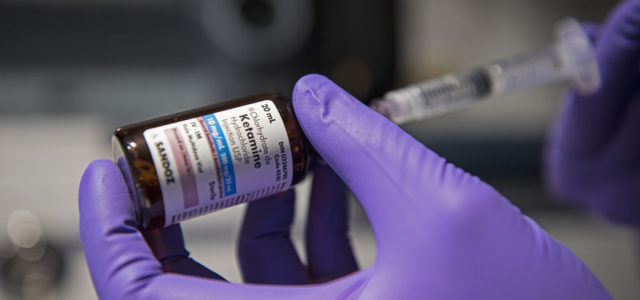
Ketamine appears to restore faulty connections between brain cells, according to research performed in mice. The anesthetic ketamine can relieve depression in hours and keep it at bay for a week or more. Now scientists have found hints about how ketamine works in the brain. In mice, the drug appears to quickly improve the functioning […]
Continue Reading

Too much screen time? Let yourself have 2 more minutes of it right now: because if you’ve been tooling around reading anything related to mood disorders or anxiety disorders, IV ketamine, and other advanced treatments, you’ve probably noticed that there’s buzz about resilience. Because of the world that has opened up since IV ketamine began […]
Continue Reading