Category: Depression

Articles about Depression by Lori Calabrese, MD | The Ketamine Blog

The World Health Organization asserts that depression causes more disability worldwide than any other illness. In addition to standing alone as a disabling disorder, it also worsens other illnesses from diabetes, liver disease, heart disease, and brain injuries. We present these articles about depression to show the many ways this disorder is expressed, ways to treat it, and to dispel stigma caused by lack of information.

Causes

Depression and stress create a self-defeating cycle. Prolonged stress prunes the synapses, the dendrites attached to them, and the dendritic spines, reducing the network necessary for optimal signaling in the brain. Consequently, thinking slows and outlook darkens. In addition, creativity all but disappears. Depression follows this process, imposing yet more stress on the these all-important signaling structures.

Other structures in the brain enter the process. These structures in turn malfunction and make the symptoms worse. The lateral habenula, the amygdala, the thalamus, and the hippocampus each play a role in depression. By the same token, depression impacts them, too.

Treatment

Only about a third of people who suffer with depression find relief with traditional antidepressants. These medicines increase neurotransmitters in the brain and eventually increase neuron growth. But the actions of these medicines delay the process and these patients improve slowly. Sometimes, if the first trial with a medication doesn’t help, a different one or combination can help another one third or so of those who didn’t feel better after the first trial. Unfortunately, 33% of people suffering from depression find no relief from these medications. Until recently, they were left with little or no hope of relief for the rest of their lives.

Benefits of Ketamine Treatment

However, ketamine treatment is a novel and advanced treatment that has changed the prognosis for those treatment-resistant patients. Ketamine switches the mRNA to “On” which turns on the DNA to turboboost the brain-derived-neurotrophic-factor (BDNF) that proliferates neuronal growth along with synapses, dendrites, and dendritic spines which play such a vital role in improving signaling throughout the brain.

Another benefit of ketamine is how rapidly it causes the G proteins to slide off the lipid rafts in the cell membrane. This allows them to get back to work enhancing signals. It also causes the cell bursting in the lateral habenula to be dampened. Another process that allows you to experience a sense of reward – and feel better – when something good happens. Basically, ketamine treatment goes to work to help you feel better fast.

Then you enjoy clearer thinking and more creativity. Also a rewarding and upbeat outlook filled with light and joy. Add to that the improved initiative, increased motivation, and hope that makes life worth living again. This remarkable outcome occurs in 65-70% of treatment-resistant patients in general, and much more than that when the treatment is highly personalized. And the results are rapid and robust. Extraordinary.

As you read these articles about depression, keep in mind that there is always hope. Researchers continue to work to find more aspects ketamine’s effects on the brain that can impact the outcome.

  • Treatment of Psychiatric Disorders: 2019 Year of Promise

    Treatment of Psychiatric Disorders: 2019 Year of Promise

    Treatment of psychiatric disorders with ketamine brings remarkable results.

    Compounds and methods for treating severe psychiatric disorders are getting better and better…

    Charlie sank into a chair in utter discouragement, as she realized she had awakened again, after hoping as she went to sleep that this would be her last night. Her last time to breathe. Night after night she prayed to die in her sleep. Morning after morning she woke up again. Ugh.

    She felt betrayed by whatever cruel powers that be…that there seemed to be no compassion for her misery…and no escape.

    She dragged herself to the bathroom and turned on the shower. Instantly, she saw an image of herself hanging by a rope from the shower head.

    And she screamed.

    Then climbed into the bathtub and stood sobbing under the shower.

    Finally, she shampooed her hair, soaped up her body, rinsed, and turned off the water.

    There was nothing to do but go to work…AGAIN…and try to function…AGAIN… and hopefully not get fired, because of her poor performance.  Tears filled her eyes…

    Suicidal Thoughts Can Be Deadly

    Charlie is one of millions in the US who want to die as a result of depression.  Approximately a million people commit suicide each year, and many times that amount try but survive. And many times more than those get struggle with suicidal thoughts that keep coming back.

    Because relatively few tell anyone they’re thinking about or even considering suicide, it’s been impossible thus far to estimate the number.

    Treatment for psychiatric disorders can turn anguish into joy.

    They don’t want to die, they just don’t want to live with this kind of misery any more. Maybe you know someone like this… or you’ve felt like this yourself.

    You are the ones we want to reach, to help, and to treat so you can rebuild fulfilling and rewarding lives again.

    Ketamine Treatment Continues to be Misrepresented

    With all its talents — with all its extraordinary mechanisms of actions — IV ketamine treatment may need a good PR firm!

    When have you seen a safe, rapid, extraordinarily effective, life-saving treatment misrepresented, misunderstood, lambasted, and gossiped about more than ketamine? (Think about that for a minute.)

    I saw a comment in STAT magazine the other day that took the cake.

    There were lots of great comments, some more informed than others. But you do sort of expect that in a national publication. And… there was a lengthy comment–difficult to decipher–claiming ketamine was inherently dangerous.

    It was clear the individual didn’t know about the research and data. All the information that’s poured out around the globe about ketamine and related compounds for psychiatric disorders over the last 10-15 years.

    The commenter seemed to only be acquainted with its dangerous and highly abusable street form, Special K. And with the extremely high doses used on the streets… repeatedly over and over and often… he or she had seen the damage that abuse of ketamine can do.

    As a psychiatrist, I hate to see it represented that way, but I cherish free speech, and freedom of expression. I also cherish scientific advancement and use it — every day — to relieve suffering.

    Ketamine should definitely be administered under a psychiatrist’s close supervision, not self-dosed.

    Then … there are the articles by young residents and clinicians, aspiring academics, and others. Those who have little true experience with the medicine or the treatment. But they’ve jumped in to write reviews of the literature or opinion pieces about it.

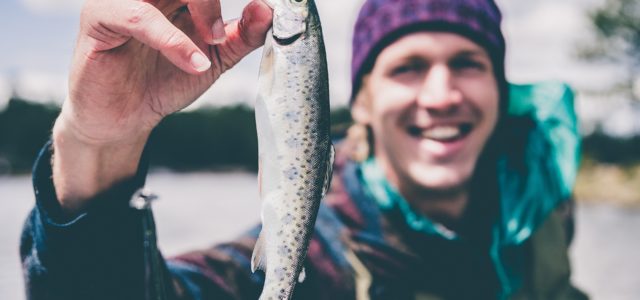
    Treatment of psychiatric disorders gave this man his smile.

    The best way to learn about ketamine treatment for psychiatric disorders is to hear directly from experts who actually use it — with many, many patients — every day in their offices or research units to treat psychiatric conditions. In this case, from the neuroscience researchers and psychiatrists who have worked with it a long time.

    Because the truth is, the majority of physicians have read snippets about it here and there. They’re just now getting up to speed. And some have distorted ideas about it.

    An article in VeryWell Mind by Naveed Saleh, M.D., May 2018, made some erroneous statements about ketamine treatment for suicidal thinking.

    First, he claimed that ketamine is best absorbed through the intramuscular (IM) route, which is just simply false.

    Ketamine is 100% bioavailable only when it’s given by the intravenous (IV) route. In IV form it’s delivered straight to the brain tissues that so desperately need its benefits. IM and IN (nasal spray), lozenges, troches, and oral liquids are all less bioavailable.

    In addition, there are other problems with IM injections of ketamine that we’ve discussed and that are described in that Time Magazine article we talked about.

    He also made claimed that if ketamine is to be widely-used, it most likely will be as an adjunct to other medications. Another misunderstanding of his research. Because the evidence says…

    Ketamine Treatment Acts Independently of Other Medications

    While that may or may not be true, my vote is that it won’t need to be. Evidence shows it doesn’t depend on other medicines for its mechanism of action. It’s not dependent on other medications to create a “partial response” that it augments. It acts independently on its own merits.

    In fact, the most robust research is in patients where medication has FAILED — patients who have TRD, or treatment-resistant depression.

    The left half of the ketamine molecule, known as esketamine, is nearing completion in its FDA trials and IS being tested as an adjunct to other medicines, not as a primary or stand-alone treatment. It’s being packaged as an intranasal spray, and has had some serious setbacks while seeking FDA approval.

    It’s exciting to see what new glimpses researchers will find as they continue to study ketamine and other related compounds for treatment of suicidal thoughts, depression, bipolar depression, PTSD, OCD, social anxiety, and addictions. Maybe it will be a new action not yet identified, or maybe additional applications or conditions that could be responsive to this extraordinary treatment. 

    But the majority of patients who receive IV ketamine treatment report that other antidepressants or anxiolytics have failed, and, even if they walk in on antidepressants and mood stabilizers, they attribute their response and remission to ketamine treatment.

    Ketamine Treatment of Psychiatric Disorders…

    At Innovative Psychiatry, we see the majority of patients with severe treatment-resistant depression, bipolar depression, and suicidal thoughts. respond and achieve remission. They are real-life, real-world people just like you or people you know. Often, they don’t have just one thing or just one disorder — because psychiatric symptoms and disorders are complex and tend to run hand-in-hand.

    We call that complex psychiatric cormorbidity.

    Don’t let the term scare you.

    It just means that when we see patients with treatment-resistant depression — as in unipolar depression and bipolar depression — they often also have other things, too, like social anxiety, PTSD, OCD, and addictions.

    They’re often hopeless. Often suicidal.

    It’s one of the reasons we’re so interested in following the research in using ketamine to treat suicidal thoughts and these other psychiatric conditions — and one of the reasons I write about them so often and devote space to them here.

    Suicidal thinking can disappear within a few hours with IV ketamine treatment. Think about what that would be like for you … or someone you love.

    If you’d like to consider ketamine treatment, give us a call. We can talk it through.

    The Microbiome Has Been Underestimated

    The microbiome is the collection of genes included in the trillions of bacteria, fungi, and viruses that populate the gut along nerve pathways connecting your brain to the rest of your body. These microorganisms provide our immune system and all work together to help our minds and bodies function properly and in partnership.

    Treatment for psychiatric disorders includes feeding your microbiome.

    Another area psychiatry is advancing quickly forward is in its understanding of the importance of the microbiome and its effect on psychiatric illness.

    When the balance between good organisms is outweighed by “bad” organisms, we become sick in some way. This may be an upset stomach, a systemic virus, or a disorder like depression, to name a few. Restoring the balance of these systems in our gut can help restore our health.

    In fact, physicians have come to understand that sometimes the extensive use of antibiotics may destroy so much bacteria that the good bacteria that fights disease becomes depleted.

    The more we learn, the more we can refine this essential part of our bodies to support our emotional well-being, as well as fight inflammation throughout our bodies.

    But, we’re also learning it’s possible to overdo good organisms, too.  And other disease symptoms can begin if there are far too many of them. It’s a balanced eco-system we’re looking for…  We’ll be talking more about that soon.

    Plans Unfolding for the 2019 Year Ahead

    And we’re brimming at Innovative Psychiatry. (How’s that for 2019?) With new initiatives, new efforts, and exciting plans.

    We’re expanding our hours and our availability, and preparing to publish our outcomes peer-reviewed journals in the hope of adding to the growing body of evidence of ketamine treatment’s remarkable benefits for treating an array of psychiatric disorders. (I’ll keep you posted as that develops.)

    We hope to present our outcomes at more national and international conferences this year.

    On top of that, we’re adding some opportunities to help us get more help to more of our patients to finance the cost of their treatment, and help fight for insurance companies to reimburse patients for the cost of their treatment.

    Ketamine Treatment: Getting Better, Giving Back

    Another opportunity in the wings is a program we’re developing — the first in the country– that would allow us to help patients Get Better and Give Back to their communities with special volunteer opportunities

    This program can help patients who would not have access to treatment any other way.

    As we get all our irons in the fire scheduled and the details sorted out, we’ll update you so you’ll know what to watch for. G

    2019 promises to be a year of hope, and a year of gratitude and goodwill, as we see more people feeling better... and getting well… after years of struggling without solutions.

    We want to see progress made toward insurance companies covering ketamine infusions for psychiatric disorders. The medical billing code for ketamine infusions exist but it is usually rejected when it is linked to a psychiatric diagnosis. We continue to fight stigma and stigmatizing terms.

    Hope is on the horizon. It’s going to be a good year.

    If you battle depressive symptoms, or suicidal thoughts like Charlie, that haven’t gotten better, despite various medicines you’ve tried, please get in touch with us if you’re interested in ketamine treatment.

    It consists of several doses of IV ketamine, usually about 6, and sometimes a few more, over 2-3 weeks. Ketamine isn’t appropriate for all patients — and doesn’t work as well for some as it does for most of our patients — so it’s not for everyone.

    But we see such high percentages of response, we can say that most likely the chances are it will be a great help to you.

    Treatment of psychiatric disorders like ketamine brings unparalleled relief.

    Most of our patients find after a full series of infusions, they can do things they’ve procrastinated about for years, enjoy things they used to enjoy, take advantage of energy to work, create, and socialize they had found impossible, in many cases for years.  And build relationships and careers that are rewarding and satisfying.

    We look forward to talking with you, and helping you find your smile again.

    To the best YOU you can be in 2019,

    Lori Calabrese, MD offers innovative psychiatric treatment like IV Ketamine
    Lori Calabrese, M.D.

  • Advances in Psychiatric Treatment: 2018 in Review

    Advances in Psychiatric Treatment: 2018 in Review

    Happy New Year!!  The big silver ball falls tonight to celebrate the birth of 2019.

    Advances in psychiatric treatment help this man find joy again.

    Let’s celebrate the unprecedented, transforming, and ever-accelerating advances in psychiatric treatment this year and the neuroscience that backs it up.

    Celebrate is the word. Because we’re so grateful to the courageous researchers around the beginning of the 21st century who dared to test new ideas and compounds to treat psychiatric disorders.

    This testing, and subsequent investigation, snowballed into a field of life-changing breakthroughs and developments like ketamine treatment, transcranial magnetic stimulation (TMS), and other “outside the box” novel treatments.

    We’ve watched TMS press forward from an almost incredulous idea to its more prestigious position as a very effective non-drug treatment for patients with major depression and OCD who have not responded to traditional treatments.

    True advancement risks misunderstanding, distrust, and adjustment before it’s accepted, and the breakthroughs in psychiatry are no different. There have been skeptics and naysayers, and those who prefer to “wait and see.” But tireless researchers press on.

    Psychiatric Treatments Are Improving

    Ketamine treatment has, in a relatively short time, emerged from being a who? kid on the block to a blockbuster this year. We know it as possibly the most rapid, robust, and effective treatment for patients with treatment-resistant depression and for depressed patients with suicidal thoughts.

    The discovery of its hidden talents and the explosion of research publications testing at its effectiveness for PTSD, OCD, addictions, and anorexia (actually one of the first published studies on IV ketamine!) has inspired numerous investigations into other rapid-acting medicines by demonstrating its widespread and neuroplastic actions in the brain.

    Across the fields of psychiatry and neuroscience, 2018 has been a very good year, with breakthrough research published all year long.

    Let’s look at some of the 21st century discoveries that have been rising to new heights in 2018.

    Outside The Box

    Schizophrenia and Autism Spectrum Disorder

    In 2018, the ballooning mental health crisis drove researchers to find more biological causes for these illnesses, and more ways to treat them effectively.

    For instance, researchers identified master keys (neat name!) in terms of genetic markers that identify complex disorders like schizophrenia and autism spectrum disorder (ASD).

    And after studying the genetic connections, they found that too much of a specific master key: MIR-137, can result in symptoms of schizophrenia … and too little of it can result in symptoms of ASD. 

    How’s that for a startling connection?

    Just knowing this can potentially pave the way for development of treatments for these disorders — using MIR-137, for example.

    Better Therapy for PTSD

    Since treatment for PTSD has traditionally been burdensome for both therapist and patient, treatments are being sought that are effective but more practical. Research supported by NIMH produced a new psychotherapy approach, called written exposure therapy, or WET.

    Advances in Psychiatric Treatment make getting well available to more people.
    By writing about the specific traumatic event, patients were found to improve as much in only 5 sessions as they improved in 12 sessions with cognitive processing therapy, or CPT.

    5 sessions are better than 12, wouldn’t you say?  For patients tormented by severe PTSD symptoms, 5 sessions are far better than 12. Just ask them.

    Better Suicide Prevention..?

    Since there are 45,000 suicides in the U.S. every year, it’s essential to develop ways to predict and prevent suicide in individuals that don’t rely on that individual telling someone. Because, many of those who succeed in ending their lives never tell anyone, so it behooves us to find more effective ways of predicting … and preventing.

    Researchers tackled electronic medical records and found that half of those who commit suicide and 2/3 of those who try but fail, have had a mental health evaluation in the last year.

    Using these records, they leverage things like diagnosis, substance abuse, use of mental health emergency treatment and in-patient hospitalizations, self harm, and scores on Patient Health Evaluations, to predict those patients at risk for suicidal intent and death.

    By better predicting those most likely to attempt suicide, we hope to provide adequate treatment in time… and help restore the lives of those who have lost hope.

    It’s not enough … but it’s just one more way to try to reach and help some people before it’s too late.

    Social Media Surprise

    We think of social media in the “fun” category, don’t we? Or do we?  If you’re like me, you know more people than you want to admit who have sworn off social media. But why? Isn’t it all about the fun? …or is it?

    The first study ever to examine the link between social media usage and mental health issues found that there’s an undeniable link between the amount of time you use social media and the intensity of the loneliness you feel.

    Or, put another way, if you’re depressed to start with, the less time you spend on social media the less depressed and lonely you’ll feel.

    These researchers only included Facebook, Instagram, and Snapchat in the study.

    Now… finally…

    Ketamine Treatment Continues to Demonstrate Its Prowess

    There are so many more breakthroughs and advancements we could talk about that they would fill a book…and it’s just too much for one blog.

    Advances in psychiatric treatment  cause those who suffer to reach for hope that's emerging about ketamine's healing.

    But it’s an exciting time in the world of mental health disorders as neuroscience researchers continue to delve into and investigate the causes, mechanisms, treatments, and prevention of these disorders. 

    Your hope for recovery… and remission… is more warranted than it’s ever been. You really can get better…even well.

    During 2018, physicians and researchers have collaborated, exchanged, and built upon the information that’s accumulating to support the rapid and robust antidepressant treatment of more and more disorders. 

    We’re Learning about Doses

    A study published in October 2018, led by Massachusetts General Hospital researchers, tested four ketamine infusion doses against each other to determine the more effective dose.

    Their trial tested 0.1mg/kg, 0.2mg/kg, 0.5mg/kg, and 1.0mg/kg of ketamine in a single 40 minute infusion. The results showed that the two smallest doses weren’t very effective at all for depression, but the two largest were.

    And that’s the range that we usually use at Innovative Psychiatry. It’s a very small dose…smaller than the dose typically used for anesthesia. 

    More study is needed, testing these two against some slightly higher doses.  And also more testing with these two doses measuring the most effective dose against bipolar disorder, social anxiety, PTSD, OCD, general anxiety, panic attacks, addictions, and eating disorders

    The more we learn, the more we need to know!

    And We’re Learning What Doses Halt Suicidal Thinking in Outpatients

    I presented my work using ketamine infusions on an outpatient basis with suicidal patients, and reported how quickly it works to halt suicidal thinking, and the doses required in Oxford, England at the First International Conference on Ketamine and Related Compounds and again at KRIYA Conference 2018 in San Francisco.

    Ketamine’s Impact on G Proteins Transforms Depression Treatment

    Extensive work on ketamine’s antidepressant actions with G proteins shows these actions are independent of the NMDA receptors… and that it relieves depression faster than SSRIs can by quickly sliding the G proteins off the lipid rafts. Plus…and this is a big plus…it also lasts longer than the half life of ketamine itself because the Gs are much slower to return to the rafts.

    A November 2018 study demonstrated that removal of G proteins from the lipid rafts was not only rapid…beginning within 15 minutes…but that returning to the lipid rafts was much slower after ketamine treatment than after SSRI’s. 
    Advances in psychiatric treatment have taught us about ketamine's rapid relief for depression is caused by its blocking cell bursts in the lateral habenula.

    All of this knowledge lights the path to more research as well as customizing personalized treatment for major depression … and soon, for other psychiatric disorders.

    Advances in Psychiatry Treatment

    Ketamine treatment is quickly becoming more sophisticated. The more we learn, the more effective your treatments will become. 

    Those naysayers who scoffed in the early years of ketamine development, who said ketamine will never see the light of day, have reason to rethink their stance now about this tide-turning treatment for those afflicted with disorders like major depression or anxiety.

    The snowball is rolling down the hill and is quickly becoming gargantuan. It’s exciting to consider…at this rate… the wonders we’ll learn about ketamine and all the other new insights into psychiatric treatment this coming year in 2019. 

    It just keeps getting better.  And more hopeful. 

    Restoration is Available for You

    So before you look forward, take a quick look back. If you face your own daily battle with symptoms of mood disorders. If you have sought treatment for severe depression, bipolar depression, social anxiety, PTSD, OCD, substance use disorder, and even suicidal thinking… and if that treatment hasn’t relieved your symptoms, perhaps you should consider ketamine treatment. 

    We encourage you or your doctor to contact us and discuss this extraordinary treatment that’s taking psychiatry by storm.

    Not for any other reason than the hope of getting you better and getting your life back. Reclaiming your joy, your relationships, your work satisfaction, and overall fulfillment in life.

    We love collaborating with your healthcare team to help you reach the best health and wellbeing you possibly can.

    Ketamine treatment won’t make you someone you’re not. But it can restore you to the very best version of yourself. A version you may not remember right now, but the one who’s buried inside you underneath the difficult symptoms that can seem to dominate everything.

    Ketamine, like any other medicine, isn’t for everyone…but if you’ve suffered without relief from numerous other medicines, it may be just right for you. Ketamine struts its best stuff in those who are the most severely ill. 

    This treatment has nothing to do with the world of “getting high…”  It just works in your brain in interesting ways to get a lot done fast. It works on your mRNA, your BDNF, your lateral habenula, in your synapses and signaling systems, and in your cell walls with the G proteins and lipid rafts.  So much happens so fast. And day by day, the symptoms of disorders fade away.

    Advances in psychiatry turn sullen despair to laughter.

    You can be vibrant, creative, motivated, patient, and engaged. You can enjoy the little things again, build your relationships again…put thoughts together and excel again.

    Start your New Year 2019 on the path to wellbeing and feeling whole. Call us.

    We’re eager to help you find the life you were meant to live without symptoms blocking the way.

    To the restoration of your best self in 2019, 

    Lori Calabrese, M.D.
    Lori Calabrese, MD offers innovative psychiatric treatment like IV Ketamine
  • 2018 Innovative Psychiatry: Ketamine Developments

    2018 Innovative Psychiatry: Ketamine Developments

    2018 Innovative Psychiatry ketamine developments show 80% response in treatment-resistant disorders.

    What a year it’s been!!

    As this busy year creeps toward its end, it’s fun to look back on all we’ve accomplished in our hard work to help find more effective treatment for those who suffer with symptoms that don’t respond to traditional treatment.

    Since the early beginnings in my work as a psychiatrist, I’ve been devoted to staying on the leading edge, and to finding solutions for those whose symptoms persist despite their best efforts.

    2018 Innovative Psychiatry ketamine developments demonstrated 80% response in patients with treatment resistant disorders.
    As I’ve added innovative and advanced treatments to my practice to extend our effectiveness. And I’ve discovered that IV ketamine treatment in a series of infusions given closely together, is the most exciting, effective treatment for depression that just won’t lift.

    So, we’ve invested time, money, and staff to help us learn more about this treatment for those who need it, and about what it can do.

    Interventions and Adjustments

    At the beginning of the year, we explored a variety of schedules and extended hours. We’ve continued to adjust them all year.  It’s always a moving target as we try to offer an opportunity for everyone to be seen and treated.

    Since I began providing ketamine treatment 3 years ago, we’ve been compiling data to learn more about the outcomes with our own patients here, as well as with those who come to us from outside Innovative Psychiatry.

    And we’ve consistently been amazed at what we see. But more about that in a bit.

    Then, in March, I had the opportunity to attend the International Conference on Ketamine and Related Compounds for Psychiatric Disorders 2018, in Oxford, England.

    2018 Innovative Psychiatry ketamine developments included attendance at the Oxford Conference.

    This conference was the first gathering globally of neuroscience researchers, psychiatrists, and psychopharmacologists specializing in ketamine research for psychiatric use.

    This momentous academic gathering explored the rapidly emerging data on the history, development, and use of ketamine, and related compounds in psychiatric treatment — in basic neuroscience, neuroimaging, and clinical studies. How does it work? Why does it work? How can we know? What does neuroimaging tell us about ketamine and the default mode network (DMN)? What’s in the pipeline with esketamine and related compounds? These are some of the questions research has been answering about ketamine. We’re gaining confidence in it as a viable and extremely useful treatment, as opposed to just an experimental treatment that would soon dissipate (as naysayers claimed). 

    I presented some of my data on treatment of suicidal thinking, and what ketamine can do to erase it in a poster session.  

    Next, came the first annual American Society of Ketamine Physicians (ASKP) Conference in September, where I saw a number of the same professionals I’d seen in Oxford…again meeting to share insights and experiences with the use of ketamine treatment in psychiatry and in pain management.

    Again, we talked about the broad applications of ketamine.  And the openness among us sharing information and insights helped to broaden the horizon for all present regarding what ketamine can do to relieve suffering in our patients.

    Suffering that, for far too many, had remained unrelieved before ketamine.

    Friendships were building at both of these conferences as we learned from each other, asked questions, and exchanged information. I took notes as fast as I could type. The information was compelling, exciting, and clinically useful.

    Then, in November, along came KRIYA Conference 2018. Many of the same medical professionals gathered along with a host of others, and something magical happened.

    These celebrated and deeply experienced experts in the field of ketamine treatment for psychiatric disorders left any pretense (they might have justifiably possessed) at the door.

    Deep connection happened. And a light bulb turned on. 

    2018 Innovative Psychiatry ketamine developments included a well-received presentation at the Kriya conference in San Francisco.

    We took notes voraciously, exchanged ideas generously, talked intensively, asked questions of each other, and utilized every second we were together.

    We gathered for coffee before the speakers began. Chatted on the steps. Talked on the way in and out, and everywhere in between. And lingered even after we were ushered from the building at the end of the day … then met at restaurants and continued far into the night. 

    I presented from the podium this time, and appreciated the enthusiastic response my data received. But I have to say, when it comes to the feats of ketamine, it’s hard to not be excited.

    In fact, Raquel Bennett Ph.D., the founder of KRIYA, declared in her opening remarks that we’re witnessing, and are also players in, the birth of a new field: ketamine for psychiatric disorders. And that this time will go down in history as a renaissance of psychiatric treatment.

    As the year has progressed, those of us in this new field are collaborating and continually refining and improving our methods of treatment as we probe more deeply into the potential of this extraordinary treatment.

    The Birth of a New Field

    If you or someone you love suffers from depression that has not responded to treatment, this collection of researchers and doctors understands, and we’re all working tirelessly to find answers for you.  

    You really aren’t alone.

    We’re also watching research for more evidence about new areas of ketamine research to show us more ways to apply it.

    2018 Innovative Psychiatry ketamine developments include ongoing research and collaboration globally.

    At the same time, ketamine’s actions inspire more research into why it’s so effective, and pharmaceutical companies are developing new and related medications with the advances in this frontier.

    Ketamine treatment consistently shows a strong response rate for treatment-resistant depression and bipolar depression; plus there is exciting emerging data for those with disorders like OCD, social anxiety, and substance use disorders that haven’t responded to other medications. 

    2018 Innovative Psychiatry ketamine developments include research opportunities.

    We continue to collaborate and follow research to find ways to increase those numbers. To make a rewarding life available to more people.

    I’ve been busy behind the scenes reviewing new research for upcoming new treatments– like esketamine, rapastinel infusions, and brexanolone infusions for post-partum depression and the exciting work done by the scientists at Neuro-Rx.

    Our Experiences at Innovative Psychiatry with You Provides Useful Aid to Other Patients in Other Practices

    My experiences with my patients in the last few years inspired me to respond to a Request of Information from the NIH/NIMH on the use of ketamine for suicidal patients — hopefully to help shape future research directions. And … to write an article that we plan to publish in a scientific journal. More information about this should be coming in the weeks ahead.

    As a result of all these new connections, I’ve had the opportunity to collaborate on an international level. 
    2018 Innovative Psychiatry ketamine developments include ongoing research in my practice to allow new drug trials.

    Over the summer, we began exploring how to serve as a potential study site so we could offer patients the opportunity to participate in clinical research trials with new medications — more on that to come. 

    This would give people an opportunity to get treatment with a new agent long before it’s available to the general public.

    Exciting, isn’t it?

    As you know, we’re all about educating our patients.

    In addition to our Ketamine Blog, we offer The Ketamine Library for our patients. (Who does that? I can tell you, from my trips around the country and into Europe … no one we know.)

    Extraordinary efforts at education. It’s one of the things we’re known for. 

    2018 Innovative Psychiatry

    And we’ve also added Instagram to reach more of our readers. We’re getting the word out about new breakthroughs in treatment.

    And have you noticed the facelift to our website menu bar

    You’ll notice a new menu along the top emphasizing our Ketamine Blog.  (It should really be called the Ketamine and So Many Other New Things Blog –but that didn’t fit very well!)  Seriously, we’ve been busy writing all year. 

    If you haven’t explored the blog much, jump in — we write about everything from science to heartache, from fear to gratitude, from children to aging gracefully, from friendships to loneliness, from narcissism (STILL such a hot topic!) to ketamine wannabees.

    And… we also offer advice, recommendations, and insights on the topics that are hard to find anywhere else — from how to screen a ketamine clinic to why your doctor might not yet be offering ketamine treatment. Check it out!

    We write about stories, successes and failures.

    I look forward to telling you more about all that and about other new initiatives we have planned, coming up in the new year ahead.

    This has been such an exciting year in the advancement of better and more effective treatment for our patients. The ground is rumbling with new breakthroughs for 2019.

    Enjoy your holiday season as it unfolds, and remember to take a moment to show kindness to those around you. It’s one of the most important things we can do for each another.

    Ketamine Inspires Hope

    Lots of inspiring news here. The purpose in all we do is to help you get better. And with the hundreds of medicines at our disposal, only about 2/3 of people psychiatrists treat with all those medicines actually improve. 

    Ask your psychiatrist to help you get better. But if you’ve tried a couple of medications…or even if you’ve tried 30!…and you don’t feel better, ketamine may really help you. 

    Ketamine treatment is amazing. It can smash depression, relieve social anxiety, dismantle PTSD, break addiction, and erase suicidal thinking within a couple hours. That’s why we’re celebrating the 2018 Innovative Psychiatry ketamine developments that are saving and restoring lives. 

    Ketamine treatment seems to demonstrate its greatest power with those who are the most ill, who’ve had the least amount of hope.

    If this sounds like you, or someone you love, call us. 

    2018 Innovative Psychiatry ketamine developments help more people achieve a fulfilling life.

    We are most thrilled by the opportunity to help you get better, really truly better, and to feel well and able to build the life of meaning you’ve always wished for.

    To find the motivation and initiative to pursue, and invest in, those things that are important to you. To build relationships that have the depth and longevity to add strength to your life. Basically, to have the energy to live well, rather than endure.

    Give yourself your best hope.  Call for an appointment to see if ketamine treatment is right for you.

    To the release and restoration of your best self, 

    Lori Calabrese, MD offers innovative psychiatric treatment like IV Ketamine
    Lori Calabrese, M.D.

  • NYT asks: Can We Stop Suicides? Here’s Our Response

    NYT asks: Can We Stop Suicides? Here’s Our Response

    Can we stop suicide? Yes, IV ketamine is saving lives daily.

    An article published this past Friday, Nov. 30, 2018, in the New York Times Opinion section, asks about a possible remedy for suicidal thinking. Well researched, but not quite well enough. Keep reading…

    Author Moises Velasquez-Manoff explored the notion that maybe…just maybe…we can quell the epidemic rate of suicide. He points out that the suicide rate keeps rising, and according to the Centers for Disease Control and Prevention, suicide is now the 10th leading cause of death. After nearly two decades of growing statistics, suicide seems to be higher than it’s ever been. 

    Tragically, medicines to quell that tide have not kept up with the death statistics and doctors have been increasingly helpless to save a life in time.

    Until now. As research and clinical use of ketamine has increased, thousands of suicidal patients have been saved, giving them time to participate in therapy and other treatments so they can heal and rebuild fulfilling lives. 

    Best Mainstream Article on Ketamine to Date

    Can we stop suicide? Yes, with a series of IV ketamine infusions.

    Kudos to Mr. Velasquez-Manoff for his thorough research about ketamine and its effectiveness in treating suicide. All too often, articles in national publications provide a narrow, myopic view of ketamine and what it can do. 

    These articles have sometimes misrepresented the potential of this medicine because of a lack of thorough research. While there’s more to the story, which we’ll talk about, there’s lots of good information here for you to read and pass on to your friends and family.

    So…Can We Stop Suicide? 

    Let’s take a stroll through this NYT article, and talk about the truths and the half truths in the quest for what matters.

    NYT: Using ketamine to treat depression and suicidality is somewhat controversial. Numerous small studies suggest that it holds great promise, but it’s only now being tested in placebo-controlled trials with hundreds of patients. 

    Dr. Calabrese: It’s true that it’s been controversial. Like with many controversies, those who make the effort to find and read the research results for themselves quickly understand the value and significance of this drug. Too many listen to hearsay and scuttlebutt and form erroneous opinions… 

    “Ketamine will never get approved for this,” or “There are too many dangers with ketamine,” they say ….  cautious? skeptical? negative Nellies?

    We hear their voices loud and long. But clearly, in real-world psychiatry, this is a medication that is revolutionizing outpatient practice.

    Can we stop suicide? Yes, with a series of ketamine infusions.

    In all fairness, there is plenty we don’t — and can’t — know. Not yet. IV ketamine treating for treatment-resistant depression (TRD)  — and other psychiatric disorders —  has only been in moderately wide use for a few years. And it will be years before we really know the long-term consequences of single and repeat infusions, even with these tiny doses. Of course. That’s what long-term means.

    And we want to know long-term physiologic effects from low-dose repeated ketamine infusions or maintenance treatment — on the bladder, particularly.

    What about long-term impact on quality of life? Let’s talk about that. Since ketamine infusions for TRD use a much, much smaller dose than is ever used in anesthesia, and since we have 50 years of surgeries to go on, it seems pretty unlikely that a short sequence of a few tiny doses of ketamine will have any more negative impact on an individual’s quality of life than their severe treatment-resistant depression did.

    What we hear — and what my colleagues around the country hear –is that ketamine treatment can be transformative. 

    At the same time, the idea that it’s only now being tested in placebo-controlled trials is only true if the author is referring to this decade. Early trials at the beginning of this century were purely investigative to see what ketamine could do.

    We’ve said all along, ketamine isn’t for everyone.

    Still, its effectiveness is extraordinary especially for those who are most severely ill, and at highest risk for suicide.

    In the last few years, trials that were launched even earlier have finally gotten published. It takes time to conceptualize a study, and get it approved by the ethics committees and reviews boards that do these things. Then to  recruit exactly the right patients if you’re a major academic center,  collect, and analyze the data… we’re talking about a lot of time. 

    But even with that said, placebo-controlled trials have flourished in the last few years, as witnessed at the International Conference on Ketamine and Other Compounds for Psychiatric Disorders 2018, where researchers came from across the globe to present their findings. And more roll off the presses each month.

    NYT: Now, scientists think that they may have found one — an old anesthetic called ketamine that, at low doses, can halt suicidal thoughts almost immediately.

    Can we stop suicide? Yes with ketamine treatment.

    Dr. Calabrese: Yes! Isn’t that great news? In the last 50 years, there has been nothing that could stop suicidal thinking in 4 hours or less — sometimes within the first hour.

    And the beauty is that IV ketamine treatment doesn’t just make the suicidal thoughts easier to bear, it erases them.

    I wish it happened this way with every patient, but we still haven’t found a medicine that works the same way on everyone. Even so, psychiatry has never seen a medicine do this so quickly, so clearly, and so effectively in so many patients.

    NYT: After her suicide attempt, Louise’s psychiatrist suggested she try ketamine. She agreed, and received an infusion intravenously. Within hours, her sense of well-being improved. The hospital discharged her. Back home, she discovered that going to the market was no longer a “herculean task.” Getting her car washed wasn’t an insurmountable chore. “Life was better,” she said. “Life was doable.”

    Can we stop suicide? Yes, with a series of ketamine infusions.

    Dr. Calabrese: I love that the author included Louise’s story. Her description is characteristic of the descriptions I hear from my patients after ketamine treatment begins to take hold. And note that her response was hours after one infusion, not a series. Then the hospital discharged her.

    A single ketamine infusion can provide a wonderful respite from the heavy lead blanket that is depression, the emptiness and vacancy of feeling, the darkness and despondency…for a few days, or a week, or maybe even 2 weeks.

    But we know that one infusion fades.  Pretty much everybody knows that. 

    If your doctor provides you with only one ketamine infusion, it’s almost cruel…it whets your appetite for how life could be…only for it to be snatched away again in a week or two.

    This is the reason “ketamine treatment” has come to mean a series of  IV infusions at tiny doses over 2-3 weeks. It’s the repetition of infusions close together that seems to stack the benefits and overcome the temporary nature of a single infusion.

    What we’re feverishly all working to find out is: exactly how many infusions? 6? 8? Should the dose be based on real body weight or ideal body weight? Some ask if it should be based on body weight at all or just fixed like they’re doing with esketamine. Should the series be all one dose? or should the dose increase? how fast and how high? is there a best dose? 

    Research has not answered these questions yet.

    In our practice, we are sticklers for data, and we collect (and are about to publish) our outcomes.  We’ve already presented them at conferences in Europe and in the U.S.

    Can we stop suicide? YES, with a series of ketamine infusions.

    Here’s a clinical pearl: dose titration is important, and many physicians and nurses don’t titrate the dose to achieve the best response.

    This practice is often the cause for patients to believe ketamine doesn’t work for them. Not in every case, but far too often.

    Seek out a psychiatrist who is up-to-date.

    There seems to be so much misinformation circulating, and  disappointed patients could possibly avoid disappointment if they — and their doctors — had access to more up-to-date information. Doctors only know the up-to-date information if they take the time to search it out.

    NYT: The drug seems to address a longstanding problem in emergency psychiatry. Sedation and physical restraint aside, doctors have few ways to quickly stop suicidal ideation, or thoughts of killing oneself. The current crop of anti-depressants can take weeks and sometimes months to work, if they work at all. They may also, paradoxically, increase suicidality in some patients. Talk therapy takes time to help as well (assuming it does).

    Dr. Calabrese: This is a paradox to be sure. The antidepressants prescribed to treat depression can sometimes actually increase suicidal thoughts and actions as a side effect in some people. Confusing and discouraging if you’re suffering without solutions. And they’re slow to work.  Even lithium and clozapine — clear anti-suicide champions — are slow to work.

    Imagine what rapid relief would feel like.  Quick relief from suicidal thoughts — whether you’re an adult or an adolescent or even a child — can give you time to do the work to scaffold things into your everyday life that can keep you well.

    One infusion can give you relief. Several can cement remission. Not for just hours or a day or a few weeks or a month. For many patients, remission gives them the time and space to make changes that keep their symptoms at bay.

    Imagine that instead of sitting in an ER or on an inpatient unit somewhere.

    NYT: Dr. Michael Grunebaum, a Columbia psychiatrist who studies ketamine, thinks the drug should no longer be relegated to a last-line treatment. “It makes sense that it move up in the treatment algorithm in E.R.s and inpatient units,” he told me. (Although if emergency rooms everywhere began offering ketamine, it could create new problems, he adds. As has occurred with opioids, people might claim to be suicidal when, in reality, they’re trying to get high.)

    Dr. Calabrese: There’s an important point we need to make here. When a psychiatrist provides ketamine in the safest, most therapeutic way, the psychiatrist manages the dose and rate and the therapeutic experience so that the biological changes that ketamine induces — dendritic branching and synaptic proliferation — can be optimized. One of the indicators of this during the infusion is the degree of dissociation. With an infusion (as opposed to IM or intranasal or oral use), this can be very carefully controlled. And the responsibility for controlling the access, and the infusion experience lies with the doctor. This is not about getting high.

    Because people have used ketamine abusively in clubs and on the street, the massive doses they use in those settings — and repeat far too often — can provoke frightening hallucinations.  Some people crave that, and use more and more.

    If you use ketamine on the street you may think you “get” ketamine treatment…what it’s like… and that it’s likely all about the “trip.” But, that’s a street culture thing. That’s not the science of medicine that heals depression and anxiety and erases suicidal thoughts.

    Can we stop suicide? Yes, with a series of ketamine infusions.

    But when psychiatrists provide this medicine with skill and deep expertise, titrating the dose and the number of infusions, working synergistically with the rest of the patient’s medications and clinicians, it’s neither dangerous nor addictive. 

    The goal is remission, not ketamine ad infinitum.

    When a patient needs a new dose every month, ad infinitum, that patient likely didn’t achieve remission in the first place. 

    We want remission for you.  We want you to get better, get going, and give back.

    All in all, we loved Moises Velasquez-Manoff’s article. And glad we’ve had this opportunity to set the record straight.

    It’s refreshing to read a journalistic article about ketamine treatment for mood disorders that’s as close to accurate as this one.

    The question was, “Can we stop suicide?” And the answer is a resounding YES, most of the time, if you let us know you need the help.

    It’s wonderful when journalists help spread the word about novel and advanced treatments that relieve severe symptoms like suicidal thinking. The goal is to find relief and remission from the suffering. And new hope that you take with you into your future.

    At Innovative Psychiatry we see patients every week who experience renewed joy, purpose in life, creativity, motivation, and initiative after a full course of ketamine treatment. And those who have the best results are often the ones who had the most severe symptoms.

    Can we stop suicide? Yes, with a series of ketamine infusions.

    Even if no other medicine or treatment has helped you before, even if your doctor told you there was nothing more they could do to help you, even if you’ve been sick for decades, you are  not hopeless.

    So take hope.

    So many people with a story like yours have gotten better with ketamine treatment.

    If you have lost hope, call us.

    Find out what it’s like to feel alive, hopeful, and able to to build a new life. Chances are we can help you live again… and enjoy the little things in life like you haven’t in what may seem like a lifetime. 

    We want to help you get well.

    Can we stop suicide? Yes, with a series of IV ketamine infusions.


  • Fuel Hope With Gratefulness All Year Round

    Fuel Hope With Gratefulness All Year Round

    Fuel hope with gratefulness this season.

    Surprising Results Can Follow Counterintuitive Choices

    Thank you.

    Such sweet words.

    Here in the US, we’re just ending a four-day celebration we call Thanksgiving weekend. True, the official day for Thanksgiving is the fourth Thursday of November each year — but it’s also true that most families spend the entire four day weekend continuing to celebrate, spend time together, and enjoy this holiday set aside for gratefulness.

    Plus, you probably know that “the holidays,” starting with Thanksgiving and lasting through New Year’s Day, is a difficult time for some people. Yet many others actually enjoy all the festivities, sharing, eating, and laughing that goes with good times together.

    Whether you’re a celebrator or an abstainer from these gatherings, there are some things we can talk about to improve these days for the grievers, and improve sensitivity for the revelers.

    Thanksgiving was first conceived by the Pilgrims after their original successful harvest in the New World. 

    That doesn’t mean it was their first harvest, but rather the first time it was successful and there was food to eat. There’s nothing like starvation to inspire gratitude for food.

    They called it their harvest festival. 

    George Washington made a proclamation that Thanksgiving should be celebrated in 1789, and it was sporadically celebrated. However, Thomas Jefferson chose not to celebrate the observance, so the day of gratefulness tended to be hit and miss until 1863. 

    In the midst of the Civil war, Abraham Lincoln declared Thanksgiving be observed as a federal holiday on the fourth Thursday of November … and that has continued to this day.

    Fuel hope with gratefulness for family.

    It might strike you as odd that President Lincoln started a federal holiday observation when the country was at war with itself, when families were torn apart by sons, fathers, and grandfathers marching off to to battle…

    Homes and farms were burned. Families were seeing more funerals than birthdays. 

    Does that sound like a time to be thankful…?

    Can you imagine the uproar? 

    “Have you heard what he’s done now???  He’s declared thankfulness as a national holiday, of all things!!”

    “I’m not surprised…after all, seeing as how we do have SO MUCH to be thankful for right now… I’m so sick of  this war and this administration!  I’ve lost my farm!  How will I feed my family?!!

    …and on and on it might have gone.

    Doesn’t sound all that different from what we hear today, does it?

    Counterintuitive Declaration in the Middle of the Chaos

    Is it possible he had a higher purpose than just creating confusion in the midst of the terrible war?

    We do know that he had an abiding faith. He seemed to understand that choosing thankfulness can inspire better decisions and better outcomes. Thinking of others inspires generosity…and his nation needed generous hearts from top to bottom if it were to heal.

    Some of the most liberating principles of life have been around for hundreds of years and dozens of generations. And sometimes they’re hard to grasp because they’re locked in counterintuitive thinking.

    Oprah Winfrey put it this way:

    “Be thankful for what you have; you’ll end up having more. If you concentrate on what you don’t have, you will never, ever have enough.” — Oprah Winfrey

    And therein lies the secret. The secret of justice and unity that President Lincoln reached for, the secret of poverty vs. abundance that Oprah warned about, the benefit that we all receive when we take the time to focus on everything and everyone in our life that’s good.

    The Secret of Gratefulness.

    “At times our own light goes out and is rekindled by a spark from another person. Each of us has cause to think with deep gratitude of those who have lighted the flame within us.” –Albert Schweitzer

    Albert Schweitzer may not be a familiar name to anyone under the age of 50. But, he won a Nobel Peace Prize in 1952 for his extensive work in Africa in an area now known as Gabon, near the Republic of the Congo.

    He had studied extensively in theology and medicine, and as a newlywed set out with his bride to live in this place where sickness and suffering were crushing the people. Over the course of his life he built an enormous hospital complex to treat the thousands who came to him for help.

    He wasn’t perfect — and even embraced perspectives that would offend us now in our modern culture — but he gave what he had from who he was and helped make life better for thousands. 

    It’s no mystery why he might have felt his “light go out” from time to time. His work was demanding and unrelenting in a place where hardships abounded.

    But he understood gratitude.

    Do you ever feel as though your light is going out…and you need it rekindled? Me, too. In fact, most of us can say that words of encouragement spoken at the right time can help to turn us around.

    Beloved 20th Century Actress Doris Day has seen it all.  She knows the value in that counterintuitive assertion of gratefulness. In her own words:

    “Gratitude is riches. Complaint is poverty.”

    Fuel hope with gratefulness.

    On her way to becoming a dance star, her car collided with a train. Her injuries took a serious toll that permanently ended her dancing career. But, rather than give up, she turned to singing under the training of a voice coach. She soon made movies that were wildly popular in the mid 1900’s … and her fans assumed her life was perfect.

    But behind the sweetheart-girl-next-door image she presented to the public… was a victim  of domestic abuse, a history of 4 marriages, the widow of the only man she loved, loss of her fortune, and complete exhaustion.

    But she, too, understands gratitude in the face of adversity.

    As humans we may envy what another has that we don’t. Wealth, charm, health, fame…but focusing on what we don’t have does nothing to improve our situation.

    Turning a laser beam of attention on our envy of another person only fuels a raging fire of jealousy inside us. And we grow more bitter and focused inward. It isolates us and doesn’t improve anything.

    On the other hand, being grateful for the gifts, the benefits, the talents we do have, empowers us to make those gift, talents, and benefits bigger, brighter, and more abundant.

    Helen Keller said that she cried that she had no shoes, until she met a man who had no feet.

    Helen Keller, if you’re not familiar with her, was blind, deaf, and mute… so you can see her metaphor about the lack of shoes…

    “Necessity is the mother of invention,” they say. So her gratitude for having feet led her to find ways to serve mankind, and especially others who were blind, deaf, or mute… or all three.

    Miss Keller knew there was no place in her life for self pity.

    She came to understand gratitude at a young age.

    During World War II, as able-bodied men went to war, and women and children were left behind, women who’d never considered such a thing went to work for wages.  It was a time of hardship. But, rather than complain, these women put on their work shoes and headed for the factories. 

    Many of us had grandmothers and great grandmothers who worked in the factories to make bombs, aircraft, trucks, and other tools needed to fight the war.

    Fuel hope with gratefulness.

    Is it any wonder that gratefulness and the can-do attitude that was required to rise above those difficulties led to a song in the last year of the war that strengthened that frame of mind? :

    You have to accentuate the positive, 

    Eliminate the negative, 

    And latch on to the affirmative, 

    But don’t mess with Mr. In-Between.

    Comical?  Maybe so…but you get the message.

    Like we saw with the man with no shoes, there is always something to be grateful for. And gratitude has a way of propelling you above the circumstances you wish would change, so you can see the bigger picture. 

    Gratefulness transforms your perspective.

    And when that happens, you’re no longer a victim, but rather on top of your circumstances. The circumstance may not change the way you want it to, but your improved outlook can give you power over it.

    No one is without flaws, and no one’s life is perfect. But each of us can contribute to the lives of others in some way, and in the process gain the freedom to overcome our own struggles on some level.

    Psychiatric disorders can render you emotionally paralyzed… trapped inside inertia, fatigue, and despair. And as you know, there are other types of paralysis. If you’ve experienced this, you may be able to relate to Jon Morrow.

    Jon Morrow is a wildly successful blogger whose body is paralyzed by Spinal Muscular Dystrophy.  He can move nothing except his eyes and lips. Helpless?  Well, he was for awhile. But he has pushed through from a point of inertia and despair to doing what he could do…until he learned to drive traffic to his blogs and has achieved the status of the most widely read blogger in the world.

    He has generated more than 200 million views of his blogs and earned $50 million as a result.  

    A spoiled rich kid?  Not in the least. This guy was facing the end of his life because of his need for healthcare, and no money to pay for it.  His story is hugely inspiring. If he can accomplish his dreams…anyone can.

    And Jon understands gratefulness.

    Look for his blog Unstoppable.me. It will give you a shot in the arm to choose and express gratefulness and overcome adversity.

    Gratefulness is liberating, empowering, and humbling… all at the same time. 

    Fuel hope with gratefulness

    So now that the Thanksgiving 2018 holiday weekend is behind us…let’s not lose sight of the lessons we’ve learned together as we venture through the rest of the winter holiday season and into the new fledgling year 2019.

    With gratefulness you can turn on the light in someone in your world, and illuminate your own heart at the same time.

    Still, if you’re suffering under the weight of a psychiatric disorder that hasn’t yielded to any medicine you and your doctor have tried, there is something more you can do as you focus on gratitude in your life.

    Ketamine treatment is a series of IV infusions that have demonstrated in thousands of cases an extraordinary capacity for relieving depression and anxiety in the vast majority of those who have not been helped by anything else.

    From severe treatment-resistant depression, bipolar depression, and suicidal thinking, to social anxiety, PTSD, OCD, and addictions, ketamine has the remarkable ability to rebuild signaling structures and systems along with regulating a wide variety of puzzle pieces in the brain that make up the sense of wellbeing, joy, motivation, and initiative you long for.

    Fuel hope with gratefulness.

    At Innovative Psychiatry, we’re big believers in joy. Happiness. And gratitude. We offer help and we offer hope — with new treatments that can turn things around for you.

    Call us. We want you to experience relief and the ability to build a rewarding life you enjoy… and to revive and renew the relationships in your life that are important to you.

    With gratitude for the opportunity to share my thoughts with you this year, I want to wish you a warm and heartfelt joyous season of holidays. 

    To the renewal of your best self,

    Lori Calabrese, M.D.
    Lori Calabrese, MD offers innovative psychiatric treatment like IV Ketamine
  • Ketamine KRIYA Conference 2018

    Ketamine KRIYA Conference 2018

    KRIYA!!

    Ketamine KRIYA Conference 2018-Dawn of a new field.

    The most phenomenal ketamine conference to date!  

    Last weekend I attended and presented at the ketamine KRIYA Conference 2018 in San Francisco. This conference emerged as the most dynamic gathering of front-line ketamine practitioners I’ve ever experienced.

    And what an event!

    The ketamine KRIYA Conference 2018 was extraordinarily different than any other research or clinical conference I’ve attended. It’s clear that the realm of ketamine treatment for psychiatric disorders is growing wider and deeper. 

    There was a true spirit of inquiry, extraordinarily open collaboration, and presentations of risks, failures, and triumphs. Sheer transparency. Openly exposed vulnerabilities. A clear admission of the limitations of what we know. The latest information about clinical uses of ketamine in psychiatry. 

    The insider news.

    What happened when Raquel put all of it — and all of us — together?

    Palpable energy instantly exploded!

    During the presentations — which were riveting. As we met for coffee. Chatted on the beautiful conference grounds, sprawled out over the steps, snugged down into comfy couches, talked over creative and inventive lunches, inhaled coffee (for some of us, all throughout the day!) — there was the sense that we needed to learn from each other as fast as we could. So … we shared Ubers and Lyfts and dinner tabs. 

    We came from all over the country … and from as far away as Russia.

    We’re serious about this.

    And what a weekend! We learned so much from each speaker and each other. We talked about our data, our practices, our experiences, what we’ve learned. What we still don’t know.

    Ketamine KRIYA Conference 2018 helped this man reach light in his life.

    Soooo many different backgrounds, so many different approaches providing patient care, so much desire to reduce suffering in our patients.

    Founded by Raquel Bennett, Ph.D., KRIYA is the Ketamine Research Institute and it is devoted to understanding the use of therapeutic ketamine in psychiatry and psychotherapy.

    I must give a shout out to Raquel Bennett.

    In such a few short years, she single-handedly founded, organized and grew KRIYA, an organization devoted to helping people heal and live fuller lives through safe, legal, and effective ketamine treatment. She is originator of the first international ketamine conference — KRIYA’s first conference, in 2015 — on the therapeutic use of ketamine.

    Raquel has earned our respect, appreciation, and applause for the enormously hard work of bringing together experts who work with therapeutic ketamine in very different ways, using different routes, for different therapeutic purposes, in all aspects of psychiatry and psychotherapy, as well as in chronic pain and hospice.

    Ketamine is a visionary medicine.

    But Raquel Bennett, Ph.D, is a visionary.  

    Fantastic speakers, wonderful food, and gorgeous (read: non-hotel) settings gave all of us opportunities to pick the brain of someone nearby. We shared, we ate, we discussed, we listened. And at the end, we kept talking until they put away the chairs, and turned out the lights … until we each left for the airport. And then checked in and kept going.

    Meet me in Terminal 2. I’m at Starbucks. Find us in the International Terminal.  We’re sitting in the food court.

    Until one by one, each had to break away to catch a plane.

     … You haven’t seen anything til you’ve seen the excitement that comes from connection.

    Many thanks to Raquel and her incredibly talented, organized and generous team for making this all possible.

    Ketamine KRIYA Conference Founder Raquel Bennett.
    Raquel Bennet, Psy.D.

    Though our backgrounds are different, and our methods varied, it was clear that we share the same passion: to help reduce suffering from psychiatric symptoms and physical pain.

    Next, let me say, I can’t possibly share it all with you here — there were 30 different speakers over 2 days, fascinating and varied discussion panels, and a lively sharing of experiences and ideas that kept us on our toes till the wee hours.

    This conference was thrilling.

    Thrilling.

    I attended KRIYA last year.  But there has been so much growth, so much more research, so many new frontiers since then … that this gathering really can’t compare.

    These 30 speakers ran the full gamut of experience with using therapeutic ketamine in psychiatry — different practice settings, different studies, varied doses, varied routes of administration, varied preparation. Varied goals.

    This was no room for small or closed minds.

    We ALL learned and grew during those two days.

    Raquel Bennett opened to set the stage for this smorgasbord of ideas. 

    She said, “We are witnessing the birth of a new field.”  She spoke about how ketamine was developed for anesthesiology and has served that field well. But the therapeutic use of ketamine has birthed a new field of ketamine in psychiatry.

    Ketamine KRIYA Conference 2018 demonstrates the difference between anesthetic ketamine and psychiatric ketamine.

    And she emphasized that the two are as different as apples and toast.

    One way they’re different is in the goals of treatment. For anesthesiologists, ketamine has been used for managing consciousness or sedation and addressing physical pain. In psychiatry, the goal of treatment is all about treating psychiatric symptoms and managing psychiatric distress.

    The second difference is in training and areas of expertise, diagnostic skills, and managing emergencies, and she described the differences between anesthesiologists and psychiatrists. Anesthesiologists are best at managing surgical emergencies, interventional pain procedures and life support.  But psychiatrists are experts in diagnosing psychiatric conditions and managing psychiatrist emergencies.

    The third difference is in the type of patient who presents for treatment.   In psychiatry, our patients need a lot of contact, a high degree of emotional safety, and a great deal of emotional support and reassurance. Things we’re deeply attuned to by our psychiatric training.

    She also talked about the differences in routes of administration as well as the dose used  for each type of patient to reach the individual goals of sedation vs. relief of psychiatric symptoms.

    Add to that the amount of preparation required in each field. An anesthesiologist can walk into the surgical area, say hello to his patient, and tell him to count backwards from 12. 

    However, psychiatrists and psychologists offering ketamine treatment invest in substantial and detailed preparation of the patient before beginning ketamine treatment — to prepare for the treatment itself, the treatment experience, and how to metabolize or make sense of the treatment experience. 

    And the preparation involves not only  a thorough history of symptoms, treatment course, previous medication and treatment failures, but also a thorough developmental and social history. 

    Our education and training centers on entering into an ongoing therapeutic relationship with our patients and the critical understanding and provision of a safe, therapeutic frame to do the deep work we do.

    These two fields are two different animals. 

    Dr. Bennet encouraged everyone to learn from everyone else, in effect, to “cross pollinate” these fields and help each other to improve in clinical practice.

    Then she described the use of ketamine in psychotherapy as a “lubricant” for psychotherapeutic work. 

    Several of the speakers described this method in their practices.  This is called ketamine-assisted psychotherapy, or ketamine-facilitated psychotherapy.

    Ketamine KRIYA Conference 2018 demonstrated what ketamine treatment can do.

    And she went a step further, to describe the use of therapeutic ketamine in psychotherapy as a tool for deep spiritual exploration. This is where the goal of treatment is not symptom relief per se, but personal growth, self-knowledge, or transcendent exploration.

    All in all, she encouraged matching the treatment to the individual patient, recognizing our responsibility to learn more about varied strategies and to share our findings within our field.

    Speakers were diverse and fascinating. If you’ve been keeping up with progress in the field of psychiatric ketamine treatment, some of these names are sure to jump out at you:

    Will Van Derveer, M.D., Wesley Rylan, M.D., Scott Shannon, M.D., Michael Stanger, M.D., Jeffrey Becker, M.D., Jason Wallach, Ph.D., Dan Engle, M.D., Lori Calabrese, M.D., John Krystal, M.D., Phil Wolfson, M.D., Jeff Guss, M.D., Elias Dakwar, M.D., George Greer, M.D., Evgeny Krupitsky, M.D., Patrick Sullivan, D.O., and Jennifer Winegarden, D.O.

    And we had some lively and fascinating panelists, including Gary Bravo, M.D., Alison McInnes, M.D., Steven Levine, M.D., Steve Best, M.D., Veronica Gold, M.F.T., Greg Wells, Ph.D., Bob Grant, M.D., Genesee Herzberg, Psy.D., Jessica Katzman, Psy.D., Jennifer Dore, M.D., Julie Megler, P.N.P., Steven Levine, M.D., Steve Best, M.D.,  Sandhya Prashad, M.D., Steve Mandel, M.D., and me.

    Oh yes, I mentioned I also presented my own data, and am excited to tell you more about that…

    But… that will have to wait for another day … Without question, our fledgling new psychiatric field has turned a corner.

    Ketamine KRIYA Conference 2018. 

    We’ll never forget this one. We can only hope they keep getting better…if that’s possible.

    As exciting as this wealth of information may be, if you’re suffering from depression, bipolar depression, PTSD, OCD, social anxiety, substance use disorders…and even suicidal thinking, don’t wait. Call us

    Thankfully, if your symptoms are mild, there are a host of antidepressants and other medicines and treatments that can hopefully help you.

    Ketamine is at its best for those who are severely suffering. 

    Ketamine KRIYA Conference 2018 educated psychiatrists to help this woman get better.

    If you’re deeply affected by severe symptoms of depression and anxiety, we can help.  Call and arrange an appointment.

    Ketamine isn’t for everyone. Of course not. It doesn’t help everyone. But even among those who aren’t helped initially… sometimes there are those who get a delayed response and in a few months reach remission quite by surprise. 

    And even though we can’t promise everyone they’ll reach remission, the truth is that a very large percentage do.

    As we’ve said before, ketamine is the most rapid and effective treatment for depression that we’ve seen in our lifetime … and really … ever.

    We’re constantly learning ways to help more people benefit and get better. And chances are…you’ll experience the most remarkable transformation you could have imagined.

    Our Results

    At Innovative Psychiatry, we see people with these symptoms and disorders get better every week with ketamine treatment. Our results are extraordinary, and our remission rate is very high. Call for an appointment and let’s talk.

    Ketamine works in some different areas of the brain in different ways than traditional medicines you might have tried that didn’t work for you. Your life really can improve dramatically.

    Find out what this remarkable treatment can do for you.

    Ketamine KRIYA Conference 2018
  • The Right Dose of Ketamine for You

    The Right Dose of Ketamine for You

    The right dose of ketamine for you helps you enjoy the things you use to love doing.

    Ketamine Treatment for Mood Disorders is NOT One-Size-Fits-All

    Have  you suffered from severe depression, suicidal thoughts, social anxiety… or PTSD, OCD, bipolar disorder, addiction… and the treatments your doctor prescribed didn’t help?

    Did you reach out to a doctor who offers ketamine, or a ketamine clinic in your area, and find that it hardly helped?

    It’s so disappointing. 

    To put your hope in a new treatment that seems like it could finally make a difference and give you your life back … only to find out it didn’t help any more than anything else you tried — well, that can be shattering. Devastating, really.

    I have some thoughts –

    The right dose of ketamine for you will help you have joy again.

    It’s true that ketamine treatment doesn’t help everyone reach remission, but it does help most… Still, there may be reasons that it didn’t do as much for you as it could have done. That disappointment you feel just may be remedied…just possibly…. by more effective means of treatment.

    Perhaps the provider who administered your ketamine treatments used a route that robs ketamine of its best opportunity to help you.

    So here’s a question:  Did you receive just a dose or two? Separated by, say, two weeks or more?

    Ketamine has been studied long enough to show us that one initial infusion is just that:  it’s the first step.  And it needs to be followed by others if you’re looking for long-lasting benefits.

    It’s been known for some time that the best way to overcome ketamine’s short duration is to stack several infusions together, every 2-3 days. And so far, the best results follow a series of 6 infusions. Over 2 weeks, and now 3.  For others, they need 6-8 infusions, maybe even 9… over 3 weeks.  And now the numbers start to rumble:

    2,2,1,1

    3 over 2 weeks

    one a week for 4 weeks 

    two a week for 3 weeks

    Geez, is this all just made up? Is there an evidence basis for how we dose and administer ketamine beyond replicating how we administer ECT, or beyond convenience — building a dosing schedule around your driving time, your spouse’s availability, or when you can get a ride? Is there a strong base of evidence for how much or how little to use?

    This is where science becomes art.  This is what the practice of medicine is.

    With IV ketamine, a foundational series of infusions can set in motion changes in the brain structures and systems that can give you the best chance of remission.

    For some patients, a few more treatments may be necessary for you to achieve remission…

    In other cases, it may be necessary to refresh your remission and bolster it, a few times a year…or once or twice a year. 

    But in many cases, that remission may remain strong after the initial series — especially if you’re able to strengthen what I like to call the infrastructure of your life.

    The right dose of ketamine makes you feel like living again.

    To reduce stressors by making positive changes.

    To work with your therapist to develop productive thoughts and actions in response to daily challenges.

    And you may need to receive those refresher infusions periodically while you work on these things. 

    Researchers are looking at why … and at how many, how often, how high, and how long. We don’t know all the answers yet.

    Another consideration is the route your doctor used.  Ketamine’s beneficial antidepressant effects are precisely delivered by IV infusion — but it has been delivered an an intramuscular injection, and it can be delivered by inhaler, or swallowed as a bitter liquid, or formulated in an oral lozenge (called a “troche.’)

    And now, there are providers out there offering ketamine by “IM infusion.”

    An “IM infusion” of ketamine is an oxymoron.

    Ketamine was originally developed for anesthesia and to be administered straight into the bloodstream, where 100% of the medicine can reach the brain — where it does its work.

    For treatment-resistant psychiatric disorders, we believe this route is especially important.

    Any other route – IM (intramuscular), intranasal, oral, sublingual, involves obstacles to the medicine reaching your brain, and a doctor can only estimate the amount that actually reaches your brain. We talked about this in detail in March of 2017.

    So…if you’re not getting the full dose of medicine but rather only 50% or even 30%…it’s not hard to see that ketamine could be being shackled from doing its best work. So important.

    Why would you risk that?

    And there’s another important detail that can rob you of your best results.

    The Right Dose of Ketamine for YOU

    The right dose of ketamine for you can help you laugh again.

    Every person is unique, every body has its own history, and your brain is unique to you.

    Yes, it’s true that a brain is a brain, but yours has its own precise, infinitesimal variations. The systems in your brain are uniquely yours. And this uniqueness must be addressed in your ketamine dose for you to experience the best possible results from your treatment.

    This is why we have a personalized, individualized approach to medical care. To customize your treatment to fit you.

    We talked about the importance of dose seven months ago, but something new has emerged on the scene. You need to hear about this.

    You may have seen the press. A study focused on ketamine dosing (finally!) which revealed two strengths of IV ketamine that provide effective symptom relief in patients with treatment-resistant depression.

    Now, keep in mind as we move through this study that the subjects in the study had treatment-resistant depression, specifically. But we know that ketamine is also effective in treating bipolar disorder, panic disorder, social anxiety, PTSD, OCD, addiction … and that it can stop suicidal thinking within just a few hours.

    So keep these conditions in mind also as we look at what the researchers found.

    Study Finds Two Doses of Ketamine Treatment That Provide Significant Relief of Symptoms

    The study, published in Molecular Psychiatry in the October 2018 issue, was led by researchers at Massachusetts General Hospital, and identified 2 doses of IV ketamine that effectively reduced symptoms of treatment-resistant symptoms.  Four were tested — two made the cut.

    The right dose of ketamine for you is most likely to restore your mental health.

    This study investigated 4 dosages of IV ketamine: 0.1mg/kg, 0.2mg/kg, 0.5mg/kg, and 1.0mg/kg. 

    Now we have a paper that confirms that doses under 0.5 mg/kg are not effective, so hopefully more focus can be devoted to dosages above 0.5 mg/kg.

    Such as 0.6, 0.7 or 0.8mg/kg.  And may even 1.1 mg/kg and 1.2 mg/kg, too.

    Of course we want to use the smallest dose possible that achieves optimum results, but physicians don’t want to administer a dose so small that it can’t achieve relief. And certainly we shouldn’t be cavalier — and provide unnecessarily large doses  —   when we know that too much ketamine can cause damage.

    At the tiny doses we use, however, there’s a wide safety margin.

    So back to the study. 

    What Doses Worked?

    The four dosage strengths were tested against an active placebo — which means a non-ketamine medicine that has similar side effects to ketamine. This helped to prevent the study subjects from being able to tell if they got ketamine or not.

    The researchers accepted 99 adults with current diagnoses of treatment-resistant depression. These subjects were chosen across 6 different geographical regions, and were involved in the study at 6 different research centers: Massachusetts General Hospital, Baylor College of Medicine/Debakey VA Medical Center, Icahn School of Medicine at Mt. Sinai, Stanford University School of Medicine, University of Texas/Southwestern Medical Center, and Yale University.

    A real hall of fame in research centers!

    The 99 participants were divided randomly into 5 groups — a group for each dose and one for the active placebo group.

    The right dose of ketamine for you by IV infusion.

    Each participant was assessed with a series of standard depression rating scales on the first day of the infusion study with a series of questions about their symptoms at that time — to established a baseline for each person.

    Then they were assessed again on the second day, the third, the fifth, the seventh, the 14th, and 30th day after that infusion. Other assessment instruments determined their mood and suicidal thinking.

    Because this was a study, the goal was to check which dose was most effective and lasted the longest. (It wasn’t designed to be a dose-titration study to help participants achieve remission.)

    So they were only given one infusion.  

    Turned out the participants receiving ketamine enjoyed substantially higher symptom improvement the first 3 days according to the depression scale, than those who received the active placebo.

    When they compared the 4 dosage groups, those who received the 0.5 mg/kg and 1 mg/kg were the only ones who showed significantly higher symptom relief. This symptom relief lasted 3 days then began to diminish. After 5 days, the antidepressant benefits were gone.

    And Ketamine Treatment Research Continues

    This is great information. And this study shows us that there needs to be more investigation of ketamine dosing — like maybe between 0.5 mg/kg and 1 mg/kg? Don’t you think?

    The right dose of ketamine for you helps you enjoy breathtaking scenery.

    It also gives us yet another reminder about why most ketamine experts administer a short series of ketamine infusions when you begin treatment. We don’t want your antidepressant benefits to decline, we want them to build. And right now the best evidence we have shows that it seems to require several infusions in a row.

    If you’ve been struggling with a disorder that stubbornly resists treatment, or if you’ve had ketamine administered in a way that was less than ideal like we’ve mentioned here, give us a call. What’s important is that you achieve the very best possible relief from your symptoms.

    Let’s put ketamine treatment on notice for your life. You need to enjoy living again.

    You really can feel better, function better, live better. It’s possible for you to enjoy like you haven’t in years, and discover motivation and initiative to accomplish what’s important to you.

    Lori Calabrese, MD offers innovative psychiatric treatment like IV Ketamine

    To the resurrection of your best self,

    Lori Calabrese, MD

  • So You Want to Buy Esketamine Nasal Spray… Really??

    So You Want to Buy Esketamine Nasal Spray… Really??

    Is It the Hype…?  Or Is There Something about Esketamine You Really Want…?

    Ok,  you’ve been wishing for a remedy for your distress with this mood disorder.  I get it. Something that will do more than take the edge off, but instead will really help you feel good again. You’ve heard about ketamine treatment, but having to go to an office and undergo IVs 6 times sounds just a bit daunting..? Then you heard about esketamine nasal spray, and that it’s close to receiving FDA approval. And it’s a nasal spray! How easy is that??

    What’s more, you’ve looked on the internet and its cost will probably be a great deal less than a series of IV ketamine infusions in a doctor’s office because you should be able to administer it yourself..? What a perfect alternative! …or is it?

    So your excitement is building that hope is around the corner…within a few short months…or maybe even weeks…?

    But wait…

    Take a breath…ok?  Of course, it’s possiblebut…

    Just a couple weeks ago, Janssen (a company under Johnson & Johnson’s umbrella) announced that things haven’t been going all that well with their testing. 

    Well, they didn’t exactly say it like that.

    You know that it takes a ginormous amount of testing to get FDA approval on a drug. And all that testing costs lots of money.

    When a pharma company pours years of resources into R&D (research and development), they hope the compound they’ve made will do what it’s designed to do, what it’s supposed to do. But they’re taking the risk it may not.

    And they have lots of investors to please.

    It’s a bit early to make judgments about esketamine nasal spray. Janssen has had some good trial results, but some weren’t that convincing at all.

    Back in May, they made an announcement that even though they’d had both promising and disappointing results with esketamine nasal spray, they weren’t discouraged about its potential. They were determined to continue the trials.

    Esketamine doesn't help social anxiety for this mean but ketamine can make him well.

    Of course, investors want to see a return on their investment. Insignificant or conflicting results won’t butter their bread, if you know what I mean. 

    Then, after announcing September 4, 2018, that they were applying for a New Drug Application (NDA) for esketamine, a few weeks later they announced that esketamine failed yet another study in their Phase III trials.

    They said esketamine nasal spray had failed to meet its primary end point in this study…to lower the depression scale for these subjects significantly from the level they were at the beginning by 4 weeks after the esketamine doses began.

    Frustrating for Janssen.

    So much money, so much work, in laboratories across the globe.

    So, let’s take a closer look at Janssen’s quest for FDA approval of esketamine.

    It’s easy to understand that even as they made the announcement that esketamine had failed this study, they continued to point out all the tests it has passed. Reminding investors that a disappointment is no reason to throw the baby out with the bath water. (At least, they hope that won’t happen.)

    When they filed the NDA on September 4, it was based on 5 Phase III studies of esketamine in treating people with treatment-resistant depression: 3 short term studies, one “withdrawal maintenance of effect” study, and one long-term study.

    The long term study was aimed at establishing the safety of esketamine use up to 52 weeks, and it found that esketamine is generally well tolerated. Not that surprising, since ketamine is well-tolerated in controlled, small doses.

    HUGE Disappointment for Janssen

    But this most recent study, where results were announced September 21, 2018, showed esketamine nasal spray failed to meet a primary end point. It did not have a statistically significant positive effect in reducing depression symptoms in the subjects. Janssen is quick to say however, that even though the response didn’t meet the goal it was intended to meet… the numbers still support the use of esketamine combined with an antidepressant.

    Esketamine failed to relieve depression in this woman, but ketamine helps her achieve remission.

    Really…?? How is that?

    You get the feeling Janssen tries to do damage control in  each of its press releases…. Pay attention to the good stuff…and minimize the bad. (There seems to be a lot of that going around.)

    Still, look at this: The trial investigated esketamine plus an antidepressant at two different doses, 84mg and 56mg. The plan was to test both doses.

    However, the larger dose didn’t shake out better than placebo! So obviously there was no point in testing the lower dose.

    What a blow for Janssen. 

    I’ve not made it a secret that I’m skeptical of esketamine nasal spray. But, I’ll concede for now that the jury is still out as psychiatrists and researchers evaluate all of the results coming in from all of the clinical trials. 

    We’ve got a medicine with IV ketamine treatment that works — and more and more basic science, translational, and clinical research supports this. But look at all the cards stacked against esketamine.

    And…if the goal is to have a nasal spray form that’s more affordable, comfortable, and accessible to more people, that’s understandable.  We get it. (Even if that nasal spray form would make it easy to hide, easy to share, and easy to abuse. Those risks are formidable risks that need to be addressed.)

    But why use just esketamine when ketamine works so well?

    You know why.

    Because of money.  Ketamine can’t be patented after 50 years of use. Esketamine can be, if they can just get it to work…even half as well.

    To take this a step further let’s look at the problem that happened in May.

    May 2018 Press Release More of the Same

    So in May, Janssen made another announcement. That it had just completed 2 studies in its Phase III trials. In one of the two studies, they announced that in a group of subjects 65 or older, esketamine nasal spray had failed to show statistically significant findings. (Yep, just like it did in this most recent study.)

    Esketamine nasal spray isn't working like ketamine would for this worried man.

    So…wait…Does that mean 2 out of 5 studies failed to show any significant advantage over a placebo…?

    Now let’s be clear.

    In all of these studies, Janssen is investigating esketamine nasal spray  in conjunction with an antidepressant in comparison to an “active” placebo compound delivered by nasal spray along with an antidepressant.

    So, even with esketamine bolstered by an antidepressant like Lexapro, Cymbalta, Zoloft, or Effexor… esketamine showed no statistically significant beneficial response in patients with treatment-resistant depression. Even at the highest dose they tested.

    Reasons Why Esketamine May Fall Far Short of IV Ketamine Treatment

    1. It’s NOT ketamine!  Esketamine is only the left-facing form of ketamine . Ketamine consists of right- and left- facing forms and esketamine is the left-facing.  So with esketamine, some of the beneficial aspects of having both available may be missing. We’d love to think esketamine is the important one, and that maybe it does all the work, right? But…maybe not. 

    2. Traditional SRIs and SNRIs have not helped a full third of people suffering psychiatric disorders…so why would adding these partially effective medications help esketamine do a better job??

    3. It’s a nasal spray, for goodness’ sake. Let’s talk about that.

    Problems with Esketamine Nasal Spray

    We’ve talked before about the differences in various routes of administration with ketamine.

    Esketamine nasal spray doesn't work as well as ketamine for this man with high anxiety.

    A huge factor is bioavailability.  You know, the amount of medicine that actually reaches your brain to treat it. Everything else is digested, or somehow altered, or bound by proteins, or otherwise eliminated by your body … which does you no good at all.

    We give ketamine by IV, so it can go straight into the blood stream and straight to your brain where it’s needed to treat the problem. Virtually 100% of the ketamine we infuse into your blood stream goes exactly where it’s needed. And because the brain’s structures and systems are so very delicate,  we want to be very precise about how much reaches it and how fast.

    With a precise infusion pump and IV access, we can control those factors exactly. There are no obstacles that prevent ketamine from reaching the systems in the brain in the amount we want, at the rate we want. And we can slow it, and we can stop it at any time.

    But what is it about a nasal spray?

    In the case of a nasal spray, there are all sorts of variables.

    It has to be absorbed through mucous membranes to find its way into your bloodstream. 

    So picture this: 

    • It has to emit a spray that’s a perfectly suspended and evenly concentrated mist to saturate your mucous membranes—that are hopefully healthy enough and not bogged down by inflammation from allergies or a cold to absorb it properly.  (It wouldn’t be a good thing if some days you can’t absorb your medication because you’ve got a cold.)
    • When you spray it into your nostril, it has to be aimed just right…high enough that it won’t drip right back out your nose and straight enough that it will be absorbed before it runs down the back of your throat and into your stomach to be digested — where it’s bioavailability will drop even further.
    • It has to be sprayed so carefully that none is wasted in the air and gently enough that it isn’t sneezed right back out.

    Then add to all this, that once sprayed, there are only a few seconds for absorption to bring change to the critical and delicate brain systems…the ones vital to you getting better. 

    With IV ketamine, there are at least 40 minutes that ketamine is being continuously infused into the blood stream reaching the brain at a precise dose and rate.  40 minutes vs. a few seconds!

    Esketamine nasal spray has been in the news all this year…and last year too.

    Anytime Janssen has an announcement to make about esketamine we want to hear it.

    Even if it’s disappointing. Not meeting a primary endpoint on its large major Phase III trial for approval?  HUGELY disappointing. Shocking, really.

    Esketamine nasal spray didn't help her, but with ketamine treatment she's in full remission.

    So, while we wait, we’re so thankful we do have ketamine treatment. It doesn’t work perfectly and it doesn’t work for everyone. But when it does, it can save lives by stopping suicidal thinking in 4 hours or less. It can bring relief and remission to those who suffer the most with severe depression, bipolar disorder, social anxiety, PTSD, OCD, substance abuse disorders… It works fast.

    And extremely well, better than anything we’ve ever seen.

    At Innovative Psychiatry we see so many patients who get better every day.  Not just 50% better, but completely better. We see them achieve remission, and they go on to enjoy life as the best they’ve ever been.

    They’re creative again, motivated, full of initiative …and hope. With lives that have meaning. And they’re glad to be alive.

    So if you’ve invested your hope in esketamine nasal spray, don’t let disappointing news stories push you to give up.  

    There’s still all kinds of hope available that we’ve never had before. It just isn’t in esketamine nasal spray.

    At least not yet.

    But ketamine is still going full steam ahead helping many patients who thought they were treatment-resistant turn around… heal… and be restored.

    To enjoy their lives fully.

    If you suffer from treatment-resistant depression, and the problems that often go along with it, call us.

    We’re all about helping you reconnect with the best you you can be.

    Lori Calabrese, MD offers innovative psychiatric treatment like IV Ketamine

    To the restoring of your best self,

    Lori Calabrese, M.D.

  • ASKP Meeting Notes:  The 2018 Inaugural Conference of the American Society of Ketamine Physicians

    ASKP Meeting Notes: The 2018 Inaugural Conference of the American Society of Ketamine Physicians

    New Advances in Ketamine Treatment

    2018 has been a good year. A very good year.

    In this fall season of harvest and bounty which surrounds us outdoors, we find ourselves as ketamine physicians with wonderful gifts to work with:  in our world of neuroscience and psychiatry, the soil is rich, the seeds have been planted, and hard work has been done – sometimes for years! – by experts who have paved the way, and brilliant emerging experts whose work and insights inspire us all.

    I’m talking about the 2018 ASKP Meeting in Austin, TX.

    Ya shoulda been there

    It was the Inaugural Meeting of the American Society of Ketamine Physicians – hence, ASKP – and it was a conference that fueled excitement, embraced inquiry, acknowledged the need for temperance … and left all of us thirsting for more opportunities to work, study, collaborate, and publish.

    I want to tell you about the meeting.

    Especially if you or someone in your life suffers from a mood disorder. If you’ve been struggling for a terribly long time. If you’ve begun to think of yourself with symptoms that have become “treatment-resistant.”  Sound familiar? Then dial in to learn about IV ketamine treatment advances.

    What you learn may help you think outside the box you’ve found yourself in.

    Hard Pruning Can Leave You Unable to Recover

    Ketamine treatment advances help more people escape depression.

    As you know, it’s terrible to struggle to live your life when your confidence, your hope, your ability to think and perform, are all dulled, impaired…broken down.

    Major depression, panic disorder, social anxiety, PTSD, OCD, bipolar disorder, addiction … the list goes on …  all of these can make it nearly impossible to reach the goals you may have for your life.

    You’ve probably seen your doctor and tried some different medicines, but if you’re not feeling better, you may be part of the large group of depressed or anxious people for whom conventional medications don’t work.

    If you’ve heard of ketamine, you may know that it’s showing great promise for helping a majority of people who weren’t helped by antidepressants.

    But, you may not have been able to find someone who administers ketamine treatment properly. Because until recently doctors have just been on their own offering ketamine the best way they know how.

    Sometimes their methods don’t work very well.

    So physicians who provide ketamine treatment are beginning to organize into groups to exchange their ideas, experiences, and discoveries, in hopes of solidifying some of the true “best practices” that provide the best outcomes for their patients.

    An important organization that’s doing this is the American Society of Ketamine Physicians, or ASKP — and we just held our Inaugural Conference September 20-22, in Austin, TX.

    Let me start by saying how grateful I am for the many opportunities to meet with other medical pioneers who are committed — like we are — to helping people who suffer with treatment resistant psychiatric disorders.

    Ketamine treatment advances lead to more remissions.

    Conferences are a festival for the mind.  Ideas spark, slides fly by, data positively crackles in the air — and so does good humor, agreeableness, collaboration, and humility.  We are humbled by the pain our patients experience, and inspired by our colleagues to learn more, think critically, design carefully, proceed with integrity.

    We are privileged to have ketamine in our toolbox and to be able to offer ketamine treatment to patients whose suffering has become unbearable.

    ASKP is helping us do just that. 

    IV Ketamine Treatment Advances: Leaders

    We were treated to a lineup of seminal leaders in the field. Steve Mandel, M.D., the President of ASKP and Ketamine Clinics of Los Angeles, James Murrough, M.D., of Mount Sinai and Sam Wilkinson, M.D., of Yale, Steve Levine, M.D., of Actify Neurotherapies, Carl Bonnett, M.D., of Klarisana in San Antonio who has been working with veterans for years treating depression, PTSD and pain; Rupert McShane, M.D., whom I met at KRIYA and Oxford, Raquel Bennett, Ph.D., the founder of KRIYA Institute and the KRIYA Conference, and Jason Wallach, Ph.D, of University of the Sciences, a brilliant synthetic chemist and expert on the pharmacology of ketamine and related novel NMDAR antagonists. 

    Dr. Mandel’s opening address caught everyone’s attention when he opened with statistics about suicide. He reported that 44,000 people die by suicide each year, and 25 times that number attempt to end their lives. There are more suicides among physicians than any other profession.

    Ketamine treatment advances can transform depression to joy.

    He stressed that there are so many people who need this medicine and not nearly enough doctors providing it — if for no other need than to help prevent suicide. But of course, we shouldn’t stop there.

    He also pointed out that in his practice, he’s seeing more and more patients who have a delayed response, just as we see at Innovative Psychiatry.

    Because of this, it’s so important that if you don’t feel better after your series of infusions, that you must not give up. You may be a late responder and we’re learning more about this all the time.

    Extensive Research That Began During Residency

    James Murrough, M.D., Ph.D., was next and he talked through the history of ketamine’s research for treating psychiatric disorders. He spoke of Carlos Zarate’s work in 2010 which was the first study in patients with treatment-resistant bipolar disorder.

    He got involved in ketamine research as a resident  in a study of 47 patients led by Sanjay Mathew, MD who, with Zarate, co-authored the book Ketamine for Treatment-Resistant Depression. It was a difficult study, and ketamine treatment was surrounded by skepticism at the time. (For some people, it still is.) But it was the largest number of patients studied clinically at that point.

    Dr. Murrough did a beautiful, comprehensive review of the clinical literature on ketamine’s effectiveness. He and his team published a study in 2015 that demonstrated that ketamine’s effect is rapid and robust.

    Then, studies accumulated that showed ketamine’s effect lasts longer when given in a series. (Which is why we give a series of 6 – 9 at Innovative Psychiatry.)

    Groundbreaking studies…over and over and over. 

    Steven Levine, M.D., talked about what he’s learned through 30,000 ketamine infusions with 3000 patients over the past several years.

    And he made the point that stress itself is a risk factor for relapse.

    Raquel Bennett, Ph.D.

    I don’t have room here to tell you enough about every presentation, but really quickly I want to tell you about Raquel Bennett’s presentation. 

    Raquel Bennett, Ph.D., spoke about the varied ways ketamine is used in psychotherapy and the importance of selecting patients appropriately for each type of treatment.  

    She also chaired a panel discussion with Eli Kolp, M.D., Robert Grant, M.D., and Jeff Becker, M.D., about their varied therapeutic approaches and their work with ketamine in psychotherapy.

    Sandhya Prashad, M.D., spoke about the hallucinogenic potential of ketamine. While many physicians have been reluctant to delve into this aspect of ketamine, the dissociative symptoms patient experience are key to their improvement.

    This wonderful gathering included research scientists, clinical researchers, full-practice physicians, and psychologists who explained their own discoveries for us to assimilate.

    So many luminaries, so little time…

    Rupert McShane, M.D.

    Sam Wilkinson, M.D., explained the challenges of research and reviewed key studies. Rupert McShane, M.D, presented data on oral ketamine and abuse concerns. I first met Rupert at the KRIYA conference and he encouraged me to attend the Oxford International Conference on Ketamine for Psychiatric Disorders 2018 conference last March. He chaired the Oxford event, which was spectacular. He’s been generous with his mentorship in so many ways. Such a lovely man.

    Rachel Dalthorpe, M.D., talked about hormonal factors in ketamine infusion treatment. She referred specifically to premenopausal women and proposed an ideal time during the menstrual cycle for scheduling follow up infusions. Such valuable information.

    I was delighted to see so many of the luminaries there who have previously spoken at Kriya… like Jason Wallach, Jeff Becker, and Steve Levine … and from the Oxford Conference like Rupert McShane and Jenny Southgate … Such friends … and such a hall of fame!

    Benjamin Keizer, Ph.D., talked about pain and the impact it has on the brain. Jennifer Southgate, Ph.D., spoke about her work with urothelium and bladder inflammation, and how ketamine can affect the bladder. 

    Ronald Hertz, M.D., explained his important work on the use of ketamine for treating severe and chronic pain…and CRPS. Randall Malchow, M.D., talked about his own studies treating pain. Jason Wallach, Ph.D., spoke on the pharmacodynamics of ketamine, expounding on the history of derivatives of PCP. He also discussed the difference between r-ketamine and s-ketamine. He is brilliant, engaging and makes chemistry fascinating.

    Ketamine Advocacy Network Helps Physicians and Patients Alike

    Finally, Dennis Hartman, who founded the Ketamine Advocacy Network, spoke about the extreme importance of patient advocacy. I was delighted to meet Kim Juroviesky. Kim hosts a Facebook group for ketamine patients, which is growing fast and helping so many.

    Ketamine treatment advances help you perform in your job.

    The entire two days was chock-full of data, expert opinions and suggestions regarding clinical use of ketamine.

    What an inauguration! Ketamine treatment is growing rapidly in use and in its positive effects. The more we can learn, the better able we are to effectively treat more patients with bright outcomes.

    IV ketamine treatment advances help you transform.

    At Innovative Psychiatry, we administer ketamine and other treatments for treatment-resistant mood disorders. And we align our methods with best practices to help you achieve the most favorable outcome.

    If you suffer from severe depression, social anxiety, bipolar disorder, PTSD, OCD, substance abuse disorder, and suicidal thinking, please call us.

    And know that you don’t have to suffer with your symptoms. Let us help you find the life you want to live, and discover the best you, you can be.

    Lori Calabrese, MD offers innovative psychiatric treatment like IV KetamineTo the reinvigorating of your best self,

    [line][line]

  • Dissociation: Is It Key to Ketamine’s Antidepressant Response?

    Dissociation: Is It Key to Ketamine’s Antidepressant Response?

    Ketamine's antidepressant effects may be predicted by dissociative experiences.That Floating Sensation May Predict Ketamine’s Healing At Work

    Know anyone who’s depressed?

    I don’t mean someone feeling blue or disappointed, but really depressed. The hard-to- function type of depression. The hard-to-think-hard-to-get-out-of bed kind of depression. Where everything looks dark and hopeless, and you doubt yourself and your value…and it continues and gets worse for months or years.

    Severe depression. The kind that makes you want to die, and you can’t see any value in your life…and those thoughts start coming… that everyone who knows you would be so relieved if you were gone. Lies that kill.

    Depression like this messes with your outlook, your decisions, your abilities, your energy, your motivation, your perception of your own value… and it’s almost insurmountable to get out of bed.

    We Call Your Disorder “Treated” Only If You Feel Better

    In some cases we call this Major Depressive Disorder, or MDD. In others, it Ketamine's antidepressant response may be predicted by dissociative experiences.may be the depressive part of the cycle in bipolar disorder. Depression of this magnitude can be debilitating. And it needs to be treated effectively. In fact, no matter what treatment is used, if you don’t feel better, then it’s the same as if your depression weren’t treated at all.

    No matter how many pills you’ve swallowed or how many therapy sessions you’ve attended —

    Treatment must produce results you can feel and confirm. Or else it’s not effective. And if you aren’t feeling better and functioning better … well, what’s the point?

    Ketamine is a medicine that was developed in the 1960’s and ’70’s as an anesthesia medicine. It’s been used for 50 years safely with children, adults, and senior citizens. It regulates glutamate in the brain, and blocks the NMDA receptor which prevents it from causing you to feel depressed.

    AMPA Gives You Power to Adapt and Develop Flexibility

    It also fires up AMPA , which is another glutamate receptor that is responsible for most of the fast excitatory transmission in the brain.

    In other words, it’s the AMPA receptors that are behind the synaptic plasticity, Ketamine's antidepressant response may be predicted by dissociation.which means they empower the connections between brain cells to grow and flourish and move signals around the brain much more rapidly.

    Plasticity basically means changeability. Or…changeableness.  (Are those even words…?)

    So, synaptic plasticity changes the connections in your brain and makes them grow and bud and sprout like crazy…which helps you to develop more and more ability to adapt the way you think, the way you respond, the way you see events and circumstances so you can develop flexibility, healthier thinking habits and more resilience, too.

    This is one big part of what makes ketamine work so well.

    Ketamine’s Antidepressant Response

    Then it tells the cell to make more and more AMPA fast, so you feel better and better rapidly. And this is just one action ketamine performs to fight depression. There are lots of others, but let’s focus on this one for now.

    We’ve talked often about ketamine treatment, provided in tiny doses roughly equal to 0.5mg/kg given IV over 40 minutes by a psychiatrist who is adept with psychopharmacological methods that make the most of each infusion.

    Ketamine is a molecule that modulates the excitatory neurotransmitter glutamate.

    We’ve talked about how important close supervision by a psychiatrist is to determine the rate and dose needed specifically for you, and your brain, so you have the quality of response to the medicine that will provide the best outcome for you.

    And…we’ve pointed out that some providers have popped up in the landscape who give the same dose to every patient, or the same protocol, or varying doses to every patient with little attention to precision rate or infusion length. This is super easy for the provider, easy for the clinic. There is no infusion pump, and the only rate control is the rolling wheel on the IV tubing.

    You see where I’m going.

    Care in Ketamine Administration Yields Better Results for You

    We’ve hypothesized that this less precise administration of ketamine may be theKetamine's antidepressant response may be predicted by dissociation during infusion. reason that non-psychiatrists and psychiatrists alike who use this one-size-fits-all method for treating depressed patients was resulting in a lower percentage of remission from mood disorders across the board. 

    We know that we’ve seen an 80% response in treatment-resistant patients by using this precise and remission-focused approach.

    Well, researchers published a study in February this year in the Journal of Affective Disorders along this line. It demonstrated how the various dissociative effects can predict how much antidepressant effect a person will receive from a ketamine infusion.

    Led by Mark J. Niciu, a team of researchers including Carlos Zarate (a leader in ketamine research), conducted a followup study to their previous work to determine whether the quality of dissociation was correlated to a positive antidepressant response.

    Dissociation…and Ketamine’s Antidepressant Response

    We’ve all been interested in this. Is dissociation “just a side effect,” or does it Ketamine's antidepressant response restores the power to enjoy.MATTER? Is it necessary to have dissociation for ketamine to “work?” Or for depression to lift? For anxiety to dissolve? For trauma to heal? And what dissociative features, exactly? How intense are we talking about? And for how long?

    The researchers took a group of 126 people from 18 to 65 with mood disorders – 84 with major depression and 42 with bipolar disorder and asked them to complete rating scales just after their treatment about what they experienced during their ketamine infusion.

    Dissociation is basically a detachment from reality, but it can include detachment from yourself (depersonalization), detachment from your surroundings (derealization)…and sometimes a sense of amnesia.

    The Study:

    Now, each patient involved in the study was currently experiencing a full episode of depression that had been going on at least 2 weeks. Prior treatments had failed all of these subjects. In some cases just one, but many had tried multiple treatments.

    Researchers selected the subjects very carefully.  None of them had psychotic symptoms and none of them had dissociative symptoms at baseline.

    Some patients received a ketamine infusion (yep, just one, not a series) at a prescribed dose of 0.5mg/kg over 40 minutes and others received a placebo…

    And guess what?

    People who experienced dissociation during their ketamine infusions had much more improvement in their depressive symptoms – the more intense the dissociation, the better the improvement.

    And the specific dissociative feature (remember there are 3:  depersonalization, derealization and amnesia) that was most strongly associated with responding to ketamine?  Depersonalization.

    The antidepressant effect was strongest at Day 7, not 3-4 hoursKetamine's antidepressant response may be predicted by dissociation. after or a day later.
    You Can’t Know Without Testing – There’s So Much to Learn

    Isn’t that interesting? You’d think the response would have been strongest during the first 24 hours, but not so in this study. You know… the miracle WOW that everyone seems to expect. (Boy, do we have to explain and help reset expectations here.) When you think about how ketamine restores signaling structures as well as all the other things it does, it does stand to reason that as the structures in the brain improve, so would the antidepressant effects.

    The research team encouraged more studies to pin down and confirm their findings. And we do, too. But it’s exciting to consider that the very dissociative experience you feel during a ketamine infusion is actually connected to the wonderful restoration it does. 

    Understanding Your Treatment and Your Healing

    It’s important to know that the experience itself is important… important for your improvement and healing.

    When you understand this, it’ll help you not be afraid.

    And it’ll help you understand that the dissociative experience during treatment is not something we see as bad or unwanted or as an adverse event that needs to be avoided or abolished. It’s an integral part of the treatment itself, and something that we have come to understand is critical for transformation.

    With proper treatment, and fine control of the dose and rate of your infusion, we work towards just the right place for you … where your treatment, and your dissociative experience during your treatment, fuse together in the best possible way, to give you the best possible outcome. 

    Now that’s a sweet spot!

    When you’ve felt trapped by a disorder, you’ll do just about anything to live a fulfilling life and wake up every morning with hope.

    Every single step of research that shines another light on ketamine’s Ketamine's antidepressant response may be predicted by dissociation during infusion.extraordinary impact on depression and other mood disorders brightens the path for all of us who treat patients with ketamine, and for those who suffer from all these mood disorders and haven’t been helped by anything else before.

    There really is hope!

    We Want You to Enjoy a Rewarding Life

    Here at Innovative Psychiatry we continue to see people like you who suffer and have given up. Then, after a ketamine treatment series, we often see them achieve remission and enjoying their restored ability to create, to invest themselves, to build relationships, and to savor life’s moments. We see this everyday.

    If you’re struggling with a psychiatric mood disorder that has not improved with other treatments, call us. We’re here to help you find the relief thousands of others have found.

    This is a new era, and you really can feel better…you can even feel well.  Kick that disorder to the curb…  let’s work together to help you live again.

    Lori Calabrese, MD offers innovative psychiatric treatment like IV KetamineTo the reinvigoration of your best self,

    Lori Calabrese, MD


error: Content is protected !!