Category: Ketogenic Psychiatry

  • The Ketogenic Diet Turbo Scrubs Trauma, Depression, and Anxiety

    The Ketogenic Diet Turbo Scrubs Trauma, Depression, and Anxiety

    Amanda screamed in pain, trembling… unable to move. The pain in her right leg was indescribable, more than she could bear. It seemed to spread to all of herself. Jillian had cantered by on her horse, but realized Amanda was no longer beside her, and turned around to find her. Then, she saw her on the ground, her right leg sprawled unnaturally over a rock. The horse she’d been riding was galloping in the distance toward the barn. As she got closer, she realized she could see bone and blood poking through Amanda’s jeans. Jillian pulled her cell phone from her pocket and called for help, then tethered her horse to a tree branch and rushed to Amanda. Removing her jacket, she folded it and tucked it underneath Amanda’s head. Amanda continued to cry out. What could be done to scrub this trauma, depression, and anxiety and give comfort to Amanda??

    Life flight helicopter rushes Amanda to trauma center.

    Trying to soothe her, Jillian held her hand, stroked her arm, and encouraged her to lie as still as she could. Within 15 minutes, they heard a siren, followed by an ambulance that worked its way along the bridal path then came to a stop. Paramedics rushed to Amanda to stabilize her leg, and started IV fluids. Then the sound of rotors as a Life Flight helicopter descended and landed nearby.

    Before long, Amanda was secured in the helicopter and transported to the nearest trauma center. Once inside, she was whisked to surgery and put to sleep. 

    The next thing she knew, she was groggily waking up and she saw there was a cast on her leg that started at her waist. A nurse told her that her femur had been broken in two places, but it had been set surgically, and after some months of recovery to allow the bone to mend, she would be as good as new.

    Whoa. What a lot to take in.

    A day that began with a leisurely ride on her horse, with her friend, had deteriorated into a shocking crisis, and a major disruption of her life. After a few days in the hospital, she was transported to her parents’ home where a hospital bed waited for her.

    This was going to involve months of laying on her back, using bedpans, and no freedom. How was she going to live like this?  What a nightmare! She was stunned at it all, and wished something could scrub away the trauma, depression, and anxiety that suffocated her. She picked up her cell phone and called her boss, explaining what had happened and that she would need a leave of absence… if that was possible.

    The doctor said she could be laid up for 5 or 6 months….

    The first couple of weeks there was the novelty of it all. Being fed on her back, waited on hand and foot by her mom, friends stopping by for visits. But then the novelty wore off, and it was the day in day out of sameness. Boredom. Worries.

    Laying in bed, unable to walk out of the house, made Amanda feel helpless and depressed.

    Amanda found herself dreaming of hopping in her car and taking off to meet friends for shopping, dining, or drinks, or a Saturday morning horse ride. She missed getting up, showering, dressing, and driving in rush hour to work. The energy in all that, the sense of anticipation and accomplishment. She missed it. Badly.

    By the beginning of the third month, the walls felt like they were closing in on her. She felt so alone and isolated — even though her mom was there during the day, and both parents were there at night. She should feel lucky, right? Her thoughts drifted to a darker place, and even the lightbulbs seemed dimmer.. gloomier. It was as though her perception of her surroundings was filtered through her dark thoughts. (She was ashamed of the isolation she felt, because she knew what a sacrifice this was for her mom who tirelessly cared for even her most basic human needs.) But she couldn’t seem to help it.

    But her mom’s presence just wasn’t somehow enough.

    She just lay there. 

    Dull. Without stimulation or hope. A listlessness invaded her mind and body. Hopelessness. 

    Helplessness.

    She craved sunshine, fresh air, activity, busy-ness. Excitement.

    Oh how she wished for something to scrub away this trauma, depression, and anxiety. It was awful.

    Amanda felt like the room was as dark as her despair.

    But in that room it was as though the sky was overcast, dark, the air heavy with dread.

    And the room had shrunk to a postage stamp in the last two months. Sometimes, she felt a rising dread, nervousness she couldn’t explain, sometimes she even felt panicky.

    Tears ran from her eyes onto the pillow.

    In the fourth month, she was transported to the hospital to modify her cast and check progress. Her orthopedic surgeon said the bone was mending nicely. Her cast was reapplied so that it only came up to her hip and she could now sit.

    Though there was some relief in that, she didn’t care. She was resigned to her isolation and helplessness.

    Her surgeon could see she was emotionally flat. It oozed out of every pore.

    “How are you coping with all this, Amanda?”

    “Fine.”

    He could see this wasn’t true.

    “You know, being in a body cast is pretty hard on some people. Few of us are prepared for the sudden cessation of the life we’ve come to know. The lack of activity, social life, independence. It gets to people. It’s nothing to be ashamed of. You’re an independent and capable young woman who has lost your independence. And even though it’s temporary, it can still take a toll.

    “I’m going to set up a referral to another doctor who may be able to help you get through this less painfully.”

    Amanda lay in bed for weeks, then months, and wished for a way to scrub trauma, depression, and anxiety away.

    Once Amanda was home and settled into a wheelchair, the phone rang. 

    It was the psychiatrist her orthopedist had recommended. They agreed upon a tele psychiatry appointment for the following morning.

    “Hi Amanda. I understand you’ve suffered an accident and a severely broken leg. Tell me what this has been like for you..?”

    “It’s been hard. The pain was terrible at first, but I had pain meds. It doesn’t hurt much anymore, but the huge cast has kept me nailed to the bed. I just couldn’t have dreamed how hard that would be.”

    After they talked about Amanda’s experiences the last four months, the doctor told her she was showing symptoms of depression, as well as anxiety. 

    “You need something that can scrub away the trauma, depression, and anxiety you’re experiencing. At our practice, we offer different treatment options to help your emotions heal — and one of them is treatment specifically that targets the metabolism deep within all your cells. Are you familiar with the keto diet, and what it can do?”

    Amanda hesitated. “Keto diet? I know some people use it to lose weight…”

    A ketogenic diet can scrub trauma, depression, and anxiety.

    “Yes, that’s true. But in psychiatry, we’re learning more all the time about how a diet that produces ketones can help resolve epilepsy, diabetes, Alzheimer’s, psychiatric illness, and more. Since many people suffer from more than one ailment, a ketogenic metabolic therapy — a treatment that gets your body to produce ketones — can address multiple issues at the same time.

    “For example, people with diabetes are more prone to depression, and people with depression often also have anxiety… and the list goes on. In your case, the trauma of your injury, and the subsequent treatment you’ve needed for it, have given way to depression and anxiety in you. 

    “By feeding the mitochondria — or power-producing mechanism in your cells — with ketones instead of glucose, your cells can able function more efficiently. The over-excitability in the cells that leads to anxiety can calm… and the cells that are functioning poorly can come up to speed, relieving depression symptoms, brain fog, hopelessness, and the other churning thoughts in your head.

    “We’re experts at getting this to happen for you—safely.”

    A diet that burns ketones for fuel can scrub away trauma, depression, and anxiety.

    A flicker of hope flashed in Amanda for a split second.

    “Amanda, I’m going to set up a full evaluation for our Metabolic Psychiatry program where we will help you upgrade your food choices so that you feel much better. Also, now that you’re in a wheelchair, you can roll yourself outside and soak up some sunshine. I want you to start doing that, in the mornings, if possible. Try to give it 30 minutes or so a day.

    “Also, there is an online broadcast that can help you understand this treatment better. It’s called Metabolic Mind. I think you’d like it and learn a ton.

    “Yes, I think so. I don’t feel like making effort of any kind these days, but I do want to feel better, and I don’t want more pills.”

    The evaluation was incredible—so detailed, so comprehensive, joint feedback and she got more and more excited by the process, all the tools, the digital apps, the group support. It was so personalized, and the support step by step, the monitoring of her symptoms and labs…

    She felt taken care of.

    A diet high in good fats and low in carbohydrates can scrub away trauma, depression, and anxiety.

    A couple hours later her mom returned with groceries, and enlisted Amanda’s help in preparing a simple but nutritious ketogenic lunch of salad with sliced avocado, grilled chicken, and almonds, with a drizzle of olive oil and balsamic vinegar.

    That evening, with salmon cooked in olive oil and feta-covered buttered broccoli for dinner, Amanda found she was really liking this new approach to food.

    Within a week she could tell a slight difference in her outlook. Was it being able to sit up? Or maybe the daily patio sessions in the sun? Was it the food?

    She wasn’t sure, but something was changing.

    Two weeks later, her mind was clearing. That dark dread was getting lighter, the fogginess and difficulty thinking was gone. Gone.

    The following month, she invited a couple friends for lunch, and they all hung out in the kitchen putting lunch together, chattering and laughing, catching up on the latest gossip.

    Cooking keto together can scrub trauma, depression, and anxiety away.

    Tears stung her mom’s eyes as she watched.

    Another month later, and Amanda’s cast was removed. She went to physical therapy to work on getting her mobility back, and walked with a cane for awhile. Eventually, she was driving again, and finally started back to work. She was enjoying relief from the whole nightmare… it seemed as if her metabolic treatment had scrubbed the trauma, depression, and anxiety that had plagued her for months.

    By the time she was back on the job, her leg was working better and better, but more important, her outlook on life was bright and hopeful.

    Amanda realized that the worst impairment had not been her broken leg, but her shattered outlook, and she was beyond grateful to see clearly again.

    Moving forward, Amanda didn’t want to risk the return of that anxiety or the depression, so it was a no-brainer to continue the metabolic regimen she had begun that had brought her so much relief. Besides, the weight she had gained lying in bed all those months was now coming off. What a relief. It had been a long seven months… but she was finally feeling like herself, and she was finally seeing the other side of this catastrophe.

    Ketogenic psychiatry scrubs away trauma, depression, and anxiety.

    Hope flourished.

    Have you experienced a life altering trauma that you found almost impossible to cope with? Did it feel like you had lost those aspects of yourself that make you who you are?

    If helplessness has turned into hopelessness and despair for you, call us.

    We offer more innovations than ever to help you feel better, and pursue the kind of rewards you seek for a fulfilling and fruitful life.

    Lori Calabrese, M.D. is on the front end of the race to stop PTSD in its tracks using IV ketamine treatment.

    To the restoration of your best self,

  • How Your Ketogenic Diet Transforms  Bipolar Disorder

    How Your Ketogenic Diet Transforms Bipolar Disorder

    How your ketogenic diet transforms bipolar disorder is good news for you.

    We’ve looked at how your ketogenic diet transforms depression. But what about bipolar disorder, one of the most severe psychiatric conditions? Surely, an illness so complex can’t be treated with something so mild and routine as a change in diet? Sound absurd? Well, it’s not only NOT absurd, it’s a neuroscience-backed intervention that’s changing lives for the better.

    Your Ketogenic Diet Transforms

    When you can relax and play ball you'll see how your ketogenic diet transforms bipolar disorder.

    As you learn about metabolic interventions, you can understand why treating your metabolism can bring your disorder into balanced order.

    For 100 years, the ketogenic diet has been a prominent and effective treatment for epilepsy. By reducing carbohydrates and providing high fat, it pushes your mitochondria to trade ketones for carbohydrates. This allows you to make energy efficiently in each cell in your body, including your brain. And ketones are the most therapeutic fuel for brain cells to use.

    Literature Review at Stanford University

    Shebani Sethi, M.D., worked with Brenda J. Yu, M.D., and Ruya S. Oz, M.D., to conduct a literature review on “current metabolic mechanisms of bipolar illness.” They specifically focused on how your ketogenic diet transforms you and repairs your metabolism and, in turn, symptoms.

    In bipolar disorder, similar to epilepsy, you see a dysfunction in the production of energy. We directly replace carbohydrate fuel with ketones in the mitochondria of the cell. This improved metabolism seems to imitate the effects of medications used to stabilize mood. Amazing, isn’t it?  

    So many people with bipolar disorder turn out to be “treatment resistant” — meaning medications are not as effective for them as they should be. For them—and for others who just don’t want to go down the road of more medication—a better and more effective treatment is critically needed.

    So, hope is spreading rapidly as the therapeutic effects of a ketogenic diet are being studied and used in the treatment of this disorder.

    Ketogenic Diet Transforms

    It’s remarkable, too, that improving energy production in brain cells is not the only way  a ketogenic diet helps. It also strengthens the immune system and reduces  inflammation, protects brain cells from oxidative stress, and reduces dysfunction in the pathways that cause changes in brain function. 

    How your ketogenic diet transforms bipolar disorder will amaze you.

    By bringing order to these systems, symptoms can then follow course and restore balance and order to your cognition, mood, and wellbeing.

    Oxidative Stress Damages Brain Cells

    Let’s take oxidative stress, for example. When it persists over time, it can cause irreversible damage to brain cells. Several studies have demonstrated that oxidative stress is one underlying cause of bipolar disorder. Chronic cellular damage like this seems to cause gaps in transmission of signals in brain cells which can result in bipolar symptoms.

    Ketones seem to play a role to protect these neurons, providing a buffer for the brain cells and relieving bipolar symptoms.

    Keto Diet Helps Neurotransmitters

    This is how your ketogenic diet transforms bipolar disorder.

    Another of many malfunctions in metabolism blamed for mood disorders and bipolar disorder is the levels of neurotransmitters that regulate mood, emotion, and cognition.  How your ketogenic diet transforms your bipolar symptoms includes what it does to your neurotransmitters.

    Dopamine is a good example. Since dopamine plays a role in arousal, reward, and motivation, you can see how it has an influence on your mood.

    Failure in the function of dopamine transporters and receptors in the brain is another likely cause of bipolar disorder. When there is too much dopamine being activated, constantly stimulating brain cells, manic symptoms can happen. This can also lead to oxidative stress…and you see the vicious cycle that results.

    And it’s not just dopamine. Serotonin is another neurotransmitter that helps regulate metabolism, emotion, and cognition. Your mood is directly affected by a neurotransmitter that regulates your metabolism! It’s not hard to connect the dots, is it? Straighten out your metabolism and improve your mood!

    Then there’s 5-HT… believed to contribute to the depressive episodes of bipolar disorder … and it’s found in low levels in people with this disorder. 

    And that leads us to norepinephrine, that helps regulate cognition, motivation, and intellect. Low norepinephrine can cause depression symptoms, and can contribute to the low moods of bipolar disorder.

    Find out how your ketogenic diet transforms bipolar symptoms.

    So how about what these neurotransmitters do?..or don’t do?

    For brain cells to function properly, there has to be balance between “inhibitory” and “excitatory” neurotransmitters.

    GABA and glutamate create balance in the glutamatergic system, and changes in either one can cause depression symptoms and anxiety. Too much stimulation of these receptors can lead to death of the brain cells.

    Beneficial Condition: Ketosis

    Ketosis, the condition a ketogenic diet leads to, can alter neurotransmitter levels. In one study, lab animals fed a ketogenic diet for 3 weeks showed no change in their levels of norepinephrine, dopamine, or 5-HT,  however, there was an increase in the activity of dopamine, and of dopamine and serotonin in another study.

    So ketosis helps regulate neurotransmitter function in improving the symptoms of bipolar disorder.

    You'll enjoy how your ketogenic diet transforms bipolar disorder symptoms.

    Extensive mechanisms impacted by ketogenic diet in bipolar disorder

    There are too many to to describe here, but we just want to offer a few examples of brain cell metabolism impacted by the ketosis established with a low carbohydrate, high fat diet.

    By improving mood, behavior, and cognition, this intervention for bipolar disorder can promote things like restful sleep, clearer thinking, stable mood and emotions and a rewarding life.

    Drs. Sethi, Yu, and Oz presented a thorough review of studies conducted about how your ketogenic diet transforms bipolar disorder symptoms, but more studies are needed. 

    Meanwhile, they’ve demonstrated a reason to hope for those who suffer from bipolar symptoms, especially if medications have not helped or if side effects of medication have required an alternative treatment.

    Do You Have Bipolar Disorder? 

    Your relationships with show how your ketogenic diet transforms bipolar symptoms.

    Have medications or other treatments been ineffective?

    If you have been diagnosed with bipolar disorder, or another a serious psychiatric disorder, and you’re interested in exploring how a ketogenic diet can be used as treatment, call us.

    Let’s meet and talk about options that may be available for you.

    We’re here to offer treatments that just may bring the relief you need, and open a door to a rewarding life for you.

    Lori Calabrese, M.D. is on the front end of the race to stop PTSD in its tracks using IV ketamine treatment.

    To the restoration of your best self,

  • Smash Bipolar Disorder With Ketogenic Psychiatry? You Bet!

    Smash Bipolar Disorder With Ketogenic Psychiatry? You Bet!

    Smash bipolar disorder symptoms with a ketogenic diet and exercise by ketogenic psychiatry.

    Greg woke up in the morning roaring. He never knew when he woke up how he’d feel, or how he’d react. The combination of angst, explosive rage, heartache, and pain burst from him as he became alert, and it took a few moments before he could gather control of himself and hold it all in. At least he could stop roaring. He went to the bathroom, feeling like he had fire ants on his brain and wanted to scream. Someone had said that sensation was caused by the inflammation in his brain. He didn’t know what it was but it made his face turn red and made him want to scream as loud as he could. Ever since he’d been diagnosed with bipolar disorder he’d taken a wide variety of medications, and nothing seemed to help him feel better. He felt like he lived in a cruel torture chamber ALL the time. He wished for a way to just smash bipolar disorder and get it out of his system.

    Treatment-Resistant Bipolar Disorder

    In spite of all the medicines he tried, Greg didn’t feel like he could socialize much because of the danger of mood swings that would ignite explosive rage or plunge him into depression… or else he’d rave too much and make a “fool” of himself, as acquaintances said. He couldn’t help it, and it made him feel awful about himself.

    He had rapid cycling bipolar disorder and his moods didn’t swing over time, they jarred him from one extreme to the other —and back — in a day. It kept his life in chaos and misery.

    The remarks of friends, acquaintances, and even relatives were so derogatory, so humiliating, that he started to develop social anxiety so severe that he was afraid to socialize at all. But being cooped up in the house all the time felt like being locked in prison.

    He yearned for fun, excitement, and acceptance. And at the same time he couldn’t trust himself to just “blend in.” How he wished he could smash bipolar disorder permanently.

    After high school, he enrolled in college. When it was time for his first exam… he panicked. He couldn’t face it. His anxiety sky-rocketed and he secretly found the keys to his grandmother’s car and took it out in the middle of the night, picked up a couple friends and they hit the road.

    You can smash bipolar disorder behaviors with a ketogenic diet and ketogenic psychiatry.

    His parents and grandmother panicked. 

    What had he done and where had he gone? They tried to reach him on his phone but he didn’t answer. Finally, late the next afternoon he called and told them he was in a neighboring state. 

    His mom tried to remain calm and reassuring to avoid triggering him into rage or panic.

    “Greg, are you ok?”

    “Yeah, I’m fine.”

    “Is everyone with you ok?”

    “Yeah, mom…really. We’re all ok.”

    “Ok good, honey. You need to come home. We need to get Gram’s car back into her garage as soon as we can. Can you get on the road and start home?”

    “Yeah.”

    “Ok, good. Where are you?”

    “I’m in Augusta, Maine.”

    “Oh wow. Ok. As I look on the map, it looks like you’re about 4 hours away. So get on the road and we’ll start looking for you in about 3 1/2 to 4 hours or so. And Greg? No alcohol or anything, ok? You need to be safe. Please call me as you go through cities so I know you’re making good progress, ok?”

    “Yes, Ok. I’ll be careful.”

    Just another crisis that no one saw coming. 

    Five hours later, Greg pulled into Gram’s driveway. His mom, Chrissy, went outside to meet him and get the keys as quickly and calmly as she could. Miraculously the car seemed undamaged. Greg was ashamed and embarrassed. His mom knew she needed to be accepting (and calm) as she talked with him about what had happened.  Greg wished he could smash bipolar disorder. He hated his unpredictable behavior.

    Life with Greg had taught her how to handle crises.

    The hard way. Whether it was a suicide attempt, or self-medicating with alcohol or substances, or just excited raving episodes, it was ALWAYS important to maintain a calm and kind presence. Greg would quickly escalate otherwise.

    His dad loved him too, but Greg’s behavior made him mad. His desire to protect his family made it very difficult for him to be calm in the face of these crises, so he (wisely) let his wife handle the immediate interactions.

    The problem was… how could they navigate this the rest of their lives?  What would become of Greg after they were gone and not there to help him? Medicines were certainly not helping. 

    What could they do?

    Smash bipolar disorder by ketogenic psychiatry.

    Steve, Greg’s dad, decided to do more research out of sheer desperation. He searched the internet for articles about bipolar disorder and treatments that might help. Something had to give. He loved his son and ached for him to have the ability and the power to live a rewarding life.

    To work, provide for himself, maybe someday marry and have a family. None of that seemed possible at this point. Surely his diagnosis wasn’t a death sentence. Surely there was some hope somewhere. He wanted to smash bipolar disorder and free him of it, but how?

    He found articles about alternative treatments, but nothing resonated. And then he found an article about research at Stanford University with Shebani Sethi, MD, that made the connection between severe psychiatric disorders, like bipolar disorder and schizophrenia, and metabolic illness. The article showed studies that used interventions like a ketogenic diet and low carbohydrates to treat these disorders. 

    He learned about the effectiveness of feeding ketones to brain cell mitochondria instead of carbohydrates and how that calmed and balanced brain function, drastically improving symptoms, increasing energy in the muscles of the body, and calming mania and explosive rage. With improved cognitive function, the patients were able to begin building rewarding lives.

    Exercise and a ketogenic diet can relieve symptoms of bipolar disorder dramatically.

    So he googled “metabolic psychiatry” and a host of articles came up. He found a great video and podcast called Metabolic Mind which discusses psychiatric disorders and metabolic illnesses that could be treated with nutritional ketosis — a ketogenic diet used in metabolic psychiatry —combined with exercise and other lifestyle changes. 

    And it turns out that the Baszucki Group is committed to directing resources towards the greater good — and they have already funded new research related to the use of metabolic approaches in psychiatry. Their reason? Matt, Jan and David Baszucki’s son, had experienced radical improvement from bipolar disorder through these interventions, after several medicines didn’t help. The Baszucki family smashed bipolar disorder and helped their son become free. Actually, they crushed it.

    Steve let out a deep and relieving sigh. 

    There was hope.

    He searched and found a metabolic psychiatry practice which offered metabolic psychiatry treatment, so he called to make an appointment for Greg, and was excited to see that he and Chrissy could be involved.

    After an extensive eval by the team, Greg began an individualized ketogenic metabolic therapy (not keto by YouTube) and they immediately started to adjust his diet according to the plan that the registered dietitian-nutritionist designed for him. There were lots of touchpoints. He was encouraged to participate in the walks and talks that the practice led several times a week, take in the gorgeous woodlands and scenery — with mountain laurel exploding in bloom! — breathe fresh air, and relax. He learned that therapeutic ketosis and exercise help fuel his mitochondria with ketones which would help improve his metabolism and the symptoms of his bipolar disorder.

    And so it happened they smashed bipolar disorder.

    Greg felt better and better, less volatile, more at ease, over the coming months. Within days, he felt sharper, clear and calm… within weeks they were seeing a real change in all of his symptoms. The calmer his mind was, the more hope he gained.

    Four months later, he enrolled in a single course in college to see if he could handle it. He was amazed at the spike in cognition he experienced, and how the brain fog he’d suffered from for years was gone. 

    The course work was laborious, and required focused effort, but the more he did, the more he got engaged, the better he comprehended it all, and the more triumphant he felt. When it got hard, he didn’t feel panic. What a relief!  He was beginning to feel like this must be what it’s like to be on top of your game. Could it be?

    He decided to take a somewhat lighter load over the next few semesters, and throw in a summer class here and there, to avoid too much stress. After all, he had time. What was important was being successful — no matter how slow he needed to go.

    Greg is well on his way to getting a BA in Literature and a teaching certificate. He continues to build confidence in his stability and health every season.

    His parents have been present for every award, every achievement, and rejoice with him every step of the way.

    The seemingly unreachable dream of a rewarding life is building and coming into being. Finally. He continues to maintain his therapeutic lifestyle to keep himself stable. He never wants to risk going back to the suffering he had known before.

    You can achieve a fulfilling and rewarding life, too.

    Do you suffer from a mood disorder or anxiety that just seems treatment-resistant?

    If you’re sick of the way that you feel, sick of meds that don’t help enough, or sick of trying one medication after another, call us.

    Through the discoveries of metabolic psychiatry, like ketogenic interventions, we can help you smash bipolar disorder and feel better, live better, and enjoy the rewards you yearn for in your life.

    Lori Calabrese, M.D. is on the front end of the race to stop PTSD in its tracks using IV ketamine treatment.

    To the restoration of your best self,

  • Turning On Neurogenesis: The Head is Part of the Body

    Turning On Neurogenesis: The Head is Part of the Body

    We’ve talked about our avoidance of the term “mental Illness” through the years, because it misrepresents psychiatric disorders. We’re now going a step further to emphasize that the head is part of the body, and that the key to treating these disorders may very well lie in the metabolism of the whole body. We’re going to be talking about the ins and outs of “metabolic psychiatry” in our quest to get more help for more people. A growing wealth of research is demonstrating the connection between the state of mitochondria in the body’s cells as a direct link to the state of a person’s mind. Studies are demonstrating that we can change the productivity of the mitochondria through diet — specifically therapeutic nutritional ketosis — and lifestyle changes. As a result, at Innovative Psychiatry, we’re expanding our practice to offer these developments to you.

    Sound shocking? This idea that eating differently could impact psychiatric symptoms?  That upgrading your food choices could not just reduce but stop symptoms that have plagued you for months… or years?

    Granted, it might sound a bit far-fetched at first. But the more you understand about cells all over your body and how one group of cells affects another, the more sense it will make.

    Therapeutic Nutritional Ketosis

    The head is part of the body, so to treat the mind, treat the whole body.

    We’ve seen this concept demonstrated in our work with anorexia nervosa, where after a period of therapeutic nutritional ketosis, we used IV ketamine treatment. We saw it work, replicated the approach with impressive results in a small pilot study that we published, presented at the International Conference on Eating Disorders in Washington DC, and discussed with Brett Scher, MD of Metabolic Mind on a video broadcast.

    Working always with the premise that the head is part of the body, we’re seeing that using therapeutic nutritional ketosis can be effective in many other illnesses and disorders as well.

    We know that stress wears down and prunes the dendrites and dendritic spines of neuron cells in the brain, and we also know this causes a dampening effect and a decrease of signals sent across the brain. Fewer signals result in less activity, less communication, less creativity, and less resilience. This can result in depression, mood switching, anxiety, and other disorders. We know that we want to see an increase in neurons, dendrites, and dendritic spines.

    More circuits = more healthy signals, creativity, communication between areas of the brain, and resilience.

    We also know that aging neurons tend to become dormant and less likely to send signals or reproduce themselves. For your mind and body to stay youthful and healthy, you need your cells to be functioning at their best. They need to reproduce themselves in an ongoing manner. When they don’t, dysfunction results. For example, dementia can develop.

    Stem Cells Restore Specialized Neuron Cells

    The cool thing about stem cells is that they can reproduce themselves over and over and over, continuously proliferating. They can also cause their new cells to develop specialized functions as needed. But when neuron cells age, what can we do to get them to proliferate new ones?

    Think of stem cells as the unprocessed, built-in construction material of the body, and in this case, for the mind. When conditions are optimal, they reproduce to form all the other cells that specialize to perform specific roles.

    But how to get conditions so optimal in a living, breathing, aging body? Because, as we’ve said, aging cells don’t reproduce that well.

    To treat psychiatric disorders, treat the cells in your body.

    A team of researchers led by Jean-Claude Martinou and Marlen Knobloch at two Swiss universities, discovered that these neurons can be increased in the adult brain. Remember, the head is part of the body. There are parts of the brain that contain quiet, non-active neural cells that are actually stem cells. Still, neuroscientists haven’t understood how to get these stem cells to increase in number.  

    These researchers discovered just how an aspect of metabolism enables these neural stem cells to overcome their dormant state and become active again. And when they’re active, they can regenerate. It’s all wrapped up in the mitochondria.

    Mitochondria Regulation

    You may know that the energy factory in the cell is the mitochondria. This special part of the cell contributes a variety of vital services, and your body flourishes as the mitochondria flourishes. The researchers discovered that the mitochondria contribute to regulating how much these neural stem cells are activated.

    A protein complex in the mitochondria called the pyruvate transporter actually influences the possible roles a cell can fulfill.

    This gets a bit complex, but here’s the crunch. When researchers know and understand that metabolic pathways separate active cells from dormant cells, these researchers can wake up the dormant cells by changing their metabolism in the mitochondria.

    Let’s say that again.

    Changing the direction of metabolic pathways can improve the activity state of neural stem cells and in doing that, the neural stem cells can generate more and more new neuron cells. In a word: neurogenesis.

    Since the head is part of the body, producing new neurons can reverse the symptoms of depression and other disorders.

    We’re going to be talking more about cell metabolism, mitochondria, and how to impact mitochondria with nutrients to generate and proliferate neurogenesis… brain cell production.

    More To Learn…

    The head is part of the body and the mind can be restored by nutritional ketosis.

    In coming weeks, we’re going to talk about using nutrients to improve your frame of mind and psychiatric symptoms. Therapeutic nutritional ketosis is all about upgrading your food choices to optimize your cell metabolism, kick up your brain energy, and tamp down your anxiety to help you get better. That’s the therapeutic part. And that’s what’s at the heart of what we offer with the metabolic psychiatry program we offer.

    We were on the cutting edge when we first offered ketamine treatment, and it has since emerged as a rapid, effective, office-based psychiatric treatment, now helping thousands upon thousands of people with psychiatric disorders around the world. 

    A New 21st Century Breakthrough

    Now we’ve added another 21st century transformative treatment to our practice: metabolic psychiatry using therapeutic nutritional ketosis and other lifestyle approaches in a unique wrap-around approach.

    At Innovative Psychiatry, we’re utilizing breakthrough transformative treatments for your improved health and wellbeing. 

    These breakthrough treatments spell hope for you. If you’re among the 35-40% of depressed people for whom traditional antidepressant medications aren’t effective, these alternative — and effective — treatments can make all the difference for you, your life, and relationships.

    If you suffer from severe depression, bipolar disorder, anxiety, or trauma… if you struggle with food or weight… if you want to optimize your health and begin to just feel good day after day, call us.

    We can offer you innovative treatment that can reverse your symptoms, and explode your hope.

    Come walk with us and give your best self access to the rewarding life you deserve.

    Lori Calabrese, M.D. is on the front end of the race to stop PTSD in its tracks using IV ketamine treatment.

    To the restoration of your best self,

  • Devastating Divorce?  You CAN Recover and Live Well Again

    Devastating Divorce?  You CAN Recover and Live Well Again

    A devastating divorce can rob you of the energy to function.

    Jenn was stunned. She read the text message again, to be sure she had not misunderstood. Her husband of 13 years said, “I don’t want to be married anymore.” Her stomach knotted, she felt herself go pale. She was driving, so she pulled the car over for safety, because she couldn’t see what was in front of her. Shock, hurt, humiliation… her ears were ringing, her hands felt numb. It was as if her heart stopped. How could she love him so much and be cast aside like yesterday’s garbage? She lived to support him, comfort him, and bring joy to his life. Everything she was and had to give …well, he was spurning her heart… her value. To make matters worse, she had been through a devastating divorce once before. It couldn’t be happening again. It just couldn’t.

    Kids struggle and need to talk following a devastating divorce.

    She didn’t WANT to start over. Jenn had invested her heart and soul to build their life together, to unite their blended family of teenagers, help them work through their anger, and feel a warm, secure place in their family. While her husband, Rick, slept for his job the next morning, she sat up and listened to teenagers who didn’t seem to get the urge to talk until it was pushing midnight.

    Night after night. 

    It just seemed to be a fact of life with kids of this age. But it seemed to be all up to her.

    With the late nights Rick was keeping, she knew this wasn’t out of the blue. She knew in her gut that the young woman with a child their family had been helping, supporting, and encouraging had become more than a charity case for him. Even though he wouldn’t admit it, this woman had become an obsession. Divorce was devastating.

    And now he wanted to leave.

    Jenn was devastated. Heart-broken. She had believed in their marriage, their communication, their shared commitment. She had believed they were both grateful for the other, and all they had accomplished in building their family and their future.

    Devasting divorce can strip you of your self respect.

    With her support, Rick had grown in his abilities in his job, and had received a string of awards, recognition, and promotions since they’d been married. He’d never known such success before, and expressed his awareness — told her often! —of the important role she played in his life.

    What happened to that?

    As days and weeks passed, she felt hollow, disillusioned, utterly flabbergasted. When she looked at herself through Rick’s eyes, she seemed to come up short. She seemed to have no value. Nothing to contribute that mattered. This devastating divorce was gutting her.

    Jenn knew she had to find a place to live. She couldn’t bear to be in this house where all the memories of their love, their work together, their battles, and their triumphs oozed from the walls and furniture. She felt suffocated by it all.

    This lady needed a break.

    A safe place with fresh new associations … so she spent the days while he was at work packing her belonging and the household items that meant the most to her. Then found a house to rent and moved in with her boxes and a couple of blankets. 

    A devastating divorce can make it hard to face life day by day.

    They could sort out the division of property through their lawyers, but she needed to not wait at home like a sitting duck for him to come and go at will with that woman in tow. Divorce was devastating. She had to be proactive … for her own survival.

    Once her boxes were empty, she ordered a bed, a sofa, and a kitchen table to be delivered.

    Then she sat in her new place, with her stuff all around. She cried. And sobbed.

    And she wailed.

    “So this is what it feels like when your heart is breaking,” she thought.

    Devastating divorce can cause you such agony you wonder if you'll ever recover.

    She felt her insides were tearing apart and exploding. The pain was unbearable. She knew she had to pull herself together, and see an attorney. But she didn’t want to. She didn’t want to do anything.

    For the next week, she spent a lot of time in bed. Crying. Staring at the wall. Thinking of a thousand memories from the last 13 years. Thinking about Rick betraying her with someone else. This devastating divorce threatened to destroy her sanity, it seemed.

    Not just anyone else. That young woman they had been “helping.”

    Jenn may have looked idle on the outside to a bystander, but inside her head she was in utter chaos.

    The pain. The rage. The betrayal.

    White hot rage was so intense, she understood for the first time what it was like to want to kill somebody. She was alarmed by the intensity, and looked for ways to calm herself, and avoid contact with her husband or his “girlfriend” … shopping for groceries at a different grocery store, using different gas stations and restaurants, the best she could.

    Then she saw the attorney and filed for divorce.

    The rage you feel during a devastating divorce can feel too great to contain.

    Her attorney could see she was struggling with more rage than she could cope with, as well as shattered self esteem. He recommended a psychotherapist he knew to be skilled in working with clients suffering from the trauma of divorce.

    During her first session with the psychotherapist, the therapist spoke of her symptoms of depression and the trauma she had experienced. He gave her the name of a prominent psychiatrist who offered metabolic interventions to target her symptoms with therapeutic nutritional ketosis and exercise.

    Jenn was traumatized alright.

    She needed all the help she could get. So she called and made an appointment.

    She also had to get a job, somehow. She hadn’t worked in years, and she didn’t know if she could think well enough at this point to produce something significant enough at a job and actually get paid. But she had to try. She called her boss from years ago, to see if the department had any openings. 

    A New Opportunity

    Not only did they have an opening, but her old boss offered her a supervisory job, which paid more and would help her get on her feet.

    So even though she felt emotionally crushed, Jenn started the job, and scheduled appointments with her therapist and the psychiatrist he recommended to her. It seemed it was all she could do to put one foot in front of the other — but instinctively she knew that if she didn’t push through and at least try, that she’d sink into a hole she might never escape. She couldn’t let this devastating divorce destroy her.

    Psychotherapy can help you manage a devastating divorce.

    The psychiatrist talked about new understanding in the field of psychiatry that involved metabolic interventions to improve metabolism and brain function. 

    She said that those interventions could include a low carbohydrate/high good fat diet to fuel mitochondria in the cells, regular moderate exercise, psychotherapy to help her change her thinking to enhance her peace and help her heal, and ketamine treatment to enhance that change.

    Keeping it simple, she described how providing the mitochondria with ketones, a more efficient fuel for cells, can bring balance and reduce the hyper-excitability — the hypervigilance — that trauma can create.

    Overall, she explained that psychiatry was broadening its understanding about how psychiatric disorders—like neurological disorders—are related to alterations in energy processes at a cellular level. (Actually at an intracellular level–at the level of the mitochondria.) And that improving metabolism by upgrading your food choices changing can dramatically change your body, calm your brain, improve your frame of mind, and eliminate your symptoms. It’s Food as Medicine.

    Getting your brain to run on diesel instead of gas can change everything.

    And so they began.
    You can triumph in a devastating divorce with IV ketamine treatment and psychotherapy.

    Over the coming weeks and months, she noticed the brain fog, that had made it hard to think or focus, dissipated. Her mind became much sharper on running on ketones. Her thinking improved. Emotions (that had been so volatile) calmed, and she was able to respond more rationally as divorce proceedings moved forward.

    Meanwhile, she was building a new life and a new sense of herself. She made new friends at work, and rediscovered her social skills by nurturing friendships she had enjoyed for years.

    She continued her relationship with her therapist for a year and a half.

    Feeling like a victim had plagued her when she and Rick first separated, but now she had forgiven herself for her own shortcomings, had let go of her resentment toward Rick, and saw herself as independent, capable, and worthy.

    Life was moving forward.

    You can recover with ketamine after a devastating divorce.

    Her thoughts came and went, but she embraced her freedom to choose or redirect them. To live… and love herself and others

    She had hope again, and so much to give when others she cared about struggled.

    Can YOU relate to Jenn?

    Has a great loss caused you to doubt yourself, your ability, and your worth? Life has its blows, and no one can avoid some of them. What you can do is to equip yourself to respond in ways that are good for you and your sense of yourself.

    You can rebuild your self, your skills, and your confidence. You can have hope again.

    If you suffer like Jenn did, and nothing you’ve tried has helped you move through it, call us.

    We can help you get on your feet again with an intervention that jumpstarts your metabolism, kicks up your energy, and reduces the rapid-firing of anger and and anxiety using metabolic treatments like a ketogenic metabolic therapy.

    It’s like getting your brain run on diesel instead of gas.

    You can be your best self again, live well again… and enjoy your best life.

    Lori Calabrese, M.D. is on the front end of the race to stop PTSD in its tracks using IV ketamine treatment.

    To the restoration of your best self,

  • Retirement: A New Beginning or Loss of Purpose in Life?

    Retirement: A New Beginning or Loss of Purpose in Life?

    Retirement can lead to loss of purpose in life when you least expect it.

    Joe woke up, looked at the ceiling, and sighed. Another day. What was he to do with this day? More of the same, most likely. Get up, drink coffee, read the paper, then watch daytime TV. He had been so excited to retire, to finally have the freedom to choose what he did with his days. To relax, read, travel…. But that wore off the first 3 months… and now it seemed the future loomed ahead endlessly. Retirement can cause loss of purpose in life, which can lead to depression.

    Even Retirement Can Get Old

    He had not expected this to get old so fast. After spending 36 years doing the same thing every day, he thought he would relish and savor the freedom to wake up without an alarm. To eat a leisurely breakfast. Enjoy a second cup of coffee.

    After 7 months of this freewheeling lifestyle, he no longer showered every day. Why should he? He wasn’t going to see anybody.  If he went fishing for hours in the sun he would clean up, because he knew he smelled pretty rank. But on a typical day hanging around the house, he didn’t smell that bad…and again, he rarely saw anyone.

    It was certainly surprising to realize that all those decades of work had directed him as they did. He had specific things to work on — every day. The subject matter changed after each project was completed, and he had to admit, it was stimulating. Plus, he felt like he was making a difference in the lives of people on some level.

    But now, he just sat around, taking up space, without any real goals in life. 

    Retirement seemed to be backfiring.

    Retirement can lead to loss of purpose in life so finding a role that makes a difference is vital.

    He was already tired of sitting in the quiet, reading book after book. Things he had longed to do, things he had seemed to have no time for, lost their luster now that he had an endless supply of time.

    Fishing in the quiet. Walking in the quiet. How fickle I must be, he thought. It’s either feast or famine, but I’m never satisfied, it seems.

    He began to think of the futility of life … the endless droning on of repetition and futility. He didn’t fully realize he had suffered a loss of purpose in life.

    Why go on? What’s the point?

    Joe needed stimulation

    He also needed human connection.

    One day when he was fishing, he saw a couple was fishing on the same shore a few yards away. He decided he might say hello. As he inched toward them between casts, he finally waved and called hello. They waved back and smiled. After all, it’s important to be quiet when you fish.

    Still, Joe’s need for human interaction drove him to keep trying.

    A few exchanges of niceties revealed it wasn’t going anywhere, so he packed up his tackle and the two fish he’d caught and headed for home.

    Joe hadn’t always been alone. He had divorced a few years ago, and the loss hadn’t affected him as deeply at the time because he was absorbed in work. But he was realizing now it could be really helpful if he had a companion to talk to on a regular basis. He thought about the couple he had seen while he was fishing, and acknowledged they had something he didn’t. Companionship. 

    But there was more to it. 

    He realized he had lost his sense of purpose in life. That deeply felt inner direction to gives life a reason to go on.

    He had taken for granted how his career had infused him with that priceless inner compass

    Joe had no idea what to do about it

    Then one day, his daughter called. She was his wise and insightful child, and was pursuing a “calling” in psychotherapy, so she often read studies to gain more insight.

    When Joe's daughter called she talked to him about loss of purpose in life.

    She told him about reading a book called, Brain Energy, and how she’d learned that mitochondria in the cells have a huge impact on how people feel and function. She explained that the mitochondria are the mechanism in the cells where energy is produced in every cell.

    She talked about diet, and how a high fat, low carbohydrate diet can feed the mitochondria… ketones... for energy, replacing carbohydrates for fuel. The safest and most efficient way to do this is with a dietitian-designed therapeutic nutritional ketogenic diet. It’s called a ketogenic metabolic therapy.

    And she talked about the importance of human connection, relationships that are meaningful and mutual. That his divorce from her mom had resulted in his being isolated, but she recognized symptoms of depression in him and suggested they talk about ways to restore relationships in his life.

    On top of those things, she emphasized the vital importance of his loss of purpose in life. That certainly resonated with Joe. They talked about how he hadn’t realized how his job had infused him with purpose, and with the constraints of that gone, he seemed to have found himself adrift.

    Treatment, diet, and relationships

    “Dad, you’re going to need to take some assertive steps to create change for yourself. You need to get under the care of a good psychiatrist, in case you need meds. Plus you need to involve yourself in activities you believe in and can commit to, where you can contribute and make some kind of difference. And you need to make the effort to start building friendships you enjoy.

    And change your diet, Dad! All the chips and dip you love to eat with your beer need to be replaced with good fats like avocados, whole eggs, olive oil, nuts, yogurt, and salmon. Cook your salmon in olive oil…in fact, cook everything in olive oil. Add avocados to your meals. Skip the potatoes, bread, and rice. You’ll be amazed what a difference you’ll feel in your emotions and your body.”

    Joe thought long and hard after his daughter hung up.  He looked online for a psychiatrist and a registered dietician, and made appointments with one of each that he found.

    The psychiatrist confirmed he was depressed. She explained the concept of metabolic psychiatry, and how metabolism plays a key role in psychiatric health. She confirmed everything his daughter had said. And she offered him a startlingly new approach with comprehensive metabolic assessment and treatment with a treatment team in her own office—not spread out and disjointed—with a registered dietitian, an expert in nutritional ketosis, and dozens of wrap-around supports for lifestyle changes including telehealth, in-person visits, digital apps, body composition analysis, labs, genetic testing, groups, nature walks, videos, recipes — ways to get energized, feel excited, get moving, shrink body fat, and find a new community of friends. There were dozens of Touchpoints.

    Joe could see he was entering a new adventure. He began to feel hope.

    To help the loss of purpose in life from retirement, eat a ketogenic diet and get treatment.

    He also made an appointment with a therapist she recommended.

    And he cancelled his appointment with the dietician he had arranged to see on his own and made an appointment with the new one.

    He began to see that the power to change his life was in his own hands. Loss of purpose in life didn’t have to be permanent. He felt the power to change.

    While he waited for his dietician appointment, he decided to give away the potatoes, rice, chips, and bread as his daughter had suggested, and went to the store to buy salmon, olive oil, avocados, and eggs. No harm in starting to eat better while he waited to learn what the psychiatrist and dietitian and their team suggested in their collaborative metabolic program.

    Then he searched online for opportunities to volunteer in his area. An organization that teaches English and reading skills to migrant children caught his eye. 

    “Now that’s a place I could make a real difference,” he said to himself.

    He called to learn how to join the group, and set out the next day to offer his help.

    Before long, he was being trained, then working directly with non-English speaking children who had bright hope in their eyes. During breaks he began to become acquainted with other volunteers and made arrangements to share a meal and go out to fish on the riverside with a few new friends.

    Six months later, he called his daughter and told her all the changes he’d made, and how grateful he was to her for helping him find his way. He told her about his new friends, and his activities. And also mentioned one “special friend” who was becoming more and more important to him.

    Meaningful relationships are important for a fulfilling life.

    And he talked about the children, and how fulfilling it was to see their lives changing for the better. He knew he was helping them build a better future. He was so grateful for the new purpose in his life.

    Have you retired or experienced some other highly stressful life event that left you floundering with a loss of purpose in life?

    Finding a role that gives your life meaning, having rewarding relationships, taking care of yourself, and upgrading your food choices are all aspects of living well and enjoying your life.

    Does it feel to you like life has become futile, without purpose, and without hope?

    If you can relate to Joe and what he was going through, call us.

    Loss of purpose can come from retiring, divorce, loss of a loved one, an empty nest, and other changes in circumstances. Recognize these blows can have a devastating effect on your life, and seek help.

    We’re here to help you find your way back to a meaningful, rewarding life.

    Lori Calabrese, M.D. is on the front end of the race to stop PTSD in its tracks using IV ketamine treatment.

    To the restoration of your best self,

  • The Metabolic Mind Video about Anorexia

    The Metabolic Mind Video about Anorexia

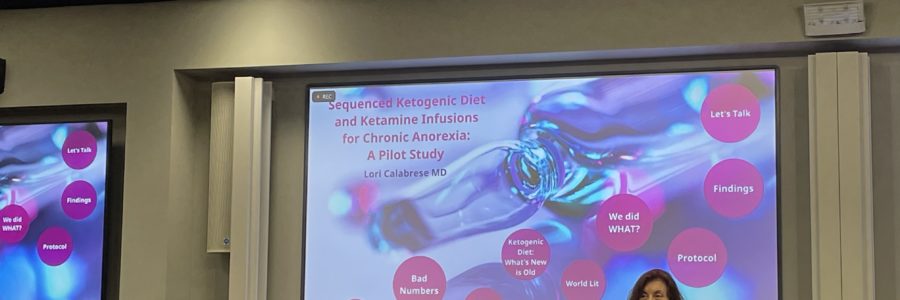
    We’ve talked before about our work with Caroline to help her recover from anorexia nervosa, and the subsequent pilot study with 5 women who had suffered from anorexia for many years. In both cases, we used a combination of a nutritional intervention that created therapeutic nutritional ketosis without weight loss and IV ketamine infusions to silence the anorexic voice. Recently, we participated in an interview on a video posted on twitter by Bret Scher, M.D., on a Metabolic Mind broadcast.

    Dr. Scher interviewed three of the five of us who co-authored the pilot study: Barbara Scolnick, M.D., Guido Frank, M.D., Ph.D.

    The idea behind the whole project was really sparked by Barbara Scolnick, MD. Barbara is Caroline’s aunt and had been searching for a way to help Caroline since she was a teenager.

    Caroline began to suffer from the symptoms of anorexia when she was 14, and though her family helped her to get treatment, nothing worked. Even if she gained weight in treatment, she would lose it again once treatment was over. She had a drive to starve.

    The “Anorexic Voice”

    The problem was the need to silence the anorexic voice that mercilessly shamed and berated her for eating. 

    To silence the anorexic voice is the most difficult aspect of treatment.

    By the time Caroline was 30, she told her aunt she couldn’t live like this the rest of her life. Something had to change. She wanted help to find a way out of anorexia after suffering from it for 15 years. But, like most of those who suffer with anorexia, Caroline was afraid of food. The “voice” of anorexia convinced her that eating anything would make her disgusting and contemptible. So she had come to live on a few peanut m&m’s a day.

    Barbara realized that the ketones Caroline’s body produced seemed to make Caroline feel good. At least at first. That the state of starvation felt “right” to Caroline. So Barbara first suggested Caroline take a dose of MCT oil daily to see if the ketones that came from it would help her.

    Adding ketones to cells seemed to help

    Caroline reported that, in fact, she did feel better as she took the MCT oil. The ketones were helping. She believed she was getting better. But not enough better. So Barbara and Caroline flew to see Beth, a registered dietitian Barbara had met a few years before in her search to understand what a therapeutic ketogenic diet might be able to do to help Caroline.

    Beth taught Caroline about this way of eating small meals packed with nutritious fats to increase the load of ketones Caroline’s cells had at their disposal. And while Caroline started with small servings, she realized that this keto diet that made other people lose weight, did not make her lose weight. She said, “See? My body IS different!”

    After some time eating these ketone producing meals – not a weight loss diet! – Caroline realized she was feeling even better still.

    But there was a problem. 

    To avoid gaining weight, people with anorexia prefer to eat almost nothing.

    At times, while she was eating this way, she would say she was getting her old familiar “voice” back (the real Caroline). But the anorexic voice wasn’t fully gone.

    So Barbara contacted me, to talk about adding IV ketamine infusions to Caroline’s therapy. By this time, Caroline’s weight was stable, but she was still plagued by the cruel, shaming anorexic voice. We hoped that the neuroplasticity that ketamine created would reduce the anorexic voice.

    IV ketamine infusions

    And so we started IV ketamine infusions. We were all learning together with her, as we sought to find a treatment that would work. In other words, a treatment that would erase the anorexic voice.

    After the 3rd infusion, Caroline woke up the next morning and that shaming voice was silent. Gone!

    She told me she didn’t think she needed any more ketamine, and felt like she had found a cure! But we did one more infusion for good measure.  

    Caroline felt elated!  

    When you silence the anorexic voice with keto + ketamine, you can enjoy eating again.

    And so were we. 

    After Caroline experienced such wonderful results, we began to talk about expanding this protocol with more people.

    Caroline entered remission that lasted for months and months for the first time since she was 14.  And she worked with us to design and carry out a pilot study as we sought to see if a small group of anorexia sufferers could experience similar results from therapeutic nutritional ketosis, and we followed that up with a series of ketamine infusions, like we did for her. Caroline’s support role for the participants turned out to be invaluable. Could we silence the anorexic voice?

    Beth Zupec-Kania, the registered dietitian who specializes in ketogenic diet therapy, and who helped Caroline, designed a similar dietary intervention — like the one Caroline used — for the women in our pilot study. We carefully screened and chose 5 adult women who had suffered from anorexia for years, and were medically stable. 

    We invited them into a home setting, where we talked, prepared meals together, and ate together— 3 meals a day plus two snacks. All of the women helped prepare these ketogenic meals, and actually achieved ketosis by the end of the weekend… and it happened so gently and beautifully.

    Then, they went home and continued it with peer coaching, to maintain ketosis without weight loss, for 4 to 8 weeks. At that point, they received a series of ketamine infusions.

    Conquering Fear of Food

    When you don't erase the anorexic voice, the fear of food returns.

    Keep in mind that fear of food, fear of eating because of the fear of gaining weight, is a primary characteristic of anorexia. So for these women to participate in a study that was very different from the “all good is good food” approach they’d had in treatment settings, they wanted assurance they wouldn’t gain weight from eating fat.

    Fat is a four letter word for a lot of people with anorexia.

    Because they had anorexia, we wanted to assure that they wouldn’t lose weight. We didn’t want it to backfire and kick up their anorexia.

    That’s the beauty—and the challenge—of this dietary intervention: because the keto diet is famous for making people lose weight who WANT to lose weight, they were reassured that they would not gain. So they were willing to try this.

    It wasn’t “a diet.” It was a ketogenic metabolic therapy — an approach used as a medical treatment— in this case, to reduce psychiatric symptoms associated with anorexia.

    Happily, we got to witness wonderful outcomes from our work with these women. Then we wrote the paper together and published it. We’re so thrilled to have it out so that others can see our results, and spread the word about the continuing research that still needs to be done to bring this treatment safely to those who need it.

    Through this experience with Caroline and the women in our pilot study, we’ve come to recognize that the core of this illness … that thing we target to bring to remission… is the “anorexic voice.” 

    That even though a patient with anorexia may go into residential treatment and begin to eat and gain weight, once they are home from treatment, they often loses the weight they have gained…because of the cruel anorexic voice.

    To silence the anorexic “voice”

    The good fats of a keto diet can help you feel better.

    In Caroline’s case, it seemed the dietary intervention provided the ketones her brain needed and even hungered for, but it wasn’t enough until ketamine infusions silenced the voice. Still… can the voice be truly silenced without the therapeutic ketone dietary intervention? And what about our ketogenic metabolic therapy alone, without ketamine infusions? Can that work by itself as effectively as the combination did? We need studies that explore these and many more questions. And carefully controlled studies involving larger populations of people are also needed. 

    And these studies need to be conducted with strict supervision and care. 

    Dr. Frank pointed out that we don’t know what causes anorexia or depression, and the symptoms of both can overlap. In addition, anxiety plays a large role in anorexia. 

    But he emphasized that what you eat can change your brain. He is interested in dopamine. And neurotransmitters like dopamine can be normalized in the neurons by certain fats added to the diet. We can learn so much more by studies along this line.

    I often tell my own patients that we all start out with big, beautiful neuronal trees, branched out in gorgeous canopies. These broad, luscious branches become continually pruned by stress, trauma, inflammatory processes, and anxiety. As this happens, we have symptoms of depression, anxiety, eating disorders, and more. 

    Neuroplasticity can help us find a way out.

    If you can reduce inflammation through a therapeutic ketogenic diet, enhance GABA through a therapeutic ketogenic diet, provide emotional and metabolic support throughout this with per counseling and medical and psychiatric supervision… and put this together so that patients flourish metabolically, you might SPARK something that gets neuroplasticity going through BDNF (brain-derived-neurotrophic-factor). Then you may have real possibility for growth to happen. And that new dendritic growth can get myelinated by the lipids (healthy natural fats) that you’re eating on a ketogenic metabolic therapy that you weren’t eating before.

    Don’t Try This At Home

    A specially designed therapeutic nutritional ketosis diet can feed your brain ketones to help you feel better.

    We see enormous hope to silence the anorexic voice. But this protocol isn’t something to do on your own. Anorexia is a metabolically dangerous condition that must be managed very carefully. We need a foundation of extensive research to establish a safe protocol before this treatment is widely applied.

    And we do hope to see this effective treatment for anorexia nervosa emerge through more research.

    If you have symptoms of depression, anxiety, PTSD, or suicidal thoughts that aren’t being helped, call us.

    We address brain energy and how therapeutic nutritional ketosis as well as IV ketamine treatment can help a variety of psychiatric conditions every day through the arms of our Metabolic Psychiatry and Ketamine treatments.

    We’re on a mission to find new ways to help you get better and live your best life.

    Lori Calabrese, M.D. is on the front end of the race to stop PTSD in its tracks using IV ketamine treatment.

    To the restoration of your best self,

  • Has Failure Made It Impossible to Enjoy Anything? Reset Now!

    Has Failure Made It Impossible to Enjoy Anything? Reset Now!

    When it's impossible to enjoy anything, ketamine treatment can help.

    Blake turned over in bed. He lay on his back, staring at the ceiling. What would he do with his day, he wondered. Ever since his business failed…scratch that…ever since HE failed…his sense of purpose had evaporated. He had been humiliated by the death of his business. And worse than that, he’d been disillusioned. He had believed in what he was doing, and what his work could do to help people. His excitement had fueled his resolve, and he tended to spring out of bed every day eager for what would unfold. But after working at it tirelessly for seven years, it was devastating to watch it wither slowly until his clientele dried up and disappeared. He was burned out. He had fought panic and tried everything to infuse new life into his marketing, his client relationships, his products. To no avail. And now he couldn’t find the least bit of interest in trying to discover what’s next in his life. He’d failed. And he had forgotten how to care, how to motivate himself, or to do anything. His feelings of failure made it impossible to enjoy anything. Not even the colors of a sunset or the fragrance of a flower. Blake had forgotten how to enjoy. Period.

    Failure and shame go hand in hand. He’d held his head high as he’d jetted around the country to meet with clients, check on customer service, and contribute to new breakthrough launches. But there came a point when interest in his services and products seemed to dry up. Wither…

    And all his scrambling to save all he’d worked for, and all those who relied on him, had turned out to be futile.

    He felt ignorant. Foolish. Inept. 

    That lost deadened feeling where it's impossible to enjoy anything can improve with ketamine treatment.

    How could he face people he knew?

    Honestly, Blake wondered if there was any reason to even get out of bed most days.

    Any reason at all.

    But every day he stayed holed up in his apartment, just confirmed his overall failure. His worthlessness. It was impossible to enjoy anything, everything…whatever he could think of.

    His mom texted him. But he made up some excuse.

    HIs brother called, but he didn’t want to answer. He just didn’t feel like it. And he didn’t care what his brother thought of him. The days of trying to fulfill other people’s expectations were gone. Nothing mattered anymore. And that seemed sad, but it was just the way it was. He couldn’t help it.

    He even got messages and emails from friends he’d made in the business. Ideas they had about how to revive the business.Their ideas were too little too late. They didn’t have the experience he had with the marketplace, and lacked the scope of perspective he’d developed through it all. They didn’t realize he’d already tried those things, and had seen just more failure.

    Blake scanned the internet looking for possible jobs. He needed income from somewhere. But he just was so mentally dull and flat. The creativity that was surging when he started his business was gone. Blank. So he didn’t know if he could actually do much of a job. He didn’t feel very employable. Everything was impossible to enjoy or do.

    And the energy he would need to for interviews, not to mention the horrid phobias that had emerged: fear and dread of leaving the house, of facing people, of going into new places… how could he overcome all that to find a job?

    Months went by. The more time that passed, the more isolated he was… by his own doing. But it was taking a toll.

    Blake was shut down — even locked down — emotionally. 

    Time to RESET

    He needed to be able to push a button so he could reboot in some way. Where was the Reset Button in his life?

    When it's impossible to enjoy anything, you just endure.

    He was still trying to find a job, as his savings were dwindling. The longer he stayed cooped up in his place, the worse he felt. He began to feel panic rising inside him … that if he didn’t find a way to break out of this ‘state’ he was in, he might just die here.

    After hours scanning the internet, Blake decided to break out of this isolation and contact his brother. He sent him a text and told him he needed to talk to someone…that the walls were closing in on him. It was hard to make contact. He didn’t enjoy it, but it was impossible to enjoy anything, anyway. It was still important. He had to do it.

    His brother, Jared, was so pleased to hear from him. He invited him to come over, or he would be glad to come to Blake’s apartment.

    Blake got himself into the shower, as hard as it was, and made himself clean up. Why was this so hard? He was overwhelmed at trying to clean up the mess of his house so he said he could go to Jared’s. That was better. He drove to Jared’s house and knocked on the door.

    Brothers hug when one reaches out for help to the other.

    Jared wrapped his arms around his brother and hugged him gently but firmly. It was such a relief to see Blake reaching out. But for Blake, he was just going through the motions. He wished he could connect with Jared, but it was impossible to feel or enjoy anything at this point.

    They talked for hours about Blake’s business, what happened, and what it was like to deal with the failure of it all. They also talked about the effect this long isolation and grief had had on Blake. Jared told his brother how much he had missed him. And suggested they put their heads together to find what might help Blake move forward again.

    Brothers Search for Answers

    As hours fled by, they explored employment, how to get help for the failure Blake felt, and what his lack of energy and fears might mean. He needed to function again!

    Side by side, they scanned the internet for answers and realized that Blake seemed to have the symptoms of depression, and that maybe his fear and dread were signs of phobias. They learned that anxiety, fear, and phobias do sometimes accompany depression. 

    Beyond this, they soon hit a wall. They could see he had symptoms, and that the symptoms may be treatable, but realized he needed a doctor to take it from there. So they searched for a psychiatrist in their community with great reviews. It seemed the best way to learn what a doctor might be like was to read what his own patients had to say about him.

    They settled on one whose reviews were, for the most part, amazing. There seemed to be one or two reviewers who complained, but all the rest were overwhelmed with the doctor’s attentiveness, willingness to listen, and symptom relief.

    So Blake made an appointment.

    Jared cleared his schedule for that day so he could go with him for moral support.

    A psychiatrist can diagnose MDD and help you get ketamine treatment.

    The doctor diagnosed major depressive disorder, and talked about possible medications. Then sent Blake home with a couple prescriptions, an antidepressant and something to ensure he could sleep.

    After a couple months, the antidepressant wasn’t working, so Blake called the new doctor to talk about ketogenic psychiatry and what might help him improve. Something just had to give. It was still impossible to enjoy absolutely anything.

    He felt like he was wasting his life.

    After scheduling a consultation appointment, Blake went to see her. She took a thorough history, including his symptoms when they started, and what he had felt like when he was his best self. Then she explained ketogenic psychiatry, and what a ketogenic diet leading to therapeutic nutritional ketosis, could do for him.

    Blake felt better and better, and in the days and weeks that followed he just kept improving. His hope was growing as he realized his creativity was returning, his energy was returning, and his thinking was clearing up more and more.

    When it's impossible to enjoy anything, ketamine treatment can make you smile again.

    Within a couple weeks, he interviewed for a job that he thought he was well suited for, and was hired. Soon he was back at work, contributing in meetings, creating new ideas, and making friends.

    Brothers Bond

    He made a pact with Jared that they would meet for dinner one night a week, to keep rebuilding their relationship and to talk about obstacles they both faced. They also went together to visit their mom, and committed to do it more often.

    Blake wanted to build a healthier infrastructure in his life to combat the isolation that had gotten him into so much trouble. And Jared saw the benefit for both of them in doing that.

    Blake also started seeing a therapist to help him untangle the feelings of failure and worthlessness that plagued him after his business ended. He was feeling more resilient since starting the ketogenic diet, but wanted to improve the way he looked at his life to guard against that type of thinking in the future.

    It's no longer impossible to enjoy life after ketamine treatment.

    And he moved forward in his life with a combination of confidence and humility — recognizing that he was human, and capable of so much. He made the decision to be a learner in life, instead of a perfectionist. And he learned about exercise and a ketogenic diet that actually would help his psychiatric health. He committed, also, to being his own best friend… instead of the cruel judge he had been.

    And these steps will help you, too.

    Within the realm of everything we offer in psychiatry, therapeutic nutritional ketosis and exercise could make all the difference for you, if it’s impossible for you to enjoy what you used to enjoy.

    If you suffer from the kinds of symptoms Blake did, call us.

    We have opened another another avenue for you with Metabolic Psychiatry. We can help you discover how to eat and move and enjoy so that you kick up your brain energy, correct your metabolism, shrink your body fat, and get back to your best self.

    There is so much to psychiatric illness, but there is also so much more you can do to be healthy again.

    We’re here to help you get there.

    Lori Calabrese, M.D. is on the front end of the race to stop PTSD in its tracks using IV ketamine treatment.

    To the restoration of your best self,

  • Smashing Anorexia with a Therapeutic Ketogenic Diet Plus IV Ketamine

    Smashing Anorexia with a Therapeutic Ketogenic Diet Plus IV Ketamine

    Halley put on her makeup and looked in the mirror. She abhorred her round face and the fat on her chest and arms. She quietly resolved that she’d swim more laps tomorrow, because the 30 laps she swam daily just wasn’t improving her appearance. It was hard, so hard, to go out in public because she knew in her gut that she would be secretly criticized for her excess weight. She saw an article about treating anorexia with a ketogenic diet plus IV ketamine, but she didn’t read it. She tossed it aside. Halley didn’t believe in anyone’s solution. She wanted nothing to do with it.

    Maybe it was denial. Or maybe it was some sort of cosmic nagging and shaming. She didn’t know. But she didn’t want to hear it. She fought guilt and shame every day.

    Halley had been avoiding family meals for a year or more, because she just  couldn’t load up on all that heavy food. It was easier to go to the gym during dinner time, and privately eat 4 peanuts, drink powerade, and chew a stick of gum. When she ate with the family, it always seemed to descend into a conflict over what she ate. Too exhausting.

    One day, Halley’s mom walked into her room and found her crying in front of the mirror.  

    “What is it, honey?” She put her arm around her painfully thin daughter and gently squeezed her. 

    Halley’s tears rolled down her cheeks.

    “I’m so fat! I try and try to diet and exercise but I stay so heavy. I hate myself.”

    Her mom embraced her. “Halley, you’re not fat! You’re really thin…”.  Then, her mom realized they might slip into a conflict, so she added, “Honey, you’re beautiful, inside and out.”

    Halley rushed out of the room. She felt like a total failure. 

    As her weight dropped more, her mom became more and more worried. Halley’s face went from slender to gaunt, and her arms lost shape, as her muscle mass diminished. 

    But Halley kept working out, running now and swimming laps, eating little to nothing. And feeling like she was heavily overweight. She felt appalled at her appearance, but it was a distorted perception. To observers, she looked rail thin, but when she looked in the mirror she thought she looked massive.

    At some point, Halley realized she hadn’t had a period in months. She’d been so busy with working out she hadn’t noticed. This scared her because she thought she wanted to have children some day. Her hair was brittle and falling out. It collected on her brush like a haystack.

    Finally, her mom convinced her to get a check up so the doctor could evaluate why her hair was falling out and her periods had stopped. 

    The doctor spent time evaluating her, asking questions, doing lab work, and listening. Then diagnosed anorexia nervosa. Her doctor referred her to a dietitian and a psychiatrist.

    But there was a problem.

    Even though the doctor recommended group therapy for Halley, the inner drive to restrict her eating and push through excessive exercise continued. There was a voice in her head that drove her. It shamed her for eating, it shamed her when she looked in the mirror, it degraded her and made her feel deeply unworthy.

    So she tired of the group therapy eventually. The reason? That anorexic voice still drove her.

    She was angry about the anorexia diagnosis. Didn’t believe anything was wrong with her. Not really.

    But she felt bad… sad…pretty hopeless. And empty. She felt ashamed to be around friends, and just didn’t feel very connected anymore. To anyone.

    Halley also felt light-headed more and more often. Sometimes dizzy, and somewhat weak.

    One day she collapsed.

    Her mom ran to her room when she heard the crash and found Halley on the floor unconscious. Mom dialed 911 and paramedics arrived in 7 minutes. They told her mom her blood pressure was low, and her pale color could be anemia. They transported Halley to the hospital and admitted her to ICU.

    Halley remained semiconscious for 3 days, while she received IVs of electrolytes, TPN (total parenteral nutrition), fluids, and iron. Lab work revealed her electrolytes were out of balance, and her liver and kidney function were out of whack, too. And she was very anemic. Thankfully, her heart wasn’t damaged — but it could have been.

    As her body’s electrolytes, fluids, and glucose balanced, Halley did a lot of thinking. She had to face that something was very wrong with her life … and potentially damaging. Even though she was glad she had survived this, she knew she needed to do something. She decided she needed to open herself to help, treatment, and changes in her life.

    The day before she was discharged from the hospital, a nurse came to talk to her. She told her that her own daughter had suffered from anorexia for years and but had recently turned it around using a special program developed by a team of specialists. Medical doctors, a registered dietitian specializing in medical ketogenic nutrition, peer counselling, and a psychiatrist.

    The approach included education, peer support counselling, a specially designed therapeutic ketogenic diet plus IV ketamine treatment.

    And it is new. We first wrote about it here 2 years ago, in a blog about Caroline, the first patient we treated with this sequence. And then published a case report about her remission from chronic anorexia.

    Another Study To Replicate Results

    Recently we conducted a pilot study with 5 women who had struggled with chronic anorexia for at least 10 years. This was our next step to replicate our outcomes from the first case study. We’ve just recently published that data in Eating and Weight Disorders: Studies on Anorexia, Bulimia and Obesity.

    Our team included an internist, a registered dietitian specializing in medical ketogenic nutrition, a psychiatrist, peer support counselling.

    Similar to the initial case study with Caroline in 2020, the subjects in our pilot study were thin—but partially weight restored—and medically stable enough to participate. (This was key.) But they were still plagued by the shaming anorexia inner voice, distorted perceptions of their shape and weight, and seriously low self esteem.

    They began a specially designed therapeutic ketogenic diet — aimed at nurtritional ketosis, not weight loss — and maintained it for several weeks.

    There is no psychiatric medication that targets specific residual symptoms of the compulsions, self-starvation, and the anorexic voice — and so they often continue even after weight has been restored to normal. And all too often, relapse occurs. Because the anorexic voice just hangs on and torments.

    To effectively treat anorexia, the compulsions and that shaming voice must be targeted and quieted.

    This is what this two-part protocol was aimed to address and where IV ketamine infusions come in.

    After at least 4 weeks of maintaining the therapeutic ketogenic diet, each participant received a series of IV ketamine infusions (modeled after the success of the first patient we treated with this approach.)

    And the voice quieted. In fact, it disappeared.

    We followed the participants closely, presented our preliminary results in Oxford, UK and published our results at six months follow-up. Four women showed significant improvements across the measures we used to assess recovery and remission; one relapsed and was admitted to a residential program.

    This approach of using a therapeutic ketogenic diet (an approach that induces safe, nourishing nutritional ketosis — not weight loss or starvation ketosis) may seem counterintuitive, but it’s based on science, and evidence supports it.

    This isn’t keto from YouTube.

    Our approach offers a potentially life-altering and lifesaving two-part treatment for a deadly disorder.

    More research is needed to understand the mechanisms in the brain that result in quieting these compulsions and the anorexic voice, and in studying this treatment sequence in anorexia. A lot more research. But we’re excited to discover and report something truly new and hopeful for so many who have suffered so long: a very careful therapeutic ketogenic nutritional approach followed by IV ketamine.

    If you’ve struggled with symptoms of chronic anorexia for a long time … if you think you might want to work with us … if you’re interested in the program we’re developing, please contact us.

    Tell us a little about yourself and your story.

    Let’s talk. Let’s start something new.

    Lori Calabrese, M.D. is on the front end of the race to stop PTSD in its tracks using IV ketamine treatment.

    To the restoration of your best self,

  • Ketamine2022: Ketamine and Related Compounds at Oxford, UK is over. …Unforgettable!!

    Ketamine2022: Ketamine and Related Compounds at Oxford, UK is over. …Unforgettable!!

    Thrilling?  Yes.  EYE opening?  Yes!  Opportunities?? YES!!

    Ketamine and related compounds conference  for treating depression.

    This week saw the best conference of the ketamine-for-depression specialization.  A gathering of neuroscience researchers, psychiatrists, chemists, and more came to share their work with ketamine and related compounds. Researchers hailed from all over the world — the Netherlands, Israel, Sweden, Greece, Ireland, Scotland, France, Australia, Italy, Canada and the US presented their work and poured out the bounty of their findings. Clinical trial sites spanned Eurasia to Australia to North America. Ketamine2022 at Oxford, UK.

    Ketamine and related compounds is such a dynamic topic that a yearly conference is held at Oxford, UK.

    There is nothing like coming together with like-minded professionals to learn and exchange ideas about this medicine we’ve seen do so much. And instinctively, our gut says it will do so much more.

    Ketamine, initially developed as an anesthesia medicine. But surprised us all when we found it could treat depression extraordinarily well—depression that had not responded to other medications. From there, ketamine has gone on to be studied and used clinically to treat PTSD, bipolar depression, and it had been shown to stop suicidal thoughts, and to reduce craving and relapse in alcohol and cocaine use disorders.

    Biopharma companies presented their data on the compounds they’re developing: Axsome, Clexio Biosciences, Janssen, Bexson Biomedical, Relmada Therapeutics, Perception Neurosciences.  

    (These are exciting times and it’s thrilling to see what’s gone on behind the scenes during the pandemic.)

    Ketamine and related compounds presented and discussed at Oxford, UK.

    There were SO MANY, far too many to describe here. But know that the field of ketamine and related compounds in psychiatric treatment is growing all the time.

    We sat at the feet of long-time respected ketamine researchers and a crowd of the best and brightest in the field.

    Rupert McShane of Oxford drew together an extraordinary group.

    Carlos Zarate, Jeff Becker, Jason Wallach, Roger McIntyre, Gerald Sanacora. These are household names in the world of ketamine for psychiatric treatment.

    Carl Zarate is an undisputed leader in ketamine research for psychiatric disorders. He spoke on glutamatergic modulators and next-generation antidepressants. The hope is growing that even those who aren’t helped by ketamine treatment will find relief through another fast acting solution.

    Roger McIntyre talked about the real world evidence that supports long term treatment with ketamine. He also participated in a debate about whether there is enough data to support widespread therapeutic use of ketamine in psychiatry for treatment resistant depression.

    Jeff Becker and Jason Wallach spoke about their new system for subcutaneous delivery of ketamine for acute post-operative pain.

    Jason Wallach spoke again about dissociatives–NMDA receptor antagonism and structure/activity relationships. (He is always so passionate, so brilliant, and so compelling!)

    There were so many wonderful speakers, wonderful insightful topics … evidence that treatment for psychiatric disorders is full of hope on the horizon.

    Ketamine and related compounds conference at Oxford UK

    So more about the conference. Overall, the presentations ranged from esketamine use longterm to new oral meds which were NMDA receptor agonists for major depression. Also about subcutaneous delivery of ketamine, and IV ketamine to prevent postpartum depression after a planned C-section, and data comparing ketamine to ECT. The topics were varied, extensive, important, and innovative.  

    I spoke on results from a small pilot trial my team and I are conducting using ketamine in the treatment of chronic anorexia — with a therapeutic ketogenic diet (yep! in chronic anorexia) followed by a series of ketamine infusions.

    (The publication is under review, so this was the first sneak peak at the data.)

    Ketamine and related compounds presented in the most lovely setting.

    Going forward, we’ll be talking about some of these topics connected to ketamine and related compounds as they develop… and change the face of therapeutic ketamine in depression and other psychiatric disorders and pain conditions.

    Here at Innovative Psychiatry, people who’ve suffered from major depression and other related conditions come to us every week seeking treatment because what they’re doing isn’t working. Often they leave with hope, joy, confidence, and a spring in their step. It’s important to understand that ketamine isn’t effective for everyone. No medicine is. But it’s transformative for many who need it. And we administer ketamine using the most effective methods available.

    If you suffer from major depression, PTSD, bipolar depression, social anxiety, alcohol use and substance use disorders, and/or suicidal thoughtscall us.

    When you come for ketamine treatment, you'll have a comfortable, quiet room to get the most from your treatment.

    Like the speakers at this conference, we’ve dedicated our days to help you find resilience, restoration, and hope — through IV ketamine treatment.

    When you come for treatment, you can relax in a beautiful, private treatment room to receive your infusions—knowing we use state of the art air disinfection. Using a system designed by the Department of Defense and NASA, each of our rooms is protected by plasma cell technology that destroys viruses, bacteria, and molds in the air. (Even though a new variant of Omicron is in the US now, we have extraordinary technology in our clinic to protect you from it.)

    You can relax and focus on just getting better.

    Call and let’s determine together if you’re a candidate for this lauded treatment. You deserve to enjoy a rewarding life. 

    Lori Calabrese, M.D. is on the front end of the race to stop PTSD in its tracks using IV ketamine treatment.

    To the restoration of your best self,

error: Content is protected !!