Blog

  • A Little History: The Beginnings of Ketamine the Depression Dragon Slayer

    A Little History: The Beginnings of Ketamine the Depression Dragon Slayer

    ketamine is the depression dragon slayer.

    The Legend of Ketamine the Depression Dragon SLAYER

    Doesn’t that sound exciting…?  Conjures up images of kings, knights, dragons…and princesses. Ketamine the Depression Dragon SLAYER … the knight in shining armor, equipped with world-class weaponry … vanquishing the enemy.

    But this is no fairy tale. This is the real deal. The story of a tool…a drug…that slipped in quietly to center stage as a mild-mannered anesthesia medicine.  A drug so boring it literally put people to sleep.

    Then somebody noticed it was leaving relaxed, productive, happy people in its wake…

    Have you wondered where this remarkable treatment came from? Did it… for instance, start out as a medicine, or was it a club drug? 

    Ketamine: The 21st Century “Miracle”

    Have a seat and get comfortable while I tell you the story of this 21st century hero who’s Ketamine the Depression Dragon Slayer… and subjugator of a host of other mood disorders. It all started in an early 1960’s laboratory, where a team of researchers were working on a new compound…

    PCP for Anesthesia??

    A certain anesthesia drug — Sernyl — had been developed a decade earlier but had so many extreme side effects like delirium, agitation, and hallucinations that it was quickly taken off the market in ’65. No doctor wanted to deal with a drug like that.

    But, like some drugs do, it snuck onto the streets and was manufactured illegally. And it was highly addictive. The generic name for it was phencyclidine; its street name was PCP or angel dust.

    Meanwhile back at the lab, even before Sernyl was pulled, Dr. Calvin Lee Stevens was working at Wayne State University to develop similar compounds and better anesthesia agents for Parke-Davis, the oldest and largest pharmaceutical company in the U.S. at the time. (Parke-Davis has its own interesting story, but we’ll save that story for a different blog.)

    In 1962, Dr. Stevens developed ketamine hydrochloride, an effective and safe short-acting anesthesia drug with much milder side effects, and far less risk of Neuroscience researchers find more benefits of ketamine the depression dragon slayer.addiction.
    When it was first tested on humans, they asked for volunteers at Jackson Prison. 

    Unbelievable, right? 

    And the first study subjects reported a “floating feeling” and, in some cases, numbness in their arms and legs.

    Ketamine Approved by FDA

    So … now the story gets juicy.  One of the scientists who developed it ran away with it to Belgium to have it patented without the knowledge of Parke-Davis. And the battle began! Lawsuits, patent wars, big money . . . and intellectual property were at stake.

    In 1970, ketamine hydrochloride was approved by the FDA under the name Ketalar as a short-acting anesthetic for children, adults and the elderly.

    The Pentagon wasted no time ensuring it was available to the war zone. And it was quickly put to use to treat wounded soldiers during Vietnam, with widespread success.

    It’s not hard to fathom that for anesthesia, a floating sensation and absence of feeling in the body could be a good thing. Neat. The blood pressure doesn’t drop. You don’t lose the airway. And you can work fast — really fast. Especially in the case of big trauma … or setting a broken arm. So those characteristics weren’t really negative, but actually positive.

    And, by the way, as neuroscientists and doctors were considering this floating feeling and the inability to feel limbs … one of the key researchers, Edward Domino, MD, was scratching his head about how to characterize this medicine. What to call it, really. His wife Toni came up with the term dissociative anesthetic and he kind of liked that idea. (I love this story–so real.) He used the term with his colleagues and it stuck. Today, ketamine is considered everywhere as a dissociative anesthetic.

    A new term for a new type of drug.

    Ketamine is so safe, and so effective, that it’s been included on the World Health Organization’s List of Essential Medicines. That list is used by the Red Cross when stocking medications for disaster responses, emergency settings, and in war zones. 

    Ok, ok, so ketamine is safe for anesthesia. But how did it come to be used as a treatment for depression?

    Who Can Vanquish the Depression Dragon?

    For a long time, the idea was that if we could just give the brain a chance to make the stuff it knows how to make, and if we could help make sure that stuff hangs around long enough to get to where it’s supposed to go, then everything could function as it should — and mood and behavior and thinking would be restored to function as they should.

    But that’s pretty simplistic and it just doesn’t happen that way.  That’s one of the reasons so many different antidepressants were developed.  We kept trying to find different neurotransmitters that might be the key to treating certain kinds of depression and certain types of anxiety , thinking that we could hit on the thing that would work. For most people.

    But, the fact is, we needed something different.

    Something that worked more effectively in more parts of the brain to do more than just keep serotonin hanging around. It’s easy to do that. Anybody who’s ever taken an SRI (new term that’s replaced SSRI) and had it work knows that.

    But for the 70% who’ve had one fail, or who’ve had one after another after another fail . . . well, those millions of people realize that it’s just not so simple.

    We needed something that would activate things like the AMPA receptor, stimulate growth of BDNF, “fertilize” new growth of synapse branches, move G proteins off the lipid rafts faster.

    We needed solutions that truly rebuilt the communication system in the brain.

    And ketamine began to appear – surprisingly – like a possible solution…

    In 2000, (remember this is 36 years after ketamine was developed and widely used as an anesthesia) a randomized, double-blind study with only 7 subjects was conducted as a “proof of concept” to study ketamine –  and its effect on Major Depressive Disorder. These patients were given a small dose of ketamine IV spread out over 40 minutes.

    Then, their depression symptoms were assessed based on a couple of tools used in psychiatry and neuroscience research: the Hamilton Depression Rating Scale (HDRS) and Beck Depression Inventory (BDI).

    The results for this first time study?  Within 4 hours, ketamine produced rapid and robust positive results that lasted up to 72 hours.

    When you compare that to the 4-12 week and even 16 week wait time patients have always endured to experience This woman is enjoying her hike because of ketamine the depression dragon slayer.results from the traditional antidepressants that focus on increasing the levels of neurotransmitters, these results were pretty spectacular.

    And there’s more.

    Those side effects that produce the floating feeling subsided within about 2 hours and before the antidepressant effects took effect. This is important, and we’ll get back to that in a minute.

    Ketamine Vanquishes the Depression Dragon

    This was the first clinical study to show that drugs – like ketamine – that act on glutamate.. a neurotransmitter that excites reactions in your brain’s chemistry lab… just might be effective for treating major depressive disorder.

    Now, a weakness of this study, besides the small number of participants, was the fact that there was no follow-up assessment of the subjects beyond the three days after the infusion. So, it was impossible to know the duration of ketamine’s antidepressant effect.

    As a result, in 2006, another study was conducted to measure just that. In this one, the participants were assessed at 110 minutes after the infusion, and continually up until 7 days.

    It turns out 71% of these participants reported a positive response (measured by that same tool, HDRS) after one day.  And even more thrilling, 29% achieved full remission.

    Plus, 35% of the participants maintained that positive response still on day 7.

    That was when the study ended. But many more studies have followed and dozens are going on today. Different doses, different protocols, different lengths of time, and in different disorders like PTSD, OCD, phobias, bipolar disorder. The more researchers learn about ketamine, the more they want to learn.

    Ketamine the Depression Dragon Slayer

    At the time of the first human trial for ketamine as treatment for depression, the only known action of ketamine was in its direct impact on glutamate, the more “exciting” of the neurotransmitters.

    However, in recent years much more about ketamine’s extraordinary action in the brain has been discovered. To date, there are four known actions ketamine takes in the cells in the brain that rejuvenate the synaptic connections, and restore wellbeing.

    There’s Just No Other Like Ketamine the Depression Dragon Slayer

    But the best guess of any of us is that more will be found. There are other drugs being studied to treat depression that work much like ketamine does. In fact, one of them, esketamine, is in Stage III trials toward FDA approval.

    They all wannabe like ketamine but they don’t wannado what ketamine does during an infusion. They don’t want to create the feeling of dissociation.

    The Amazing Handiwork of a Masterful Restoration Expert

    However, there’s a point to consider. The “floating sensation” and whatever goes with it is an important aspect of the treatment.  And here’s why.

    Because when you’re experiencing those moments of “dissociation,” ketamine is actively working in The floating feeling is part of the process as ketamine the depression dragon slayer.your brain cells to rebuild and restore function. Notice in the research that they said the side effects had stopped before the antidepressant benefits began.

    That strange feeling is what you experience when ketamine is “fixing” your brain.

    We have medications to treat any aspect of the infusion experience that might become overwhelming for you. But, when you receive ketamine treatment, know that this particular sensation is part of the restorative process. It’s where the transformation begins. Embrace it…relax…and allow it to take its course.

    Because those sensations are a sign that your restoration is coming.

    Be hopeful. We are. We so appreciate the work of Parke-Davis, the neuroscientists, the anesthesiologists, and researchers who have brought all the information public about ketamine’s track record in treating psychiatric mood disorders.  And, we also appreciate the research and the medical professionals who continue to explore ketamine more deeply, and all who will participate in this adventure in the future.

    Ketamine’s not going anywhere. One by one, those who were skeptical and who held ketamine therapy at arm’s Woman enjoys afternoon sunshine because of ketamine the depression dragon slayer.length are crossing over to join us in watching the daily transformation this incredible drug provides.

    Like anything else, ketamine’s not perfect. But it’s the most exciting treatment that’s come along in psychiatry in our lifetime. At Innovative Psychiatry, we consistently see 80% of patients who’ve been failed by other treatments get better.

    If you’ve suffered from psychiatric mood disorders that have not responded to treatment, call us. Let’s find out if you’re a candidate for ketamine treatment. While it’s not for everyone, it may be just what you need to really live again.

    Let’s find your best self together,

    Lori Calabrese, M.D.
    Lori Calabrese, MD offers innovative psychiatric treatment like IV Ketamine

  • Who Should Provide IV Ketamine as Treatment for Depression?

    Who Should Provide IV Ketamine as Treatment for Depression?

    Should anesthesiologists give IV ketamine as treatment for depression.If This is What You Picture When You Imagine IV Ketamine Treatment for Depression, Think AGAIN!!

    And nix that image. Because we’re going to talk about who should provide IV ketamine as treatment for depression.

    Ketamine treatment is getting more and more attention in the press as a paradigm shifter for effective treatment for psychiatric mood disorders. And more and more medical professionals are opening offices to offer ketamine treatment for depression, and for pain management. Of course, more availability of ketamine treatment means more relief for more sufferers.

    Which is a good thing … right?

    Well, yes, but it raises some serious questions.

    Ketamine Isn’t for Everyone

    Like, for instance, is ketamine treatment for everyone?  And the answer to that is “No.” Not everyone will respond to it when it’s used for psychiatric mood disorders.

    But there are clinical factors and genetic tests that doctors can use to predict more accurately whether you’re likely to respond to ketamine treatment for depression.

    And another question: Is providing ketamine treatment for depression similar to providing ketamine treatment for pain? Is this something any medical doctor can easily do?  After all, it’s just a simple medication like any other, right?

    The answer to that isn’t exactly straight forward. First of all, the question includes an assumption that any medical doctor can easily prescribe any medication … even for specialized needs.

    Legally, this is true. Ethically and practically, it’s not.

    And while he may be able to prescribe a drug legally as a medical doctor…is he deeply versed enough in the nuances of the patient’s response to the drug and the drug’s potential side effects…as well as the patient’s potential reaction to those side effects and what to do about them….? 

    Is it really the best decision for a doctor to treat a condition he/she isn’t fully knowledgable about?

    Should an internist treat your periodontal disease? 

    An internist is expected to recognize and treat pretty much anything going on with your body…after all, he’s well-versed in inflammation and infections, and knows all about antibiotics. But his wide scope prevents him from having a specialist’s focused knowledge and deep experience with specialized aspects of your body, like your gums, for instance. So, you go to a dentist, and your dentist may send you to a periodontist for your gums…if you need it…a specialist’s specialist.

    Do All Psychiatrists Treat All Psychiatric Conditions?

    Well, let’s consider the nuances of psychiatry. There is a wide range of psychiatric disorders, including behavior disorders, mood disorders, personality disorders, cognitive disorders, developmental disorders, addictive disorders, and more — including all kinds of treatment modalities and several different kinds of psychotherapies we use — and most psychiatrists are not experts at everything.

    Of course not.

    Most of us gravitate naturally to our interests, and the best of us align our work with our own best selves — we choose the age range, the population, the conditions that fascinate us and tug at our hearts…the modalities that align with the way our own brains work and the way we interact. Some of us are researchers. Some of us are in the trenches. We play to our strengths. 

    We all should.

    Now, back to IV ketamine treatment.

    Anesthesiologists Use Ketamine in Surgery

    It’s understandable that anesthesiologists would be pretty comfortable treating patients with IV ketamine Who should provide and monitor IV ketamine Treatment for depression.since they’ve been using ketamine in surgery and emergency settings throughout their career.

    They’re also at ease sitting and monitoring a patient throughout the infusion treatment, because that’s what they do.

    Some medical doctors might get a bit antsy during that whole process, but it’s just second nature to an anesthesiologist.

    And, it’s true there are certainly plenty of anesthesiologists offering IV ketamine treatment for psychiatric mood disorders. They’re highly skilled in starting IVs, familiar with ketamine, and excellent in handling emergencies in the ER and in the OR.

    An anesthesiologist’s education and training is all about life support during critical moments in surgery. And these specialists know physiology like nobody’s business.

    But…

    Who Should Provide IV Ketamine as Treatment for Depression?

    When it comes to evaluating a psychiatric patient as a candidate for off-label use of IV ketamine treatment for treatment-resistant depression or other mood or anxiety disorders, there’s a great deal to manage. The role of ketamine used as an adjunct with complex medications and psychotherapy, for instance.

    Plus, the patients’ response to the drug and how to treat therm in their specific state of mind, whatever it is,  that emerges during treatment… All within the context of their baseline psychiatric symptoms and vulnerabilities.

    Anesthesiologists just aren’t trained for that.

    The same is true of nurses, even those in advanced practice.

    It’s my belief that the use of ketamine in the treatment of psychiatric disorders is something that is best done by psychiatrists who are thoroughly familiar with IV ketamine treatment.
    And here’s why.

    Because the things that this treatment requires — assessment of the patient and of the psychiatric response (not just the physiologic response), dose adjustment, management of fear, management of expectations… this is all psychiatric expertise. In addition, the family and their overall involvement (or lack of involvement) in the patient’s suffering… It requires we curate the experience, integrate it with psychotherapy, coordinate it within the context of the patient’s medical problems and with the professionals treating them. All these things are without a doubt what WE do and what our entire specialty is about.

    We deal with suicidal patients all day long and every night and weekend–anesthesiologists don’t and, understandably, don’t want to. But many, if not most, patients who receive IV ketamine treatment are not only no strangers to suicide, but in fact are so plagued by such thoughts their lives sometimes hang in the balance. Even to survive till the end of the infusion.

    Those tormenting thoughts just seem to creep in even when you’re not looking for them, and bring a presence to the ketamine room that stuns everyone involved.  That is, until  ketamine stops the suicidal thinking independently… and even if the depression doesn’t stop immediately… but lifts more slowly. A well-informed psychiatrist needs to be present to walk each patient through every scenario, especially when the outcome is a surprise.

    So, again, who should provide IV ketamine as treatment for depression? Definitely, not just anybody. Preferably a psychiatrist deeply experienced and educated in the nuances of ketamine treatment in psychiatric patients.

    Just as internists are not specialists in all areas of illness, not all psychiatrists are versed in the use of ketamine for psychiatric mood disorders.

    So What Kind of Psychiatrist Steps Out to Offer IV Ketamine Treatment?

    The ones who are really comfortable with medicine, and adjusting, adapting, and combining it for therapeutic outcomes. The ones who also have a strong identity as a physician first, and who are already experts in psychopharmacology.

    These psychiatrists are accustomed to a model of consultation and collaboration. And they like to work collaboratively with other psychiatrists, therapists, PCP’s, and families.

    This is no place for lone riders.

    These are the ones who know what it’s like when you’re the most suicidal of the suicidal, and who will stand with you and not be afraid. Those who understand that something transformative happens during an infusion. And that the specific experience of the infusion itself matters if there’s to be healing.

    We are grateful to the anesthesiologists who brought ketamine out of the OR and into the office.  

    But the psychiatric care of our most fragile, desperate, and ill patients — with multiple tangled psychiatric disorders, complex histories of polypharmacy and treatment failures, excruciating trauma, and concurrent medical problems — demands the finest life-saving that we have to offer, by psychiatrists. Nothing less.

    We continue forward to learn all we can from our patients and the dedicated neuroscientists who Who should provide Iv ketamine as treatment for depression in someone like this man?continue to explore the actions of this remarkable drug. As they explore, we continue to see our treatment-resistant patients enjoy extraordinary responses in 80% of cases.



    If you’ve suffered from treatment-resistant mood disorders and have tried multiple treatments without success, we get it. Innovative Psychiatry is a practice that specializes in helping people who have not found help before. People who have been to other psychiatrists and were failed by traditional treatments. People who are running low on hope.

    Innovative Psychiatry is into hope renewal. Through groundbreaking use of medications and treatments, we’re helping people like you live again. Enjoy life again. Please call us to schedule an appointment. We’ll evaluate whether you’re a likely candidate. There really is hope.

    To the release of your very best self,

    Lori Calabrese, M.D.

    Lori Calabrese, MD offers innovative psychiatric treatment like IV Ketamine

  • Will My Doctor Give Me an IV Ketamine Treatment Referral?

    Will My Doctor Give Me an IV Ketamine Treatment Referral?

    Will my doctor give me an IV ketamine treatment referral?

    Hoping for an IV Ketamine Treatment Referral?

    Recently, we talked about reasons some doctors may be reluctant to provide IV ketamine treatment for psychiatric mood disorders. We talked about how difficult it is to harvest all the information about ketamine for depression on the internet and become informed. No drug company spends millions of dollars in marketing a drug they won’t profit from. So there aren’t the usual easy-to-digest brochures and videos that help a doctor assimilate the information quickly. And there’s so much out there!

    Over 1200 papers, thousands of pages, that require trainloads of nights and weekends to study. When does a busy physician ingest all that?

    Skepticism about Prescribing Off-Label

    We also talked about the skepticism of doctors who want to see more solid long term studies. Studies with large numbers of subjects followed for years to see what long-term side effects might arise.

    In addition, we talked about what an enormous undertaking it is to set up a practice or clinic for IV ketamine Will my doctor give me an IV ketamine treatment referral?infusions. The protocols, the staff, the expensive equipment for monitoring and delivering the infusion. Plus the extra office space, the federal and state regulations that have to be followed regarding storage of a controlled substance, biohazardous waste, etc.

    It can be overwhelming for a psychiatrist who is accustomed to a practice of verbal evaluations and 15 minute med checks.

    To make a long story short, some psychiatrists aren’t that eager to prescribe a drug off-label. They want to see more studies, and they want to be sure it’s safe. Not to mention the fact that there’s fear of abuse.

    Ketamine for Depression is Spreading by Word of Mouth

    And this is the reason doctors who are currently treating their patients with ketamine for psychiatric mood disorders are publishing their results.

    We want you and your doctor to have the benefit of our experiences with our patients, the methods we’ve found to be the most effective and safe, and the reports of our patients after treatment.

    Because as we mentioned in the prior article, since pharmaceutical companies can’t make a huge profit with a drug that’s off patent, doctors everywhere just aren’t receiving all the usual aids offered to familiarize us with all the data about ketamine.

    Without Pharmaceutical Billions, Ketamine Resorts to Grass Roots

    So it’s become more of a grass roots movement, if you will, to share information with each other, with neuroscientists, and with the public, and raise awareness of the effectiveness of treatment with ketamine for psychiatric mood disorders, like depression and anxietyYoung woman enjoying life since IV ketamine treatment referral.

    Using the best practices encouraged by the Consensus Statement of the American Psychiatric Association Council of Research Task Force on Novel Biomarkers and Treatments, psychiatrists across the US and around the world, are finding ketamine treatment to have rapid and robust antidepressant results. And their patients are enjoying restored lives, restored enjoyment, and restored hope.

    Ketamine’s Short Duration: A Solution that Restores Joy in Life

    Some professionals caution that ketamine treatment has a short duration. But, psychiatrists and the anesthesiologists who’ve been using ketamine for decades, have made a discovery. And that is that approximately 6 infusions over a 2-week period seems to “stack up” enough of ketamine’s benefits that they last far more than just six times longer than one infusion. Like a synergistic treatment cluster.

    For many patients, this regimen brings more than improvement… it brings remission. For others, as long as there are maintenance doses to keep ketamine’s actions working, their lives are lived as if they’re well. Really well.

    So with so many doctors treating hundreds and thousands of patients with extraordinary results, why isn’t word spreading faster?  

    Frustrating, isn’t it?

    “Will my doctor give me an IV ketamine treatment referral?”

    Sorting Through the Literature

    You hope so. But understand that your doctor may need more time to come to an informed and confident opinion JAMA Psychiatryabout ketamine treatment. It may have a lot to do with the information he or she has found on the subject. She may be reading peer-reviewed studies as she gets time. Or he may have run into some articles that present vague results. But encourage them to keep researching. Because there are plenty of professional journals publishing exciting findings, even though there are some articles that are less optimistic.



    In fact, there are dozens of articles across the internet, written about ketamine treatment by biased individuals. Those who either aren’t medical professionals, or are biased without experience with ketamine. And these articles influence those seeking information, and sour them against recognizing the facts when they see them.

    When people form opinions without building them upon a foundation of neuroscience, but rather on the comments of others, prejudices form. Biases form based on impressions, opinions, hearsay… you can read examples in all sorts of forums on the web. Opinions tossed out with “impact,” but with little or no fact.

    Second Opinions May be Helpful

    And truth be told, while your doctor’s learning for himself what he believes about ketamine, you can learn about ketamine treatment and discuss seeking ketamine treatment.  And then share your results with your doctor and with your family.

    In fact, your family may suggest you let “a second set of eyes” look at you and your illness. Especially if they can see you haven’t been improving. Most doctors respect that, and it’s an ideal time to check with a doctor who offers innovative treatments like IV ketamine treatment.

    Still, understand that your doctor may not feel comfortable referring you for a treatment he’s not yet confident about. But you’re responsible for your own well-being and health. In the 21st century healthcare environment, individuals have become informed about their health and wellbeing and are far more engaged in looking for solutions than ever before. And you can choose to seek out physicians who do offer ketamine treatment, then report your results back to your doctor. By doing that, you’ll give him a data point to build his own research around.

    It’s true that some doctors have been known to react to a patient’s stepping away from their recommendations. And that’s a shame, if their advice has not helped you recover. It’s also true that you as the patient are the person actually living with your symptoms. And enduring them. I daresay, you should not be punished for actively seeking a better quality of life.

    The same is true if you’re a parent of a teen who struggles with a mood disorder. An example is with treatment-resistant bipolar depression. Since research shows that early treatment gives your child the best hope of getting better, as a parent you probably feel compelled to find the solution that really works.

    IV Ketamine Treatment for Depression – Experimental?

    Ketamine treatment is still considered “experimental” by some psychiatrists, but for those of us who have seen extraordinary success in the lives of so many patients, it’s become a relied upon and almost miraculous solution.

    The consensus statement by the task force mentioned above points out that more studies are needed with large populations. True. Of course that’s true. But, the task force members also laud the results of IV ketamine treatment with their own patients. The guidelines they suggest for providing ketamine were not to discourage doctors from using it, but rather to encourage doctors who offer it to offer it within safe parameters.

    At Innovative Psychiatry, we use the same careful monitoring and other safeguards recommended by the APA task force, as well as others, and have for years. We’ve seen very positive responses in 80% of our patients who have been failed by  traditional antidepressants over the long term.Enjoying things I used to enjoy since an IV ketamine treatment referral.

    They’re amazed at the continuous improvement in their lives, their relationships, and their enjoyment of life.

    If traditional antidepressant treatment has failed you, call us. We’ll schedule an appointment to determine whether IV ketamine treatment is right for you.

    We’re here to help you find joy in life again.

    To the emerging of your best self,

    Lori Calabrese, M.D.

    Lori Calabrese, MD offers innovative psychiatric treatment like IV Ketamine

  • Why Doesn’t My Doctor Provide Ketamine as Treatment for Depression?

    Why Doesn’t My Doctor Provide Ketamine as Treatment for Depression?

    This man has hope after asking why doesn't my doctor provide ketamine as treatment for depression.

    Why Doesn’t My Doctor Provide Ketamine as Treatment for Depression?

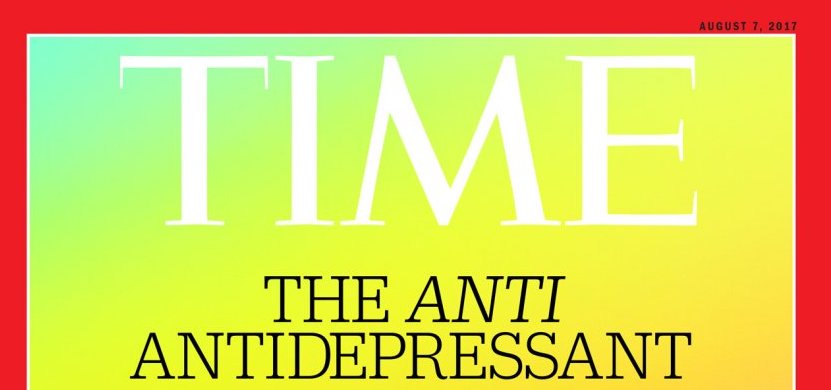
    It’s all over the news. Even the recent TIME magazine cover story. Ketamine as treatment for depression is blowing the doors off traditional treatments for psychiatric mood disorders.  Have you heard?

    Studies are piling up that demonstrate ketamine’s remarkable effectiveness. It’s making people who suffer better.  Not just “feel” better, but physiologically better.

    You know…  it’s really amazing when your brain is repaired and functioning well, how many aspects of your health and well-being improve. When you feel better and your outlook improves, you begin to see other aspects of well-being bloom.

    Things like initiative, motivation, resilience. We know it’s true that depression compromises the immune system. And we also know a healthy, balanced outlook strengthens it. You feel like eating healthier. You don’t get sick as often, and can be more physically active. Which in turn improves cardiovascular and respiratory function. And that activity improves stamina.

    Depression and anxiety sap stamina. Remission restores it.

    At this point, the drug therapy winning the most kudos for reversing depression and anxiety that isn’t helped by Soldier with PTSD asks why doesn't my doctor provide ketamine as treatment for depression?traditional antidepressants is ketamine treatment. In my practice, we see a consistent response of 80% among those who’ve tried other medications without relief.

    Ketamine is not specifically FDA-approved for the treatment of depression or other psychiatric disorders. And because it’s no longer brand name, it’s unlikely that any drug company will spend the colossal money required to gain FDA approval. But here’s the thing.

    It works.

    And it’s safe.

    Ketamine has been used safely in adults and for children for more than fifty years.

    In fact, it holds a solid position on the international list of drugs needed by the Red Cross for emergencies and disasters around the world.

    It’s up to a physician’s discretion whether to prescribe a drug for an off-label use. And ketamine for depression is an off-label use of the drug.

    Off-Label Use of FDA-Approved Drugs Can Provide Solutions

    When doctors prescribe a drug for an “off-label” use, they do it prudently and inform themselves in advance about the drug’s benefits for this off-label purpose.

    Neurontin, for example, was FDA-approved for epilepsy, but was found remarkably effective off-label for nerve pain and then got approved for it.  It’s also effective off-label for anxiety and in alcohol detox.

    Prazosin is FDA-approved for high blood pressure, but is often prescribed off-label to treat nightmares that accompany PTSD.

    Propranolol is FDA-approved for treatment of high blood pressure and angina pectoris, or chest pain.  However, it’s been found very effective off-label in treating performance anxiety. So a student whose mind freezes in a testing situation can be calm and perform on a test with mental clarity after a single dose.

    Cymbalta is FDA-approved for depression but doctors found it to be so effective for fibromyalgia in their depressed patients while Lilly still had it under patent that Lilly got it approved for fibromyalgia.  And then spread the word.

    So you can see that prescribing off-label is not only medically acceptable — and common — but can lead to safe and effective breakthroughs.

    For ketamine, which is FDA-approved as an anesthetic, studies by neuroscientists have demonstrated it is effective Young woman asked why doesn't my doctor provide ketamine as treatment for depression?for relieving depression by at least four different actions across the brain.  And clinical results have underscored the same.

    Thousands of patients around the US have been treated with ketamine for psychiatric mood disorders at a 75-80% response rate.

    Well with all this … why doesn’t my doctor provide ketamine treatment for depression, you ask?

    Well, the answer is multi-faceted.

    Any Emerging New Treatment Requires In-depth Study

    For one thing, doctors don’t prescribe something they haven’t investigated. There are more than 1200 scientific papers about ketamine to digest and evaluate. With their very busy schedules, how do physicians access all that information efficiently?

    There’s a plethora of scientific articles that range from basic science to clinical studies and that describe ketamine’s actions. And then there are the peer-reviewed studies, metanalyses, and opinion papers throughout the world literature on ketamine use in psychiatry that summarize current findings. Thousands of papers, tens of thousands of pages, and neuroscientists all over the globe are studying it.

    But there is no drug company promoting it. There are no glossy brochures. Or drug reps with samples and sound-bites. Not even slick TV ads to make you clamor and ask your doctor for it. No easy ad campaigns. Nothing like that.

    You need nights and weekends. LOTS of nights and weekends. Tons of hours. Academic privileges to access the journal articles or the willingness to purchase them one by one. All this extensive information isn’t prepared in a format that’s easily absorbed. The whole process can be daunting.

    Complete Paradigm Shift for Psychiatrists to Offer a “Procedure” in the Office

    Most psychiatrists haven’t done a procedure since residency. So it’s a horse of a different color to think about “treatment” as involving procedures other than the clinical work of talking, evaluating, providing psychotherapy, and writing a prescription for medication.

    Many still consider ketamine an “experimental” drug. They don’t feel ready to invest the necessary time, money, space, staff and other adjustments required to offer a treatment and a procedure that requires thinking outside the box.  Again, they need access to extensive information to move past their doubts and make those adjustments. But … an easily assimilated form of that information isn’t being generated for them.

    Add to that the state and federal regulations regarding obtaining, storing, and administering controlled substances and OSHA regulations regarding safety and hazardous waste. What psychiatrist has ever had to deal with hazardous waste…?

    It’s like starting a practice within a practice, with each side having its own requirements, staff, problems, demands, equipment, furnishings, regulations, reports, oversight, and on and on. It’s a gargantuan undertaking.

    Caution About Trying a New Drug

    In addition, there’s the issue of off-label use. Most doctors use some drugs off – label. But each time they make a decision to do that, they want to be assured of safety.

    Ketamine requires space — for storage and equipment — and room for patients and the people they bring with them to drive them home — and special equipment for safe handling and safety monitoring. Most psychiatrists don’t know where to get it, how to start, how to monitor patients appropriately and safely and for how long. There is no manual or how-to book. Many don’t have the staff. Some don’t even have an answering service or a receptionist.

    Beyond that, and despite the growing body of evidence, some doctors just feel cautious. They’re reluctant to try something new before all the potential obstacles have been removed and the effectiveness and safety statistics are well-established.

    This is why a task force made up of some of the best and the brightest minds in neuroscience and psychiatry issued a consensus statement regarding the off-label use of ketamine for depression. Led by Gerard Sanacora, M.D. for the American Psychiatric Association, they published their experience about its use and its remarkable results,. And issued suggestions for appropriate screening, monitoring, and safety.

    IV Ketamine Treatment Is Costly 

    Why is that?  Because ketamine itself is kind of cheap.

    But psychiatrists who do offer IV ketamine treatment take on responsibility and big expenses to provide it safely. Since the preferred route of administration at this point is intravenous infusion, or IV, extra safeguards have to be put in place.

    Things like space, equipment, regulations for handling, storing and disposing of controlled substances are required. Add to that the extensive policies and procedures for all of this. Plus new staff, DEA compliance, hazardous waste disposal, nursing staff salaries, equipment for continuous monitoring of vital signs.

    Think about this. Many psychiatrists don’t even have an answering service. Or office staff.

    SO … what drives us, the ones who take it all on?

    Ketamine treatment is saving lives.

    Doctors Make Up Their Own Minds About Ketamine – In Their Own Time

    Of course we do. Some are willing to reach out and try something they haven’t tried before, to find solutions for their patients who suffer.  Others worry about the data, and the risks of lawsuit for potential reactions to a drug they don’t fully understand. Still others prefer to wait until more drugs are developed that mimic the action of ketamine, and that can be FDA approved on their own merit.

    Meanwhile, the cost for that caution? Unnecessary loss of life. Ketamine demonstrates its ability to not only provide relief for psychiatric mood disorders, but also its tandem and separate action to rapidly erase suicidal thinking that saves lives in emergency situations in clinics and doctor offices around the world.

    While traditional antidepressants reduce suicidal thinking within 9-12 weeks, many patients at riskAs a doctor you can provide ketamine as treatment for depression and lend a helping hand to at-risk patients. of suicide can’t wait that long. Ketamine acts to erase those thoughts within 4 hours…and many times in only 45 minutes.

    Dr. Stephen Hyde, an Australian psychiatrist, says that once those new drugs are developed and approved by the FDA – a many-years-long process – there will still be no data about long term side effects until 20 or 30 more years have passed. Sooo….how many lives will be lost in the meantime? Ketamine is available now.

    His suggestion: Why not use it now for those who won’t live that long without effective treatment, and compile data now about long term use?

    Some of us believe that’s the best choice.

    Sanacora, the lead in the APA consensus statement, expressed it this way. In an interview with NPR news that followed the publishing of the task force consensus statement he said:

    “If you have patients that are likely to seriously injure themselves or kill themselves within a short period of time, and they’ve tried the standard treatments, how do you not offer this treatment?” 

    We offer Ketamine as Treatment for Depression, When It’s a Good Match for You

    I hope that more and more psychiatrists learn about ketamine, and choose to stretch their capabilities even farther than they have. That in following the guidelines of the APA task force, they’ll help more people achieve rewarding lives through ketamine treatment.

    In the meantime, in my practice, I offer everything I possibly can that can safely bring relief to patients whose lives are passing in misery…or torment…or are about to end in suicide.

    At Innovative Psychiatry, 80% of our patients respond well who’ve been failed by traditional Reach out for help from a doctor who does provide ketamine as treatment for depression.treatments. And for the other 20% we continue to pursue solutions, and apply a combination of treatments to bring them relief. We never stop. We live to see you well.


    If you suffer from psychiatric mood disorders such as major depression, anxiety disorders, PTSD, OCD, bipolar depression, or a similar illness, and traditional antidepressants have failed you, call us.  Schedule an appointment to determine if ketamine treatment is right for you.

    We look for genetic markers and other signs that indicate if you’re likely to respond and benefit from ketamine, and determine the best treatment plan for you.

    Ketamine treatment is not for everyone, but it could be just right for your recovery, renewal, and restoration.

    To the emerging of your best self,

    Lori Calabrese, M.D.

    Lori Calabrese, MD offers innovative psychiatric treatment like IV Ketamine

  • Got Lithium? Old Drug Lights the Path to New Hope

    Got Lithium? Old Drug Lights the Path to New Hope

     Lithium: old drug lights new path in bipolar disorder.

    How Can We Relieve Those Who Suffer so Terribly…?

    Mania goes way back. And the destruction it causes goes way deep.  We’ve searched for centuries for a way to bring relief to those who suffer so terribly.

    Sometimes we in medicine go out on a limb, or strike a new path. Other times we fiddle to get things just right–or just calmed down enough to get through the night. Still other times we could tear our hair out in frustration. Getting it right could mean the difference between life and death.  

    Bipolar disorder is a poorly understood illness, with great and terrible symptoms. It’s one of the most debilitating psychiatric illnesses that exists.  And despite all the advances in psychiatry and neuroscience, doctors still reach for lithium.

    Pretty incredible, right? Who does that? Old fuddy-duddies? The docs who don’t read, who don’t keep up? Surely, a digital native would never prescribe lithium. Or take it. It’s an old drug, past its prime. No news there… Right?

    Wrong. 

    What we’re learning about what lithium actually does is going to help turn bipolar disorder on its ear.

    “Mood Swings,” As If They’re Fun

    You read about “mood swings” and it’s almost as if they’re a simple and harmless variation from one frame of mind to another… but that doesn’t even scratch the surface.

    Picture yourself in the middle of your day, mowing the lawn or cleaning up the kitchen or checking your phone.  You begin to notice an intensifying anxiety coupled with agitation rising up inside you … thoughts race through your mind of an experience where you were deeply hurt by someone.

    How Do You Heal…?  How Do  You Forget?

    The hurt escalates to bitterness, then to thoughts of vindictive retaliation. You’ve completely dropped what you were doing, as you storm through the house or office.

    It feels as though you’re about to lose it.

    Before you know what’s happened, you’re in a rage.  Could be a seething, jaw-clenching, lip-pursing internal rage … or one of those really awful ones — throwing dishes and glasses, lamps or staplers, shattering them against the wall. Impulsive actions mix with unbearable emotional pain and you throw whatever you can grab… or knock over a table, hurl a chair across the room, spew the most diabolical phrases you can imagine.

    This may go on for minutes or hours. 

    Bipolar Episodes

    Eventually, it passes. You look around you and see the destruction you left in your wake… faces of people you care about looking crestfallen and shell-shocked. You realize what you’ve done and you don’t know why. Shame fills you up and overflows. You look for privacy to try to stabilize. Then, you realize how much it’ll take to start repairing the damage to property and relationships. The sorrow you feel about this ugliness…the helplessness you feel to control it….the constant humiliation that follows you like a cloud … it all becomes too overwhelming.

    And you feel your emotions sinking… sinking… nosediving…. til the despair and futility of living your own life seems utterly insurmountable, and the only solution in your mind is to end it.

    For some people who suffer from bipolar disorder, this pretty much describes their day. For others, an episode like this might occur once a month, or maybe once a year.

    The Whiplash of Terrifying Highs and Life-Threatening Lows

    And there’s more.

    There are times when you could feel on top of the world, capable of doing anything, and the longer you feel that way, the more super human you may feel. You might begin to believe you can fly, and you might even try it … from a rooftop.

    Or you might believe you can lead your followers to conquer the world or the markets…or…you might believe you can have sex without risk of pregnancy, just by “willing” the sperm to never find the egg.

    You might believe you’re destined to change the world, or become famous, or be adored. Or that you have unlimited wealthLithium: Old drug lights path to new hope for bipolar disorder sufferers like this man who's feeling overly powerful and exuberant. and will never feel the loss of money spent.
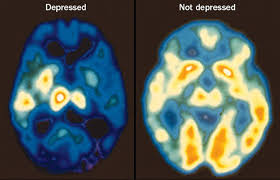
    The scenarios are as broad as there are people with this illness.

    But, one thing you learn: The higher “UP” you go in mania, the farther down you’ll probably nosedive in depression.

    Mood swings? 

    More like Saturn V mega-rockets that zoom to the moon — but then take a U-turn and dive right into hell. These are more than moods…and the changes are far more intense than “swinging.”

    No one should have to live with these careening, catastrophic whiplashes.

    Lithium: Old Drug Lights Path to New Hope

    Medical studies have found little to understand what really causes these actions, these “mood swings.” There are so many factors that come into play that it’s dizzying. But we have found medications that seem to help some of the time.

    The first medication that was found to be useful in some cases was lithium, which helps about a third of people with bipolar disorder. What does lithium do in bipolar disorder…? Quite a lot, in those who respond to it.  But how it works has been a mystery.

    Until recently. A network of neuroscience researchers across the globe set up an incredibly elegant way to study the action of lithium within brain cells so they could better understand what lithium actually does to help someone suffering from bipolar disorder, and in doing so, they were able to see a new target for this illness.

    Learning the Mechanism of Bipolar Disorder, through Lithium

    Sort of like following the bread crumbs back to the beginning to find new solutions for better outcomes.

    Since lithium only helps about 35% of people who suffer with bipolar disorder, the plan was to find out HOW it works to help those people, then develop new treatments that might help them and possibly the other two-thirds whom lithium doesn’t even touch.

    The Problems with Lithium

    Because, even for those 35% whose brains respond to lithium, many abandon it because of the serious problems it can sometimes cause.

    For one thing, there’s a tiny window within which lithium is helpful…or “therapeutic.” Not a lot of swing room in the narrow little range before side effects begin, and they’re obvious when they happen:  nausea, diarrhea, tremor, thirst, excessive urination, weight gain.  Go too high and the body gets toxic.  

    For some, lithium works–in fact for some, it’s the only thing that’s ever worked, despite its risks–but not all people.  Why is that?

    Neuroscientists Keep Probing

    To explain their amazing work, and what they learned from it, we’re going to have to get a bit “science-y”… so grab your lab goggles and get ready to roll.

    These researchers started with a certain type of stem cell. They used pluripotent stem cells, that is, the type that can develop into every type of cell found in the human body.  (There are other types of stem cells, such as those that only develop into particular types of cells. Forget about them.)

    These pluripotent cells were taken from people who suffered with bipolar disorder, and who were already being helped by lithium. That’s the key. They wanted to watch what happens when lithium is introduced into the cells of a person who IS responsive to lithium, to learn how it helps, and why.

    Lithium’s PathwayLithium: Old drug lights path to new hope for bipolar disorder.

    The outcome of their in-depth study was this: they found a pathway lithium follows to bring relief to those who respond to it. They found that people with bipolar disorder have abnormally elevated CRMP2, which is a protein necessary for sending signals through the neurons.

    Dendrites are the structures on the neurons that receive electrical messages. The dendritic spine is a tiny little protrusion from the dendrite that’s a storage compartment for the synapse…you know, the connection that sends out a messages to another neuron . . . or to millions.

    Hefty Science, but Exciting News!

    Ok, ok, a lot of vocabulary here … but stay with me.

    • CRMP2 – a protein necessary for sending signals through the neurons that influences their structure
    • dendrites – structures on the neurons that receive electrical messages
    • dendritic spines – tiny protrusions from the dendrite that are storage compartments for the synapse
    • synapse – the connection between neurons that sends out messages

    So these researchers discovered that with lithium in someone who is responsive to it, the CRMP2 protein is instrumental in changing the dynamics in the neuron at the dendrite and dendritic spine formation. To bring it into more normal function. It normalizes the set-point. And that helps stabilize that person’s mood.

    The discovery that lithium has this effect on the CRMP2 protein helps us better understand what it is that goes awry in bipolar disorder. It’s not simply a question of a gene. There’s actually a protein that can be toggled off and on in real time to create a better set point for mood and behavior. To create more longer and more dense branching in dendrites. More dense dendritic spines. Growth.

    We know there are other ways that lithium acts, too.  But understanding this opens up a promising pathway for researchers to explore and target with new treatments. This is lithium: old drug lights path to new hope for bipolar disorder sufferers. It’s a big step forward.

    The more that’s understood about bipolar disorder, the more we can do to help those who suffer.

    Lithium Helps 35% – What about the rest?

    So, since lithium is one of only a very few medications that help people who have bipolar disorder stabilize, and it’s only effective in about 1/3 of bipolar patients, we clearly need more means of treatment.

    Ketamine treatment and TMS have both shown a strong tendency for treating depressive episodes in bipolar disorder. There are other medications that can be used as mood stabilizers, too (although none of the ones tested affected CRMP2), and lifestyle changes that can help create and maintain well-being and minimize mood swings.

    Now…the mood swings of bipolar disorder. What if you could take the depression part of bipolar disorder out of the mix?

    Erase Suicidal Thinking

    And what if you could erase suicidal thinking? The suicide rate for people with bipolar disorder is somewhere between 30-50%. And keep in mind, that statistic is for those who succeed in ending their life. The rate of those who attempt suicide, or think about and plan it, is much, much higher. What ketamine treatment can do, that lithium can’t, is erase suicidal thinking rapidly.  Within four hours. It takes five days to achieve a therapeutic level with lithium.  Five days.

    When the suicidal thinking stops, the suicide attempt thankfully doesn’t happen. It not only saves the life of the person suffering with the disorder, but it also spares the family.

    As we continue to work with these advances, we encourage you to reach out to us if you’ve suffered with a mood disorder without relief from your treatment. Our practice specializes in patients who’ve found no help in other treatments.  We’ll do a thorough evaluation to determine if you’re a candidate for one of the innovative new treatments in psychiatry that are giving our patients their lives back. 

    We’re here to help you find your most happy and fulfilled self.

    Call us or arrange an appointment for a thorough evaluation to determine the best treatment for you.

    To your best self through science,

    Lori Calabrese, M.D.

    Lori Calabrese, MD offers innovative psychiatric treatment like IV Ketamine

  • TIME Magazine Runs Cover Story on Ketamine as a Treatment for Depression

    TIME Magazine Runs Cover Story on Ketamine as a Treatment for Depression

    New Hope for Depression

    Jul 26, 2017
    For more, visit TIME Health.ketamine in time magazine

    Every week, when Ian Hanley sits down with his therapist, he goes through a list of depression treatments he’s been researching online. The best-known treatments at the top of the list–half a dozen antidepressants and known combinations of those drugs–are all crossed out.

    “My therapist says he’s never had this much difficulty with somebody,” says Hanley, “which is sort of a dubious honor.”

    Hanley is only 21 years old, but he’s already six years into his search for something, anything, that can help him feel better for more than a few weeks at a time. “I’ve heard people describe it as sadness, and that’s not specific enough,” he says. Numbness is closer, but it’s not like depression inures you to suffering. “It’s like not quite being alive,” he says, “but still having to go through all the crappy parts of being alive.”

    When he was in the 10th grade, Hanley basically lost all desire to get out of bed in the morning. He started seeing a psychiatrist and a therapist–the same one he sees today–and went on Zoloft. “I wasn’t catatonic anymore,” he says. But the positive effects soon disappeared, like they would with every medication he’s tried since.

    This year, Hanley quit college and put on ice his ambitions to become a screenwriter. Now he spends most of his time waiting to start a new treatment, trying that new treatment or waiting to see if he feels better.

    Most diagnoses do not come with 20-plus medicines approved by the Food and Drug Administration to treat it–and yet with depression, more options don’t always mean better outcomes. Ever since the first antidepressants were introduced 60 years ago, doctors have had patients like Hanley–people who don’t seem to get better even after they’ve worked their way through the lengthy list of available drugs. About 30% of all people with depression don’t respond adequately to the available treatments. That’s a dismal failure rate for a class of drugs designed to improve a person’s basic ability to function.

    Not that it has hurt the market. At last count, about 12% of Americans took antidepressants. Global revenue for antidepressants was about $14.5 billion in 2014 and is projected to grow to nearly $17 billion over the next three years. Clinical depression affects 6.7% of U.S. adults, or about 16 million people, and a growing number of children and teenagers too. It’s the leading cause of disability in the world, costing the U.S. economy alone $210 billion a year in lost productivity, missed days of work and care for the many physical and mental illnesses related to depression, like anxiety, posttraumatic stress disorder, migraines and sleep disorders.

    There hasn’t been a major depression-drug breakthrough in nearly three decades, but a number of factors are conspiring to change that. Scientists are gaining a more nuanced picture of what depression is–not a monolithic disease, but probably dozens of distinct maladies–and they’re getting closer to learning what works for which kind of ailment. With suicides in the U.S. at their highest number in 30 years, experts agree that patients need faster ways to feel better, without waiting the typical four to eight weeks it takes for antidepressants to kick in. And as old drugs have gone off patent–making them less lucrative for drugmakers–companies are eager to find new revenue streams.

    The biggest development has been the rediscovery of a promising, yet fraught, drug called ketamine. It’s best known as a psychedelic club drug that makes people hallucinate, but it may also have the ability to ease depression–and fast.

    In a race to shape the next generation of antidepressants, Johnson & Johnson and Allergan are fast-tracking new medicines inspired by ketamine. The FDA could be reviewing new drug submissions by as early as next year. Researchers, too, are exploring how to harness big data and even genetic testing to come up with new ways of treating depression for the 30% of people who don’t respond to the current standard-of-care treatment options.

    All of this has psychiatrists, long frustrated with their menu of available treatments, hopeful for the first time in years. Finally, they say, their field is on the cusp of a much-needed breakthrough. “At this point, any new depression treatment that makes it to the finish line is a huge win,” says Dr. George Papakostas, director for treatment-resistant depression studies at Massachusetts General Hospital. “It’s going to have a major impact.” The question is, which method will prove to help the most people in the safest way possible?

    Doctors have always seen depression as something that’s distinct from ordinary sadness, but what causes it and how best to treat it has changed wildly over the years. In the 5th century B.C., Hippocrates believed the body was made up of four humors and that too much “black bile,” the humor secreted by the spleen, resulted in melancholia. Melancholia as described by the Greeks looked a lot like depression today: persistent dark moods with a deep, lasting fear or sadness that isn’t based on reason. The Greeks prescribed lifestyle treatments like diet, exercise, sleep, bathing and massage as well as rougher approaches like vomiting and bloodletting. In later ancient times, sex was also considered a helpful remedy.

    By the Middle Ages, depressive-like behavior was believed to be a disease of the spirit–the result of demonic possession. Many depressed women were thought to be witches, and the cure for them was to be burned alive.

    The idea that depression is rooted in the brain–and not a bodily fluid or possessed spirit–didn’t take hold until the 17th century, when a neurologist named Thomas Willis decreed that melancholia was “a complicated Distemper of the Brain and Heart.” Although he had little else to offer patients besides the lifestyle remedies of the Greeks, melancholia was finally thought to be at least partly biological. In subsequent years, everything from herbal remedies to opium to music therapy to spinning stools designed to make people too dizzy to feel pain fell in and out of vogue.

    Beginning in 1938, electroconvulsive therapy was thought to be the only effective modern treatment for depression, but the procedure sometimes caused memory loss, among other side effects.

    It wasn’t until the 1950s that doctors hit upon the idea that certain chemical cocktails could be used to treat depression. The first, called iproniazid, was found by accident when it was being tested as a treatment for tuberculosis. Doctors noticed that the TB patients taking the drug transformed from miserable and near death to euphoric, energetic and social. Newspaper articles of people “dancing in the halls tho’ there were holes in their lungs” captured the popular imagination, and in 1957 scientists decided to try it on a small group of psychiatric patients.

    According to that study, 70% of them became happier and more social. By the end of the decade, about 400,000 people with depression were on the drug. The high was short-lived, however: scientists soon discovered that the pills caused liver damage, and it was pulled from the market in 1961.

    Another experimental drug, imipramine, was supposedly an antipsychotic, but scientists discovered in 1957 that it worked much better on people with depression. It became the first in a class of what’s called a tricyclic antidepressant, so named for its three-ringed chemical structure.

    By studying how those early drugs worked, scientists were able to hit on a new idea about what caused depression in the first place: depleted levels of the brain’s neurotransmitters, namely serotonin, norepinephrine and dopamine. Those early drugs may have come with nasty side effects, but they ultimately gave rise to selective serotonin reuptake inhibitors, the drugs most widely prescribed today.

    Eli Lilly released the first one, Prozac, in 1987. It was an immediate hit; in just three years, 2 million people around the world were taking it, and pharmaceutical companies began churning out their own only slightly different versions of the drug soon after. SSRIs are still the field’s proudest and most profitable achievement, but they’re far from perfect. They can make people feel worse before they start feeling better several weeks after treatment begins. When the drugs work, they’re life-changing. But they don’t work for everyone. On SSRIs, about 35% of people taking them experience full remission.

    “We have no idea, after many decades of studying these drugs, why some people get better and some people don’t,” says Dr. Roy Perlis, director of the Center for Experimental Drugs and Diagnostics at Massachusetts General Hospital. “We desperately need truly new interventions.”

    The largest, longest study conducted on depression treatments, called the STAR*D trial, found that after people tried four antidepressants over the course of five years, about 70% of them were free of depressive symptoms. That’s a lot of trial and error to end at a place where 30% of patients don’t experience remission at all.

    The STAR*D trial ended in 2006, and despite a clear hole in the market–and a clear patient need–a golden age of new depression treatments still hasn’t arrived. Drug companies do not want to spend their money developing yet another SSRI–there are already a dozen approved by the FDA. “The drug companies basically shut down a lot of their brain research when it comes to psychiatry,” says Dr. Richard Friedman, director of the psychopharmacology clinic at Weill Cornell Medical College.

    “In my opinion, it wasn’t necessarily a lack of interest–it was just that people had felt that they’d gone as far as they could with things like Prozac, and they weren’t sure what the next targets were going to be,” says Husseini Manji, global head for neuroscience at Janssen, the pharmaceutical arm of Johnson & Johnson.

    Now, many experts–and drug companies–believe that target is ketamine hydrochloride, the only legally available psychedelic drug in the U.S.

    In large doses, anesthesiologists use ketamine to put people under before surgery. In smaller doses, clubgoers use “Special K” to trip and hallucinate; it’s one of the top drugs of abuse in Asia. However, its newest application, discovered serendipitously in the late 1990s, opened ketamine up to a whole new audience: those looking for a fast-acting drug for stubborn depression.

    There are two drugs, one from Allergan and one from Johnson & Johnson, that work similarly to ketamine and are in late-stage clinical trials. As of now, ketamine is not FDA-approved for depression. So far, clinical trials on ketamine for depression have been small, and there aren’t many of them. Only about 400 people have participated in such studies, and many had fewer than 100 people. (By comparison, the STAR*D trial had almost 3,000 participants.) Still, the results are promising enough to excite a number of prominent researchers in the field.

    “In the past 20 years, I’ve not seen anything like this,” says Dr. Cristina Cusin, a clinician and researcher who runs the ketamine clinic at Massachusetts General Hospital. Studies have shown that 60% to 70% of people with treatment-resistant depression respond to ketamine.

    Ketamine has also shown promise in putting an end to suicidal thoughts. “We have patients saying, ‘I’m exactly as depressed as I was before, I just don’t want to kill myself anymore,’” says Cusin. “This was very surprising. We can’t explain it.”

    Barbara Reiger, who’s 59 and lives in San Diego, says she tried nearly everything to lift her out of the depression that had plagued her since childhood and sometimes rendered her suicidal. When she learned about ketamine in 2015, she decided to try it at a ketamine clinic in her hometown. Since ketamine is FDA-approved as an anesthetic, physicians can legally prescribe it off-label for any condition they believe it may help, including depression.

    Since then, every six weeks or so, she shows up at a private ketamine clinic, where she’ll put on an eye mask in a dim room, sit back in a recliner and have a needle full of ketamine plunged into her deltoid. It doesn’t make her feel high, exactly, but she remembers that the first time she tried it, a grin and happy tears spread across her face. “I felt I was putting things in order, moving pieces of a puzzle around to make it all make sense,” she says.

    [Read the Full Article Here]

  • Is TIME Telling the Truth about Ketamine?

    Is TIME Telling the Truth about Ketamine?

    Is TIME telling truth ketamine?Is TIME Telling the Truth about Ketamine?

    In the most recent issue of TIME magazine (7/27/17), the cover story by Mandy Oaklander celebrates the potential of ketamine treatment for depression. While we’re thrilled to see ketamine’s remarkable benefits for psychiatric mood disorders broadcast to such a large readership – (26 million!), we’re concerned about misconceptions arising from the article.

    “Since 1923, TIME Magazine has been one of the most authoritative and informative guides to what is happening in the worlds of health and science, politics, business, society and entertainment,” at least that’s what TIME says… about TIME.

    There’s no question TIME is a recognized and revered publication, and because of that, most readers assume whatever is printed in TIME is true. But is TIME telling the truth about ketamine for depression? Since TIME’s articles are written by human journalists, mistakes can happen, and misconceptions can arise. 

    We’re going to take them on.

    Take on TIME Magazine? Takes a lot of guts, to tell you the truth. Guts, and more than 2 decades in the trenches, in all kinds of settings — from among the best that academic psychiatry has to offer (Massachusetts General Hospital, Harvard, Yale)… to the days and nights and weekends in hospitals, ERs, and my own office… with the thousands of real-live people I’ve treated who’ve suffered the most severe, unrelenting, and deadly forms of depression, mania, anxiety and trauma imaginable. To suicide so close it rattles.

    Takes guts, alright. A love for this work. An incredible reserve of hope and goodwill. And a ton of experience with ketamine infusions — and the patients, families and clinicians who wind their lives around a clear little vial of hope in a jar.

    Clearing up Misconceptions about Ketamine for Depression

    So let’s clear up some of those misconceptions. In each numbered example, the quote from the TIME article is in italics, followed by my comment.

    1. TIME:In large doses, anesthesiologists use ketamine to put people under before surgery. In smaller doses, clubgoers use “Special K” to trip and hallucinate…”

    Dr. Calabrese: The dosage of ketamine used in the club scene under the name “Special K” is quite large compared to doses used in anesthesia, and the dosage used in treatment of depression is even smaller. This is an important distinction since the most troubling side effects occur in club goers and people abusing ketamine on the street, rather than in patients being treated for depression. Abusers of the drug use it in higher and higher doses, repeatedly over time…. often mixing it mixing with alcohol, opioids, and barbiturates, which is what can cause serious and life-threatening outcomes.  

    2. TIME: “Studies have shown that 60% to 70% of people with treatment-resistant depression respond to ketamine.”

    Dr Calabrese: In all fairness, statistics like this vary based on unknown variants among those collecting the data and the patients themselves. But I can say that in my practice, which includes hundreds of IV infusions, 80% of patients respond, which rivals the best results of the institutions where I’ve trained and taught.

    Infusion Treatments … Not a TRIP

    3. TIME:Ketamine trips are known to help people disconnect from their bodies and their thoughts, and it worked that way for Is TIME telling truth ketamine...? Reiger. After her first trip, she remembers feeling better than she had for years. ‘I immediately felt relief … a lightness of the depression kind of lifting,’ says Reiger. And it all happened in less than an hour.”


    Dr. Calabrese: Use of the term “ketamine trip” is misleading… and sensationalizing. It sounds as though what we’re doing is encouraging drug abuse and proposing “tripping” as treatment. Nothing could be further from the truth. The abuse of a respected and valuable medication by those who use it illegally should not taint it’s value when administered carefully in controlled settings. Ketamine has been a safe and widely used medication in anesthesia for a half century.

    RED CROSS says Ketamine is Irreplaceable

    The following excerpt is a statement by the International Federation of Red Cross (IFRC) and is their stand about ketamine placement on a list of internationally controlled substances:

    Ketamine is the anaesthetic of choice when reliable manual and mechanical ventilation equipment is not available or when advanced airway management (tracheal intubation) is not possible (e.g. in mobile clinics, road-traffic accidents with crushed vehicle and trapped persons). Ketamine has a very favourable safety profile in clinical use and is particularly useful in healthcare settings where task- shifting is required due to a lack of skilled anaesthetic staff.

    “In resource-poor hospital settings without anaesthetic machines, often without oxygen and sometimes even without electricity, ketamine is the only anaesthetic drug that allows even major surgery being performed. Its usability in traumatology makes it the preferred drug in mass casualty situations, such as earthquakes.

    IFRC position on placing ketamine under international control:  Is TIME telling truth ketamine?

    “Ketamine has an undisputable role in humanitarian assistance and in prehospital and disaster medicine. There are no available alternatives to ketamine to provide safe anaesthesia in some of the most challenging clinical situations and emergency settings.

    Ketamine is a Humanitarian Drug

    “Ketamine has a very specific but not insignificant – thus not ‘limited’ – value for humanitarian assistance. Ketamine’s clinical benefits and safety profile, coupled with its usability and importance in some of the most vulnerable and fragile countries far overweigh the risks associated with its misuse. In our view, the addictive potential and the scope of misuse of ketamine does not support its inclusion as a internationally controlled substance as defined by the 1971 schedules of International Drug Control Conventions.”

    The value of ketamine as an emergency and disaster medicine is irreplaceable, and its use in surgery carries obvious value. My point is that it’s an invaluable medication first, and it’s now becoming the most rapid and remarkably effective medication we’ve seen yet for treatment-resistant depression and PTSD.

    It’s true that it can cause side effects and hallucinations in high doses, but the illegal and unsupervised use of it on the street doesn’t diminish the good work it can do when properly administered under supervision of a psychiatrist.

    Is TIME telling the truth about ketamine…??

    How Ketamine Works to Reverse Depression and Anxiety

    4. TIME: “Experts aren’t sure exactly how ketamine works, although they agree it doesn’t target the standard antidepressant route of serotonin, norepinephrine and dopamine. Instead, they think it stimulates a series of receptors in the brain, kick-starting something called synaptic plasticity–the ability of parts of the brain to grow and change. While antidepressants have been shown to also increase plasticity, ketamine seems to do it much more quickly–and much more powerfully.”

    Dr. Calabrese: We’ve learned so much already, and there’s so much more to know. Neuroscience researchers are finding out more all the time about how ketamine treatment works. TIME refers to kick-starting synaptic plasticity, and that’s true. So far, neuroscientists have identified 4 different actions that that come in to play when ketamine acts rapidly to lift depressive symptoms and suicidal thoughts.  Ketamine:

    I’m sure even more of ketamine’s actions for reversing depression and anxiety will emerge soon.

    Ketamine Wannabe Drugs

    5. TIME:In a race to shape the next generation of antidepressants, Johnson & Johnson and Allergan are fast-tracking new medicines inspired by ketamine. The FDA could be reviewing new drug submissions by as early as next year.”

    Dr. Calabrese: We’re all excited to see the new frontier of ketamine wannabe drugs unfold. Ketamine has caused a paradigm shift in psychiatry, and good money is being invested in other closely-related compounds to bring more help to more people.

    6.TIME:Ketamine’s effects are temporary; depression reliably creeps back, so people need infusions every few weeks or more to keep their symptoms at bay.”

    Dr. Calabrese: I would say, Sometimes. Some patients receive a short series of infusions and go into remission…and stay there. They’re well.  Others do need a maintenance infusion periodically.  But I wouldn’t say that “depression reliably creeps back.”  Whether or not depression recurs — and when — for anyone depends on many different factors. The mechanism of action with ketamine is so complex and different than any other treatment we’ve ever been able to offer, and for some people it appears to be extremely long-lasting.  And we have a lot to learn about the best methods and treatment intervals for maintaining remission.

    Ketamine Should Not Cause a BAD TRIP Under Physician Supervision

    7. TIME: “For his part, Ian Hanley is waiting to see if ketamine, which he recently crossed off the list of treatments he has tried, will be a success or just another failure. His first IV infusion left him dazed and, after a long nap, uncharacteristically energetic. The night of his first trip, he shocked his parents by cleaning his room and going for a walk for the first time in ages. But about half of his subsequent treatments sent him on bad trips. He was consumed with worries that he’ll stay depressed, that ketamine won’t work for him and that, if it doesn’t, he won’t know what to do next.”

    Dr. Calabrese: Again, TIME calls ketamine treatments trips — yikes! A provocative word that makes people worry about what the treatment is really like, worry that they’ll get addicted. It evokes all kinds of fear in your mind and all kinds of fear for people who are suffering . . . and who just want relief.  They don’t want weird.  They don’t want scary. The floaty or out-of-body experience that happens with most infusions is not the point of the treatment. This is enormously reassuring to so many people who already live with hellish thoughts — they don’t need any more.

    When ketamine is administered carefully and slowly in a controlled medical setting as an infusion with state-of-the-art monitoring, the dose and the rate can be adjusted to avoid the awful side effects and risks that people have described with IM injections, intranasal sprays, or infusions that are too rapid or too strong.

    It’s a fact that there are people who are not helped by ketamine. It’s not for everyone.  But there is no other office-based treatment for depression and anxiety that brings such rapid and dramatic response in 80% of cases.

    Not for Everyone… but may be just right for you

    Ketamine treatment isn’t the answer to everything, but it can do so much to restore your power to enjoy and engage in your life. If you’ve suffered from depression, anxiety, and other mood disorders that have not responded to other treatments, please do give us a call. Let’s spend the time to do a comprehensive evaluation, and determine what will help you the most.

    There really is hope — even if that seems hard to believe. You really can have your life back.

    To the emerging of your best self,

    Lori Calabrese, M.D.

    Lori Calabrese, MD offers innovative psychiatric treatment like IV Ketamine

  • The Guardian: The people taking ketamine for depression

    The Guardian: The people taking ketamine for depression

    ‘I can stop and breathe’: the people taking ketamine for depression

    It has a reputation as a party drug, but some patients say it has transformed their lives after no other treatments helped. 

    When depression takes hold of Helen it feels like she is drowning in a pool of water, unable to swim up to the world above. The 36-year-old former nurse has had mental health problems most of her life. No drugs, hospital stays or therapies have been able to help.

    Then one day, during yet another spell in hospital, her consultant told her about a psychiatrist treating patients with ketamine. The psychiatrist in question visited her to discuss using the drug. He warned there were no guarantees, but it had helped some patients.

    Since then Helen’s life has transformed. Sitting on a bench in the grounds of the hospital where her treatment began a year and a half ago, she lists everything she can do now that she could not before: take her kids to school, give them hugs, go on coffee dates.

    “I am managing my thoughts and that is what ketamine helps to do. It slows down my thought process so instead of being completely overwhelmed by all these immense negative thoughts and feelings … I can think, stop and breathe,” she says, nervously pulling her sleeves over her hands as she talks.

    She adds: “It’s still really hard but now there is a tiny fraction of a second where my thoughts are slow enough to think: ‘I can deal with this. I cannot give up.’”

    Helen is not the only person changed by ketamine. For Keith, a 64-year-old former businessman, who is also at the hospital, it has helped where other drugs have failed. He has been on it for three years to treat bipolar disorder. He explains that he has taken an infusion of the drug that morning, which is why he is so chatty.

    “I take an infusion intravenously in hospital once every six weeks and then I have 10ml which I take orally twice a week at home. I go out afterwards and do things like gardening. When I am depressed I don’t want to do anything. All I do is sit on the sofa and watch TV shows like Bargain Hunt,” he says.

    Keith credits ketamine with helping soften his depression, such that he now has good days as well as bad ones. “My wife gets her husband back for those few days when I am normal – well, whatever normal is,” he says.

    There is increasing evidence that ketamine, often thought of as a party drug of abuse, is an effective and powerful antidepressant. Helen and Keith are patients at Warneford NHS hospital in Oxford where Dr Rupert McShane leads the UK’s only ketamine treatment centre. It caters for people for whom other antidepressants have not worked. McShane is not the only doctor who has been experimenting with the drug – other UK hospitals have given it to patients as part of clinical treatments.

    [Read the Full Article on The Guardian Here]

  • Daily News: Ketamine for Depression

    Daily News: Ketamine for Depression

    Ketamine is being used as a cutting-edge treatment for depression, PTSD

    One in five adults — 40 million Americans — has a mental health condition, according to Mental Health America.

    Within that number, nearly 16 million people suffer from depression and more than 7 million are affected by post-traumatic stress disorder. The two conditions tend to go hand-in-hand, as those who suffer from PTSD often experience depression in their lives.

    Nearly twice as many women suffer from depression as men, and even though PTSD is mostly associated with male soldiers coming back from war, any traumatic event such as a car accident or sexual assault can cause the condition.

    PTSD is something that both men and women must deal with, and it occurs twice as much in women, according to the U.S. Department of Veteran Affairs.

    Veterans push state Senate on medical pot use for PTSD sufferers

    While there are dozens of medications to treat depression and PTSD, some of which overlap, most merely cover up the problem.

    Many medications work on the assumption that you don’t have enough serotonin in your brain. And if you replace enough of these feel-good hormones, you will feel better.

    But there are other options. For example, periodic Ketamine infusions in small doses can help repair damaged connections in the brains of patients who suffer from depression and PTSD.

    Developed in 1962, Ketamine was originally used as an anesthetic, but quickly found its way onto the streets as a recreational drug, taking on the name Special K. It has also been used as a tranquilizer for animals such as horses and cats.

    As an anesthetic, it’s still considered one of the safest around. But that usually happens in one dose. The unknown is what happens to the brain over time with repeated infusions of Ketamine.

    But those who may be at risk of cognitive damage are people who abuse the drug daily or multiple times a week in high doses. In contrast, I work with patients who receive an infusion once a month, and also go through traditional talk therapy.

    In some cases Ketamine has started to alleviate patients’ symptoms after one infusion. Most anti-depressants can take weeks or months to start working.

    Extensive research conducted on Ketamine at multiple universities in the United States and abroad reveals a 75 percent success rate for the treatment. A recent study at Columbia University found that Ketamine infusions given in a vaccine-like fashion to those embarking upon an environment likely to cause significant stressors — such as soldiers entering a battle or aid workers going to a disaster area — prevented or reduced PTSD symptoms.

    But Ketamine shouldn’t be viewed as a magic bullet; it’s a tool. Ideally, patients eventually will feel like they are sailing on their own and Ketamine is merely there as a backup.

    [Read the Full Article on Daily News]

  • Suicidal Thoughts Children Have – What Can Parents Do?

    Suicidal Thoughts Children Have – What Can Parents Do?

    Depressed boy may just seem bored to parents. Suicidal thoughts children have can be addressed and treated.The Beauty of a Fresh Young Mind

    Your child is born beautiful, both fragile and strong at the same time, with all your hopes and dreams for her waiting to be fulfilled.

    She bursts through infancy, preschool, then her first few grades, and you discover she’s not an empty canvas waiting for you to paint…she’s an individual. Her views catch you by surprise, her reactions are different than yours would be.  And little by little it dawns on you she’s actually a separate and unique person in her own right… And you learn to observe, support, and guide. 

    But then, along the way, you notice traits that also trouble you. She’s your precious child, and you want her to enjoy her childhood, her school activities, her friends. But, she seems less and less like the toddler and Mom enjoying newborn can't predict the suicidal thoughts children have, but by nurturing her as she grows she'll be there to help.preschooler you knew her to be. 

    She’s sad, irritable, agitated at times.

    By the time she’s 13, she’s talking about wanting to die. (And you think, this isn’t typical… is it?) Thirteen years old… and mentions death not just once… but often. She is treated with correction at school much more than she used to, and seems to swing from glee to sorrow to desperation… the correction from teachers baffles and grieves her. Your daughter feels persecuted, and doesn’t understand. She cries that she wants to die… You wonder what on earth is going on…? What are these suicidal thoughts she has?

    Why Would a Child Want to Die…?

    A 10 year-old-boy reaches out to his parents, weeping, crying out that he wants to die. When they tell him things will get better, he says that they always say that.  That he’s given up hope…  at 10.

    This wasn’t the impulsive thought of a pubescent teenager, but a child who can’t remember a time he wasn’t suffering in emotional pain. That boy later attempts suicide the first time at 14. Again, not impulsively…he’s been suffering for years…  Suicidal thoughts in children. Heartbreaking… and dangerous.

    Suicide in children under 12 is rare….about 4 per 500,000 a year… at least that’s what statistics say. That figure’s doubled since 1979, and recently was listed as the 14th leading cause of death in children under 12. Just under meningitis and anemia.

    If kids under 12 struggle with depression and other mood disorders, and even think about wanting to die, why is the rate of suicide so low among this age?

    It’s not because it doesn’t happen. No… it’s because it happens differently.

    For instance, one reason is supervision. This age is typically supervised by a parent or teacher. So they’re more often interrupted. And most parents are reluctant to report these cases.

    Children are Spontaneous

    Another point is that traditional suicide in teenagers and adults starts with a thought, then grows into a plan, then Worried dad... suicidal thoughts in children - what can parents do?proceeds to action. On the other hand, suicide in children is typically spontaneous, rather than planned. Like a child overwhelmed from school might jump in front of traffic, and it’s labeled an accident. Or a frustrated third grader “falls” from an apartment window after wrestling with his brother. Again, it looks like an accident. Or a 5 year-old jumps in a pool…then inhaleson purpose. Again, an accident.

    Bottom line, adults often miss depression or anxiety disorders in a young child. Exceptionally tuned-in parents may notice the changes in their child, but may not know what to do to help. It’s a phase… they think. He’s a child.  He’ll snap out of it.   

    But years go by. And “wanting to die” just keeps coming up.

    Persistent Sorrow May Be a Sign

    An 11-year -old cries herself to sleep night after night…praying she’ll die before she wakes in the morning. But Suicidal thoughts in children, -what can parents do?morning after morning, she wakes up as usual. And each time she’s disappointed, because life is so full of pain for her. She can’t remember when she wasn’t drowning in sorrow, emptiness, isolation.

    She always dove into her school work to distract herself from the constant inner ache. The sense of futility. But eventually, she just got tired.  Tired of trying so hard, tired of fighting constantly for relief. It all seemed so hopeless. Pointless.

    One night, her mom walks into her room to kiss her goodnight, and finds her with a bottle of Tylenol dumped in front of her on the bed, and a tall glass of water in her hand.

    Her mom had no idea she felt suicidal…

    When you’re faced with suicidal thoughts in children what do you do…?

    You Feel So Helpless…

    Turns out teenaged girls are twice as likely to be diagnosed with a mood disorder as boys. And boys are also far too often affected by the pain and listlessness that saps their desire to live. The agitation some depressed kids feel often leads to disruption in class, and the child is punished. Which further reduces their hope as well as their self respect.

    What do you do? Tighten the discipline…?  Then tighten the structure…? Plus, tighten her accountability…?? Unfortunately, all too often what appears to be a discipline problem in a child at school is more accurately a psychiatric mood problem. Not that discipline and structure aren’t good for children. They are. But an ill child may not have the energy to respond as you’d wish…

    If the child is depressed, correction and punishment can just drive him further into himself, reducing anySuicidal thoughts in children - What can parents do? hope or self-respect he might have had. If he has another behavior disorder, he likely doesn’t understand what drives him, and just may feel baffled by the punishment, and more hopeless.

    Parents Try So Hard to Help

    The most well-meaning parents can be completely caught off-guard by a psychiatric mood disorder in their child. Their best efforts to help by encouraging new interests and social activities can be misdirected if the child is depressed, or suffering from an anxiety disorder, that drains her energy.

    No matter how closely they may work with the psychiatrist to try new medications, therapies, hospitalizations, exercise and diet changes, if the problem in the child’s brain is not related so much to school and friends and junk food but rather to structural changes in certain parts of the brain, traditional efforts aren’t going to help.  And everyone becomes discouraged…and exhausted.

    For parents, to know your child is wishing to die… month after month, year after year… and that all your best efforts make no difference… can leave you feeling defeated, but never willing to give up the fight.

    And, if you’ve fought for your child’s life for years, and you hear about a treatment that’s bringing relief to others within hours, your instincts leap at the opportunity to save your child.

    So you learn all you can about this treatment.

    Suicidal Thoughts Children Have – What Can Parents Do?

    Suicidal thoughts in children What can parents do? Your research shows you there are skeptics, professors and scientists who say there are reasons to wait and see if this remarkable treatment is safe, but you learn of those who have been almost miraculously released from their symptoms, you want to try it.  You reach for hope.

    You say to yourself, the risks of unknown potential side effects that might show up decades later, compared to saving my child’s life right now, is a no-brainer. Our child may not live till next month… !

    We’ll take this as it comes, and help her to get her life back now.

    If you’ve ever lived with a suicidal loved one, you know how very real this comparison is. Your instinct says, “Ok, so what if we wait 20 years when researchers know more…?  She won’t be alive when that time comes. Let’s give her the time we can.”

    That’s the story of those who’ve desperately needed a remedy for their child’s psychiatric mood disorder.  Who have almost resigned to accepting their child will die from suicide.

    WHAT can be done?

    The New Story of Ketamine Treatment

    Ketamine treatment is presenting itself as the psychiatric hero for mood disorders. A drug that’s been used in anesthesia for humans and animals for 50 years is showing itself to remarkably restore the lives of those disabled by mood disorders.

    A drug that’s been heavily abused on the streets, under the name Special K.  Like so many medications that are a Suicidal thoughts in children - what can parents do?great help to those who need them, and receive them under medically-supervised conditions, ketamine is abused by people “just looking for a good time.”

    Sadly, there are rare and serious long-term side effects that have occurred with illegal, heavy ketamine abuse on the street. Things like severe bladder pain that have sometimes required the removal of the bladder, for instance. But, keep in mind the doses that people have used illegally to get to this point are massive … each one on the order of 10 times or more the dosage used in anesthesia, over years.  And the dose used in psychiatry is miniscule in comparison.  We call it a fairy dust fraction. 

    Ketamine Treatment – To Be Provided Only Under Close Medical Supervision

    Under medically-supervised conditions, ketamine treatment has proven to be a safe medication for decades in children and adults. Children and adults have responded well to it in ERs and ORs throughout the country for decades.

    The uncertainty lies in the fact that, as an anesthetic, it’s not been used repeatedly in many patients over a period of years, so there is limited information about whether there might be long-term negative side effects.

    But, as a psychiatric treatment for depression, anxiety, and other mood disorders, IV ketamine treatment is being used now with wonderful results. While it’s true that a single dose of ketamine may not last very long, a short series of infusions often brings about a complete remission of symptoms. In our practice, with our customized treatment protocols, fewer than 20% of our patients need to return for follow-up or maintenance infusions.

    And while these carefully supervised infusions are rather expensive, most parents say that the investment is less than the cost of antidepressants over years…that haven’t worked…not to mention the value of watching their child bloom.

    Suicidal Thoughts Children Have Can Be Dissipated by Ketamine Treatment …in Minutes

    Plus, a remarkable and separate action of IV ketamine, is that it erases suicidal thinking within 4 hours, and often Suicidal thoughts children have leave parents baffled about what to do.in minutes.

    So it not only removes the danger of suicide, but also gives your child back her joy for life. The power to enjoy experiences. Plus, initiative to work through therapy to strengthen her thinking patterns for productive living. And, the hope to plan for and work toward the future.

    Yale Psychiatrist Touts Ketamine Treatment in Children

    Jack Turban MD, a child and adolescent resident psychiatrist at MGH/Harvard Medical School, recently published an article where he shared his observations of a group of adolescents during and after their IV ketamine infusions for psychiatric mood disorders. After their infusions, he remarked:

    “I could see the weight of depression lifted from these patients within hours. Adolescents who were previously ready to end theirTeen girl relaxed and at ease after IV ketamine. Suicidal thoughts children have can be quickly stopped by IV ketamine.. own lives became bright and hopeful. Psychiatry has never seen a drug intervention so powerful and fast acting. While most anti-depressants take weeks to work and offer modest improvement, ketamine offers dramatic improvement in less than a day.”

    Dr. Turban went on to express his concern that some doctors are using less discretion with ketamine treatment —  in fact, he questioned their ethics. He described doctors who were sending large amounts of the drug home with patients, to give themselves injections at home. This puts the patient in jeopardy of side effects or a situation that can’t be handled at home. He also spoke of lollipops for children, and the danger of addiction under such uncontrolled use.

    Dr. Turban quoted Jennifer Dwyer, MD PhD at the the Child Study Center at Yale, who said,

    “Ketamine should only be given under careful physician supervision with appropriate monitoring.”

    We agree.

    IV Ketamine Treatment – Innovative Remedy for Psychiatric Mood Disorders

    With that understanding, we at Innovative Psychiatry are consistently encouraged by the hope and promise that IV Suicidal Thoughts Children have can be healed by IV ketamine.ketamine is providing for recovery and remission of psychiatric mood disorders in children and adolescents, as well as adults. We operate with integrity and with excellence, and use only the best practices in providing IV ketamine treatment for treatment-resistant mood disorders.

    So, we proceed with great care, following the results of clinical studies and data across the country to watch new advances unfold.

    We’re on the edge of our seats because suicide is the second leading cause of death in adolescents, and 40% of depressed teens aren’t helped by traditional treatment. And as mentioned above, many of those suicides are the end result of suffering that began in early in childhood. IV ketamine treatment is the greatest hope for treating pediatric mood disorders… ever.

    It’s worth the caution, the studies, the gathering of data, and the meeting of the brightest and best psychiatric minds, to find the safest way to make this treatment available and save those lives.  Beyond saving them; to restore, rejuvenate, and revive them.

    If you or your child have suffered from the effects of depression, anxiety, painful memories… and you’ve not found a treatment that brings you relief, and you feel yourself losing hope, please call me. Let’s arrange an appointment and talk about your options.

    To the discovery of your child’s very best self,

    Lori Calabrese, M.D.

    Lori Calabrese, MD offers innovative psychiatric treatment like IV Ketamine


error: Content is protected !!