
Blog

  • Resilience: Adapting To Emerge as Your Best Self

    Resilience: Adapting To Emerge as Your Best Self

    A woman's hand reaching out for the possibilities that can come from her circumstances, and that's resilience.Do you know someone who can’t seem to go through difficulty without collapsing emotionally?  Whether the difficulty is a natural disaster, a broken relationship, or a financial loss…

    Some people can weather difficult storms with strength and resilience. Others become grief-stricken and shut down every time something disappointing happens.  Why is that?

    So what is resilience, anyway? 

    Resilience is the ability to absorb and then find a healthy way to adapt to what you’re faced with. 

    Attitude: Resilient or Victimized?

    A key to understanding and developing resilience, is attitude.  Or better said, perception. Those who look for ways to learn and grow in each difficulty presented to them, are the ones who are actively growing a bumper crop of resilience. It’s how you perceive the difficulty you face that makes the difference.

    Do you meet challenges on your own terms, believing the outcome is based on who you are and how you respond?

    Or…do you feel victimized by storms, fold up and lick your wounds when times are tough? Do you tend to see the glass half empty? If so, you may have a difficult time recovering from an adverse situation or experience.

    Resilience Takes Practice

    Anyone who goes through life with a proverbial halo over his head, never challenged, always rewarded, may or may not have the resilience he needs to draw from when times are tough.  Until you face hardship or difficulty, you never know how you’ll respond to it. 

    On the other hand, we also know we can train ourselves to be less resilient. if you’ve had challenges every step of the way, you have the best opportunity for displaying resilience, or else learning how to develop it. Because it’s in the presence of the storm that resilience is developed.

    Psychologists who conducted studies of children in extremely trying circumstances learned how they either succumbed to or surmounted their situation. Among the children, about 2/3 succumbed to their circumstances, losing their belief in themselves, and their hope for future achievements.

    But about 1/3 responded to their dire circumstances with determination and a belief that they were in control, that their outcome would be the result of their own decisions and actions.

    What they concluded is that the children who rose above their circumstances, who piloted their own journey through their personal storms, were those who did not view their difficulties as traumatic, but as just another difficulty to be overcome.  

    Trauma is How You Perceive It

    Only those who view difficulty as traumatic are, in fact, traumatized.

    What’s more, anyone can learn to view the difficulties they face in life in a resilient way. By learning to view an emotionally-charged experience as less emotional, and more factual, you can remove the traumatic association of it. Then, train your emotions to view it with less pain. By doing this, you can learn to regulate your emotions, and strengthen your resilience.

    On the other hand, we also know we can train ourselves to be less resilient. By exaggerating the emotional feelings tied to an experience, by thinking about it, talking about it, meditating on it, we can convince ourselves we’ve been traumatized. And that traumatized orientation will continue to follow us through life unless we set about to change it. We don’t even realize we’re doing this to ourselves.

    When you perceive a difficult situation as one that’s threatening, your own ability to face it and overcome it drains away. Conversely, view it as a challenge to be overcome, and your emotions remain strong and agile, adapting as you go and building inner strength along the way.

    This is what those resilient children discovered on their own.

    Some of them may have been fortunate to find a friend or relative who gave them support, as studies have shown that the most resilient of people are those who are closely connected to mentor or peer group support.

    David Brooks’ work on resilience in children has shown that the one thing that is found is children who develop resilience is the presence of a charismatic adult in the life of that child.

    Studies of military groups found those units with the strongest peer support and highest morale were the most adaptive in stress situations such as battle.

    Flexibility
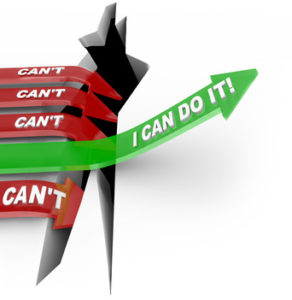
    Graphic image shows all the indicators that say you can't do it, but then one emerges that says, I CAN DO IT! This is resilience.

    Flexibility is a core value for resilience. The ability to adapt to circumstances as you navigate through them, gives you the power to emerge successful.

    In the award-winning movie, Pursuit of Happyness, Chris Gardner (played by Will Smith) faced ever-increasing obstacles and hardships that would have crushed many to despair, as he sought a better life for himself and his son. But his flexibility in the face of those hardships, and his stubborn tenacity in holding to his belief he would overcome them was the reason he did.

    In one scene, he locked himself and his son in a public restroom to sleep in safety, then woke the next morning to continue his quest to get the career that would change his and his son’s destiny.

    For some, that one experience alone would have been seen as traumatic. And hope would have drained away. But for Chris, it was a means to accomplish what he had to do to achieve what he wanted to achieve. It was a bump on the road to success.

    Resilience is Learned

    And, remember, you can learn to adapt, to change the way you see the challenges and stressors, every day. Take a moment to look at your circumstances. Are they as damaging as you tell yourself they are? Can you look at them with an objective view and see ways to adapt your attitude to move forward?  If you can, you’re building your own crop of resilience, and paving the road to your own success. There’s no shame in realizing you have invited a traumatized view of an experience. We’ve all done it. The key is to change to become a happier person.

    You really are the captain of your fate in this life, as you strengthen your skill to ride the ups and downs in life that surround you.

    Look for ways to develop resilience in your own life daily. The opportunities are all around you. And if you don’t see where to start, you may benefit from our innovative approach and  advanced psychiatric services, such as TMS or IV Ketamine treatment.

    Contact us and let’s discuss your options. You really can feel better and live a rewarding life.

    To the growth of your best self,

    Lori Calabrese, MD

    Lori Calabrese, MD offers innovative psychiatric treatment

  • How Curcumin Relieves Depression

    How Curcumin Relieves Depression

    This woman is enjoying her friends at a dinner party because curcumin alleviated her depression

    In the search for alternatives to help those patients who suffer from treatment-resistant depression, or who can’t tolerate the side effects of some antidepressant medications, a shining star rises — curcumin.

    Curcumin is the potent anti-inflammatory ingredient found in the spice turmeric. The wonderful aromatic spice that makes mustard and curry yellow, turmeric is a delicious ingredient used in Indian and other eastern foods. Its flavorful qualities are second only to its healing characteristics.

    Curcumin Protects Almost Every Part of Your Body

    As a result, it provides anti-inflammatory benefits to nearly every part of the body. A single curcumin molecule possesses anti-inflammatory, antimicrobial, chemotherapeutic,  anti-thrombotic, anti-hepatotoxic, antiparasitic, anti-diabetic, anti-psoriasis, and wound healing properties…but that just scratches the surface.

    Today though, we’re focused on how it can help depression. And that brings into focus its neuroprotective properties…and…that it penetrates the blood-brain barrier carrying its healing properties to the brain. It’s also been discovered through animal studies that curcumin enhances neurogenesis in the adult hippocampus by proliferating the numbers of newly generated cells there. (more…)

  • Gut-Brain Axis – How Your Gut Microbiome Communicates with Your Brain

    Gut-Brain Axis – How Your Gut Microbiome Communicates with Your Brain

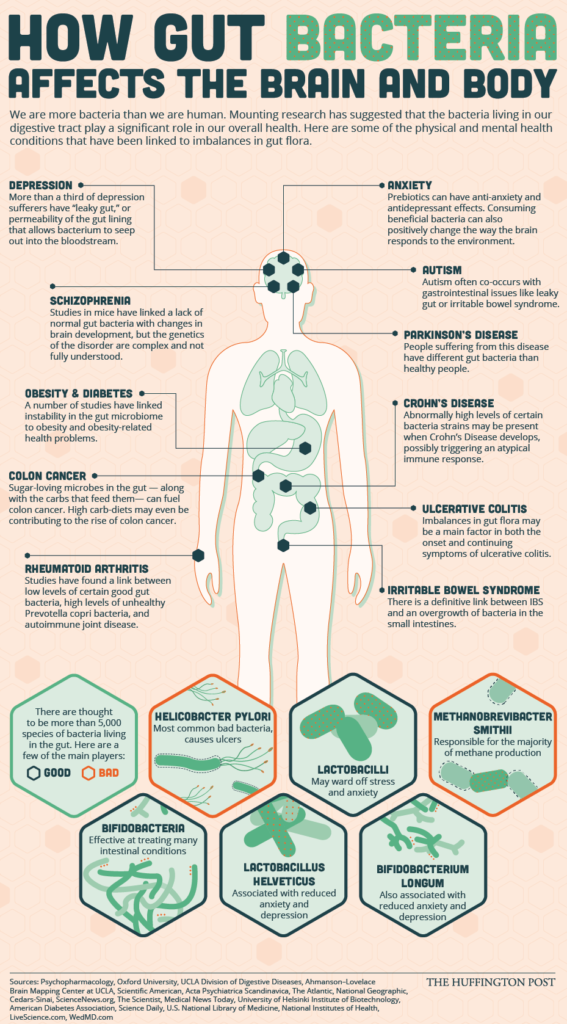
    This young woman is enjoying her healthy lunch of fresh raw vegetables for feeding her gut bacteria to affect her brain through gut-brain axisYour gut-brain axis is one of of the most effective systems you can use to transform your mood. Really? Really. We’ve been talking about that microbiome eco-system community that lives in your gut, and how it affects your mood, your wellness, and your mental health. The gut-brain axis is the pathway of communication between your gut microbiome and your brain — and it’s the system that makes all this possible.

    The Gut-Brain Axis is Complex and Powerful

    By definition, the gut-brain axis is the two-way communication that takes place between the GI tract and the central nervous system, using biochemical components. They include:

      • neuroendocrine and neuroimmune systems
      • hypothalamic–pituitary–adrenal axis (HPA axis)
      • sympathetic and parasympathetic arms of the autonomic nervous system
      • enteric nervous system (the nerves the run through the gut)
      • vagus nerve
    • gut microbiota

    The Vagus Nerve Highway is the Gut-Brain Axis

    How does all this stuff work? Your gut microbiome combines forces with the nervous system in your intestines, your hormone or endocrine system, your neuro-immune system, and your autonomic nervous system. Then it sends signals along the “highway” of the vagus nerve from gut to brain and back to carry communication signals between the two. 

    About that nervous system in your intestines… The GI tract has been called the “second brain” because of its intricate network of mesh-like neurons that determine its function. In addition, it fits the “second brain” picture because of the massive trillions of cells that live there in the form of synergistic bacteria – which provide 75% more DNA than the human body does. And, because of the signals that are delivered back and forth to create equilibrium in the body and mind.

    The two-way communication between gut and brain occurs via hormonal and chemical signals like norepinephrine, serotonin, and tryptophan, as examples.

    Chart shows how gut bacteria affect the brain and body through the gut-brain axis.

    Gut Bacteria Can Undermine or Equip Your Mind and Emotions

    And let’s be clear: the operations between these trillions of bacteria work to help your body accomplish much of what it does. They also have a significant impact on your frame of mind,  your mental acuity, your inclination towards emotional distress – or toward recovery – and countless other feats.

    The purpose of this article is simply to show you there’s a highway between your gut and brain. And if you want your brain to fare well, treat the microbiome in your gut well. On the other hand, neglect it, and there’ll be dear prices to pay.

    Feed your gut with beneficial bacteria like lactobacillus acidophilus, and freight trucks will barrel up that highway to your brain bearing peace of mind, pain regulation, and stress management.

    But neglect it – feed it fats and sugars and keep your life idle and sterile – and a freight train will charge for your brain bringing infection, depression, anxiety, and insecurity.

    Studies Pull Back the Curtain

    Myriad studies have been conducted to see what the results are from this communication, from gut peristalsis, to immunity from disease, and emotional and mental well-being.

    In one study, mice born and raised in a germ-free environment had a very weak microbiome and showed a panicked reaction to difficulty. On the other hand, when certain beneficial bacteria from a broad and healthy microbiome were given to these mice, they reacted with a calm confidence in managing the high-risk situation.

    Then in another, mice were injected with the fecal matter from people with depression. (Remember, the microbiome lives in the intestines so the fecal matter contains a sample of that microbiota). The normally carefree mice showed signs of depression and anxiety. When they were offered sweet water as a treat, they turned it down, and through a variety of tests displayed anxiety with more and more intensity. So in their case, their behavior dramatically changed when microbiota from a depressed person entered their body.

    And in still another study, 22 healthy men were given a capsule that contained bifidobacterium longum for a month.  Remember this one? – it reduces cortisol, the stress hormone. You won’t be that surprised to learn that…you guessed it…they reported feeling less stressed.

    You Can Change Your Personal Outcomes

    The point is, even though you have neurons throughout your body, nearly three-fourths of those outside your brain live in your intestines, and are connected to your brain by way of the vagus nerve “highway.”

    It’s not that easy to just trade in your current microbiome for another. But, you can definitely influence the balance between beneficial probiotic organisms and those that cause dis-ease. In other words, those that make you sick or miserable on some level. They foster stress, depression, agitation, anxiety, and mental distress. To gain beneficial balance over the dis-ease, feed your microbiome probiotics and prebiotic foods.

    Those prebiotic foods include non-digestible fiber that you find in raw foods like garlic, jicama, onions, leeks, and artichokes. They feed the Raw veggies that feed the microbiome and gut-brain axisprobiotics and improve your digestive processes. Remember, as silly as it may sound, probiotics eat prebiotics, so feed them well!

    You can take that information and change what you do. Trade computer and TV time for gardening and working out. Eat healthy foods to reduce inflammation, improve immunity, improve mood, reduce your response to stress, and create an inner peace and tranquility you may not have imagined.

    You Really Can Change Your Destiny Through Your Gut-Brain Axis

    Meanwhile, as you work to improve your microbiome, we can improve your well-being from treatment-resistant depression and anxiety. If you need help gaining a brighter outlook, let’s talk. Because with the use of advanced psychiatric treatments like IV ketamine therapyTMS treatment and medications, you can experience a real improvement, and still keep getting better through your improved microbiome. Contact me and let’s work through this together, step-by-step.

    To your ever-developing best self,

    Lori Calabrese, MD

    Lori Calabrese, MD offers innovative psychiatric treatment

  • Your Microbiome: How It Affects Your Mood

    Your Microbiome: How It Affects Your Mood

    Young woman buying fresh vegetables to support her microbiome and moodWhat Is Your Microbiome and Why Does It Matter?

    In the last five years, researchers have learned more and more about the the organisms in our own intestinal tract, our microbiome. Let’s talk about the connection between those organisms and their affect on our physical and mental health, for better or for worse.

    The types of specific organisms that flourish there have a strong influence on the function of the brain and nerve pathways — and, therefore, on your mood and peace of mind.

    What does Depression have to do with your belly?

    Anyone who suffers from depression may know there’s an inherited tendency for that to occur. If either of your parents also struggled with depression, the chances are stronger that you might, too. But beyond your own personal DNA, there’s another huge area of DNA that may influence the moods you experience far more.

    Deep within your intestines is a community of microscopic bacteria which are both helpful and harmful. This community of trillions of mutually beneficial microbial cells make up the bacteria of your gut. We call it your personal microbiota. Each of these cells contains genes, and the combination of the genes in all of them is your own personal microbiome.

    If the genes in your microbiome influence low stress and a positive outlook, the effect on your mood is likely to be positive. But if the genes in your microbe-flourishing gut are  favorable to high stress and melancholy, the impact on your outlook is likely to push you into a rut of stressed living.

    For the most part, this microbiome is friendly and beneficial to your digestion. It makes use of far more nutrients from your food than would be possible without it. However, in recent times, scientists discovered that this same community of bacterial organisms are to blame for inflammatory and autoimmune diseases like atherosclerosis, asthma, and autism.

    You can change your life

    Learning to understand the microbiome and even influence its effect is potentially a superbly rewarding endeavor.

    So we have to ask: if this teeming ecosystem of bacteria in our intestines can accomplish good productive health-promoting feats, or trigger destructive diseases that can cripple us for life, is there a way to affect this microbiome so it does good and not evil?

    To better understand the answers to this and other questions, we need to understand how the natural flora in the gut exchanges information and products with the brain.

    The vagus nerve can bring the strongest guy to the ground

    And it turns out there’s a nerve that connects the two, called the vagus nerve.

    Have you ever seen someone faint at the sight of blood? This fainting reaction happens when the vagus nerve tells that person’s brain to suddenly dilate blood vessels in the body, which results in fainting… and they go out like a light.

    It’s the reason that you might see a picture of something gory, and feel a sick feeling in your stomach right before your brain declares “lights out” and you fall to the floor. It’s the vagus nerve that sends those signals.

    So with that in mind, what does the vagus nerve communicate to the brain, and what determines that choice?

    Think of it this way:

    When friendly, health-promoting bacteria ( probiotics) dominate the environment in your gut, those bacteria tell the brain that the environment is favorable for an upbeat mood. Then the sullen melancholy feelings mysteriously melt away. Nutrients and protein are sent to the brain to nourish that upbeat mood, and your glum outlook subsides.This lady is relaxed and upbeat because of favorable microbiome in gut.

    But the opposite is true if the dominating bacteria promote depression, stress, and anxiety.

    The gut is the largest organ in the immune system? Really??

    The gastrointestinal system is the largest organ in the immune system. This flourishing ecosystem of bacteria can have a positive or negative effect on other aspects of your well-being. So it’s important to your daily welfare to understand how this happens. Then you can take action to promote the best possible environment in your gut for your best well-being and mental function.

    Certain bacterial families weaken your immune system, decrease your confidence and emotional stamina, and promote a chronic long-term condition of high stress.

    Others reduce stress and promote wellbeing and resilience.

    Studies have shown that the more extreme stress is in your life, the community of symbiotic organisms in your gut will create a favorable environment for chronic stress, and unfavorable for mental relaxation.

    Stress or Relaxation

    Just as “birds of a feather flock together” so it is with these organisms. If you allow stress to go unchecked, the bacterial environment in your gut will shift. And it will come to match that ecosystem of stress and illness. Over time, you’ll find you feel locked-in and stuck in that stressful lifestyle and the outlook that goes with it.

    But, it’s also possible to actually change the environment in your gut. It can be made to support low stress, an upbeat outlook, and energy to enjoy life. And you can do it through the foods you eat, the things you do for pleasure, the amount of sleep you get, and more.

    For instance, studies have discovered that when lab animals were given probiotics, their high anxiety behaviors were calmed and their immune response was normalized, as well as their apparent relaxation.

    Psycho-biotics

    If probiotics do that much for lab animals, how much more will they do for you?

    Certain bacteria in specific families are considered “psycho-biotic” organisms because, like the probiotics just mentioned, they have an antidepressant effect on the brain.

    Further, through systems involving these gut microbes, nutrients are processed and passed through the blood-brain barrier. That improves the relaxation of processes that take place in the neurons. (The nerves that carry information signals to and from the brain.)

    The point here is that these probiotic systems are even equipped with a transport to make sure the right nutrients reach the brain and produce the hoped-for results.

    This is all great news for those of us who feel we drew the short straw concerning mood disorders in our family tree. It turns out that by investing in the mountain of genetics in our gut microbiome, we have the power to turn our genetic destiny on its proverbial ear.

    Watch for my blog next week.  Learn more about good microbiota to nurture. See a list of actions you can take, foods you can eat, and factors you can include in your daily life. All of this will ensure your probiotic heroes are flourishing in your gut promoting your best, most productive, and well-adjusted self.

    To the flourishing of your best self,

    Lori Calabrese, MD

    Icalabrese-0195_g_crop-webf you’ve suffered from depression, anxiety, or other mental health obstacles and have not had relief, Dr. Lori Calabrese, MD offers innovative psychiatric solutions. Contact us here for an in-depth evaluation. We’ll learn which solutions could work for you best and transform your life as you know it. We’re here to help you find your very best self.

  • 7 Tips to Avoid Holiday Stress and Depression

    7 Tips to Avoid Holiday Stress and Depression

    Holiday Stress and DepressionThe holidays are quickly approaching and you may already be experiencing some angst. While the holidays are a great way to spend quality time with family and friends, stress and depression aren’t uncommon during this time. Here are 7 tips to help you avoid holiday stress and depression.

    1. Be Realistic

    We often have an idea of how the holidays will be in our mind but is that idea realistic? Families aren’t perfect and, sometimes, things go awry. Each holiday is going to be different than the last. It’s important to find ways to work around any issues that may arise. For instance, if someone can’t make it, find an alternative way to share the holiday with him or her. You can video chat or send photos to one another.

    2. Own Your Feelings

    Owning your feelings is a great way to help avoid stress and depression during the holidays. If you can’t attend a family function or if someone can’t attend your function, it’s okay to feel sad or disappointed. If the holidays bring up memories of a deceased loved one, it’s okay to feel grief. Try to set aside some private time to let your feelings out so that you can enjoy the remainder of the holiday.

    3. Set Aside Differences

    Accepting your family and friends for who they are will help you avoid a great deal of stress during the holidays. You don’t have to agree with anyone’s opinion or life choices; accept them for who they are and agree to disagree.

    4. Plan

    With so much going on and people coming into town, it’s important to have a plan for the holidays. Set aside specific days for shopping, cooking, and visiting others so that you’re not so overwhelmed. If you have family coming into town for an extended period of time, it may also be helpful for you to plan your menu for their visit to keep last minute meal issues from arising.

    5. Say No

    Learning to say no will help you avoid a great deal of stress and depression during the holidays. If you say yes when you really wanted to say no, you may develop resentment, which isn’t going to serve you well during this time. If you can’t participate in an activity, say no. If you can’t attend an event, say no. You can’t be everything to everyone and that’s okay.

    6. Budget

    The bulk of stress surrounding the holidays is often related to money. Many people spend more than they planned and then become worried about making ends meet or paying off debt. This is especially true when buying gifts. To minimize the stress associated with this, it’s important to create and stick to a budget. Keep in mind that you don’t have to purchase a gift for everyone you know.

    7. Keep Healthy Habits

    The holidays are often a time of rich foods, which can derail your healthy eating habits. Be sure to keep up with your diet and exercise routine during this time. Not only will your waistline thank you, but your mental health will thank you, too. It’s okay to indulge occasionally, but overindulgence only adds to your holiday stress.

    The holidays should be a time of peace and joy. Following these tips will help you achieve just that. To learn more, or to schedule an appointment, please contact our office at 860.648.9755.

    To getting you back to your best self,
    Lori Calabrese, MD

    calabrese-0510_g_crop

  • When Depression Medications Don’t Help

    When Depression Medications Don’t Help

    Options for treatment-resistant depression are IV ketamine and TMSTreatment-resistant depression

    When you’re depressed and taking an antidepressant, it may seem like it takes forever for it to work. While therapy, in addition to medication, can help… it may not be enough if you’re experiencing treatment-resistant depression. Some people find after many months with a medication that there’s no relief. If that’s the case, we can offer options that can make a dramatic difference. In addition to traditional antidepressant medications, there are new treatment options available.

    1. Ketamine

    Ketamine is an innovative, off-label treatment of depression, which has created a wave of scientific interest and excitement in psychiatry and is administered intravenously. Unlike traditional antidepressant medication, ketamine acts quickly and has few side effects. Many patients find that ketamine is a much better option when traditional medications don’t work for them.

    Most patients find that their mood improves within hours of treatment instead of weeks or months. For those with major depressive disorder (MDD) or those contemplating suicide, fast treatment is crucial.

    2. TMS

    Transcranial magnetic stimulation (TMS) is another alternative to the treatment of depression. This is a non-invasive procedure that uses magnetic fields to stimulate the nerve cells in the brain and can lead to response and remission even when other treatments haven’t been effective.

    During treatment, magnetic pulses are delivered to the specific section of your brain in charge of controlling your mood. It may activate regions of your brain that have been inactive due to depression, which improve your depression symptoms and allows you feel better.

    Being depressed can take its toll on your life in many different ways. If you think you’re medication isn’t working, there is hope, and we are here to help you. IV ketamine and TMS may work even when other strategies don’t. To learn more, or to schedule an appointment, please contact our office at 860.648.9755.

    To getting you back to your best self,
    Lori Calabrese, MD
    calabrese-0510_g_crop

  • How to Stay Present Through Emotional Pain

    How to Stay Present Through Emotional Pain

    emotional painCoping with emotional pain may leave you feeling like life is passing you by. It can be difficult to remain focused on the present while you’re dealing with emotional pain, but it’s crucial to do your best to live for each day. If you’re having trouble staying present through emotional pain, here are some tips to help.


    1. Expose Your Fears

    At some point, we’ve all experienced the fear of losing control. Many people feel as though they have to control their feelings and emotions during trying times, but you need to let this go. In order to fully heal from emotional pain, you need to relinquish control by exposing your fears.

    2. Label Your Feelings

    Recognizing and labeling your feelings is another way to stay present through emotional pain. This allows you to fully understand what you’re feeling and why you’ve having those feelings. It greatly enhances your mindfulness because you’re focusing on what you’re feeling at that exact moment.

    3. Let It Out

    Sometimes, you just need to sit down and have a good cry to release all the emotions you’ve been carrying. Crying is a sign of strength and not a sign of weakness so don’t be afraid to let your emotions run down your cheeks. After a good cry, you may find yourself feeling a little better and able to focus more on the present than before.

    Dealing with emotional pain can be difficult but it’s important to remain focused on the present. Try your best not to let your emotional pain keep you from enjoying the little things life has to offer. To learn more about staying present through emotional pain, or to schedule an appointment, contact us at 860.648.9755.

    To getting you back to your best self,
    Lori Calabrese, MD
    calabrese-0510_g_crop

  • How to Cultivate a Positive Self Image

    How to Cultivate a Positive Self Image

    self imageHaving a positive self image is essential to your well-being, but how do you get and keep it? Sadly, we can easily slip into feeling that who we are is not good enough, but that’s simply not true. We are all unique and we are all good enough! Here are some ways to cultivate a positive self-image and increase your self-esteem.


    Focus on Accomplishments

    It’s easy to focus on the negative things that happened throughout the day but work on focusing on what you accomplished that day instead. Changing your mindset from negative to positive will have a profound impact on your mental health and your self-esteem. Give yourself the credit you deserve for the things you achieve each and every day and you will begin to recognize even little things as accomplishments. .

    Think Positively

    This goes hand-in-hand with focusing on your accomplishments because you’re changing your thoughts from negative to positive. Make a conscious effort to remove all negative and self-sabotaging thoughts from your mind. Breaking this habit is going to take some time, so be patient with yourself and recognize your efforts

    Be Grateful

    Expressing gratitude is a great way to cultivate a positive self-image. Even if you don’t particularly feel grateful, take some time to appreciate the blessings in your life. If it helps, write a weekly or daily gratitude list to help you look for the silver lining. Be kind and gracious to the people that you see today who have performed some small service for you.

    Practice Self-Care

    Nothing says you love yourself more than taking care of yourself. Eat a healthy diet, exercise regularly, get enough sleep, and always make time for rest and relaxation. There is nothing wrong with taking some time for you to do what you enjoy or just unplug for a while and take a break from the rest of the world.

    Although you were meant to love who you are, it’s understandable that you might not always feel that way. To learn more about cultivating a positive self-image, or to schedule an appointment, please call our office at 860.648.9755 .

    To getting you back to your best self,
    Lori Calabrese, MD
    calabrese-0510_g_crop

  • 4 Ways to Ease Depression

    4 Ways to Ease Depression

    ease depressionIf you’re battling depression, you know how debilitating it can be. It’s more than just feeling unhappy; it’s pervasive and it takes time to develop positive strategies to help lift your symptoms. While antidepressants and psychotherapy are the cornerstone of treatment, there are many tools that you use to help ease your depressive symptoms.


    1. Journal

    Journaling has a profound impact on your mood because it can work in two ways. You can write down all of your fears and worries to help ease and quiet your mind. You can also use journaling to remind you that things are never as bad as they may seem. Make a habit of jotting down a few things you’re grateful for each time you journal. Also try to make note of something positive that happened to you that day, no matter how insignificant you may think it is.

    2. Exercise

    Regular exercise isn’t only good for your physical health, it works wonders for your spirits. When you exercise, your body releases endorphins, which help improve your immune system and boost your mood and self-esteem. You should strive to get 20 minutes of cardio or weight work (something that gets you pumping) 5 times per week.

    3. Stop Negative Self Talk

    When you’re depressed, you may find that it’s easier to see things in a negative way instead of a positive one. You may blame yourself when things go awry because depression reinforces self-doubt. When your thoughts turn negative, get out your journal and jot down a few things you like about yourself. This will help you change your thought process and ease depression. Get on Twitter and follow Twitter handles that post motivational and inspiring quotes – there’s a bunch! They can give you a positive stream of hope and encouragement at the touch of a finger any time you need to nurture yourself.

    4. Listen to Music

    Music has healing powers that are often overlooked or easily dismissed. When you’re feeling depressed, turn on some upbeat music and you’ll notice that your mood can begin to improve.

    While these things can help ease minor depression symptoms, you should consult your doctor if your symptoms persist or worsen. To learn more about innovative treatments for depression, or to schedule an appointment, please call us at 860.648.9755.

    To getting you back to your best self,
    Lori Calabrese, MD
    calabrese-0510_g_crop

  • The 3 Phases of Addiction

    The 3 Phases of Addiction

    addictionAddiction steals your joy, hijacks your plans, destroys your family and can ruin your life. It is more complicated than just overindulging in an activity or substance that boosts your mood and doesn’t want to let up. Addictions are psychiatric disorders that require treatment. In order to fully understand addiction, it’s important to understand the three phases.

    Phase 1: Binge

    When you take an addictive drug, or participate in any other addictive behavior, dopamine and other neurotransmitters are released, which then signal the brain that the person has received a reward. Over time, dopamine begins to be released in anticipation of the addictive behavior or drug. It is during this time that the brain associates the reward feeling with the drug or addictive behavior, which can create powerful cravings and prompt a binge.

    Phase 2: Withdrawal

    Your brain begins to reset the reward system, making it difficult to experience pleasure without the drug or addictive behavior. When you don’t participate in the addictive behavior or ingest the drug, the body begins going into withdrawal. It is during this time that you begin to do the drug or preferred activity simply to avoid the feelings of withdrawal.

    Phase 3: Preoccupation

    You become more and more obsessed with the drug or addictive behavior. Although you may be fully aware that the addiction is ruining your life, it’s all you can think about. You become unable to function without it and are always looking for the next fix.

    Addiction isn’t limited to substances like drugs or alcohol can be devastating The brain reward and reset mechanisms that underlie binge, withdrawal and preoccupation can be used to understand a number of behaviors that can spiral out of control such as eating, shopping, internet use, and video gaming.

    If you or someone you love is struggling with an addiction, we are here to help you. To learn more or to schedule an appointment, please call us at 860.648.9755.

    To getting you back to your best self,
    Lori Calabrese, MD
    calabrese-0510_g_crop

error: Content is protected !!